 Original
Rip Van Winkle
38 min readages 10 and uptalerie.com/en/tales/rip-van-winkle-original
Rip Van Winkle, a henpecked Dutch farmer, wanders into the Catskill Mountains and shares a strange flagon with a silent crew of antique Dutchmen playing ninepins. He wakes twenty years later to a dead wife and a village that now belongs to a free United States, and spends his old age on the inn bench telling his story.
By Woden, god of the Saxons,from whom we have Wednesday, that is, Woden’s day,truth is a thing that I will always keepuntil the day I creep into my grave.Cartwright
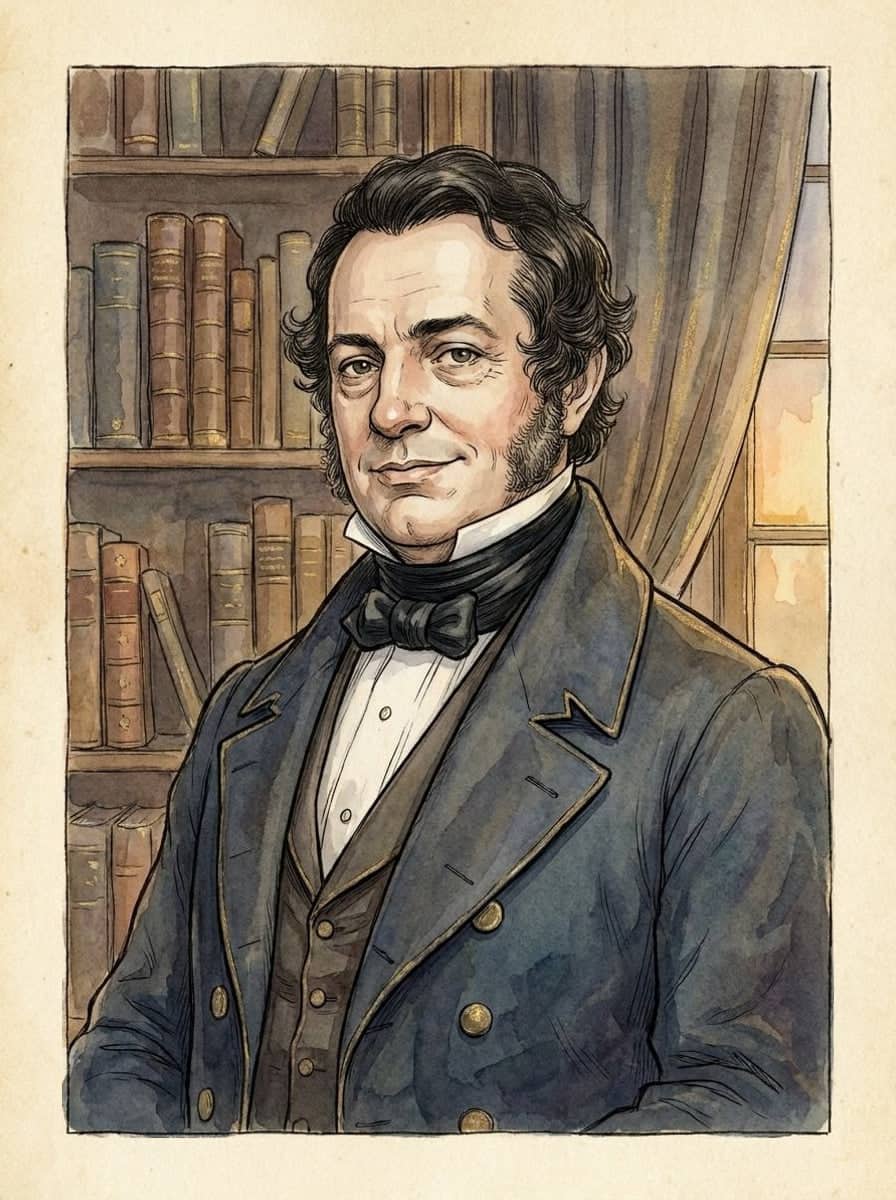
The story that follows was found among the papers of the late Diedrich Knickerbocker, an old gentleman of New York who took the keenest interest in the Dutch history of the province and in the ways of the people descended from its first settlers. His researches, however, were not carried on among books so much as among people, for books are painfully thin on the subjects he loved best, while he found the old burghers, and their wives still more, rich in that store of legend and hearsay which is so valuable to true history. So whenever he came upon a genuine Dutch family, shut up snugly in its low-roofed farmhouse under a spreading sycamore, he looked on it as a little clasped volume printed in old black letter, and studied it with all the eagerness of a bookworm.
What came of all this research was a history of the province during the years of the Dutch governors, which he published some time ago. Opinions have differed as to the literary merits of the work, and, to tell the truth, it is not a bit better than it needs to be. Its chief virtue is its scrupulous accuracy, which was indeed questioned a little when the book first appeared, but has since been thoroughly established, so that it is now taken into every historical collection as a work of unquestionable authority.
The old gentleman died soon after his book came out, and now that he is dead and gone it can do his memory no great harm to say that his time might have been much better spent on weightier labors. He was apt, however, to ride his hobby his own way, and though it did now and then kick up a little dust in the eyes of his neighbors and grieve the hearts of some friends for whom he felt the truest respect and affection, his errors and follies are remembered more in sorrow than in anger, and people have begun to suspect that he never meant to injure or offend anybody. However the critics may value his memory, it is still held dear by a good many people whose good opinion is well worth having, and in particular by certain biscuit bakers, who have gone so far as to stamp his likeness on their New Year cakes, and have given him in that way a chance at immortality almost as good as being struck on a Waterloo medal or a Queen Anne farthing.
Anyone who has made the voyage up the Hudson must remember the Catskill Mountains. They are a broken-off branch of the great Appalachian family, and are seen away to the west of the river, swelling up to a noble height and lording it over the country all around. Every change of season, every change of weather, indeed every hour of the day works some change in the magical colors and shapes of these mountains, and all the good wives, far and near, look on them as perfect barometers. When the weather is fair and settled, they are clothed in blue and purple and print their bold outlines on the clear evening sky; but sometimes, when the rest of the landscape is without a cloud, they will gather a hood of gray vapor about their summits, which in the last rays of the setting sun will glow and light up like a crown of glory.
At the foot of these fairy mountains the traveler may have made out a light smoke curling up from a village whose shingle roofs gleam among the trees, just where the blue tints of the upland melt away into the fresh green of the nearer country. It is a little village of great antiquity, founded by some of the Dutch colonists in the early days of the province, about the beginning of the government of the good Peter Stuyvesant (may he rest in peace), and until a few years ago some of the houses of the original settlers were still standing, built of small yellow bricks brought over from Holland, with latticed windows and gabled fronts topped with weathercocks.
In that same village, and in one of those very houses, which, to tell the precise truth, was sadly worn by time and weather, there lived many years ago, while the country was still a province of Great Britain, a simple, good-natured fellow by the name of Rip Van Winkle. He was descended from the Van Winkles who cut such a gallant figure in the chivalrous days of Peter Stuyvesant, and went with him to the siege of Fort Christina. He had inherited, however, very little of the warlike character of his ancestors. I have said that he was a simple, good-natured man; he was, besides, a kind neighbor and an obedient, henpecked husband. Perhaps it was that last circumstance that gave him the meekness of spirit which made him so universally popular, for men who live under the discipline of a shrew at home are apt to be obliging and peaceable everywhere else. Their tempers, no doubt, are made pliable and soft in the fiery furnace of domestic trouble, and a scolding delivered at bedtime is worth all the sermons in the world for teaching the virtues of patience and long suffering. A scolding wife may therefore, in some ways, be counted a tolerable blessing, and if that is so, Rip Van Winkle was three times blessed.
Certain it is that he was a great favorite among all the good wives of the village, who, as women kindly will, took his part in every family quarrel, and never failed, when they talked such matters over in their evening gossip, to lay the whole blame on Dame Van Winkle. The children of the village, too, would shout with joy whenever he came near. He joined in their games, made their playthings, taught them to fly kites and shoot marbles, and told them long stories about ghosts and witches and Indians. Whenever he came dodging about the village he was surrounded by a troop of them hanging on his coat, climbing on his back, and playing a thousand tricks on him without the least fear of punishment; and not a dog in the whole neighborhood would bark at him.
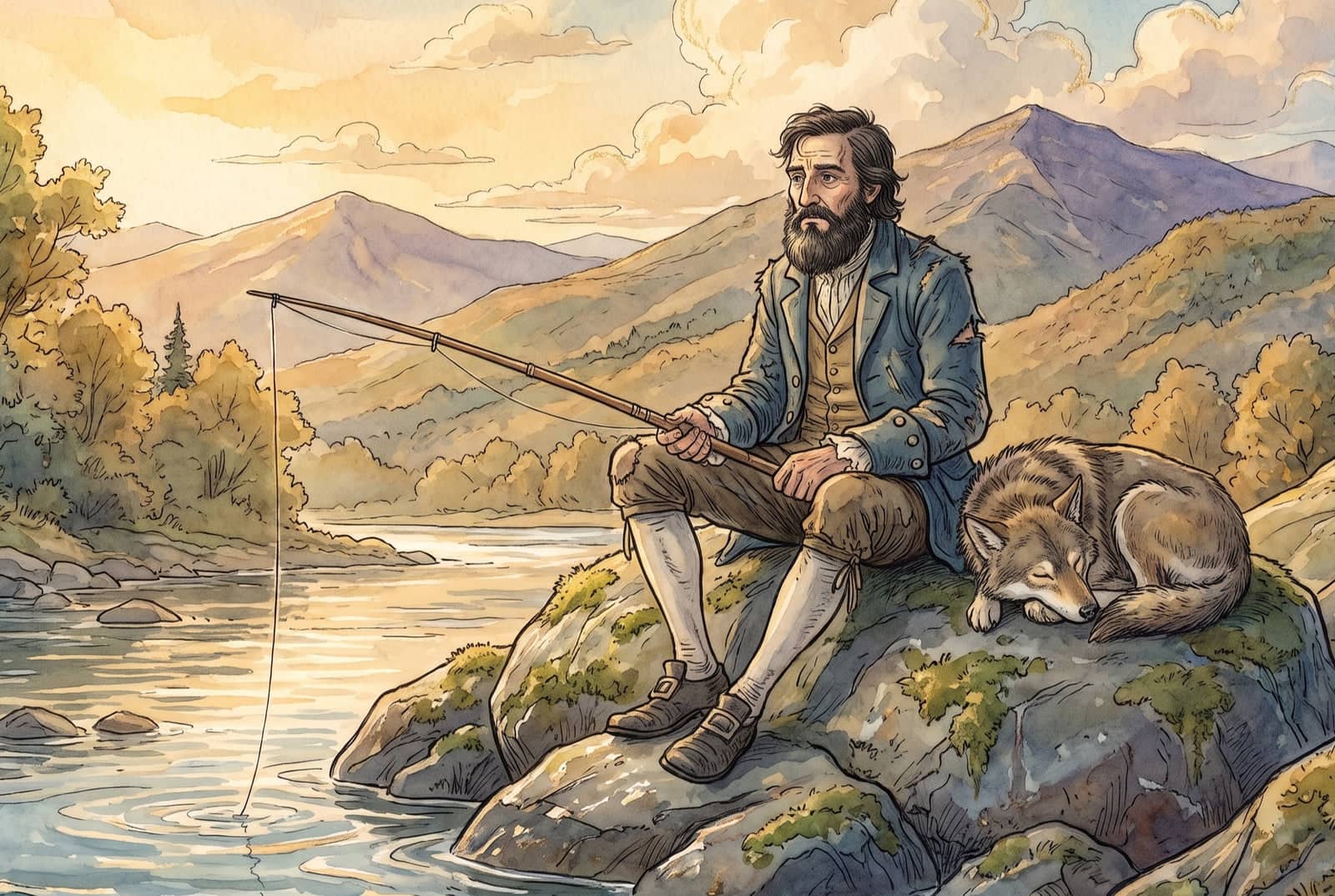
The one great flaw in Rip’s makeup was that he could not bear any kind of profitable work. It was not for want of patience or perseverance, for he would sit on a wet rock with a rod as long and as heavy as a lance and fish all day long without a murmur, even though not a single fish so much as nibbled. He would carry a gun on his shoulder for hours together, tramping through woods and swamps, up hill and down dale, to shoot a few squirrels or wild pigeons. He would never refuse to help a neighbor even with the roughest labor, and he was the first man at every country gathering for husking corn or building stone walls. The women of the village, too, used to send him on their errands and set him to those little odd jobs their less obliging husbands would not do for them. In a word, Rip was ready to attend to anybody’s business but his own; as for doing his duty by his family and keeping his farm in order, he found it impossible.
In fact, he declared it was no use working on his farm at all. It was the most miserable little piece of ground in the whole country, and everything about it went wrong in spite of him. His fences were forever falling to pieces; his cow either wandered off or got in among the cabbages; weeds were sure to grow faster in his fields than anywhere else; the rain always made a point of setting in exactly when he had some work to do out of doors. So although the land he had inherited had dwindled away under his management, acre by acre, until there was hardly more left than a patch of corn and potatoes, it was still the worst-kept farm in the neighborhood.
His children, too, were as ragged and wild as if they belonged to nobody. His son Rip, a young rascal made in his own image, promised to inherit his father’s habits along with his father’s old clothes. He was usually to be seen trotting like a colt at his mother’s heels, dressed in a pair of his father’s cast-off wide breeches, which he had all he could do to hold up with one hand, the way a fine lady holds up her train in bad weather.
Rip Van Winkle, however, was one of those happy souls, of easy, well-oiled temper, who take the world as it comes, eat white bread or brown, whichever can be had with the least thought and trouble, and would rather starve on a penny than work for a pound. Left to himself he would have whistled his life away in perfect contentment; but his wife was forever ringing in his ears about his idleness, his carelessness, and the ruin he was bringing on his family. Morning, noon and night her tongue was going, and everything he said or did was sure to bring on a fresh flood of household eloquence. Rip had only one way of answering lectures of that kind, and by long use it had grown into a habit. He shrugged his shoulders, shook his head, turned his eyes up, and said nothing. That, however, always brought a fresh volley from his wife, so that he was glad to draw off his forces and take to the outside of the house, the only side which, in truth, belongs to a henpecked husband.
Rip’s one supporter at home was his dog Wolf, who was quite as henpecked as his master; for Dame Van Winkle regarded the two of them as companions in idleness, and even looked on Wolf with an unkind eye as the cause of his master’s going astray so often. It is true that in every point of spirit proper to an honorable dog he was as brave an animal as ever ranged the woods; but what courage can stand up against the endless, all-besetting terror of a woman’s tongue? The moment Wolf came into the house his crest fell, his tail drooped to the floor or curled between his legs, and he sneaked about with the air of a criminal on his way to the gallows, casting many a sidelong glance at Dame Van Winkle; and at the least flourish of a broomstick or a ladle he would fly to the door yelping.
Times grew worse and worse with Rip Van Winkle as the years of matrimony rolled on. A sour temper never mellows with age, and a sharp tongue is the only edged tool that grows keener with constant use. For a long while he used to console himself, when he was driven out of the house, by joining a sort of everlasting club of the sages, philosophers and other idle persons of the village, which held its sessions on a bench in front of a small inn, marked by a ruddy portrait of His Majesty King George the Third. There they used to sit in the shade all through a long, lazy summer day, talking listlessly over village gossip or telling endless, sleepy stories about nothing at all. But it would have been worth any statesman’s money to hear the profound discussions that sometimes took place when an old newspaper happened to fall into their hands from some passing traveler. How solemnly they would listen while Derrick Van Bummel, the schoolmaster, drawled out the contents. He was a neat, learned little man who was not to be daunted by the most gigantic word in the dictionary. And how wisely they would deliberate on public events some months after they had happened.
The opinions of this little parliament were entirely governed by Nicholas Vedder, the patriarch of the village and landlord of the inn, who took his seat at the door from morning till night, moving only just enough to keep out of the sun and stay in the shade of a large tree, so that the neighbors could tell the hour by his movements as exactly as by a sundial. It is true that he was hardly ever heard to speak, but he smoked his pipe without stopping. His followers, though, for every great man has his followers, understood him perfectly and knew how to gather his opinions. When anything that was read or told displeased him, he was seen to smoke his pipe hard and send out frequent, angry puffs; but when he was pleased he drew the smoke in slowly and calmly and let it out in light, placid clouds, and sometimes, taking the pipe from his mouth and letting the fragrant vapor curl about his nose, he would nod his head gravely in token of complete approval.
Even from this stronghold the unlucky Rip was at last routed by his scolding wife, who would suddenly break in on the peace of the assembly and call the whole company worthless; nor was that great personage Nicholas Vedder himself safe from the bold tongue of this terrible woman, who charged him to his face with encouraging her husband in habits of idleness.
Poor Rip was at last driven almost to despair, and his one way of escaping the labor of the farm and the clamor of his wife was to take his gun in hand and stroll away into the woods. There he would sometimes sit down at the foot of a tree and share what was in his bag with Wolf, whom he pitied as a fellow sufferer in persecution.
“Poor Wolf,” he would say, “your mistress leads you a dog’s life of it; but never mind, my lad, as long as I live you will never want a friend to stand by you.”
Wolf would wag his tail, look wistfully up into his master’s face, and, if dogs can feel pity, I truly believe he returned the sentiment with all his heart.
On one long ramble of this kind, on a fine autumn day, Rip had scrambled without noticing it to one of the highest parts of the Catskills. He was after his favorite sport of shooting squirrels, and the still, lonely places had echoed and echoed again with the reports of his gun. Panting and tired, late in the afternoon, he threw himself down on a green knoll covered with mountain grass that crowned the brow of a precipice. Through an opening between the trees he could look out over all the lower country for many a mile of rich woodland. Far, far below him he saw the lordly Hudson moving on its silent but majestic course, with the reflection of a purple cloud, or the sail of some lagging boat, here and there asleep on its glassy surface, and losing itself at last among the blue highlands.
On the other side he looked down into a deep mountain glen, wild and lonely and shaggy, its bottom filled with fragments fallen from the overhanging cliffs and scarcely lit at all by the last reflected rays of the setting sun. For some time Rip lay musing over this scene. Evening was gradually coming on; the mountains began to throw their long blue shadows over the valleys; he saw that it would be dark long before he could reach the village, and he heaved a heavy sigh at the thought of facing the terrors of Dame Van Winkle.
As he was about to start down, he heard a voice a long way off, hallooing.
“Rip Van Winkle! Rip Van Winkle!”
He looked around and could see nothing but a crow winging its solitary flight across the mountain. He decided his fancy must have deceived him, and turned again to go down, when the same cry rang through the still evening air.
“Rip Van Winkle! Rip Van Winkle!”
At that same moment Wolf bristled up his back, gave a low growl, and slunk to his master’s side, looking fearfully down into the glen. Now a vague uneasiness stole over Rip. He looked anxiously in the same direction and made out a strange figure slowly toiling up the rocks, bending under the weight of something he carried on his back. He was surprised to see any human being in this lonely and unfrequented place, but supposing it to be somebody from the neighborhood in need of help, he hurried down to give it.
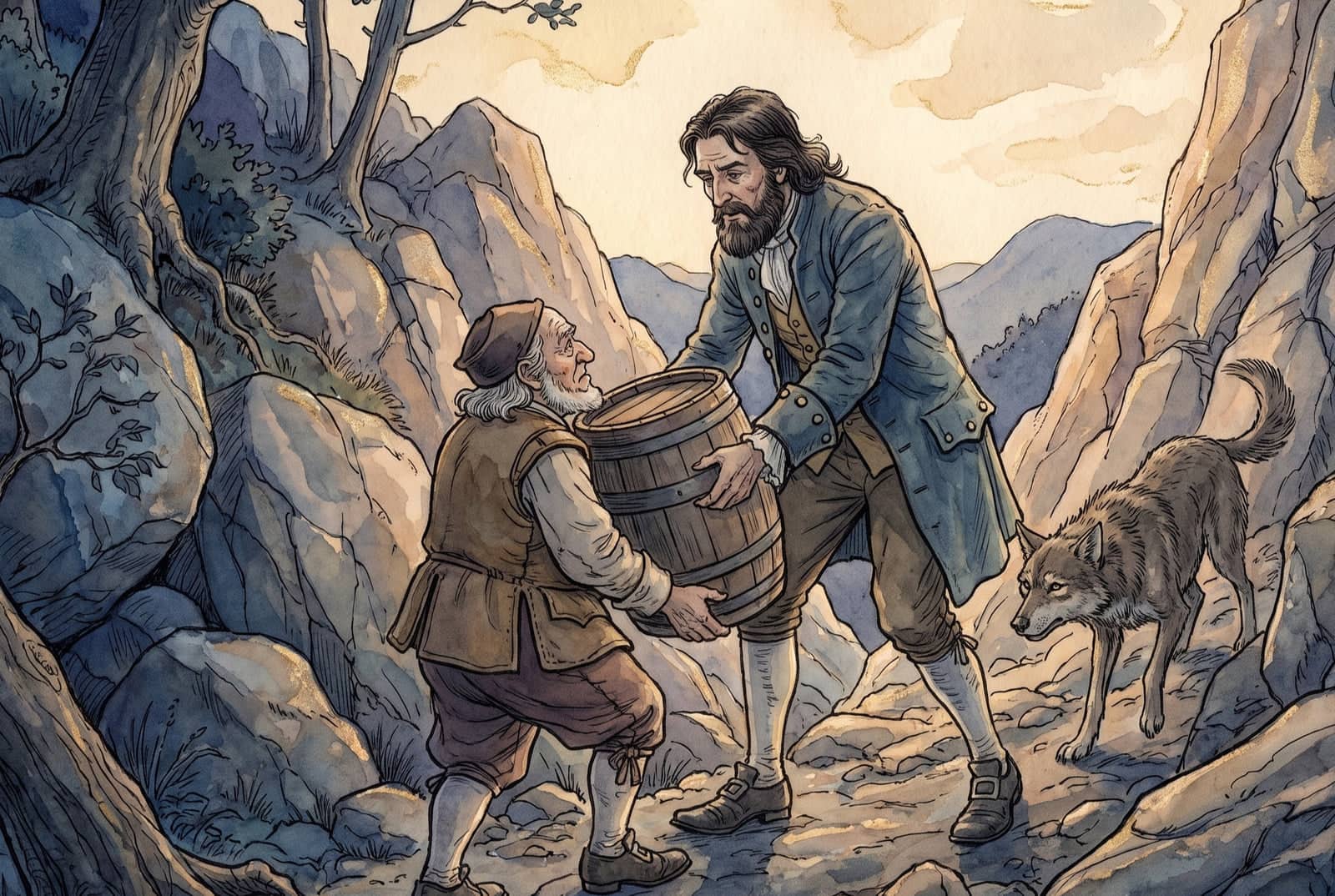
On coming nearer he was more surprised still at the oddity of the stranger’s appearance. He was a short, square-built old fellow with thick bushy hair and a grizzled beard. His clothes were of the antique Dutch fashion: a cloth jerkin strapped round the waist, and several pairs of breeches, the outer pair very full, decorated with rows of buttons down the sides and bunches of them at the knees. On his shoulders he carried a stout keg that seemed to be full of liquor, and he made signs for Rip to come and help him with the load. Rip was rather shy and distrustful of this new acquaintance, but he obliged with his usual readiness; and taking turns to relieve each other, they clambered up a narrow gully that seemed to be the dry bed of a mountain torrent. As they went up, Rip heard now and then long rolling peals, like distant thunder, that seemed to come out of a deep ravine, or rather a cleft between lofty rocks, toward which their rugged path was leading them. He paused for an instant, but supposing it to be the muttering of one of those passing thunder showers that so often happen on the mountain heights, he went on. Passing through the ravine, they came to a hollow like a small amphitheater, ringed by sheer precipices, over the brinks of which the trees leaned out and shot their branches, so that you caught only glimpses of the blue sky and the bright evening cloud. All this while Rip and his companion had labored on in silence; for though Rip marveled greatly what could be the object of carrying a keg of liquor up this wild mountain, there was something strange and unaccountable about the stranger that inspired awe and checked all familiarity.
On entering the amphitheater, new objects of wonder presented themselves. On a level spot in the center was a company of odd-looking people playing at ninepins. They were dressed in a quaint, outlandish fashion; some wore short doublets, others jerkins with long knives in their belts, and most of them had enormous breeches in the same style as their guide’s. Their faces were peculiar too. One had a large head, a broad face and small piggish eyes; the face of another seemed to consist entirely of nose, and was topped by a white sugarloaf hat set off with a little red cock’s feather. They all had beards of various shapes and colors. There was one who seemed to be the commander: a stout old gentleman with a weather-beaten face, wearing a laced doublet, a broad belt and a short sword, a high-crowned hat with a feather in it, red stockings, and high-heeled shoes with rosettes on them. The whole group reminded Rip of the figures in an old Flemish painting that hung in the parlor of Dominie Van Schaick, the village parson, and had been brought over from Holland at the time of the settlement.
What seemed particularly odd to Rip was that although these people were plainly amusing themselves, they kept the gravest faces and the most mysterious silence, and were altogether the most melancholy party of pleasure he had ever witnessed. Nothing broke the stillness of the scene but the noise of the balls, which, whenever they were rolled, echoed along the mountains like rumbling peals of thunder.
As Rip and his companion came up, the players suddenly left off their game and stared at him with such a fixed, statue-like gaze, and such strange, dull, lifeless faces, that his heart turned over inside him and his knees knocked together. His companion now emptied the contents of the keg into large flagons and made signs to him to wait on the company. He obeyed in fear and trembling. They drank the liquor in profound silence, and then went back to their game.
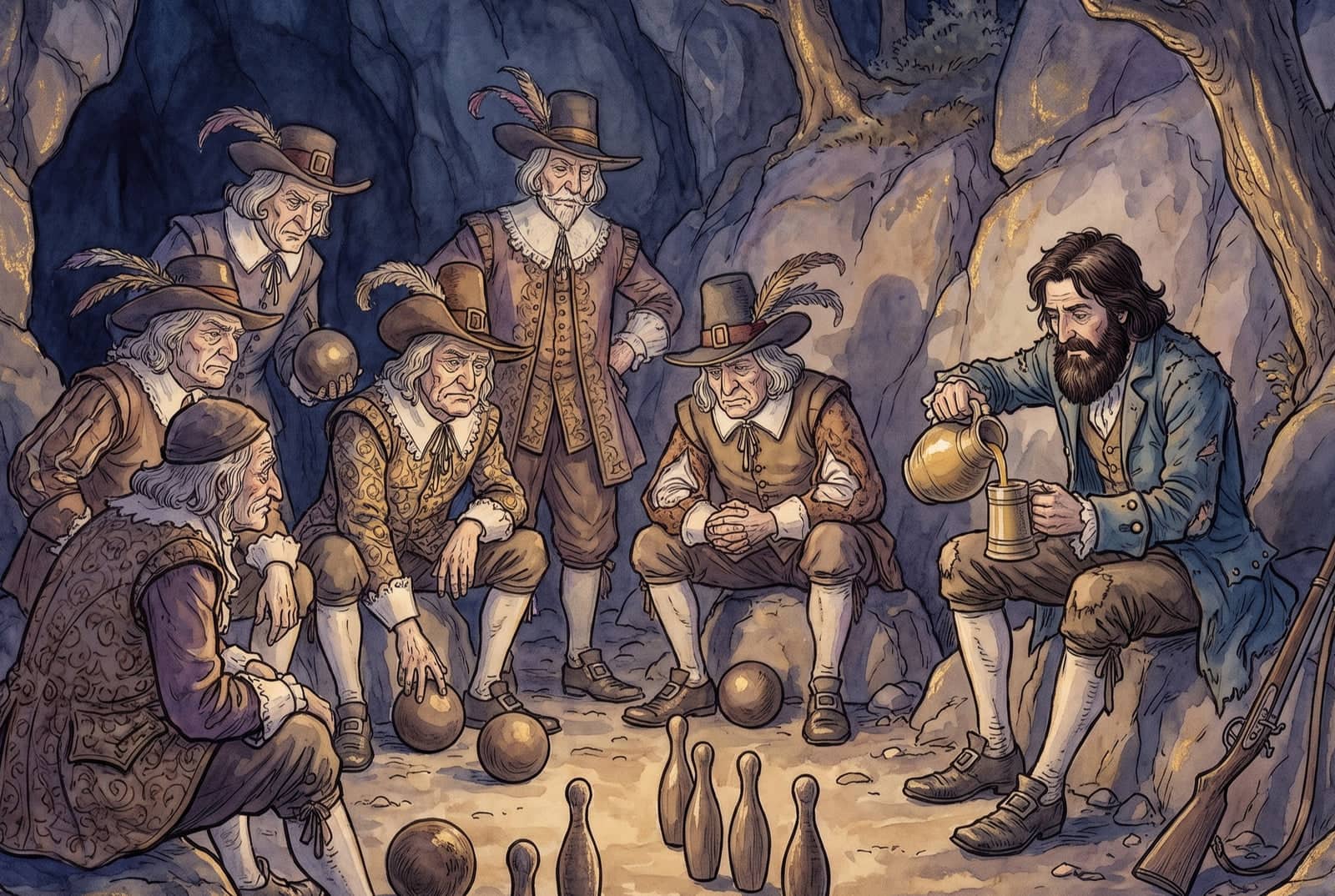
By degrees Rip’s awe and apprehension wore off. He even ventured, when no eye was fixed on him, to taste the drink, which he found had much of the flavor of excellent Dutch gin. He was a thirsty soul by nature, and was soon tempted to repeat the draft. One taste led to another, and he went back to the flagon so often that at last his senses were overpowered, his eyes swam in his head, his head sank little by little, and he fell into a deep sleep.
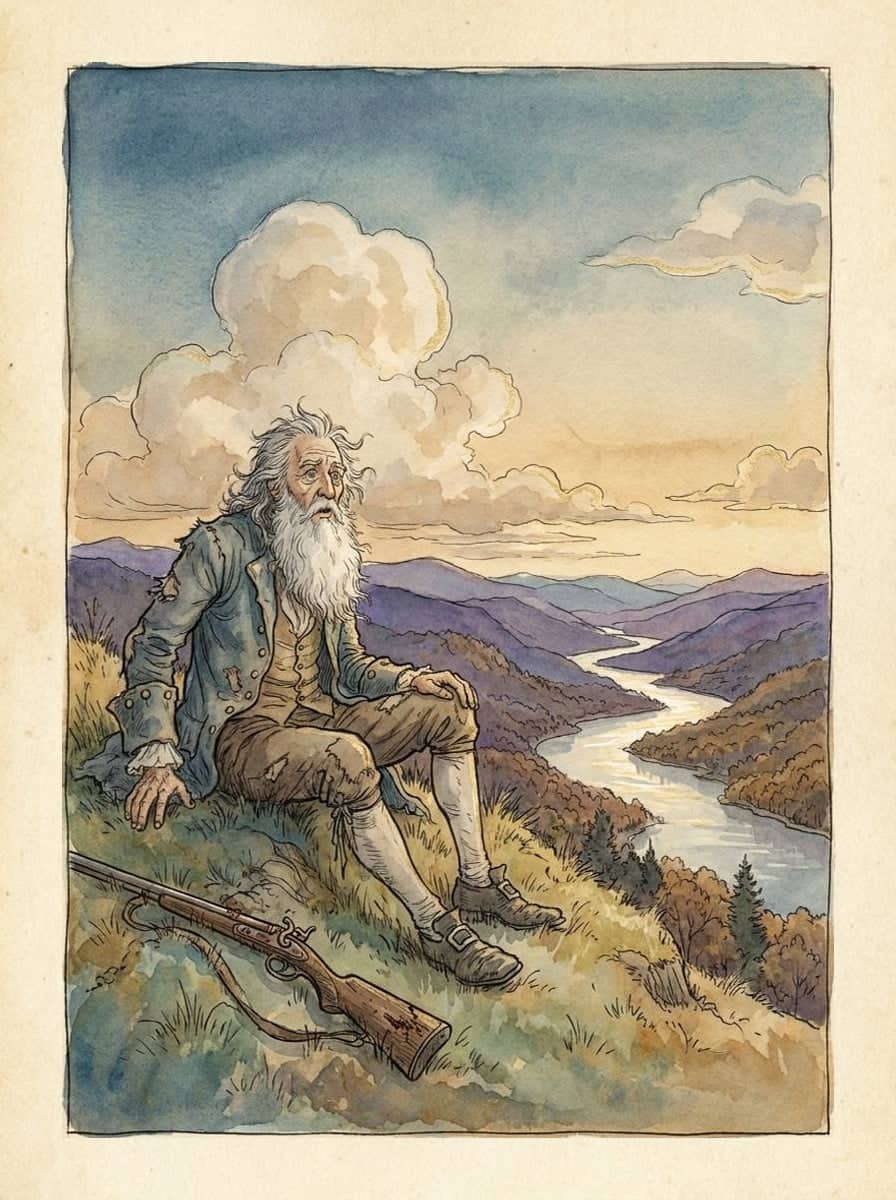
When he woke he found himself on the green knoll where he had first seen the old man of the glen. He rubbed his eyes. It was a bright sunny morning. The birds were hopping and twittering among the bushes, and an eagle was wheeling high overhead, breasting the pure mountain breeze.
“Surely,” Rip thought, “I have not slept here all night.”
He went over everything that had happened before he fell asleep: the strange man with the keg of liquor, the mountain ravine, the wild retreat among the rocks, the woebegone company at ninepins, the flagon.
“Oh, that flagon, that wicked flagon,” he thought. “What excuse am I going to make to Dame Van Winkle?”
He looked around for his gun, but in place of the clean, well-oiled fowling piece he found an old firelock lying beside him, the barrel crusted with rust, the lock falling off, the stock eaten by worms. He now suspected that the grave revelers of the mountain had played a trick on him, and, having dosed him with liquor, had robbed him of his gun. Wolf, too, had disappeared, though he might have strayed off after a squirrel or a partridge. Rip whistled for him and shouted his name, but all in vain; the echoes gave him back his whistle and his shout, but no dog was to be seen.
He determined to go back to the scene of the last evening’s revels, and, if he met any of the party, to demand his dog and his gun. As he rose to walk he found himself stiff in the joints and short of his usual liveliness.
“These mountain beds do not agree with me,” he thought, “and if this frolic should lay me up with a fit of rheumatism, I shall have a blessed time of it with Dame Van Winkle.”
With some difficulty he got down into the glen. He found the gully up which he and his companion had climbed the evening before, but to his astonishment a mountain stream was now foaming down it, leaping from rock to rock and filling the glen with babbling murmurs. He managed all the same to scramble up along its sides, working his toilsome way through thickets of birch and sassafras and witch hazel, and now and then tripped up or entangled by the wild grapevines that twisted their coils and tendrils from tree to tree and spread a kind of net across his path.
At length he came to the place where the ravine had opened through the cliffs into the amphitheater, but no trace of any such opening remained. The rocks stood up in a high, impassable wall, over which the torrent came tumbling in a sheet of feathery foam and fell into a broad deep basin, black with the shadows of the surrounding forest. Here poor Rip was brought to a stand. He called and whistled after his dog again, and was answered only by the cawing of a flock of idle crows, sporting high in the air about a dry tree that hung over a sunny precipice, and who, safe in their height, seemed to look down and scoff at the poor man’s perplexities. What was to be done? The morning was passing away, and Rip was famished for want of his breakfast. He grieved to give up his dog and his gun; he dreaded to meet his wife; but it would not do to starve among the mountains. He shook his head, shouldered the rusty firelock, and, with a heart full of trouble and anxiety, turned his steps homeward.
As he came near the village he met a number of people, but not one of them did he know, which surprised him somewhat, for he had believed he was acquainted with everyone in the country round. Their dress, too, was of a different fashion from the one he was used to. They all stared at him with the same marks of surprise, and every one of them, on catching sight of him, stroked his own chin. This gesture was repeated so often that Rip did the same without thinking, and, to his astonishment, found that his beard had grown a foot long.
He had now entered the skirts of the village. A troop of strange children ran at his heels, hooting after him and pointing at his gray beard. The dogs, not one of which he recognized for an old acquaintance, barked at him as he passed. The very village was altered. It was larger and fuller of people. There were rows of houses he had never seen before, and those which had been his familiar haunts had disappeared. Strange names were over the doors, strange faces at the windows, everything was strange. His mind now misgave him; he began to doubt whether he and the world around him were not both bewitched. Surely this was his native village, which he had left only a day before. There stood the Catskill Mountains; there ran the silver Hudson in the distance; there was every hill and hollow exactly as it had always been. Rip was sorely perplexed.
“That flagon last night,” he thought, “has addled my poor head badly.”
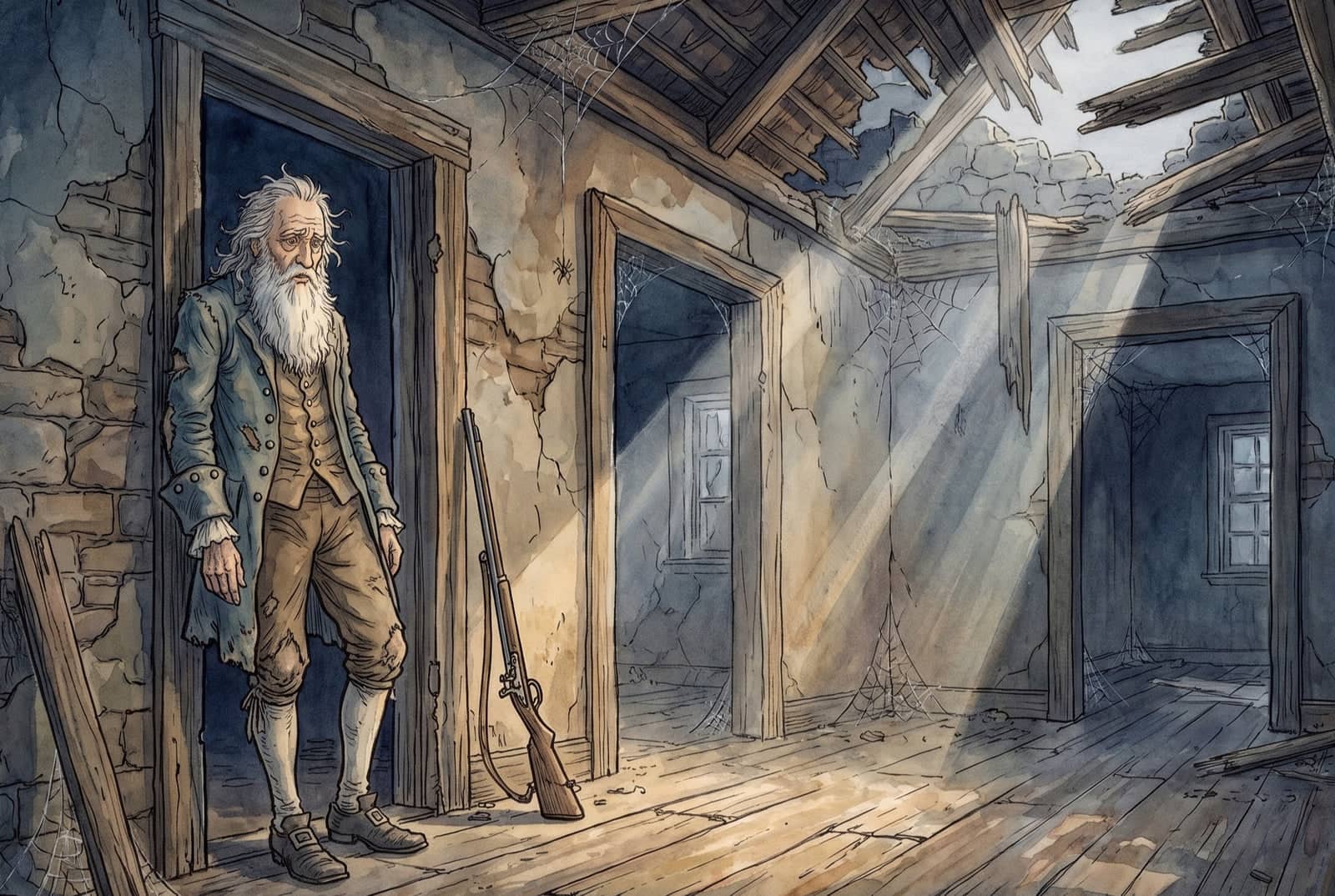
It was with some difficulty that he found the way to his own house, which he approached in silent awe, expecting every moment to hear the shrill voice of Dame Van Winkle. He found the house gone to ruin. The roof had fallen in, the windows were shattered, and the doors were off their hinges. A half-starved dog that looked like Wolf was skulking about it. Rip called him by name, but the creature snarled, showed his teeth and passed on. This was an unkind cut indeed.
“My very dog,” sighed poor Rip, “has forgotten me.”
He went into the house, which, to tell the truth, Dame Van Winkle had always kept in neat order. It was empty, forlorn, and to all appearances abandoned. This desolation overcame all his fears of his wife. He called loudly for her and for his children; the lonely rooms rang for a moment with his voice, and then all was silence again.
He now hurried out and made for his old resort, the village inn, but that too was gone. A large rickety wooden building stood in its place, with great gaping windows, some of them broken and mended with old hats and petticoats, and over the door was painted, “The Union Hotel, by Jonathan Doolittle.” Instead of the great tree that used to shelter the quiet little Dutch inn of old, there was now a tall bare pole with something on the top that looked like a red nightcap, and from it fluttered a flag with a curious arrangement of stars and stripes. All this was strange and past understanding. He did recognize on the sign the ruby face of King George, under which he had smoked so many a peaceful pipe; but even this was strangely transformed. The red coat had become one of blue and buff; a sword was held in the hand instead of a scepter; the head wore a cocked hat; and underneath was painted in large letters, “GENERAL WASHINGTON.”
There was, as usual, a crowd of people about the door, but not one that Rip remembered. The very character of the people seemed changed. There was a busy, bustling, disputatious tone about them instead of the accustomed calm and drowsy tranquility. He looked in vain for the wise Nicholas Vedder, with his broad face, his double chin and his fine long pipe, sending out clouds of tobacco smoke instead of idle speeches; or for Van Bummel the schoolmaster, doling out the contents of an ancient newspaper. In their place a lean, bilious-looking fellow with his pockets full of handbills was holding forth vehemently about the rights of citizens, elections, members of Congress, liberty, Bunker Hill, the heroes of seventy-six, and other words that were a perfect babble to the bewildered Van Winkle.
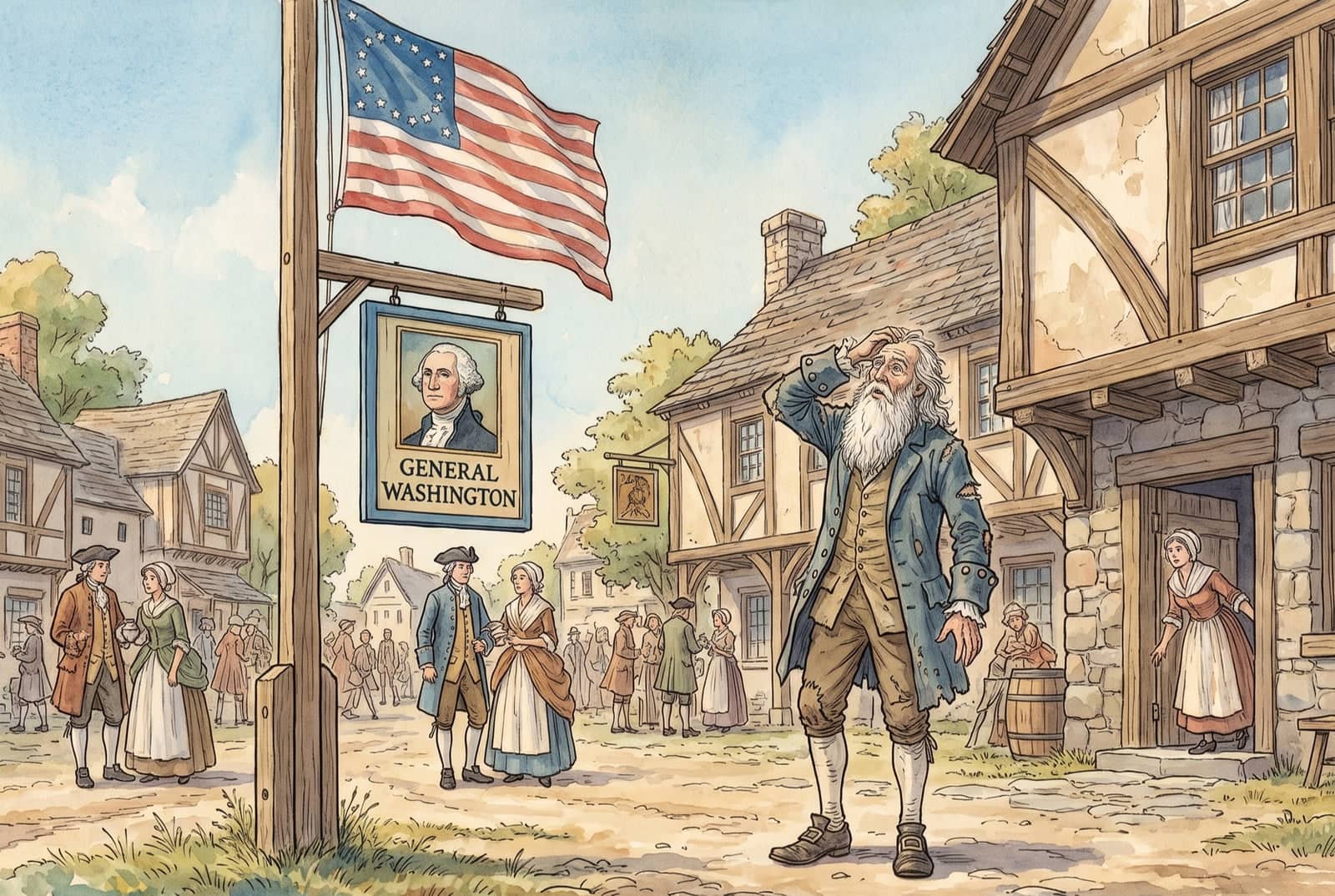
The appearance of Rip, with his long grizzled beard, his rusty fowling piece, his uncouth dress and the army of women and children at his heels, soon drew the attention of the tavern politicians. They crowded round him and eyed him from head to foot with great curiosity. The orator bustled up, drew him partly aside, and asked him which side he voted on. Rip stared in vacant stupidity. Another short but busy little fellow pulled him by the arm and, rising on tiptoe, asked in his ear whether he was Federal or Democrat. Rip was quite as much at a loss to understand that question. Then a knowing, self-important old gentleman in a sharp cocked hat made his way through the crowd, putting people to right and left with his elbows as he passed, and planted himself in front of Van Winkle with one arm on his hip and the other resting on his cane. His keen eyes and his sharp hat seemed to bore into Rip’s very soul as he demanded, in an austere tone, what had brought him to the election with a gun on his shoulder and a mob at his heels, and whether he meant to breed a riot in the village.
“Alas, gentlemen,” cried Rip, somewhat dismayed, “I am a poor, quiet man, a native of this place, and a loyal subject of the King, God bless him.”
Here a general shout burst from the bystanders.
“A tory! A tory! A spy! A refugee! Hustle him! Away with him!”
It was with great difficulty that the self-important man in the cocked hat restored order. Having put on a tenfold austerity of brow, he demanded again of the unknown culprit what he had come there for and whom he was looking for. The poor man humbly assured him that he meant no harm, and had merely come in search of some of his neighbors who used to keep about the tavern.
“Well, who are they? Name them.”
Rip thought for a moment.
“Where is Nicholas Vedder?”
There was silence for a little while, and then an old man answered in a thin, piping voice.
“Nicholas Vedder? Why, he is dead and gone these eighteen years. There was a wooden gravestone in the churchyard that used to tell all about him, but that is rotted and gone too.”
“Where is Brom Dutcher?”
“Oh, he went off to the army at the beginning of the war. Some say he was killed at the storming of Stony Point; others say he was drowned in a squall at the foot of Antony’s Nose. I do not know. He never came back.”
“Where is Van Bummel, the schoolmaster?”
“He went off to the wars too. He was a great militia general, and now he is in Congress.”
Rip’s heart died away as he heard of these sad changes in his home and among his friends, and found himself so alone in the world. Every answer puzzled him besides, by speaking of such enormous stretches of time, and of matters he could not understand: war, Congress, Stony Point. He had no courage left to ask after any more friends, but cried out in despair.
“Does nobody here know Rip Van Winkle?”
“Oh, Rip Van Winkle!” exclaimed two or three of them. “Of course. That is Rip Van Winkle over there, leaning against the tree.”
Rip looked, and saw an exact copy of himself as he had been when he went up the mountain: apparently as lazy, and certainly as ragged. The poor fellow was now completely confounded. He doubted his own identity, and whether he was himself or another man. In the middle of his bewilderment the man in the cocked hat demanded who he was and what his name was.
“God knows,” he cried, at his wits’ end. “I am not myself. I am somebody else. That is me over there. No, that is somebody else who has got into my shoes. I was myself last night, but I fell asleep on the mountain, and they have changed my gun, and everything is changed, and I am changed, and I cannot tell what my name is, or who I am.”
The bystanders now began to look at one another, to nod, to wink significantly, and to tap their fingers against their foreheads. There was a whisper, too, about securing the gun and keeping the old fellow from doing any mischief, at the very suggestion of which the self-important man in the cocked hat withdrew in some haste. At this critical moment a fresh, comely young woman pressed through the throng to get a peep at the gray-bearded man. She had a chubby child in her arms, who, frightened at his looks, began to cry.
“Hush, Rip,” she cried, “hush, you little fool. The old man will not hurt you.”
The name of the child, the air of the mother, the tone of her voice, all woke a train of recollections in his mind.
“What is your name, my good woman?” he asked.
“Judith Gardenier.”
“And your father’s name?”
“Ah, poor man. Rip Van Winkle was his name, but it is twenty years since he went away from home with his gun, and nobody has heard of him since. His dog came home without him. Whether he shot himself, or was carried off by the Indians, nobody can tell. I was only a little girl then.”
Rip had one more question to ask, and he put it with a faltering voice.
“Where is your mother?”
“Oh, she died too, a short time ago. She broke a blood vessel in a fit of passion at a peddler from New England.”
There was a drop of comfort, at least, in this news. The honest man could contain himself no longer. He caught his daughter and her child in his arms.
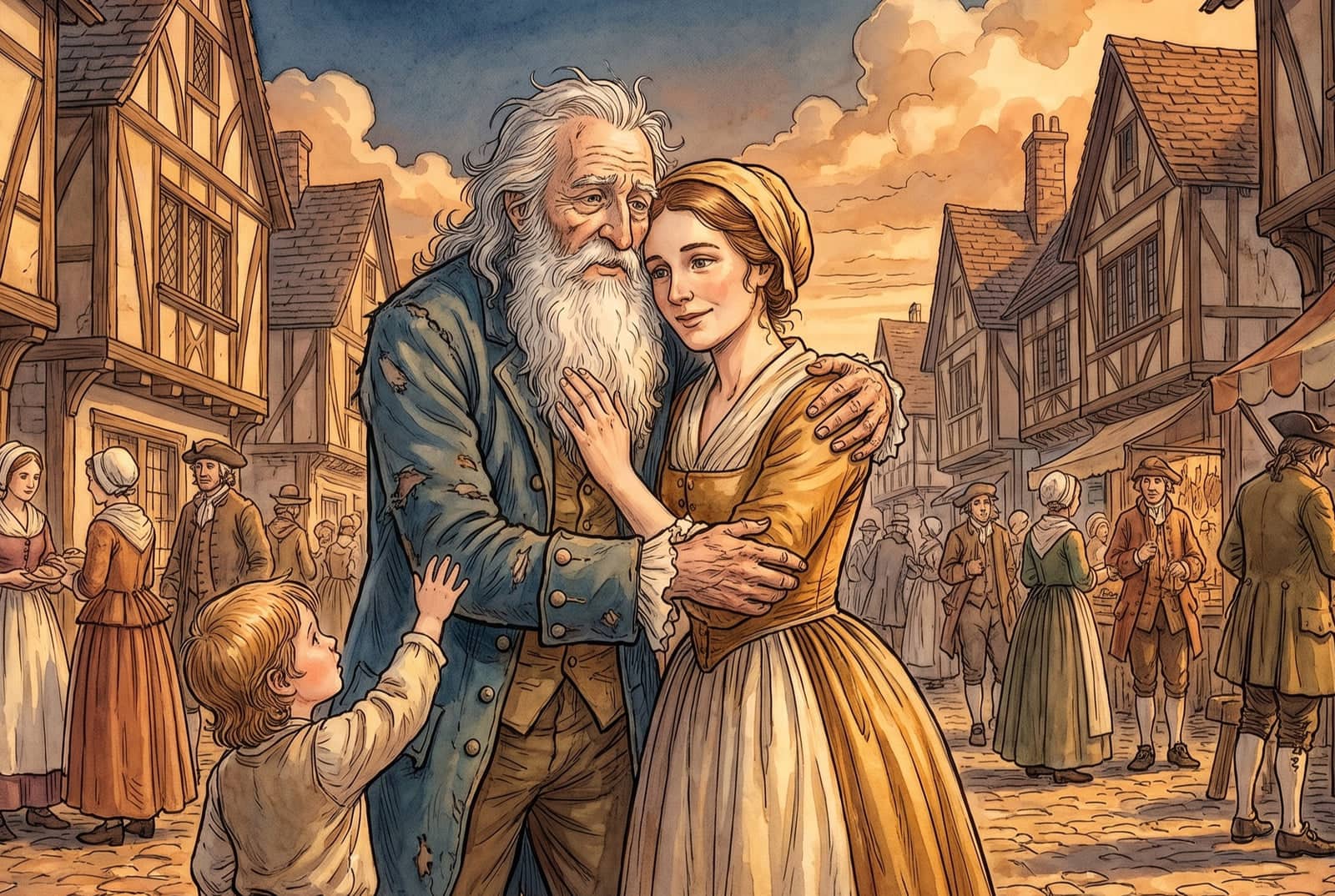
“I am your father!” he cried. “Young Rip Van Winkle once, old Rip Van Winkle now. Does nobody know poor Rip Van Winkle?”
All stood amazed, until an old woman came tottering out of the crowd, put her hand to her brow, and, peering under it into his face for a moment, cried out.
“Sure enough, it is Rip Van Winkle! It is himself! Welcome home again, old neighbor. Why, where have you been these twenty long years?”
Rip’s story was soon told, for the whole twenty years had been to him no more than a single night. The neighbors stared when they heard it. Some were seen to wink at each other and put their tongues in their cheeks; and the self-important man in the cocked hat, who had come back to the field once the alarm was over, screwed down the corners of his mouth and shook his head, upon which there was a general shaking of heads throughout the gathering.
It was decided, however, to take the opinion of old Peter Vanderdonk, who was seen slowly advancing up the road. He was a descendant of the historian of that name, who wrote one of the earliest accounts of the province. Peter was the most ancient inhabitant of the village and well versed in all the wonderful events and traditions of the neighborhood. He recollected Rip at once and confirmed his story in the most satisfactory manner. He assured the company that it was a fact, handed down from his ancestor the historian, that the Catskill Mountains had always been haunted by strange beings. It was said that the great Hendrick Hudson, the first discoverer of the river and the country, kept a kind of vigil there every twenty years with the crew of his ship the Half Moon, being permitted in this way to revisit the scenes of his great venture and keep a guardian eye on the river and on the great city that bears his name. Peter’s own father had once seen them in their old Dutch clothes, playing at ninepins in the hollow of the mountain, and Peter himself had heard, one summer afternoon, the sound of their balls, like distant peals of thunder.
To make a long story short, the company broke up and returned to the more important concerns of the election. Rip’s daughter took him home to live with her. She had a snug, well-furnished house and a stout, cheery farmer for a husband, whom Rip remembered as one of the boys who used to climb on his back. As for Rip’s son and heir, the very image of his father, the young man who had been seen leaning against the tree, he was employed to work on the farm, but showed a hereditary willingness to attend to anything on earth except his own business.
Rip now took up his old walks and habits again. He soon found many of his former cronies, though all of them rather the worse for the wear and tear of time, and he preferred making his friends among the rising generation, with whom he soon grew into great favor.
Having nothing to do at home, and having reached that happy age when a man may be idle without reproach, he took his place once more on the bench at the inn door, and was honored as one of the patriarchs of the village and a chronicle of the old times before the war. It was some time before he could get into the regular track of gossip, or be made to comprehend the strange things that had happened during his long sleep: that there had been a war of revolution, that the country had thrown off the yoke of old England, and that instead of being a subject of His Majesty George the Third he was now a free citizen of the United States. Rip, in fact, was no politician. The changes of states and empires made little impression on him. But there was one kind of tyranny under which he had long groaned, and that was petticoat government. Happily, that was at an end. He had got his neck out of the yoke of matrimony and could go in and out whenever he pleased, without dreading the rule of Dame Van Winkle. Whenever her name was mentioned, however, he shook his head, shrugged his shoulders and turned his eyes up, which might have passed either for resignation to his fate or for joy at his deliverance.
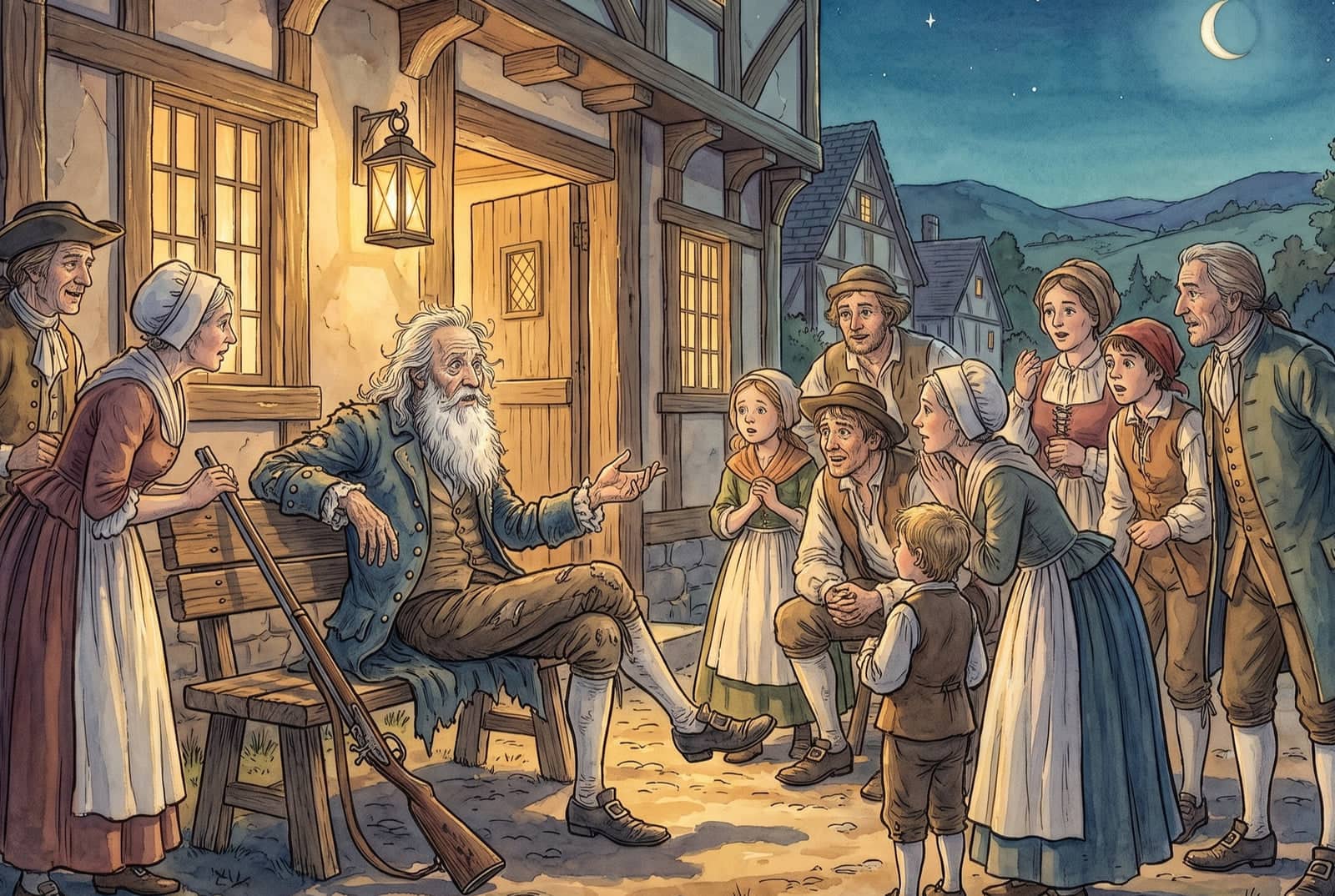
He used to tell his story to every stranger who arrived at Mr. Doolittle’s hotel. He was noticed at first to vary on some points every time he told it, which was doubtless owing to his having so lately woken up. In the end it settled down exactly to the tale that has been told here, and there was not a man, woman or child in the neighborhood who did not know it by heart. Some always pretended to doubt the reality of it, and insisted that Rip had been out of his head, and that this was the one point on which he always remained a little flighty. The old Dutch inhabitants, however, almost all gave it full credit. Even to this day they never hear a thunderstorm of a summer afternoon about the Catskills without saying that Hendrick Hudson and his crew are at their game of ninepins; and it is the common wish of all the henpecked husbands in the neighborhood, when life hangs heavy on their hands, that they might have a quieting draft out of Rip Van Winkle’s flagon.
Retold by Talerie from Rip Van Winkle (opens in a new window)License: Public domainCopy this text, adapt it, use it however you like. A link back to Talerie is appreciated but never required.CC0 1.0 (opens in a new window)