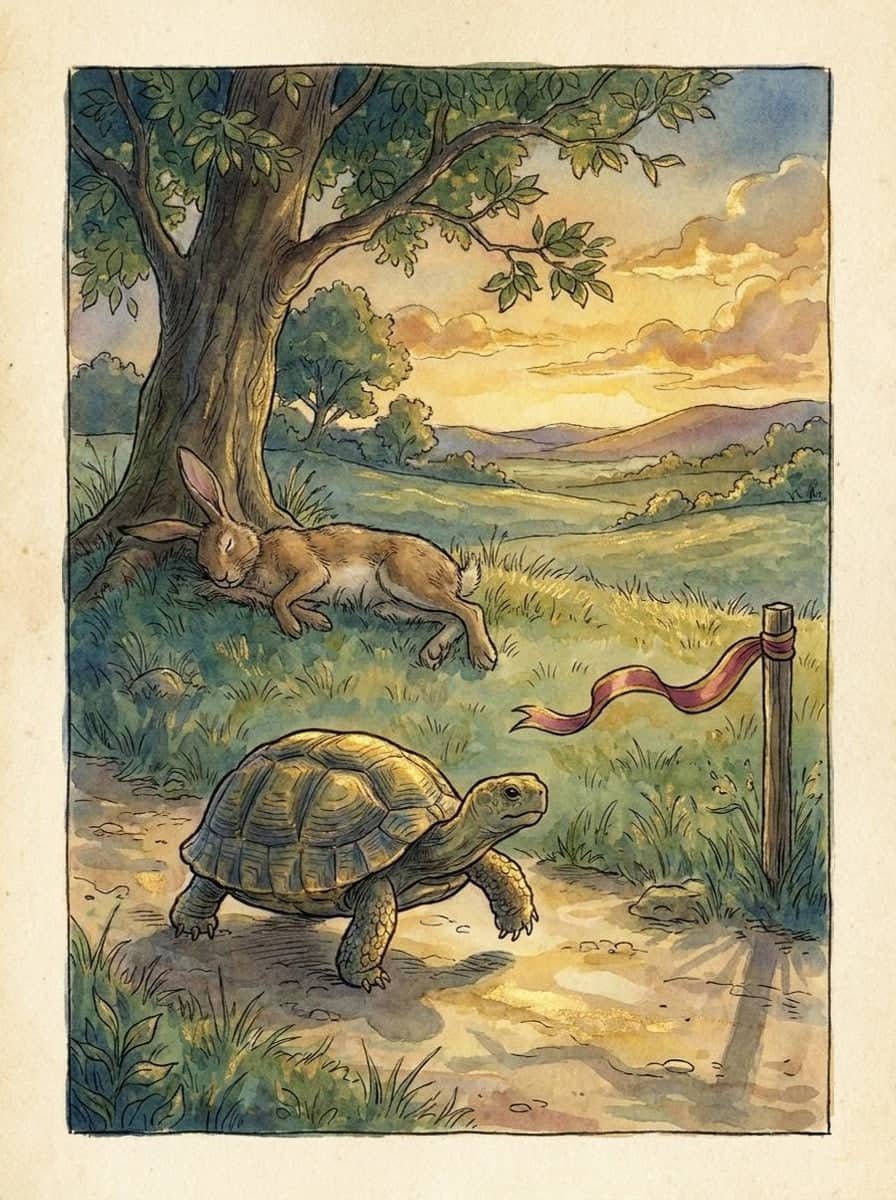
The Tortoise and the Hare
2 min readages 4 and up
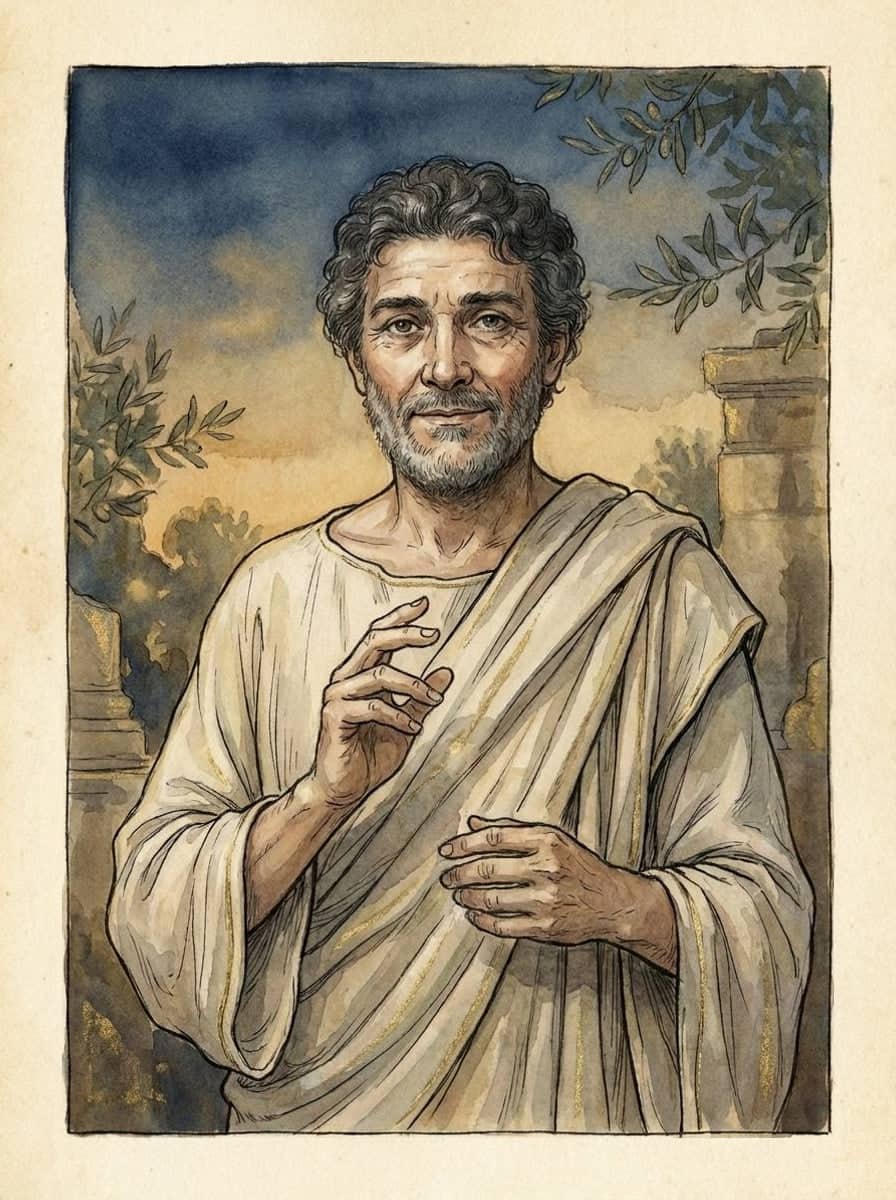
620–564 BC
Aesop is the name attached to several hundred short stories about animals, and it may never have belonged to a real person. Ancient writers place him in the sixth century BC and call him a slave; Herodotus says he belonged to a man of Samos and was killed by the people of Delphi. He wrote nothing down, and no text of his has ever existed.
The fables came down in prose and in verse alike. Phaedrus put them into Latin verse in the first century AD, Babrius into Greek verse in the second, and Greek prose collections were copied alongside both. Much later, in France, La Fontaine turned them into poems that schoolchildren still learn by heart, and every century since has retold Aesop in its own words.
A much later anonymous romance, the Life of Aesop, gave him a hunched back and a tongue that would not work until a goddess loosened it. That book is fiction rather than evidence, even though Aesop tells several of his fables in it.
16 fables
2 min readages 4 and up
1 min readages 3 and up
2 min readages 4 and up
2 min readages 4 and up
2 min readages 3 and up
1 min readages 3 and up
1 min readages 4 and up
1 min readages 4 and up
2 min readages 5 and up
2 min readages 4 and up
2 min readages 4 and up
1 min readages 4 and up
2 min readages 3 and up
1 min readages 4 and up
2 min readages 4 and up
2 min readages 4 and up