Skip to content
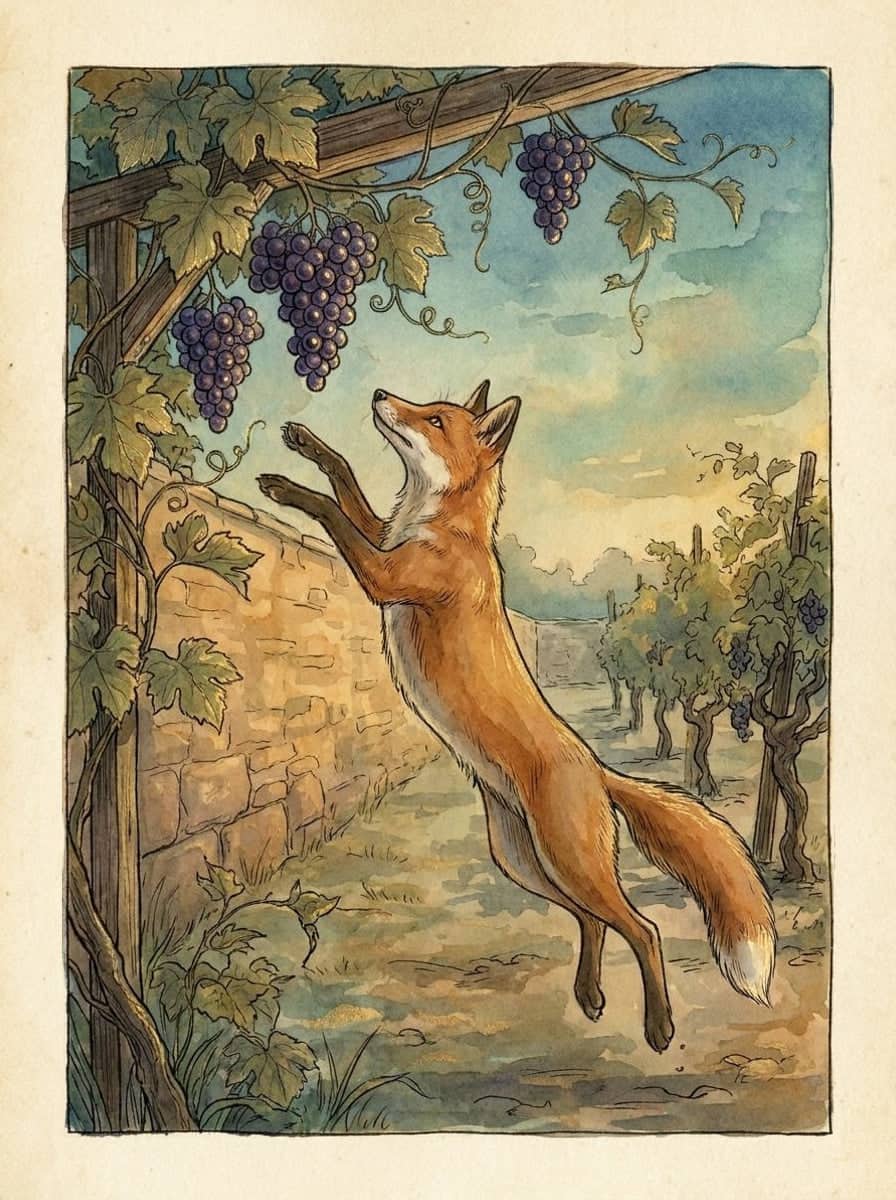
A red fox leaps upward on a vineyard path, forepaws reaching for grapes on a high trellis, a stone wall and rows of vines behind him.

The Fox and the Grapes

Aesop

1 min readages 3 and up

One afternoon a fox spots grapes high over a garden wall and jumps again and again but never reaches them. He shrugs it off as though nothing had happened, walks away down the path, and decides those grapes are sour after all.


One warm afternoon a hungry fox came along a garden wall and saw grapes hanging above him, bunch after heavy bunch, dark and shining on a vine that had been trained across a high trellis.

He sat back, gathered himself, and jumped. His nose came close, but the grapes stayed exactly where they were. He tried again, harder. He tried a third time, higher still, until his legs ached and the dust rose around him in a little cloud.

They were simply out of reach.

So the fox stopped jumping. He shook the dust from his coat, lifted his head, and set off down the path as though nothing at all had happened.
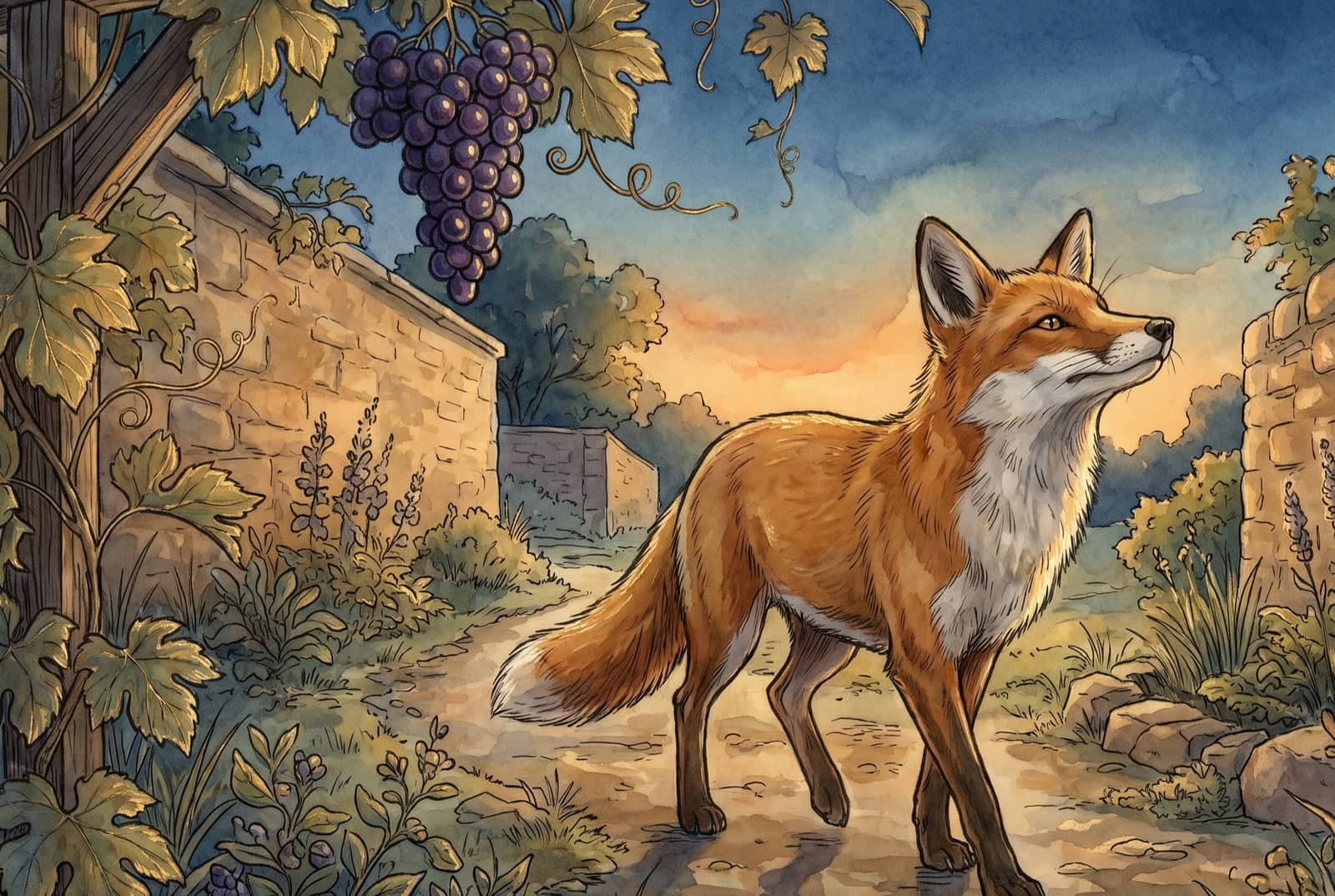
The fox walks away down the garden path, head held high, unhurried, as grapes still hang untouched on the vine behind him in the fading evening light.

“I thought those grapes were ripe,” he said. “Now I can see they are sour.”

Retold by Talerie from Aesop’s Fables: a new translation (opens in a new window)License: Public domain

Similar tales

About this fable

The Fox and the Grapes belongs to the fables told under Aesop’s name. In Émile Chambry’s edition it is Greek prose: a hungry fox sees bunches of grapes hanging, wants them, cannot get them, and goes away saying to itself, in Chambry’s French, “C’est du verjus.” There is also a version in Latin verse by Phaedrus.

Our English text retells the fable as V. S. Vernon Jones translated it; in his book it comes first. His fox jumps as high as he can, gives up and walks off “with an air of dignity and unconcern”, calling the grapes quite sour. We turn his single paragraph into five and add a moral, which he does not give.

The fable in two English texts

Vernon Jones (1912)Jacobs (1894)
Settinga vine on a high trellisa hot summer’s day, an orchard
The foxhungrythirsty
The attemptjumps as high as he canjumps up “with a One, Two, Three”
Walking awaywith dignity and unconcernwith his nose in the air
Last wordsthought them ripe, sees they are quite sour“I am sure they are sour”
Moralnoneeasy to despise what you cannot get
Show more
Now I can see they are sour.
V. S. Vernon Jones, 1912: I thought those Grapes were ripe, but I see now they are quite sour.

How our retelling tells it

Our fox comes along a garden wall one warm afternoon and sees the grapes on a vine trained across a high trellis; the afternoon and the wall are our additions. He jumps three times, the last time until his legs ache and the dust rises around him, whereas Vernon Jones does not count the tries. Then the fox shakes the dust from his coat, sets off down the path as though nothing had happened, and says that the grapes he thought ripe are sour.

Nothing in the story should worry a child: the fox is neither punished nor laughed at; he simply walks away. Vernon Jones ends on the fox’s words, so the moral printed below our text, “What we cannot get, we are quick to decide we never wanted”, is ours.

Phaedrus, La Fontaine and the sour grapes

In Phaedrus’s Latin verses the fox leaps for the grapes with all its strength before declaring “Nondum matura est; nolo acerbam sumere”. La Fontaine’s fox, “gascon, d’autres disent normand”, calls the grapes “trop verts”, and La Fontaine’s closing line asks whether that was not better than complaining. Both foxes say the grapes are not ripe, and Chambry renders the Greek fox’s words as “C’est du verjus”; among the fable texts we read, only the English ones call them sour. Joseph Jacobs wrote that the English expression “The grapes are sour” comes from this fable. George Fyler Townsend’s translation calls the fox “she”.

Vernon Jones’s book also holds The Fox and the Crow and The Fox and the Stork, both on our site, but each has a different fox and a story of its own.

Sources

Period texts

Commentary

Catalogue

Claims checked against these sources on October 14, 2026.

Coloring pages to print

Where else to find this fable