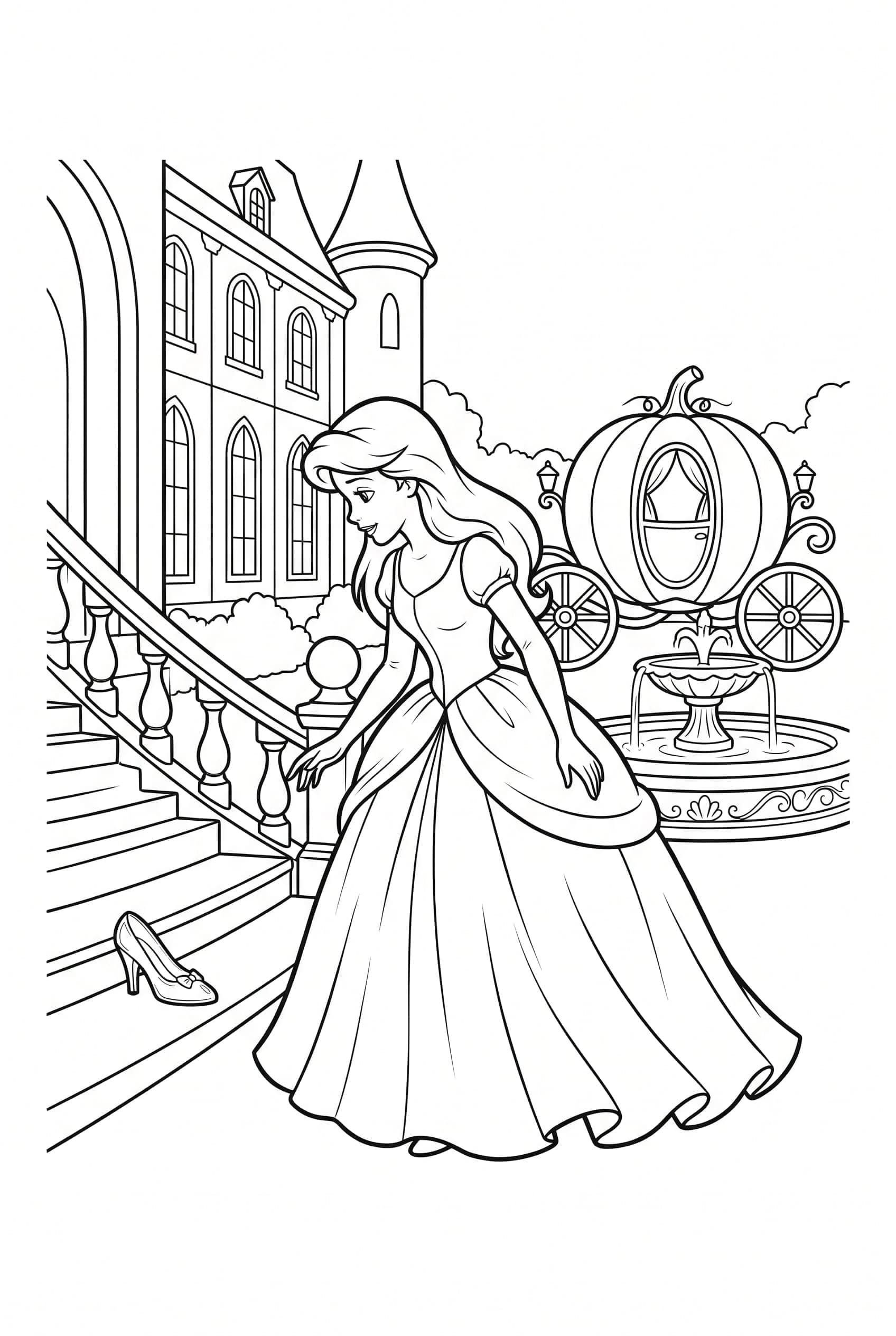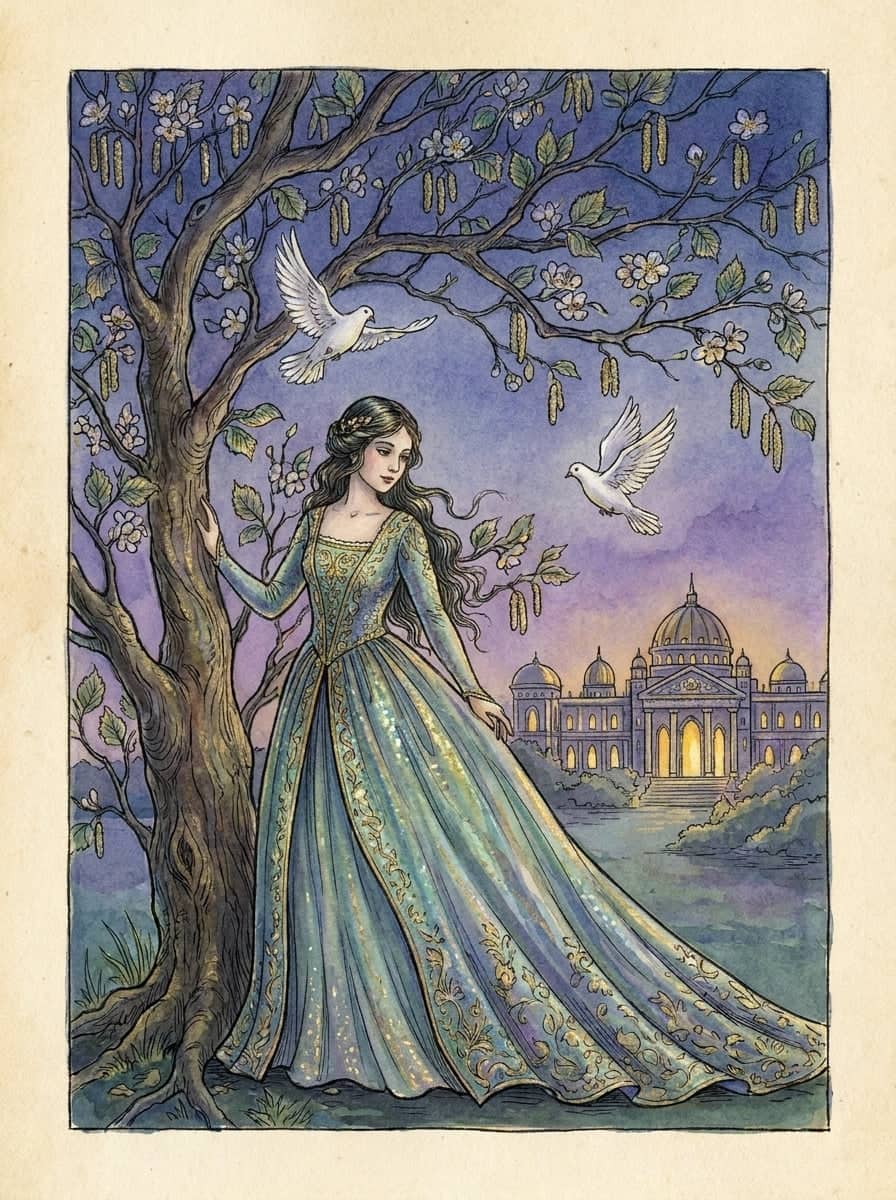
A grieving girl endures her cruel stepmother and two vain stepsisters while a bird in a wishing tree dresses her for three days of dancing with the king’s son. When the golden slipper fits only her foot, he knows her as his true bride, and on their wedding day two doves blind her lying sisters for their spite.
A rich man’s wife fell ill, and when she felt her end was near she called her only daughter to her bedside. “Stay good and kind, dear child,” she said, “and I shall look down on you from heaven.” Then she closed her eyes and was gone.
Every day the girl went to her mother’s grave and wept, and she stayed good and kind. Snow covered the grave, and when the spring sun had drawn it off, her father took another wife.
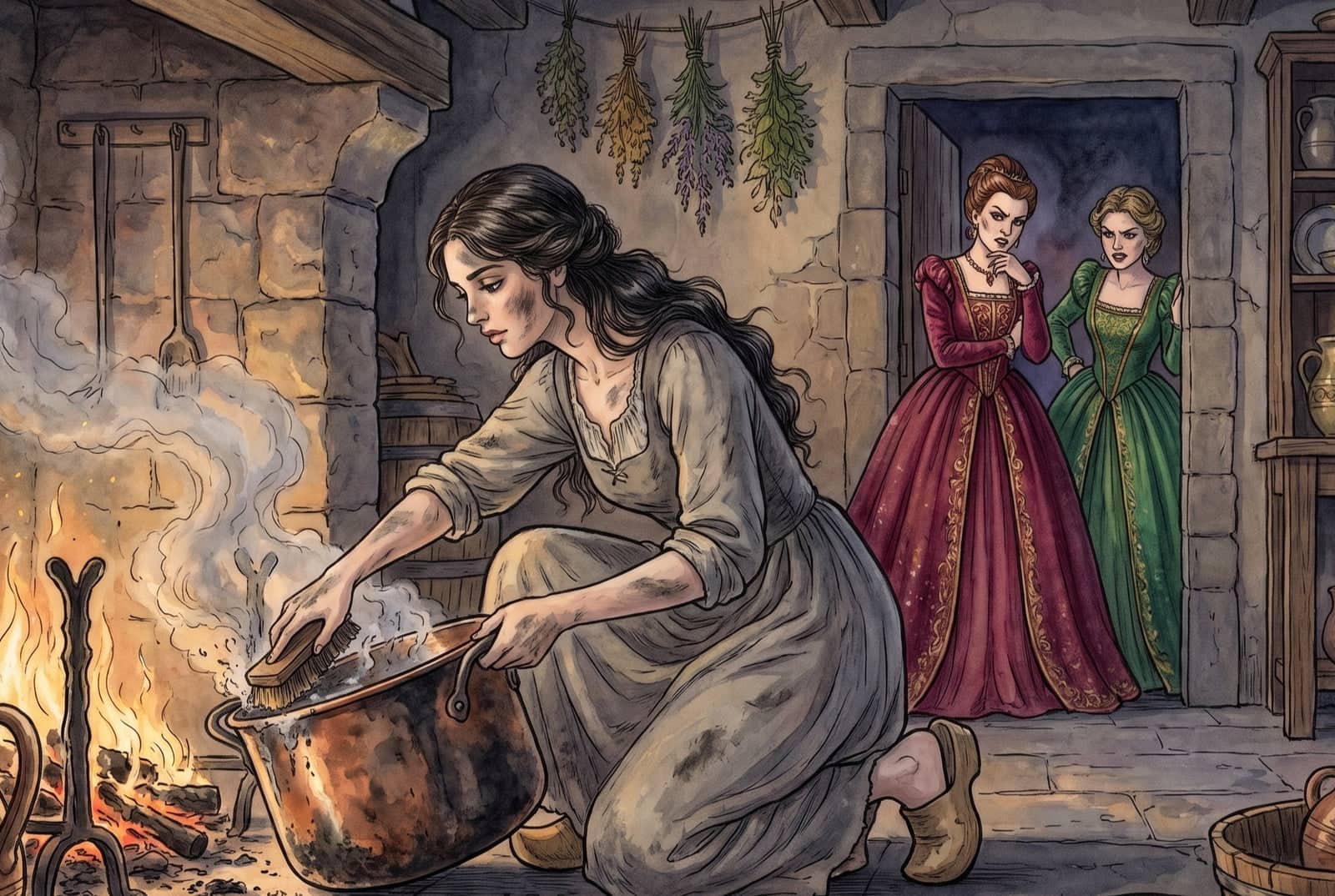
The new wife brought two daughters, fair of face and hard of heart. “Is the silly goose to sit in the parlor with us?” they said. “Whoever wants bread must earn it. Out with the kitchen maid.” They took her pretty clothes and gave her a gray gown and wooden shoes.
She worked from morning until night, carrying water, lighting fires, cooking and washing, and the sisters tipped peas and lentils into the ashes for her to pick out again. At night she had no bed but the hearth, and she looked so dusty and gray that they called her Cinderella.
One day her father was going to the fair, and asked the girls what he should bring them.
“Beautiful dresses,” said the first.
“Pearls and jewels,” said the second.
“Father,” said Cinderella, “break off for me the first branch that brushes your hat on the way home.”
He bought the dresses and the jewels, and on the way home a hazel twig knocked his hat off. He broke off that branch and brought it back, and each girl had what she had asked for.
Cinderella planted her branch on her mother’s grave and wept so much that her tears watered it, and it grew into a fine tree. Three times a day she sat beneath it and prayed, and a little white bird always came and threw down whatever she wished for.
Then the king announced a festival of three days, at which his son was to choose a bride. “Comb our hair, brush our shoes and fasten our buckles,” the sisters told Cinderella. “We are going to the palace.” She obeyed, but wept, for she longed to go too, and begged her stepmother to let her.
“You, Cinderella?” said the stepmother. “You are covered in dust and ashes, you have no dress and no shoes, and you want to dance!” But the girl kept asking, until the stepmother emptied a dish of lentils into the ashes. “Pick these out in two hours and you shall come.”
Cinderella went out to the garden and called:
Come, tame pigeons and turtledoves,all you birds beneath the sky:the good ones in the pot,the bad ones in the crop.
Two white pigeons flew in at the kitchen window, then the turtledoves, and at last all the birds beneath the sky. They settled among the ashes and began, pick, pick, pick, pick, and within the hour the dish was full and away they flew.
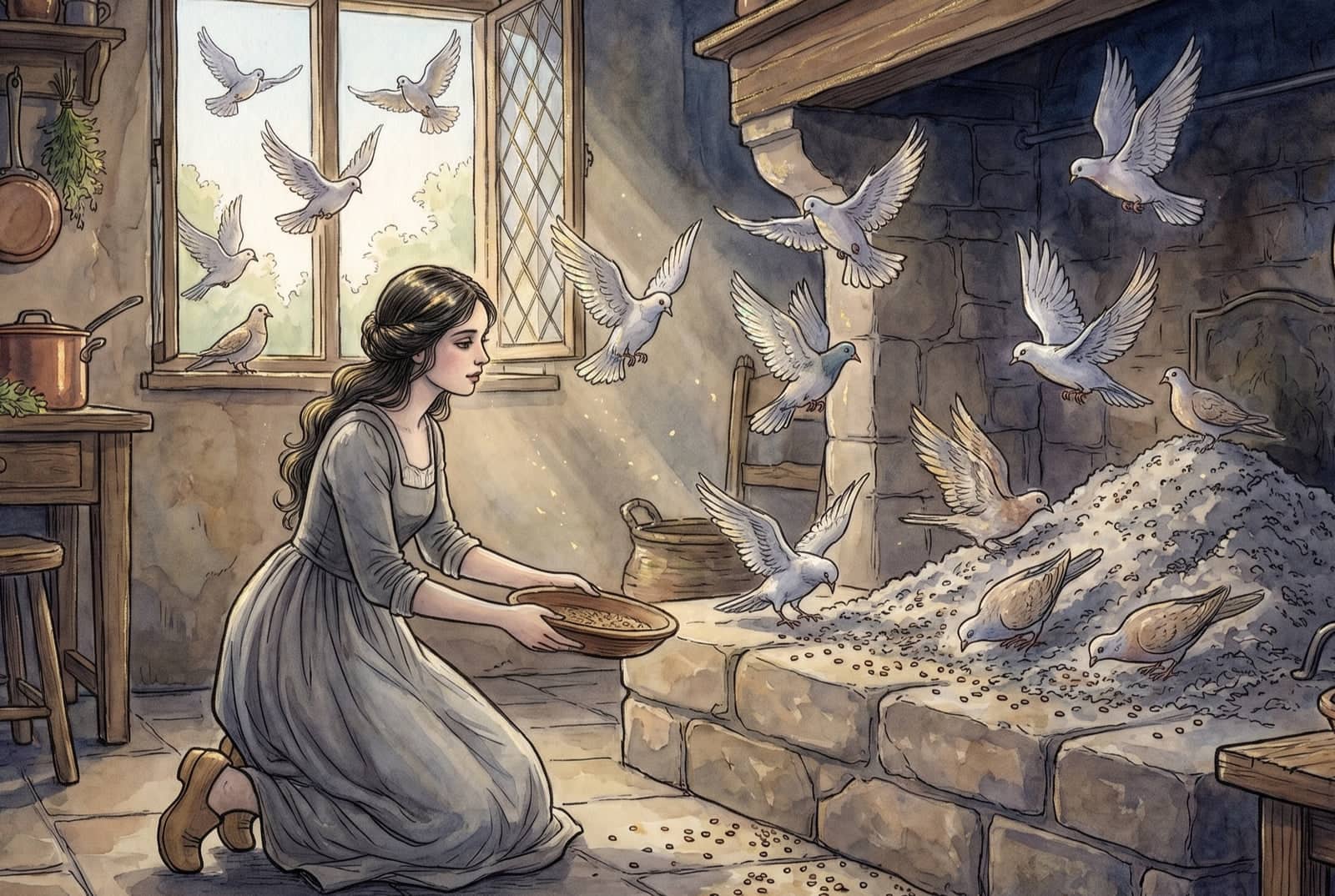
But when Cinderella brought the dish, the stepmother emptied two more into the ashes. “Pick these out in one hour and you shall come,” she said, certain it could not be done.
Cinderella went out to the garden and called:
Come, tame pigeons and turtledoves,all you birds beneath the sky:the good ones in the pot,the bad ones in the crop.
Again the birds came whirring in, and before half an hour had passed the ashes were picked clean and the dishes were full. But the stepmother said, “You have no dress, you cannot dance, and we would be ashamed of you,” and hurried off with her two proud daughters.
When the house was empty, Cinderella went to the grave under the hazel tree and called:
Shiver and quiver, little tree,throw gold and silver down on me.
The bird threw down a dress of gold and silver and slippers stitched with silk. Cinderella dressed and went to the festival, and nobody knew her; her sisters took her for a princess from far away. The king’s son would dance with no one else, and to all who asked her he said, “This is my partner.”
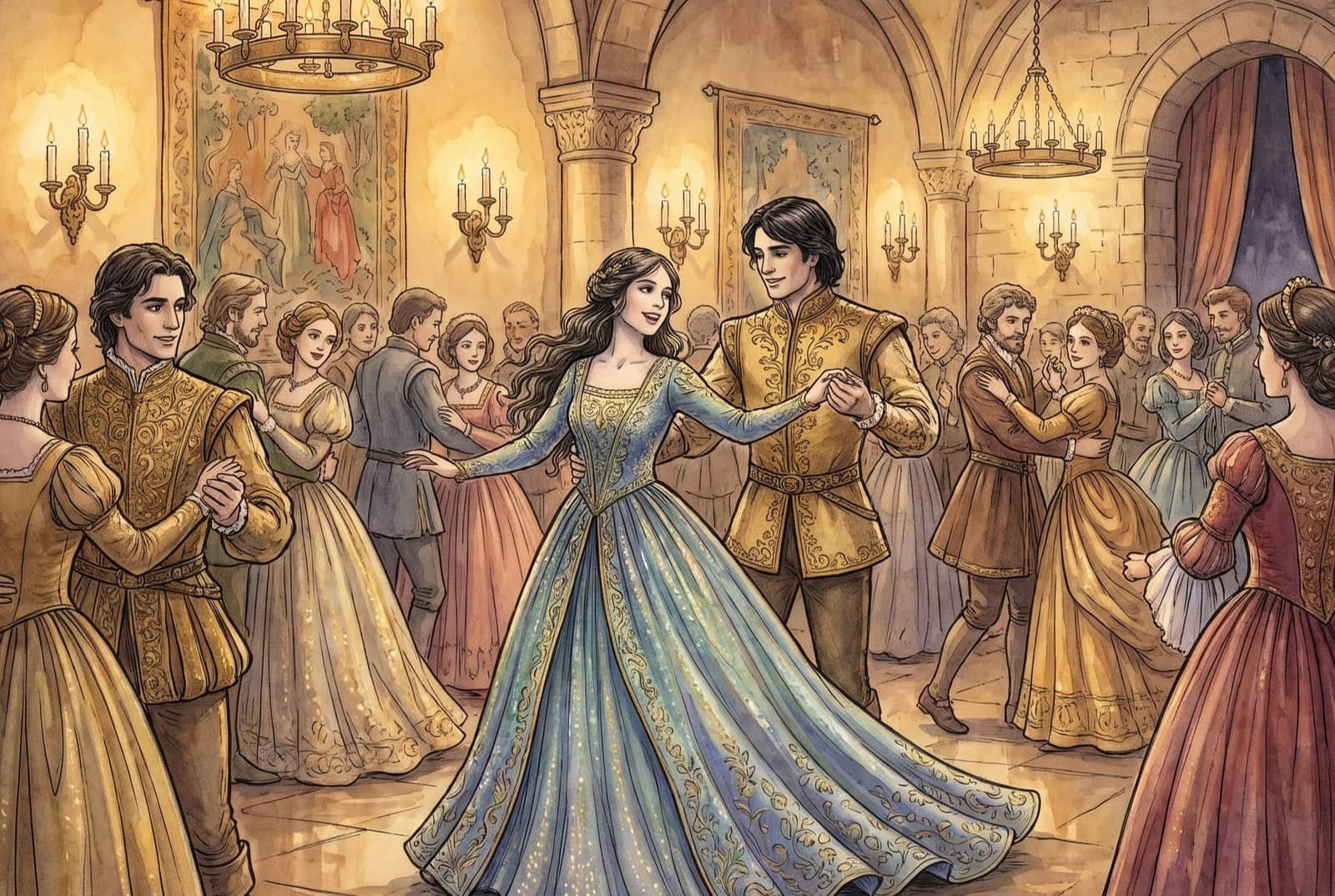
She danced until evening and then wanted to go home. “I will see you home,” said the king’s son, but she slipped away into the dovecote. He told her father, who wondered whether it could be Cinderella and broke it open with an axe, but nobody was inside: she had climbed down at the back, left the fine clothes on the grave for the bird, and was lying in the ashes again.
The next day, when the others had gone, Cinderella went to the hazel tree and said:
Shiver and quiver, little tree,throw gold and silver down on me.
The bird threw down a finer dress still, and everyone wondered at her beauty. The king’s son danced with her alone. “This is my partner,” he said to all who asked. In the evening he followed her, but she sprang into the garden and climbed a tall pear tree like a squirrel. The king’s son told her father, who had the tree cut down, but she had jumped from the far side, given the dress back to the bird, and was lying among the ashes as usual.
On the third day Cinderella went once more to the grave and said to the little tree:
Shiver and quiver, little tree,throw gold and silver down on me.
This time the dress was more splendid than any before, and the slippers were of pure gold. No one could speak for wonder, and the king’s son danced with her alone. “This is my partner,” he said to all who asked.
When evening came she got away so quickly that he could not follow. But he had used a trick: the staircase was brushed with pitch, and as she ran down it her left slipper stuck fast. He picked it up, small and dainty and all of gold.
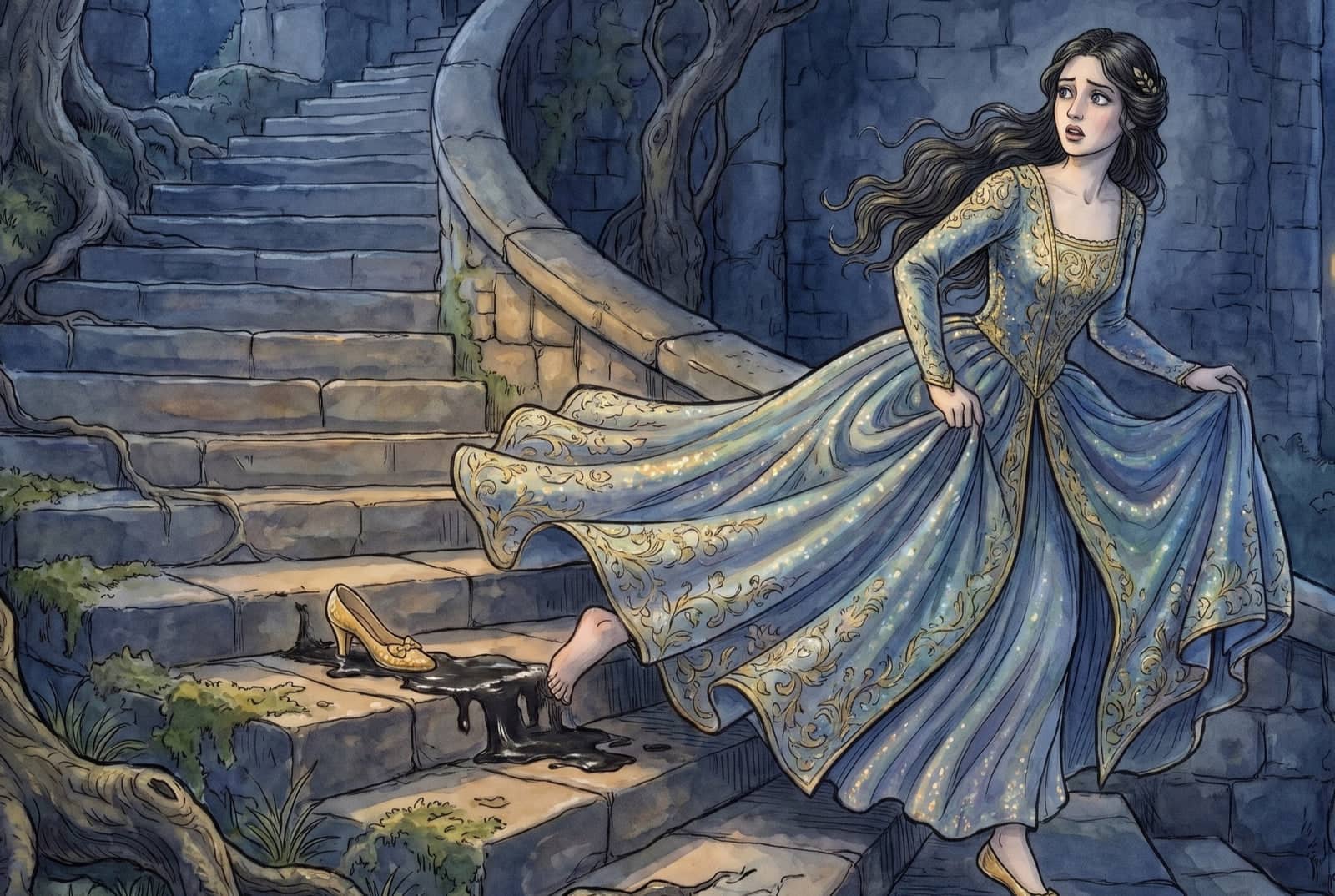
The next morning he went with it to her father. “No one shall be my wife but the woman whose foot this golden slipper fits.”
The sisters were glad, for they had pretty feet. The elder took the shoe to her room, but could not get her big toe in. Her mother handed her a knife. “Make the foot fit. When you are queen you will never need to walk again.” She bore the pain without a sound, and the king’s son set her on his horse and rode away past the grave, where two doves called:
Coo and peep, coo and peep,there’s blood inside the shoe.The shoe is far too small for her,the true bride waits for you.
He looked down at her foot, saw that the doves were right, and took the false bride back again. The other sister got her toes in, but her heel was too large, and her mother handed her the same knife with the same words. She too bore the pain in silence, and the king’s son set her on his horse; as they rode past the hazel tree the doves called again:
Coo and peep, coo and peep,there’s blood inside the shoe.The shoe is far too small for her,the true bride waits for you.
He looked down, saw that the doves were right once more, and took this false bride back too. “This is not the right one either,” he said. “Have you no other daughter?”
“No,” said the man. “There is only a little kitchen maid my late wife left behind, but she could never be the bride.”
“Send her up to me,” said the king’s son.
“Oh no,” said the stepmother. “She is far too dirty to be seen.”
But he insisted, and Cinderella had to be called. She washed her hands and face, came in and bowed, and he held out the golden shoe. She drew her foot from the heavy wooden shoe and slipped it into the slipper, and it fitted as though made for her. When he looked into her face he knew her at once.
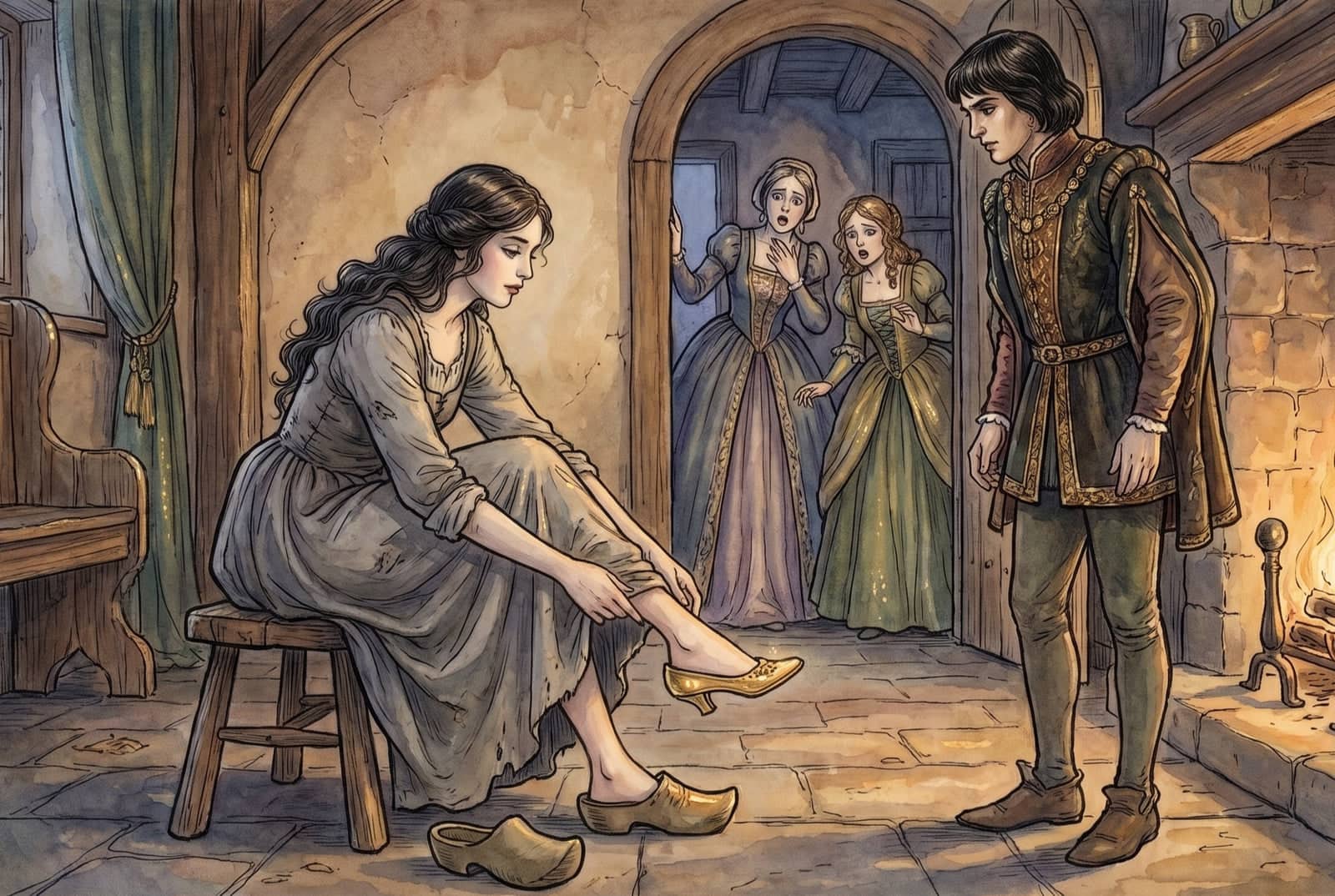
“That is the true bride!” he cried.
The stepmother and the sisters went pale with anger, but he set Cinderella on his horse and rode away. As they passed the hazel tree, the doves called:
Coo and peep, coo and peep,no blood inside the shoe.The shoe is not too small for her,the true bride rides with you.
Then they came flying down and settled on Cinderella’s shoulders, one on the right and one on the left, and there they stayed.
On the wedding day the false sisters came too, hoping to share Cinderella’s good fortune. But as the bride and groom walked to the church the doves flew at the two sisters, and by the time the wedding was over neither of them could see. So, for their spite and their lies, they were blind all their lives.
Retold by Talerie from Household Tales by Brothers Grimm (opens in a new window)Public domainCopy this text, adapt it, use it however you like. A link back to Talerie is appreciated but never required.CC0 1.0 (opens in a new window)