The Tale of the Bamboo Cutter
15 min readages 6 and uptalerie.com/en/tales/the-tale-of-the-bamboo-cutter
An old bamboo cutter finds a tiny shining girl inside a bamboo, and she grows into Princess Kaguya, who refuses five suitors and the Emperor. Once her people have carried her off to the moon, the Emperor sends her letter and the Elixir of Life to Mount Fuji, where his men burn them.
Long, long ago there lived an old bamboo cutter. He was very poor, and sad too, because he and his wife had never had a child to brighten their old age. Every day he cut bamboo in the hills, and the two of them made it into baskets and other things to sell.
One morning, as he worked, the whole grove was suddenly flooded with a soft, bright light, as if the full moon had risen over the spot. The light was streaming from a single bamboo. The old man dropped his axe and went closer. Inside the hollow stem stood a tiny girl only three inches tall, more beautiful than anything he had ever seen.
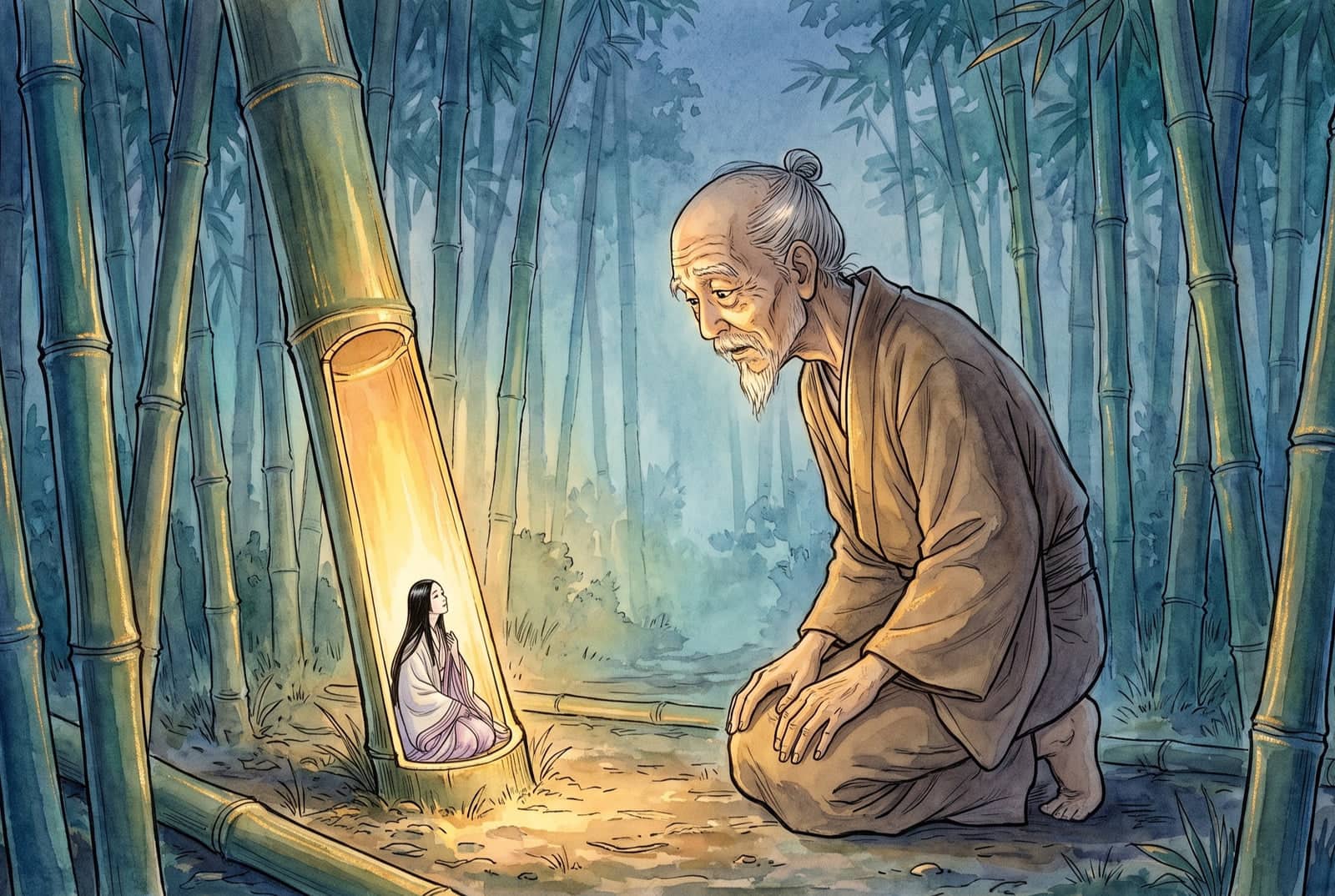
“You must have been sent to be my child,” he said, “for I have found you among the bamboos, where I work every day.”
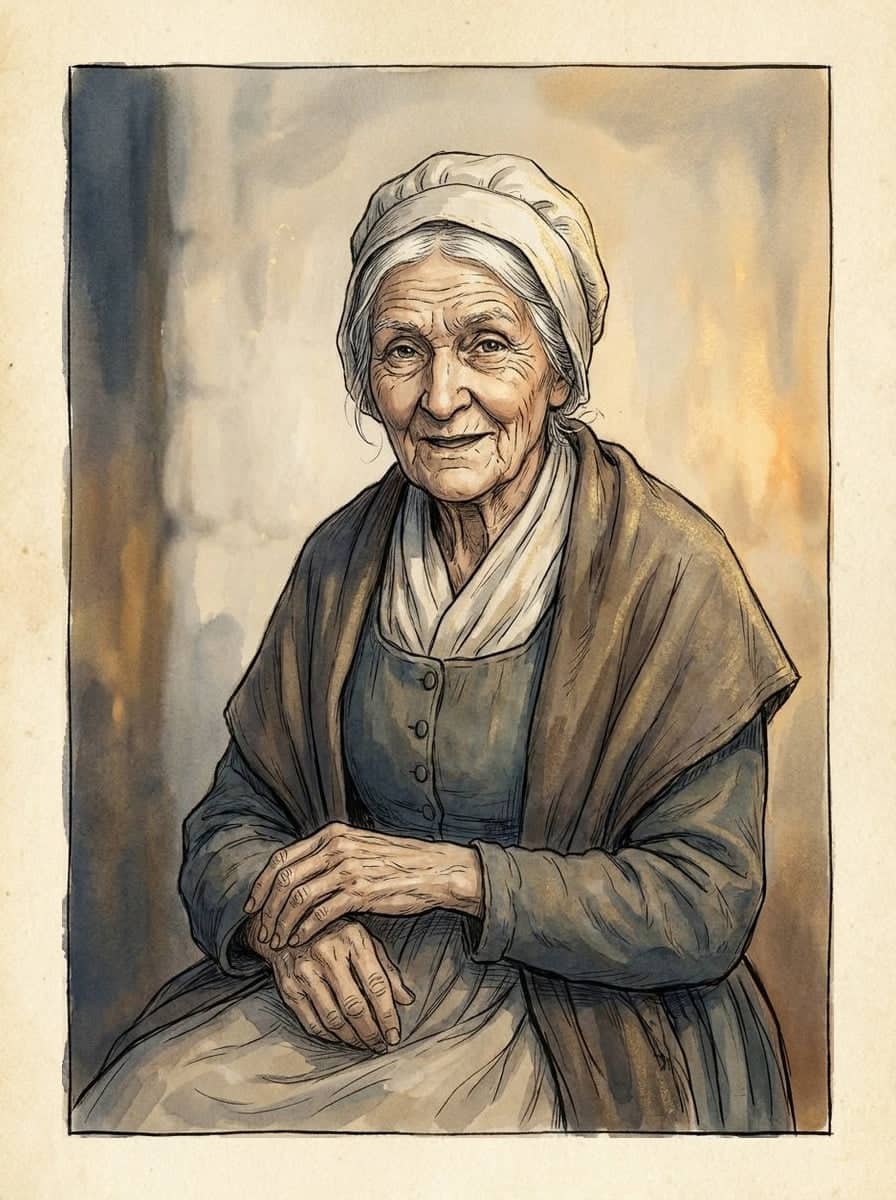
He carried her home in his hand, and his wife laid her in a basket to keep her safe from the slightest harm. All their lives they had longed for a child, and now they poured all the love of their old age on this little girl.
From that day on, the old man often found gold hidden in the bamboos he cut, and precious stones as well. Little by little he grew rich, built a fine house, and was no longer the poor bamboo cutter but a wealthy man.
In just three months the bamboo child grew into a young woman. Her foster parents dressed her in beautiful kimonos and kept her behind the screens like a princess. She seemed to be made of light: a soft shining filled the house, so that even at night it was as bright as day. Whenever the old man felt sad, he had only to look at her and his sorrow was gone.
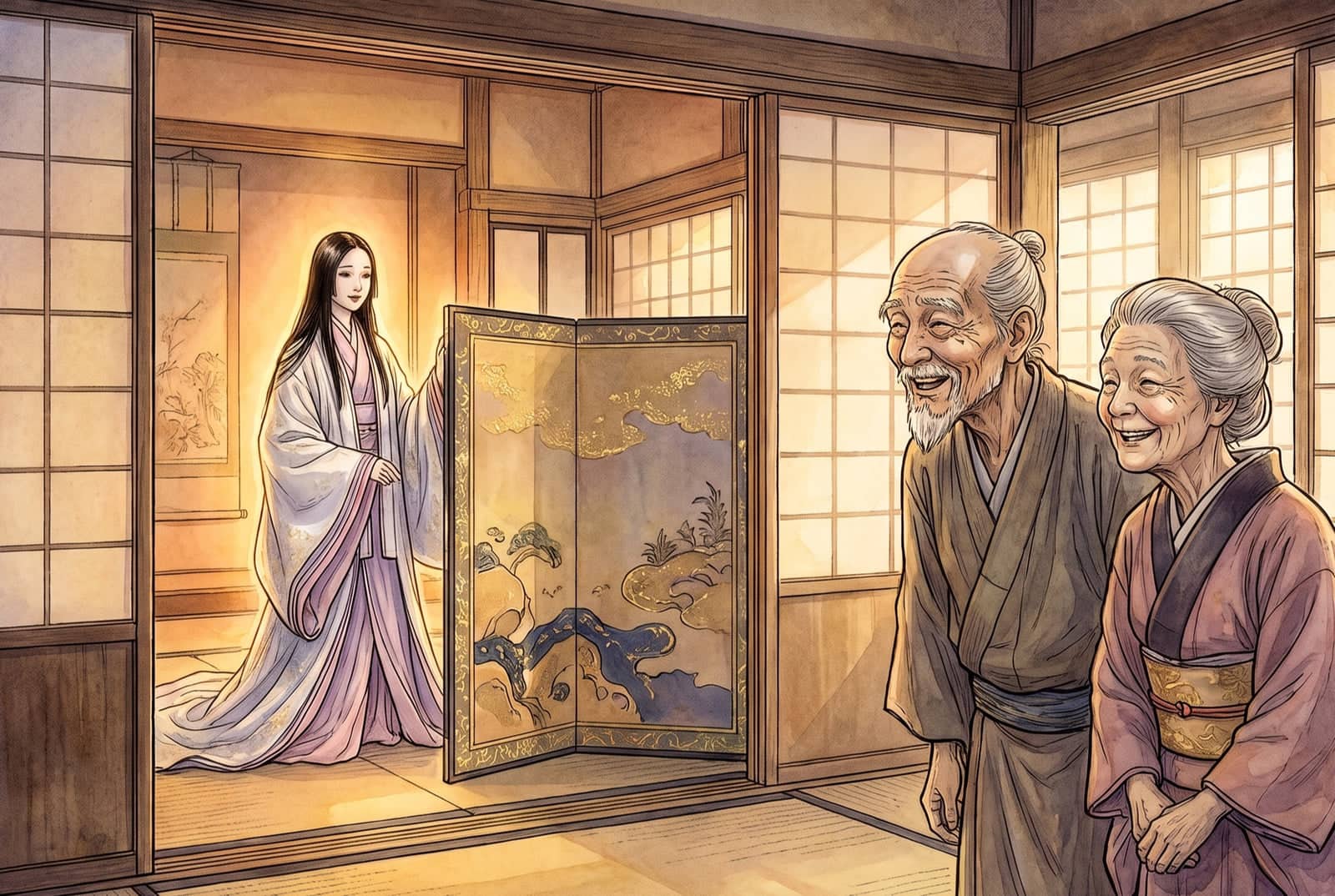
A famous name-giver called her Princess Kaguya, the Shining Princess, because her body gave out such a soft, bright light that she might have been a daughter of the moon. Her fame spread far and wide, and many men longed to marry her, or even just to catch sight of her.
Suitors stood outside the house day and night and peered through holes in the fence, hoping for a glimpse of her, but all for nothing. In the end most of them gave up and went home. Only five knights stayed. Through the winter and through the scorching summer they waited, in sunshine and in rain, writing her letters and poems that she never answered.
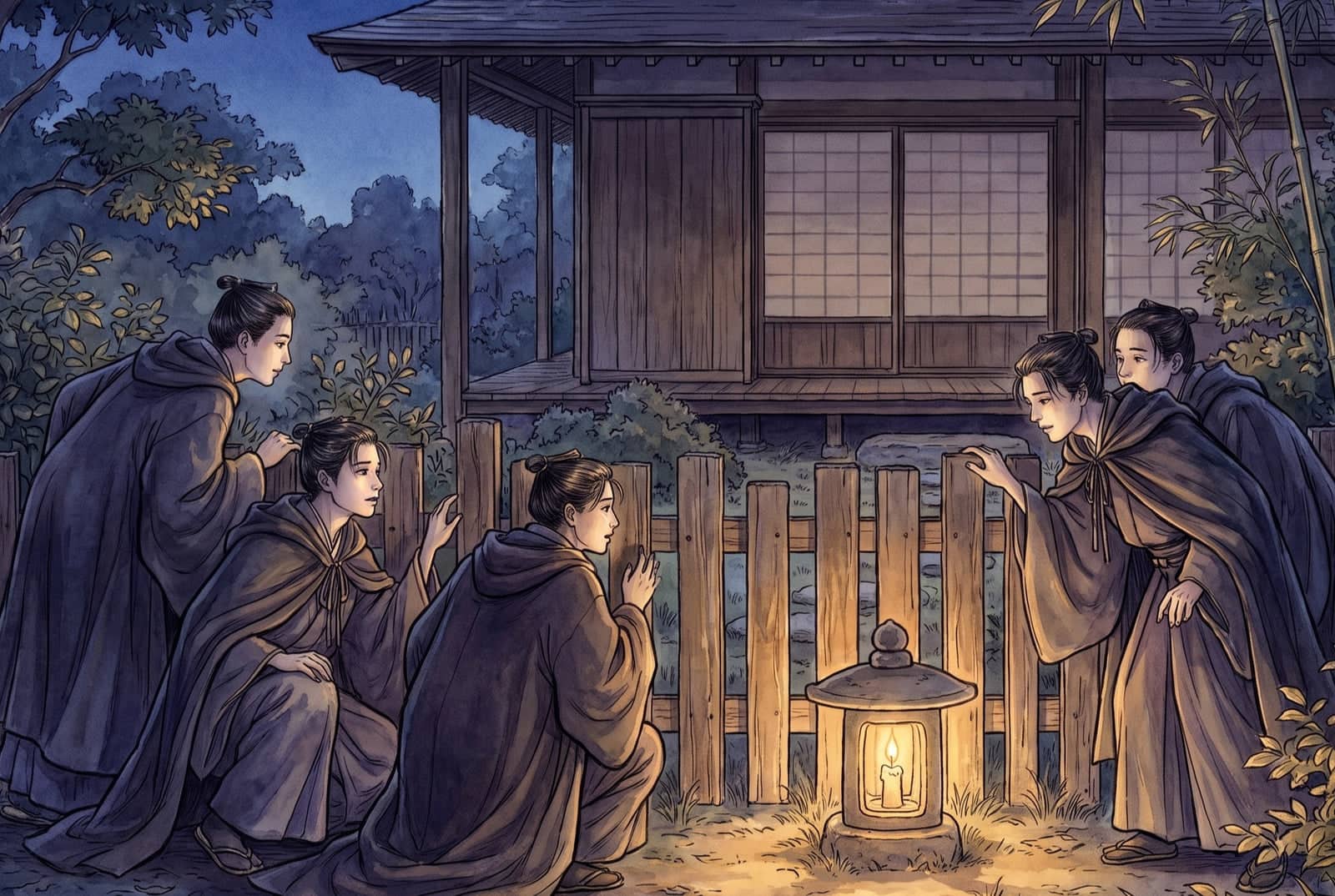
At last they begged the old man to let them see her. He told them that since he was not her real father, he could not make her do what she did not want to do. But in his heart he felt sorry for them, and he would have liked to see her married to one of them. So he went in to her.
“You have always seemed to me like someone from heaven,” he said, “yet I have brought you up as my own child. Will you refuse to do as I ask?”
The Princess said there was nothing she would not do for him, for she loved him as her own father.
“I am past seventy,” said the old man, “and my end may come at any time. While I live, you may stay as you are. But when I am gone, who will take care of you? So I beg you, meet these five brave men and choose one of them.”
“Oh, why must I?” cried the Princess. “I have no wish to marry.”
She said a man who married her without really knowing her might have a change of heart afterwards. But the old man reminded her how long the five had waited, going without food and sleep, and asked what more she could want. At last she agreed. Each of them must bring her something she wished for from a faraway land, and she would marry whichever one succeeded.
That evening the five suitors came and played their flutes beneath her windows. The old man gave them her message, and they all agreed, for the trial would stop any jealousy among them. Then the Princess sent word of what each must bring.
The first knight was to bring her the stone bowl that had belonged to the Buddha in India.
The second was to bring a branch from the wonderful tree on Mount Horai in the Eastern Sea, whose roots were silver, whose trunk was gold, and whose fruit were white jewels.
The third was to bring the skin of the fire-rat of China.
The fourth was to bring the jewel that shone in five colors on the head of a dragon.
The fifth was to bring the shell that a certain swallow carried inside it.
The old man thought these tasks far too hard, but the Princess would set no others. When the five knights heard them, they went home in despair. Yet after a while their love came back, and each made up his mind to try.
The first knight did not have the courage for the long, dangerous journey to India. Instead he bought an ordinary stone bowl from a temple in Kyoto, wrapped it in cloth of gold, waited quietly for three years, and then brought it to the house.
The Princess unwrapped it, expecting it to fill the room with light, but it did not shine at all. So she knew it was a fake, and she sent it straight back. The knight threw the bowl away and gave up all hope of winning her.
The second knight sent word that he was sailing for Mount Horai. But after three days at sea he landed, had a house built that no one could get into, and shut himself up in it with six skilled jewelers. Together they made a branch of gold and silver that would pass for one from the wonderful tree.
When it was finished, he made himself look worn out from traveling and brought the branch to the house in a lacquer box. The old man was completely taken in and praised it as a treasure found nowhere in the land. But the Princess looked at it carefully and said, sadly, that no one could have fetched a branch from Mount Horai so quickly, and she believed it was man-made.
So the old man asked the knight where he had found it, and the knight made up a long story.
“Two years ago I set sail for Mount Horai,” he said. “A great storm blew us onto an island full of demons, who threatened to eat me, but I made friends with them and they helped us mend the boat. Our food ran out, and many of us fell sick.
“At last, on the five hundredth day, I saw a mountain rising from the sea. On the beach a shining being came toward me, holding a golden bowl. I asked him if I had found Mount Horai, and he answered, ‘Yes, this is Mount Horai!’
“I climbed to the top, and there stood the golden tree with its silver roots. I broke off this branch and hurried back, and it has taken me four hundred days. My clothes are still damp from the sea, I was in such a hurry to bring it to the Princess.”
Just then the six jewelers arrived at the house. The knight had never paid them, so they asked the Princess for their wages. They had worked for more than a thousand days, they said, on the golden branch with its silver twigs and jeweled fruit, and had not been paid a single coin.
So the trick was found out. The Princess sent back the branch and paid the jewelers generously herself. But on their way home the angry knight caught up with them and set upon them for giving away his secret, and they barely escaped. Then he went off, furious and without hope, to live alone in the mountains.
The third knight had a friend in China, and he paid him a great deal of money for the skin of the fire-rat, which no fire can harm. The knight sent it to the Princess in a box and waited outside for her answer.
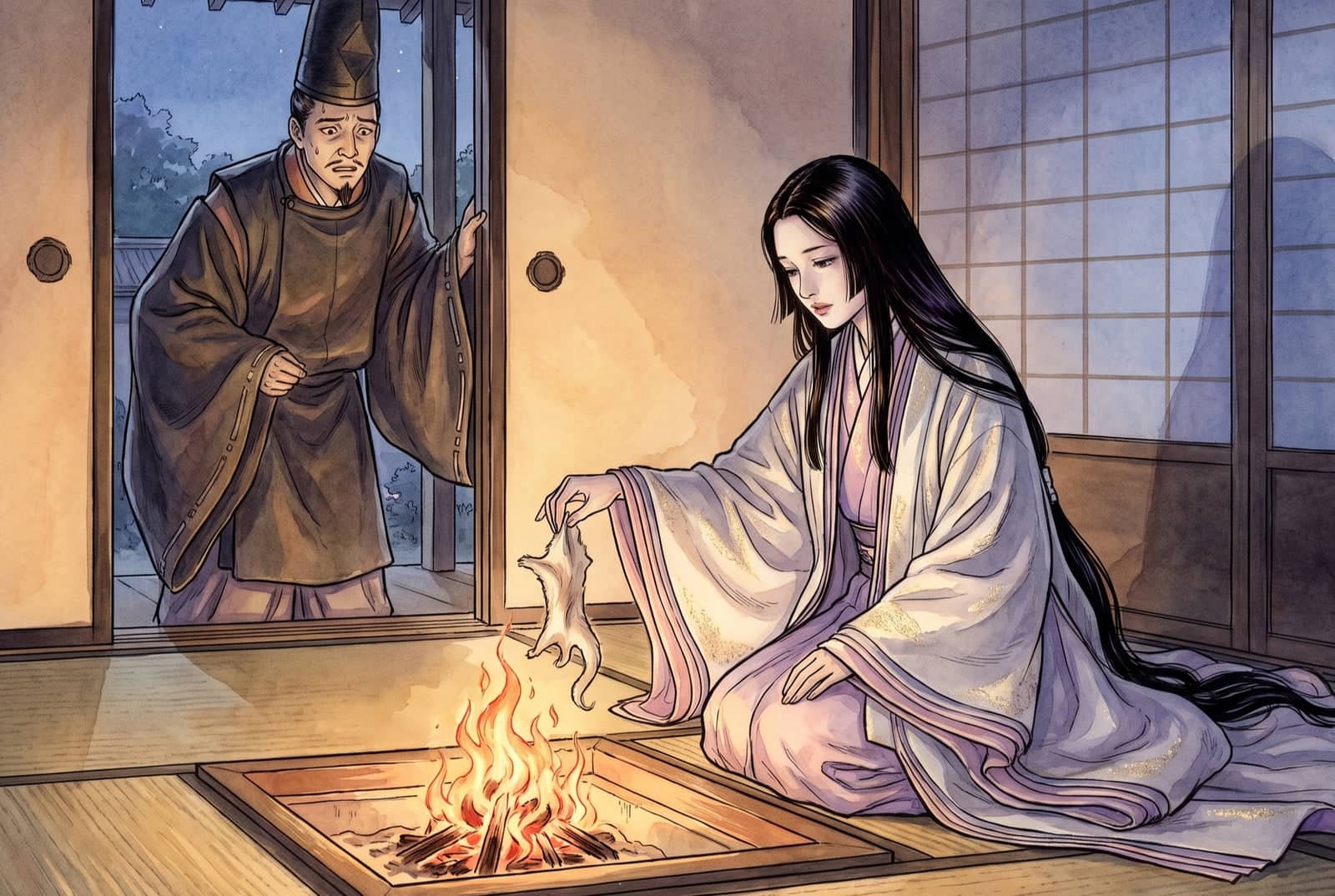
The Princess said she must first test it, for if it were real it would not burn. She opened the box and threw the skin into the fire. It crackled and burned up at once. So the third knight had not kept his word either.
The fourth knight was no braver than the rest. He sent his servants to find the dragon and ordered them not to come back without the jewel. But they thought the order impossible and simply went off on vacation instead, grumbling about their master. Meanwhile he was so sure of winning the Princess that he had his house decorated to welcome her.
After a whole year of waiting, he hired a ship and set out himself. A few days out, a great storm struck, and it lasted so long that he gave up on the dragon altogether. When at last the ship was blown ashore, he took to his bed with a terrible cold and a swollen face.
As he lay there, his love turned to anger. Perhaps, he thought, the Princess had wanted him dead, and that was why she had sent him on such an impossible quest. He told his servants he was sick of adventures and would never go near her house again.
And like all the others, the fifth knight failed too. He never found the swallow’s shell.
By now the fame of the Princess’s beauty had reached the Emperor, and he sent a lady of the court to fetch her to the palace. But the Princess would not even see the lady, and told the old man that if she were forced to go to the palace, she would vanish from the earth.
So the Emperor decided to see her for himself. He arranged a hunt near the bamboo cutter’s house, rode ahead of his followers, and went straight in to where the Princess sat.
He had never seen anyone so beautiful. She shone in her own soft light, and he could not take his eyes off her. She tried to slip away, but he caught hold of her and begged her to come to court, where she would have everything she could wish for. He was about to send for a palace carriage to take her away at once.
But the Princess stopped him. If she were forced to go, she said, she would turn into a shadow. Even as she spoke, her shape began to fade, and she grew dimmer and dimmer before his eyes.
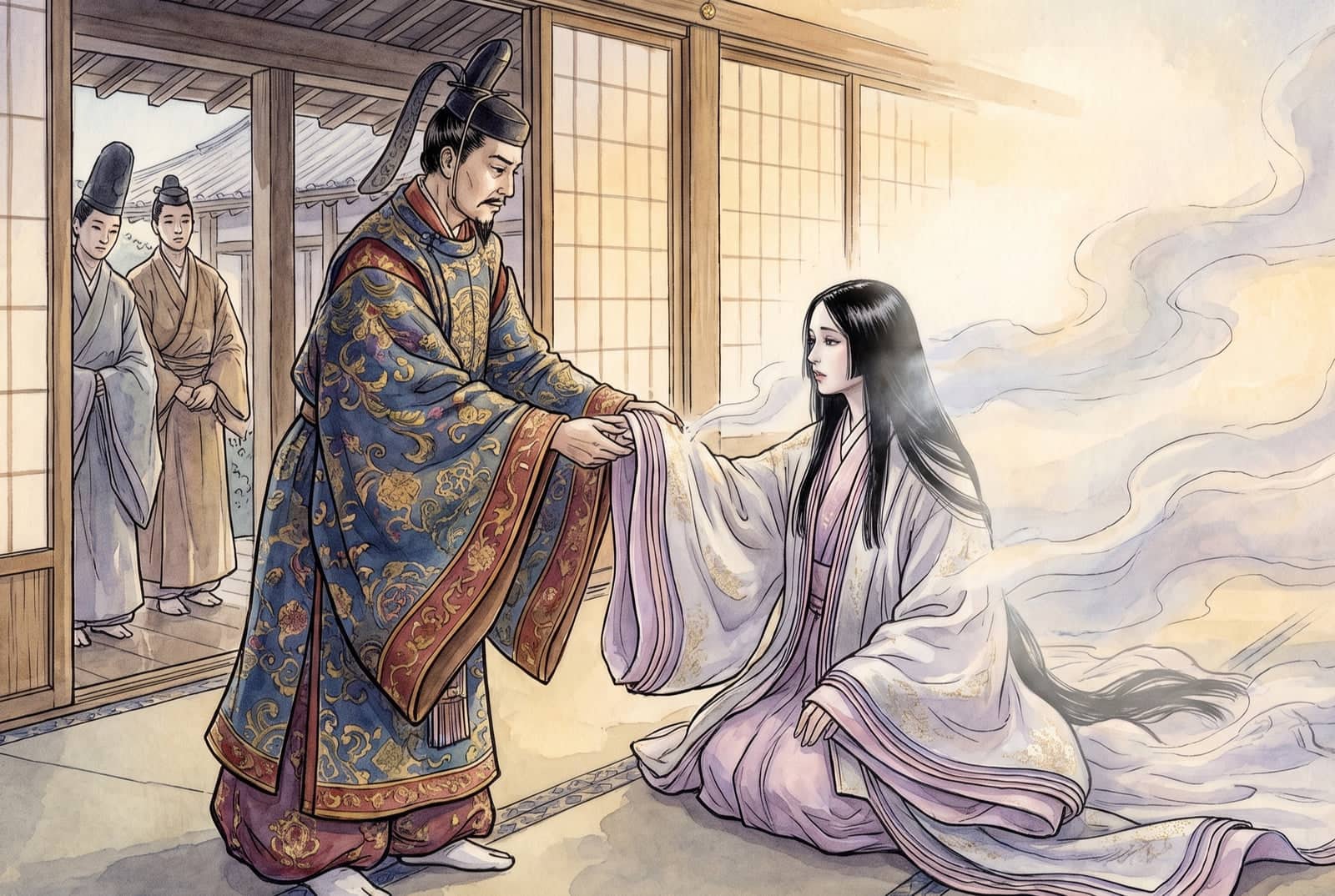
Then the Emperor promised to leave her free, if only she would come back as she was. And she did.
He left the house with a heavy heart and thought of her night and day. He began to write poems to her, telling her of his love. She would not see him again, but she answered with poems of her own, which told him gently and kindly that she could never marry anyone on this earth.
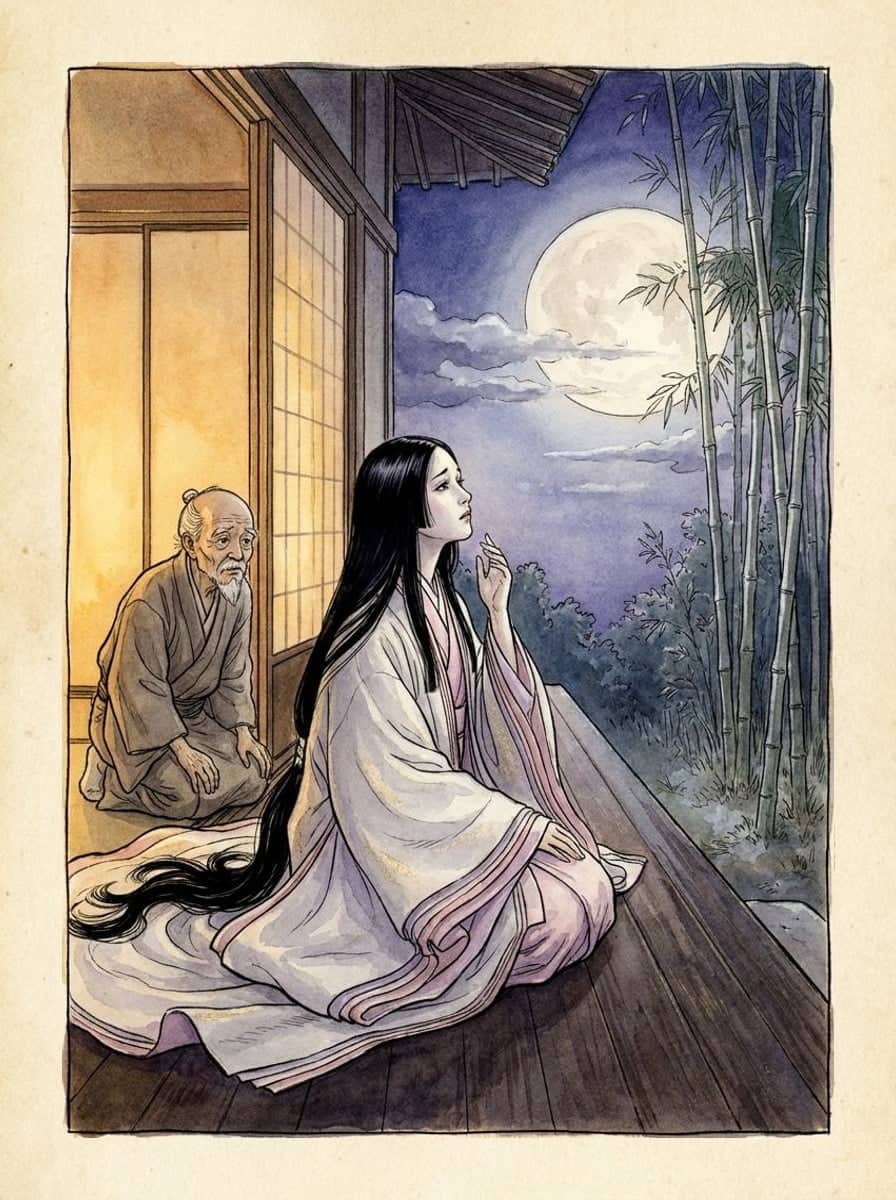
Around this time her foster parents noticed that night after night the Princess sat on her balcony gazing at the moon, and always ended in tears. One night the old man found her weeping as if her heart would break, and he begged her to tell him why.
Through her tears she told him he had been right to think she did not belong to this world. She had come from the moon. On the fifteenth night of this very month, when the August moon was full, her people would come to fetch her home. What made her cry was the thought of leaving her kind foster parents and the home where she had been so happy.
When the Emperor heard, he sent two thousand archers to guard the house on the fifteenth night. One thousand took their places on the roof, and another thousand watched every door. The old man and his wife hid the Princess in an inner room, and no one was to sleep that night.
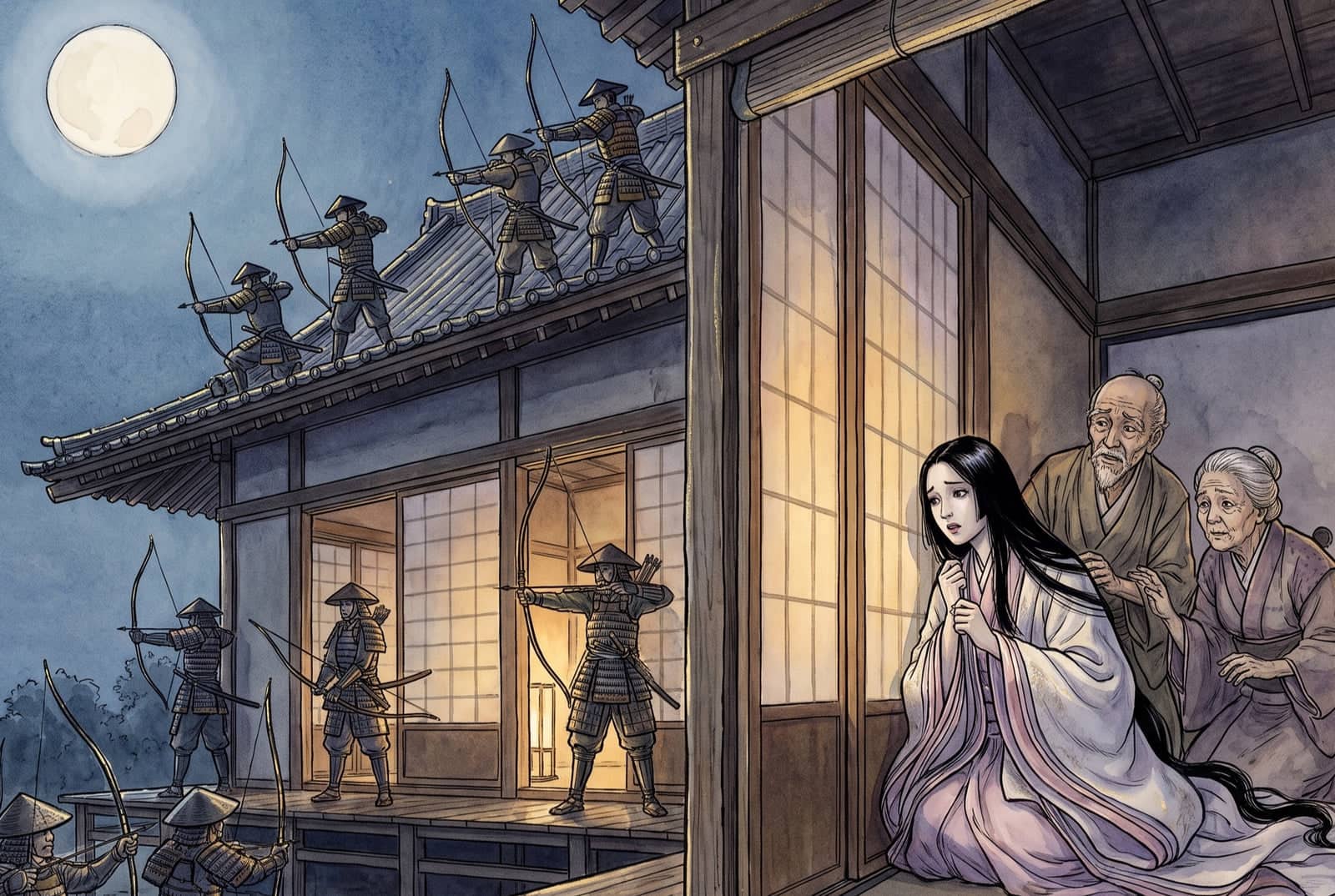
But the Princess told the old man it was all no use. When her people came for her, nothing at all could stop them, not even the Emperor’s men. If it were up to her, she said, she would stay with the old man and his wife in their old age and repay all their love and kindness.
The night wore on. The golden harvest moon rose high in the sky, and all was silent in the pine and bamboo forests and on the roof where the archers waited.
Then the sky began to turn gray toward dawn, and everyone hoped the danger had passed. Suddenly the watchers saw a cloud gather round the moon and roll down toward the earth, nearer and nearer, and to their dismay it was heading straight for the house. The archers tried to draw their bows, but a strange stillness came over them, and not one arrow left its string.
The cloud came to rest only ten feet above the ground. In the middle of it stood a flying chariot full of shining beings. One of them, who looked like a king, stepped out, and standing in the air he called to the old man.
“The time has come,” he said, “for Princess Kaguya to return to the moon. She did a grave wrong, and as a punishment she was sent to live down here for a while. We know how well you have cared for her, and we have rewarded you for it. It was we who put the gold in the bamboos for you to find.”
“I have brought her up for twenty years,” said the old man, “and never once has she done anything wrong. The lady you are looking for cannot be her.”
Then the messenger called out in a loud voice:
“Princess Kaguya, come out of this humble house. Do not stay here a moment longer.”
At these words the screens of the Princess’s room slid open all by themselves, and there she was, shining in her own light, bright and full of beauty.
The messenger led her to the chariot. She looked back at the old man, saw how deeply he was grieving, and spoke many comforting words. It was not her wish to leave him, she said, and he must always think of her when he looked at the moon. He begged to go with her, but that was not allowed. So she took off her embroidered outer robe and gave it to him to remember her by.
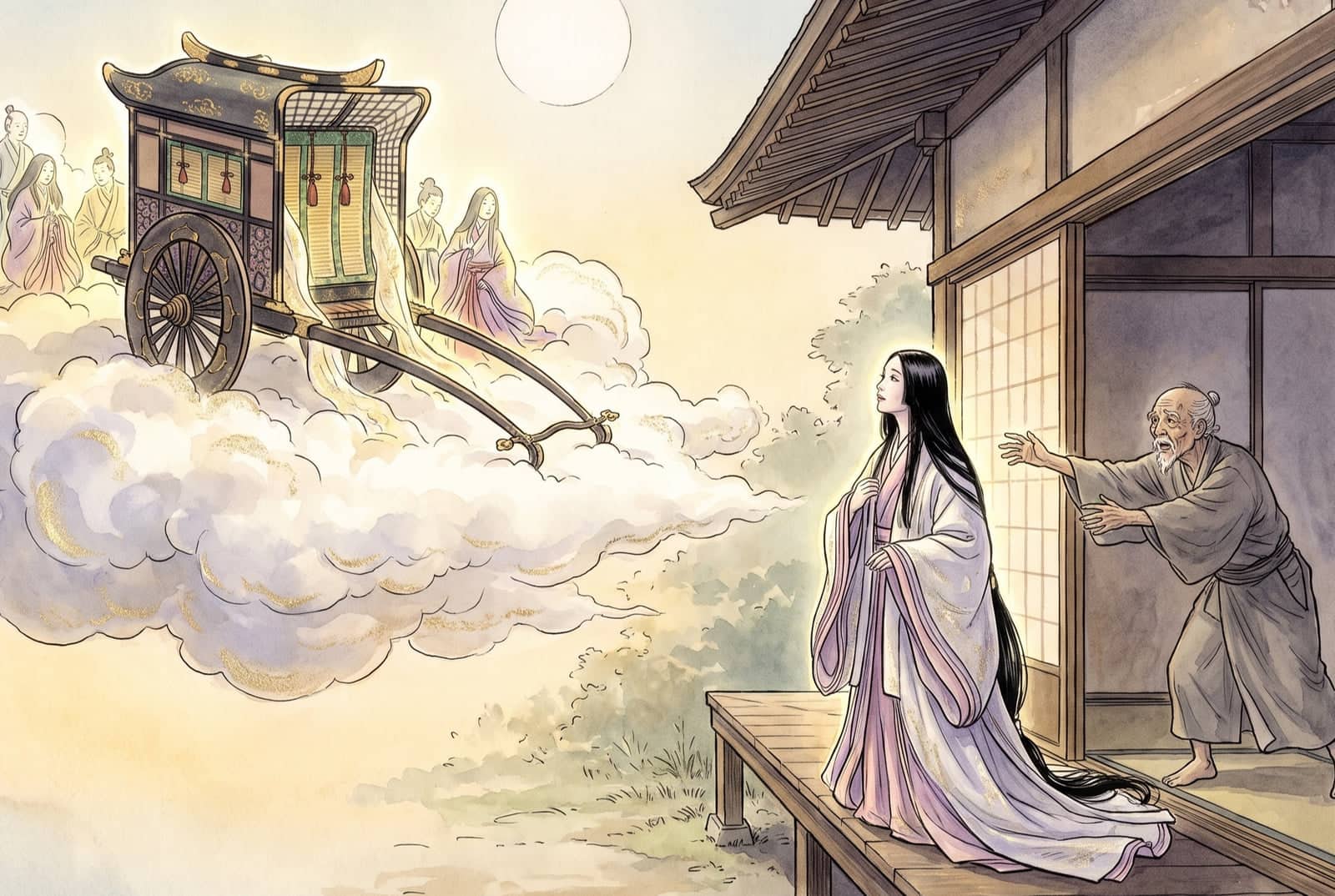
One of the moon people held a wonderful robe of feathers, and another a little bottle of the Elixir of Life. The Princess drank a little and was about to give the rest to the old man to drink, but they would not let her.
They were just about to put the robe of feathers on her shoulders when she said, “Wait a little. I must not forget my good friend the Emperor. I must write to him once more to say goodbye, while I am still in this human form.”
She kept the impatient moon people waiting while she wrote. Then she gave the letter and the bottle of the Elixir of Life to the old man and asked him to take them to the Emperor.
Then the moon people laid the robe of feathers on her shoulders, and the chariot began to roll up toward the moon. As everyone gazed after her through their tears, dawn broke, and in the rosy morning light the chariot was lost among the clouds.
The Emperor was afraid to touch the Elixir of Life. He sent it, with her letter, to the top of Mount Fuji, the most sacred mountain in the land, and there, at sunrise, his men burned them both. And people say that to this day you can see smoke rising from the top of Mount Fuji into the clouds.
Retold by Talerie from Japanese Fairy Tales (opens in a new window)License: Public domainCopy this text, adapt it, use it however you like. A link back to Talerie is appreciated but never required.CC0 1.0 (opens in a new window)