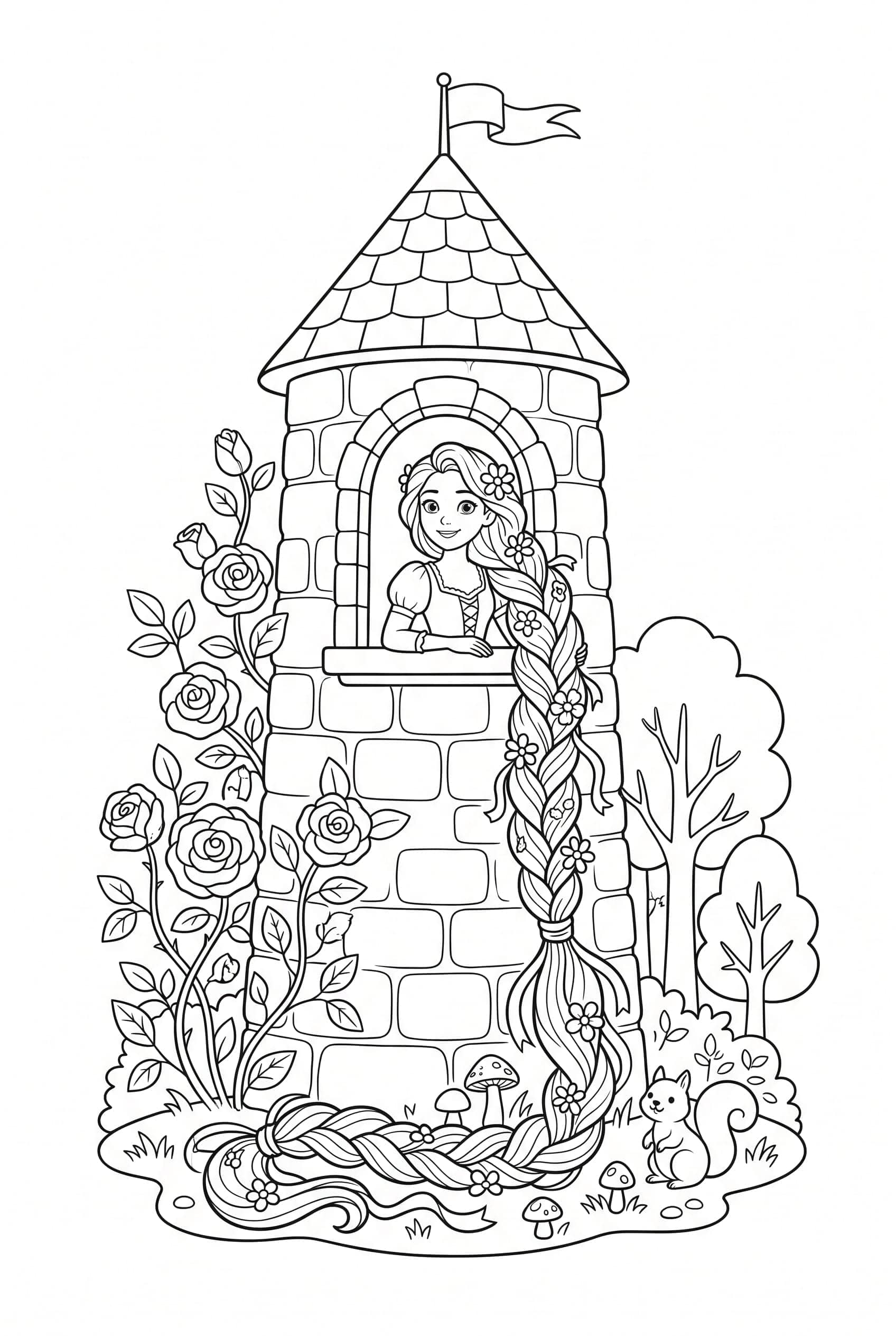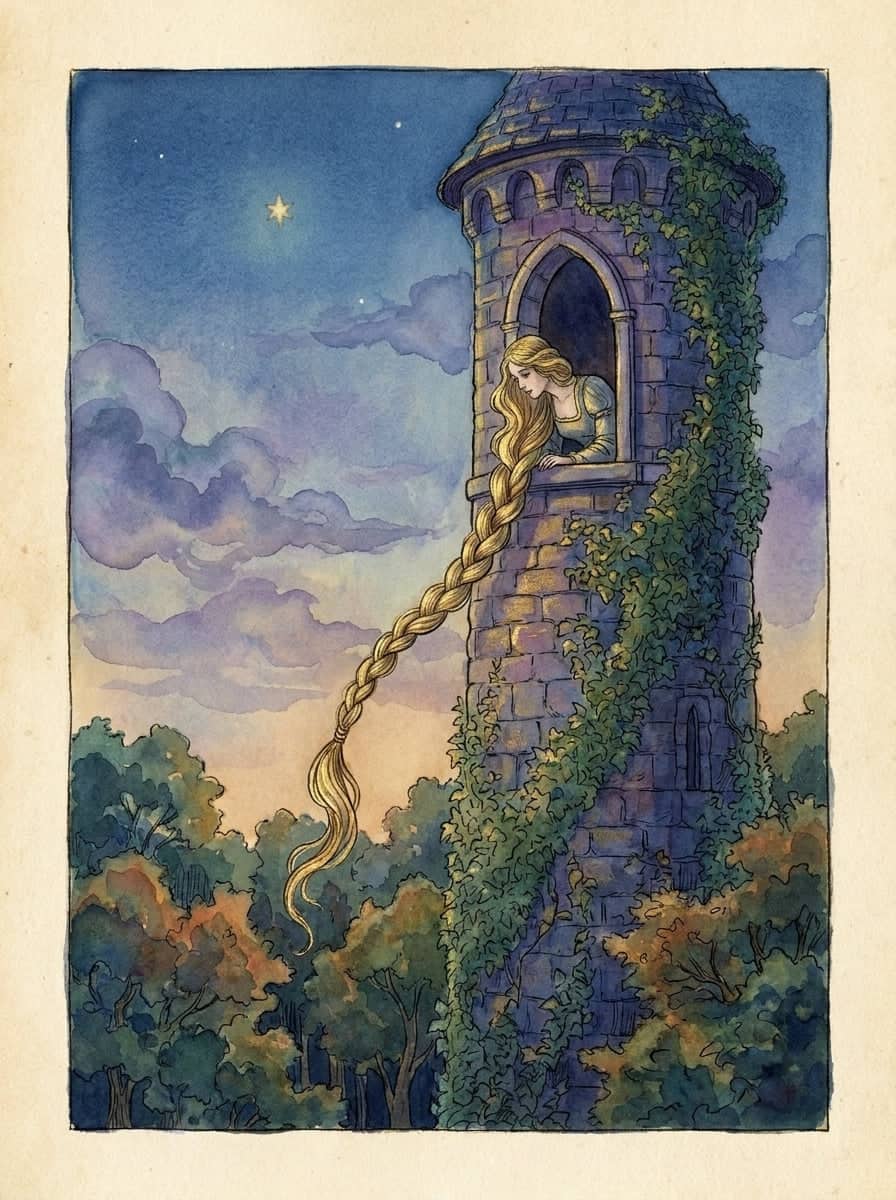
An enchantress shuts Rapunzel in a forest tower with no door and climbs to her window by the braids the girl lets down. A king’s son climbs the same braids, so the enchantress casts her into the wild and he falls into thorns that blind him, and years later her tears heal his eyes and he takes her home to his kingdom.
There were once a man and a woman who had long wished for a child, and at last the woman knew her wish would be granted. Behind their house a little window looked down into a splendid garden, walled high all around, and nobody dared go in, for it belonged to an enchantress whom the whole world feared.
One day the woman saw there a bed of rampion so fresh and green that she longed to taste it, and the longing grew until she turned pale and would not eat at all.
“If I cannot have some of that rampion,” she said, “I shall die.”
At dusk her husband climbed the wall and brought her a handful, and it tasted so good that the next day she wanted three times as much. In the evening he climbed down once more, and this time the enchantress was waiting for him.
“How dare you steal my rampion like a thief?” she said. “You will pay for this.”
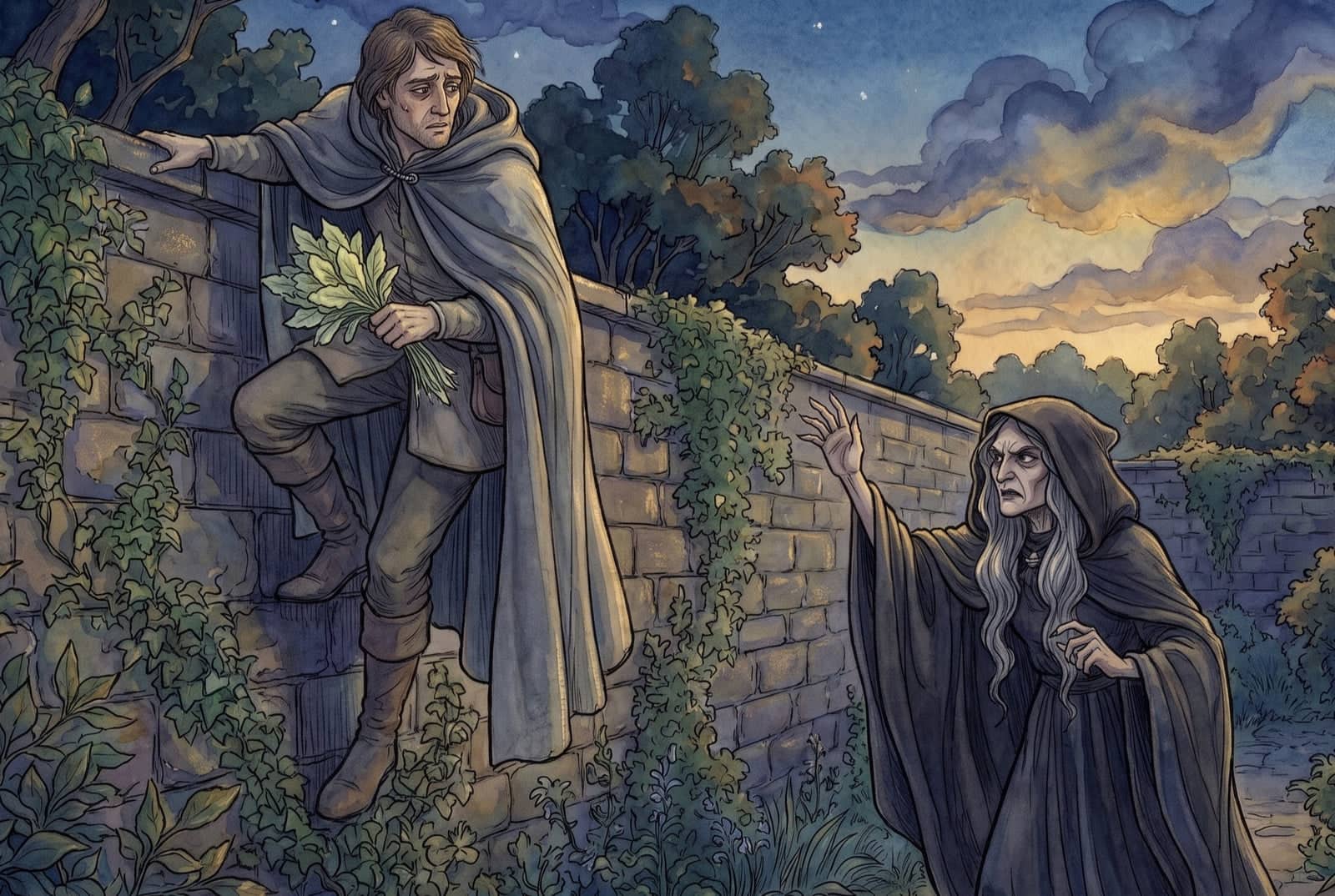
“Have mercy,” he answered. “My wife saw your rampion from our window, and she would have died without it.”
The enchantress let her anger go. “Then take as much as you like, on one condition: you must give me the child your wife will bring into the world. I will care for it like a mother.”
In his fear the man agreed, and when the child was born the enchantress came at once, named the little girl Rapunzel, and carried her away.
When she was twelve, the enchantress shut her in a tower deep in the forest. It had neither stairs nor door, only a small window at the very top. Whenever the enchantress wanted to come in, she stood below and called:
Rapunzel, Rapunzel,let down your hair.
Rapunzel’s hair was long and fine as spun gold. At that call she unwound her braids, looped them over the window hook, and let them fall far down the wall, and the enchantress climbed up by them.
A year or two later a king’s son rode through the forest and heard singing so sweet that he stopped to listen. The song drew him back every day, and once, from behind a tree, he saw the enchantress come and heard her call:
Rapunzel, Rapunzel,let down your hair.
The braids came down, and the enchantress climbed up. “If that is the ladder,” thought the king’s son, “I will try my luck too.” The next evening he stood at the tower and called:
Rapunzel, Rapunzel,let down your hair.
The hair fell, and he climbed up.
Rapunzel was frightened at first, for she had never seen a man before. But he spoke so kindly, telling her how her singing had given his heart no rest, that her fear left her. When he asked whether she would take him for her husband, she thought, “He will love me better than old Mother Gothel does,” and she said yes and laid her hand in his.
“I will gladly go with you,” she said, “but I cannot get down. Bring a skein of silk each time you come, and I will weave a ladder.”
After that he came every evening, for the enchantress came by day, until one afternoon Rapunzel said without thinking, “Tell me, Mother Gothel, why are you so much heavier to draw up than the young king’s son?”
“You wicked child!” cried the enchantress. “I thought I had kept you from all the world, and you have deceived me!”
In her anger she caught the beautiful braids, wound them round her hand, and with one snip of the scissors cut them off. Then she carried poor Rapunzel away to a wild and empty land and left her there to live in sorrow.
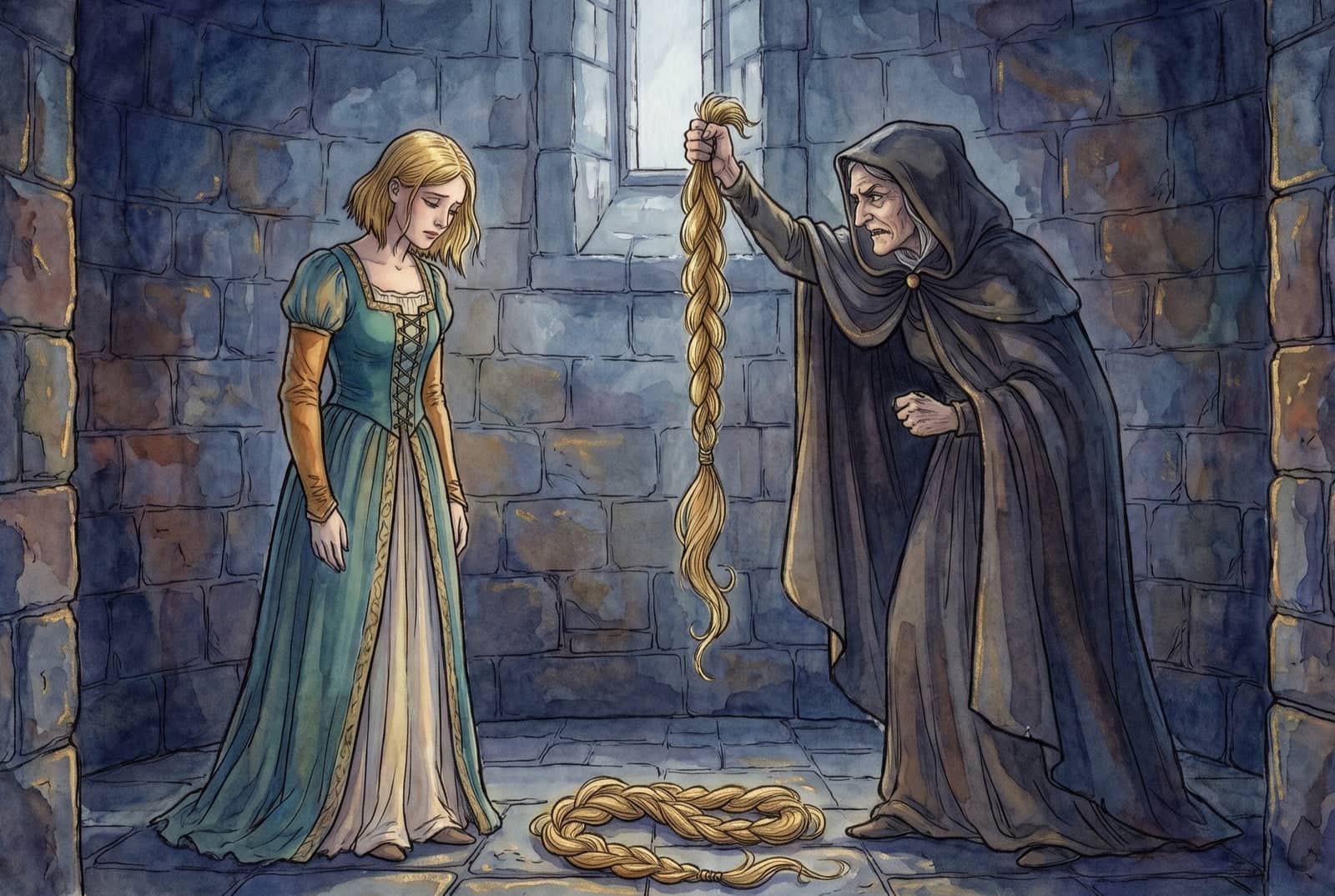
That same evening the enchantress tied the cut braids to the window hook, and when the king’s son came and called:
Rapunzel, Rapunzel,let down your hair.
she let the hair fall, and he climbed up. But it was the enchantress who waited above.
“Aha!” cried the enchantress. “You have come for your darling, but the cat has taken the sweet bird from the nest. You will never see her again.”
In his grief the king’s son sprang from the window. He lived, but he fell among thorns, and when he rose he could no longer see. Blind, he wandered the forest for years, until at last he came to the wild land where Rapunzel lived in want with the twins she had borne, a boy and a girl.
He heard a voice so dear and familiar that he went toward it, and Rapunzel knew him and threw her arms round his neck and wept. Two of her tears fell on his eyes, and they grew clear again, and he could see as well as before.
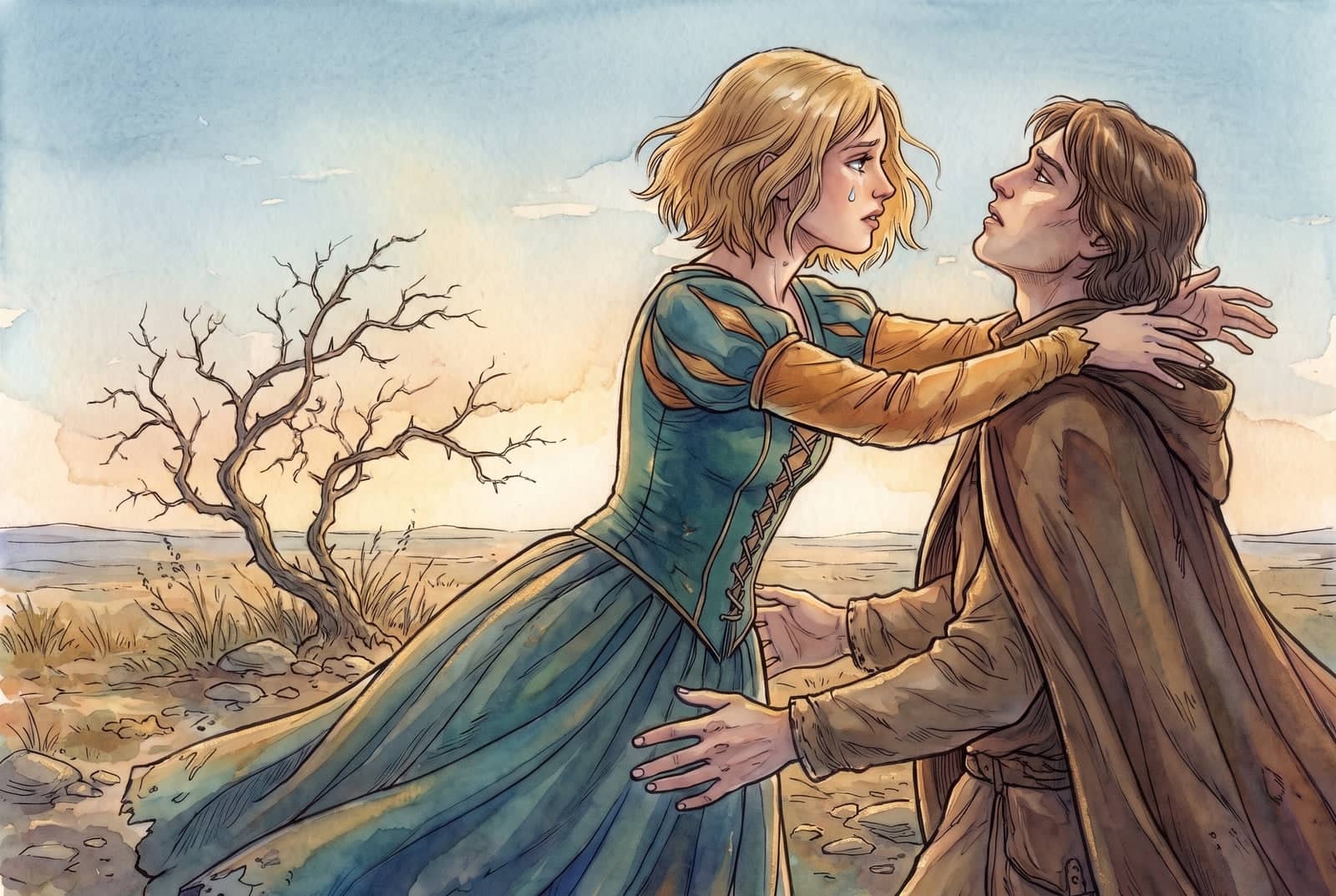
He led her home to his kingdom, where they were welcomed with joy, and they lived long and happily together.
Retold by Talerie from Household Tales by Brothers Grimm (opens in a new window)Public domainCopy this text, adapt it, use it however you like. A link back to Talerie is appreciated but never required.CC0 1.0 (opens in a new window)