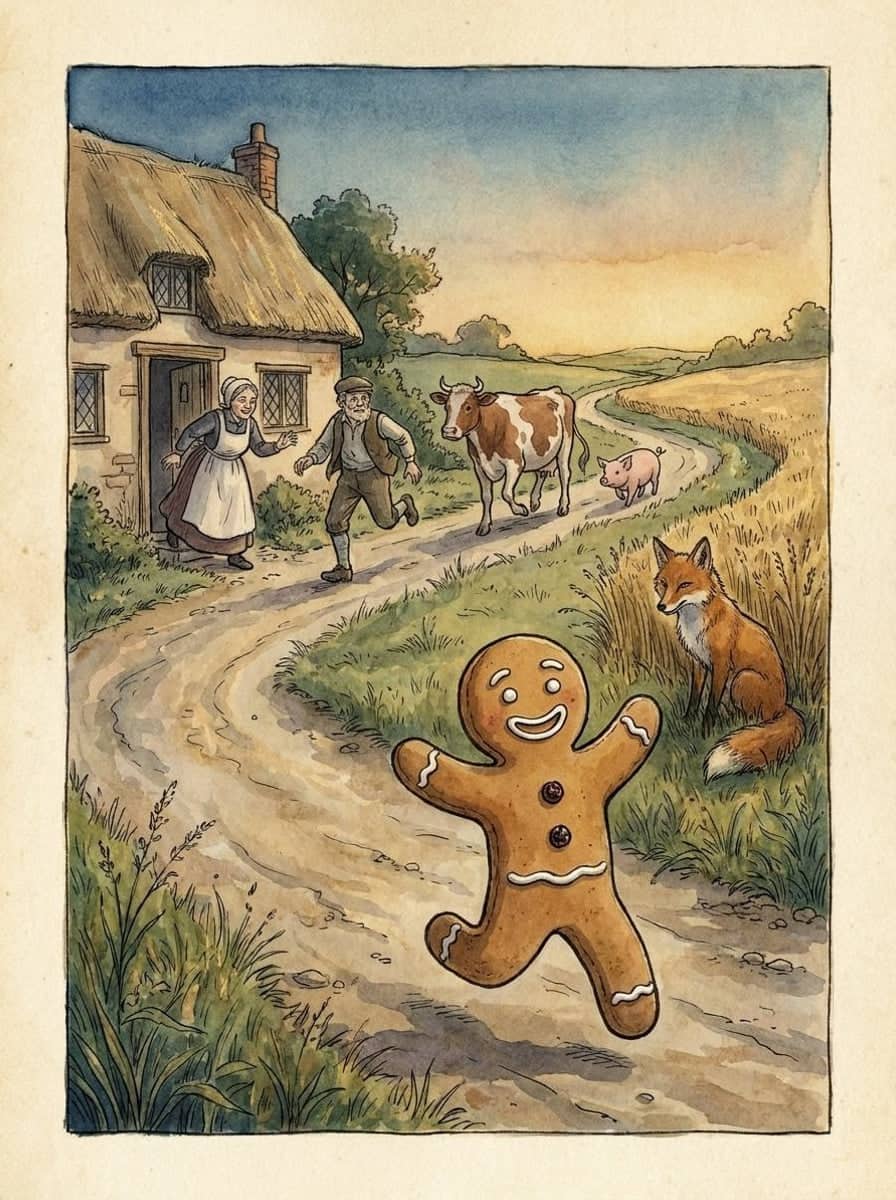
The Gingerbread Man
4 min readages 3 and up

These tales were told aloud, over and over, long before anyone thought to print them. The people who told them were mostly women doing other people’s work: servants, nurses, cooks and grandmothers, telling while their hands were busy, or telling the children they were minding. The collectors’ own notes say so, on the rare occasions they say anything about the teller at all.
One of those notes survives in full. In 1875 a children’s magazine printed “The Gingerbread Boy” and said where it had come from: a servant girl from Maine had told it to the children of the house, and she had it from an old lady when she was a child herself. Neither woman is named, and nobody thought to ask. A collector who wrote a tale down put his own name on the book, because collecting was the respectable half of the work; the woman who actually knew the story was a source, not an author.
A spoken story was never a fixed text. It came out a little different every time, because the teller shaped it for the children in front of her: shorter when they were tired, worse when they were not listening. What reached print was one of those tellings, on one day, from one person.
3 tales
4 min readages 3 and up
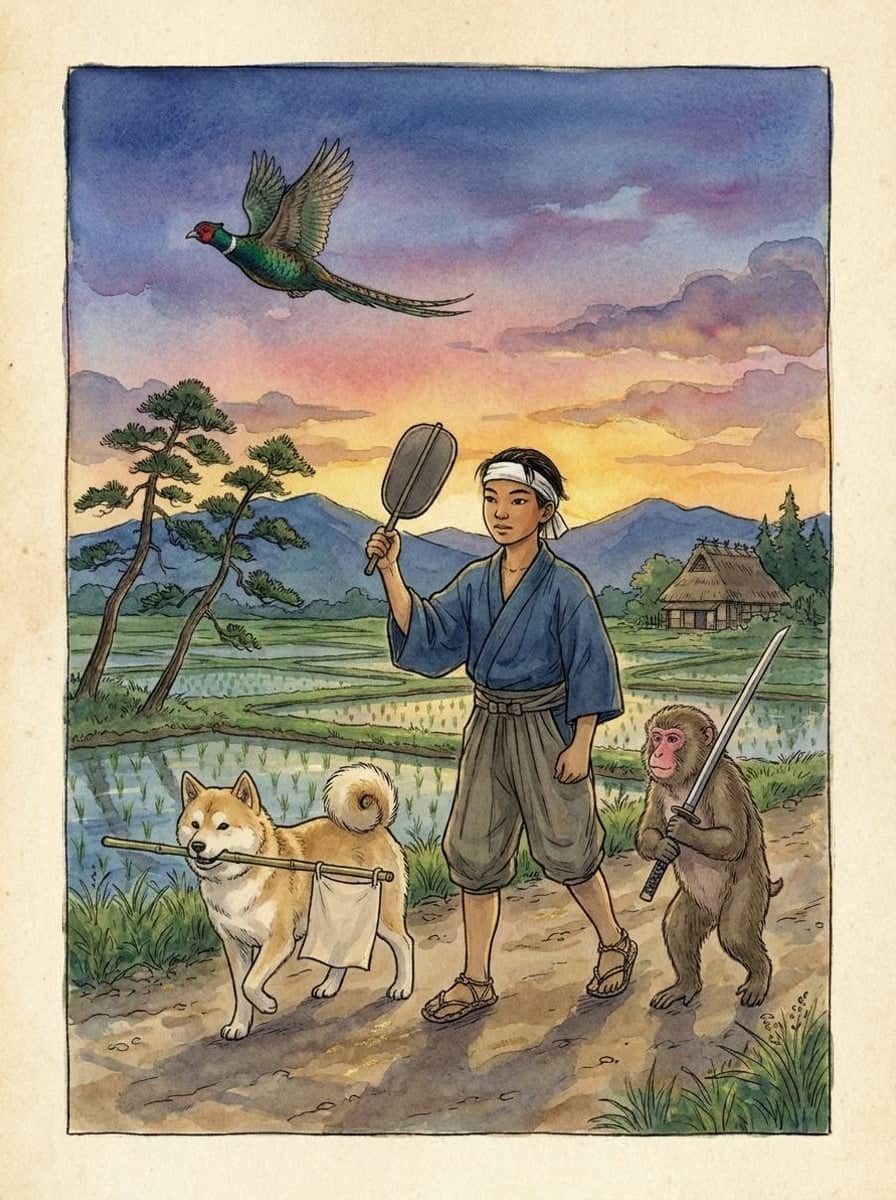
15 min readages 6 and up
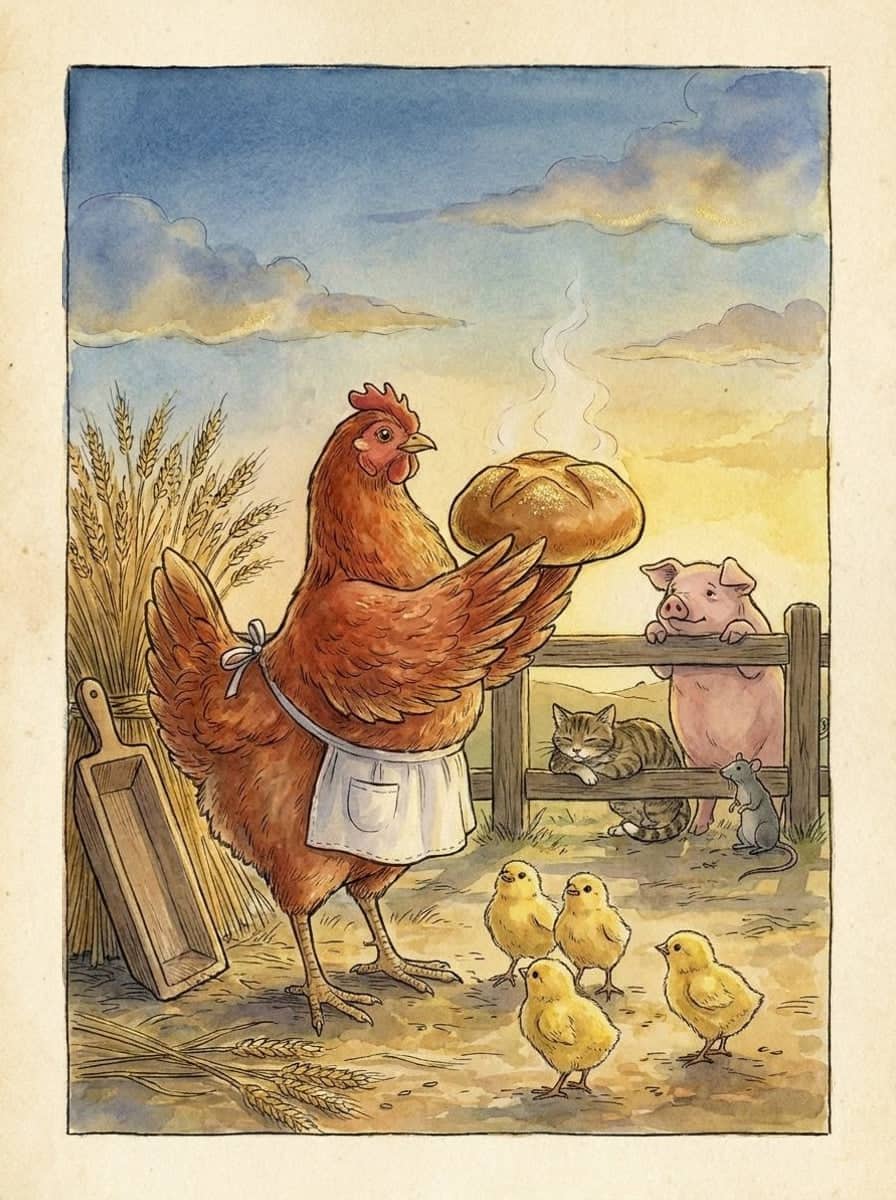
7 min readages 3 and up