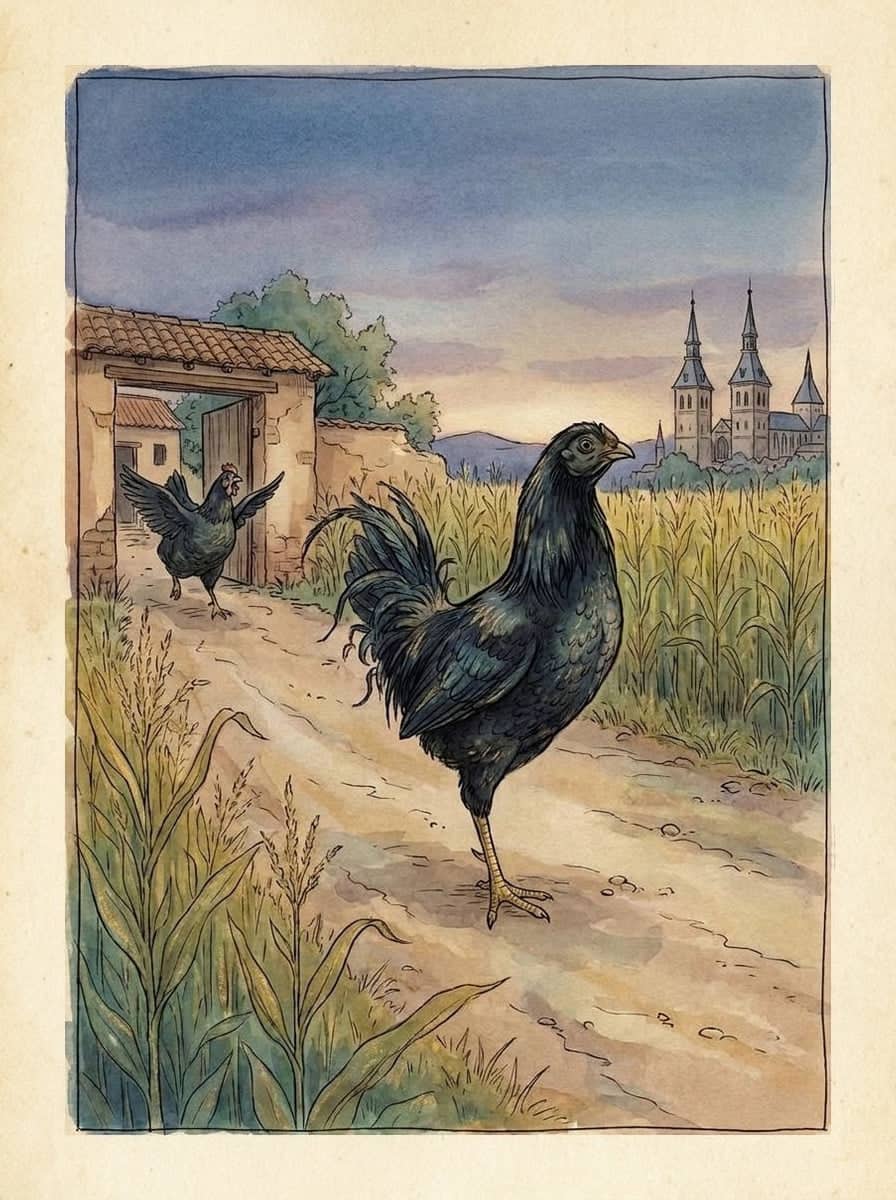
Medio Pollito hatches with one leg, one wing, one eye, and half a beak, and he cannot keep still. Tired of the dull farmyard, he hops off to see the king without looking back. On the way a stream choked with weeds, a dying fire, and the wind caught in a chestnut tree all beg him for help.
Once upon a time there was a handsome black Spanish hen who had a large brood of chicks. They were all fine, plump little birds, all except the youngest. When he first broke out of his shell, his mother could hardly believe her eyes. He looked nothing like the twelve soft, downy chicks tucked under her wings. It was as if someone had cut him in two. He had only one leg, one wing, and one eye, and he had half a head and half a beak.
His mother shook her head sadly as she looked at him.
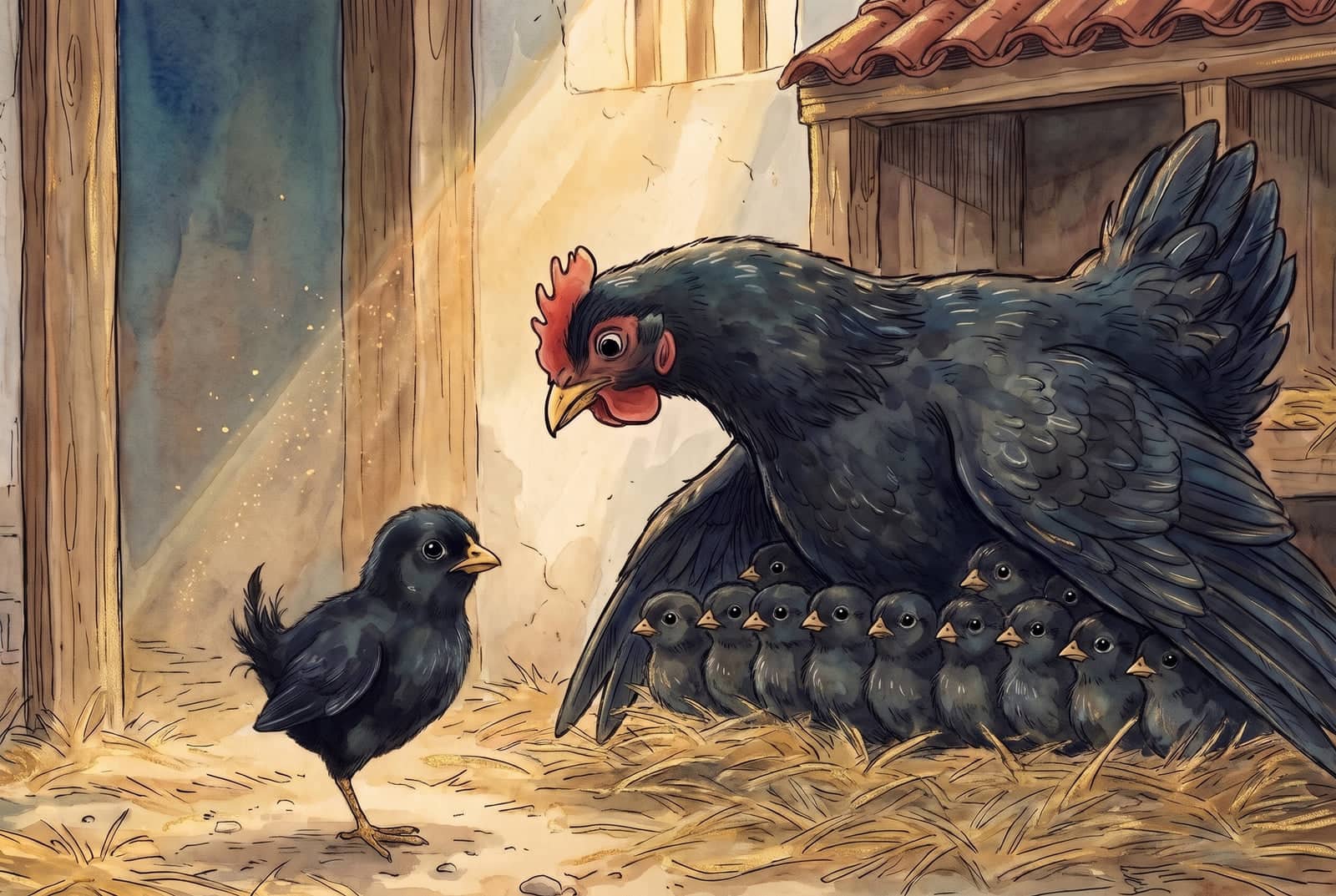
“My youngest is only half a chick,” she said. “He can never grow into a tall, handsome rooster like his brothers. They will go out into the world and rule over farmyards of their own, but this poor little fellow will always have to stay at home with his mother.”
And she called him Medio Pollito, which is Spanish for half-chick.
Odd and helpless as he looked, Medio Pollito had no wish at all to stay under his mother’s wing. He was as different from his brothers and sisters inside as he was outside. They were good, obedient chickens, and when the old hen clucked for them, they came running back to her side, cheeping. But Medio Pollito was restless in spite of his one leg. When his mother called him back to the coop, he pretended not to hear, because he had only one ear.
When she took the whole family for a walk in the fields, he would hop off by himself and hide among the corn. His brothers and sisters spent many anxious minutes searching for him, while their mother ran back and forth, clucking with fright.
The older he got, the more stubborn and disobedient he became. He was often rude to his mother and bad-tempered with the other chickens.
One day he came home from a longer ramble than usual. He strutted up to his mother with the funny little hop and kick that was his way of walking, cocked his one eye at her very boldly, and said, “Mother, I’m tired of this dull farmyard with nothing but a dreary cornfield to look at. I am off to Madrid to see the king.”
“To Madrid, Medio Pollito!” cried his mother. “Why, you silly chick, that would be a long way even for a grown rooster. A poor little thing like you would be worn out before you’d gone halfway. No, no, stay at home with your mother, and someday, when you’re bigger, we’ll take a little trip together.”
But Medio Pollito had made up his mind. He wouldn’t listen to his mother, and he wouldn’t listen to his brothers and sisters, though they begged him to stay.
“What’s the use of all of us crowding together in this cramped little place?” he said. “When I have a fine courtyard of my own at the king’s palace, maybe I’ll invite a few of you to come for a short visit.”
He hardly stopped to say goodbye. Off he stumped down the road to Madrid.
“Be sure you’re kind and polite to everyone you meet!” his mother called, running after him. But he was in such a hurry that he didn’t answer her, or even look back.
Later that day, as he was taking a shortcut through a field, he came to a stream. It was so choked with weeds and water plants that it could barely flow.
“Oh, Medio Pollito,” the stream called as he hopped along its bank, “please come and help me clear away these weeds.”
“Help you? Ha!” said Medio Pollito, tossing his head and shaking the few feathers in his tail. “Do you think I have nothing better to do than waste my time on that? Help yourself, and don’t bother busy travelers. I am off to Madrid to see the king.”
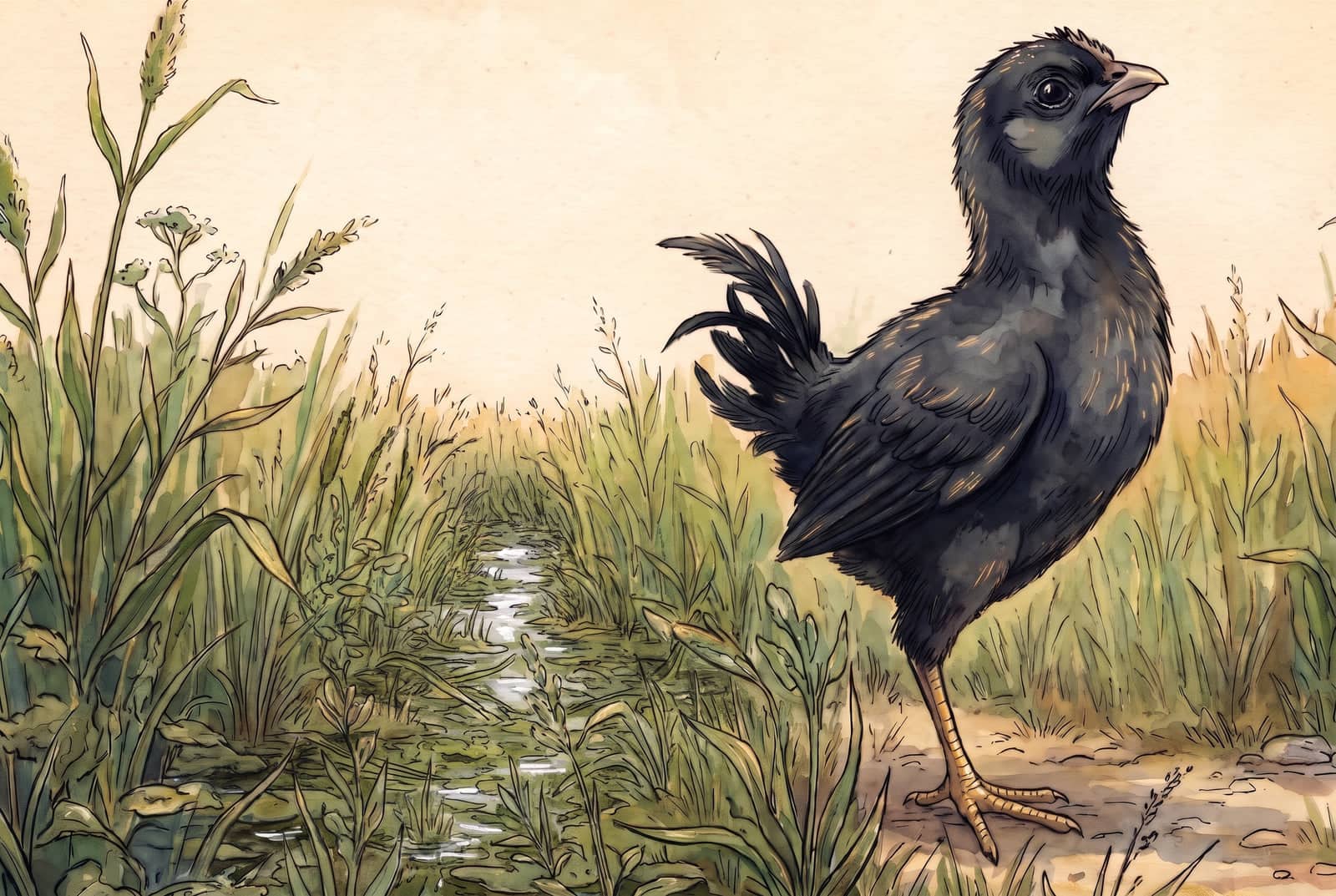
And hoppity-kick, hoppity-kick, away stumped Medio Pollito.
A little farther on, he came to a fire that some travelers had left burning in the woods. It had burned very low and would soon go out.
“Oh, Medio Pollito,” said the fire in a weak, flickering voice as he came near, “in a few minutes I’ll be gone, unless you put some sticks and dry leaves on me. Please help me, or I will die!”
“Help you? Ha!” said Medio Pollito. “I have other things to do. Gather your own sticks, and don’t bother me. I am off to Madrid to see the king.”
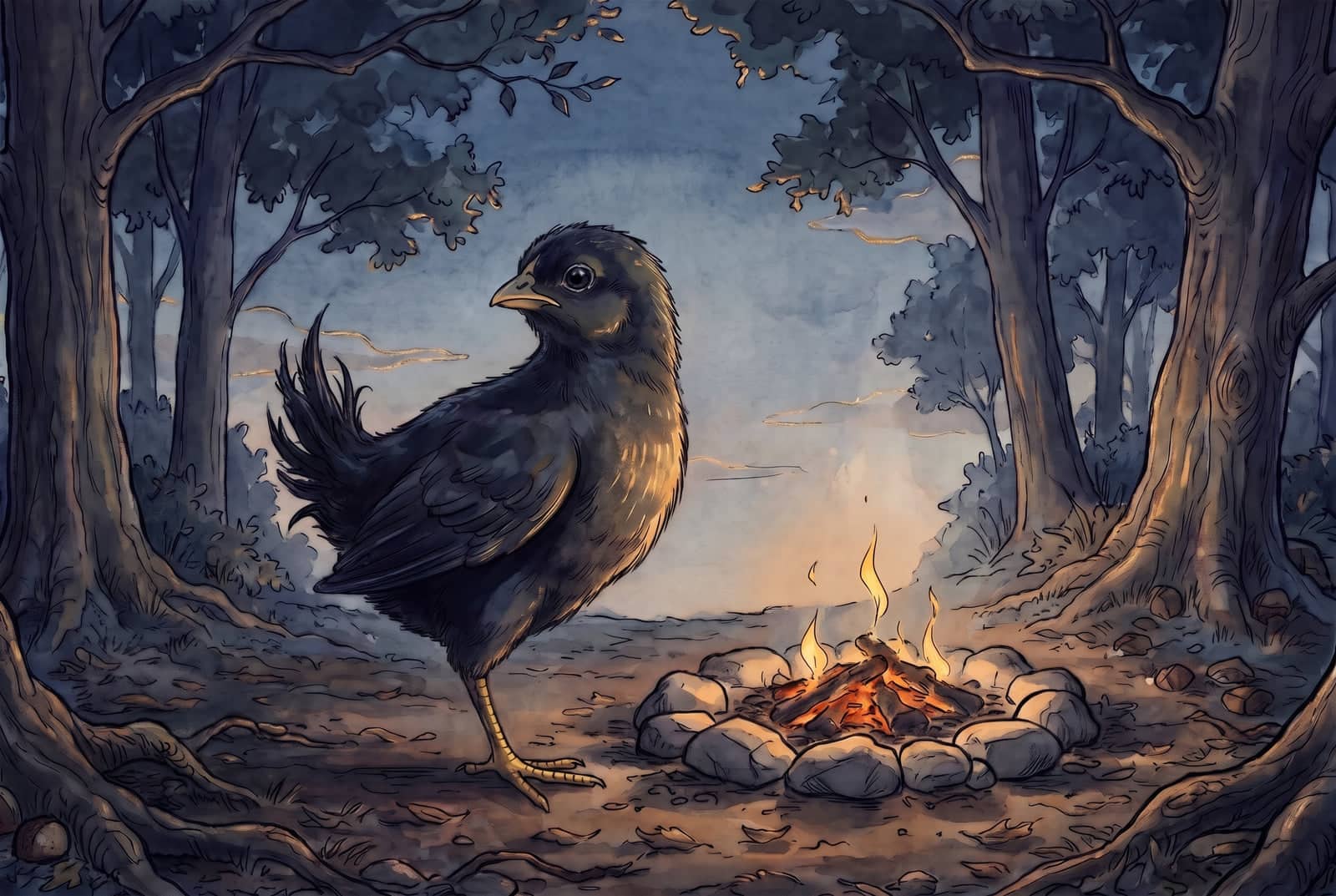
And hoppity-kick, hoppity-kick, away stumped Medio Pollito.
The next morning, when he was nearly at Madrid, he passed a big chestnut tree. The wind had blown into its branches and was caught there, all tangled up.
“Oh, Medio Pollito,” called the wind, “please hop up here and help me get free of these branches. I can’t get loose, and it’s so uncomfortable.”
“It’s your own fault for going in there,” said Medio Pollito. “I can’t waste my whole morning helping you. Just shake yourself loose, and don’t hold me up. I am off to Madrid to see the king.”
And hoppity-kick, hoppity-kick, away stumped Medio Pollito, very pleased with himself, for he could already see the towers and roofs of Madrid.
In the city he came to a great, splendid building with soldiers standing at its gates. This, he knew, must be the king’s palace, and he decided to hop up to the front gate and wait there until the king came out. But as he was hopping past one of the back windows, the king’s cook spotted him.
“Here’s just what I need,” the cook said to himself. “The king has sent word that he wants chicken broth for his dinner.”
He opened the window, reached out, grabbed Medio Pollito, and dropped him into the pot of broth that hung over the fire. The water closed over Medio Pollito’s head, cold and clammy, and plastered his feathers to his sides.
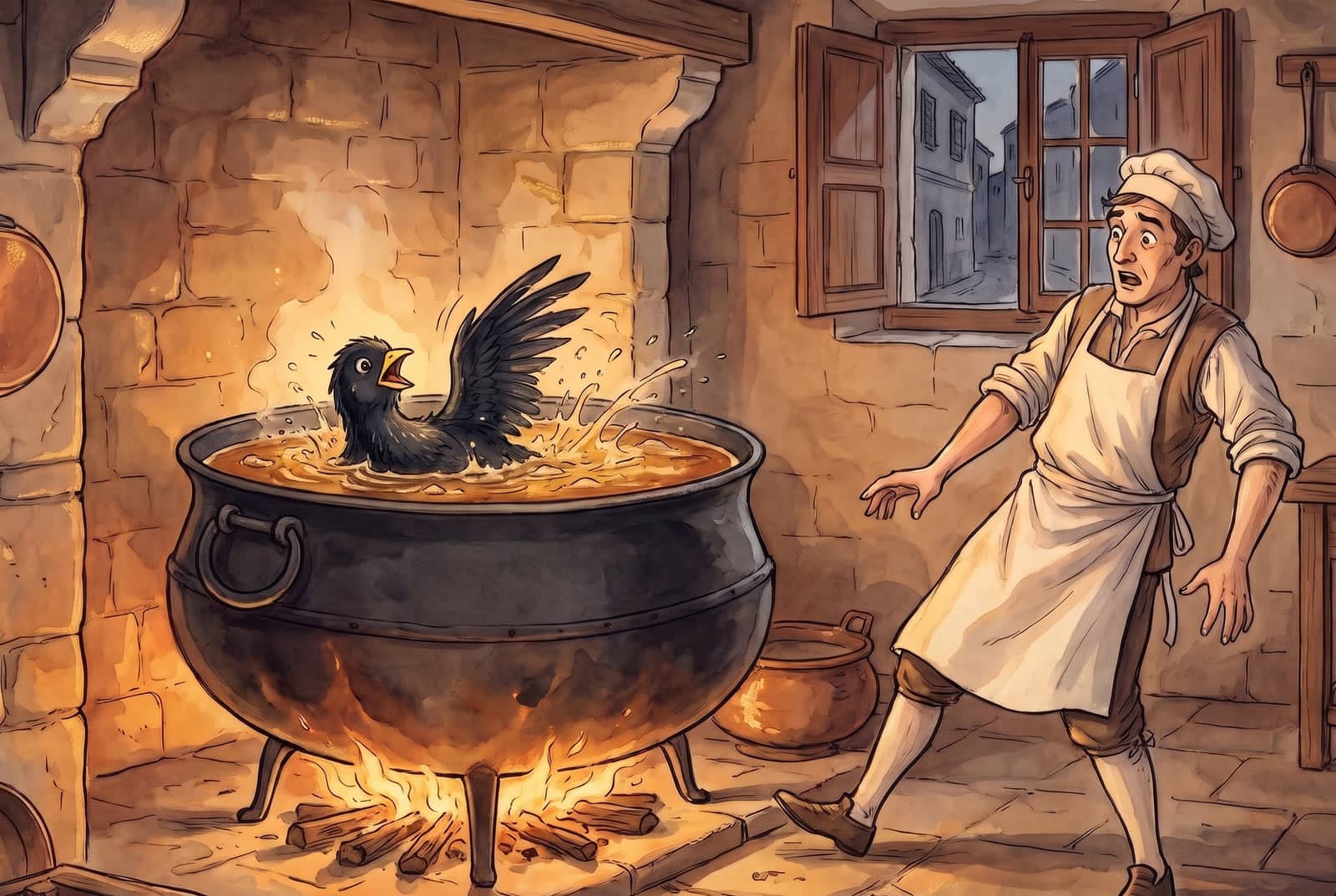
“Water, water!” he cried in despair. “Please have pity on me, and don’t soak me like this!”
“Ah, Medio Pollito,” said the water, “you would not help me when I was a little stream out in the fields; now you are punished.”
Then the fire under the pot began to burn and scald him. It hurt terribly, and he hopped from one side of the pot to the other, trying to get away from the heat.
“Fire, fire!” he cried. “Don’t burn me like this! You can’t imagine how much it hurts.”
“Ah, Medio Pollito,” said the fire, “you would not help me when I was dying in the woods; now you are punished.”
At last, when the pain was so bad that Medio Pollito thought he would die, the cook lifted the lid to see whether the king’s broth was ready.
“Look at this!” the cook cried in dismay. “This chicken is no good at all. It’s burned to a cinder. I can’t send that up to the royal table.”
He opened the window and threw Medio Pollito out into the street.
But the wind snatched him up and whirled him through the air so fast that he could hardly breathe. His heart pounded as if it would burst.
“Oh, wind!” he gasped at last. “If you rush me along like this, you’ll kill me. Please let me rest a moment, or…”
But he was so out of breath that he couldn’t finish.
“Ah, Medio Pollito,” said the wind, “you would not help me when I was caught in the branches of the chestnut tree; now you are punished.”
The wind swept him over the rooftops until they came to the tallest church in the city, and there it left him, fastened to the very top of the steeple.
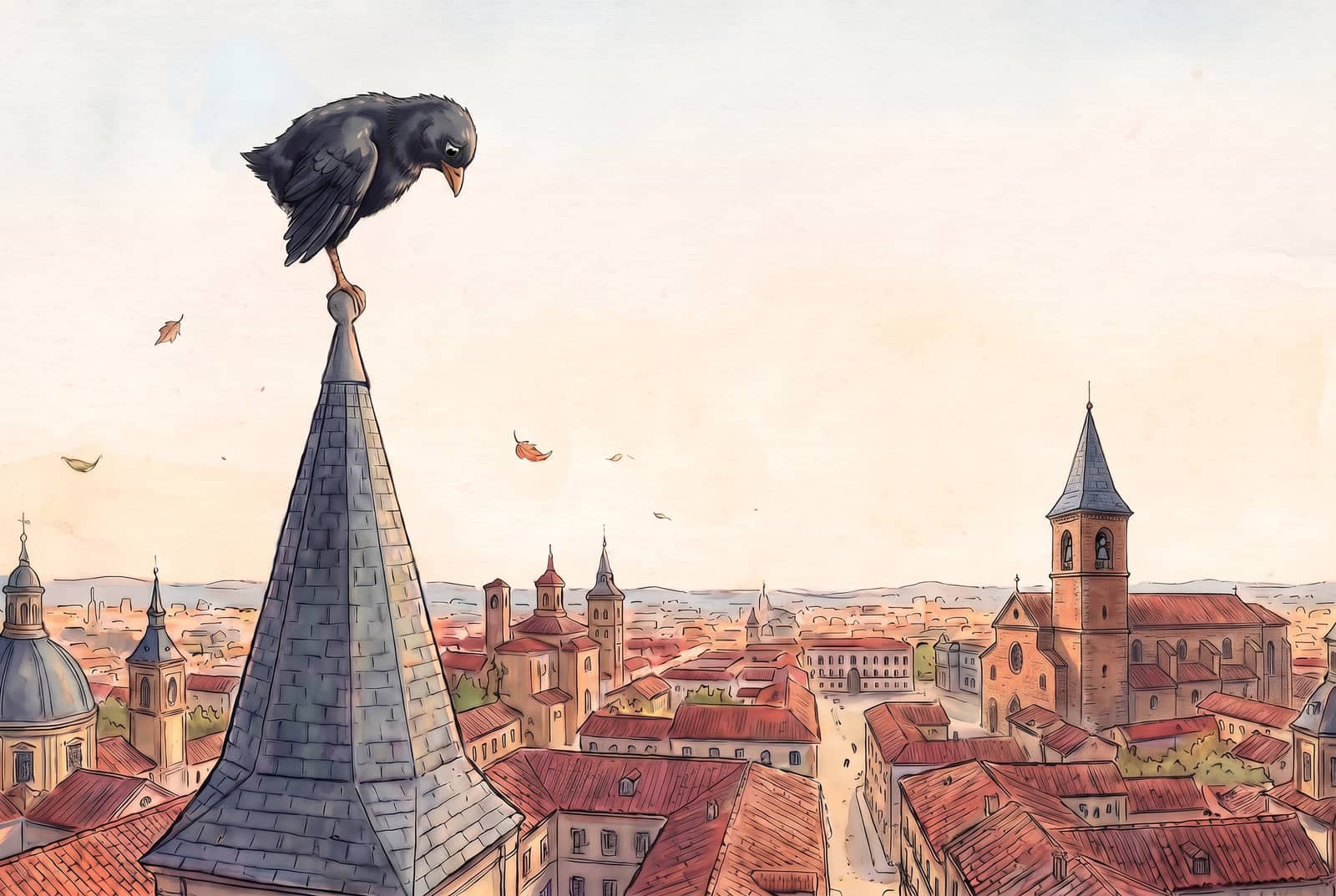
And there Medio Pollito stands to this day. If you go to Madrid and walk through the streets until you come to the tallest church, you will see him perched on his one leg at the top of the steeple, his one wing drooping at his side, gazing sadly out over the city with his one eye.
Retold by Talerie from The Green Fairy Book (opens in a new window) Public domain Copy this text, adapt it, use it however you like. A link back to Talerie is appreciated but never required. CC0 1.0 (opens in a new window)