The Ugly Duckling
12 min readages 5 and uptalerie.com/en/tales/the-ugly-duckling
A big gray duckling hatches last in a farmyard nest, and the ducks, the hens and even his sisters drive him away for being ugly. He survives the winter alone, then bends his head to the clear water of a garden pond, sees his own likeness among the great swans, and hears the children call him the most beautiful of all.
It was summer, and glorious out in the country. By an old farmhouse the burdock grew so tall that a child could have stood upright beneath its leaves, and there, on her nest, sat a duck, waiting for her ducklings to hatch. She was tired of sitting, for the little ones took so long.
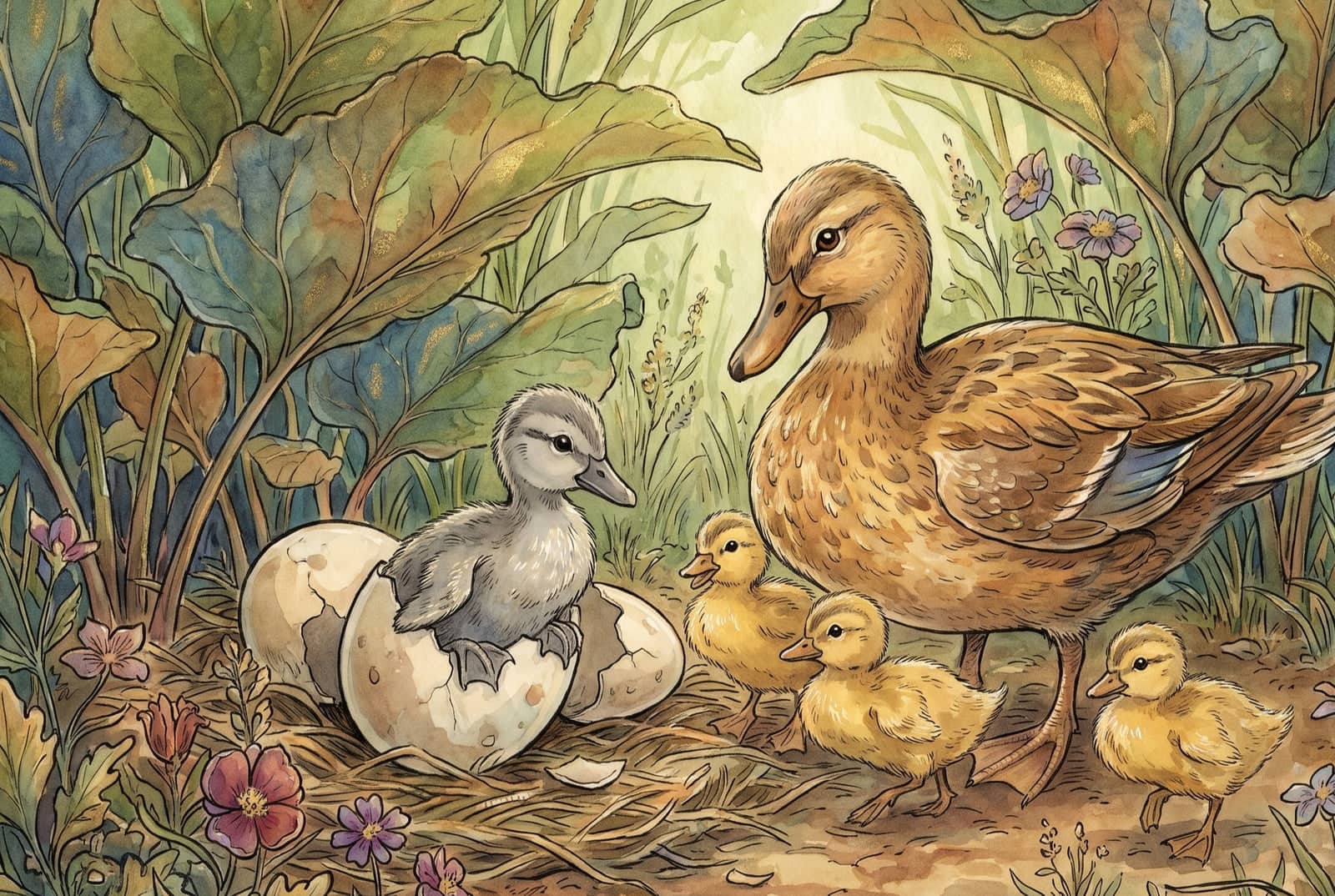
At last one egg cracked, and then another. “Peep, peep,” said each little creature as it lifted its head.
“Quack, quack,” said the mother, and they scrambled up and looked round at the green leaves. She let them look their fill, for green is good for the eyes.
“How big the world is,” said the ducklings, who had far more room now than they had inside the shell.
“Do you think this is the whole world?” said their mother. “It stretches far past the garden, right into the parson’s field, though I have never been there myself. But the biggest egg is lying there still.”
“Well, how are you getting on?” asked an old duck who had come to visit.
“That one egg will not break,” said the duck on the nest. “But look at the others. Were there ever prettier ducklings?”
“Let me see it,” said the old duck. “That is a turkey’s egg. I was tricked that way once, and the young ones would not go near the water. Leave it lying, and teach the others to swim.”
“I shall sit a little longer,” said the duck. “I have sat so long that a few more days will make no difference.”
“Suit yourself,” said the old duck, and off she went.
At last the big egg broke. “Peep, peep,” said the young one, and out he crawled, very large and very ugly. “Can he be a turkey chick?” said his mother. “We shall soon see. Into the water he goes.”
Next morning she took the family down to the river that ran below the farmhouse, and splash, in she went. “Quack, quack,” she said, and one duckling after another tumbled in after her. Up they came and swam beautifully, the big gray one along with the rest.
“That is no turkey,” said the mother. “See how straight he holds himself. He is my own child, and quite handsome when you look at him properly. Come along, and I shall present you at the duck yard. Watch out for the cat.”
In the duck yard two families were fighting over an eel’s head, and in the end the cat got it.
“That is the way of the world,” said the mother, whetting her beak, for she would have liked the eel’s head herself. “Now bow to that old duck. She has Spanish blood, and the red rag round her leg is the greatest honor a duck can have. Bow, and say quack.”
They did it. But the ducks round about said out loud, “Are we to have that bunch as well, as if there were not enough of us already?” And one of them flew at the big gray duckling and bit him in the neck.
“Leave him alone,” said his mother. “He is doing no one any harm.”
“He is too big and too odd,” said the duck who had bitten him.
“Those are handsome children the mother has,” said the old duck with the rag, “all but that one. I wish she could make him over again.”
“That cannot be done, Your Grace,” said the mother. “He is not handsome, but he has a good heart and swims as well as any of them. He lay too long in the egg, and that is why he has not the right shape.”
But the duckling who had come last out of the egg was bitten and shoved and laughed at by ducks and hens alike. The turkey cock, born with spurs and sure that he was an emperor, puffed up like a ship in full sail and bore down on him.
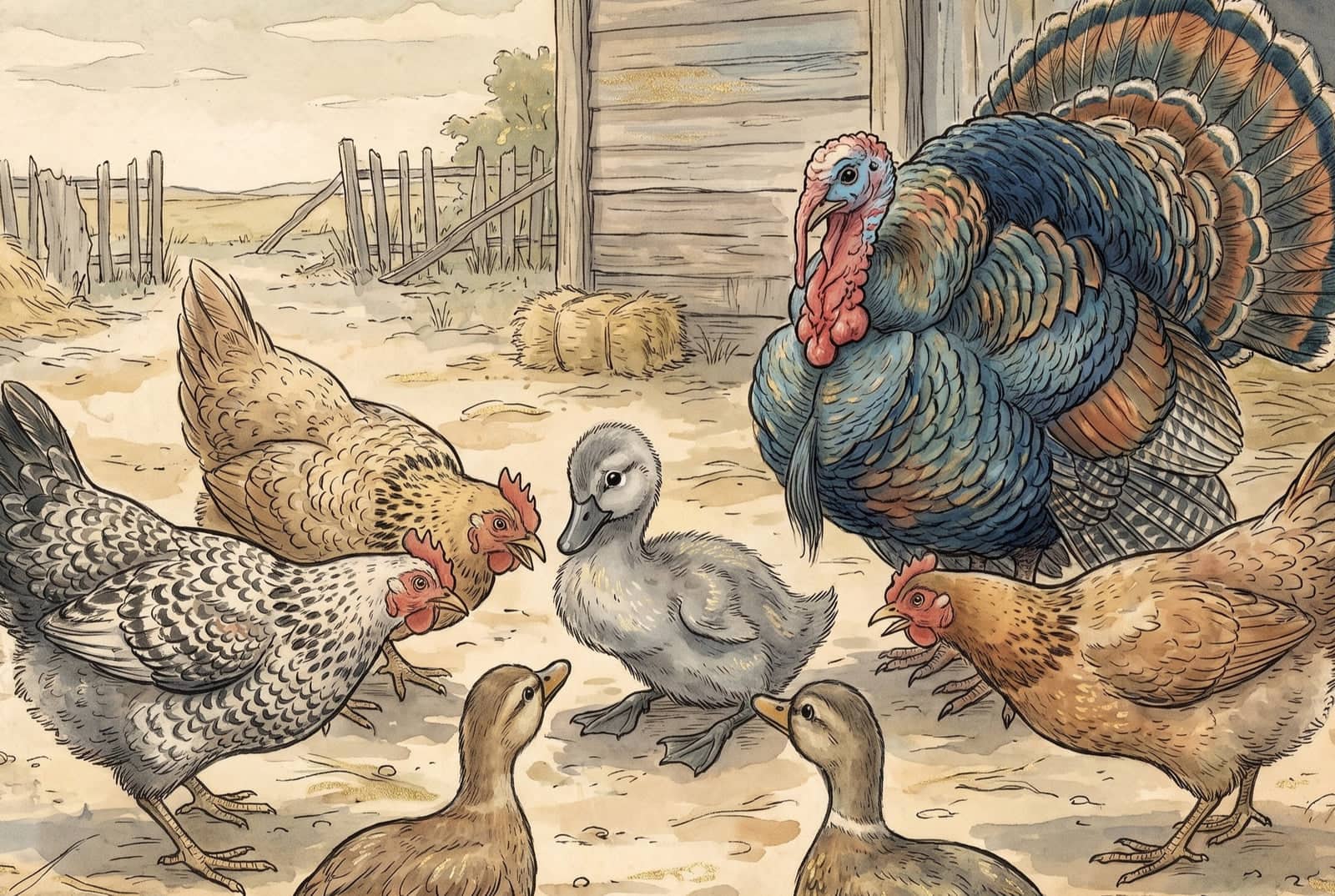
Every day it grew worse. Even his sisters were unkind. “I wish the cat would get you, you ugly thing,” they said, and his mother wished him far away. The ducks bit him, the hens beat him, and the girl who fed the poultry kicked at him.
So he ran, and flew over the fence, and the little birds in the bushes flew up in fright. “That is because I am so ugly,” he thought, and he kept going until he came to the great moor where the wild ducks lived. There he lay all night, tired and sorrowful.
In the morning the wild ducks looked at their new comrade. “What sort of a bird are you?” they asked, and he greeted them as politely as he could.
“You are extremely ugly,” they said, “but that is nothing to us, so long as you do not marry into our family.” He had no thought of marrying. He only wanted to lie among the reeds.
He lay there two days, and then two young ganders came along. “Listen, friend,” they said. “You are so ugly that we rather like you. Come with us and be a bird of passage. On another moor there are fine young geese, every one of them unmarried. You might make your fortune, ugly as you are.”
Bang, bang. Two shots cracked over the moor, and the young ganders fell among the reeds and did not rise again. Bang, bang, it went again. The sportsmen lay all round the water, and the dogs came splashing into the marsh.
The duckling hid his head under his wing, and at that moment a huge, dreadful dog stood beside him. He thrust his muzzle close and showed his sharp teeth, and then, splash, splash, off he went without taking him.
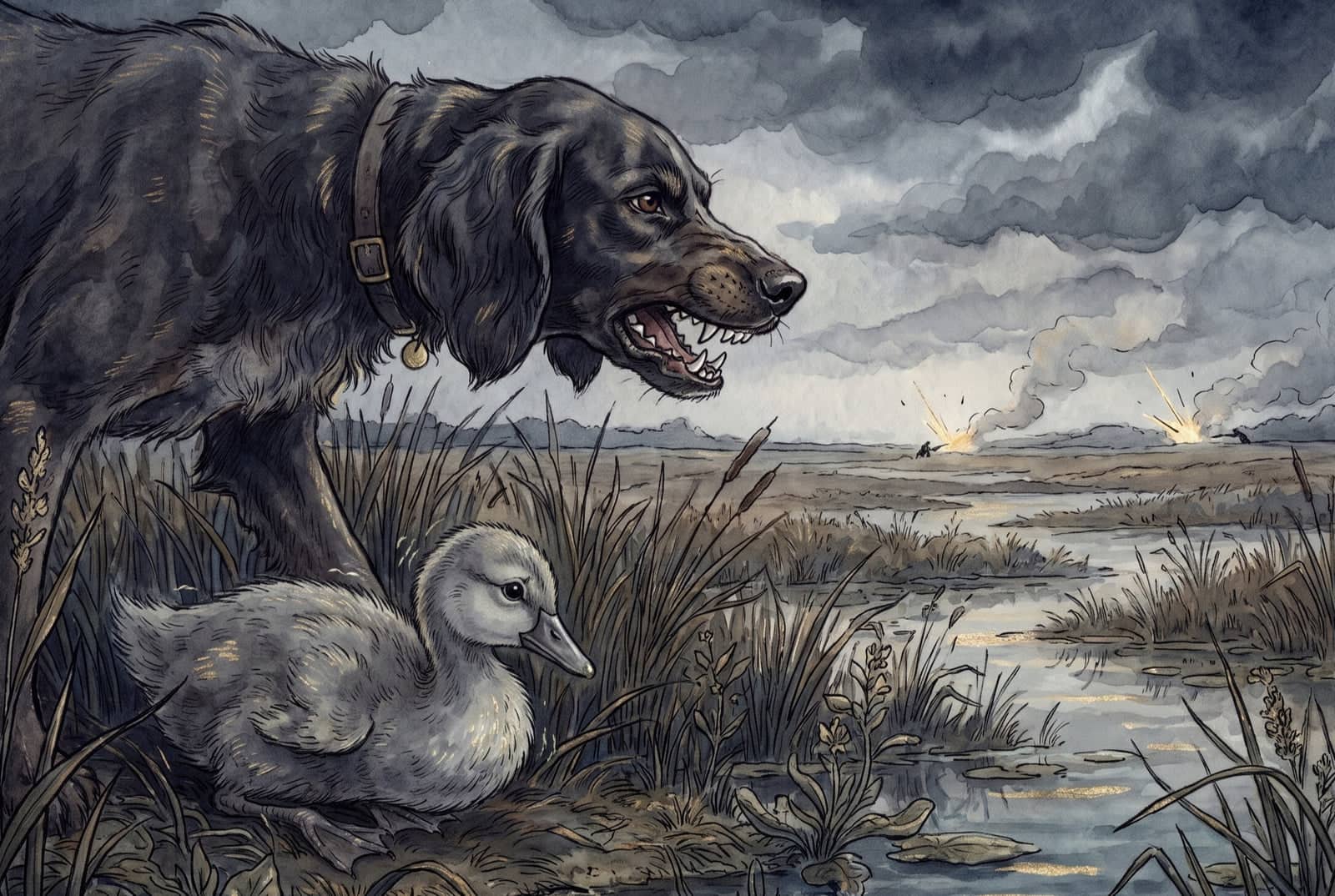
“Thank goodness I am so ugly,” sighed the duckling, “that even the dog will not bite me.” And he lay still while gun after gun went off above him.
It was late before all was quiet, and even then he did not dare to move. At last he hurried away over field and meadow, until a storm blew up and he could hardly go on.
Toward evening he came to a cottage so tumbledown that it could not make up its mind which way to fall. One hinge of the door had given way, and through the crooked gap the duckling slipped inside.
An old woman lived there with her tom cat and her hen. The cat, whom she called Sonny, could arch his back and purr, and even throw out sparks if you stroked his fur the wrong way. The hen had such short legs that she was called Chickie Shortlegs.
In the morning the cat purred and the hen clucked at the stranger. The woman’s eyes were not good, and she took the duckling for a fat duck that had strayed from home. “Now I shall have duck’s eggs,” she said, “if only it is not a drake.”
So he was taken on trial for three weeks, but no eggs came. The cat was master of the house and the hen was mistress, and they always said, “We and the world,” for they believed themselves to be half of it, and the better half.
“Can you lay eggs?” asked the hen.
“No.”
“Then be so good as to hold your tongue.”
“Can you arch your back, and purr, and throw out sparks?” said the cat.
“No.”
“Then you have no business to have an opinion when sensible people are talking.”
So the duckling sat in his corner, out of spirits, until the sunshine came in at the open door and such a longing to swim came over him that he had to tell the hen.
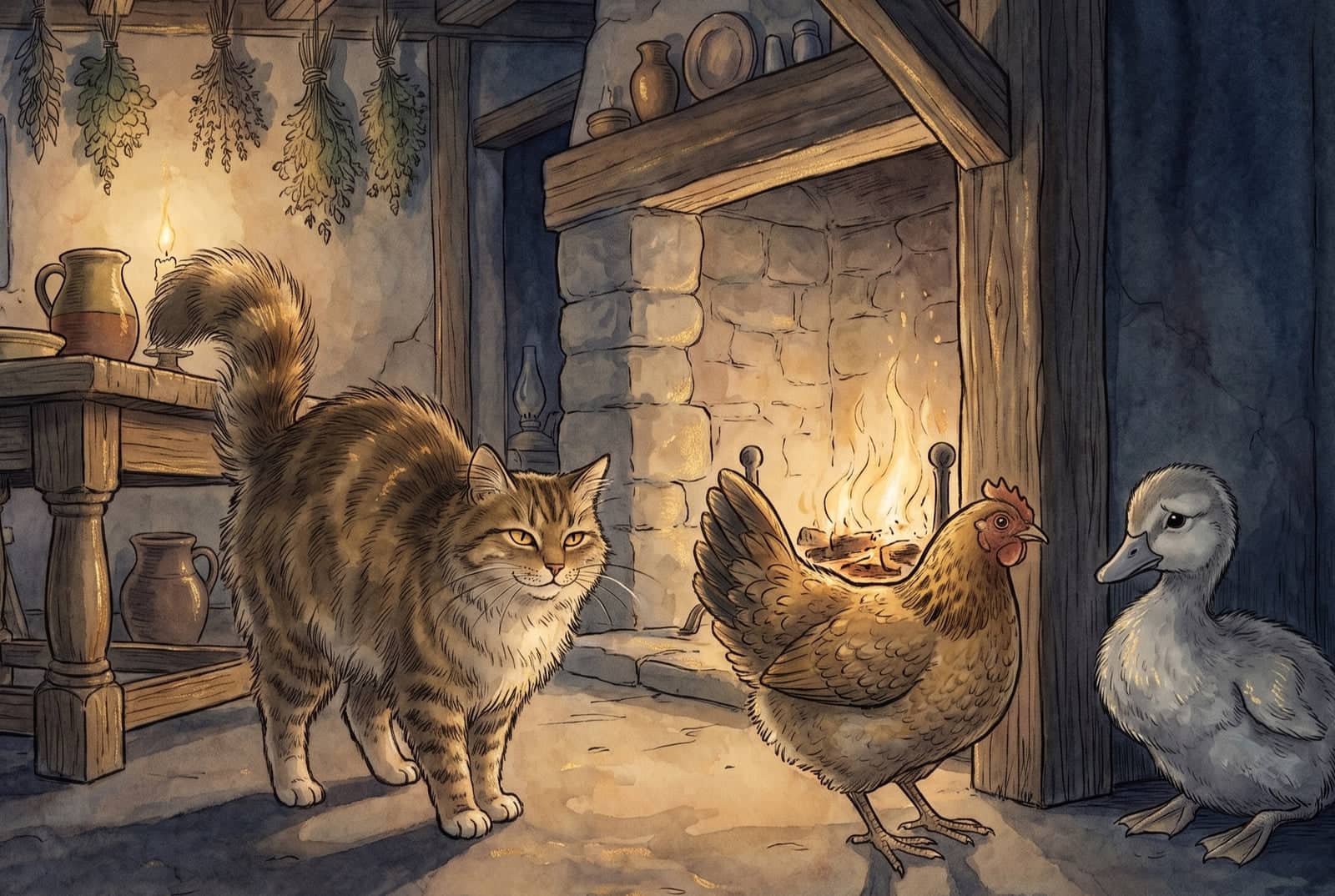
“What has gotten into you?” she said. “You have nothing to do, and that is why you get such fancies. Lay eggs, or purr, and they will pass off.”
“But it is so lovely to swim,” said the duckling, “to feel the water close over your head and to dive to the bottom.”
“A great pleasure, I am sure,” said the hen. “Ask the cat, the cleverest creature I know, whether he cares to dive. Do you suppose our mistress, the old woman, wants the water over her head?”
“You don’t understand me,” said the duckling.
“Then who is to understand you? Don’t give yourself airs, child, and be thankful for the good that has been done for you. I tell you unpleasant truths, and that is how you know your real friends.”
“I think I shall go out into the wide world,” said the duckling.
“Yes, do,” said the hen.
So he went. He swam and he dived, but every creature passed him by because he was so ugly.
Then autumn came. The leaves turned yellow and brown, and the clouds hung heavy with snow. On the fence stood the raven, crying, “Croak, croak,” with the cold. Things went hard for the poor duckling.
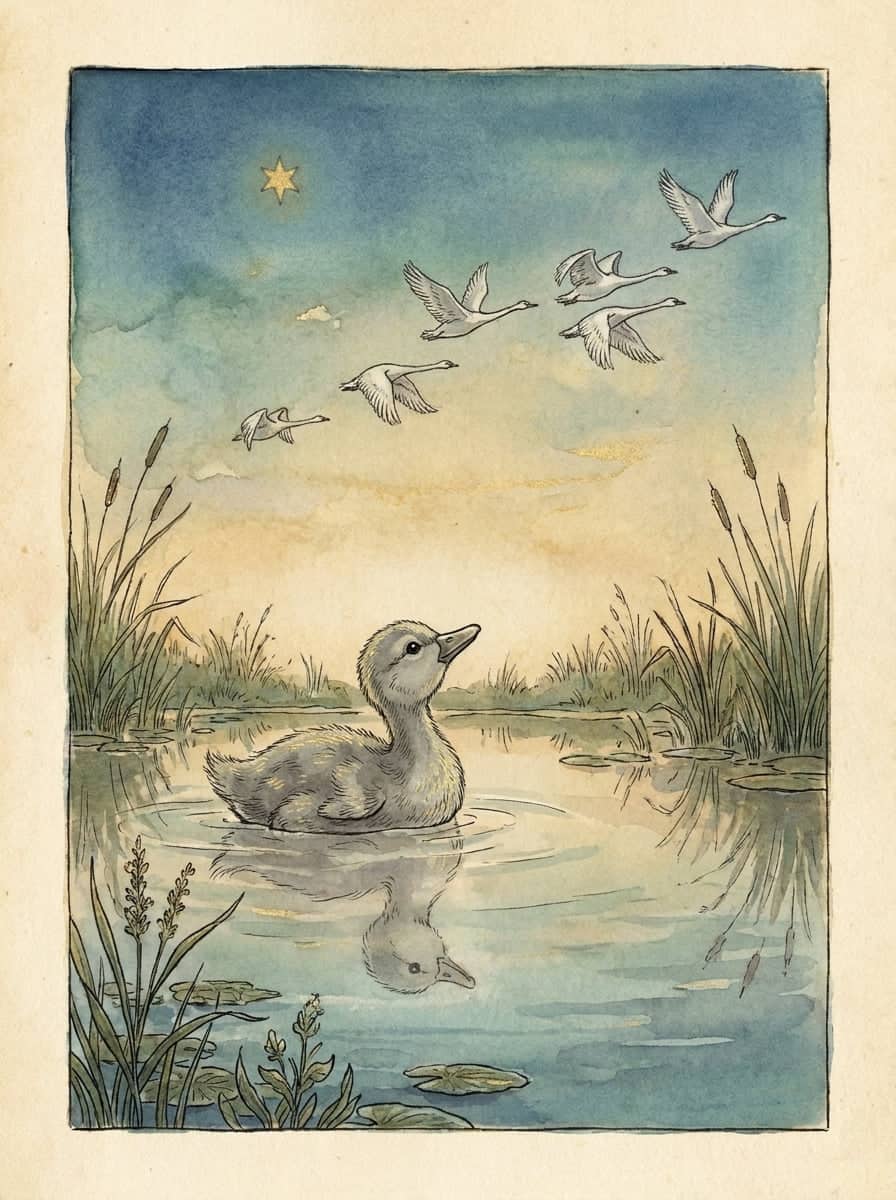
One evening, as the sun was going down, a flock of great birds came out of the bushes, dazzling white, with long, graceful necks. They were swans. They gave a strange cry, spread their splendid wings, and flew away to warmer lands. The duckling turned round in the water like a wheel, stretched his neck after them, and gave a cry so strange that it frightened him. He did not know what those birds were called, but he loved them as he had never loved anyone.
The winter grew very cold. He had to swim about to keep the water from freezing over, but every night the hole grew smaller, until at last he lay still and froze fast in the ice.
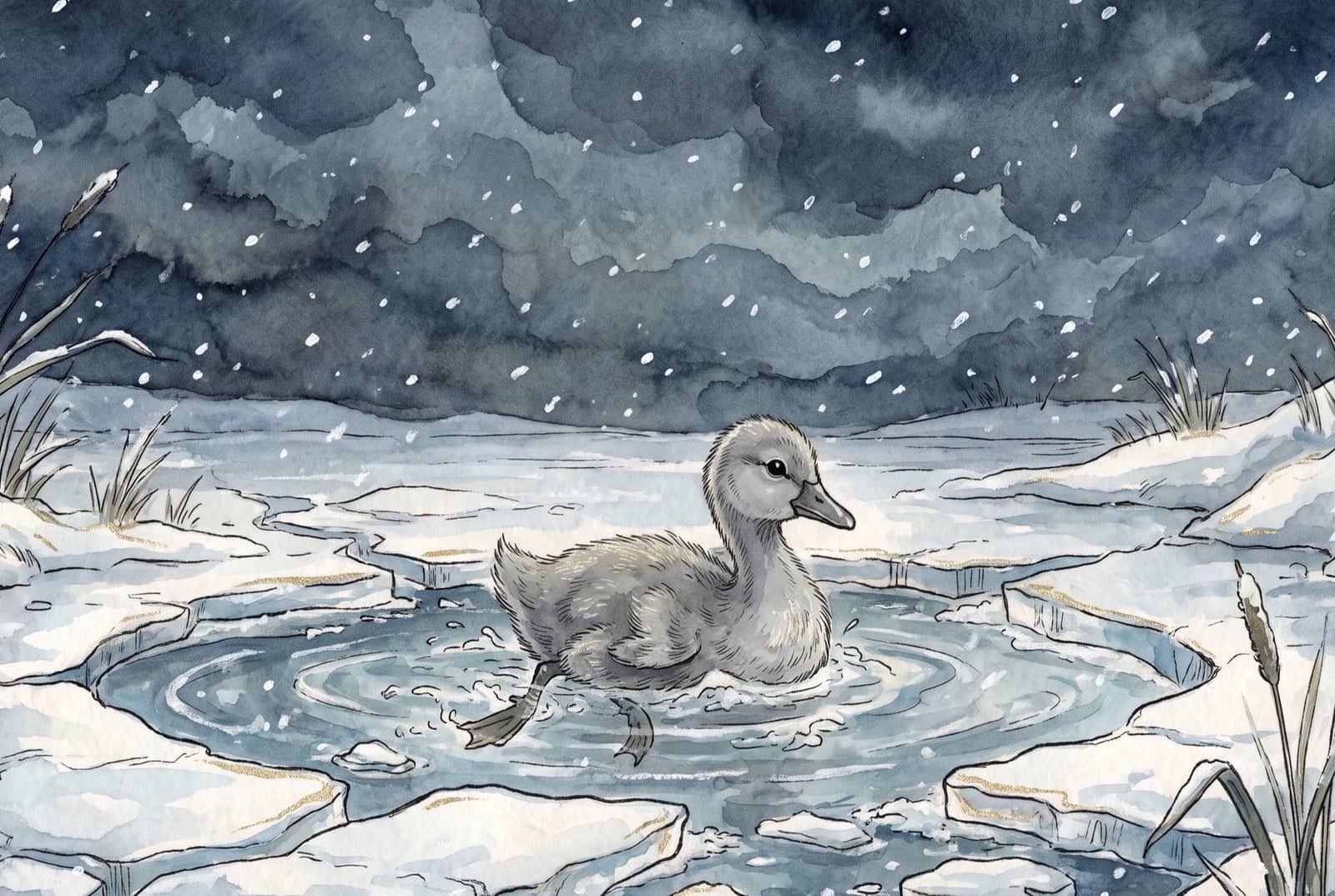
In the morning a farmer came by, broke the ice with his wooden shoe, and carried the duckling home to his wife. There the duckling came to himself again.
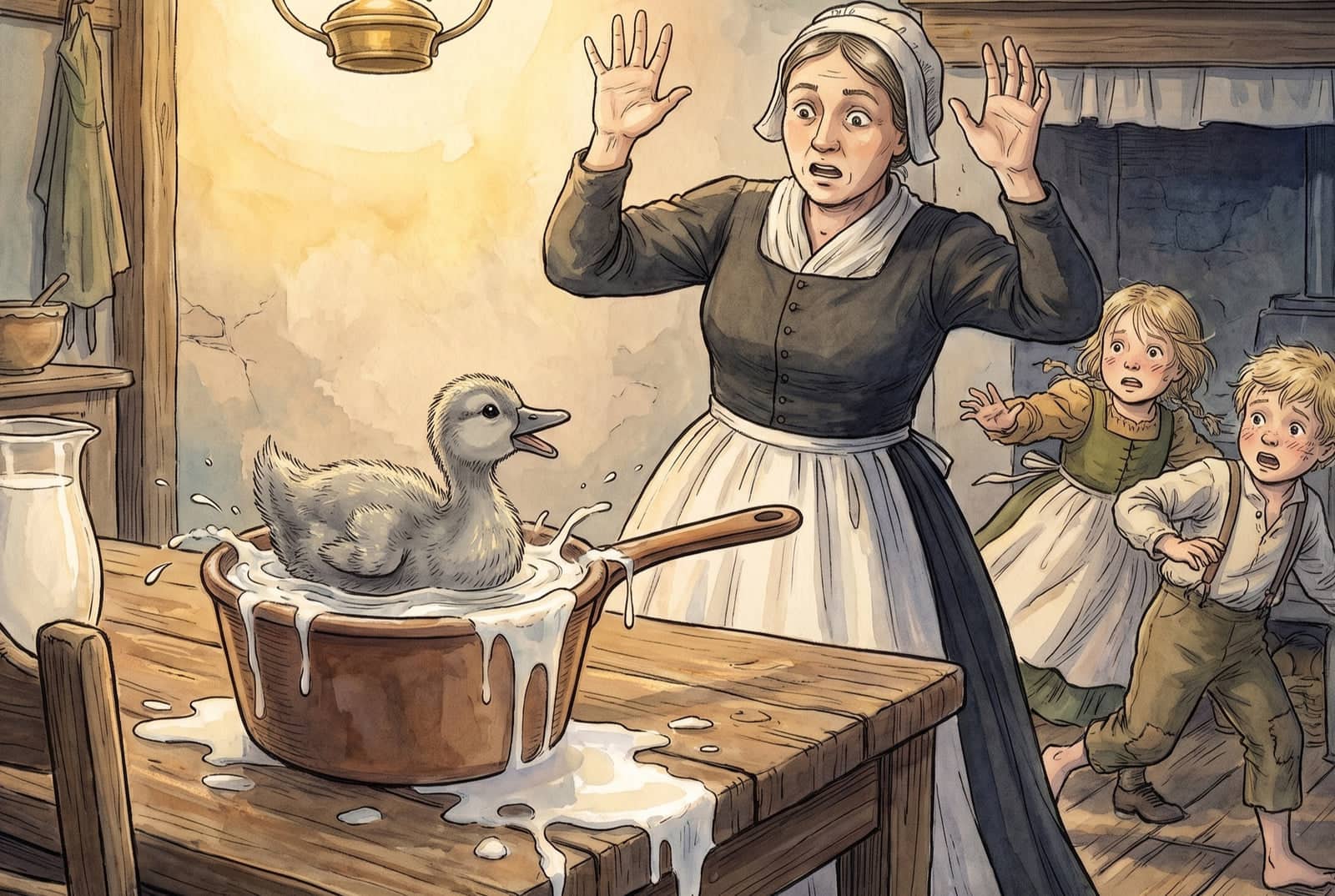
The children wanted to play with him, but he thought they meant to hurt him, and in his fright he flew into the milk pan, so that the milk splashed all over the room. The woman clapped her hands, and away he went into the butter cask and then the meal barrel. She struck at him with the tongs, and luckily the door stood open. He slipped out into the snow and lay there, worn out.
It would be too sad to tell all the misery he bore that winter. He was lying among the reeds when the sun began to shine warm again, and the larks were singing. It was beautiful spring.
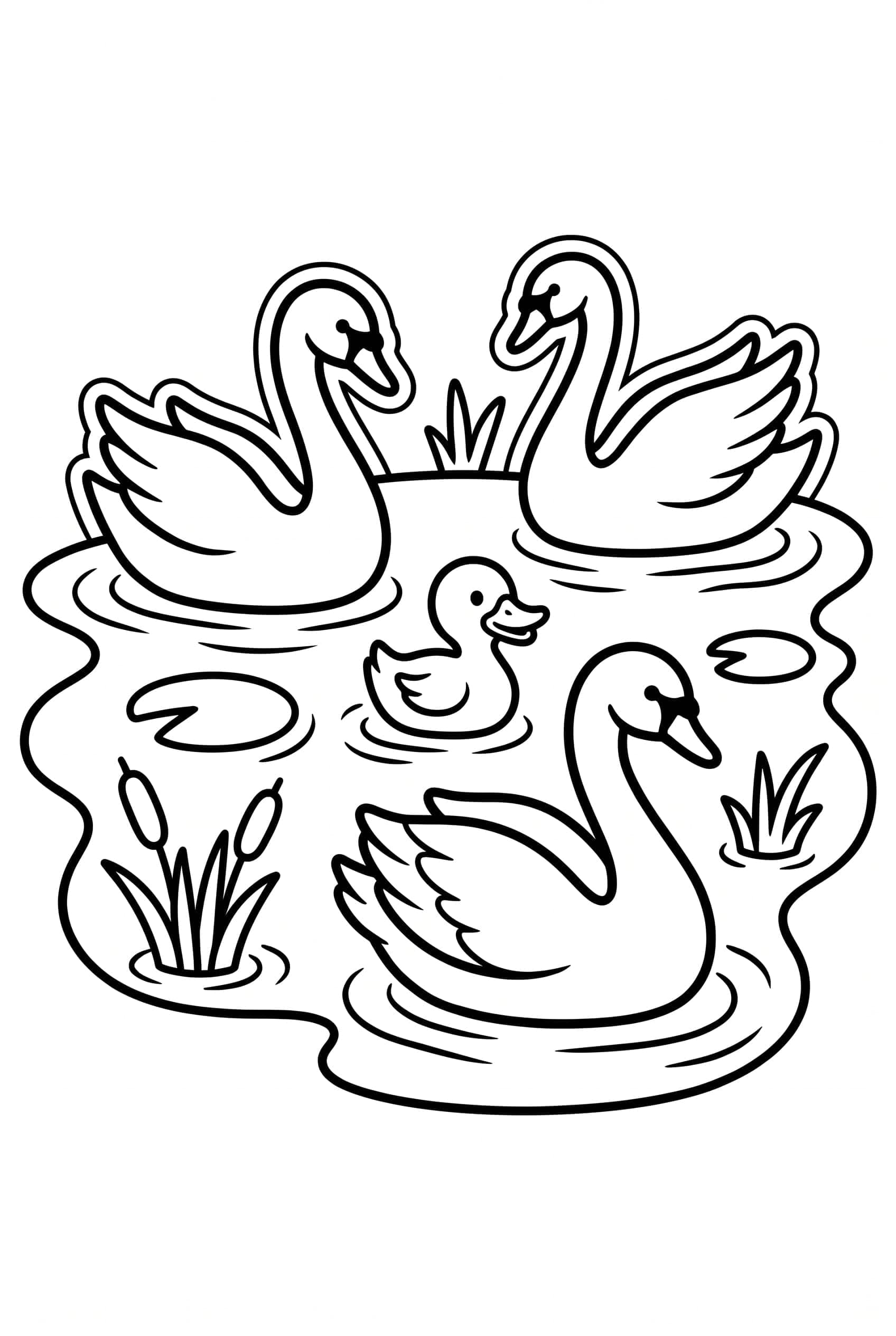
Then all at once he lifted his wings. They beat strongly and carried him into a great garden, where the apple trees stood in blossom and the lilac bent its branches down to the water. Out of the thicket came three splendid white swans. The duckling knew the glorious birds, and a strange sadness came over him.
“I will fly to those royal birds,” he said, “and they will strike me dead, because I, who am so ugly, dare to come near them. But better that than to be nipped by the ducks, beaten by the hens, and to go hungry through the winter.”
He flew out on to the water and swam toward them. They saw him and came rushing at him with their feathers raised.
“Kill me, then,” said the poor creature, and he bent his head to the water and waited.
But what did he see below him in the clear water? His own likeness, and it was no longer a heavy, dark gray bird. It was a swan.
It does not matter in the least being born in a duck yard, if only you have lain in a swan’s egg.
He was glad now of all the trouble he had come through, for it made his good fortune the sweeter. The great swans swam round him and stroked him with their beaks.
Some little children came into the garden and threw bread into the water, and the smallest cried, “There is a new one.” The others clapped their hands and danced and ran to fetch their father and mother.
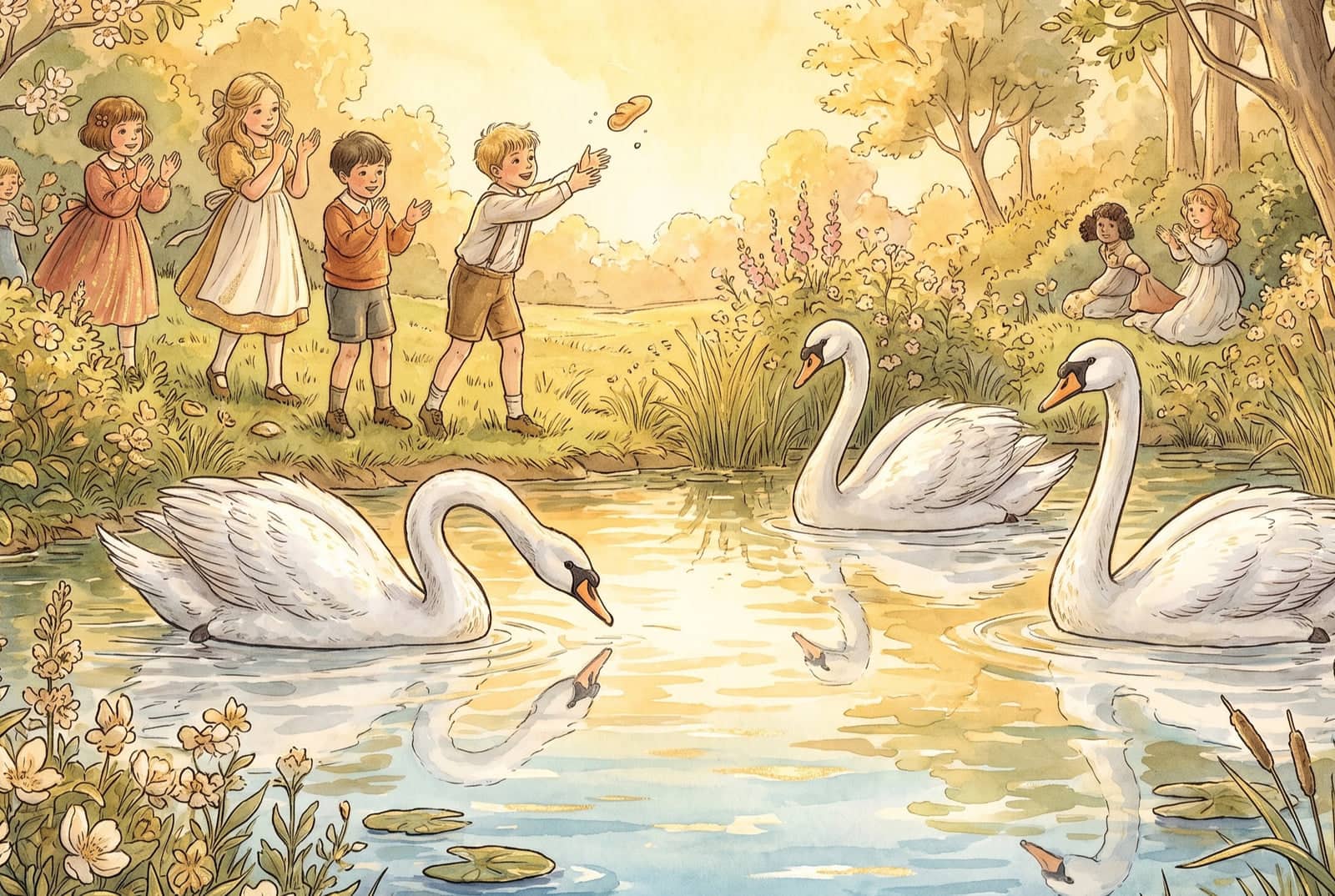
“The new one is the most beautiful of all,” they said. And the old swans bowed their heads before him.
Then he felt quite ashamed and hid his head under his wing. He was far too happy, and yet not proud at all. He thought how he had been hunted and mocked, and now they were all saying that he was the most beautiful of all the birds. Then his feathers rustled, his slender neck lifted, and he rejoiced from a full heart: “I never dreamed of so much happiness when I was the ugly duckling.”
Retold by Talerie from Fairy Tales of Hans Christian Andersen (opens in a new window)License: Public domainCopy this text, adapt it, use it however you like. A link back to Talerie is appreciated but never required.CC0 1.0 (opens in a new window)