A father’s angry word turns his seven sons into ravens, and the little sister born that day walks to the end of the world to find them, past the sun and the moon to the kind stars. She pays dearly to open the glass mountain that holds them, drops her ring into the last cup, and her brothers have their own shapes again.
There was once a man who had seven sons and no daughter at all, however much he wished for one.
At last a little girl was born to him. The joy in that house was great, but the baby was small and weak, so weak that the christening could not wait for Sunday. It had to be done at once.
The father sent one of the boys running to the spring for the water. The other six ran along with him, and because every one of them wanted to be the first to dip the jug, they pulled it this way and that until it slipped out of their hands and went down into the well.
There they stood, looking at the dark water below. Not one of them dared to go home.
At home the father waited, and when the boys did not come and did not come, he lost his patience. “They have forgotten all about it over some game,” he said. “The good-for-nothing boys.”
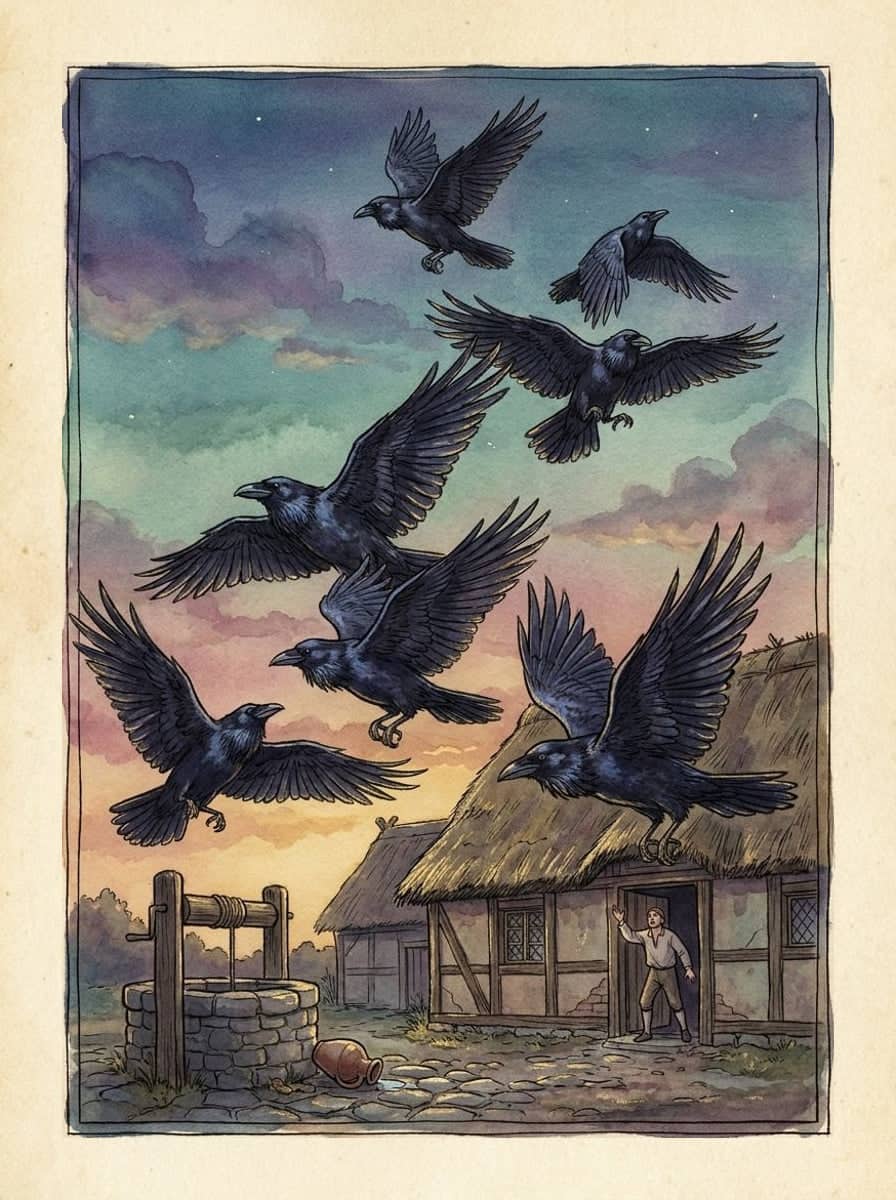
Then a worse fear took hold of him, that his little daughter would die before she was christened, and in his anger he cried out, “I wish the boys were all turned into ravens!”
The word was hardly out of his mouth when he heard a whirring in the air above the roof. He looked up, and there flew seven coal-black ravens, away over the house and out of sight.
Not all his sorrow could call that word back again. The parents grieved for their seven sons, and they took what comfort they could in their little daughter, who soon grew strong and grew lovelier with every day that passed.
For a long time the girl did not know that she had ever had brothers, because her parents took care never to speak of them in front of her. Then one day she overheard two people talking about her.
“She is a pretty thing,” they said, “but she is the reason those seven brothers of hers came to grief.”
The words stayed with her like a stone in her shoe. She went to her father and mother and asked whether it was true that she had once had brothers, and what had become of them.
They could not keep the secret any longer. They told her everything, and they said that Heaven had willed it so, and that it was no fault of hers.
That was no comfort to her. Day after day she thought of her seven brothers, until she came to believe that it was for her to set them free.
She had no rest and no peace until at last she slipped out of the house in secret and went off into the wide world to find her brothers and free them, whatever it might cost her.
She took nothing with her but a little ring her parents had given her, to remember them by, a loaf of bread for her hunger, a jug of water for her thirst, and a small stool to sit on when she grew tired.
She walked on and on, far, far, to the very end of the world.
There she came to the sun. But the sun was too hot and too terrible, and it ate little children, and she turned and ran.
She ran until she came to the moon, and the moon was far too cold, and cruel besides. When it caught sight of the child it said, “I smell, I smell human flesh.”
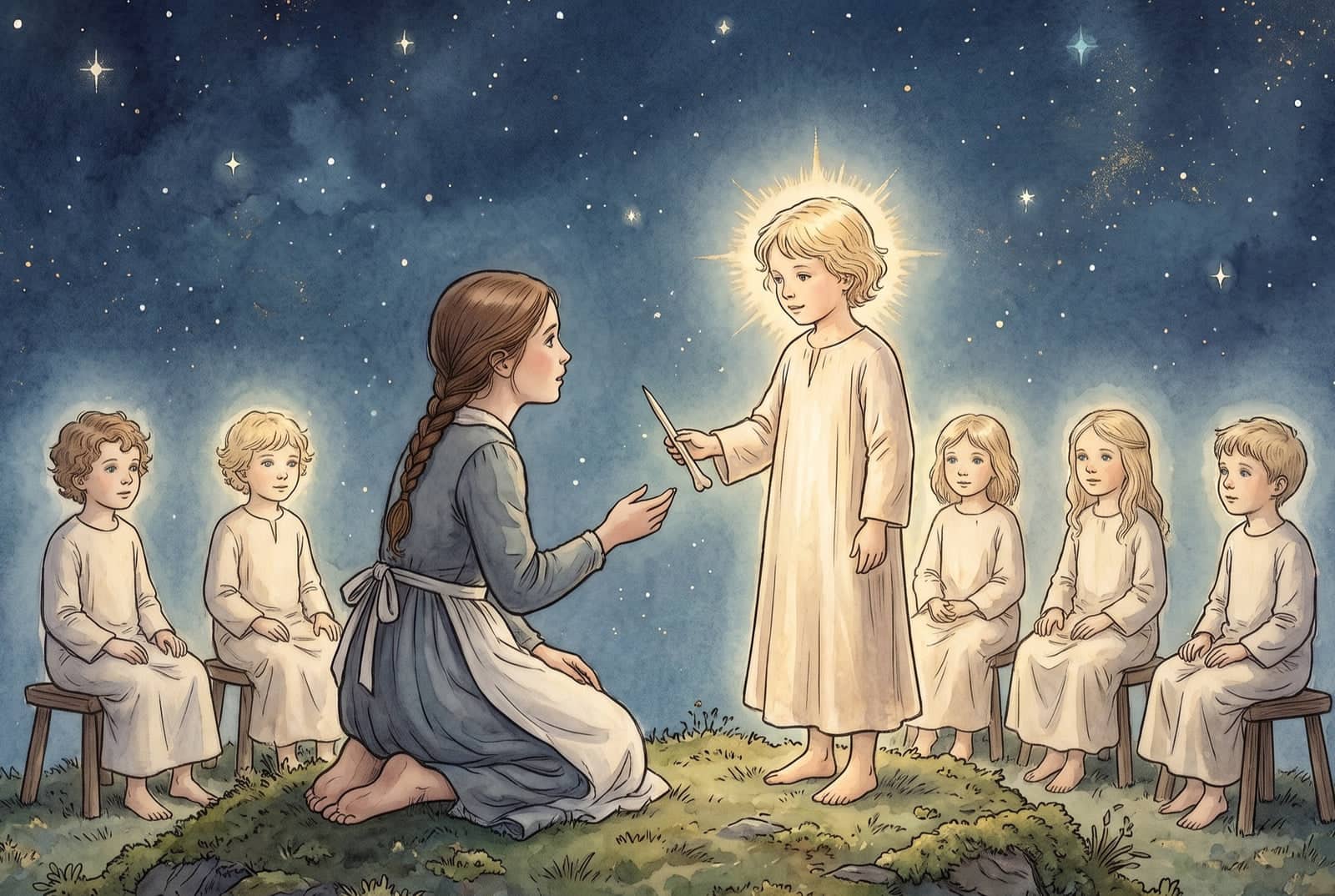
Away she ran again, and this time she came to the stars. The stars were kind to her, and good. Each of them sat on a little stool of its own.
Then the Morning Star stood up and gave her a small bone, the drumstick of a chicken.
“Without this little bone you cannot unlock the glass mountain,” it said, “and your brothers are inside the glass mountain.”
The girl wrapped the bone carefully in a cloth and walked on until the glass mountain stood shining in front of her.
The gate was locked. She reached for the bone, and when she opened the cloth, the cloth was empty. The good stars’ gift was gone, lost somewhere along that long road.
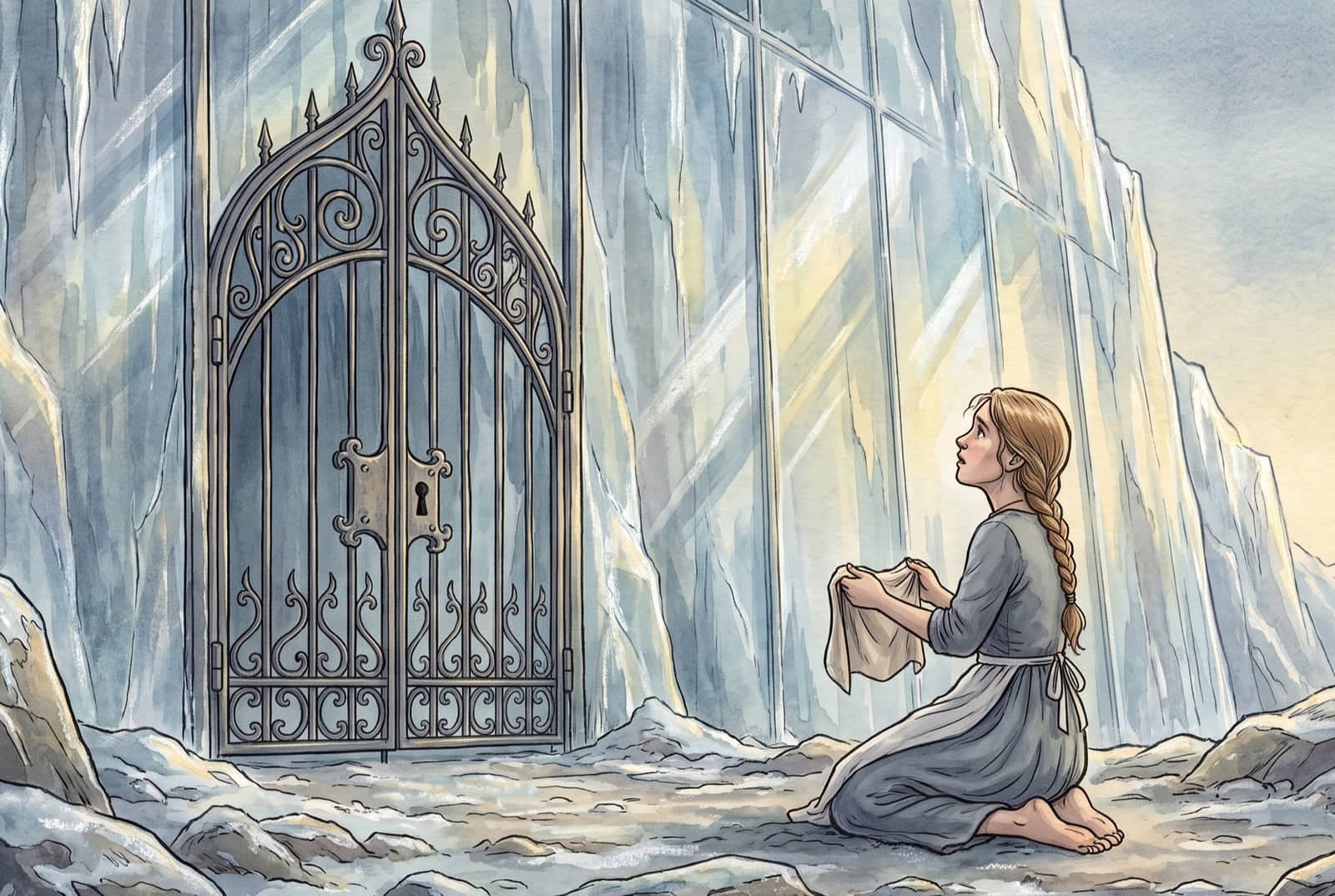
What was she to do now? Her brothers were shut inside, and she had no key.
So the good little sister made a key where there was none: one of her own small fingers. She set it in the lock, and the gate opened for her.
Inside, a little dwarf came to meet her. “My child,” he said, “what are you looking for?”
“I am looking for my brothers, the seven ravens,” she answered.
“My masters the ravens are not at home,” said the dwarf, “but you may wait here until they come.”
Then the dwarf carried in the ravens’ supper, on seven little plates, with seven little cups beside them.
From every little plate the sister ate one small mouthful, and from every little cup she took one small sip. Into the last cup she let the ring fall, the ring she had brought from home.
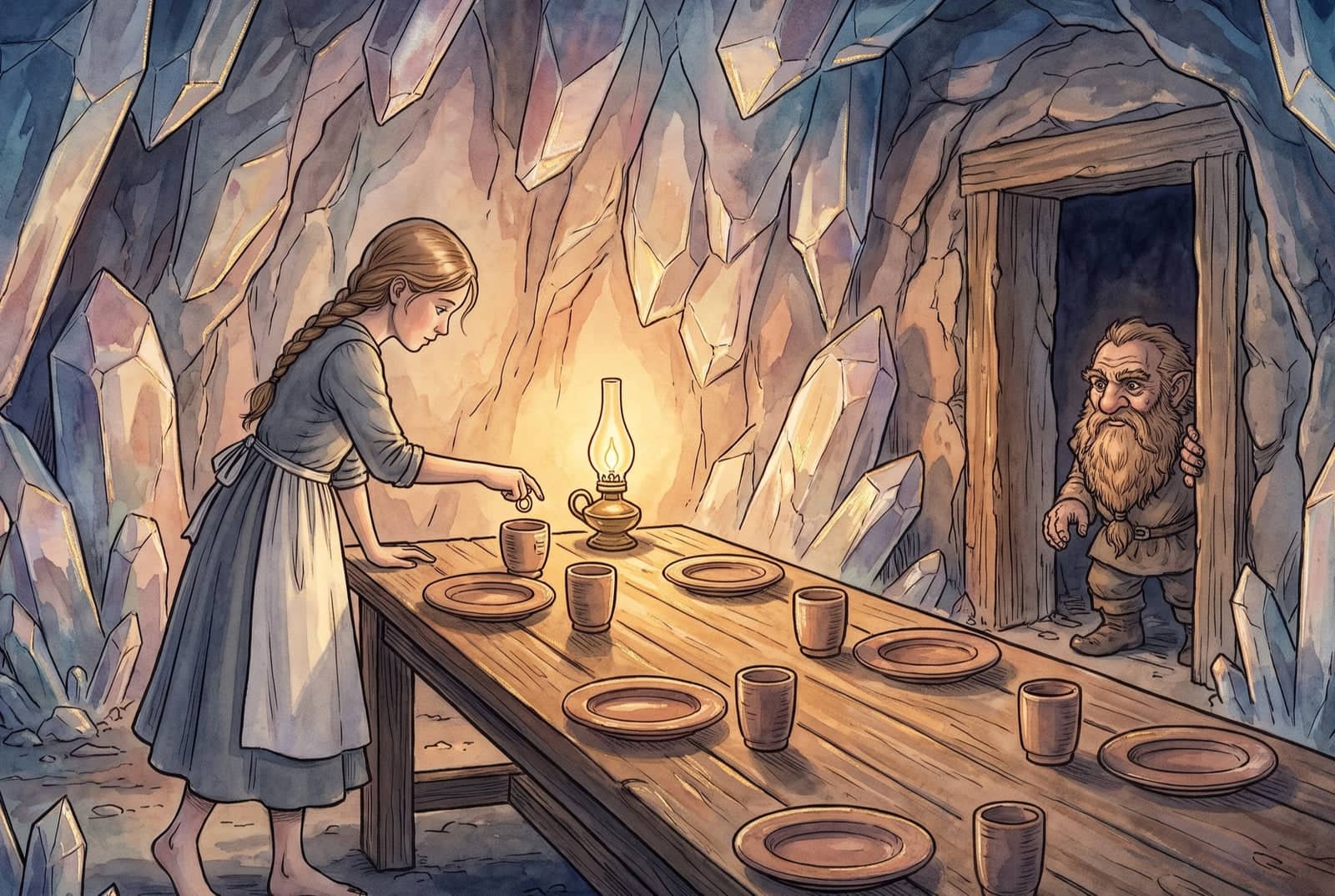
All at once there was a whirring and a rushing in the air outside. “Now my masters are flying home,” said the dwarf.
The girl slipped behind the door and stood still.
In they came, wanting their supper, and went to their places, and each one looked at his little plate and his little cup. Then said the first, and the second, and every one after him:
Who has eaten from my little plate?Who has drunk from my little cup?That was a human mouth.
And when the seventh came to the bottom of his cup, something rolled against his lips. He took it out and looked at it, and he knew it at once. It was a ring belonging to his father and mother.
“God grant our little sister were here,” he said, “and then we should be set free.”
The girl, listening behind the door, heard the wish and stepped out into the room.
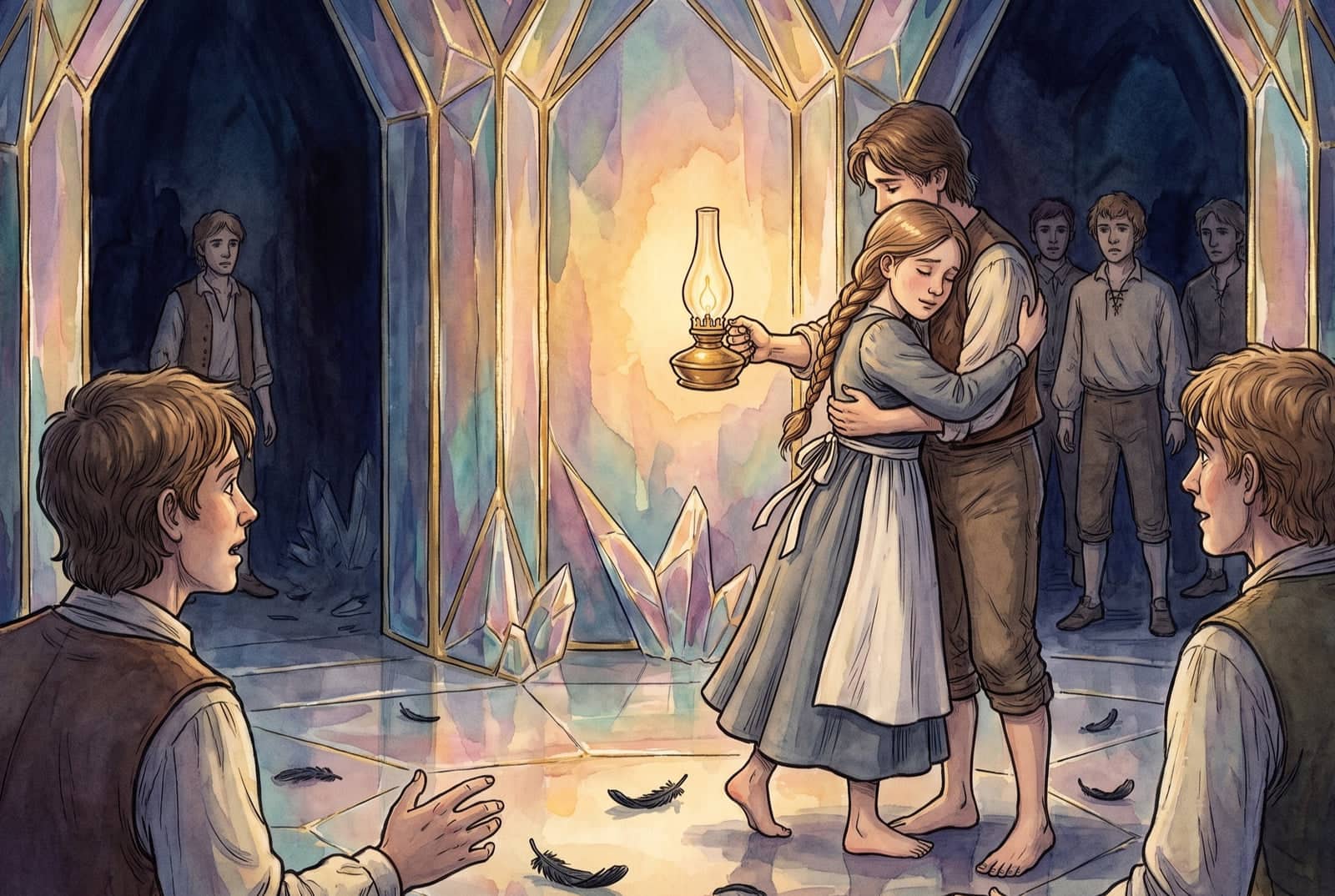
In that same moment the ravens had their own shapes again, and there stood her seven brothers. They hugged her and kissed her, and the eight of them went home together, joyfully.
Retold by Talerie, Source: Household Tales by Brothers Grimm (opens in a new window)
License: Public domainCopy this text, adapt it, use it however you like. A link back to Talerie is appreciated but never required.CC0 1.0 (opens in a new window)