A stepdaughter is rinsing the blood from her spindle at the well when it slips from her hand. She jumps in after it and wakes in a meadow where bread calls from an oven and apples beg to be shaken down. Farther on, Frau Holle peeps out of a little house, her teeth so large the girl almost runs.
There was once a widow who had two daughters. One was beautiful and hardworking, and the other was ugly and lazy. But the widow loved the ugly, lazy one far more, because she was her own child. The other girl was only her stepdaughter, so it was the stepdaughter who had to do all the work and be the Cinderella of the house.
Every day the poor girl had to sit by a well beside the highway and spin and spin until her fingers bled. One day her spindle was stained with blood, so she leaned over the well to rinse it clean. But the spindle slipped out of her hand and fell to the bottom.
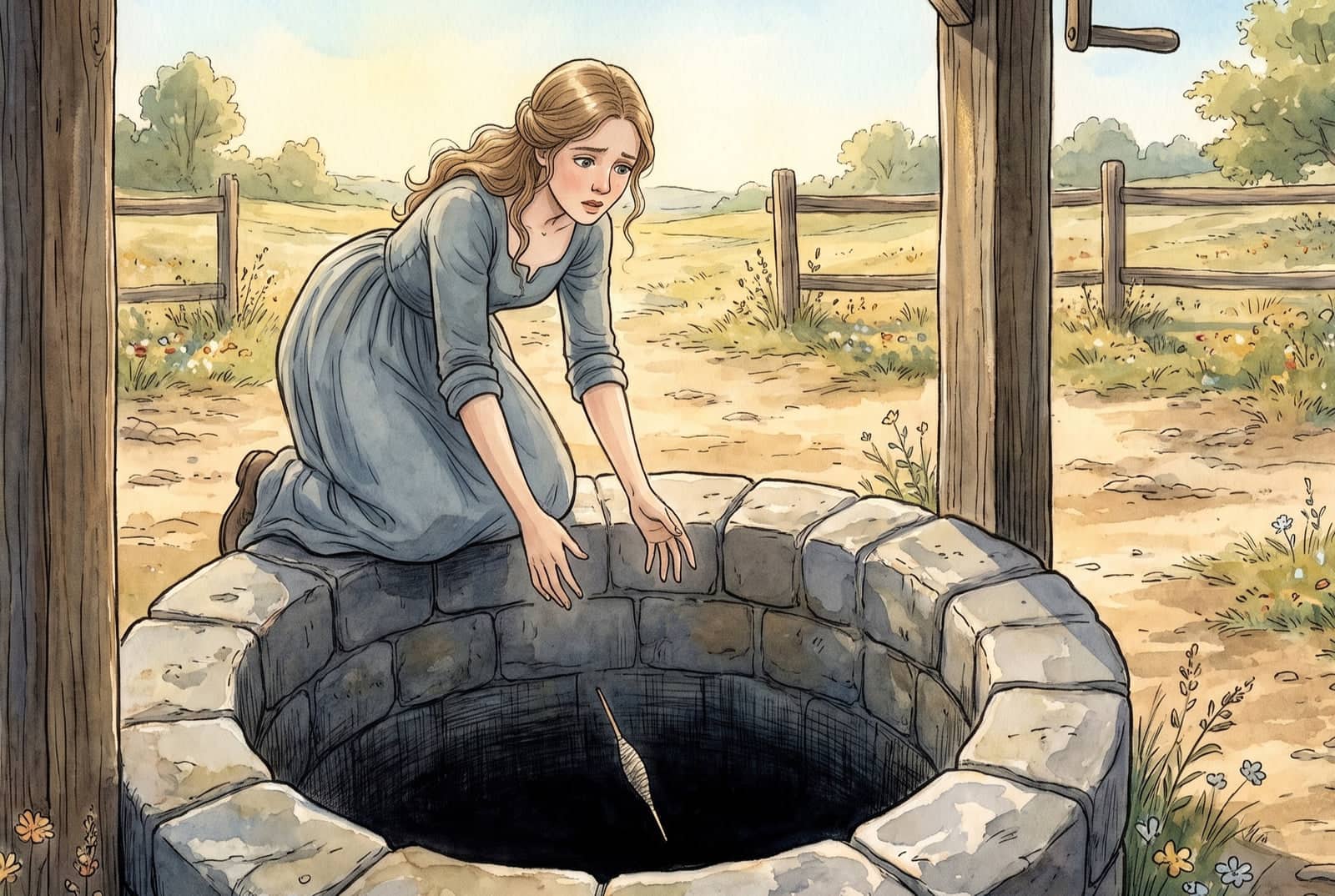
The girl began to cry. She ran to her stepmother and told her what had happened, but the stepmother scolded her harshly and showed her no mercy at all.
“You let the spindle fall in,” the stepmother said, “so you can go and fetch it out again.”
So the girl went back to the well. She was at her wits’ end, and in her misery she jumped in after the spindle. She fainted, and when she came to, she was lying in a lovely meadow. The sun was shining, and thousands of flowers grew all around her.
The girl walked across the meadow until she came to a baker’s oven full of bread, and the bread called out to her.
“Take me out, take me out, or I shall burn! I have been baked long enough.”
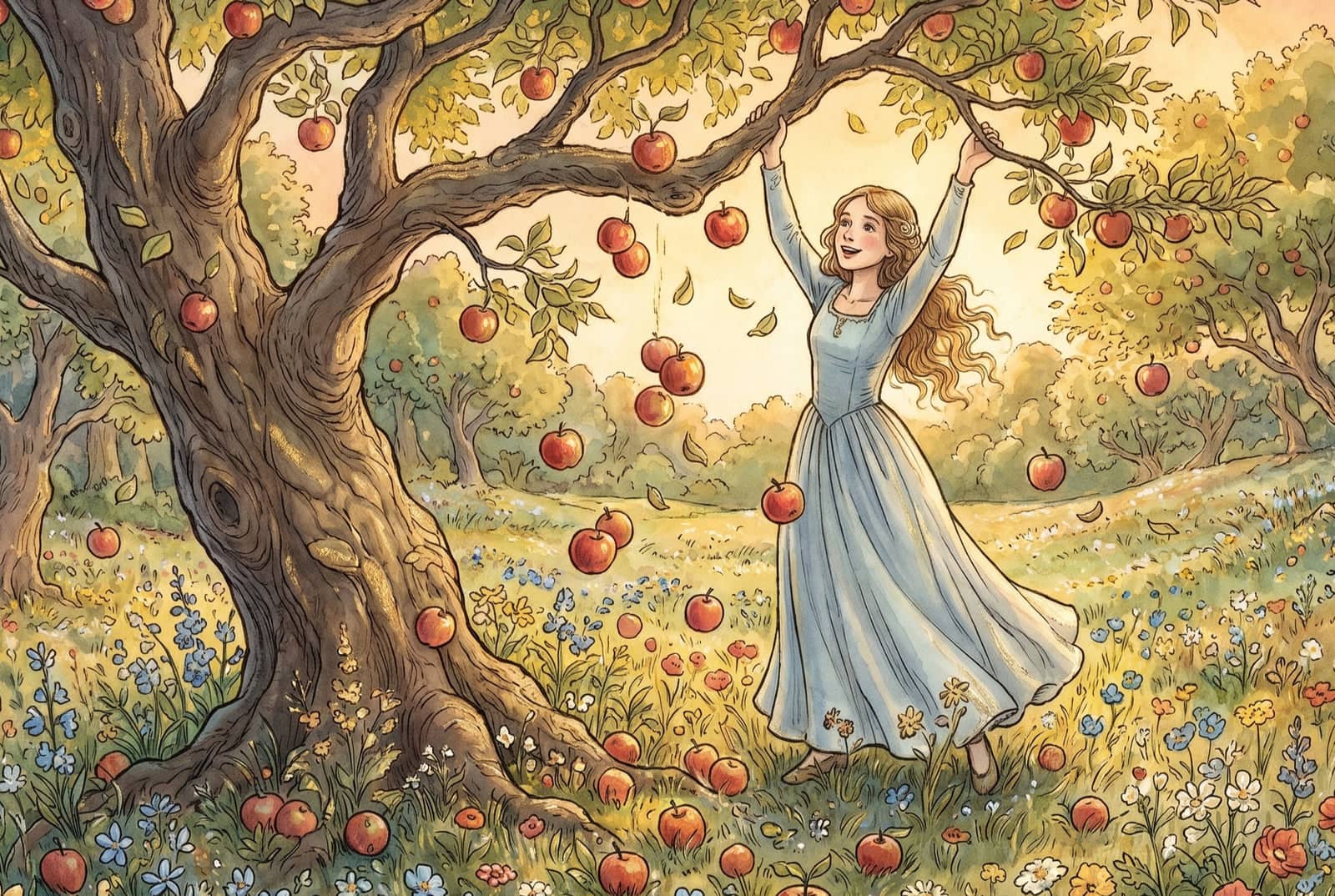
The girl went up to the oven and took out the loaves, one after another, with the bread shovel. Then she walked on until she came to a tree heavy with apples, and the tree called out to her too.
“Shake me, shake me! We apples are all of us ripe.”
The girl shook the tree until the apples fell like rain, and she kept on shaking until not one was left. Then she gathered them into a heap and went on her way.
At last the girl came to a little house, and an old woman peeped out of it. The old woman had such large teeth that the girl was frightened and was about to run away.
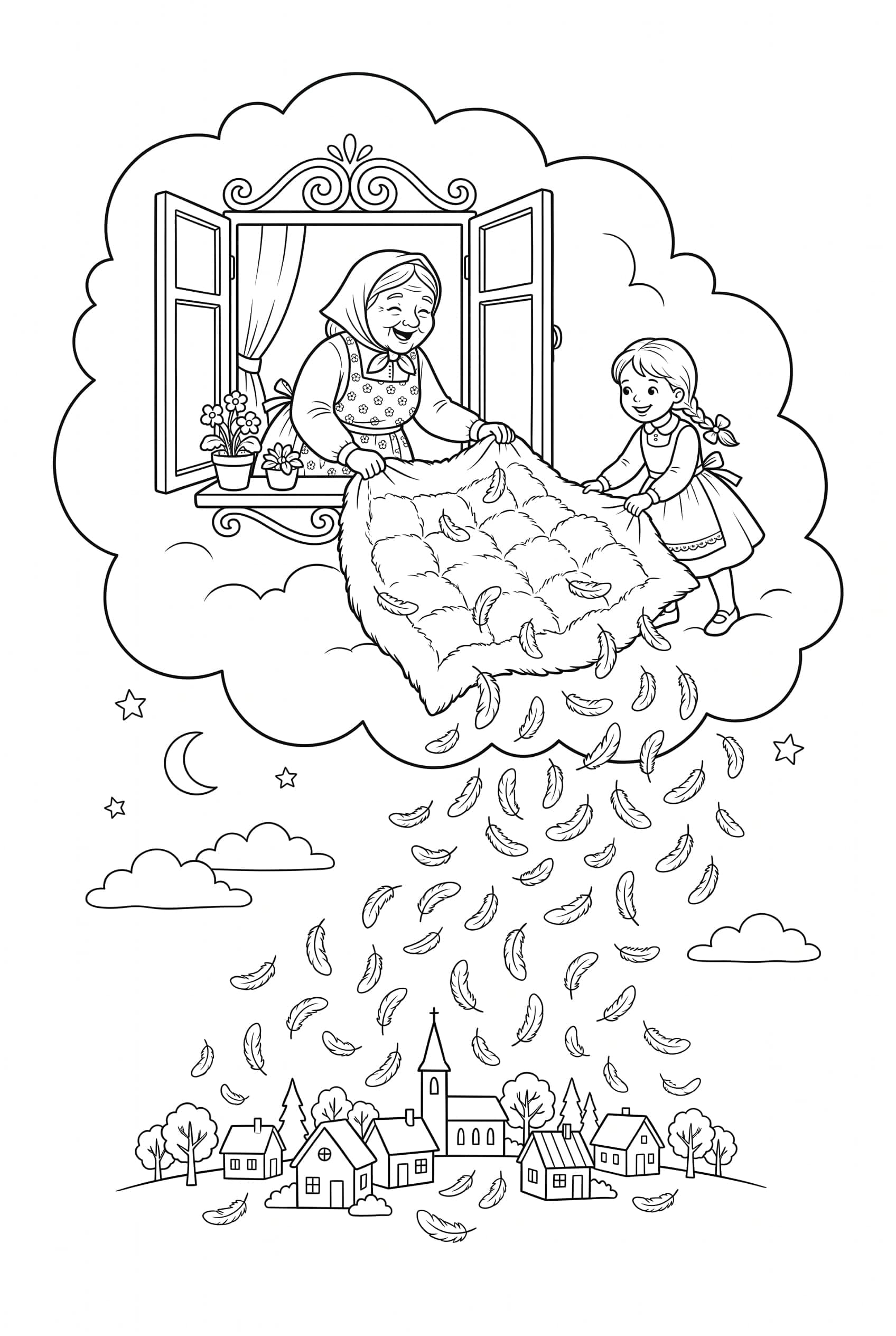
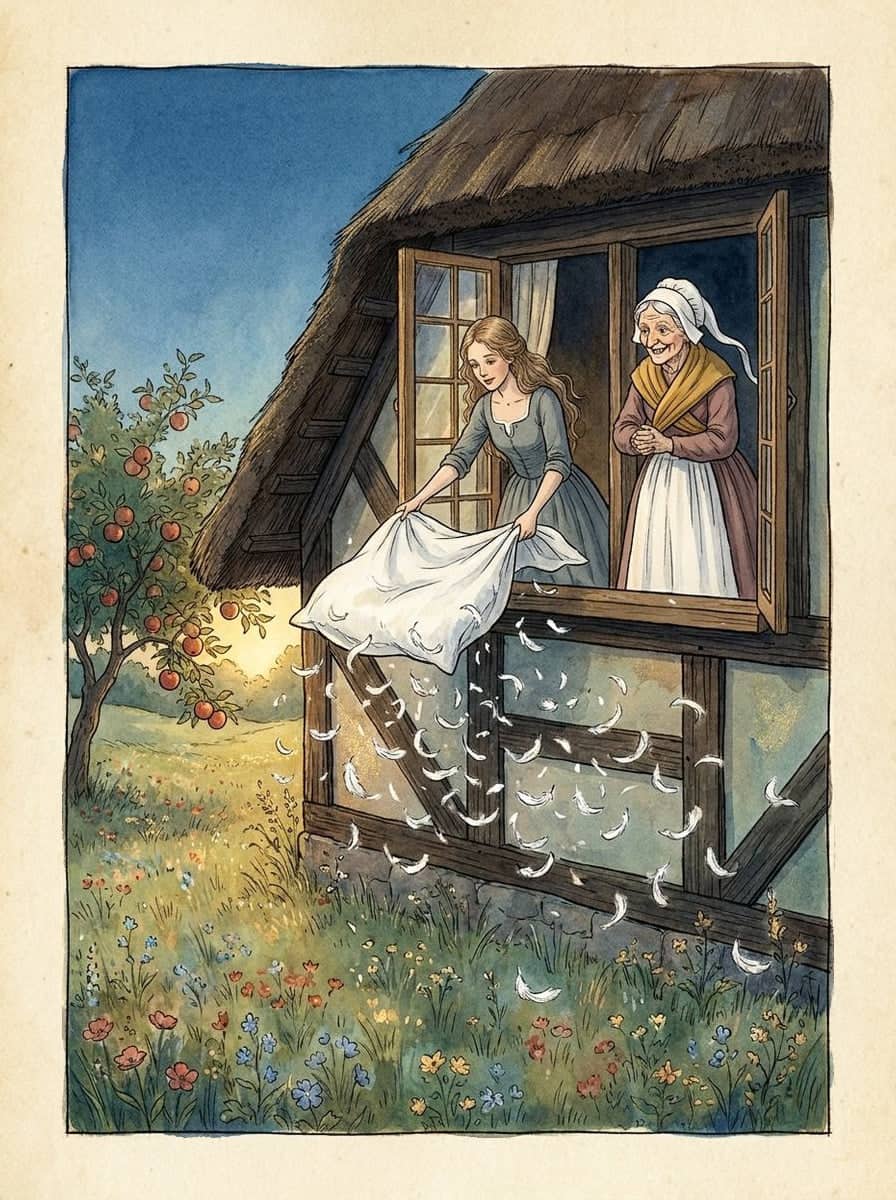
“What are you afraid of, dear child?” the old woman called after her. “Stay with me. If you do all the work in the house properly, you’ll be well taken care of. But you must make my bed carefully and shake it hard, until the feathers fly, for then it snows in the world above. I am Frau Holle.”
The old woman spoke so kindly that the girl took heart and agreed to work for her. She did everything just as Frau Holle wished, and she always shook the bed so hard that the feathers flew about like snowflakes. In return she had a good life there. She never heard an angry word, and she had roast or boiled meat every day.
After she had been with Frau Holle for some time, the girl grew sad. At first she didn’t know what was wrong, but in the end she understood that she was homesick. She was a thousand times better off here than at home, and still she longed to go back.
“I’m homesick,” the girl said to Frau Holle at last. “However well off I am down here, I can’t stay any longer. I must go back up to my own people.”
“I’m glad you long for home,” said Frau Holle, “and because you have served me so faithfully, I will take you up myself.”
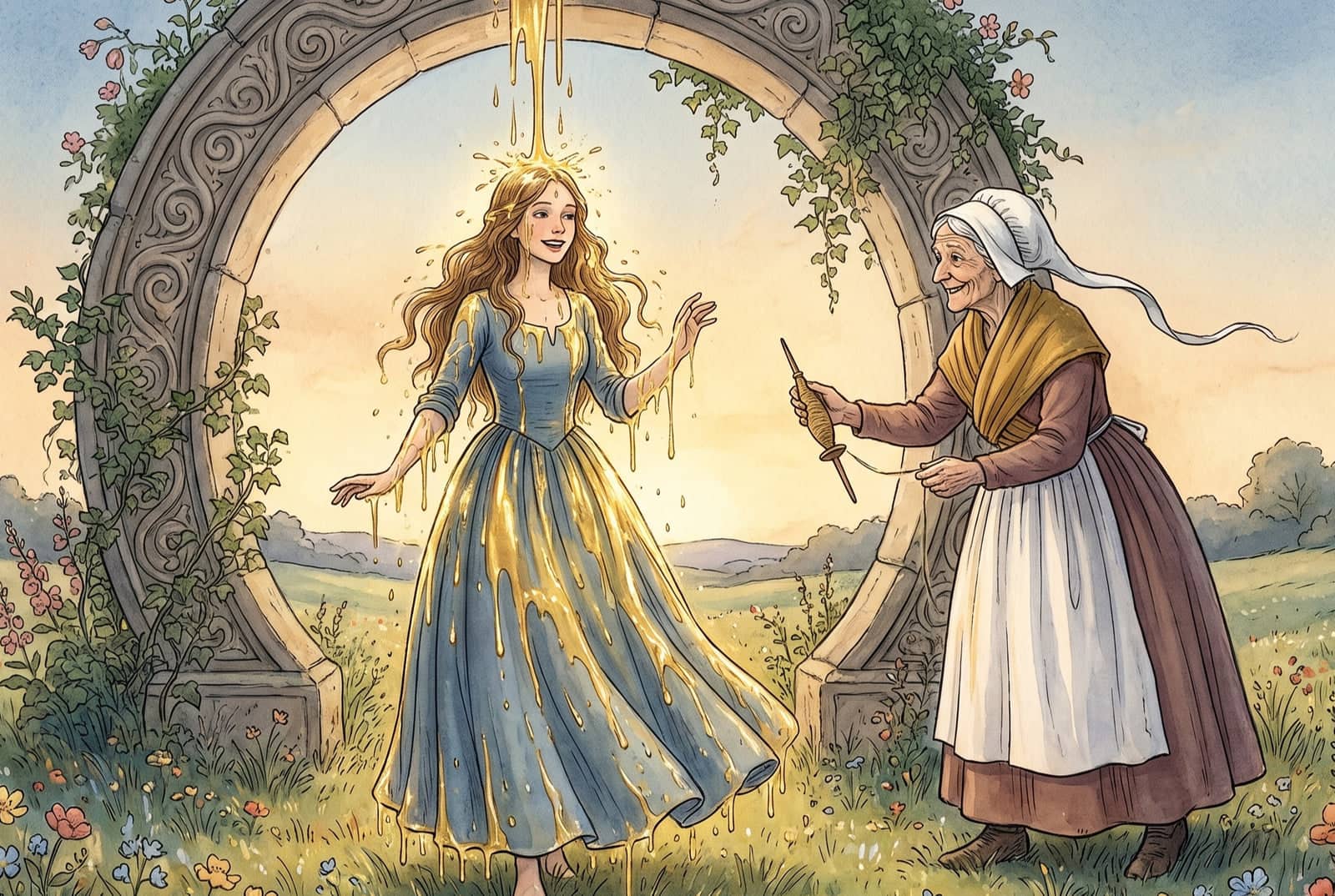
Frau Holle took the girl by the hand and led her to a great gate. The gate swung open, and just as the girl stood beneath it, a heavy shower of gold came pouring down. All the gold clung to her until she was covered with it from head to toe.
“That is yours, because you have worked so hard,” said Frau Holle, and she gave the girl back the spindle that had fallen into the well. Then the gate closed, and the girl found herself up in the world again, not far from home.
As the girl came into the yard, the rooster standing by the well saw her and crowed.
Cock-a-doodle-doo! Our golden girl has come home to you!
So the girl went in to her stepmother, and because she came home covered in gold, her stepmother and her stepsister gave her a warm welcome.
The girl told them everything that had happened to her. When the stepmother heard how the girl had come by such riches, she wanted the same good luck for her own ugly, lazy daughter.
So the lazy girl had to sit by the well and spin. To get blood on her spindle, she stuck her hand into a thorn bush and pricked her finger. Then she threw the spindle into the well and jumped in after it.
The lazy girl woke in the same lovely meadow as her stepsister and walked along the very same path. When she reached the oven, the bread called out again.
“Take me out, take me out, or I shall burn! I have been baked long enough.”
But the lazy girl answered, “As if I’d want to get my hands dirty!” and walked on.
Soon she came to the apple tree, and the tree called out to her.
“Shake me, shake me! We apples are all of us ripe.”
“The very idea!” the lazy girl answered. “One of you might fall on my head.” And on she went.
When the lazy girl came to Frau Holle’s house, she wasn’t afraid, because she had already heard about the big teeth, and she went to work for Frau Holle at once.
On the first day the lazy girl made herself work hard and did whatever Frau Holle told her, for she was thinking of all the gold she would be given. On the second day she began to dawdle, and on the third day she did even less. By then she wouldn’t get up in the morning at all. She didn’t make Frau Holle’s bed properly either, and she never shook it hard enough to make the feathers fly.
Frau Holle soon grew tired of this and told the lazy girl to leave. The lazy girl was glad enough to go, because she thought the shower of gold was coming at last. Frau Holle led her to the great gate too, but as the lazy girl stood beneath it, a big kettle of pitch was emptied over her instead of gold.
“That is the reward for your service,” said Frau Holle, and she shut the gate.
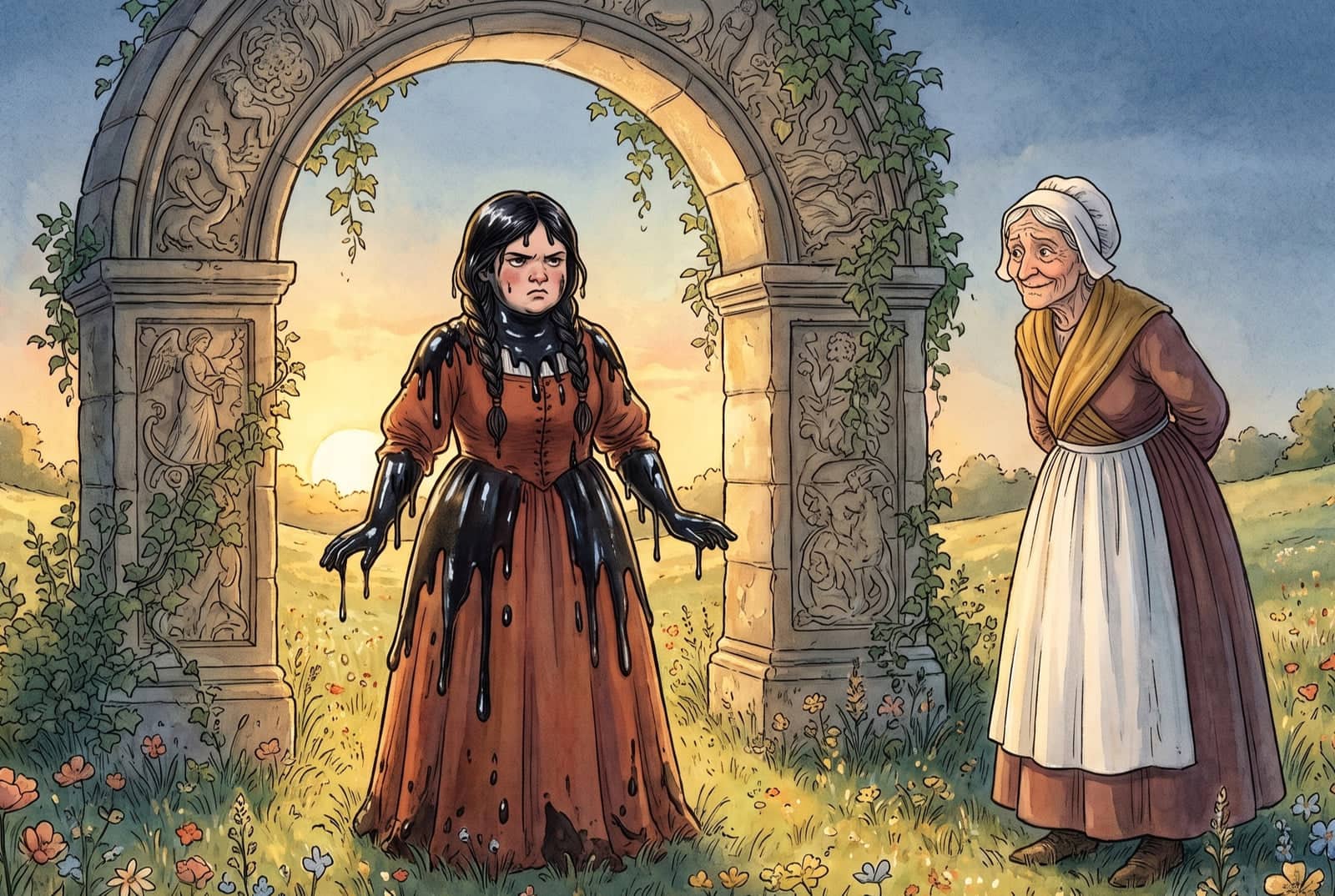
So the lazy girl went home, covered all over in pitch. As soon as the rooster by the well saw her, he crowed.
Cock-a-doodle-doo! Our pitchy girl has come home to you!
The pitch stuck fast to her, and it would not come off as long as she lived.
Retold by Talerie from Household Tales by Brothers Grimm (opens in a new window) Public domain Copy this text, adapt it, use it however you like. A link back to Talerie is appreciated but never required. CC0 1.0 (opens in a new window)