The Elves and the Shoemaker
4 min readages 3 and uptalerie.com/en/tales/the-elves-and-the-shoemaker
A poor shoemaker wakes to find the leather he cut sewn into shoes so fine that customers pay well for them. He and his wife stay up and watch two little men work at midnight, so the couple sew them clothes in thanks, and the little men dress and dance over the chairs and out the door.
Once there was a shoemaker who, through no fault of his own, grew so poor that all he had left was enough leather for a single pair of shoes.
One evening he cut out the pieces, meaning to sew them in the morning. His conscience was clear, so he said his prayers and lay down and slept peacefully.
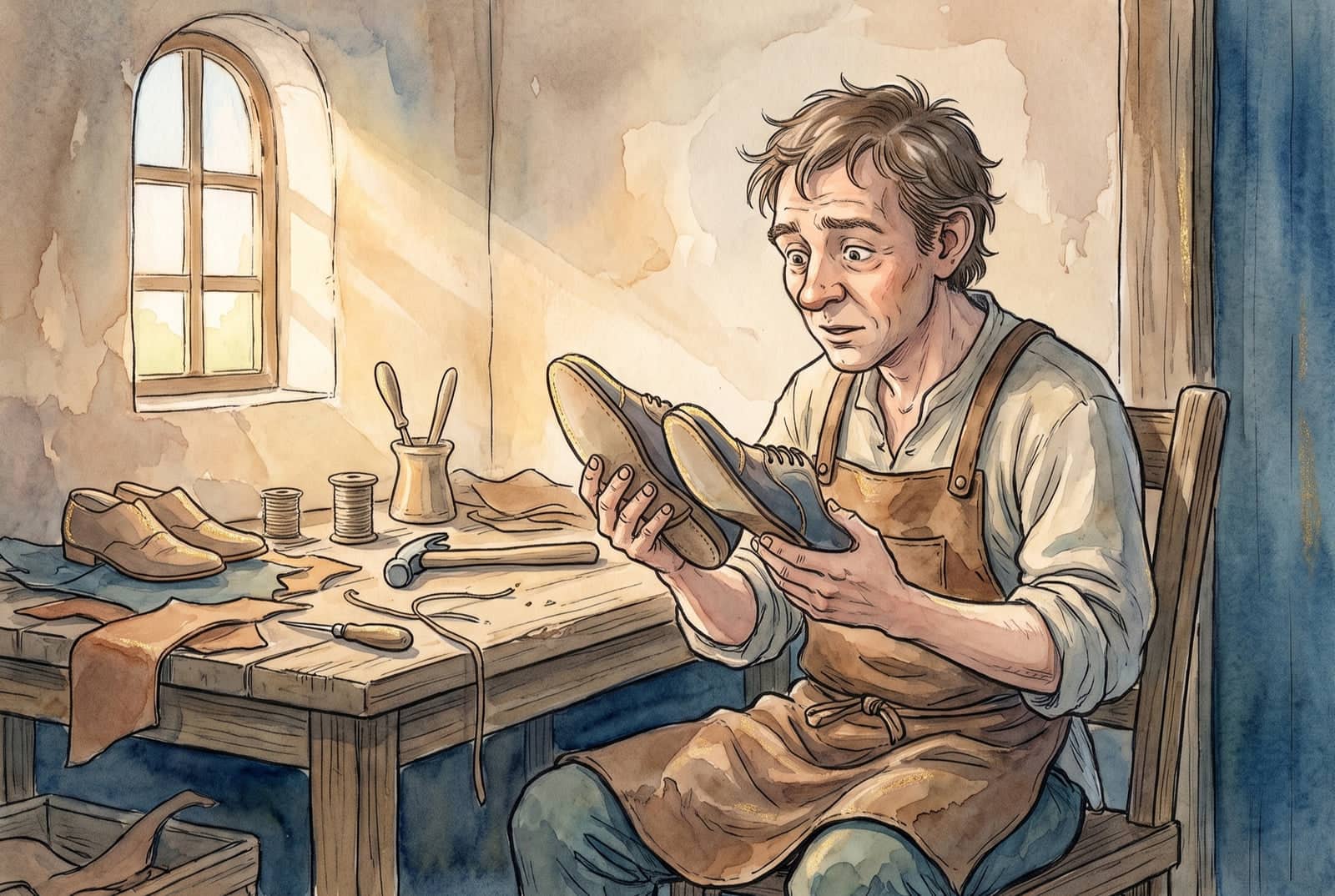
When he woke and sat down to work, there on the table stood the shoes, finished.
He turned them over in his hands, hardly believing what he saw. Not one stitch was crooked. They were as fine as anything a master could have made.
That same morning a customer came in. He liked the shoes so well that he paid more than the usual price, and with the money the shoemaker bought leather for two pairs.
He cut them out that evening and went to bed meaning to start early. There was no need. When he got up, both pairs stood ready, and buyers came for them too, and paid so well that he could buy leather for four pairs.
The next morning the four pairs were finished as well.
And so it went on. Whatever he cut out in the evening was sewn by dawn. Soon he was making an honest living again, and before long he was a wealthy man.
One evening not long before Christmas, when he had finished his cutting, he said to his wife, “What would you say to sitting up tonight and seeing who it is that gives us such a helping hand?”
His wife thought that was a fine idea. She lit a candle, and the two of them hid in the corner of the room behind the clothes that hung there, and watched.
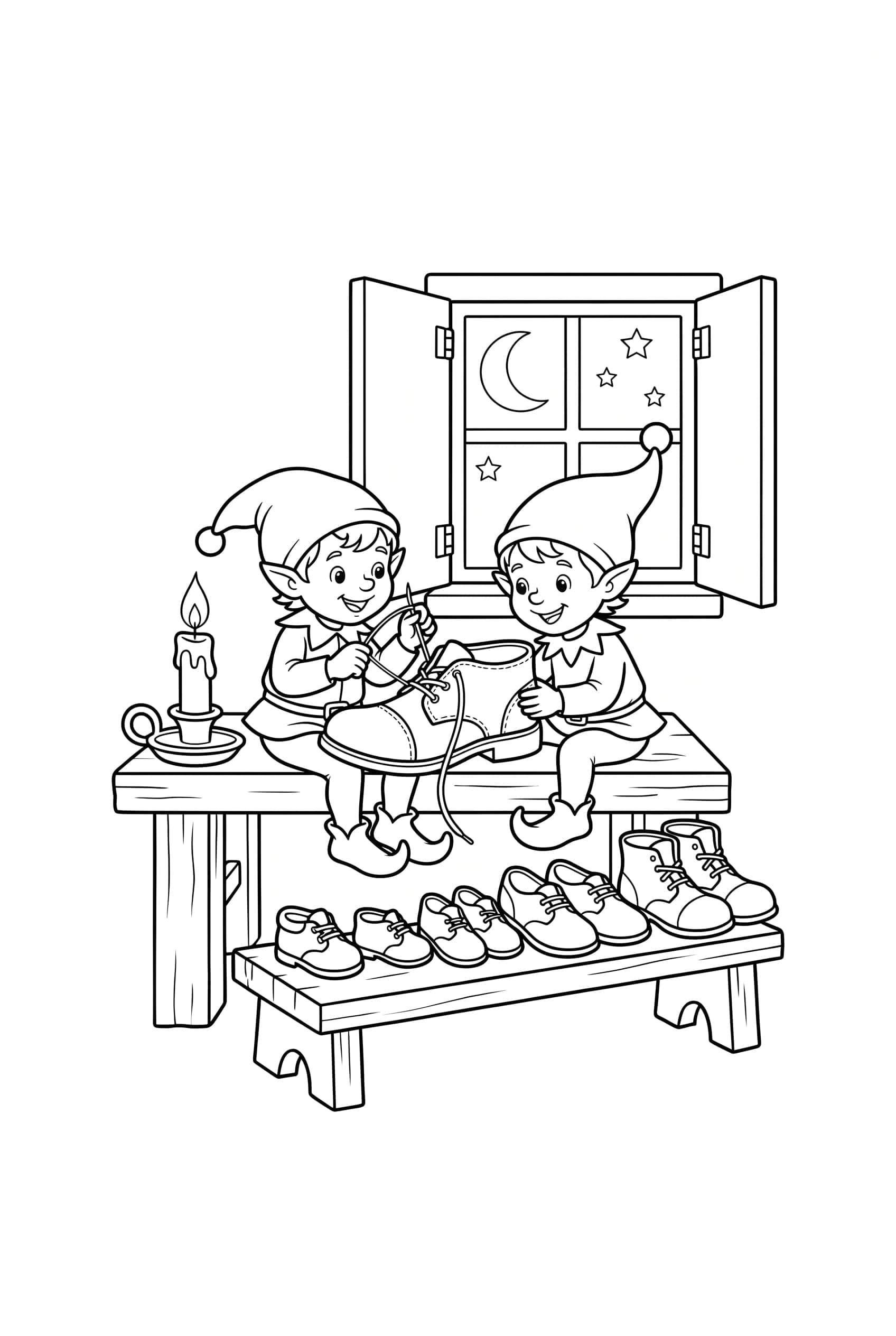
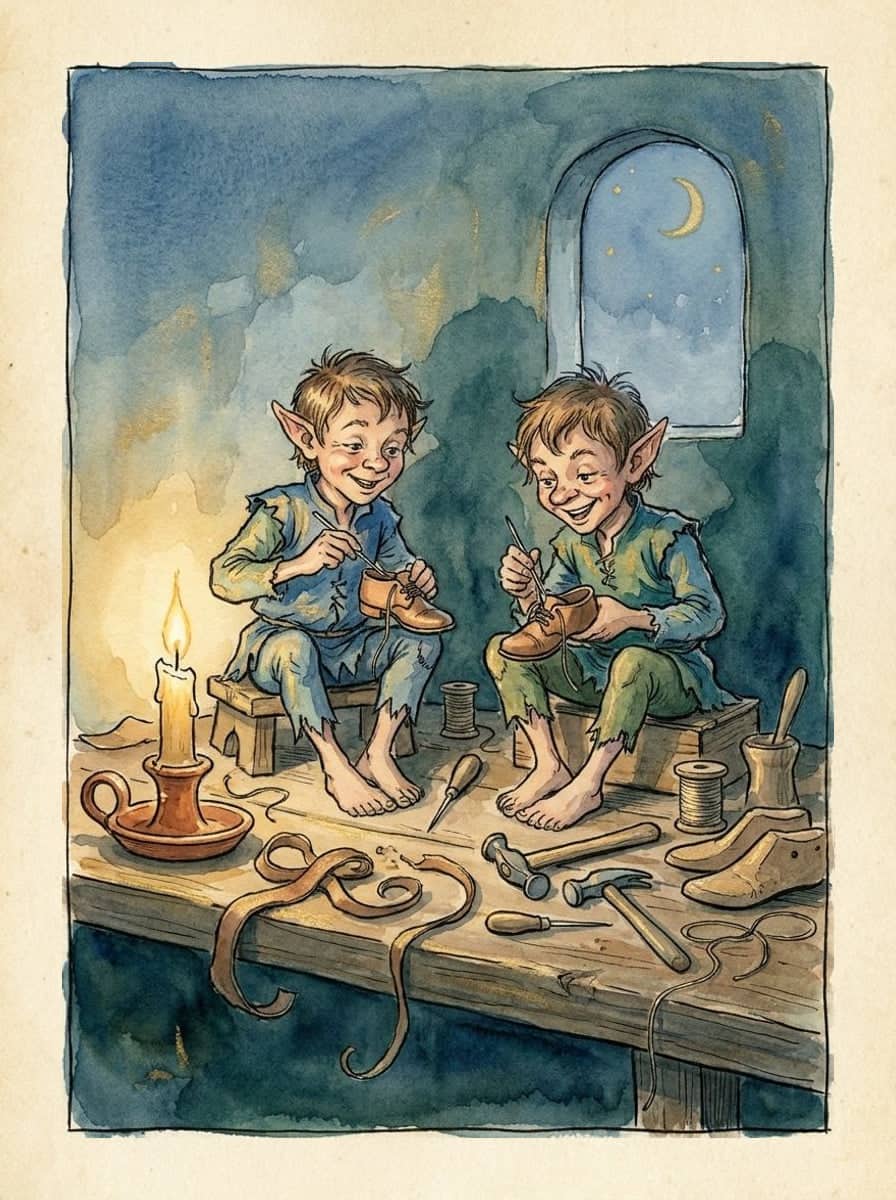
At midnight two little men came in, small and nimble, in threadbare rags and bare feet. They sat down at the shoemaker’s table, gathered up all the cut leather, and set to work.
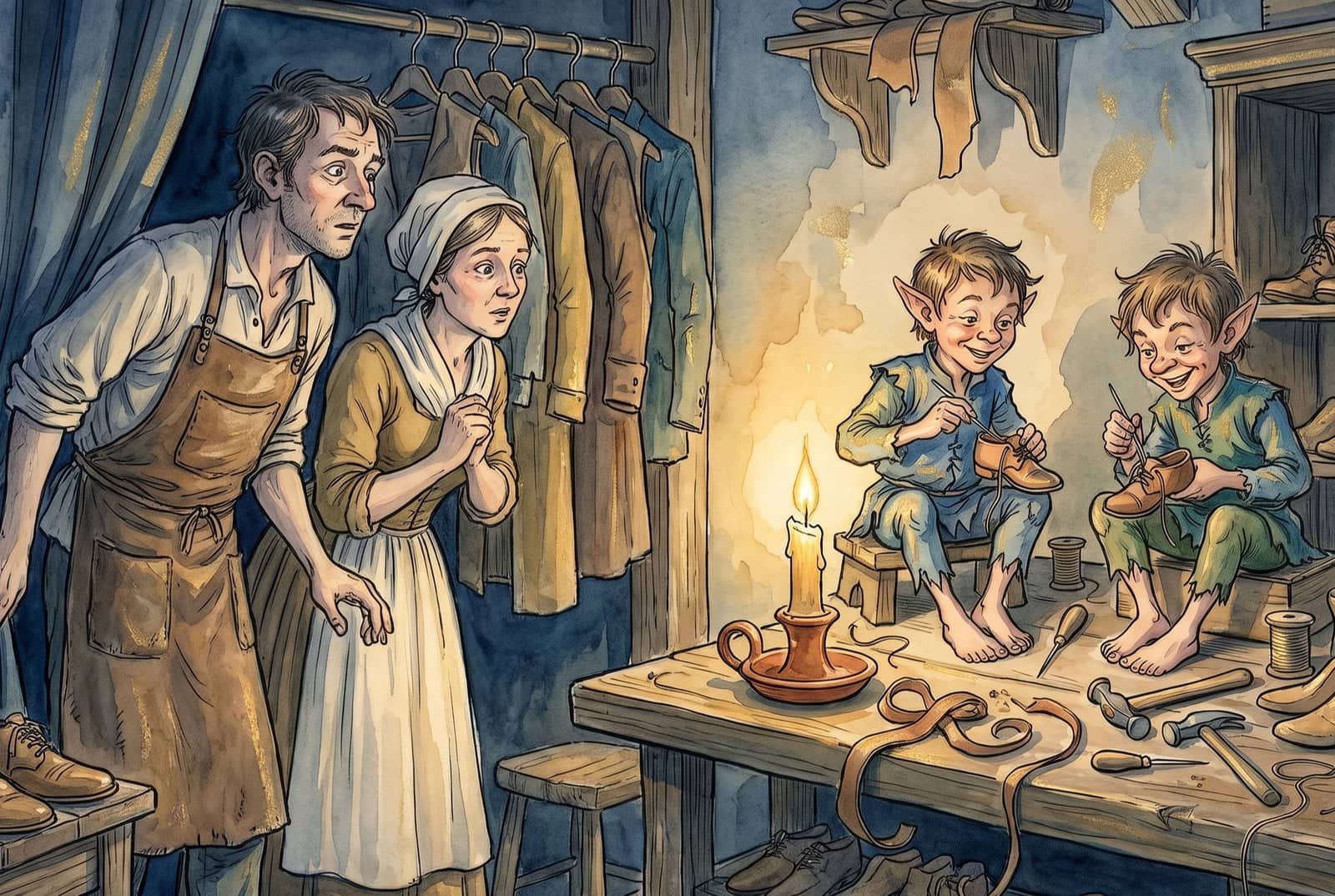
They stitched and sewed and tapped with their tiny fingers so quickly that the shoemaker could not take his eyes off them. They never stopped until every shoe stood finished on the table. Then they darted away and were gone.
In the morning his wife said, “The little men have made us rich, and we really must show them we are grateful. They run about in rags and bare feet, and they must be cold. I will sew them little shirts, vests and breeches, and knit each of them a pair of stockings. You can make them a pair of little shoes apiece.”
“Gladly,” said the shoemaker.
When everything was ready, they laid the presents out together on the table instead of the cut leather, and then hid themselves again to see what the little men would do.
At midnight the two came bounding in, ready to begin. When they found no leather, only all those pretty clothes, they stopped and stared.
Then they beamed with delight. They dressed as fast as they could, smoothing the fine cloth down with their hands, and they sang:
Now we are lads so fine and neat,why cobble shoes for other feet?
Then they hopped and danced and leapt over the chairs and the benches, and at last they danced right out the door.
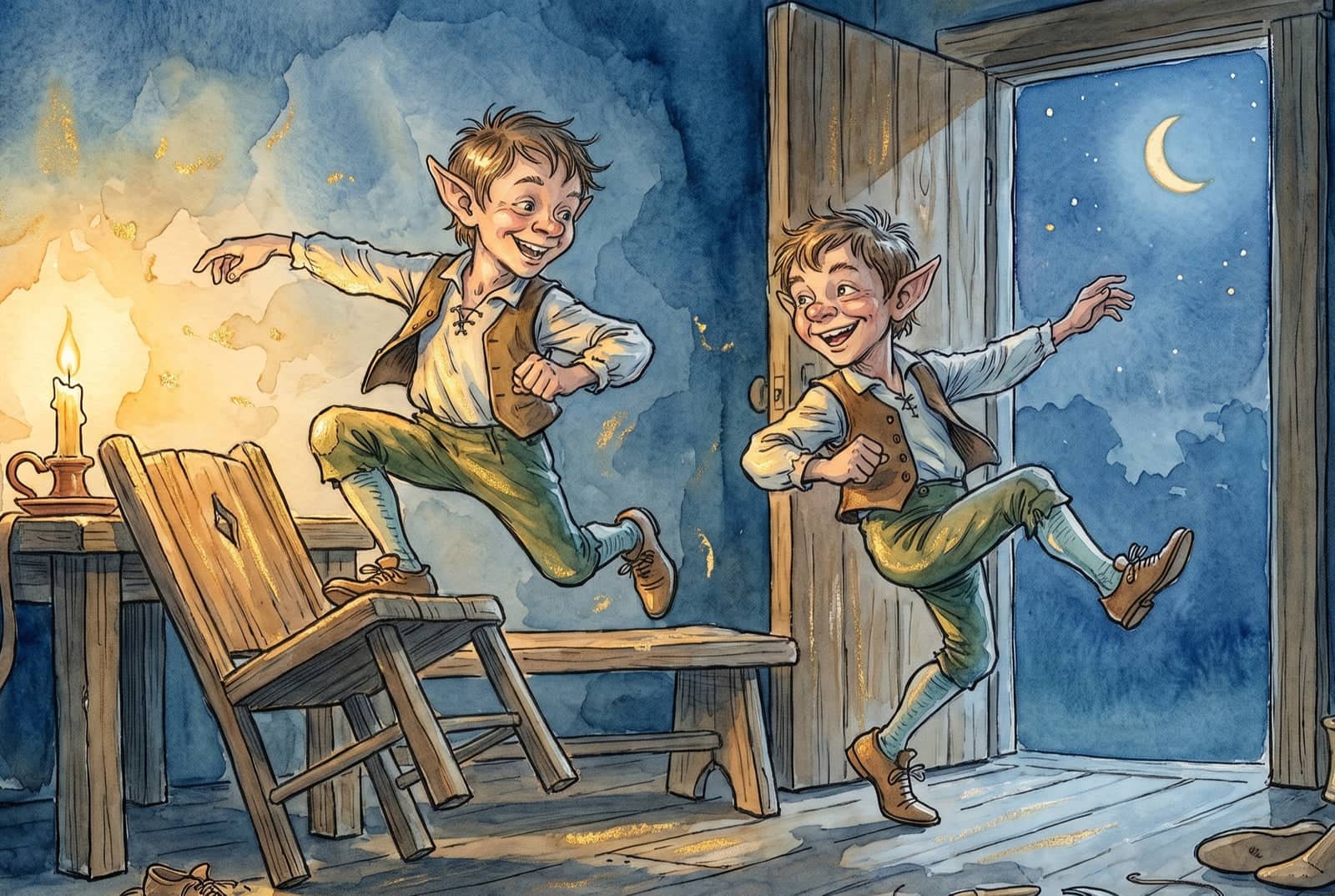
They never came back. But all his life long the shoemaker did well, and everything he set his hand to prospered.
Retold by Talerie from Household Tales by Brothers Grimm (opens in a new window)License: Public domainCopy this text, adapt it, use it however you like. A link back to Talerie is appreciated but never required.CC0 1.0 (opens in a new window)