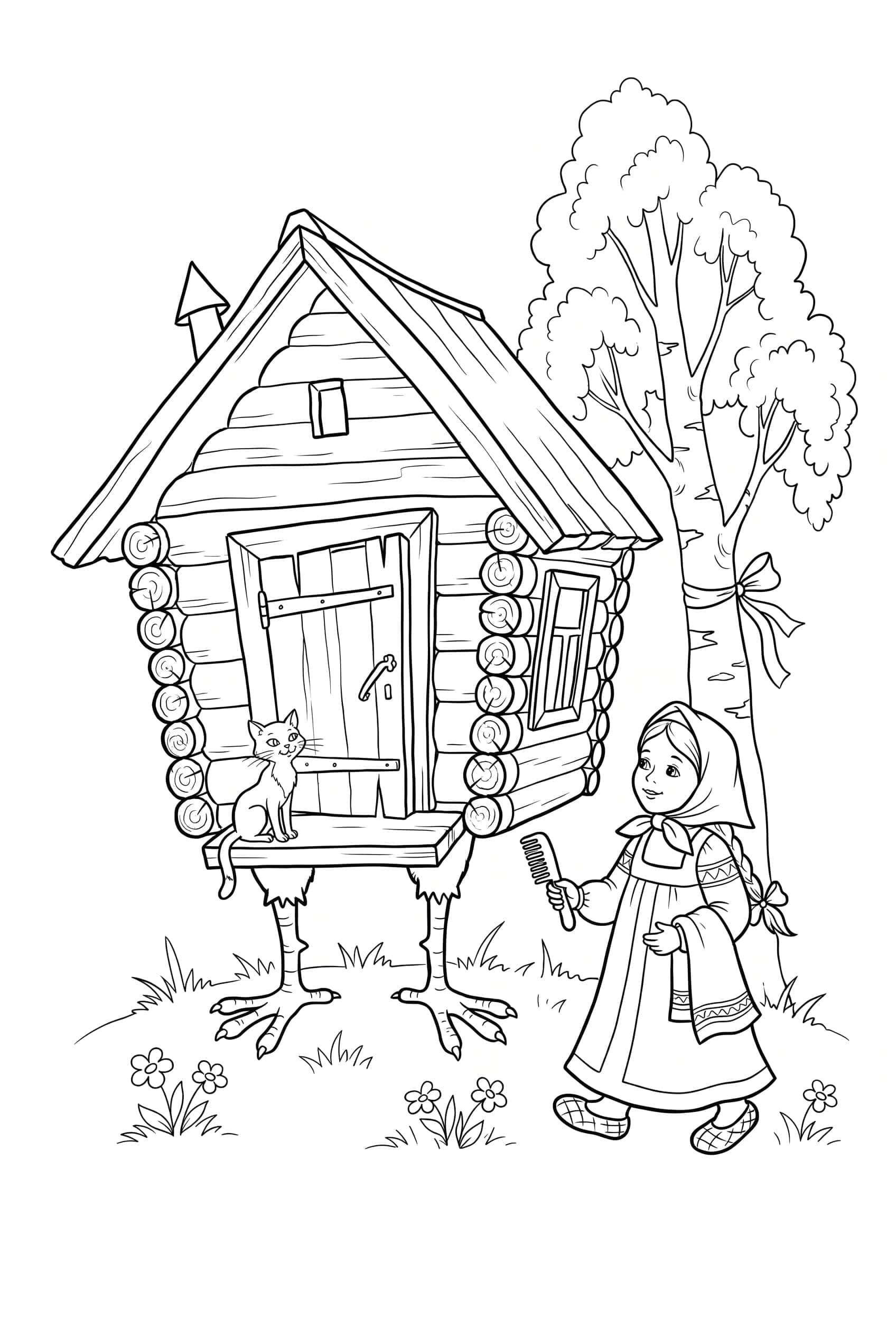
A cruel stepmother sends her stepdaughter to her own sister, a Baba Yaga, for a needle and thread. Warned by her real aunt, the girl brings a ribbon for the birch, oil for the creaking doors, rolls for the dogs, and bacon for the cat. At the loom she hears the witch plan to eat her for breakfast.
Once upon a time there lived an old man and his wife, and they had a daughter. Then the wife died, and the old man married again.
The new wife did not love the girl at all. She was a cruel stepmother who beat her and kept wondering how she might be rid of her for good.
One day the father went away on a journey. The stepmother called the girl and said, “Go to your aunt, my sister, and ask her for a needle and thread, so I can sew you a new dress.”
But the stepmother’s sister was a Baba Yaga, a witch who ate children. The girl was no fool, though. Before she set off, she went to see her own aunt, her real one.
“Good morning, Auntie!”
“Good morning, my dear! What brings you here?”
“Mother is sending me to her sister, to ask for a needle and thread for a new dress.”
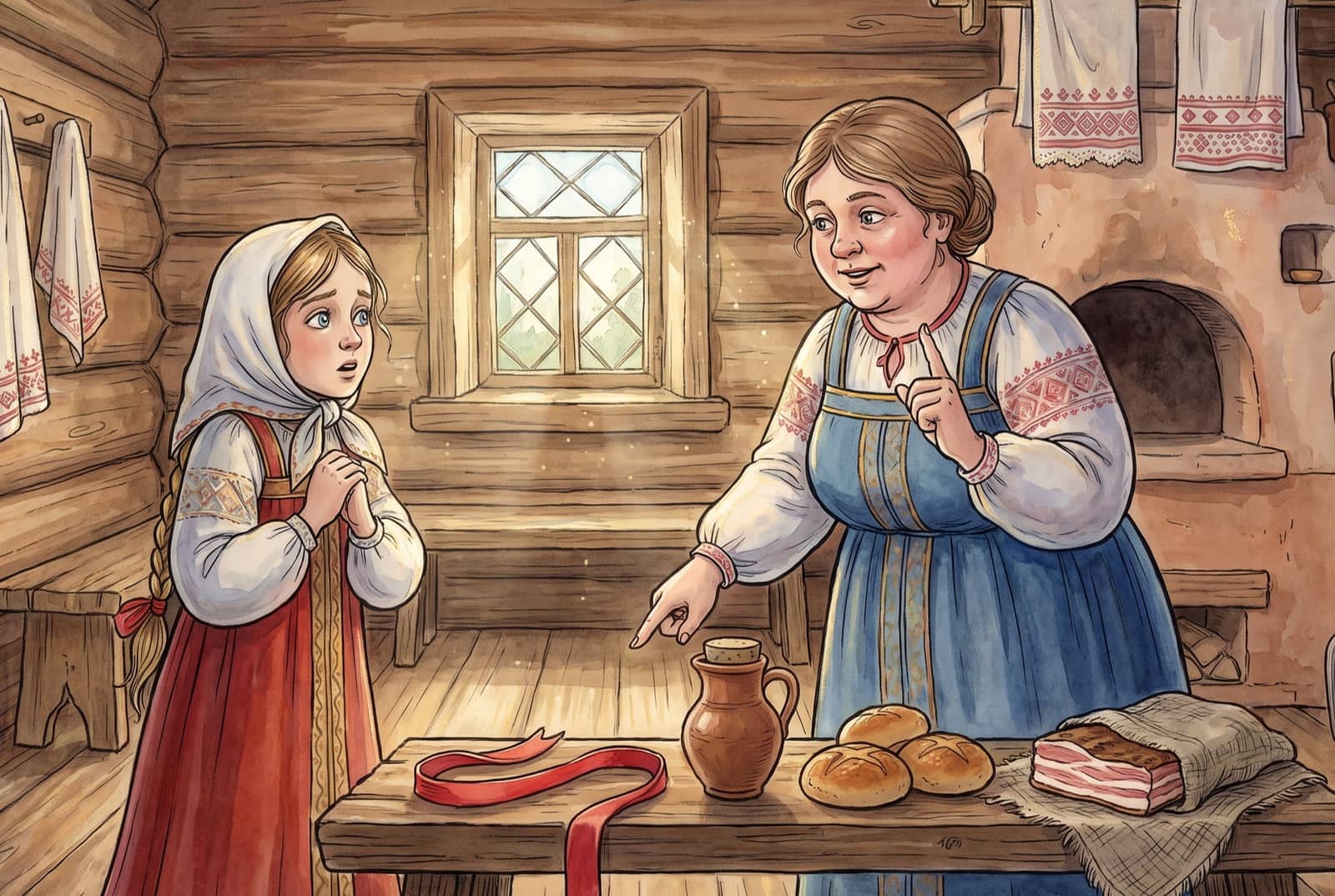
The real aunt listened and then told the girl exactly what to do. “At that house, my dear, there is a birch tree that will try to lash you across the eyes, so tie a ribbon around it. There are doors that will creak and slam, so pour oil on their hinges. There are dogs that will try to tear you to pieces, so throw them these rolls. And there is a cat that will try to scratch your eyes out, so give it a piece of bacon.”
The girl thanked her and set off. She walked and walked until she came to the place. There stood a hut, and inside it sat the Baba Yaga, old Bony Legs, weaving at her loom.
“Good morning, Auntie,” said the girl.
“Good morning, my dear,” said the Baba Yaga.
“Mother sent me to ask you for a needle and thread for a new dress.”
“Very well. Sit down and do a little weaving while you wait.”
So the girl sat down at the loom, and the Baba Yaga went outside to her maid.
“Go and heat the bathhouse and give my niece a good wash,” she said. “And keep a close eye on her. I mean to have her for breakfast.”
The girl heard every word and sat there so frightened she could hardly breathe. When the maid came by, the girl begged her softly, “Please, kind lady, wet the firewood so it won’t catch, and carry the bath water in a sieve.” And she gave the maid a handkerchief.
After a while the Baba Yaga came to the window and called in:
“Are you weaving, niece? Are you weaving, my dear?”
“Oh yes, dear Aunt, I’m weaving,” the girl answered.
So the Baba Yaga went away again. Then the girl gave the cat its piece of bacon and whispered, “Is there any way out of here?”
“Take this comb and this towel,” said the cat, “and run. The Baba Yaga will come after you. Put your ear to the ground, and when you hear her close behind you, throw down the towel. It will turn into a wide, wide river. If she gets across the river, put your ear to the ground again, and when you hear her close, throw down the comb. It will turn into a thick, thick forest, and that she will never get through.”
The girl took the towel and the comb and ran. The dogs leaped up to tear at her, but she threw them the rolls, and they let her go by. The doors began to creak and slam, but she poured oil on their hinges, and they let her through. The birch tree swung its branches at her eyes, but she tied the ribbon around it, and it let her pass.
Meanwhile the cat sat down at the loom and set to work. It did not do much weaving, but it tangled the threads into a fine mess. Up came the Baba Yaga to the window:
“Are you weaving, niece? Are you weaving, my dear?”
“I’m weaving, dear Aunt, I’m weaving,” the cat answered gruffly.

The Baba Yaga rushed into the hut and saw that the girl was gone. She began to beat the cat and scold it for not scratching the girl’s eyes out.
“All the years I’ve served you,” said the cat, “you never gave me so much as a bone. But she gave me bacon.”
Then the Baba Yaga flew at the dogs, the doors, the birch tree and the maid, scolding and beating them all.
“All the years we’ve served you,” said the dogs, “you never threw us so much as a burnt crust. But she gave us rolls.”
“All the years we’ve served you,” said the doors, “you never poured so much as a drop of water on our hinges. But she poured oil on us.”
“All the years I’ve served you,” said the birch tree, “you never tied so much as a thread around me. But she tied a ribbon around me.”
“All the years I’ve served you,” said the maid, “you never gave me so much as a rag. But she gave me a handkerchief.”
Then old Bony Legs jumped into her mortar, drove it along with her pestle, and swept away her tracks behind her with a broom. Off she flew after the girl.
The girl put her ear to the ground. When she heard the Baba Yaga close behind her, she threw down the towel, and at once it became a wide, wide river.
The Baba Yaga came to the river and ground her teeth with rage. Then she went home for her oxen and drove them down to the water. The oxen drank the river to the very last drop, and the Baba Yaga took up the chase again.

The girl put her ear to the ground once more. When she heard the Baba Yaga coming near, she threw down the comb, and at once a forest sprang up, so thick that nothing could pass. The Baba Yaga gnawed and gnawed at the trees, but however hard she tried, she could not gnaw her way through, and in the end she had to turn back.
By now the girl’s father had come home.
“Where is my daughter?” he asked.
“She’s gone to her aunt’s,” said the stepmother.
Soon afterward the girl herself came running home.
“Where have you been?” asked her father.
“Oh, Father!” she said. “Mother sent me to Auntie’s for a needle and thread for a new dress. But Auntie is a Baba Yaga, and she wanted to eat me!”
“And how did you get away, my girl?”
“Like this,” said the girl, and she told him the whole story from beginning to end.

When the father had heard it all, he was filled with fury at his wife, and he shot her. From then on he and his daughter lived happily together, and all went well with them.
Retold by Talerie from Russian Fairy Tales (opens in a new window) Public domain Copy this text, adapt it, use it however you like. A link back to Talerie is appreciated but never required. CC0 1.0 (opens in a new window)