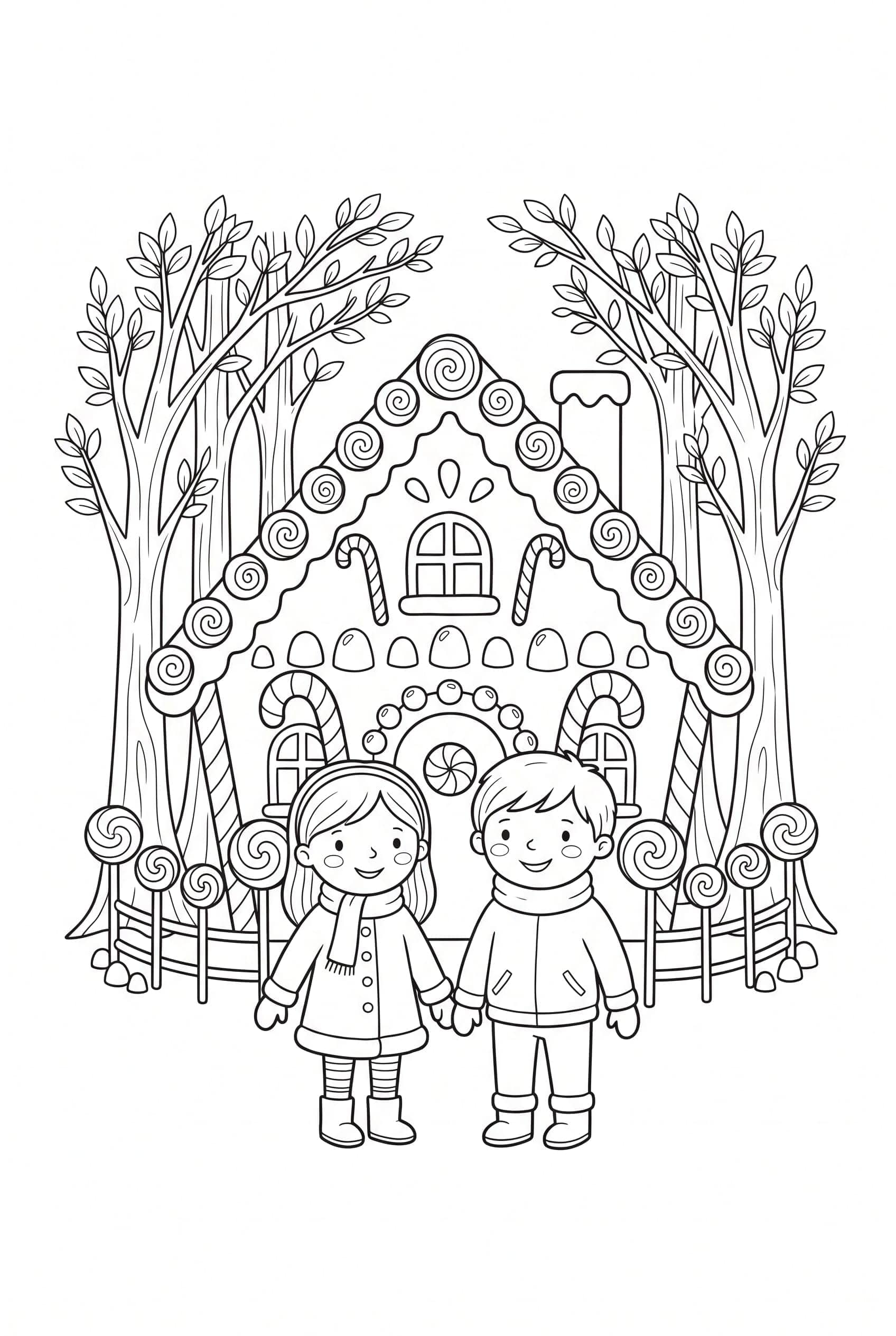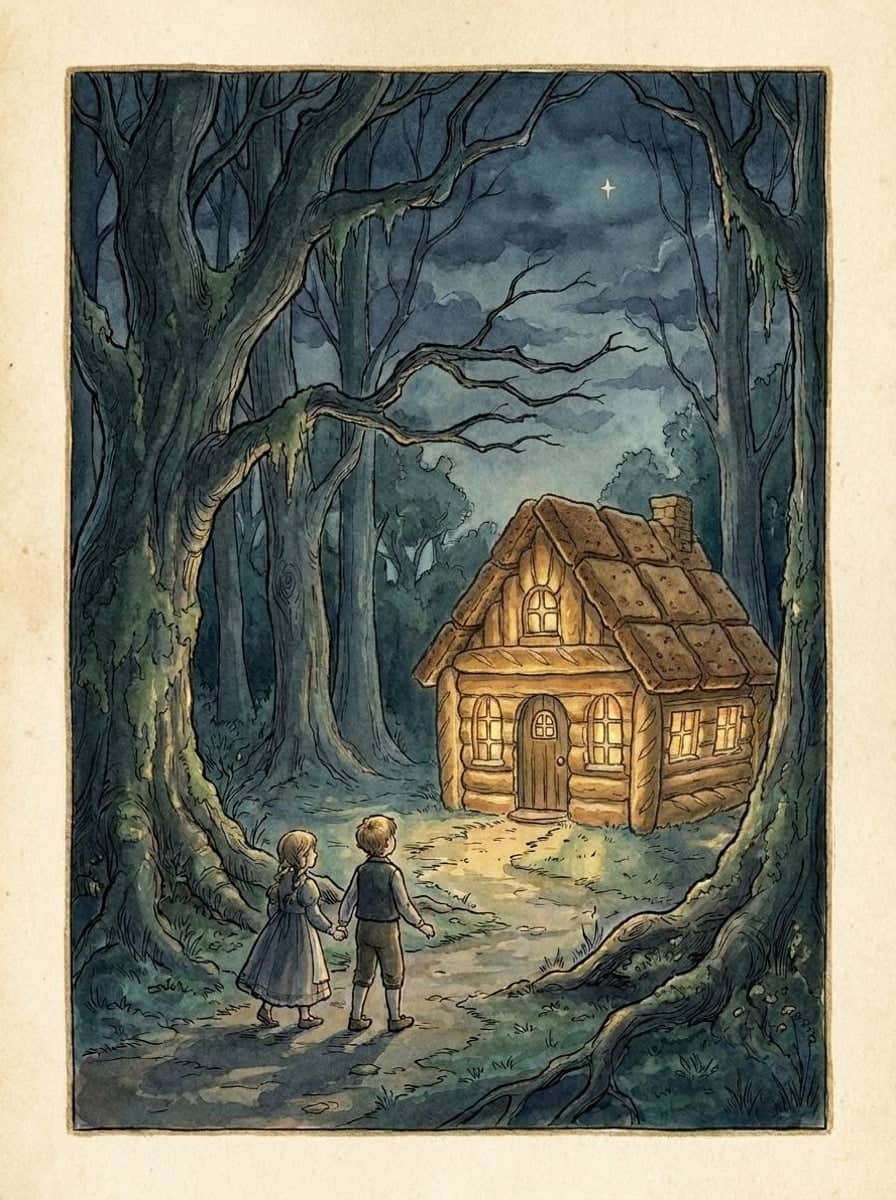
Abandoned in the woods by their starving parents, Hansel and Gretel meet an old woman who shuts the boy in a stable to fatten him for her pot. Gretel pushes the witch into her own oven and frees her brother, and a white duck carries them over the water on the way home to their father, pockets and apron full of pearls.
At the edge of a great forest lived a poor woodcutter with his wife and his two children, Hansel and Gretel. When famine came over the land, there was no bread left in the house. “How are we to feed the children,” the woodcutter sighed one night, “when we have nothing for ourselves?”
“I will tell you what,” said his wife. “Tomorrow we lead them into the thickest part of the forest, light them a fire, and leave them there. They will never find the way home.”
“I could never leave my own children in the woods,” said the man. “The wild animals would find them.”
“Then all four of us will starve,” she said, “and you may as well plane the boards for our coffins.” She gave him no peace until he agreed.
The children were too hungry to sleep and heard every word. Gretel wept. “Now it is all over with us.”
“Hush, Gretel. I will find a way.” When the old folks were asleep, Hansel slipped outside. The moon was shining, and the white pebbles in front of the house glittered like silver coins. He filled his pockets full of them. “Sleep quietly, little sister,” he said when he came in.
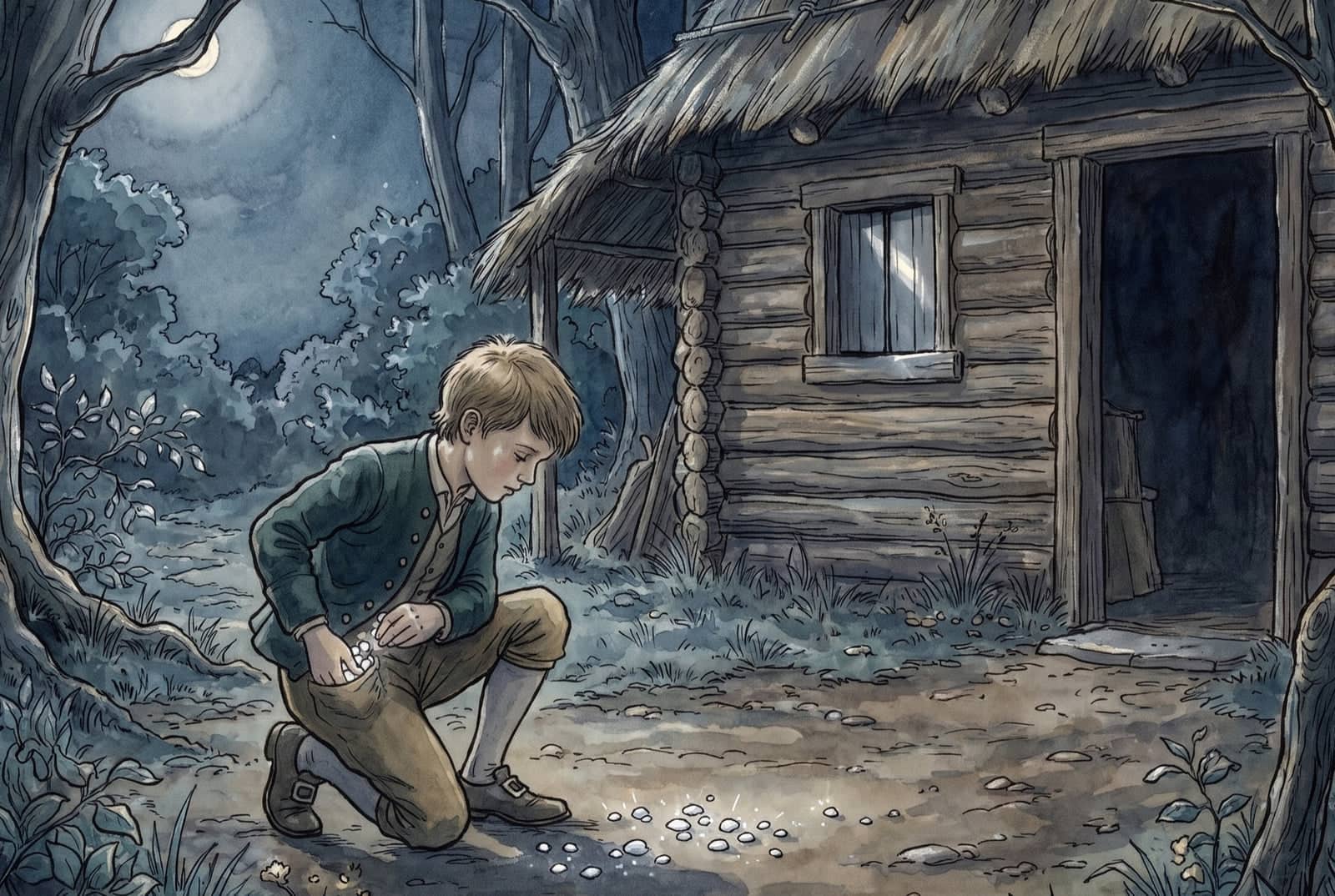
Before sunrise their stepmother shook them awake. “Get up, you lazybones. We are going into the forest for wood.” She gave them each a small piece of bread for their dinner, and Gretel carried both pieces under her apron, for Hansel’s pockets were full of stones.
Again and again Hansel stopped and looked back at the house.
“Hansel, what are you staring at?” said his father. “Keep up and mind your feet.”
“Oh, father, I am looking at my white cat. She is sitting up on the roof, wanting to say goodbye to me.”
“Silly boy,” said the woman. “That is no cat. That is the morning sun shining on the chimney.”
Each time he stopped, Hansel dropped another white pebble on the path.
Deep in the forest their father lit a fire of brushwood. “Lie down and rest,” said the woman. “When we have cut our wood, we will fetch you.” At noon the children ate their bread. They heard the strokes of an axe and thought their father was near, but it was only a branch he had tied to a dead tree, knocking in the wind. They fell asleep, and woke to black night.
Gretel began to cry. “How shall we ever get out of the forest?”
“Wait until the moon comes up,” said Hansel, “and we will find the way.”
When the full moon rose, he took his sister by the hand and followed the pebbles, which shone like new silver. At daybreak they knocked at their father’s door. “You wicked children,” said the woman, “why did you sleep so long in the forest?” But the father was glad, for leaving them had cut him to the heart.
Before long there was hunger again. “Everything is eaten,” the children heard the woman say one night. “We have half a loaf, and when it is gone, that is the end of us. The children must go, deeper into the wood this time, so they cannot find their way out.” The man would have shared the last mouthful with them, but again he gave way.
The children heard it all. Hansel got up to fetch pebbles, but the woman had locked the door. “Don’t cry, Gretel,” he said. “Go to sleep. Help will come.”
In the morning their bread was smaller than before, and Hansel crumbled his in his pocket as they walked.
“Hansel, why do you keep stopping and looking round?” said his father.
“I am looking at my little pigeon. She is sitting up on the roof, wanting to say goodbye to me.”
“Silly boy,” said the woman. “That is no pigeon. That is the morning sun shining on the chimney.”
And little by little Hansel scattered every crumb along the path.
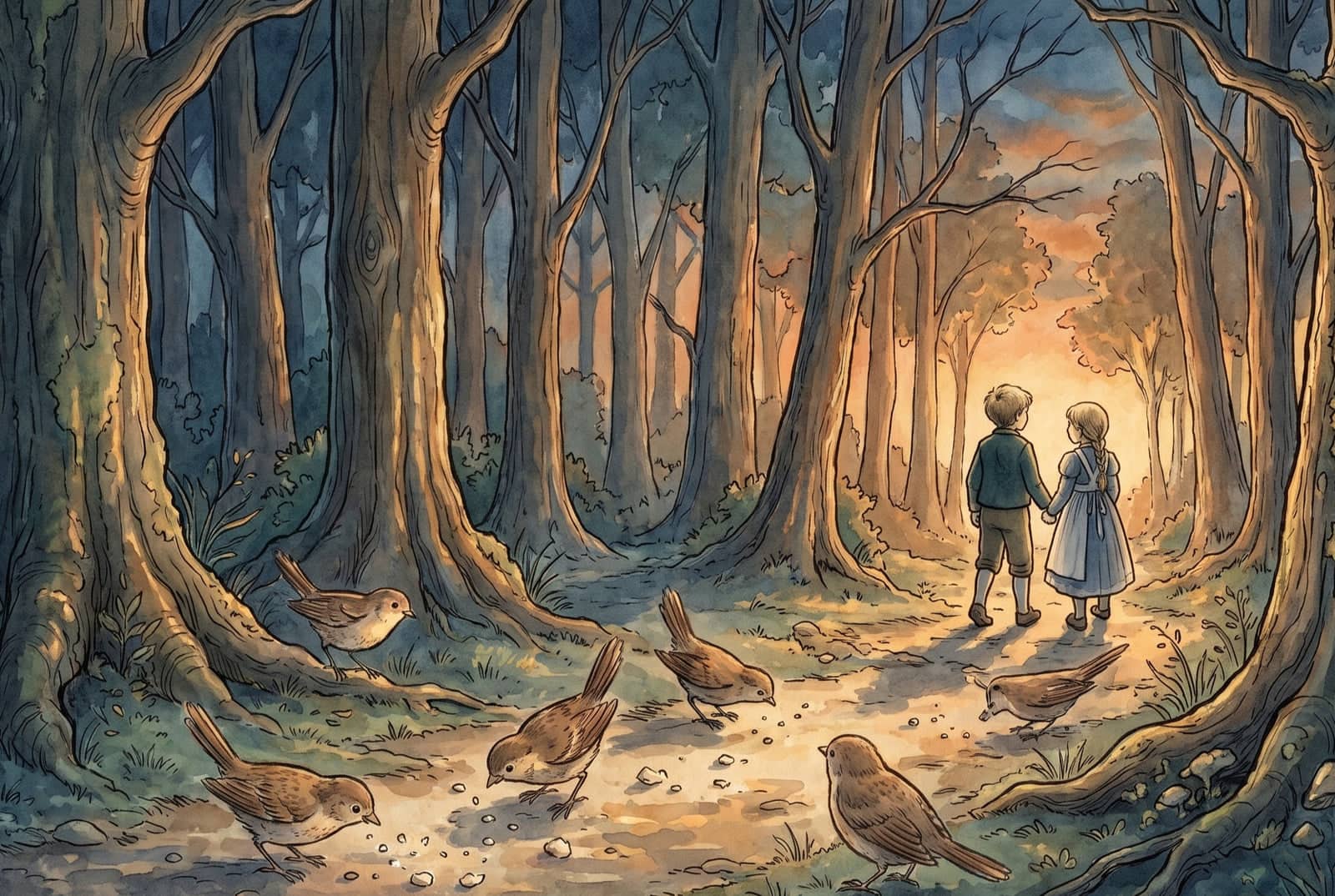
She led them deeper into the forest than they had ever been, built another great fire, and told them to sleep until evening. At noon Gretel shared her bread with Hansel, who had strewn his along the road. The evening came and went, and nobody came.
They woke in the dark. “Wait until the moon rises,” said Hansel, “and we shall see the crumbs I scattered.” But there was not a crumb left: the birds had picked up every one. They walked all that night and all the next day without finding the way out, with nothing to eat but a few berries. At last they lay down under a tree and slept.
On the third morning a snow-white bird sang so sweetly from a branch that they stood still to listen. Then it flew on ahead, and they followed until it settled on the roof of a little house. The house was built of bread and roofed with cake, its windows made of clear sugar.
“Here is a meal for us,” said Hansel. “I will take the roof, and you can try the window.” He broke off a corner of the roof, and Gretel nibbled at a pane. Then a thin voice called from inside:
Nibble, nibble, little mouse,who is nibbling at my house?
The children answered:
The wind, the wind,the heavenly child.
They ate on. Then the door opened, and a very old woman came creeping out on a crutch. The children dropped what they held, but she nodded her head kindly. “Dear children, come in and stay with me. No harm will come to you.” Inside she gave them milk and pancakes with sugar, apples and nuts, and made up two little beds, and they thought they were in heaven.
The old woman had only pretended to be kind. She was a wicked witch who had built her house of bread to lure children, and any child who fell into her hands never went home again. Witches have red eyes and cannot see far. “I have them now,” she laughed. “They shall not get away from me.”
In the morning she looked at the two of them asleep. “That will be a fine mouthful,” she muttered. She carried Hansel out to a little stable and shut him behind a barred door. Then she shook Gretel awake. “Get up, lazy thing, and cook something good for your brother. When he is fat, I shall eat him.” Gretel wept, but she had to obey.
Poor Hansel got the best of the food, and Gretel nothing but crab shells. Every morning the old woman crept out to the stable and called, “Hansel, stretch out your finger, so I can feel whether you are getting fat.” But Hansel held out a little bone instead, and the witch, whose eyes were dim, took it for his finger. Four weeks went by, and he was as thin as ever.
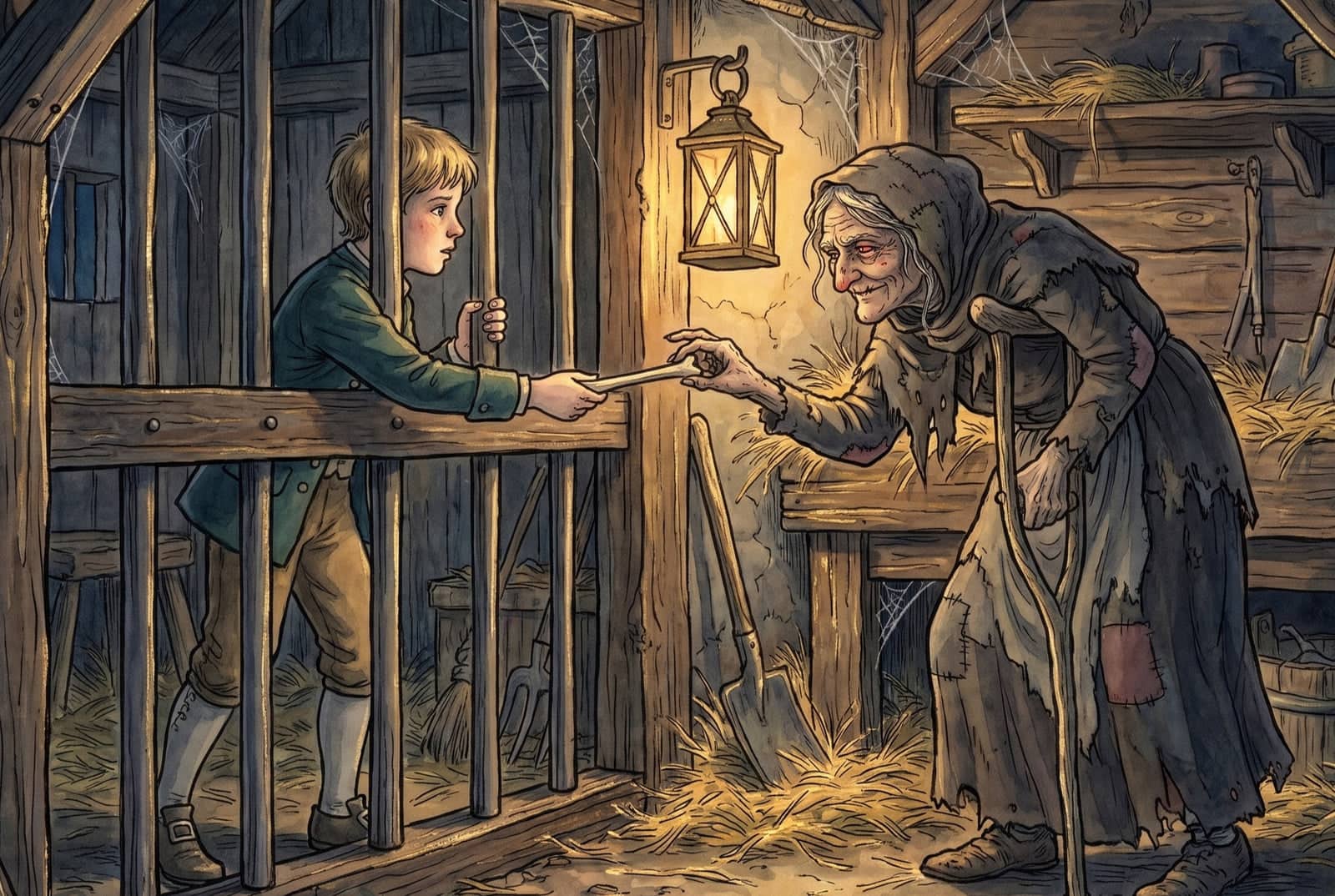
At last her patience ran out. “Be quick and fetch water, Gretel. Fat or thin, tomorrow I shall cook your brother.” How the poor sister cried as she carried the water. “If only the wild animals had found us in the forest. At least we would have been together.”
“Save your howling,” said the old woman. “It will do you no good.”
Early next morning Gretel had to fill the cauldron and light the fire. “We will bake first,” said the witch, and pushed her out to the oven, where the flames were leaping. “Creep in and see whether it is hot enough for the bread.” Once the girl was inside, the witch meant to shut the door on her.
But Gretel saw what she had in mind. “I don’t know how to do it. How do you get in?”
“Silly goose,” said the old woman. “The opening is big enough. Look, I can get in myself.” And she put her head into the oven. Then Gretel gave her a shove that sent her right inside, shut the iron door and pushed the bolt across. That was the end of the wicked witch.
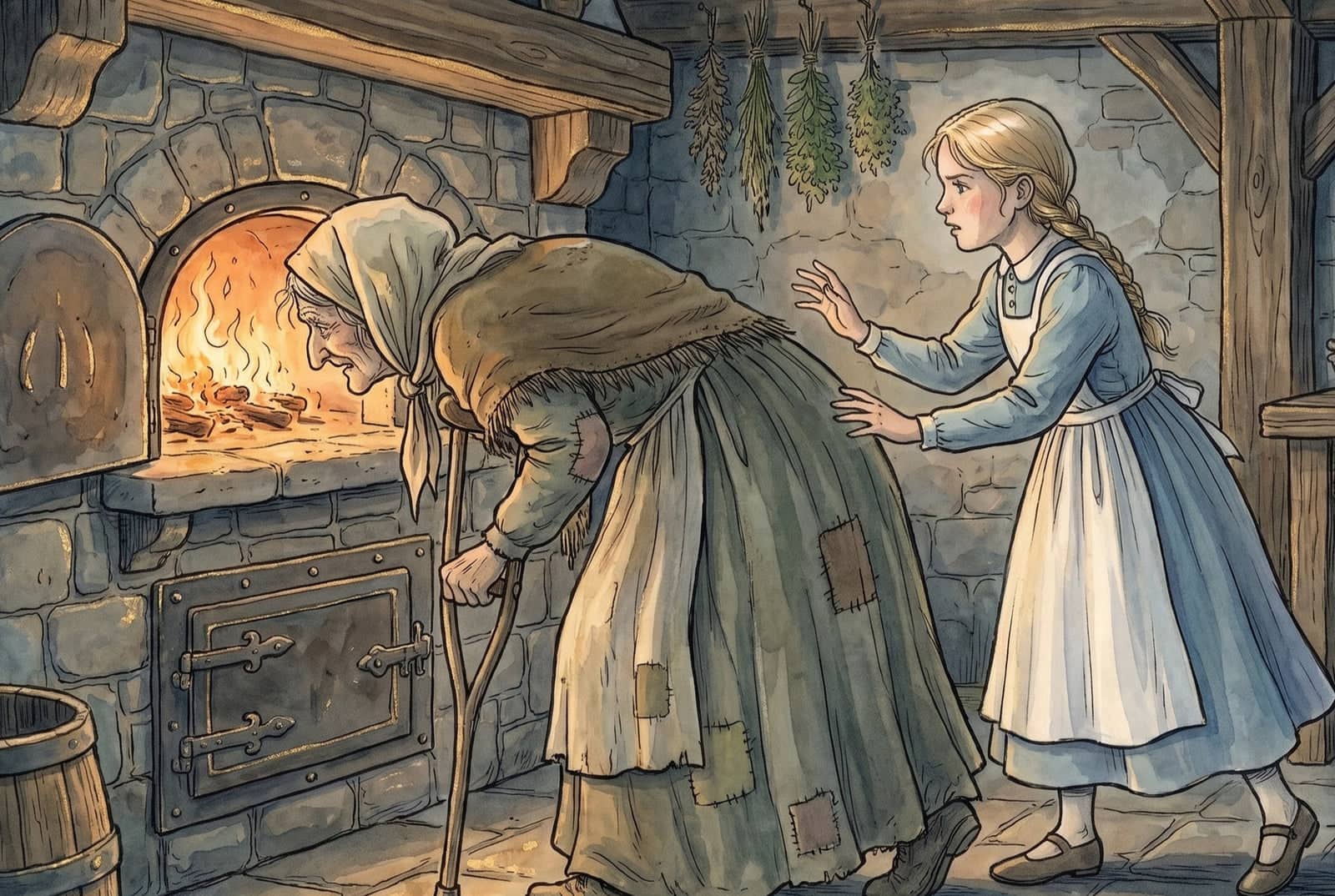
Gretel ran straight to her brother and opened the stable. “Hansel, we are free! The old witch is dead!” Out he sprang like a bird from a cage, and they hugged and danced for joy. In the house, chests of pearls and jewels stood in every corner. “These are better than pebbles,” said Hansel, and filled his pockets, and Gretel filled her apron.
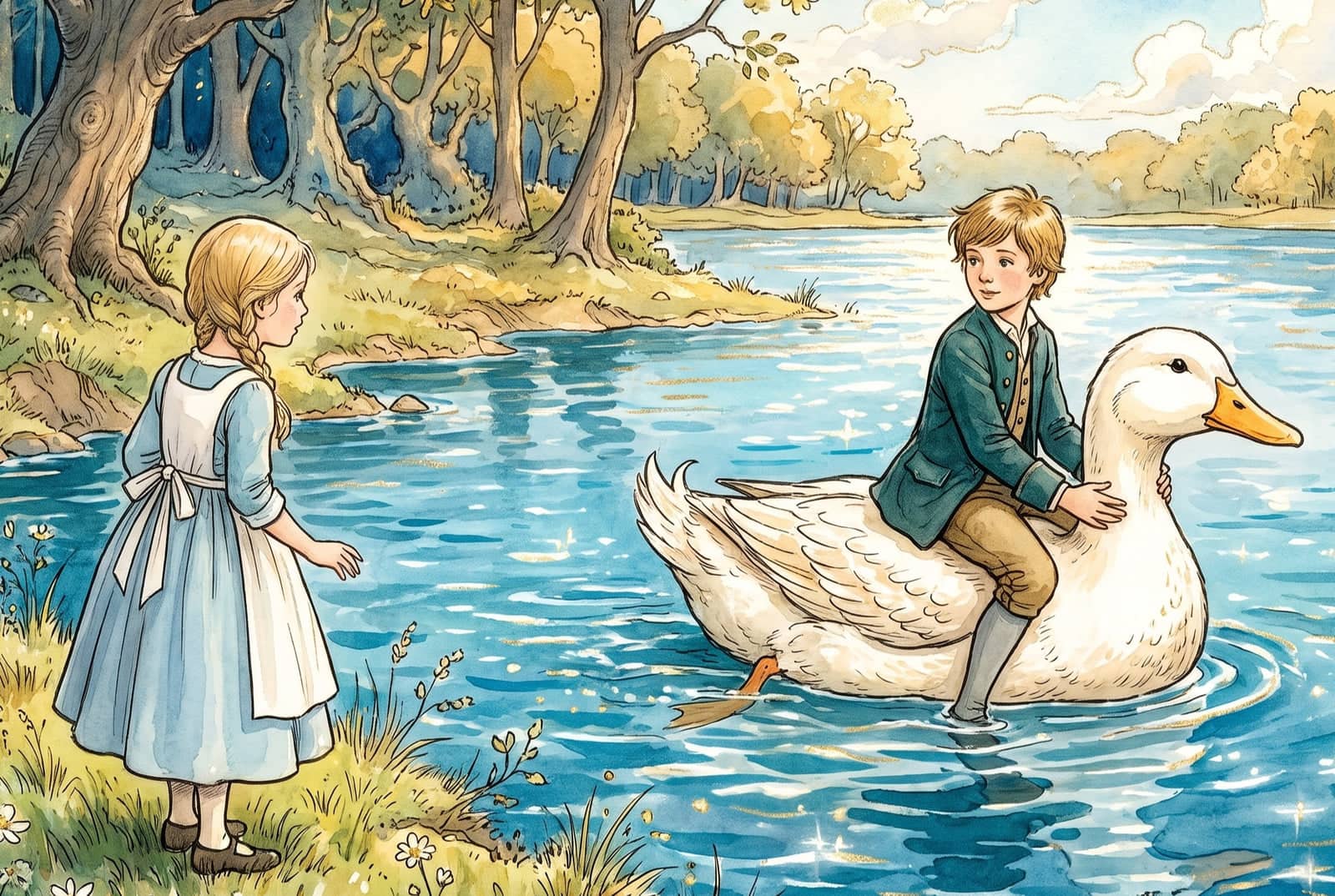
They walked for two hours, and when they were clear of the witch’s forest they came to a great stretch of water with no bridge and no plank in sight. “But there is a white duck swimming,” said Gretel. “She will help us if I ask her.” And she called:
Little duck, little duck, here we two stand,Hansel and Gretel, and no boat at hand.No bridge, no plank, and no way around:take us across on your back, safe and sound.
The duck came swimming over, and Hansel sat on her back and called to his sister to sit beside him. “No,” said Gretel, “that would be too heavy for her. She must take us over one at a time.” And so she did.
On the other side the forest looked familiar again, and at last they saw their father’s house. They ran in and threw their arms round his neck. He had not known a happy hour since he left them in the forest. His wife had died in the meantime. Gretel shook out her apron until pearls and precious stones went bouncing about the room, and Hansel emptied his pockets after them. All their troubles were over, and they lived happily together.
My tale is done,there runs a mouse.Whoever catches itmay make a great big fur cap out of it.
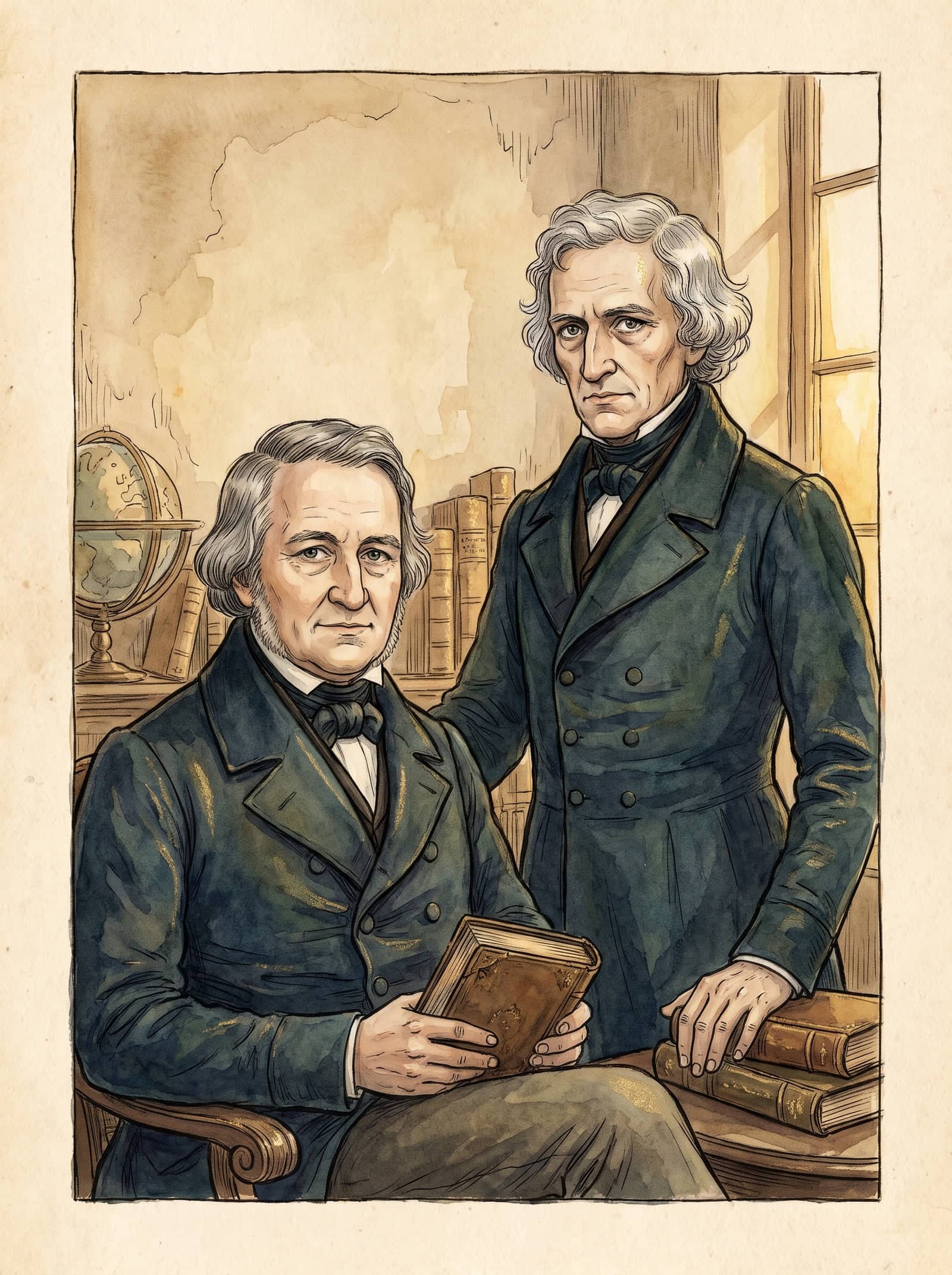
Retold by Talerie from Household Tales by Brothers Grimm (opens in a new window)License: Public domainCopy this text, adapt it, use it however you like. A link back to Talerie is appreciated but never required.CC0 1.0 (opens in a new window)