The Emperor’s New Clothes
9 min readages 5 and uptalerie.com/en/tales/the-emperor-s-new-clothes
An emperor who loves nothing but new clothes pays two swindlers for cloth that no fool can see, and his court praises the bare looms rather than admit it sees nothing. A child in the crowd calls out that the emperor is wearing nothing, and still he walks on while the chamberlains carry a train that is not there.
Many years ago there lived an emperor who cared for nothing in the world so much as new clothes. He spent every coin he had on them, and his whole ambition was to be beautifully dressed. His soldiers did not interest him, the theater did not amuse him, and the one thing he truly enjoyed was riding out through the streets so that everybody could see what he was wearing. He had a coat for every hour of the day. Of another ruler people might say that he was in his council chamber; of this one they always said, “The emperor is in his dressing room.”
The great city where he lived was a lively place, and travelers arrived there every day from every corner of the world. One day two swindlers came as well. They passed themselves off as weavers, and said they could weave the most beautiful cloth anyone could imagine. Not only were the colors and the pattern uncommonly fine, they said, but clothes made from this cloth had a wonderful property: they were invisible to anyone who was not fit for his office, or who was hopelessly stupid.
“What splendid clothes those would be,” thought the emperor. “If I wore a suit of that cloth, I could tell which men in my empire are unfit for the posts they hold. I could tell the clever from the foolish! That cloth must be woven for me at once.” And he gave the two swindlers a great deal of money in advance, so that they could begin without delay.
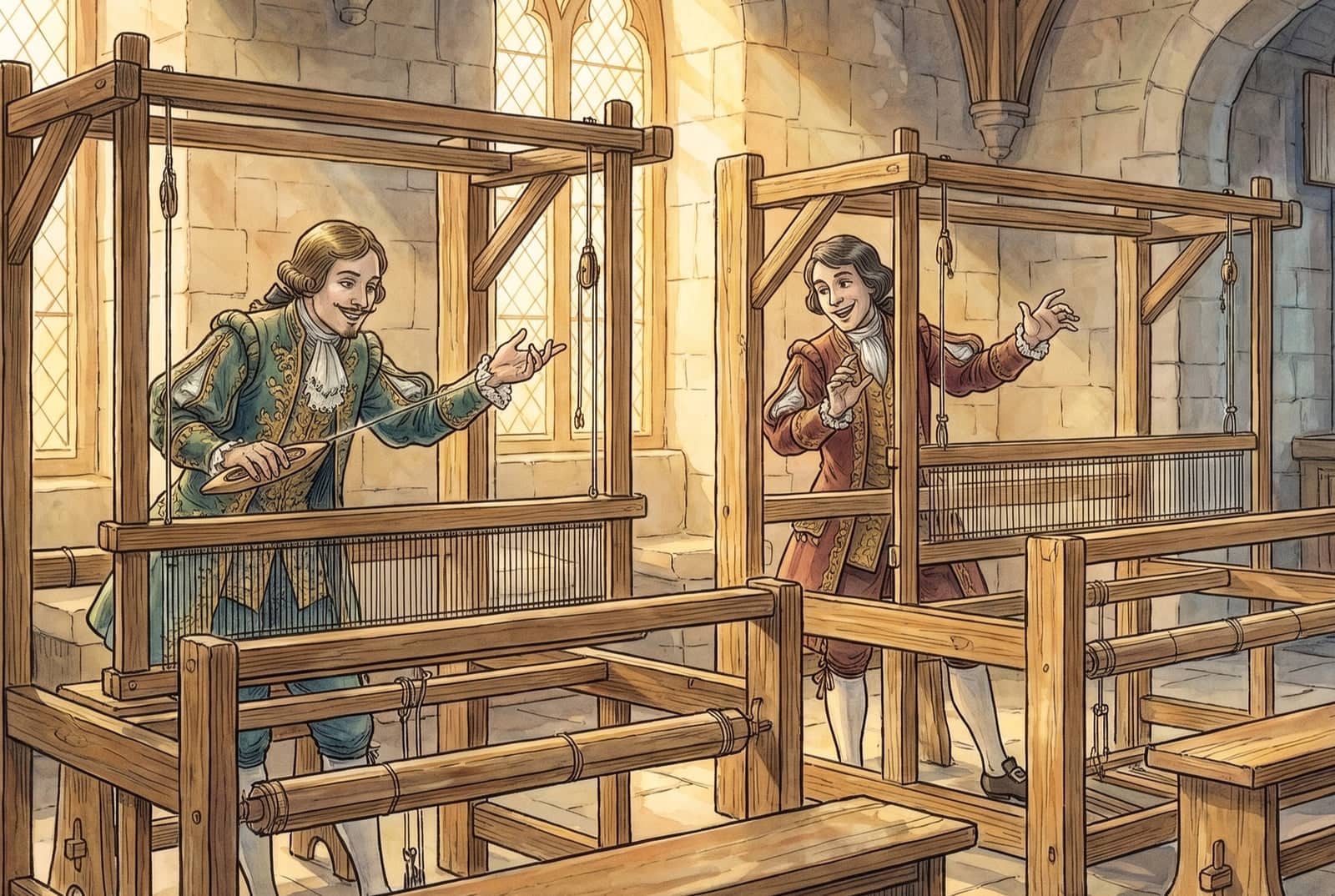
They set up two looms and made a great show of weaving, though there was nothing at all on the looms. They asked for the finest silk and the most precious gold thread, put every bit of it into their own pockets, and sat working at the empty frames until late into the night.
“I should very much like to know how far along they are,” thought the emperor. But he felt a little uneasy when he remembered that a man who was stupid, or unfit for his office, would see nothing. He was quite sure he had nothing to fear on his own account, and yet he thought it wiser to send somebody else first. By now the whole town knew what a remarkable power the cloth had, and everyone was eager to discover how foolish his neighbor might be.
“I shall send my honest old minister to the weavers,” the emperor decided. “Nobody can judge the cloth better. He has good sense, and nobody understands his office as he does.”
So the good old minister went into the hall where the two swindlers sat working at the empty looms. “Heaven help us,” he thought, and opened his eyes very wide. “I cannot see a thing!” But he did not say so aloud.
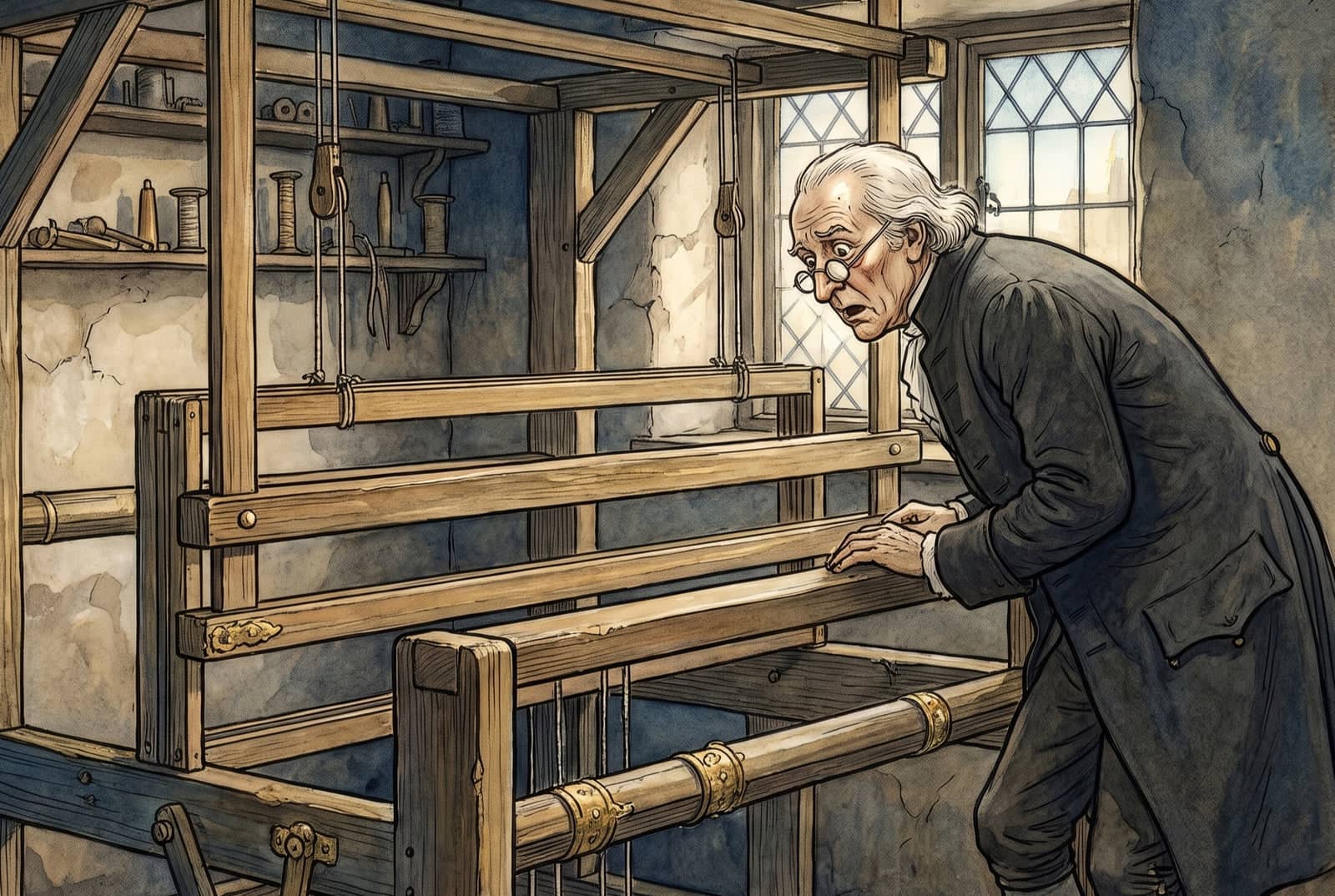
Both swindlers begged him to step closer, and asked whether the pattern was not charming and the colors beautiful. Then they pointed at the empty loom. The poor old minister looked and looked, and still he could see nothing, for there was nothing to see. “Good gracious,” he thought, “can it be that I am stupid? I never believed it, and nobody must ever find out. Can it be that I am not fit for my office? No, it will not do to say that I could not see the cloth.”
“Well, have you nothing to say about it?” asked one of the men at the loom.
“Oh, it is charming, quite delightful,” answered the old minister, peering through his spectacles. “What a pattern! What colors! I shall tell the emperor that I am very pleased with it.”
“That is good news,” said the weavers, and they named the colors one by one and explained the curious pattern. The old minister listened carefully, so that he could repeat it all when he went back to the palace, and that is just what he did.
Now the swindlers asked for more money, more silk and more gold. They kept every thread of it for themselves, and not one thread ever reached the loom, but they went on working at the empty frames as busily as before.
Soon the emperor sent a second honest official to see how the weaving was coming along. It went with him exactly as it had gone with the minister. He looked and looked, and since there was nothing there but an empty loom, he saw nothing at all.
“Is that not a beautiful piece of cloth?” asked the swindlers, pointing out the magnificent pattern that did not exist.
“I am not stupid,” thought the man. “So it must be my good post that I am not fit for. That is very odd, but I must not let anyone notice.” And he praised the cloth he could not see, and told them how the colors and the pattern delighted him. “It is quite delightful,” he said afterwards to the emperor.
The whole town talked of the wonderful cloth. At last the emperor wished to see it himself while it was still on the loom. He went to the two clever swindlers with a crowd of chosen courtiers, the two officials who had already been there among them, and found the weavers working with all their might, without a fibre or a thread.
“Is it not splendid?” said the two officials. “Your Majesty need only look at the pattern, at the colors!” And they pointed at the empty loom, for they were certain the others could see the cloth.
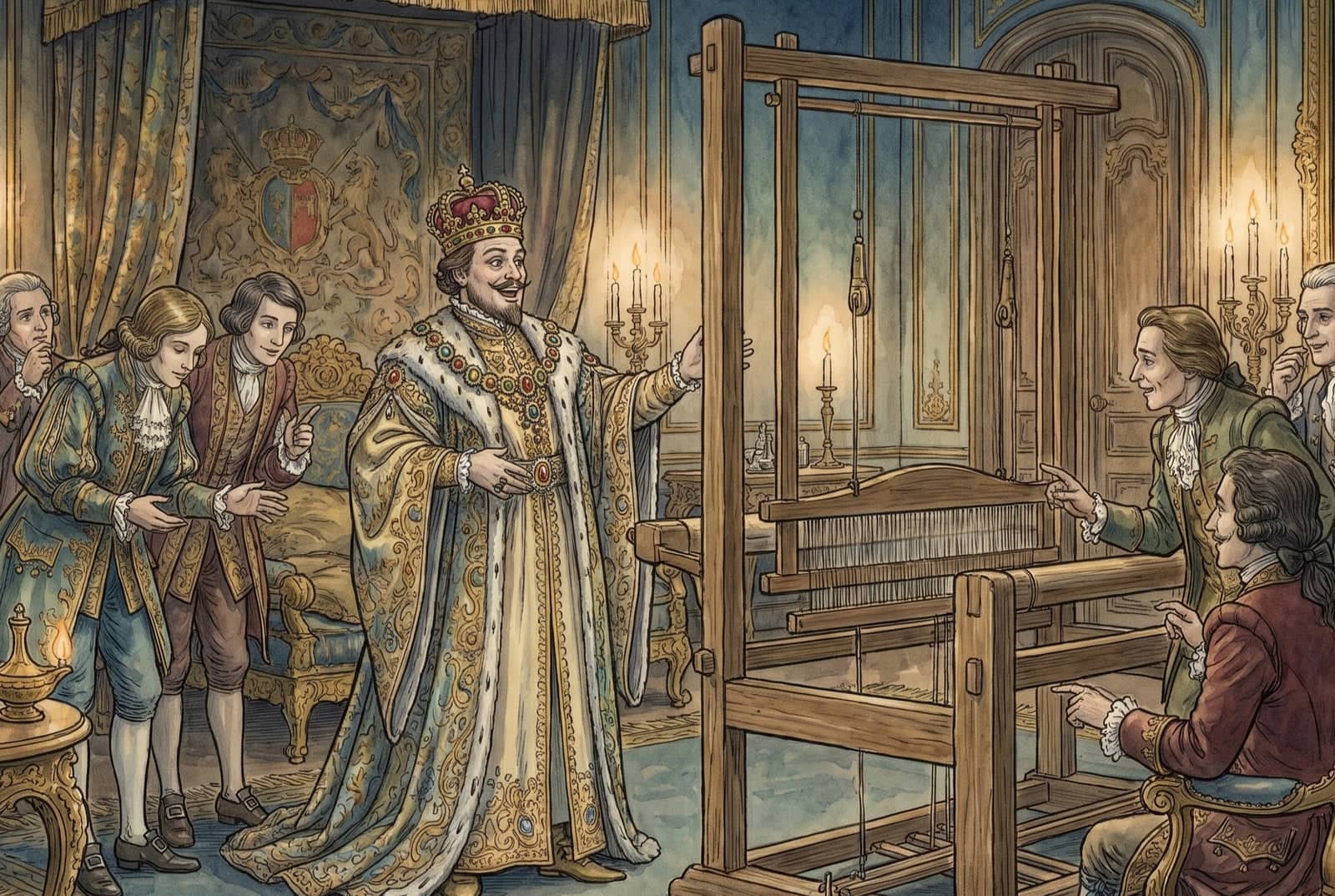
“What is this?” thought the emperor. “I see nothing at all! This is dreadful. Am I stupid? Am I unfit to be emperor? That would be the most terrible thing that could happen to me.” Aloud he said, “Oh, it is very fine. It has my highest approval.” He nodded contentedly and gazed at the empty loom, for he would not say that he saw nothing. His whole retinue looked and looked and made no more of it than he had, and every one of them said what the emperor said: “Oh, it is very fine!” They all advised him to wear the magnificent new clothes for the first time at the great procession that was soon to be held. “Splendid! Charming! Excellent!” went from mouth to mouth, and everybody seemed thoroughly delighted. The emperor gave the two swindlers the title of Imperial Court Weavers.
All through the night before the procession the swindlers stayed up with more than sixteen candles burning, so that people could see how hard they were working to finish the emperor’s new clothes. They pretended to lift the cloth from the loom, they cut the air with great scissors, they sewed with needles that had no thread, and at last they said, “There. The new clothes are ready.”
The emperor came himself, with his finest gentlemen. The swindlers raised an arm as though they were holding something up. “Here are the trousers! Here is the coat! Here is the cloak!” they said, and so on with every piece. “It is all as light as a cobweb. You would think you had nothing on your body at all, and that is the beauty of it.”
“Just so!” said the gentlemen of the court, though they could see nothing, for there was nothing to see.
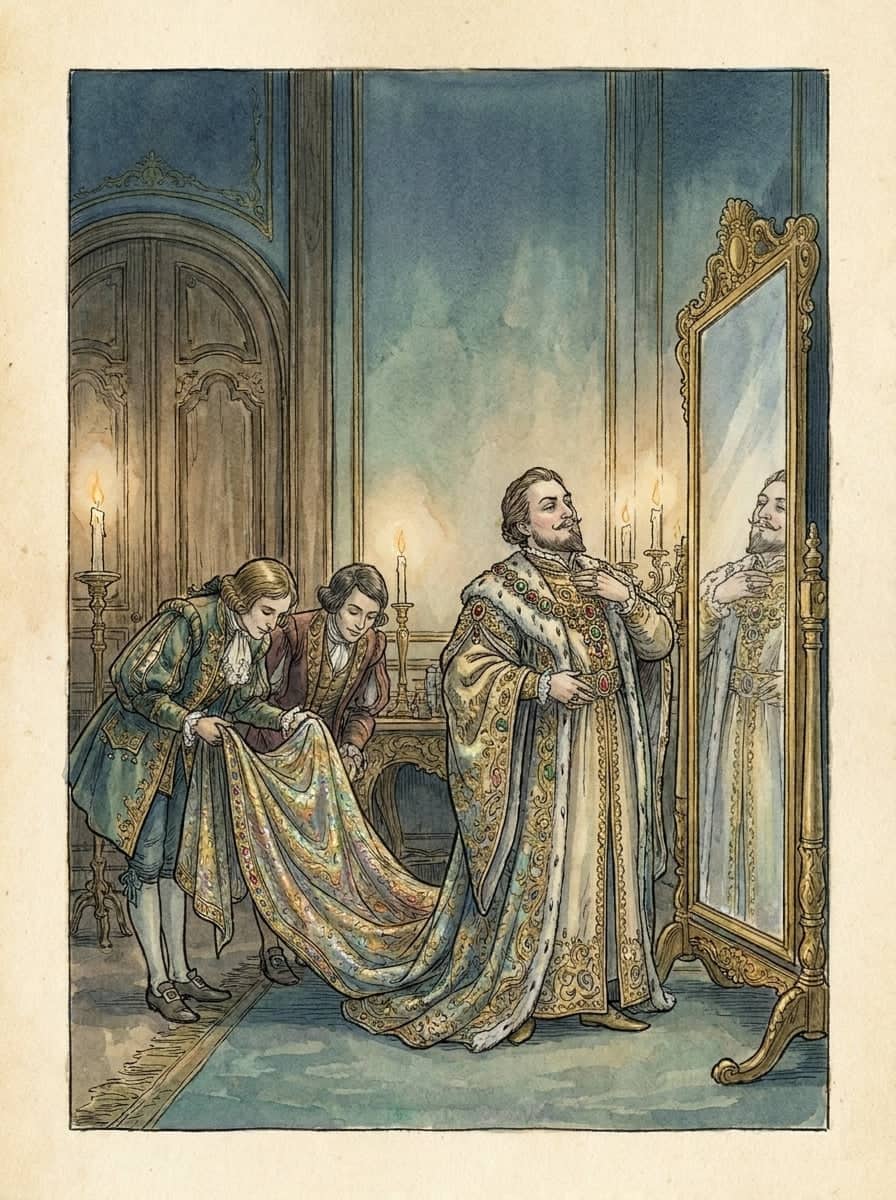
“Would Your Imperial Majesty be graciously pleased to take off your clothes?” said the swindlers. “Then we shall dress you in the new ones, here before the great mirror.”
The emperor took off everything he was wearing, and the swindlers made as if to put each new piece on him, and the emperor turned this way and that in front of the mirror.
“How well they suit him! What a perfect fit!” said everyone. “What a pattern! What colors! It is a costly suit indeed.”
“The canopy that is to be carried above Your Majesty is waiting outside,” announced the master of ceremonies.
“Good, I am ready,” said the emperor. “Does it not sit well on me?” And he turned to the mirror once more, so that it should look as though he were studying his fine clothes.
The chamberlains who were to carry the train reached down to the floor as though they were lifting it, and walked along as if they were holding something in the air. They did not dare let anybody see that they could see nothing.
So the emperor walked in the procession under the splendid canopy, and everyone in the street and at the windows cried, “How wonderful the emperor’s new clothes are! What a train he has! How beautifully it fits!” Nobody would let it be known that he saw nothing, for then he would have been unfit for his office, or terribly stupid. No clothes of the emperor’s had ever been such a success.
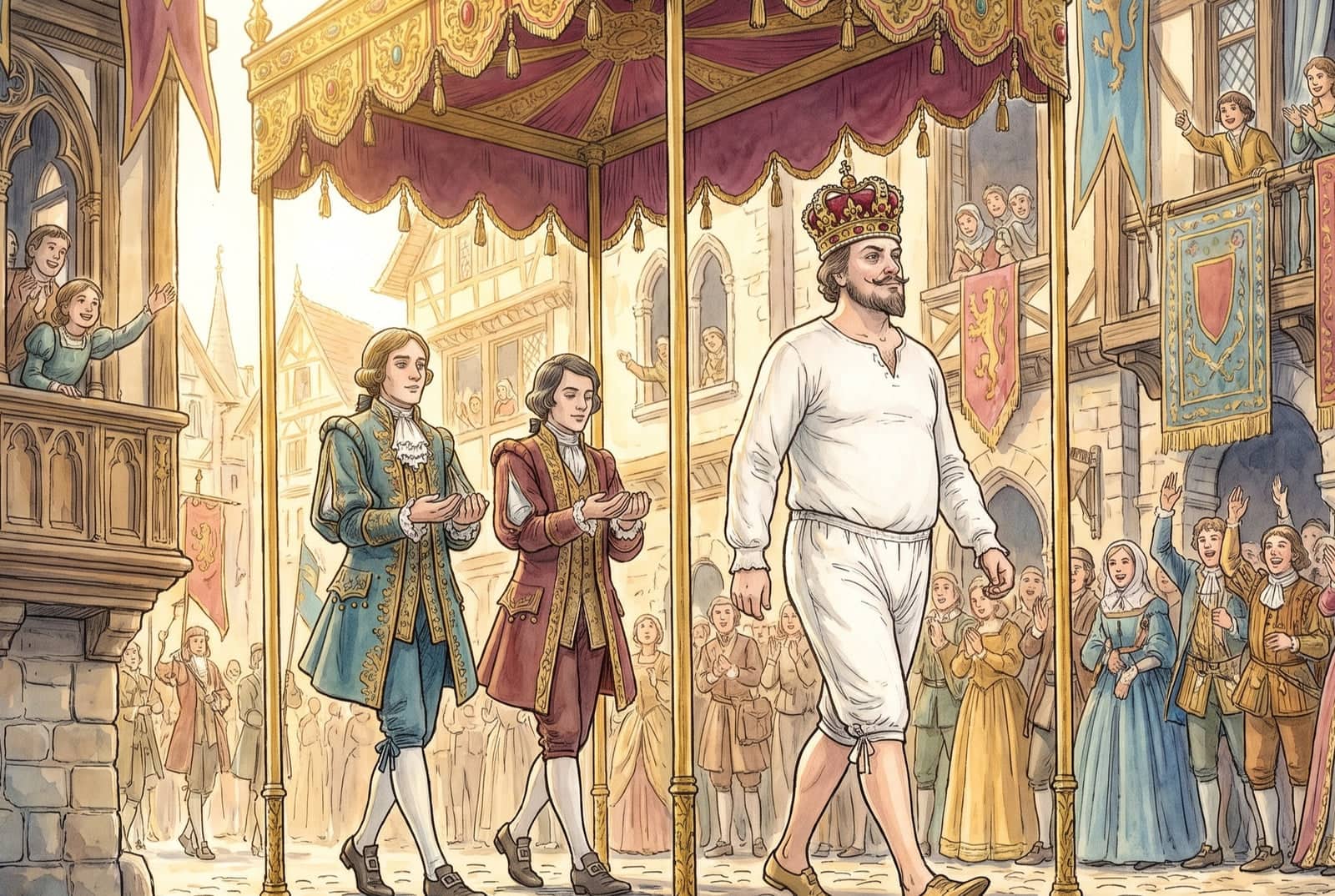
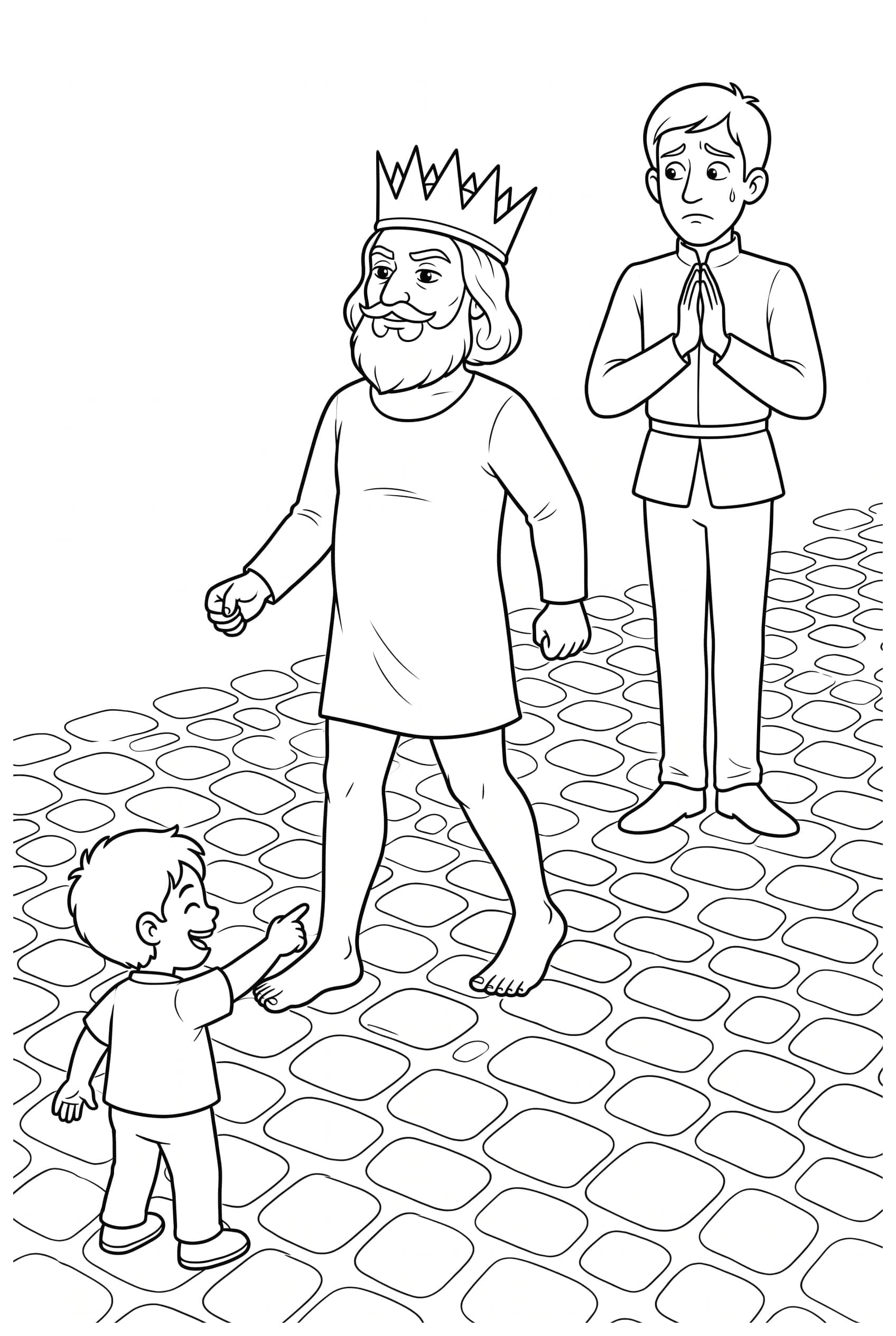
“But he isn’t wearing anything at all!” said a little child at last.
“Good heavens, listen to the voice of innocence,” said the child’s father. And one person whispered to another what the child had said.
“But he isn’t wearing anything at all!” cried the whole crowd.
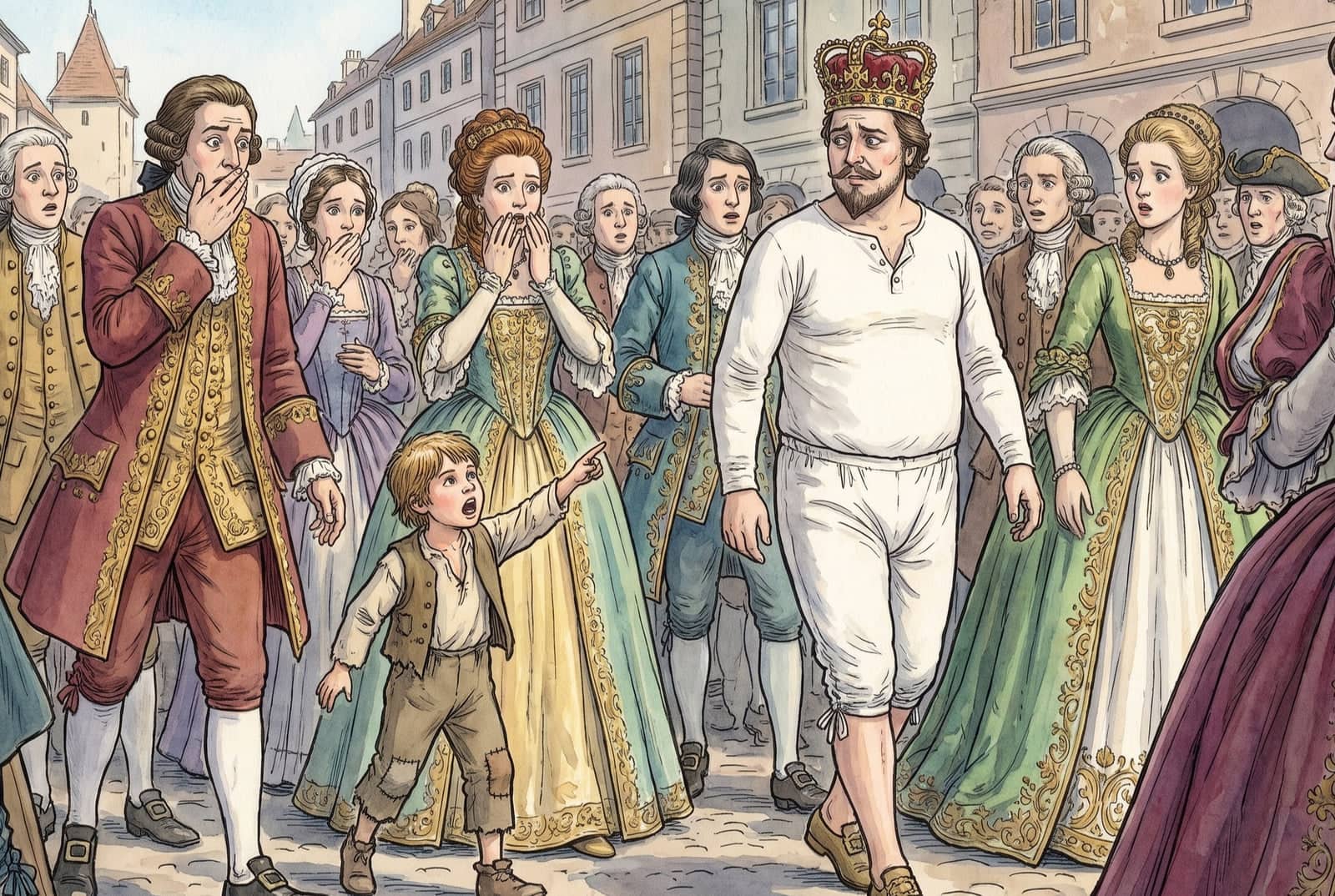
That went to the emperor’s heart, for it seemed to him that they were right. But he thought to himself, “Now I must see the procession through to the end.” So he held himself prouder than ever, and the chamberlains walked behind him, carrying the train that was not there.
Retold by Talerie from Fairy Tales of Hans Christian Andersen (opens in a new window)License: Public domainCopy this text, adapt it, use it however you like. A link back to Talerie is appreciated but never required.CC0 1.0 (opens in a new window)