A Chinese emperor hears that the best thing in his empire is a plain gray nightingale, then lets a jeweled clockwork bird take her place. Years later Death sits on the emperor’s chest, and the banished nightingale sings at his window until Death gives up the crown and sword, and the servants find their emperor alive.
In China, as you know, the emperor is Chinese, and everyone around him is Chinese too. It happened many years ago, and that is just why the story is worth hearing now, before it is forgotten.
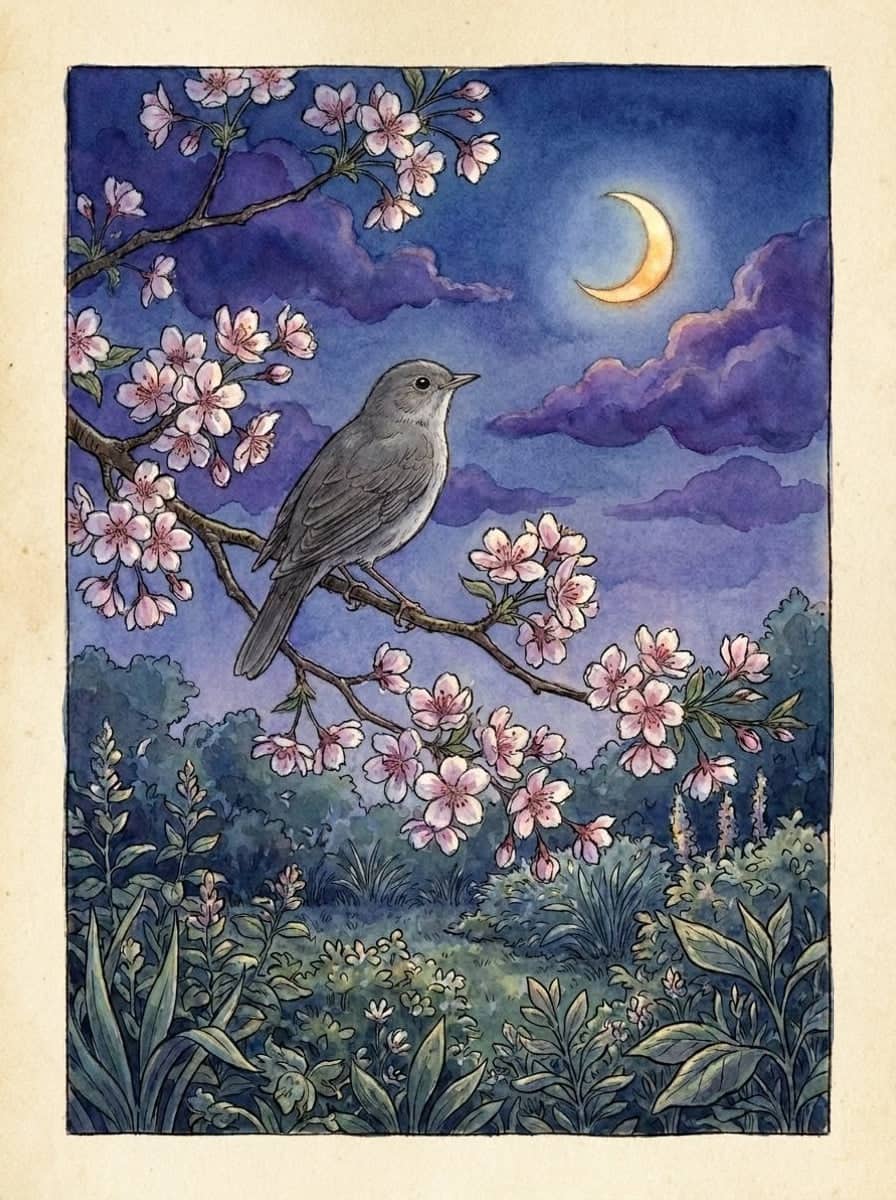
The emperor’s palace was the finest in the world, built all of porcelain, so costly and so brittle that anyone who touched it had to take care. In the garden grew wonderful flowers, and silver bells were tied to the loveliest of them, so that nobody could walk past without noticing. Beyond the garden lay a forest running down to the blue sea, and in its branches lived a nightingale.
She sang so beautifully that the poor fisherman lay still and listened when he rowed out at night with his nets. “Oh, how lovely that is,” he would say. Then he had to mind his nets and forgot her; but the next night, when she sang again, he said the same: “Oh, how lovely that is.”
Travelers came from every country in the world to see the city, the palace and the garden, and when they heard the nightingale they all said, “That is the best of all.” Learned men wrote books about it all, and poets wrote verses about the bird in the forest.
One day some of those books came to the emperor. He sat in his golden chair reading with pleasure, until he came to a line that said: “The nightingale, though, is the best of all.”
“What is this?” said the emperor. “I know nothing about any nightingale. Is there such a bird in my empire, in my very own garden? And I have to learn it from a book!”
He called his gentleman in waiting, who was so grand that whenever anyone of lower rank spoke to him, he answered nothing but “P,” which means nothing at all.
“They say this nightingale is the best thing in my whole empire,” said the emperor. “Why has nobody told me? I wish her to sing before me this evening.”
The gentleman in waiting had never heard the name. He ran up staircases and down, through halls and passages, and nobody else had heard it either, so he came back and said the bird must be a fable invented by the people who write books.
“The book was sent to me by the mighty emperor of Japan,” said the emperor, “so it cannot be untrue. She must be here this evening, or the whole court shall be trampled on after supper.”
“Tsing-pe!” said the gentleman in waiting, and away he ran again, with half the court behind him, for nobody wished to be trampled on after supper.
At last they found a poor little girl in the kitchen. “Oh, I know the nightingale well,” she said. “Every evening I carry the scraps from the table home to my sick mother by the shore, and coming back I rest in the wood and hear the nightingale sing. Then the tears come into my eyes, and it is just as if my mother were kissing me.”
“Take us to her,” said the gentleman in waiting, “and you shall have a place in the kitchen and see the emperor dine.”
So they set out for the wood, half the court with them. On the way a cow began to low.
“There she is!” cried the young courtiers. “What power in so small a creature!”
“No, that is a cow lowing,” said the little kitchen maid. “We are still a long way off.”
Then the frogs began to croak in the marsh.
“Wonderful,” said the court chaplain. “Now I hear her. It is just like little church bells.”
“No, those are frogs,” said the little kitchen maid. “But I think we shall hear her very soon now.”
And then the nightingale began to sing.
“There she sits,” said the girl, pointing to a small gray bird up among the branches. “Is it possible?” said the gentleman in waiting. “How plain she looks! She must have lost her color at the sight of so many fine people.” Then the girl called up, “Little nightingale, our gracious emperor wishes you to sing for him.”

“With the greatest pleasure,” said the nightingale, and she sang so that it was a joy to hear.
“My excellent little nightingale,” said the gentleman in waiting, “I invite you to a court festival this evening.”
“My song sounds best out among the green trees,” said the nightingale. But she came gladly when she heard that the emperor wished it.
At the palace the porcelain walls glittered in the light of a thousand lamps, and a golden perch stood in the middle of the great hall. The whole court was there, and the little kitchen maid stood behind the door, for she was now a Real Court Cook.
The nightingale sang so beautifully that tears came into the emperor’s eyes and ran down his cheeks, and she sang more beautifully still, until it went straight to every heart. The emperor said she should wear his golden slipper round her neck, but she thanked him and said she was rewarded enough.
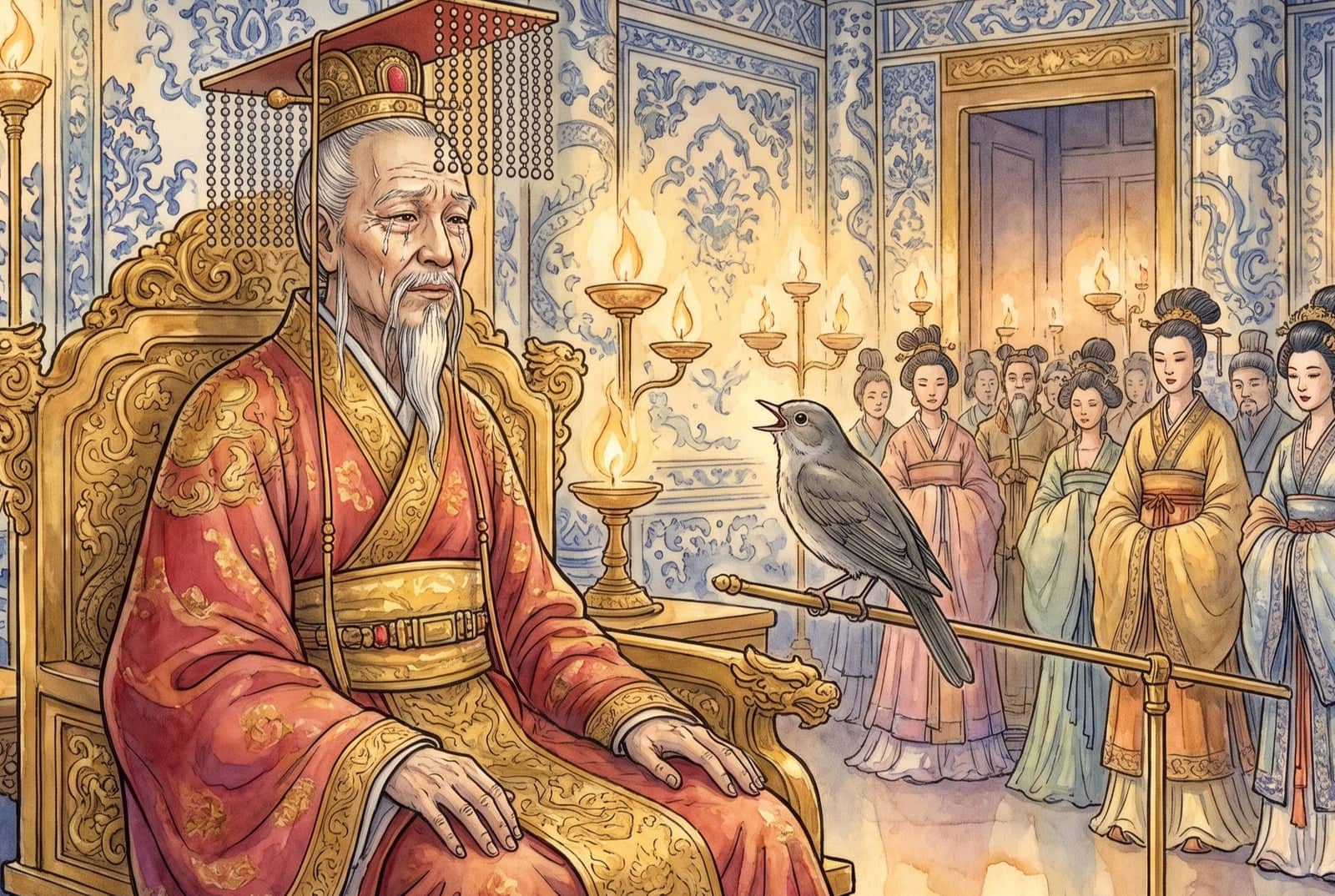
“I have seen tears in an emperor’s eyes, and that is the richest treasure of all. An emperor’s tears have a wonderful power.” And she sang again with her sweet, glorious voice.
She was to stay at court now, with her own cage, and when she flew out twelve servants held her by silk ribbons. There was no pleasure at all in an outing like that.
One day a large parcel came for the emperor with the word “Nightingale” written on it. It was not a book, but an artificial nightingale in a box, made to look like the living one and covered with diamonds, rubies and sapphires. Wound up, it could sing one of the pieces the real bird sang. Round its neck hung a ribbon that said: “The Emperor of Japan’s nightingale is a poor thing beside the Emperor of China’s.”
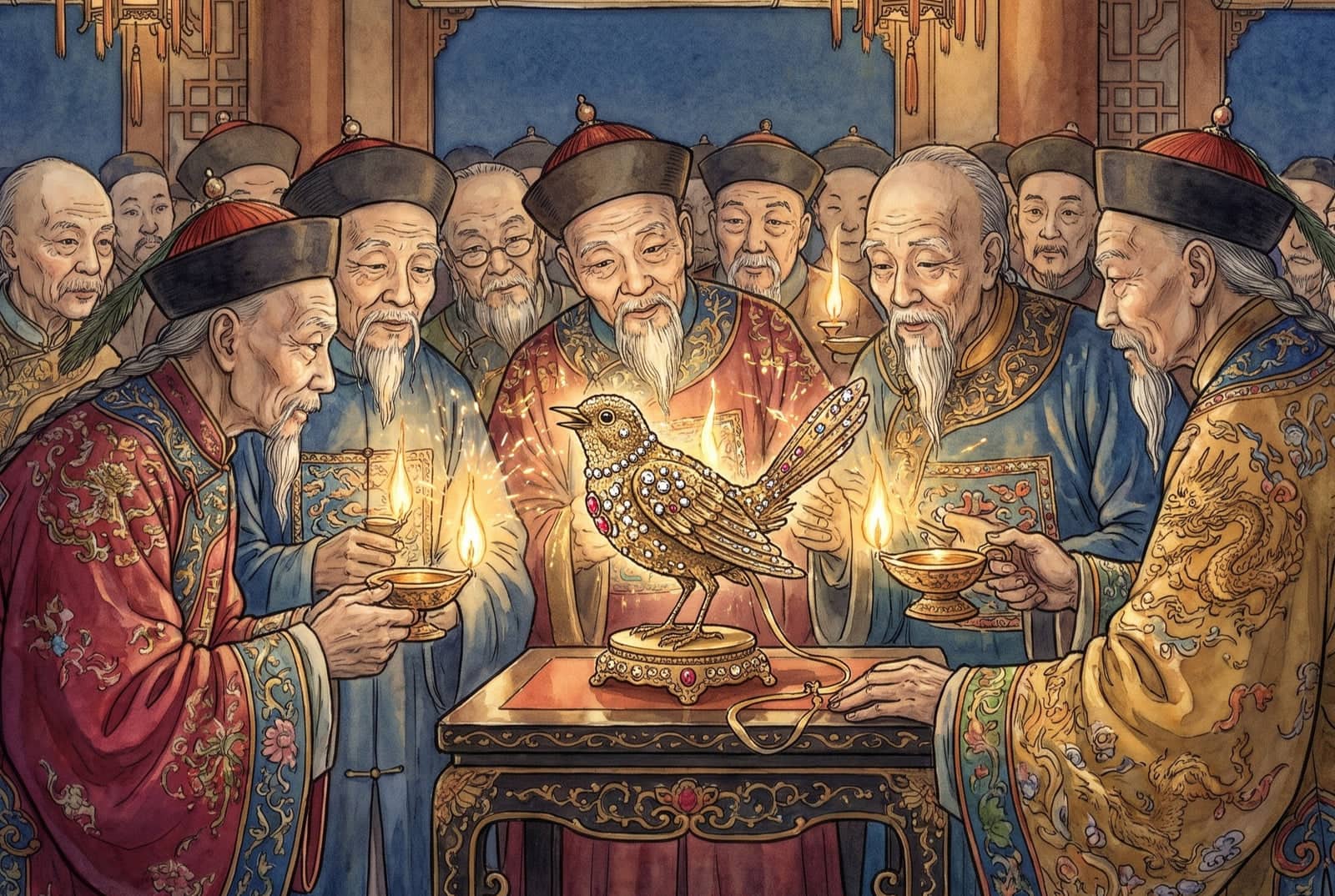
“Now they must sing together,” said the court. “What a duet that will be!” But it did not go well, for the real nightingale sang in her own way and the artificial bird by clockwork. “That is no fault of his,” said the music master. “He keeps perfect time and belongs entirely to my school.”
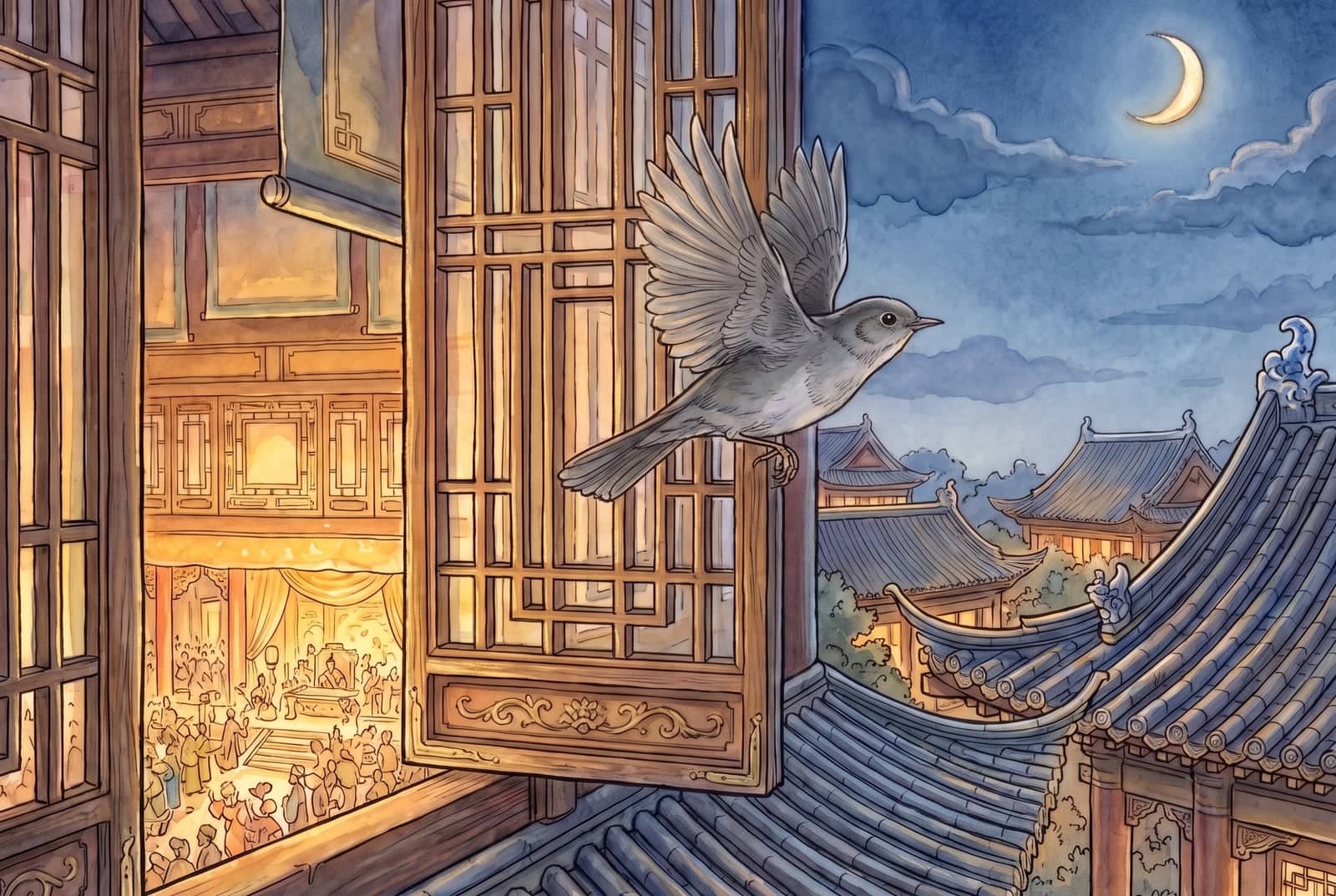
So it sang alone, and was quite as great a success, and far prettier to look at. Three and thirty times it sang the same piece and was not tired. Then the emperor thought the living nightingale ought to sing. But where was she? Nobody had noticed her fly out of the open window, home to her green woods.
The courtiers called her ungrateful. “We have the better bird after all,” they said, and it sang for the thirty-fourth time. The music master swore it was better than a living one, for with a real nightingale nobody can reckon what is coming.
The people were delighted with it too. But the poor fisherman, who had heard the real nightingale, said, “It sounds pretty enough, but something is missing, and I do not know what.”
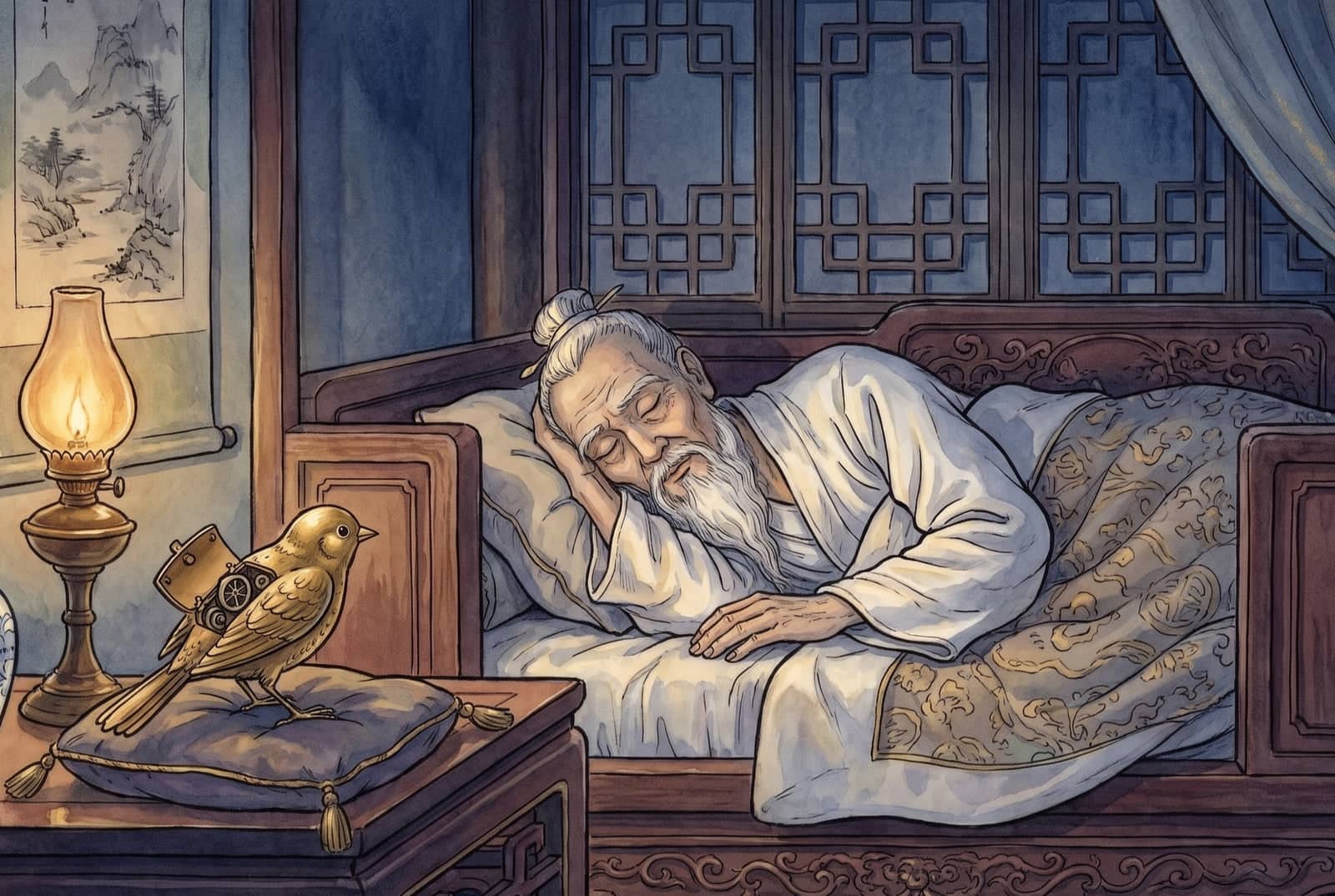
And the real nightingale was banished from the country and the empire, while the artificial bird was given a silk cushion beside the emperor’s bed, with gold and jewels lying round about it and the golden slipper she had refused hung about its neck.
So a year went by, and everyone in China knew every little cluck of that song by heart, which was just why they liked it best. The boys in the street sang, “Zi-zi-zi, cluck, cluck, cluck,” and the emperor sang it too.
But one evening, while the artificial bird was singing its best and the emperor lay in bed listening, something inside it went whizz. Whirr, went all the wheels, and the music stopped. The watchmaker got it into some sort of order again, but the pegs were worn, and now it might sing only once a year. The music master said it was every bit as good as before, and so it was every bit as good as before.
Five years passed, and a real sorrow came upon the land. The Chinese were fond of their emperor, and now he was ill and could not live much longer. A new emperor had been chosen, and the people in the street asked the gentleman in waiting how the old one was.
“P,” he said, and shook his head.
Cold and pale the emperor lay in his great bed. The whole court believed he was dead and ran off to greet the new emperor. The halls were quiet, quite quiet. But the emperor was not dead yet. A window stood open, and the moon shone in upon him and the artificial bird.
He could hardly breathe. Something was sitting on his chest, and when he opened his eyes he saw that it was Death, wearing the emperor’s golden crown and holding the emperor’s sword and his banner. Out of the velvet curtains strange faces looked at him, some ugly, some gentle: his own deeds, good and bad, come to see him now that Death sat upon his heart.
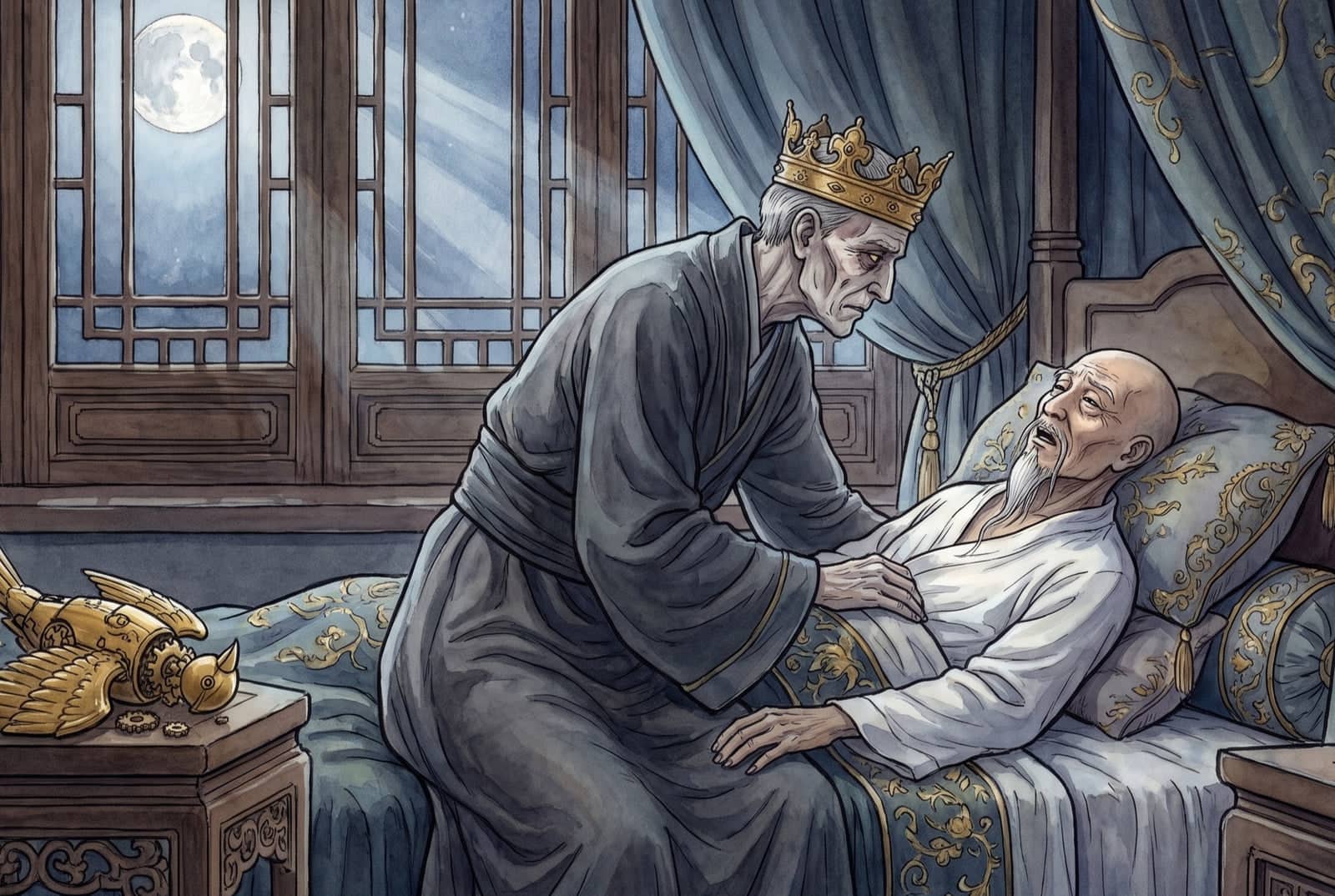
“Do you remember this?” whispered one after another. “Do you remember that?” And they told him so much that the sweat ran from his forehead.
“I never knew!” cried the emperor. “Music, music! The great Chinese drum, so that I need not hear what they are saying!” But they went on, and Death nodded at everything.
“Music, music!” cried the emperor. “You little golden bird, sing! I have given you gold and hung my own golden slipper round your neck. Sing!”
But the bird stood silent. There was nobody to wind it up, and it never sang otherwise. Death went on staring with his great hollow eyes, and it was quiet, dreadfully quiet.
Then, all at once, the loveliest singing came in at the window. It was the little living nightingale, on a branch outside. She had heard of her emperor’s trouble and had come to sing him comfort and hope. As she sang, the pale faces grew fainter, the blood moved faster in the emperor’s weak body, and even Death listened and said, “Go on, little nightingale. Go on.”
“Yes, if you give me the golden sword,” said the nightingale. “Yes, if you give me the rich banner. Yes, if you give me the emperor’s crown.”
And Death gave up each treasure for a song. She sang on, of the quiet churchyard where the white roses grow, where the elder tree breathes out its scent and the grass is watered by the tears of those left behind. Then Death began to long for his garden, and floated out of the window like a cold white mist.
“Thank you,” said the emperor. “You heavenly little bird, I know you well. I drove you out of my country, and still you have sung the evil faces from my bed and Death from my heart. How can I reward you?”
“You have rewarded me,” said the nightingale. “I drew tears from your eyes the first time I sang to you, and I shall never forget it. Those are the jewels that gladden a singer’s heart. But sleep now, and grow strong and well again. I will sing to you.”
And she sang, and the emperor fell into a sweet, healing sleep. The sun was shining in at the window when he woke, strong and well. Not one of his servants had come back, for they all believed him dead. Only the nightingale sat beside him and sang.
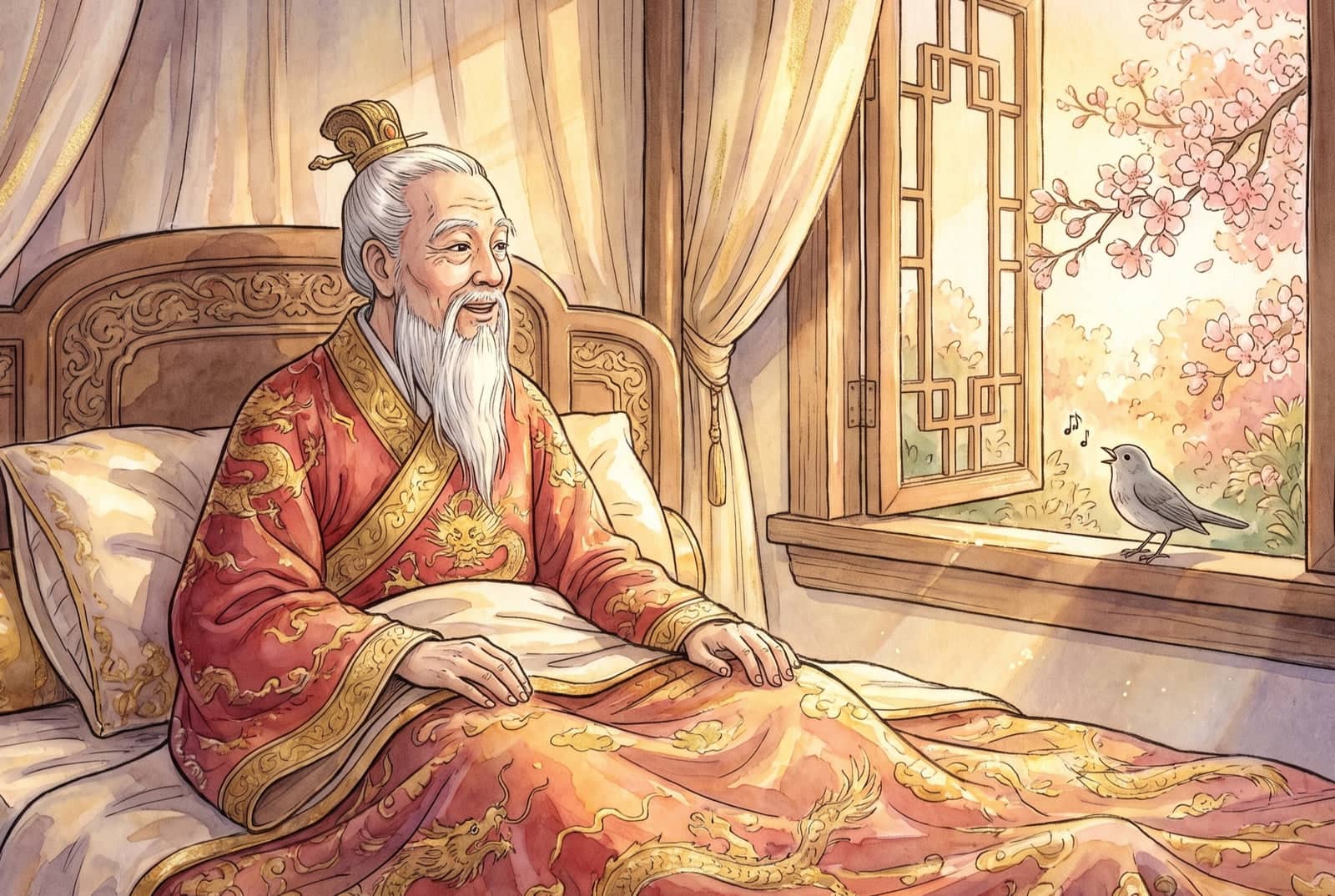
“You must stay with me always,” said the emperor. “You shall sing only when you please, and I will break the artificial bird into a thousand pieces.”
“Do not do that,” said the nightingale. “It did good while it could. Keep it as you have kept it. I cannot build my nest in the palace, but let me come when I wish. In the evening I will sit on the branch by your window and sing to you. I will sing of those who are happy and of those who suffer, and of the good and the evil that are hidden from you. I love your heart more than your crown. But one thing you must promise me.”
“Anything,” said the emperor, who had risen and put on his imperial robes, and pressed the heavy golden sword to his heart.
“Only this. Tell no one that you have a little bird who tells you everything. Things will go better that way.”
And the nightingale flew away.
The servants came in to look at their dead emperor. There they stood, and the emperor said, “Good morning.”
Retold by Talerie from Fairy Tales of Hans Christian Andersen (opens in a new window)License: Public domainCopy this text, adapt it, use it however you like. A link back to Talerie is appreciated but never required.CC0 1.0 (opens in a new window)