The Nightingale and the Rose
8 min readages 7 and uptalerie.com/en/tales/the-nightingale-and-the-rose
A Nightingale gives her life for a Student who needs a red rose to dance with the professor’s daughter, singing all night against a thorn until her blood turns the rose crimson. When the girl prefers the chamberlain’s nephew’s jewels, the Student throws the rose into the gutter and goes back to his dusty Metaphysics.
“She said she would dance with me if I brought her red roses,” cried the young Student, “but there isn’t a single red rose in all my garden.”
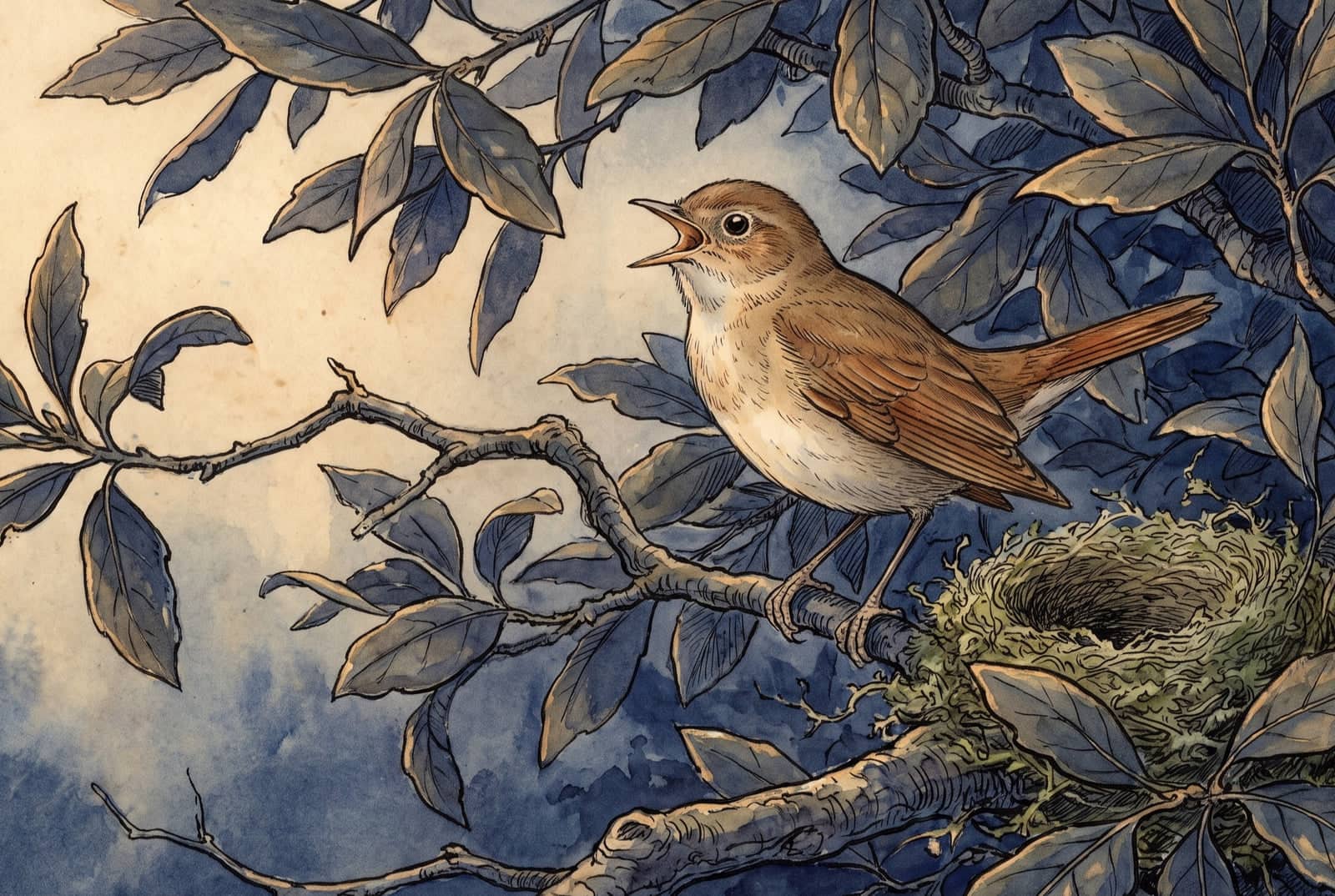
From her nest in the holm-oak, the Nightingale heard him and wondered.
“I have read everything the wise men ever wrote,” he said, and his eyes filled with tears, “and yet my life is miserable, all because I have no red rose!”
“Here at last is a true lover,” said the Nightingale. “Night after night I have sung of him without ever knowing him, and now I see him.”
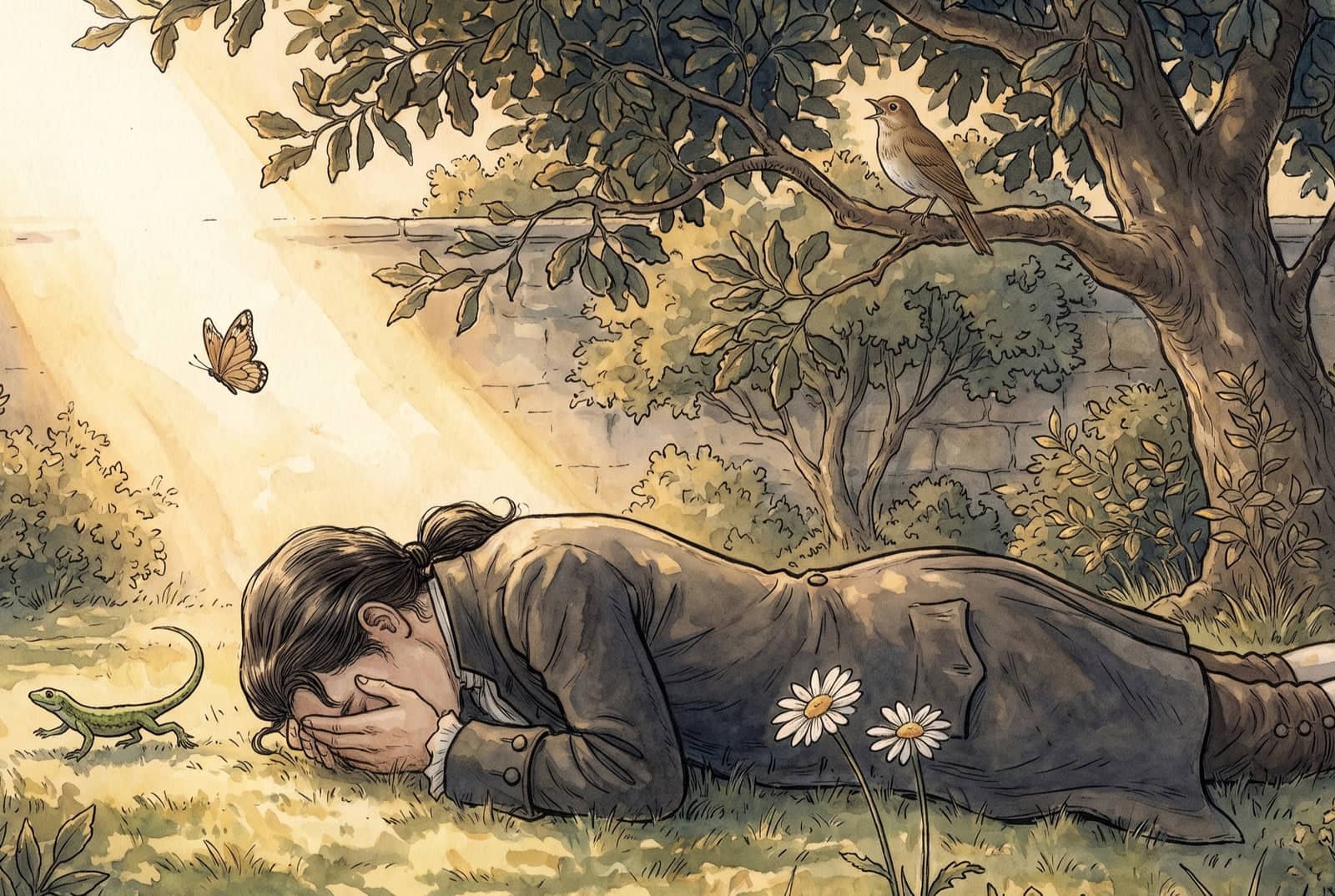
“The prince is giving a ball tomorrow night,” the Student murmured. “If I bring my love a red rose, she will dance with me until dawn. If not, she will walk right past me, and my heart will break.” And he threw himself down on the grass, buried his face in his hands, and wept.
“Why is he crying?” asked a little Green Lizard, running past with his tail in the air.
“Why, indeed?” said a Butterfly, who was fluttering after a sunbeam.
“Why, indeed?” a Daisy whispered to his neighbor.
“He is crying for a red rose,” said the Nightingale.
“For a red rose?” they cried. “How very silly!” And the little Lizard, who was something of a cynic, laughed out loud.
But the Nightingale understood the Student’s sorrow. She sat quietly in the Oak-tree for a while. Then she spread her brown wings and sailed across the garden like a shadow.
In the middle of the lawn stood a beautiful Rose-tree, and she flew over and landed on one of its branches.
“Give me a red rose,” she cried, “and I will sing you my sweetest song.”
But the Tree shook its head. “My roses are white,” it answered, “whiter than the snow on the mountain. Go to my brother who grows around the old sundial. Perhaps you will find what you want there.”
So the Nightingale flew to the Rose-tree around the old sundial.
“Give me a red rose,” she cried, “and I will sing you my sweetest song.”
But the Tree shook its head. “My roses are yellow,” it answered, “yellower than the daffodils in the meadow. Go to my brother who grows beneath the Student’s window. Perhaps you will find what you want there.”
So the Nightingale flew to the Rose-tree beneath the Student’s window.
“Give me a red rose,” she cried, “and I will sing you my sweetest song.”
But the Tree shook its head. “My roses are red,” it answered, “redder than the coral in the caves of the ocean. But the winter has chilled my veins and the frost has nipped my buds, and I will have no roses at all this year.”
“One red rose is all I want,” cried the Nightingale. “Is there no way I can get it?”
“There is a way,” answered the Tree, “but it is so terrible that I don’t dare tell you.”
“Tell me,” said the Nightingale. “I am not afraid.”
“Then you must build the rose out of music by moonlight,” said the Tree, “and stain it with your own heart’s blood. You must sing to me all night long with your breast against a thorn, until the thorn pierces your heart and your life flows into my veins and becomes mine.”
“Death is a great price to pay for a red rose,” said the Nightingale, “and Life is very dear. It is sweet to sit in the green woods and smell the hawthorn. Yet Love is better than Life, and what is the heart of a bird compared to the heart of a man?”
She flew back to the Student, who was still lying on the grass with tears in his eyes.
“Be happy,” she cried. “You shall have your red rose. All I ask in return is that you be a true lover, for Love is wiser than Philosophy and mightier than Power.”
The Student looked up, but he could not understand her, for he knew only the things that are written down in books.
The Oak-tree understood, though, and he felt sad, for he was very fond of the little Nightingale who had built her nest in his branches.
“Sing me one last song,” he whispered. “I will be very lonely when you are gone.”
So the Nightingale sang to him, and her voice was like water bubbling from a silver jar.
When she had finished, the Student got up and walked away. “She sings well,” he said to himself, “but she is all style and no feeling. She would never sacrifice herself for anyone else. What a pity her beautiful notes don’t do any practical good!” Then he went to his room, lay down on his narrow bed, and soon fell asleep.
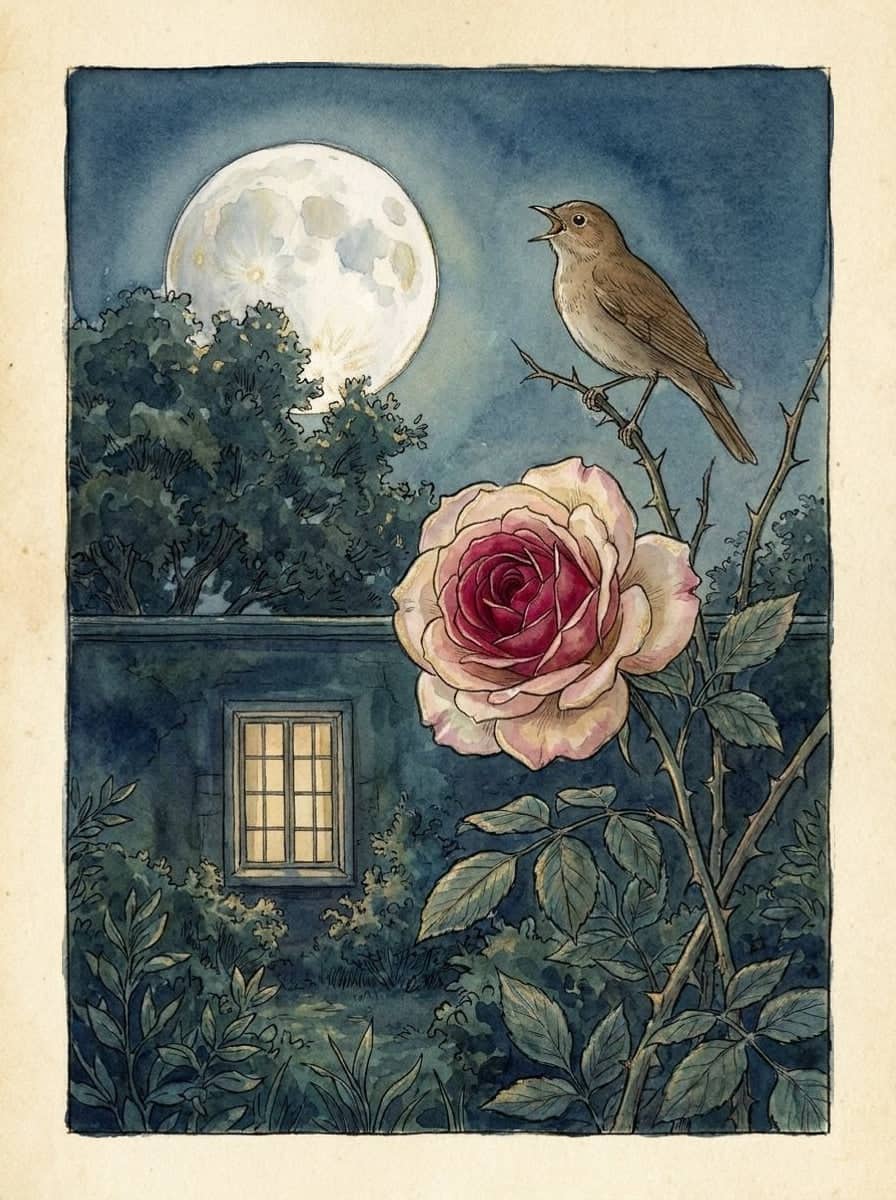
When the Moon came out, the Nightingale flew to the Rose-tree and set her breast against the thorn. All night long she sang, and the cold crystal Moon leaned down to listen. The thorn went deeper and deeper, and her life flowed out of her into the Tree.
First she sang of love being born in the heart of a boy and a girl, and on the highest branch a rose began to bloom, petal after petal, as song followed song. The rose was pale, like the mist over the river.
“Press closer, little Nightingale,” cried the Tree, “or Day will come before the rose is finished.”
So the Nightingale pressed closer against the thorn, and her song grew louder, and a delicate flush of pink crept into the petals. But the heart of the rose stayed white, for only a Nightingale’s heart’s blood can turn the heart of a rose crimson.
“Press closer, little Nightingale,” cried the Tree, “or Day will come before the rose is finished.”
So the Nightingale pressed closer still, until the thorn reached her heart and a bitter pain went through her. Wilder and wilder grew her song, for she sang of the Love that does not die in the grave. And the rose turned crimson, like the eastern sky at dawn, and its heart was as crimson as a ruby.
Then her voice grew faint, and she gave one last burst of music. The white Moon heard it, forgot the dawn, and lingered in the sky. The red rose heard it and opened its petals to the cold morning air.
“Look, look!” cried the Tree. “The rose is finished now!” But the Nightingale did not answer, for she was lying dead in the long grass, with the thorn in her heart.
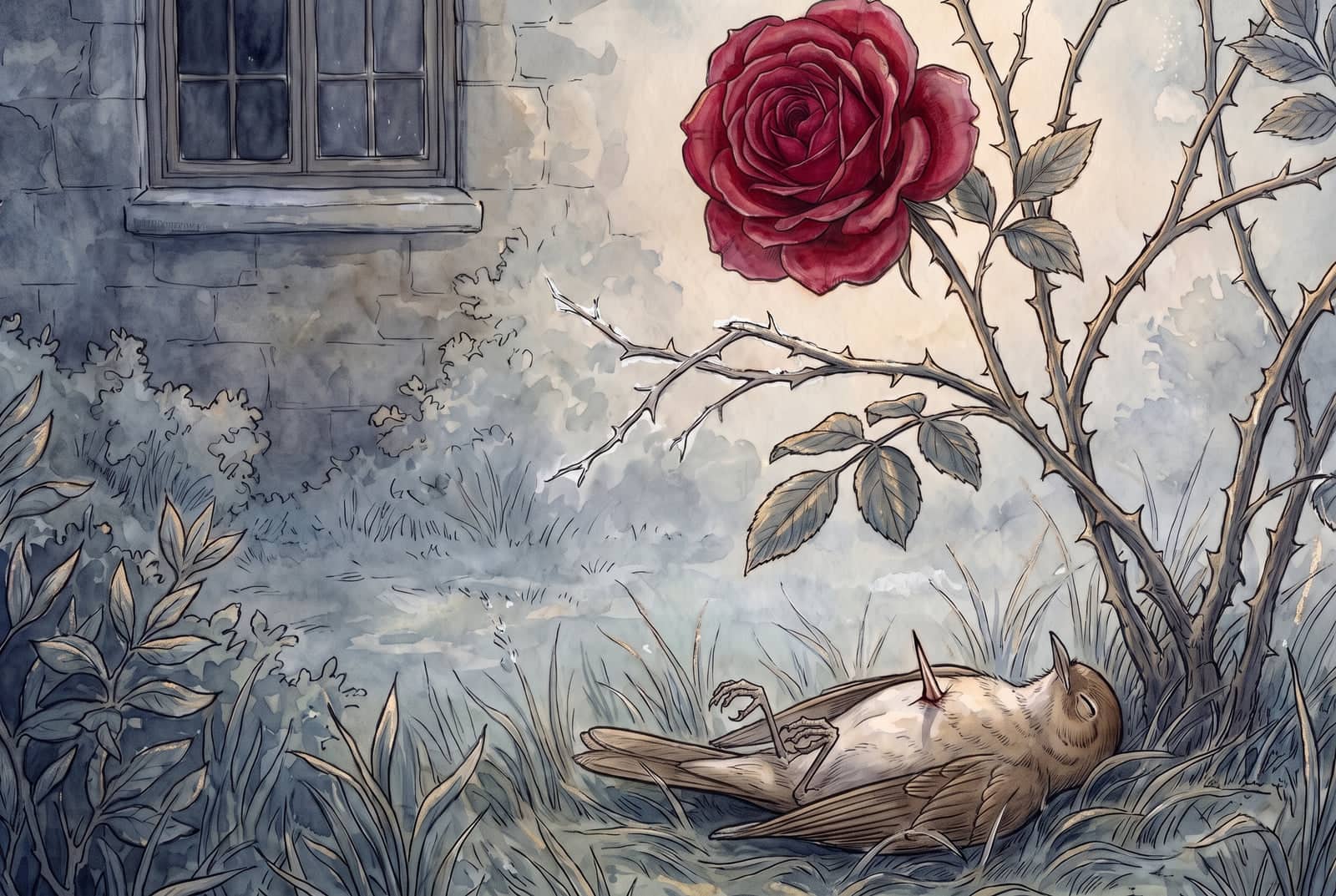
At noon the Student opened his window and looked out.
“Why, what a wonderful piece of luck!” he cried. “A red rose! It must have a long Latin name.” And he leaned down and picked it.
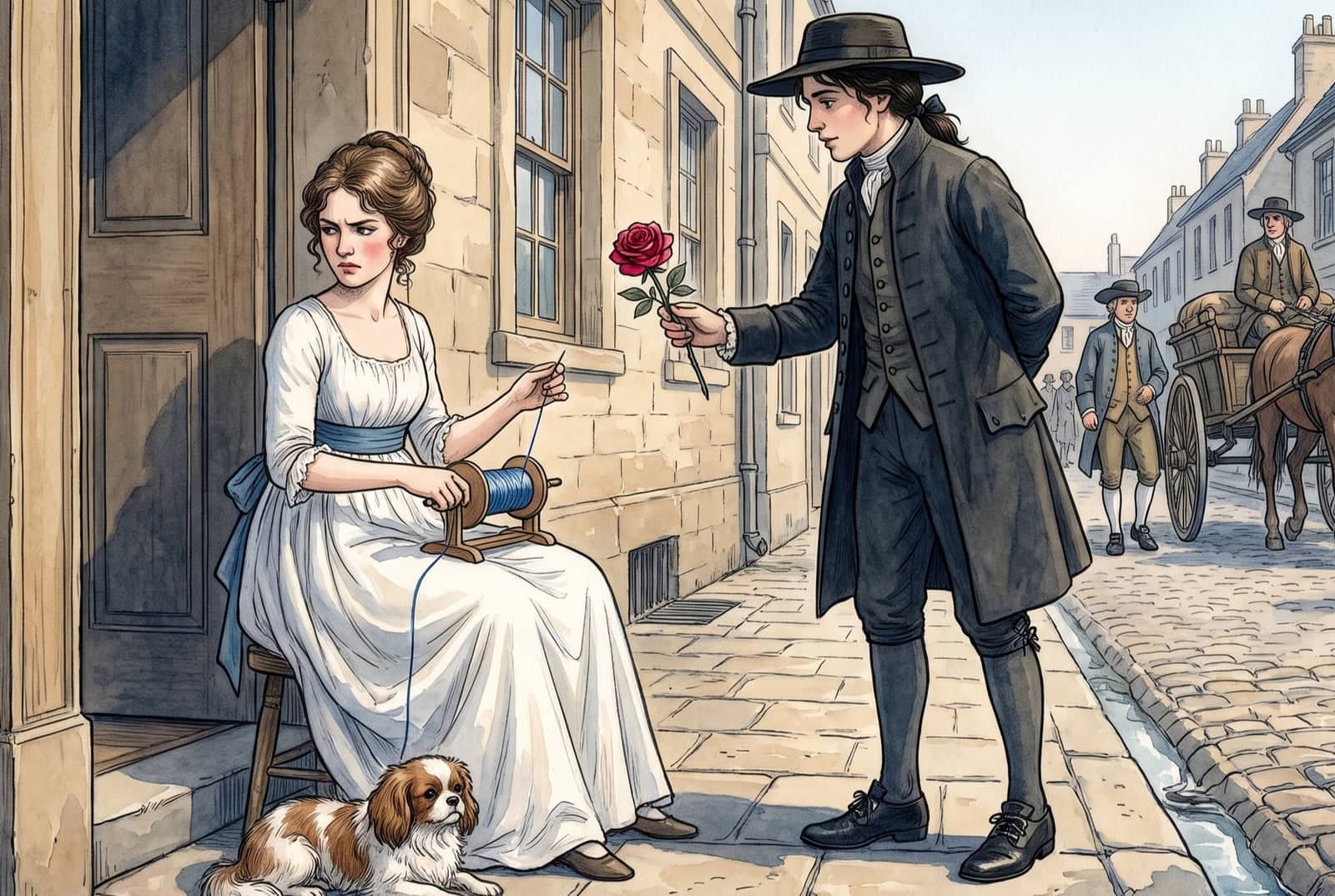
Then he put on his hat and ran to the professor’s house. The professor’s daughter was sitting in the doorway winding blue silk, with her little dog at her feet.
“You said you would dance with me if I brought you a red rose,” cried the Student. “Here is the reddest rose in all the world. Wear it tonight, and as we dance it will tell you how much I love you.”
But the girl frowned. “I’m afraid it won’t go with my dress,” she answered. “Besides, the chamberlain’s nephew has sent me some real jewels, and everybody knows that jewels cost far more than flowers.”
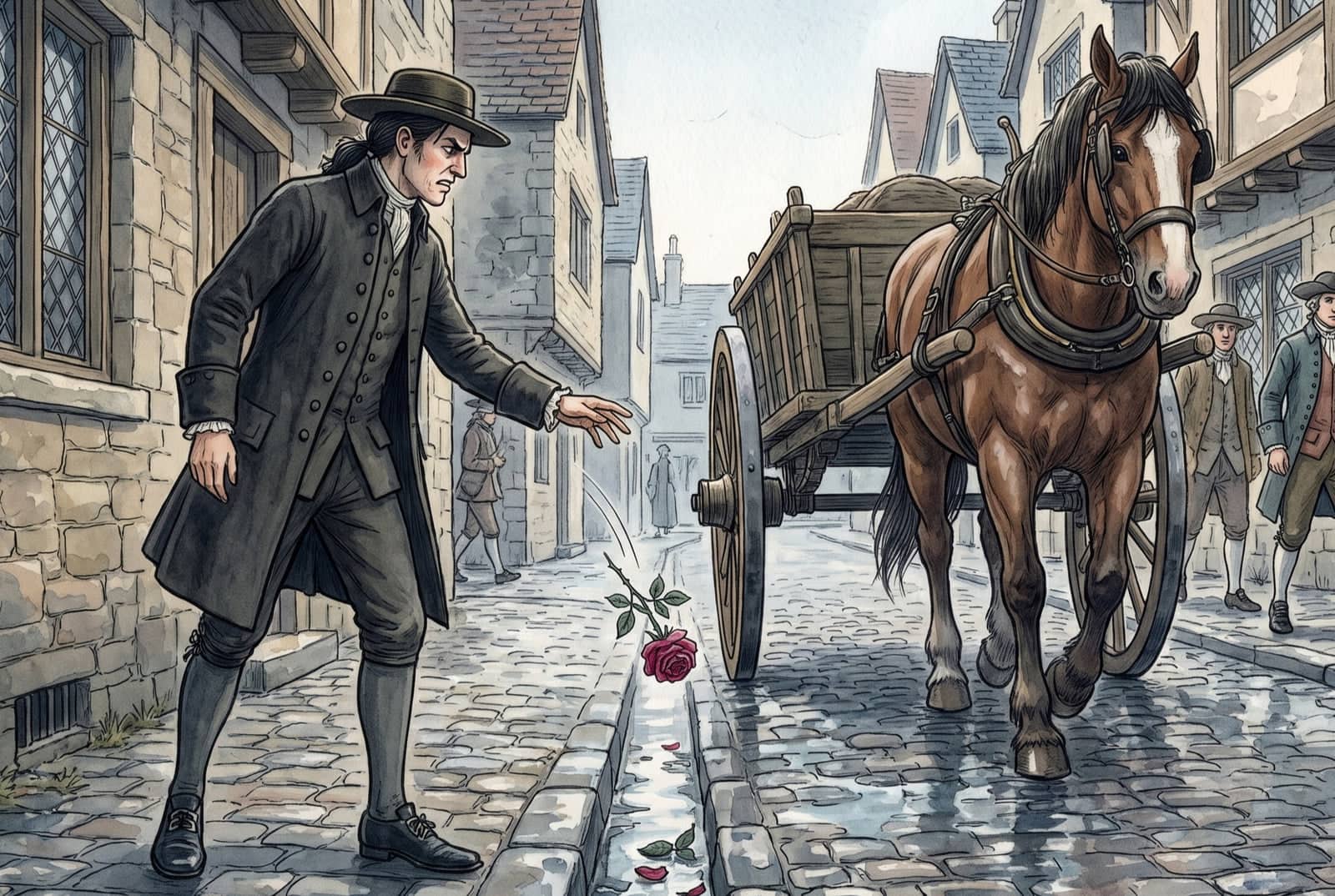
“Well, you are very ungrateful,” said the Student angrily, and he threw the rose into the street. It fell into the gutter, and a cart wheel rolled over it.
“Ungrateful!” said the girl. “You are very rude. And after all, who are you? Only a Student.” And she got up and went into the house.
“What a silly thing Love is!” said the Student as he walked away. “It isn’t half as useful as Logic, because it doesn’t prove anything. It is quite impractical. I will go back to Philosophy and study Metaphysics.”
So he went back to his room, pulled out a great dusty book, and began to read.
Retold by Talerie from The Happy Prince and Other Tales (opens in a new window)License: Public domainCopy this text, adapt it, use it however you like. A link back to Talerie is appreciated but never required.CC0 1.0 (opens in a new window)