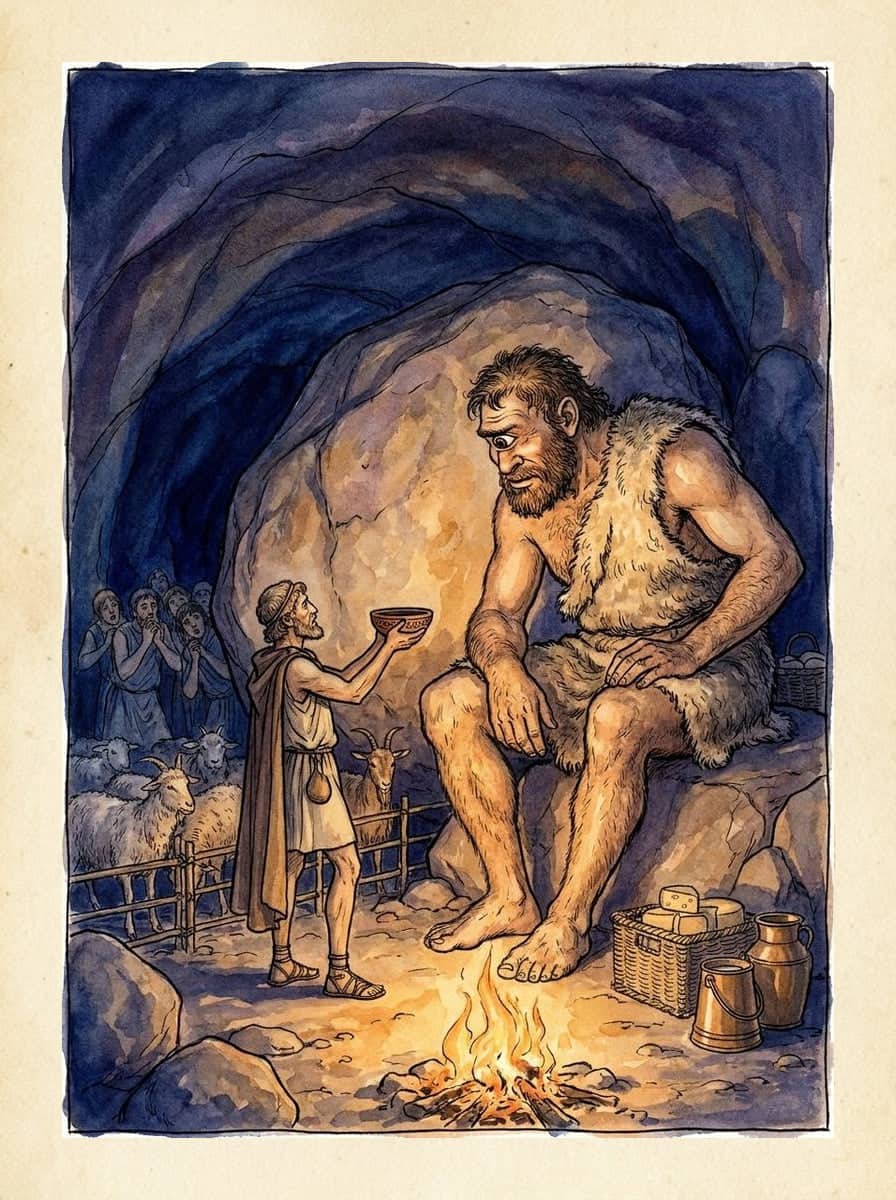
Odysseus and the Cyclops
14 min readages 7 and up
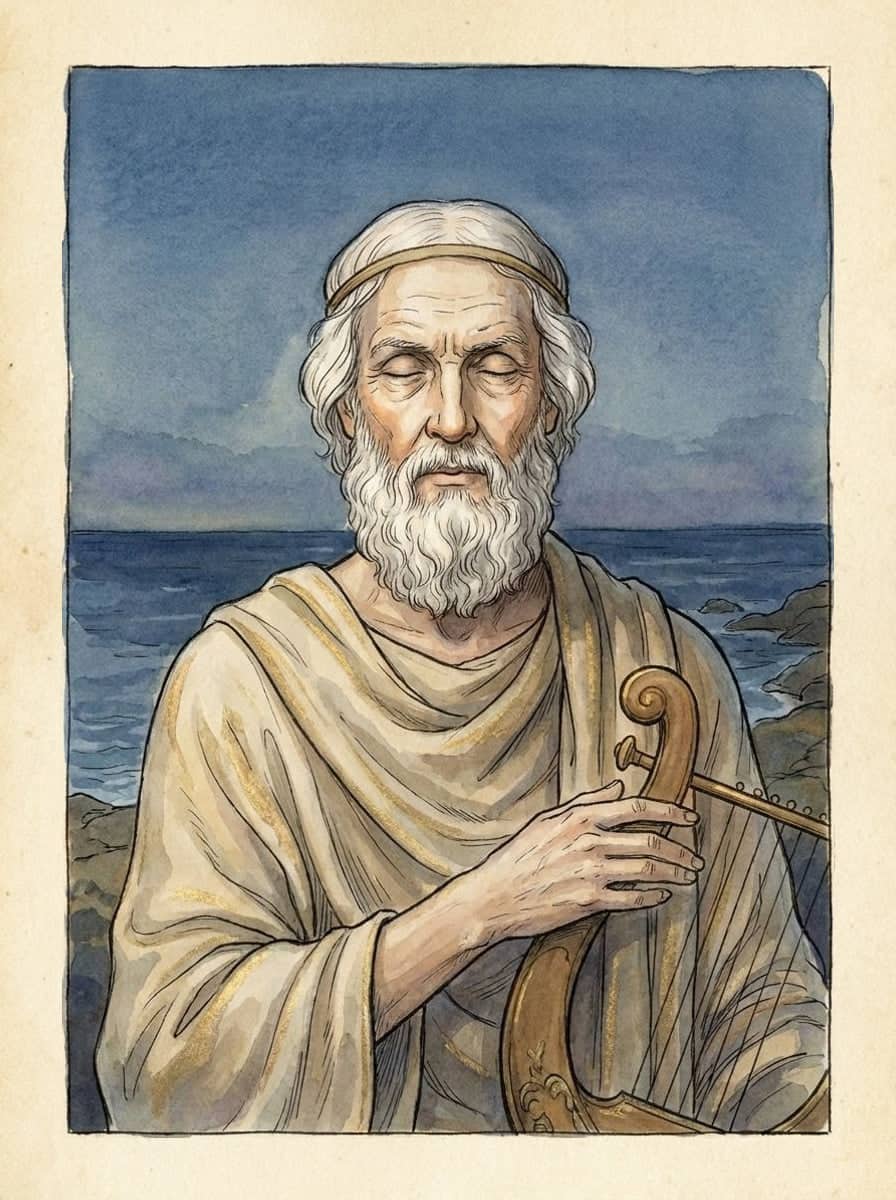
Homer is the name the ancient Greeks gave to the poet of the Iliad and the Odyssey. Nobody knows who he was, or whether one person made both poems. The Greeks themselves never doubted it; modern scholars do, and the long argument over it has a name of its own, the Homeric Question. Herodotus placed Homer about four hundred years before his own time, roughly the ninth century BC, while most scholars now date the poems to the eighth or seventh. The blind poet is tradition too: the Homeric Hymn to Apollo speaks of a blind man who lives on rocky Chios, and ancient readers took that as Homer describing himself. Several cities claimed him, Smyrna and Chios among them.
What can be studied is the poems, and they were made to be heard. Both are in dactylic hexameter, in an artificial literary Greek that mixes dialects, mostly Ionic. In the 1920s and 1930s Milman Parry, and after him Albert Lord, compared their repeated phrases, rosy-fingered Dawn and the wine-dark sea, with the songs of singers in Yugoslavia, and showed them to be the working tools of poets who composed aloud. Professional reciters called rhapsodes performed them, and in Athens they were recited at the Panathenaic festival.
The Odyssey runs to about 12,000 lines, and its division into 24 books came later, usually credited to the scholars of Alexandria. The Cyclops is in Book IX, and Odysseus tells it himself, at the court of Alcinous, king of the Phaeacians. The trick at its centre lives in the Greek: he gives his name as Outis, Nobody.
1 tale
14 min readages 7 and up