The Little Match Girl
3 min readages 6 and uptalerie.com/en/tales/the-little-match-girl
On the last evening of the year a barefoot girl wanders the snowy streets with matches nobody will buy. She strikes them one by one until her grandmother comes to carry her into a brightness beyond hunger and cold, and in the morning the child is still smiling in her corner with one bundle of matches burnt away.
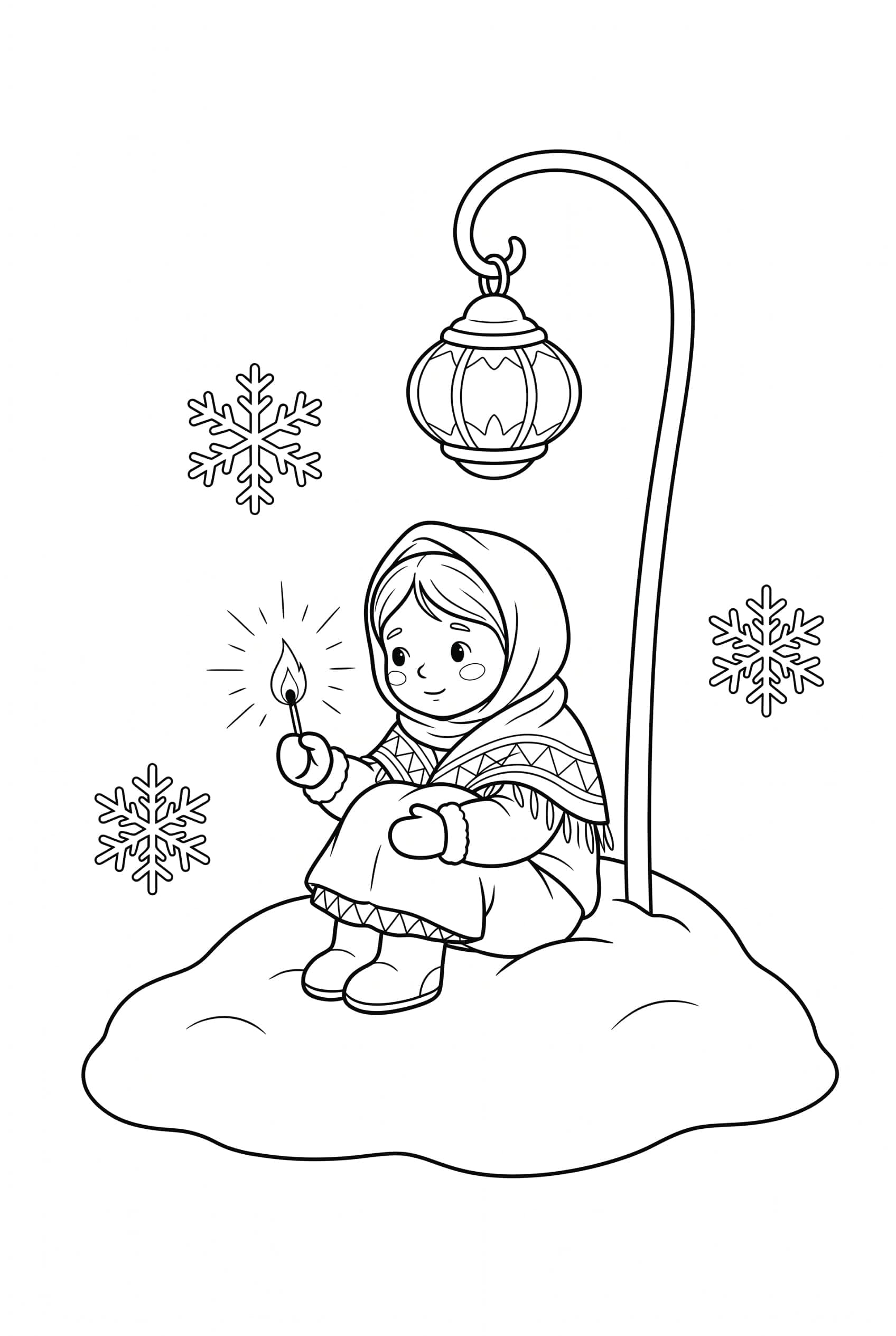
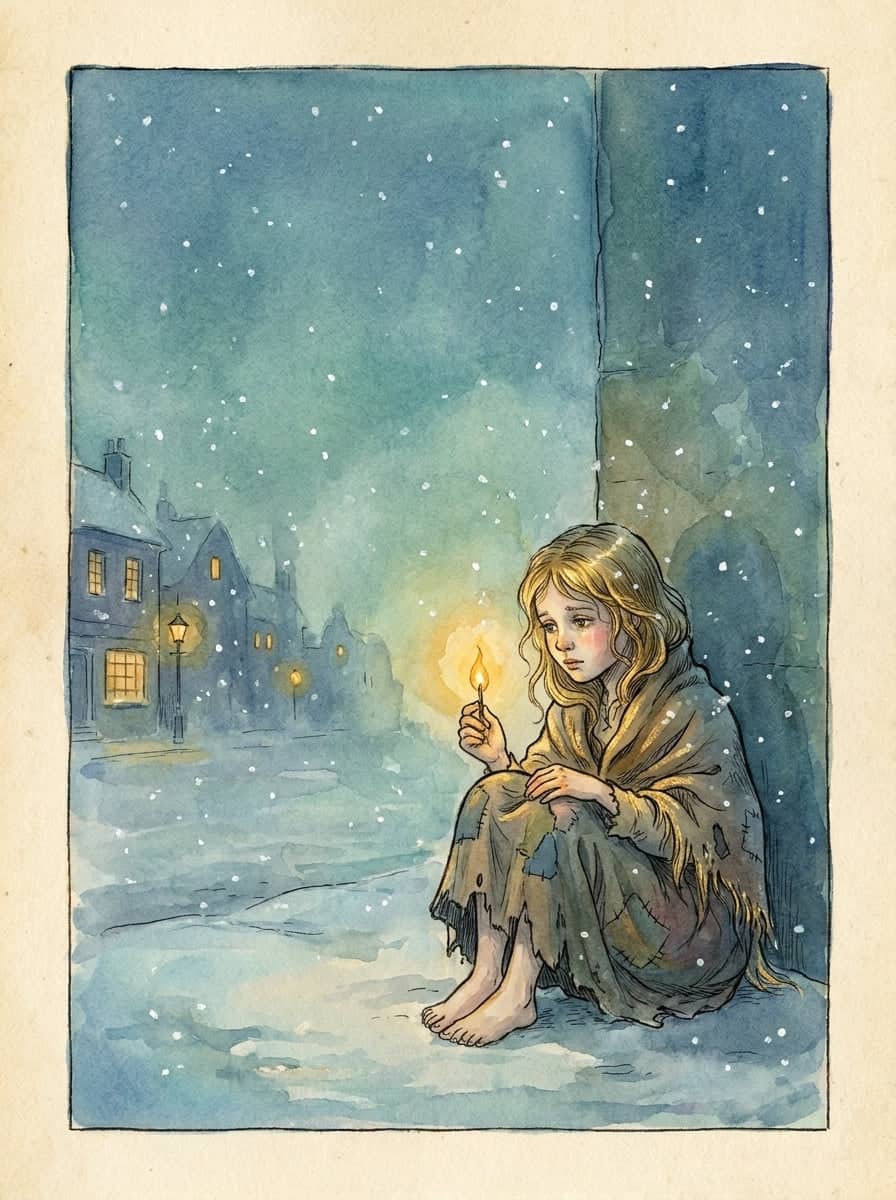
It was bitterly cold and snowing on the last evening of the year. A poor little girl walked the dark streets bare-headed and barefoot.
She had left home in her mother’s slippers, far too big for her, and lost them darting across the road in front of two carriages. A boy took one, and the other was gone.
She went on barefoot, her feet red and blue with cold, matches in her apron and a bundle in her hand.
All day nobody had bought one, and nobody had given her a penny.
Lights shone from every window, and the air smelled of roast goose, for it was New Year’s Eve.
In a corner between two houses she curled up small, her cold feet tucked under her.
She dared not go home with no money, for her father would be angry, and home was no warmer, with wind whistling through the roof.
Her hands were nearly numb. Perhaps one match, struck on the wall, would warm her fingers.
She pulled one out. Scratch! It burned bright and warm, like a little candle.
It seemed to her that she sat beside a great iron stove. The fire glowed so kindly that she stretched out her toes. Then the flame died, and the stove was gone.
She struck a second match, and where its light fell the wall turned clear as a veil.
Inside, a white cloth lay on the table, with fine china and a roast goose stuffed with apples and plums.
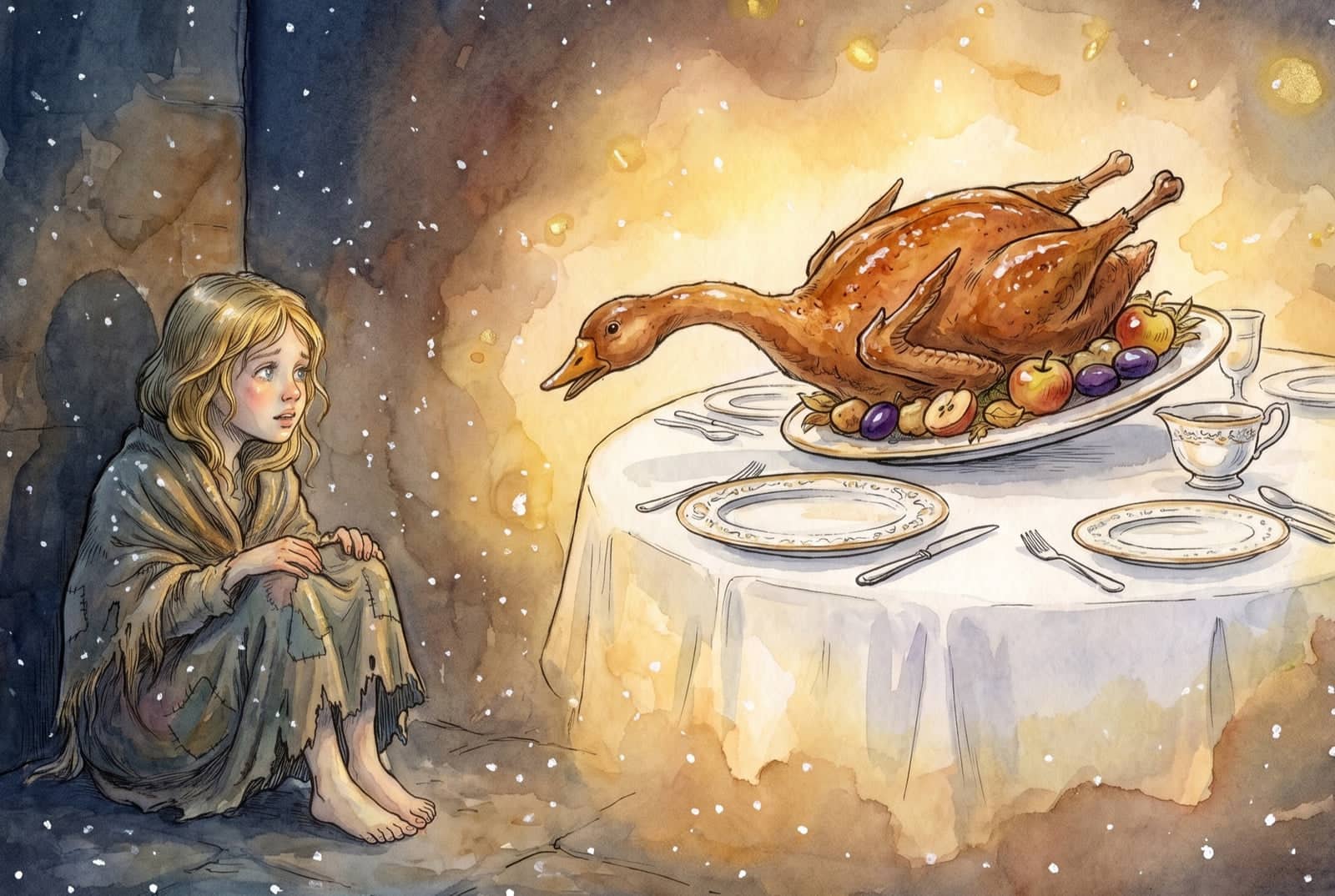
The goose hopped down from the dish and waddled across the floor to her, knife and fork in its breast. Then the match went out, and there was only the cold wall.
She lit another, and now she was sitting under a Christmas tree, grander than any she had seen, with a thousand candles on its branches. She reached for them, and the match went out.
The lights rose higher until they were stars, and one fell in a long streak of fire.
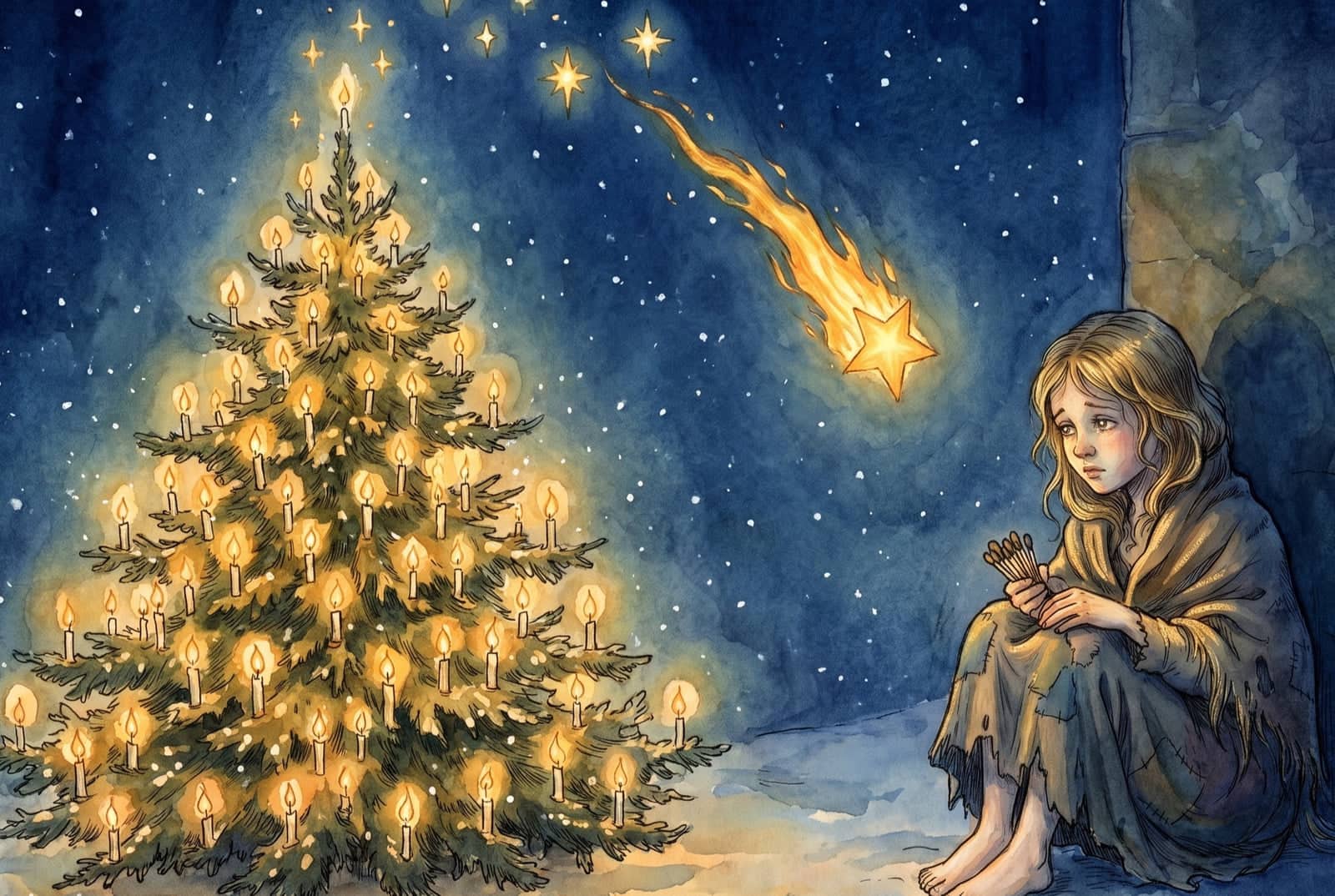
“Someone is dying,” she thought, for her grandmother, now dead and the only one who had ever loved her, had said that a falling star means a soul going to God.
She struck one more match, and in its light stood her grandmother, shining and gentle.
“Grandmother!” cried the little girl. “Take me with you! I know you will go when the match burns out, just as the stove did, and the goose, and the tree.”
Quickly she struck the whole bundle of matches, to keep her grandmother there. They blazed brighter than daylight, and her grandmother had never looked so lovely.
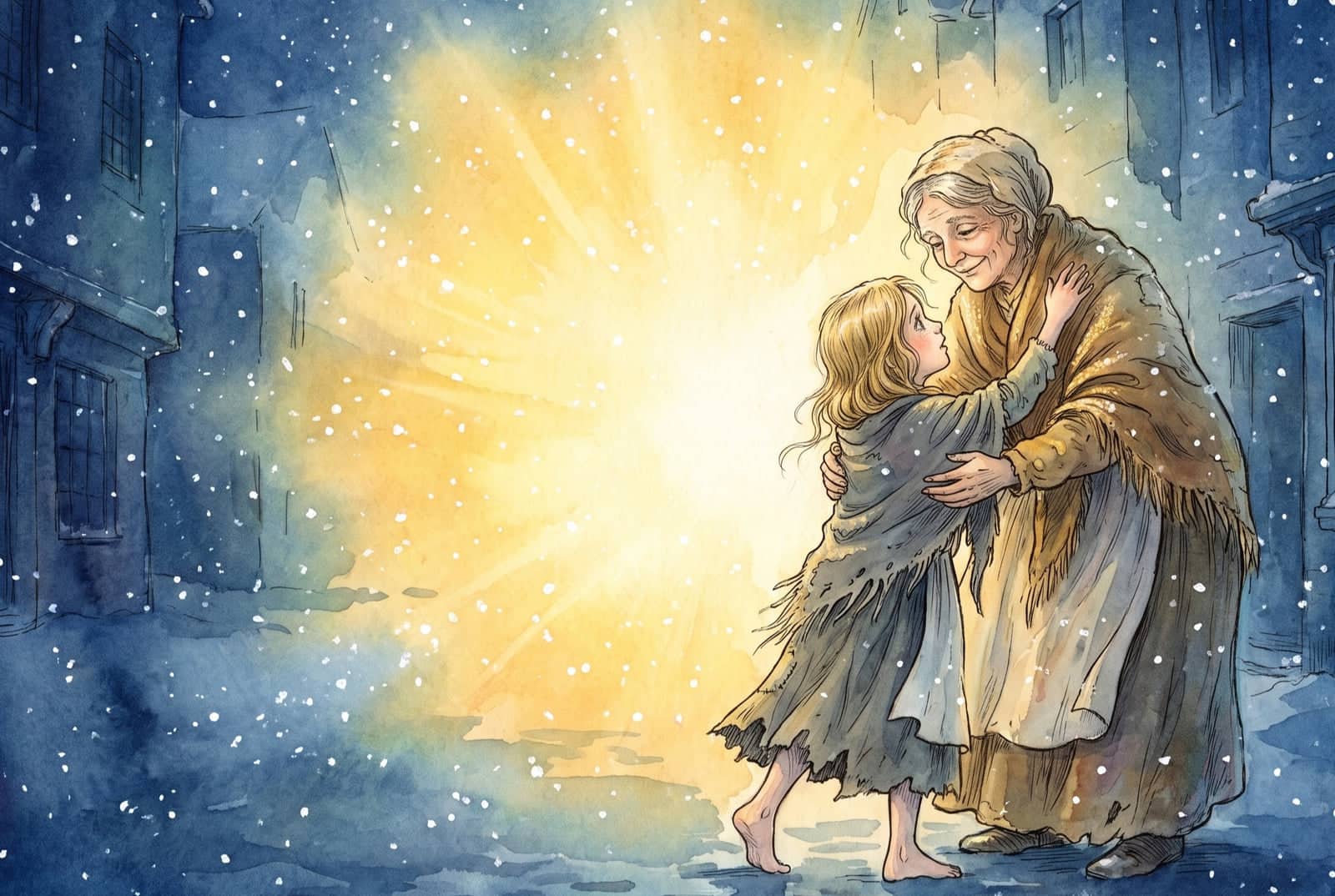
She took the little girl in her arms, and they flew up together far above the earth, where there is no cold, no hunger and no sorrow. They were with God.
In the cold morning the child was still sitting in her corner, smiling. She had not lived to see the new year.
The New Year’s sun rose over her, the matches still in her hand, one bundle burnt away.
“She was trying to keep warm,” people said. Nobody guessed what beautiful things she had seen, or into what brightness she had gone with her grandmother.
Retold by Talerie from Fairy Tales of Hans Christian Andersen (opens in a new window)License: Public domainCopy this text, adapt it, use it however you like. A link back to Talerie is appreciated but never required.CC0 1.0 (opens in a new window)