A little fir tree in the forest wants only to grow tall, and at Christmas it is felled and set up in a warm room, its branches hung with candles and gilded apples. Dragged up to a dark loft and then out to the yard, the tree is chopped and burnt under the brewing kettle while a child runs off with its gold star.
Far down in the forest stood a pretty little fir tree. It had a good spot, with sun enough and air enough and taller firs all around it for company.
But it took no notice of the sun, or the birds, or the red clouds overhead. It wanted one thing only: to be tall.
Children came through the wood to gather berries and sat down beside it. “Look how sweet and small this one is,” they would say, and the fir tree could not bear to hear it.
Every year it grew another ring of branches, which is how you count the years of a fir, and every year it sighed.
“If only I were big like the others! Then I could look out over the world, and nod as grandly as they do in the wind.”
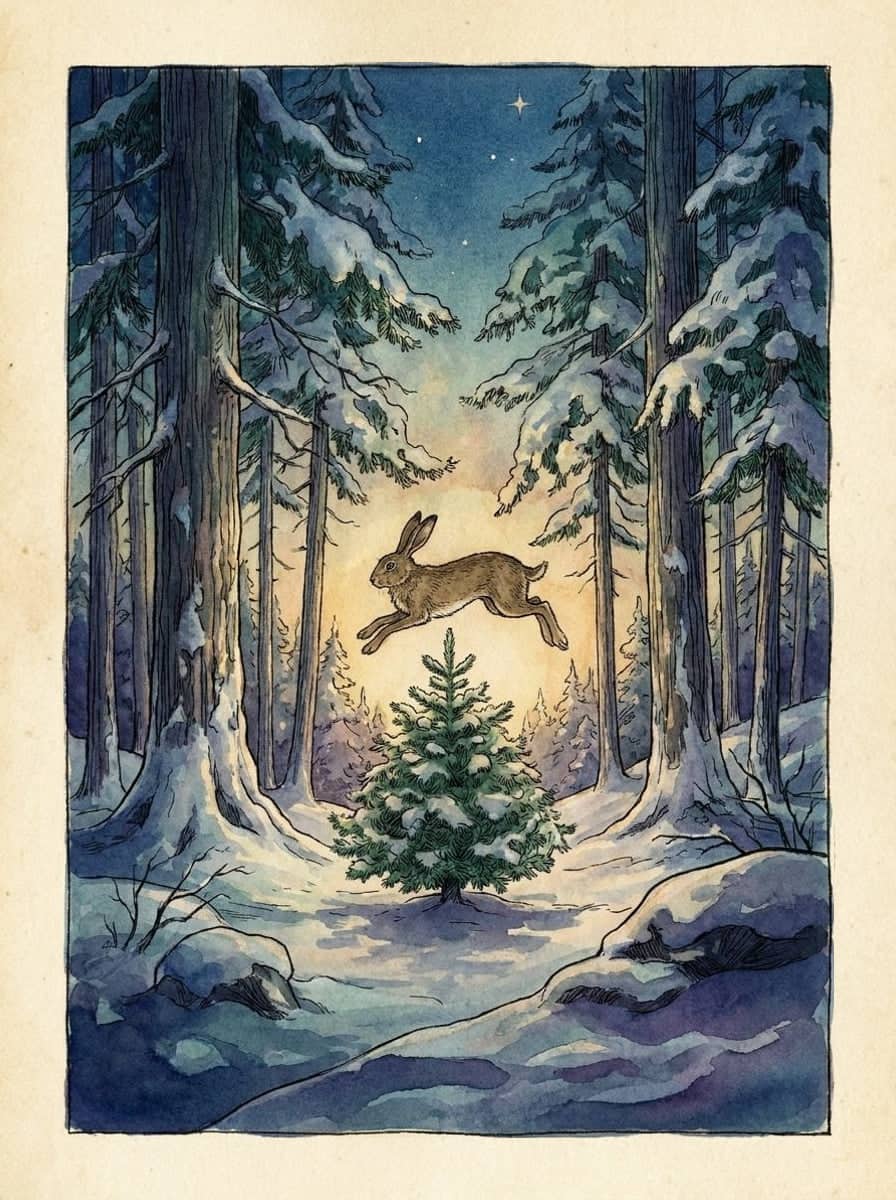
In winter a hare would come springing along and jump clean over the little tree. How it hated that! But by the third winter it had grown so tall that the hare had to run around it.
Every autumn the woodcutters felled the biggest trees. Their branches were cut away until you could hardly tell what they had been, and horses dragged them out of the forest.
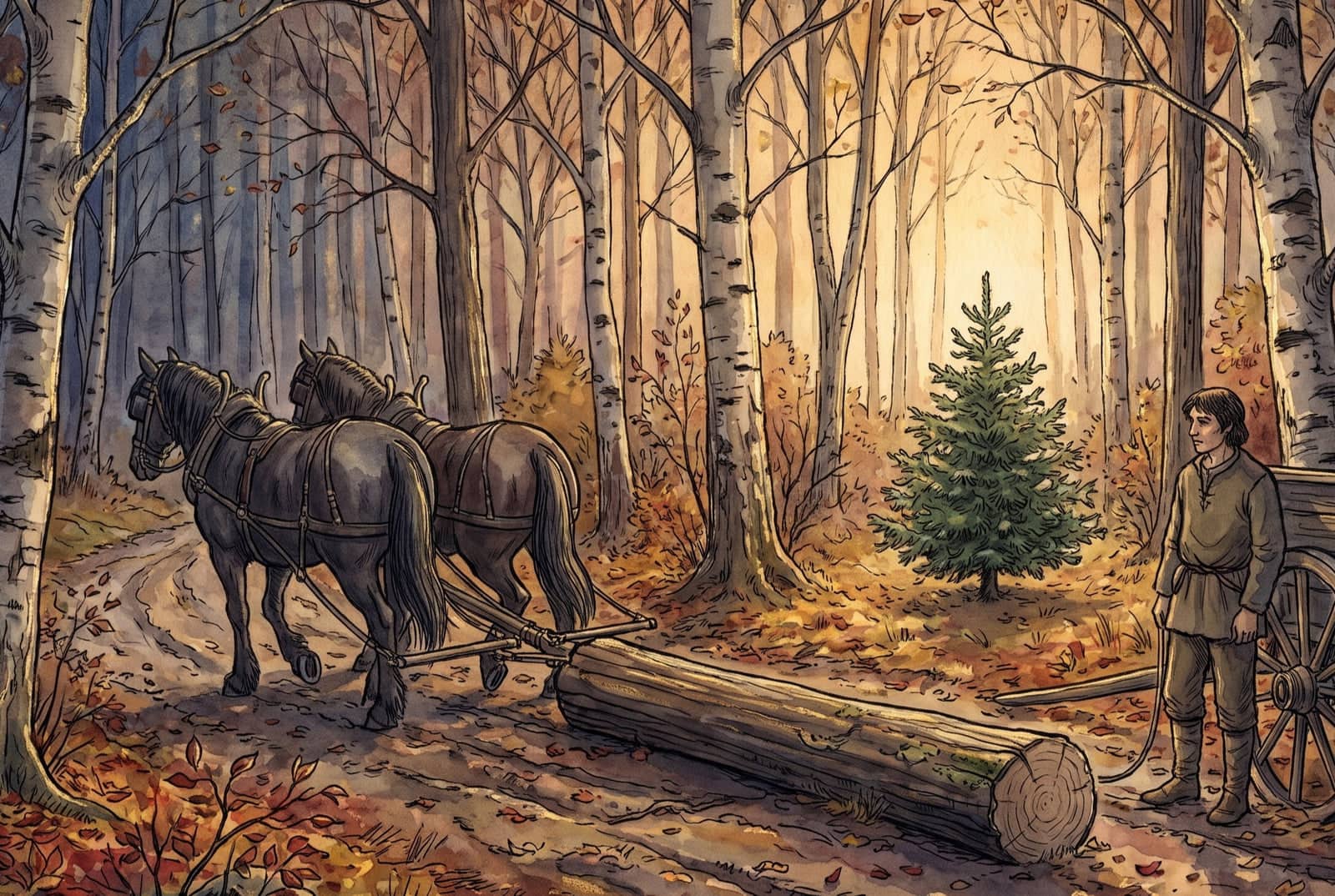
Where were they going?
In the spring the fir asked the swallows and the storks. The swallows knew nothing, but the stork nodded.
“I passed new ships on my way from Egypt, with splendid masts that smelled of fir. How tall they stood!”
“Oh, if only I were big enough to go out over the sea!” said the fir. “What is the sea like?”
“That would take far too long to explain,” said the stork, and away he flew.
“Be glad of your youth,” said the sunbeams. “Be glad of your fresh green growth, and of the young life in you.”
The wind kissed the tree and the dew wept over it, but the fir did not understand.
When Christmas drew near, quite young trees were felled, some smaller than the fir, and those kept every branch as they were carried away.
“Where are they going?” the fir asked. “They are no bigger than I am. Why do they keep their branches?”
“We know! We know!” chirped the sparrows. “We have looked in at the windows in the town. Such trees are set up in a warm room and hung with gilded apples, honey cakes, toys and hundreds of candles.”
“And then?” asked the fir, trembling in every branch. “And then what happens?”
“That is all we saw,” said the sparrows.
“Something finer still must come after,” thought the tree, “or why would they dress us up like that? If only it were Christmas! I am tired out with wanting.”
“Be glad of your youth,” said the air and the sunlight. “Be glad of your fresh green growth, and of the young life in you.”
But the tree was not glad. It only grew, until everyone who passed said what a fine tree it was.
At Christmas time it was the first of all to be felled. The axe went deep through the heart of it, and the tree came down with a sigh. It felt a pain and a faintness, and grieved to leave the spot where it had shot up and the companions it would never see again.
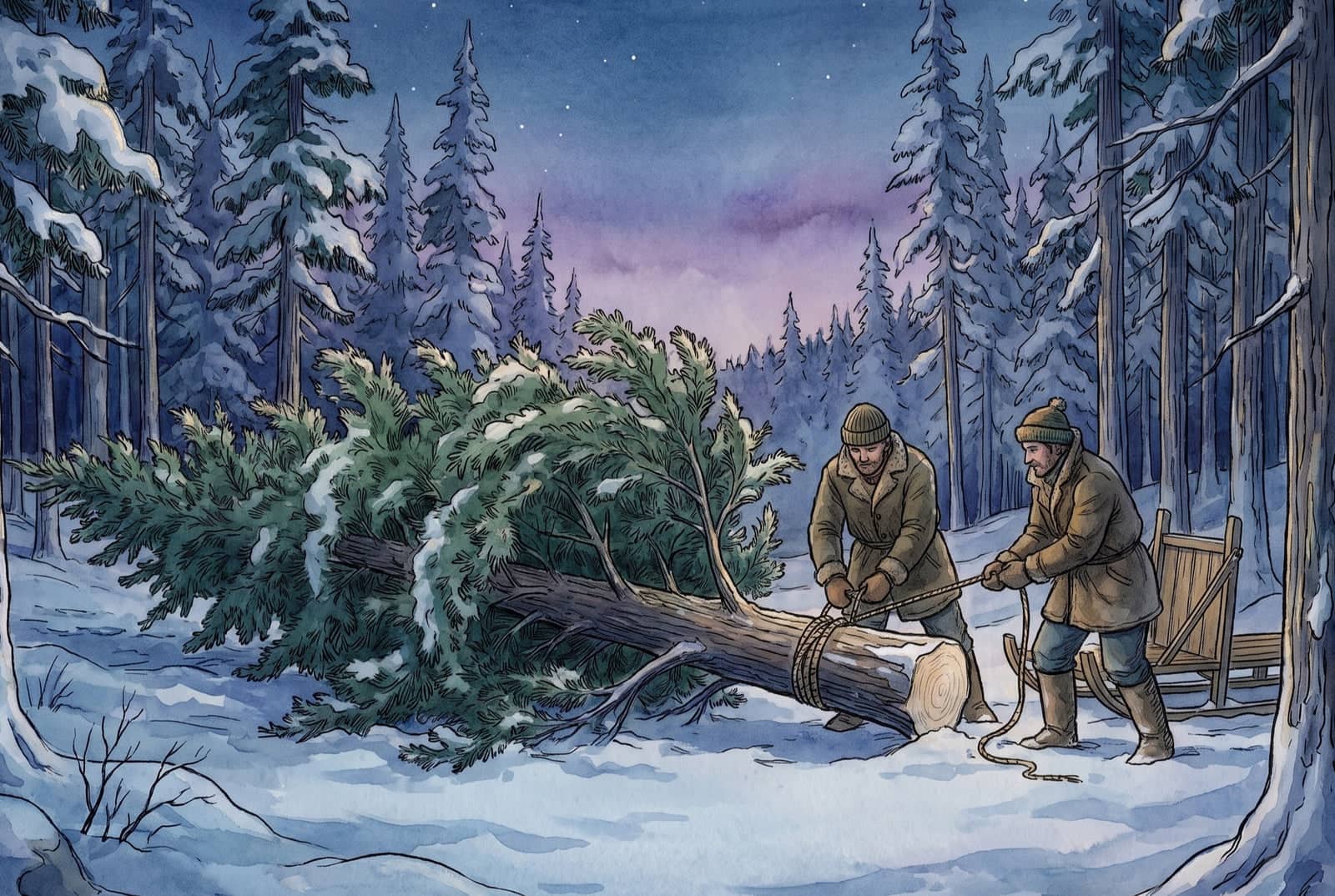
It came to itself in a courtyard, where a man said, “That one is beautiful. We only want that one.”
Two servants carried the fir into a great room and stood it in a tub of sand, hidden round with green cloth.
How the fir tree trembled!
The servants and the young ladies dressed it in paper nets of sweets, gilded apples and walnuts, and more than a hundred small candles.
Dolls like real people floated in the green, and right at the top they fastened a star of tinsel gold.
“Shall I stand here dressed like this, winter and summer?” the tree wondered, and its bark ached with wanting.
Then the candles were lit. Such a blaze, such a glitter! The tree shook with joy, and one of the flames caught the green and scorched it.
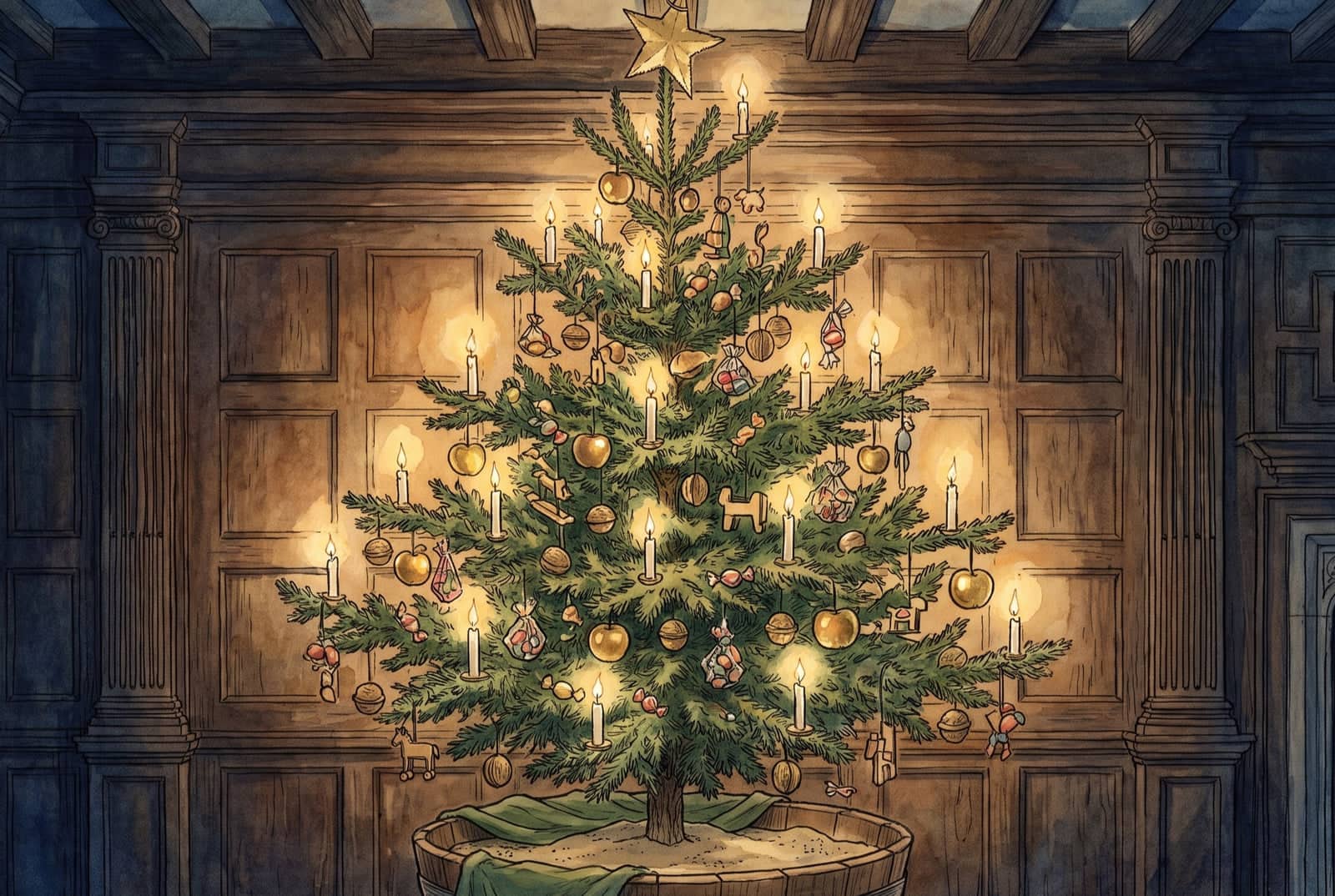
“Help, quick!” cried the young ladies, and put it out.
After that it did not dare tremble at all. It could not bear to lose the smallest piece of its finery.
Then the doors flew open, the children rushed in, and one present after another was picked off the branches. When the candles had burned down, the children were let loose on the tree and fell on it until every branch cracked. Only the gold star tying its top to the ceiling kept it from going over.
Afterwards they danced away with their toys, and nobody looked at the tree again, except the old nurse, feeling between the branches for a forgotten fig.
“A story! A story!” cried the children, and pulled a little fat man over to the tree.
He sat down under it. “One story only,” he said. “Will you have Ivede-Avede, or Humpty Dumpty, who fell down the stairs and rose to greatness all the same and married the princess?”
“Humpty Dumpty!” shouted the children, and that was the story he told.
The fir tree stood silent and full of thought. Never had the birds in the forest told anything like that. Fell down the stairs, and married the princess after all!
“Who knows,” thought the tree. “Perhaps I shall fall down the stairs one day and marry a princess too. Tomorrow I shall enjoy all my glory.”
In the morning the servants came in, and the tree waited to be dressed again. But they dragged it up to the loft, into a dark corner where no daylight came.
Days and nights went by, and when somebody came at last, it was only to push big boxes into the corner until the tree was hidden as though it had never been there.
“The ground is hard with winter,” it thought, “so they cannot plant me yet. I am to stand sheltered until spring. How kind people are! If only it were not so dark up here, and not so lonely. Not even a hare.”
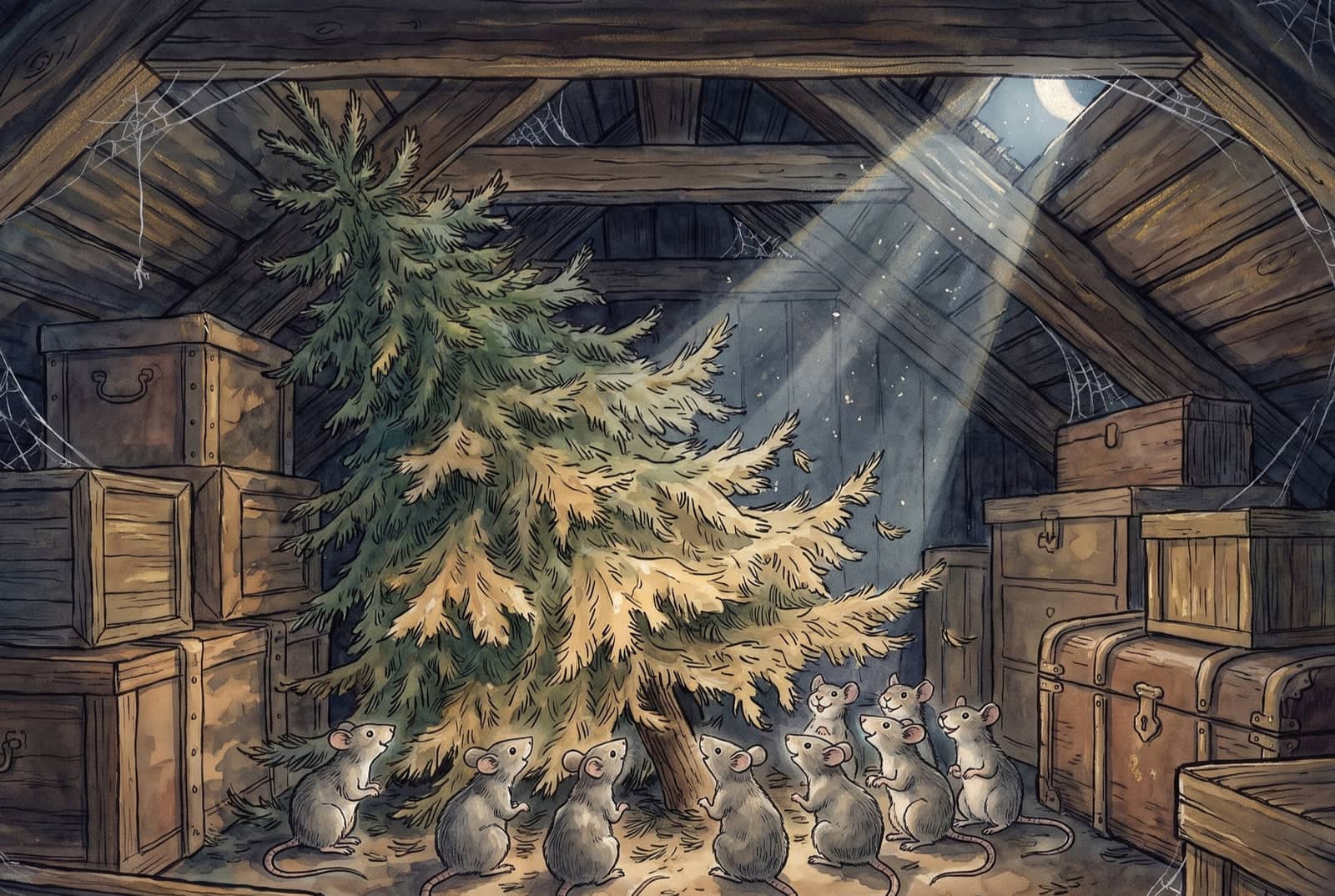
“Squeak, squeak,” said a little mouse one night, and then came another. They sniffed at the fir tree and crept in among its branches.
“It is bitterly cold,” they said, “but otherwise it is good to be here. Isn’t it, you old fir tree?”
“I am not old at all,” said the tree. “Where I come from, the sun shines and the birds sing.”
And it told them of its young days in the forest, and of Christmas Eve, with the cakes and the candles. They had never heard the like.
“How much you have seen! How happy you have been!” they said.
“Happy?” said the tree, and thought over what it had been telling them. “Yes. They were cheerful times, now I think of it.”
The next night the mice brought four more, and the tree told the whole story of Humpty Dumpty, until they were ready to jump to its top for joy.
But on Sunday two rats came as well. “Is that the only story you know?” they asked.
“The only one,” said the tree. “I heard it on the happiest evening of my life, though I did not know then how happy I was.”
“A thoroughly miserable story,” said the rats. “Don’t you know one about bacon, or candle fat in the larder?”
The tree did not, and off they went. The little mice thought less of the story after that, and in the end they stayed away too.
“That is over as well,” sighed the tree. “But I shall be glad when they bring me out.”
And one morning they did. People came to clear the loft, and a servant dragged the tree down into the yard.
Beside it a garden lay in bloom, with roses over the fence, and the swallows called, “Tweet, tweet, my mate has come!” But they did not mean the fir tree.
“Now I shall live!” it cried, and spread its branches wide. They were withered and yellow, every one, and it lay among the weeds and nettles with the gold paper star still shining on top.
Some of the children who had danced round it at Christmas were playing there. The smallest ran over and pulled the star off.
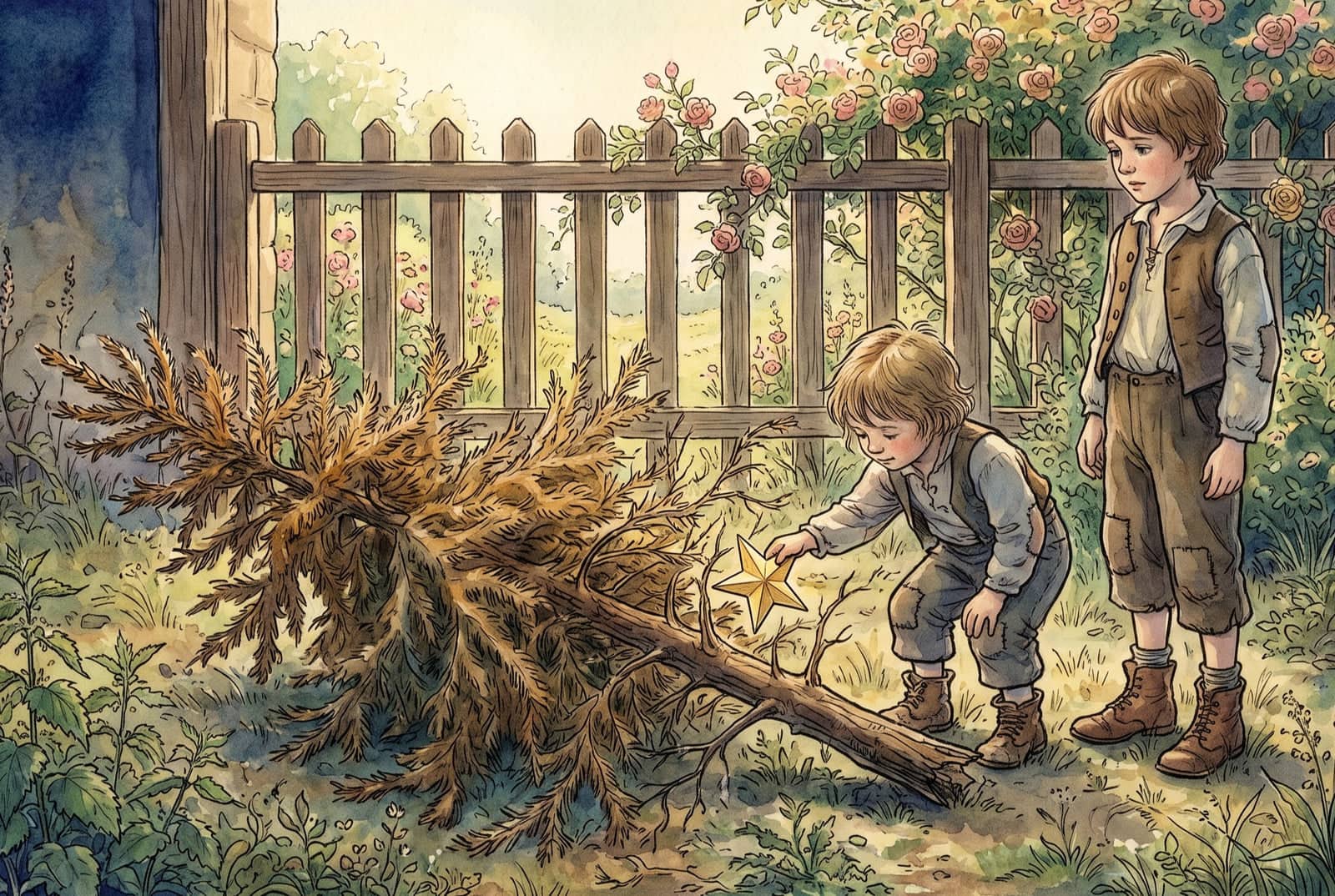
“Look what is still stuck on the ugly old fir tree,” said the child, and trod on the branches until they cracked under his boots.
And the tree looked at the garden, then at itself, and wished it had stayed in its dark corner. It thought of the forest, of the merry Christmas Eve, and of the little mice.
“Gone,” said the old tree. “All gone. If only I had been glad while I could.”
Then the servant chopped it into small pieces, and they flared up under the brewing kettle. Each sigh the tree gave was like a little shot, so the children ran over and sat by the fire, crying, “Pop! Pop!”
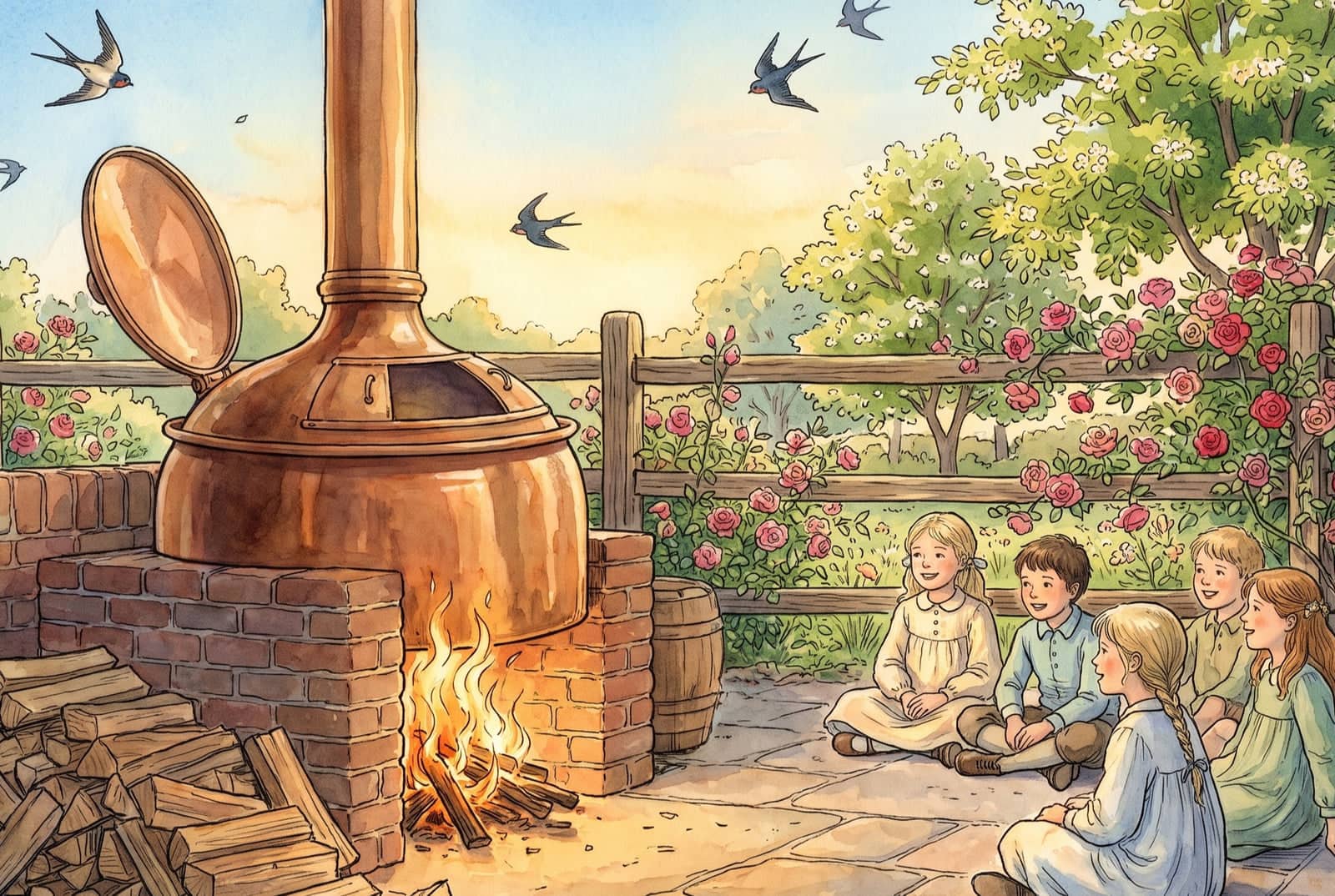
But at every crack, which was a deep sigh, the tree thought of a summer day in the forest, of Christmas Eve, and of Humpty Dumpty, the only story it had ever known.
And then the tree was burnt.
The boys played on in the garden, and the smallest wore the gold star on his chest, the star the tree had worn on the happiest evening of its life. Now the evening was gone, and the tree was gone, and the story too. Gone, all gone, and so it goes with every story.
Retold by Talerie, Source: Fairy Tales of Hans Christian Andersen (opens in a new window)
License: Public domainCopy this text, adapt it, use it however you like. A link back to Talerie is appreciated but never required.CC0 1.0 (opens in a new window)