Two children slip away from a stepmother who beats them and sleep in a hollow tree deep in the forest. But the stepmother is a witch, and she has laid a curse on every spring. The brother is desperately thirsty, and at each spring his sister hears the water say what a drinker will become.
Once upon a time a little brother took his little sister by the hand and said, “Since Mother died, we haven’t had one happy hour. Our stepmother beats us every day, and all we get to eat is the hard crusts. Even the little dog under the table is better off: at least she throws him a good bite now and then. Come, let’s go out into the wide world together.”
They walked all day, and at nightfall they came to a great forest. Worn out with sorrow and hunger, they crept into a hollow tree and fell asleep.
Now the stepmother was a witch. She had seen the children leave, crept after them in secret, and laid a curse on every spring in the forest.
In the morning the brother said, “Little sister, I’m thirsty. I think I can hear a spring.”
Soon they found one sparkling over the stones. The brother was about to drink, but as the water rushed along, the sister heard it say, “Who drinks of me will be a tiger; who drinks of me will be a tiger.”
“Please, little brother, don’t drink,” she cried, “or you’ll become a wild beast and tear me to pieces.”
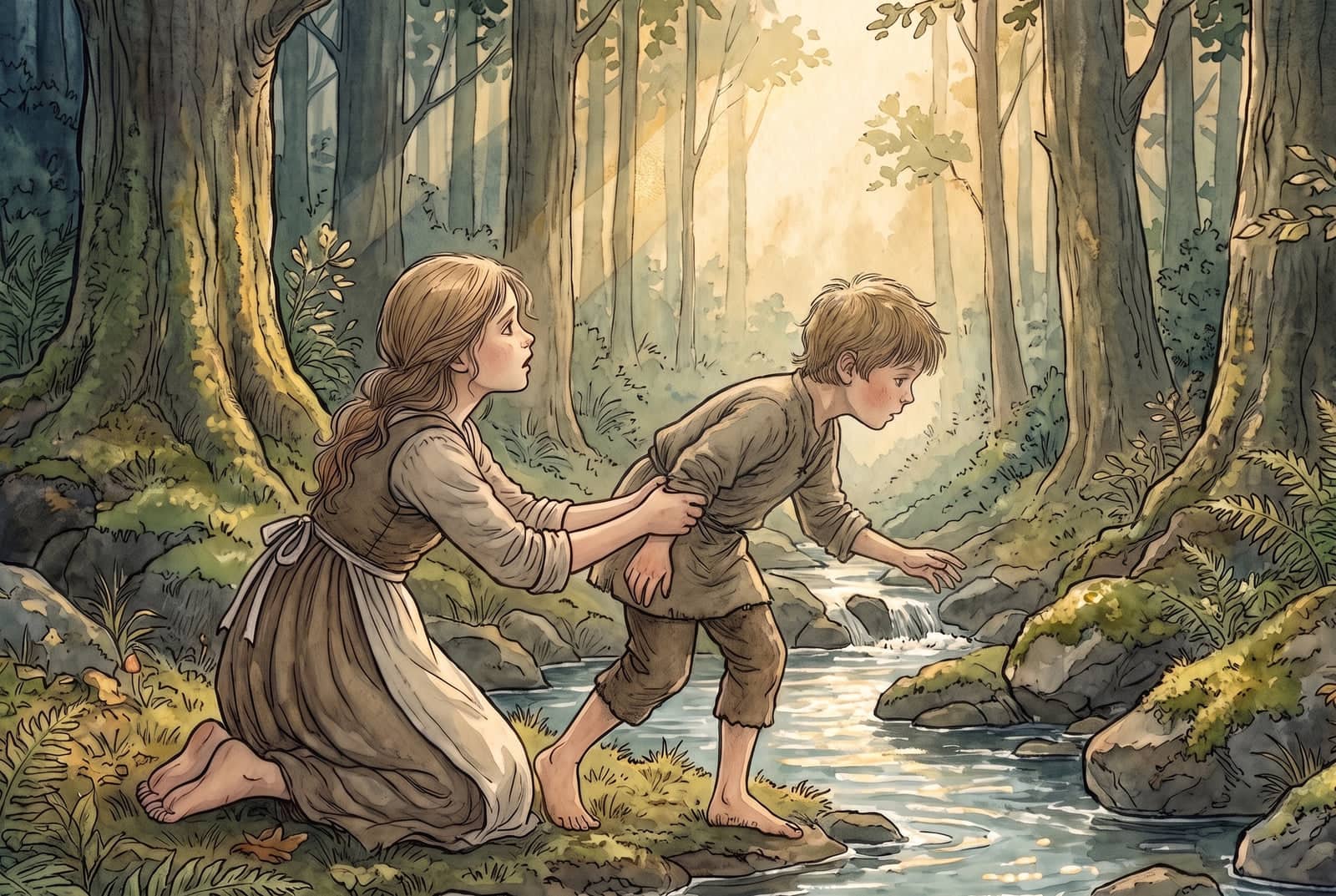
The brother waited, and at the next spring the sister heard it say, “Who drinks of me will be a wolf; who drinks of me will be a wolf.”
“Little brother, please don’t drink,” she cried, “or you’ll become a wolf and eat me up.”
“Then I’ll wait for the next one,” said the brother, “but there I’ll drink, whatever you say. I’m much too thirsty.”
At the third spring the sister heard it say, “Who drinks of me will be a roebuck; who drinks of me will be a roebuck.”
“Oh, little brother, please don’t drink,” she said, “or you’ll turn into a deer and run away from me.”
But the brother had already knelt down and drunk. The moment the first drops touched his lips, there lay a young fawn where the boy had been.
The sister wept, and the fawn wept with her. At last she said, “Hush, dear little brother. I will never leave you.”
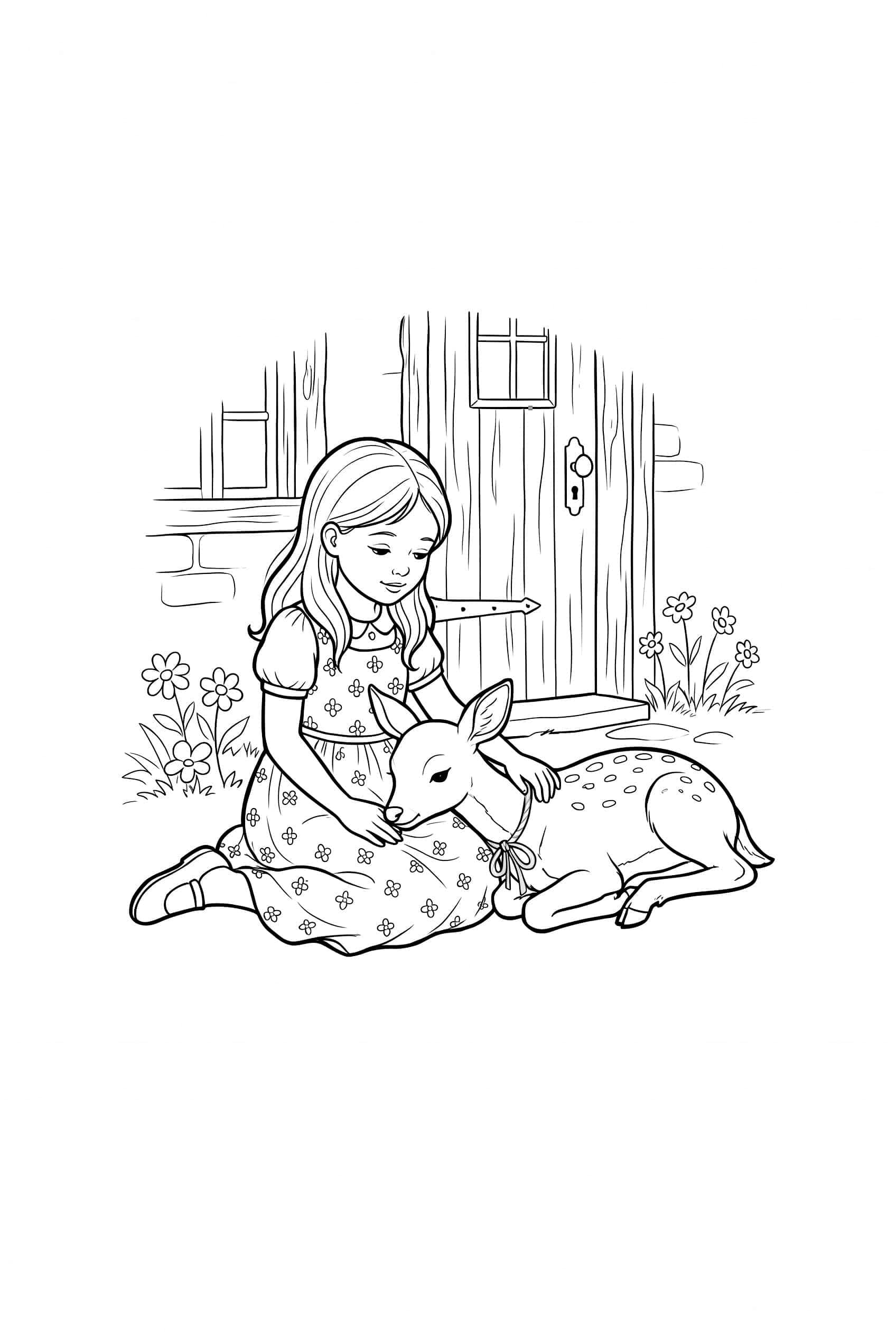
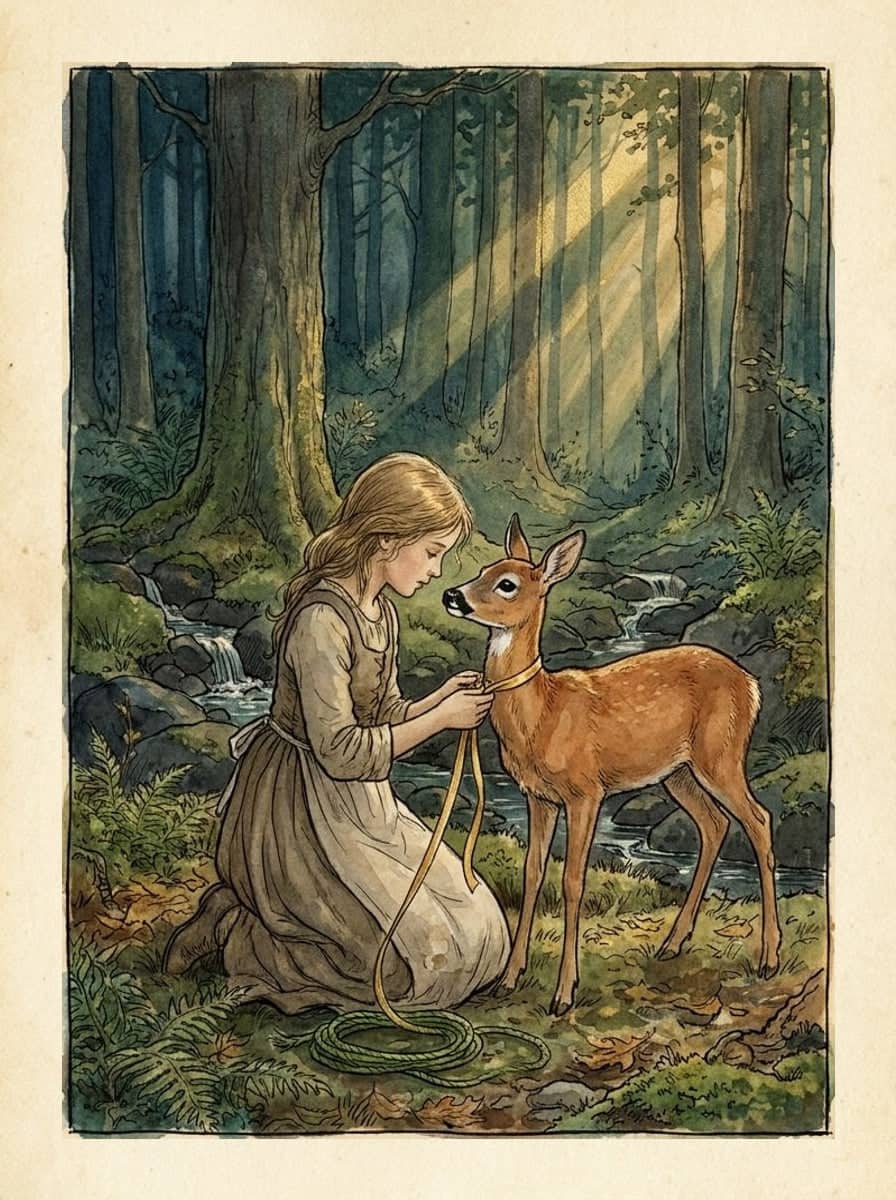
She tied her golden garter around the fawn’s neck, plaited a soft rope from rushes, and led him deep into the forest, until they came to an empty little house and made it their home. Every day she gathered berries and nuts for herself and grass for the fawn, and at night she slept with her head on his back. It would have been a wonderful life, if only her brother had kept his human shape.
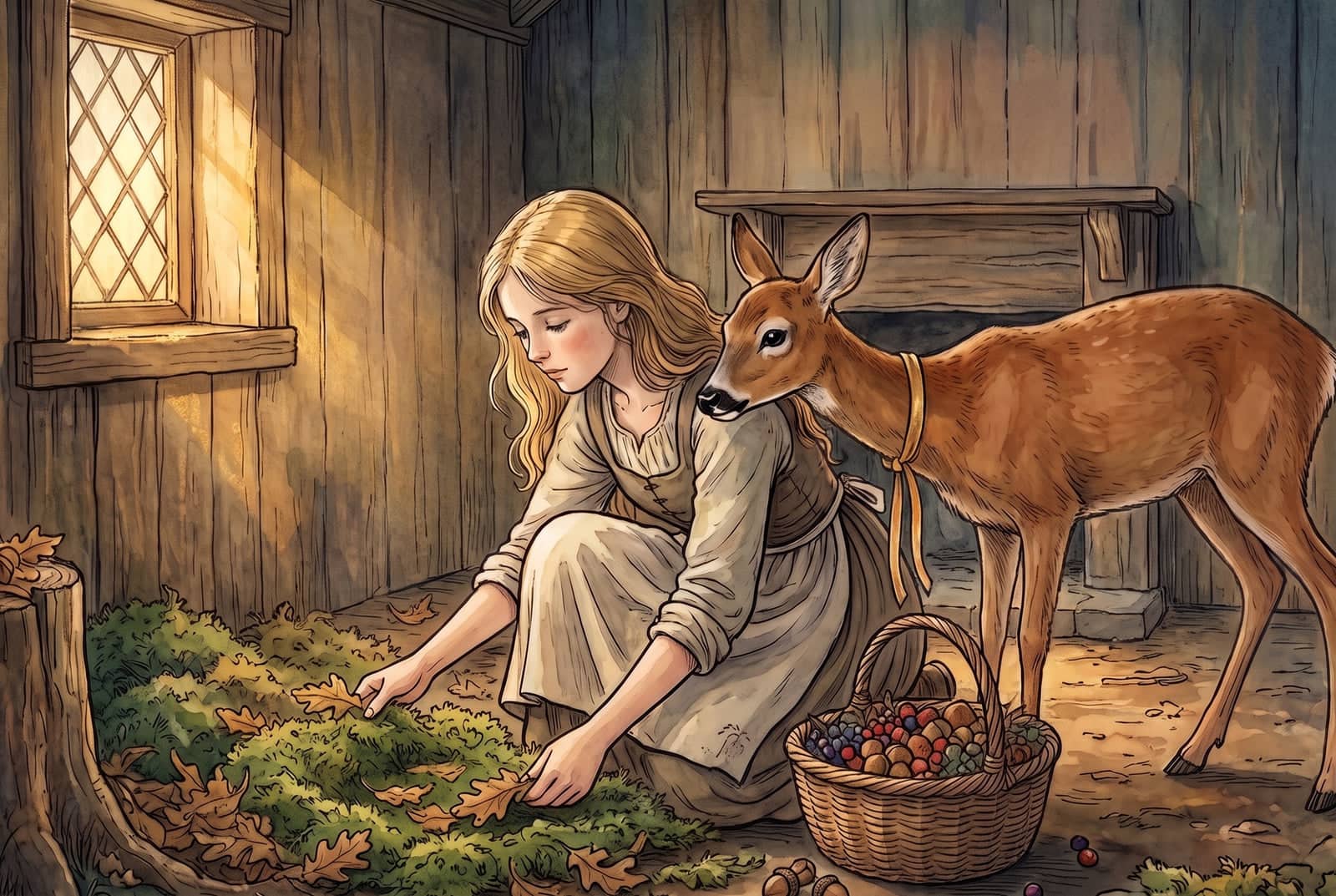
One day the king held a great hunt in the forest. Horns blew and hounds barked, and the fawn longed to be out there.
“Oh, let me go out to the hunt,” he begged. “I can’t bear it any longer.”
At last his sister gave in. “But come back in the evening,” she said. “I’ll keep my door shut against the wild huntsmen. So that I know it’s you, knock and say, ‘My little sister, let me in.’ If you don’t say that, I won’t open the door.”
The king’s huntsmen chased the fawn all day, but he always leaped away over the bushes. When it grew dark, he ran to the little house, knocked, and said, “My little sister, let me in.” The door opened, and he slept safe on his soft bed.
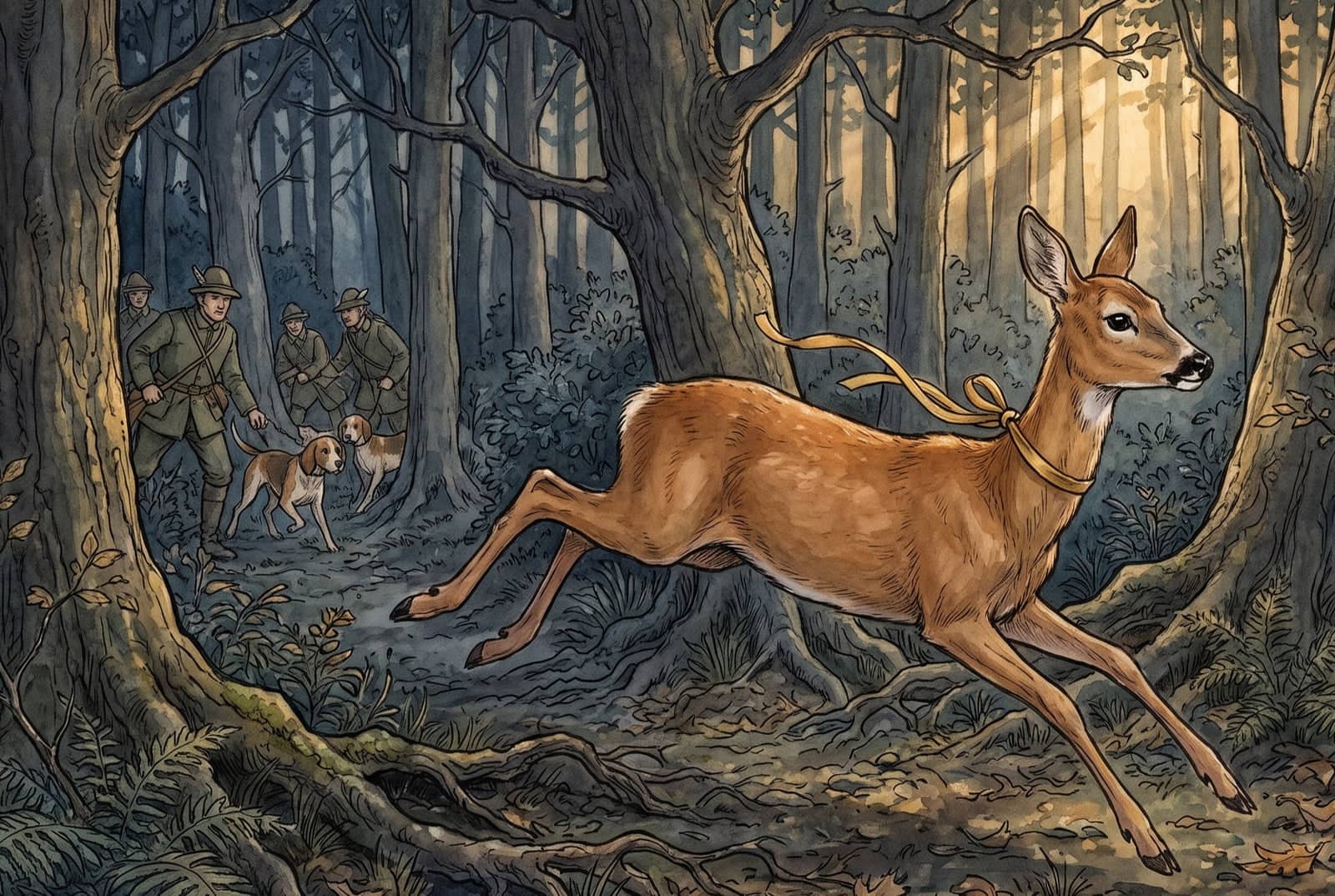
The next day the hunt began again, and his sister let him out. By evening the huntsmen had surrounded the fawn with the golden collar, and one of them wounded him slightly in the foot. As the fawn limped home, that same huntsman crept after him, heard him call, “My little sister, let me in,” and saw the door open. Then he told the king everything.
“Tomorrow we will hunt once more,” said the king.
The sister washed the fawn’s wound and laid herbs on it, and by morning he no longer felt it. When the horns sounded again, he begged to go out.
“Now they’ll kill you,” she wept, “and I’ll be alone in the forest.”
“If you keep me in, I’ll die of sorrow right here,” answered the fawn. “When I hear that horn, I can hardly keep my feet still!”
With a heavy heart she unlocked the door.
This time the king told his huntsmen, “Chase him all day, but let no one harm him.” At sunset he had the huntsman show him the little house. He knocked and called, “My little sister, let me in.” The door opened, and there stood a girl more beautiful than any he had ever seen.
The girl was frightened to see a stranger with a golden crown instead of her fawn, but the king held out his hand kindly and said, “Will you come with me to my castle and be my dear wife?”
“Oh yes, Your Majesty,” she answered, “but the fawn must come too. I won’t leave him.”
“He shall stay with you as long as you live,” said the king, “and he shall want for nothing.”
Just then the fawn came bounding in, and she led him out on his rope of rushes.
The king took her to his castle, and the wedding was held with great splendor. For a long while they were happy, and the fawn played in the castle garden.
The wicked stepmother had believed both children long dead. When she heard how happy they were, envy gave her no peace. Her own daughter, who was as ugly as night and had only one eye, grumbled, “I should have been the queen.”
“Just be quiet,” said the old woman. “When the time comes, I’ll be ready.”
In time the queen had a baby boy, and while the king was out hunting, the witch took on the shape of the chambermaid and said to the queen, “Come, Your Majesty, your bath is ready. It will give you fresh strength.”
The witch and her daughter carried the weak young queen into the bath-house, locked the door, and ran off. The fire they had lit inside was so fierce that the queen could not breathe, and she died.
Then the old woman laid her daughter in the queen’s bed and gave her the queen’s face. The missing eye, though, she could not give back, so the daughter had to lie on her blind side to keep the king from noticing.
That evening the king came home, overjoyed to hear that he had a son, and went to see his dear wife.
“Oh no, Your Majesty, keep the curtains closed!” the old woman cried. “The queen mustn’t look at the light yet.”
The king went away, never guessing the truth.
At midnight the nurse, sitting up alone by the cradle, saw the door open and the true queen come in. She lifted the baby from the cradle and fed him, shook up his pillow, and tucked him in again. Then she went to the fawn’s corner, stroked his back, and went out without a word.
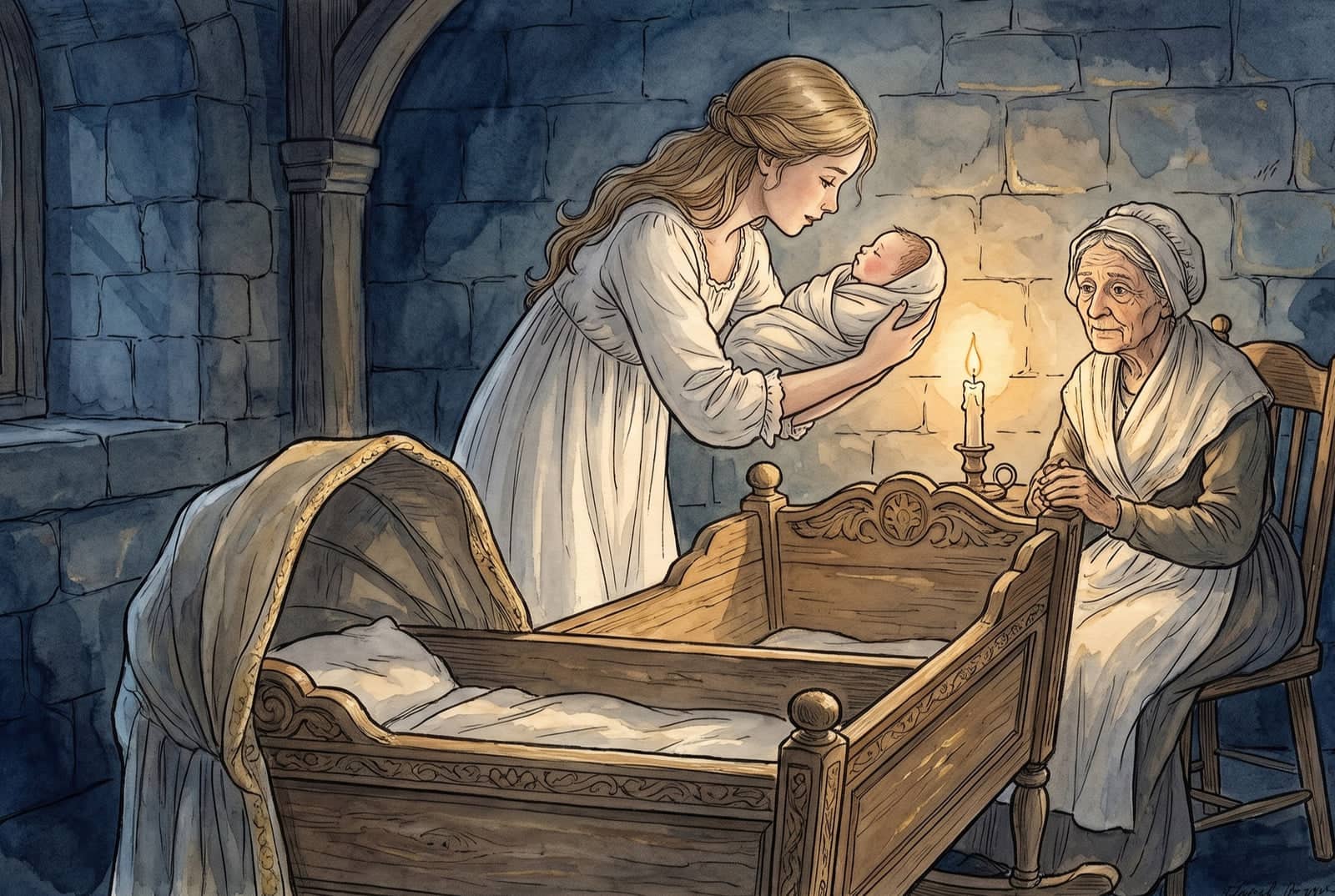
In the morning the nurse asked the guards whether anyone had come in during the night.
“No,” they answered, “we saw no one.”
Night after night the queen came, always silent, and the nurse did not dare tell anyone.
Then one night the queen spoke:
How fares my child, how fares my roe? Twice shall I come, then never more.
As soon as she had vanished, the nurse went to the king and told him everything.
“Good heavens!” cried the king. “Tomorrow night I’ll keep watch by the child myself.”
At midnight the queen appeared again and said:
How fares my child, how fares my roe? Once will I come, then never more.
She tended the child and vanished. The king did not dare speak to her, but he kept watch again the next night. Once more she said:
How fares my child, how fares my roe? This time I come, then never more.
Then the king sprang to her and said, “You must be my dear wife!”
“Yes, I am your dear wife,” she answered, and by the grace of God she was alive again, rosy and well.
She told the king what the witch and her daughter had done, and he had them both brought to judgment. The daughter was led into the forest, where the wild beasts killed her. The witch was put into the fire, and the moment she had burned to ashes, the fawn took back his human shape.
And the sister and her brother lived happily together to the end of their days.
Retold by Talerie from Kinder- und Hausmärchen (opens in a new window) Public domain Copy this text, adapt it, use it however you like. A link back to Talerie is appreciated but never required. CC0 1.0 (opens in a new window)