A rich man’s wife wishes under the juniper tree for a child as red as blood and as white as snow. Her son is born, she dies, and his stepmother comes to see the boy as all that stands between her own daughter and the whole fortune. The Devil keeps putting that thought into her head.
Once upon a time, two thousand years ago or more, there was a rich man who had a beautiful and pious wife, and they loved each other dearly. But they had no children, though she prayed for one day and night.
One winter day she was peeling an apple under the juniper tree in their courtyard when she cut her finger, and her blood fell on the snow. “Oh,” she sighed, “if only I had a child as red as blood and as white as snow!” At once her heart grew light.

The months went by, and when the juniper berries ripened, she ate them hungrily and grew sick and sad. “If I die,” she told her husband, weeping, “bury me beneath the juniper tree.” At last she had a son as white as snow and as red as blood, and when she saw him, she was so happy that she died.
Her husband buried her beneath the juniper tree and grieved for a long time. Then he married again, and his second wife gave him a daughter, Marlinchen.
The stepmother loved her daughter dearly, but whenever she looked at the little boy, she thought that he stood between her child and the whole fortune. The Devil kept putting the thought into her head, until she slapped the boy here and cuffed him there, and the poor boy found no peace anywhere.
One day Marlinchen followed the stepmother upstairs. “Mother, give me an apple.”
“Yes, my child,” said the stepmother, and took one out of a chest that had a great heavy lid and a sharp iron lock.
“Can’t Brother have one too?” asked Marlinchen.
“Yes, when he comes home from school,” said the stepmother. But when she saw him coming, it was as if the Devil had gotten into her. She snatched the apple back and threw it into the chest.
When the little boy came in, the Devil made her speak sweetly, though her eyes were full of hate. “My son, would you like an apple?”
“Mother,” said the little boy, “how dreadful you look! Yes, give me an apple.”
She lifted the heavy lid. “Take one out for yourself.” As the little boy leaned in, she slammed the lid down on him, and the little boy was dead.
Terrified, she tied a white handkerchief around his neck and sat him on a chair by the door with the apple in his hand.
Soon Marlinchen came to the stepmother, who was stirring a pot on the fire. “Mother, Brother is sitting by the door, all white, with an apple in his hand, and he won’t answer me.”
“Go back,” said the stepmother, “and if he won’t answer, box his ear.”

So Marlinchen went back and boxed his ear, and he toppled from the chair. She ran to the kitchen, crying, “Oh, Mother, I’ve killed Brother!” and no one could comfort her.
“Marlinchen, what have you done?” said the stepmother. “Hush, and don’t tell anyone. It can’t be helped now.”
Then the stepmother cooked the little boy into black puddings for the father’s dinner. Marlinchen stood by the pot and wept so hard that her tears fell into it, and it needed no salt.
When the father sat down to dinner, he asked, “Where is my son?”
“He’s gone off to the country to his mother’s great-uncle,” said the stepmother. “He asked to stay there six weeks.”
“He didn’t even say goodbye to me,” said the father, and he began to eat. “Marlinchen, why are you crying? Your brother will come back. Oh, wife, this is delicious! Give me more. It seems to me as if it were all mine.” He ate the whole dish and threw the bones under the table.
Marlinchen took her best silk handkerchief from her drawer, gathered every bone from under the table, and tied them up in it. Weeping, she carried them out and laid them beneath the juniper tree.
Then the juniper tree stirred, its branches parting and closing like hands clapping for joy. A mist rose from it with a fire at its heart, and out of the fire flew a beautiful bird, singing. When he had flown away, the handkerchief with the bones was gone. Marlinchen felt as glad as if her brother were still alive, and she went in and ate her dinner.

The bird landed on a goldsmith’s roof and sang.
My mother, she killed me, my father, he ate me, my sister, little Marlinchen, gathered together all my bones, tied them in a silken handkerchief, laid them beneath the juniper tree. Kywitt, kywitt, what a beautiful bird am I!
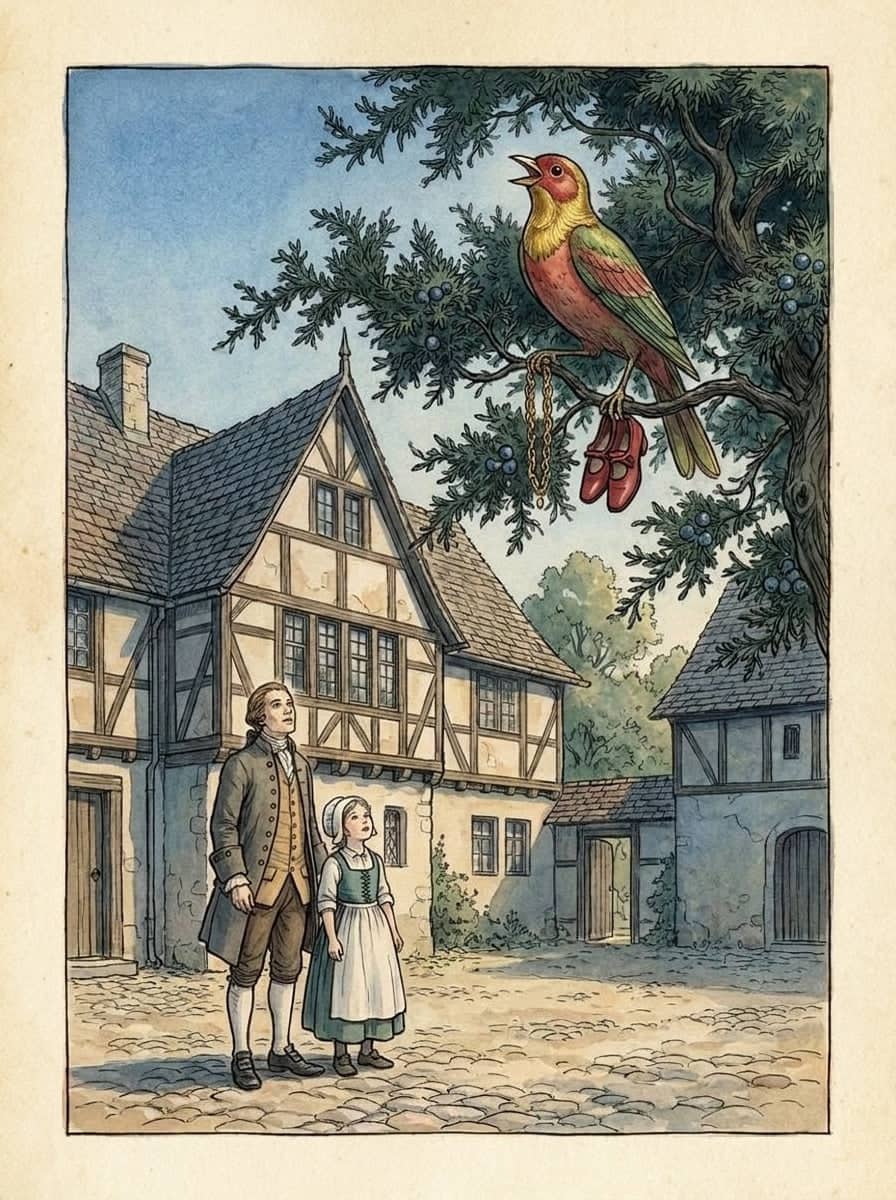
The goldsmith ran out of his workshop with a slipper on one foot and only a sock on the other, holding a gold chain. “Bird,” he said, “how beautifully you sing! Sing me that song again.”

“No,” said the bird, “I won’t sing twice for nothing. Give me the gold chain, and I’ll sing it again.”
“There,” said the goldsmith, “take the chain. Now sing me that song again.”
The bird took the chain in his right claw, perched in front of the goldsmith, and sang.
My mother, she killed me, my father, he ate me, my sister, little Marlinchen, gathered together all my bones, tied them in a silken handkerchief, laid them beneath the juniper tree. Kywitt, kywitt, what a beautiful bird am I!
Next the bird flew to a shoemaker’s roof and sang.
My mother, she killed me, my father, he ate me, my sister, little Marlinchen, gathered together all my bones, tied them in a silken handkerchief, laid them beneath the juniper tree. Kywitt, kywitt, what a beautiful bird am I!
The shoemaker ran out in his shirtsleeves and called his whole household to come and look. How beautiful the bird was, with red and green feathers, a neck like real gold, and eyes that shone like stars!
“Bird,” said the shoemaker, “how beautifully you sing! Sing me that song again.”
“No,” said the bird, “I won’t sing twice for nothing. You must give me something.”
“Wife,” said the shoemaker, “go up to the attic and bring down the red shoes from the top shelf.”
When his wife brought them, the bird took the shoes in his left claw, flew back to the roof, and sang.
My mother, she killed me, my father, he ate me, my sister, little Marlinchen, gathered together all my bones, tied them in a silken handkerchief, laid them beneath the juniper tree. Kywitt, kywitt, what a beautiful bird am I!
Then he flew far away to a mill that went klipp klapp, klipp klapp, klipp klapp, where twenty millers were cutting a millstone, hick hack, hick hack, hick hack. The bird perched in a linden tree outside and sang.
My mother, she killed me,
One of the men stopped working.
My father, he ate me,
Two more stopped and listened.
My sister, little Marlinchen,
Four more stopped.
Gathered together all my bones, tied them in a silken handkerchief,
Now only eight were still cutting.
Laid them beneath
Now only five.
The juniper tree.
And now only one.
Kywitt, kywitt, what a beautiful bird am I!
Then the last one stopped too. “Bird,” he said, “how beautifully you sing! Sing it once more for me.”
“No,” said the bird, “I won’t sing twice for nothing. Give me the millstone, and I’ll sing it again.”
“If it belonged only to me,” said the miller, “you could have it.”
“Yes,” said the others, “if he sings again, he can have it.”
So the twenty millers raised the stone with a beam, and the bird put his head through the hole and wore it like a collar. He flew back into the tree and sang.
My mother, she killed me, my father, he ate me, my sister, little Marlinchen, gathered together all my bones, tied them in a silken handkerchief, laid them beneath the juniper tree. Kywitt, kywitt, what a beautiful bird am I!

With the chain, the shoes, and the millstone, he flew home to his father’s house.
At home the father, the stepmother, and Marlinchen were sitting at dinner. “How light my heart feels!” said the father. “How happy I am!”
“Well, I’m not,” said the stepmother. “I feel as if a great storm were coming.”
Marlinchen sat crying in a corner. Then the bird came and perched in the juniper tree and sang.
My mother, she killed me,
The stepmother covered her ears and shut her eyes, but a roar filled her ears like the wildest storm, and her eyes burned and flashed like lightning.
My father, he ate me,
“Oh, wife,” said the father, “what a beautiful bird! He sings so splendidly, and the sun is so warm, and there’s a smell just like cinnamon.”
My sister, little Marlinchen,
Marlinchen laid her head on her knees and wept and wept.
“I’m going outside,” said the father. “I must see that bird up close.”
“Oh, don’t go!” said the stepmother. “I feel as if the whole house were shaking and on fire.”
But the father went out and looked at the bird.
Gathered together all my bones, tied them in a silken handkerchief, laid them beneath the juniper tree. Kywitt, kywitt, what a beautiful bird am I!
Then the bird dropped the gold chain, and it fell right around the father’s neck. He went inside and said, “Just look what a fine bird that is! He’s given me a handsome gold chain.”
The stepmother fell to the floor in terror, and the bird sang again.
My mother, she killed me,
“I wish I were a thousand feet under the earth, so I wouldn’t have to hear it!” cried the stepmother.
My father, he ate me,
She fell down again as if she were dead.
My sister, little Marlinchen,
“Oh,” said Marlinchen, “I’ll go out too and see if the bird will give me something.” And out she went.
Gathered together all my bones, tied them in a silken handkerchief,
The bird threw the shoes down to her.
Laid them beneath the juniper tree. Kywitt, kywitt, what a beautiful bird am I!
Marlinchen put on the red shoes and danced back into the house. “I was so sad when I went out,” she said, “and now I’m so happy!”
“Well,” cried the stepmother, jumping to her feet with her hair standing up like flames, “I feel as if the world were coming to an end! I’ll go out too and see if my heart feels any lighter.”
As she stepped out the door, crash! the bird threw the millstone down on her head, and it crushed her to death.
The father and Marlinchen ran outside. Smoke, flames, and fire were rising from the spot, and when it was over, there stood the little brother.

He took his father and Marlinchen by the hand, and all three were full of joy. Then they went into the house and sat down to dinner.
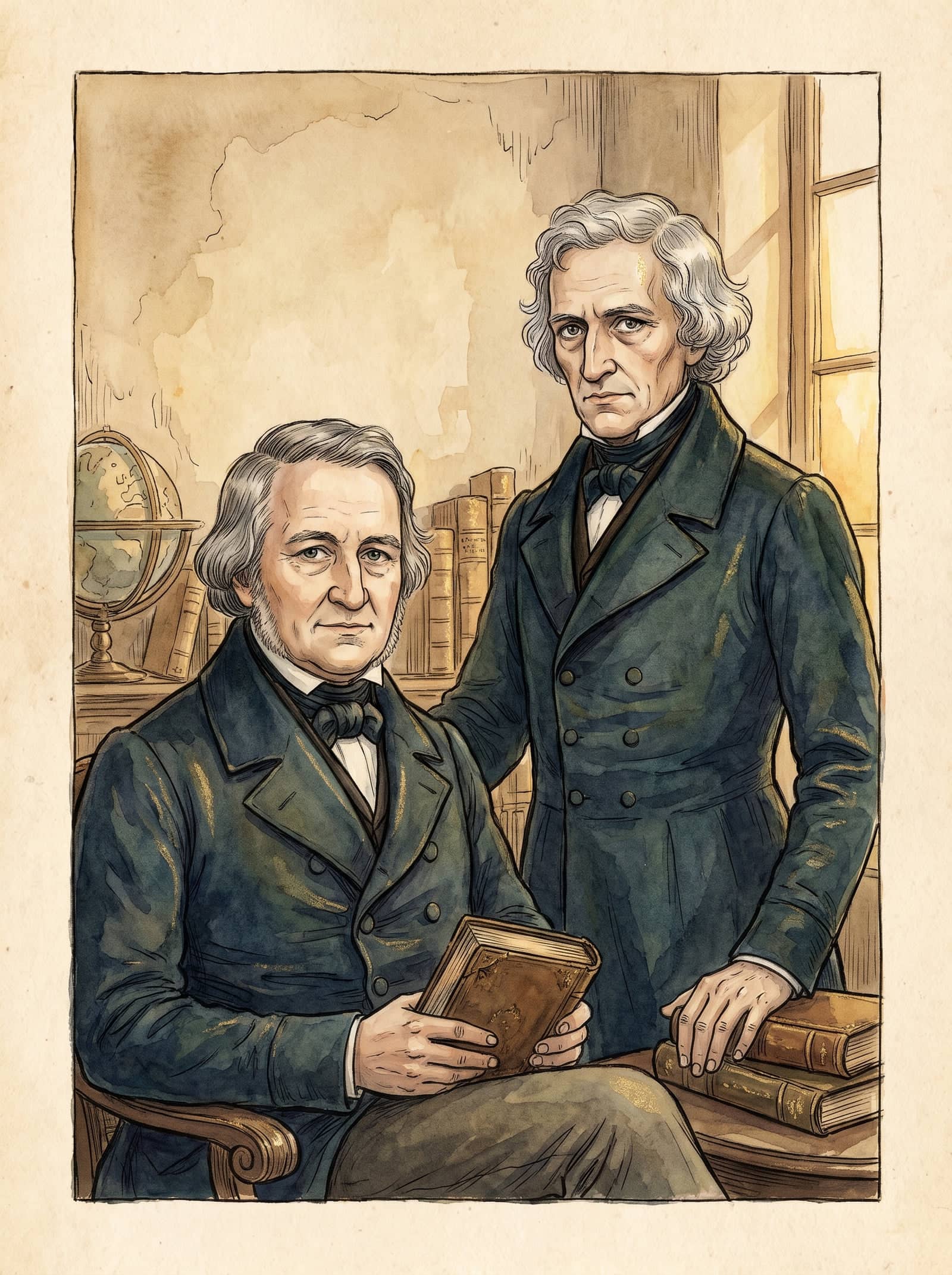
Retold by Talerie from Household Tales by Brothers Grimm (opens in a new window) Public domain Copy this text, adapt it, use it however you like. A link back to Talerie is appreciated but never required. CC0 1.0 (opens in a new window)