La Llorona
12 min read ages 10 and up Readers’ rating across all languages: 4.5 out of 5, from 15 votes. How did you like this legend? talerie.com/en/tales/la-llorona
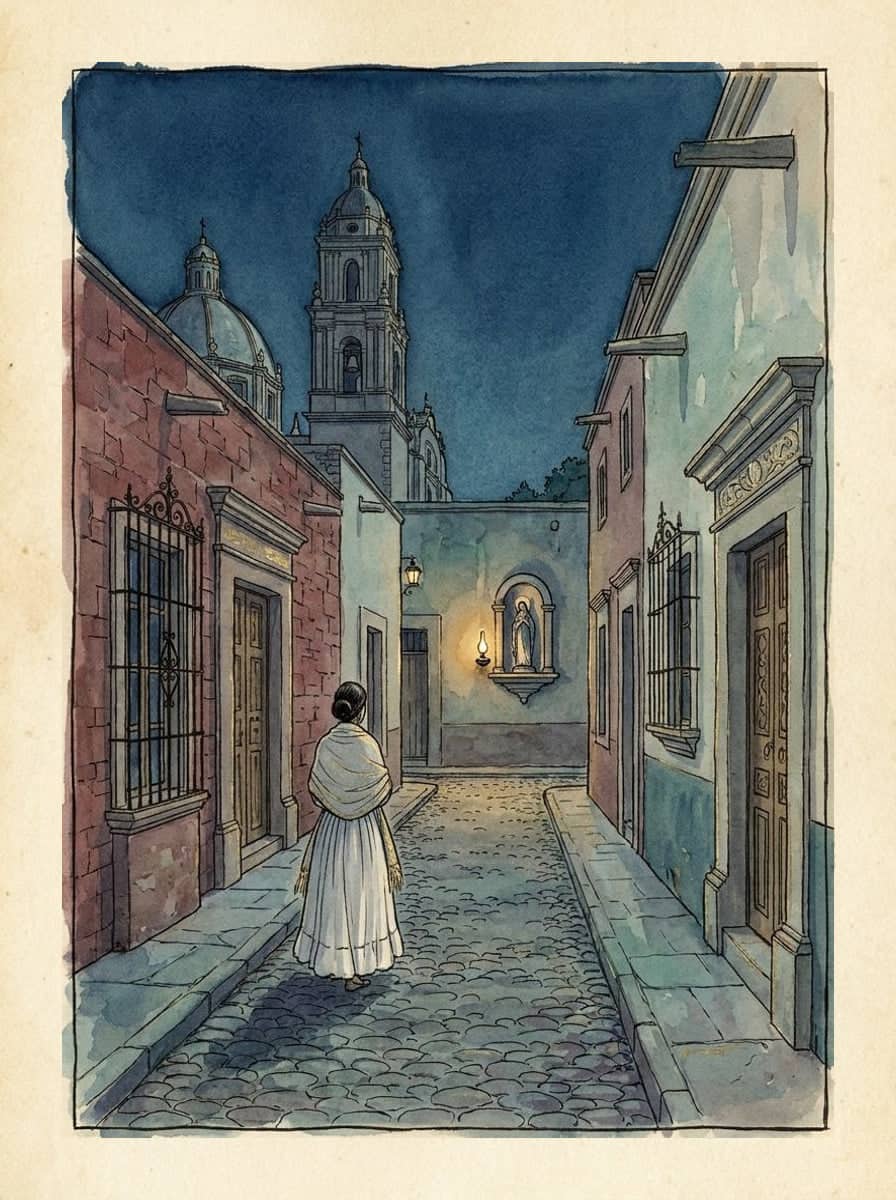
Every night at midnight, a woman in white runs through the streets of Mexico City, weeping aloud. Her story begins long ago with beautiful Luisa, who lives behind a shut door in a gloomy little alley. The young man who waits for her by a saint’s shrine is rich, noble, and careful to keep her hidden.
For more than two hundred years, the story of La Llorona, the Weeping Woman, has been handed down from parents to children, and passed on by them to strangers. It was told in hushed voices and heard with dread. There was a time when nobody doubted it, and though people told it in different ways, they all agreed on one thing.
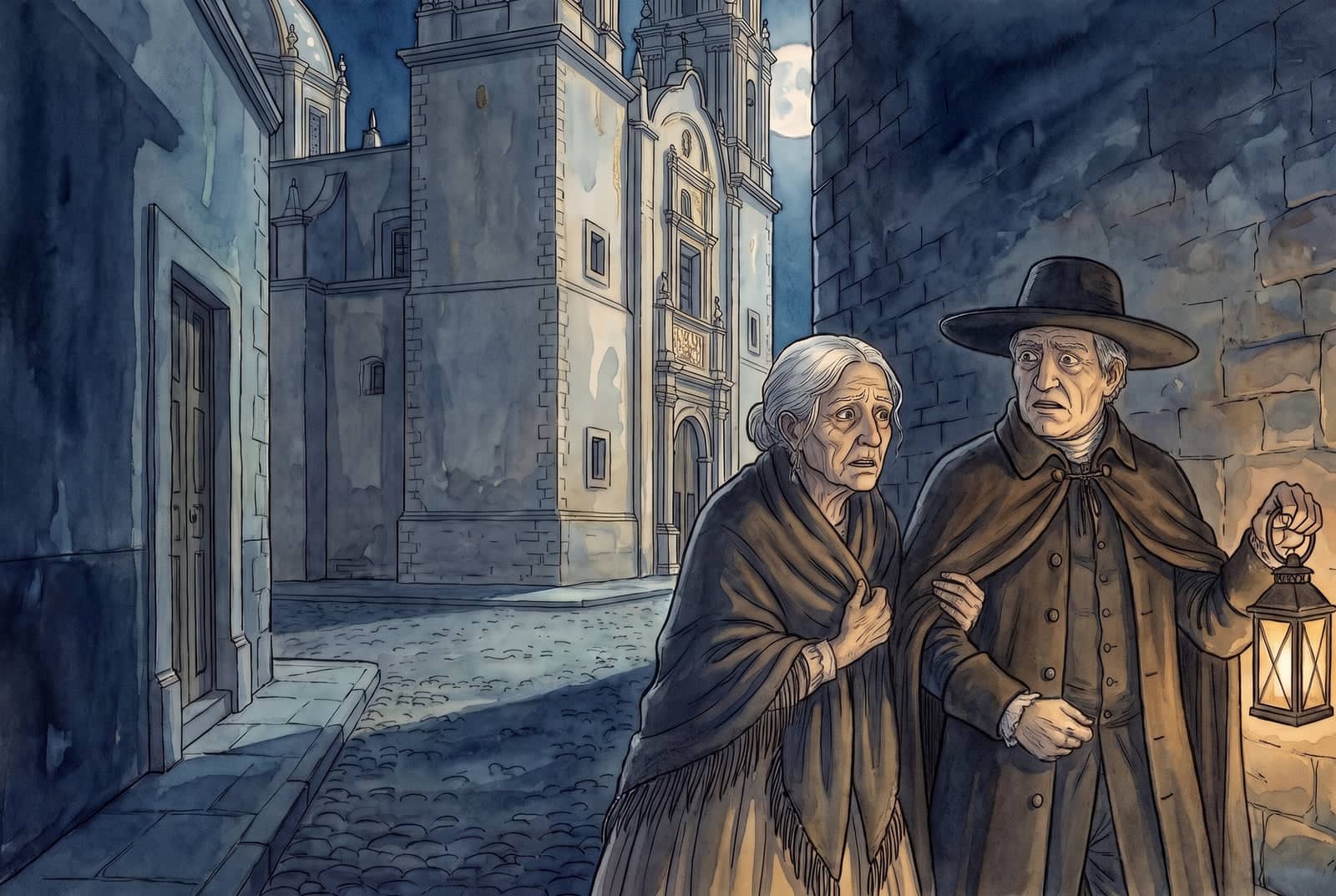
When the Cathedral bell struck midnight, a mysterious woman, always dressed in white, came racing through the city from one end to the other, from the city gate and the farthest neighborhood all the way to the palace. She was a soul in torment, held in this world by her enormous sins and doomed to go on weeping aloud.
People said that the ghost would stop in her flight and let out a cry, a moan so deep that even the boldest man who heard it fell senseless to the ground. In the silence of the night the cry spread through the whole city like a mournful echo. A thousand times, people who were still awake, whether at their pleasures or kept up by their worries, heard that piercing wail after the clock struck twelve. The devout crossed themselves and said a prayer or a psalm so that the poor soul might find eternal rest.
One man swore he had seen her hurry across the Cathedral courtyard at the very hour someone else saw her at San Pablo. Another, who had fallen senseless, was still shaking as he told how he had heard the terrible cry so clear and so close that the ghost’s robe rustled against his arm. Children, young people, and the old gathered on street corners and argued over what it could all mean.
This is how it began, as wise and simple folk alike heard it long ago.
Luisa was as slender as a palm tree swaying by a lake in the May breeze, and as white as a lily. She had dark, burning eyes, curly hair that fell in loose waves over her marble-white shoulders, and lips as red and fresh as pomegranate flowers. And crowning all her charms was the bloom of her youth. She lived in a poor, dark room in a remote corner of a gloomy little alley, happy and unafraid of the tricks the world has always played on beautiful girls.
The fame of her beauty traveled fast, from the poorest people all the way up to the great lords. Every young gallant tried to catch a glimpse of her lovely face, openly or out of the corner of his eye. The deserted alley that had once frightened people now filled up at night with admirers, and serenades and love songs rang out there. The nights always ended in quarrels and knife fights, and men were left wounded on the paving stones.
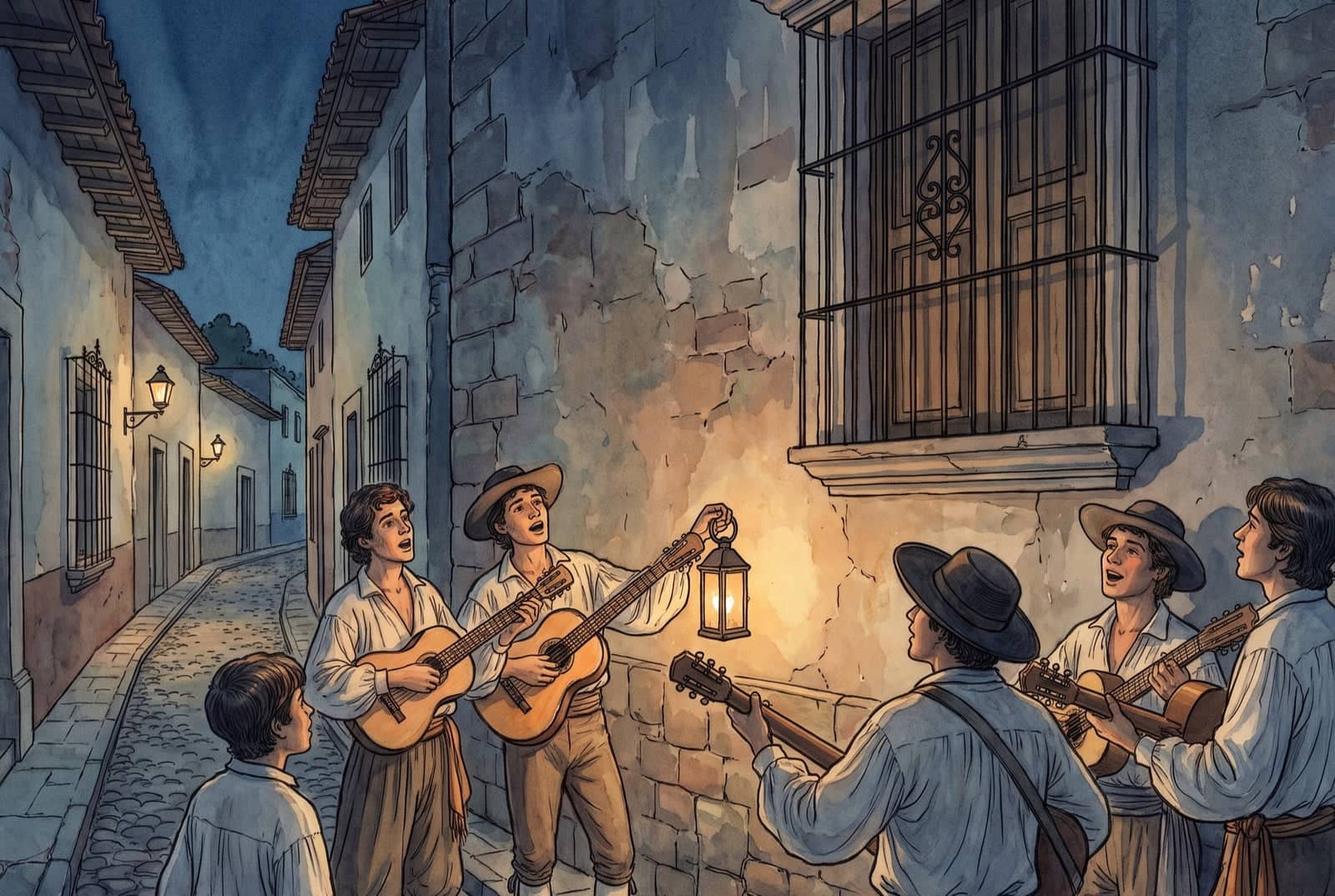
But Luisa’s door stayed shut, like the stone over a tomb. No one heard a sound behind it, and not a glimmer of light through the cracks showed that anyone lived there.
At the far end of the alley there was a little shrine in the wall. A small lantern, paid for by some devout neighbor, hung there and dimly lit the crude image of a saint.
On long, dark nights the neighborhood fell quiet, and no music or singing came from the young men. The street was empty, the wind whistled, the stars hid, and even the owls in the bell tower fell silent under the steady rain. Then, in the stillness, came soft footsteps, the steps of someone who did not want to be heard.
At the same moment Luisa’s door opened, slowly and carefully, and a woman wrapped in a cloak slipped out and went to the foot of the shrine. There, in the light of the little lantern, a handsome young man was waiting. The two of them spent the night hours together and parted before the first light of dawn.
One morning the early risers began to spread the news, and the neighbors passed it from door to door in astonishment: Luisa had vanished in the night. Both doors of her room stood open. There was no sign of a robbery or an attack; it was plain that she had run away with someone, and that it had all been planned.
The news raced through Mexico City like lightning, and with every telling it grew. Everyone found a reason to pass through the miserable little alley. Some went up to her door; others stared at the saint, as if he could tell them what he had witnessed. Plenty of people had the whole affair figured out at once, and the titles and names of counts and rich heirs passed in whispers from mouth to mouth. One reckless fellow even said a name out loud, and he could have earned himself a public whipping for it.
But gossip, like everything human, runs out in time. Little by little the city forgot Luisa’s beauty, her unknown lover, the serenades, the knife fights, and her disappearance. The narrow street grew sad and silent again, as it had been before, with no light at night but the saint’s small lantern.
How sweetly life passes under the shelter of love, and how quickly the days and the years fly! Six years had gone by since the city learned that beautiful Luisa had disappeared one night. What nobody knew then, time has made clear.
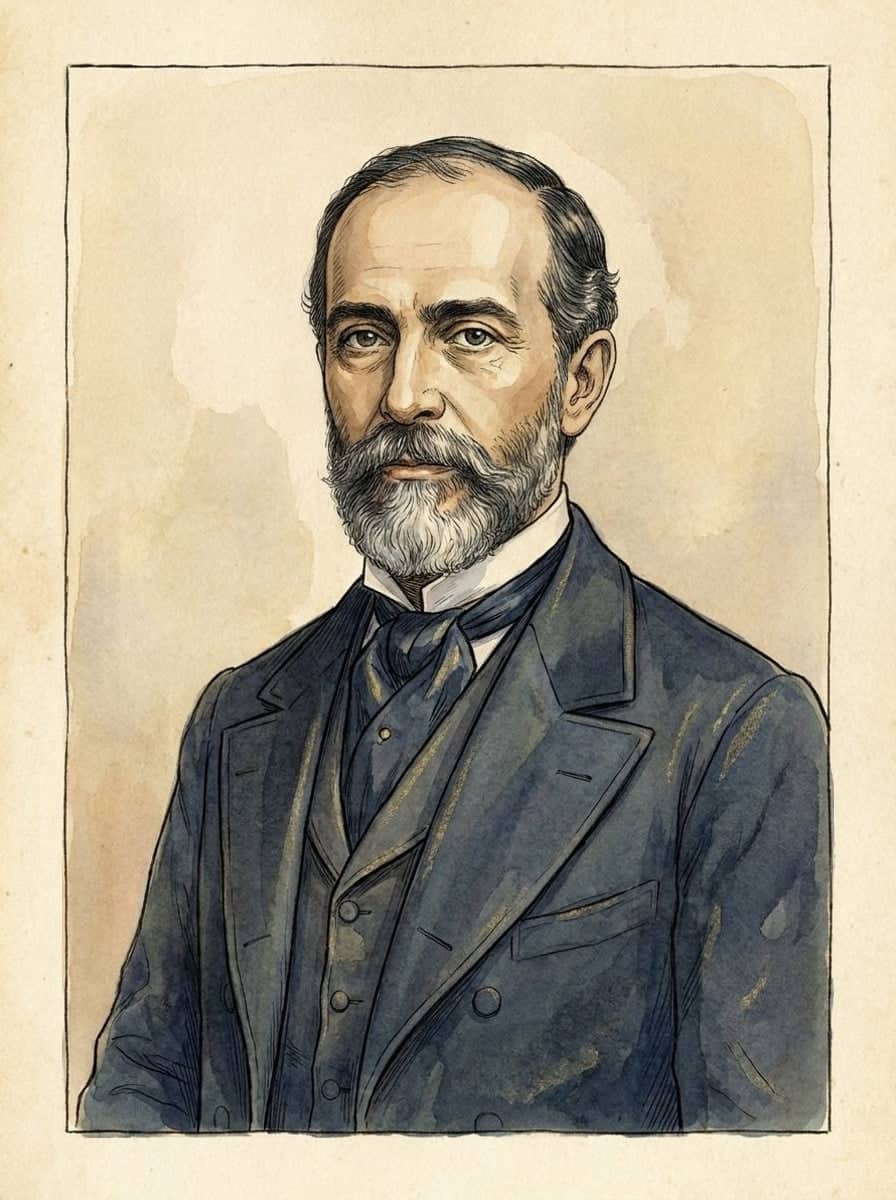
Luisa’s lover was Don Ñuño de Montes-Claros, a rich young nobleman of thirty, tall and strongly built, with large blue-gray eyes, brave, and free with his money. He was also discreet in everything he did. He hid his treasure away in a secret place, and there he made a cozy nest that the whole world searched for in vain. But he never married her.
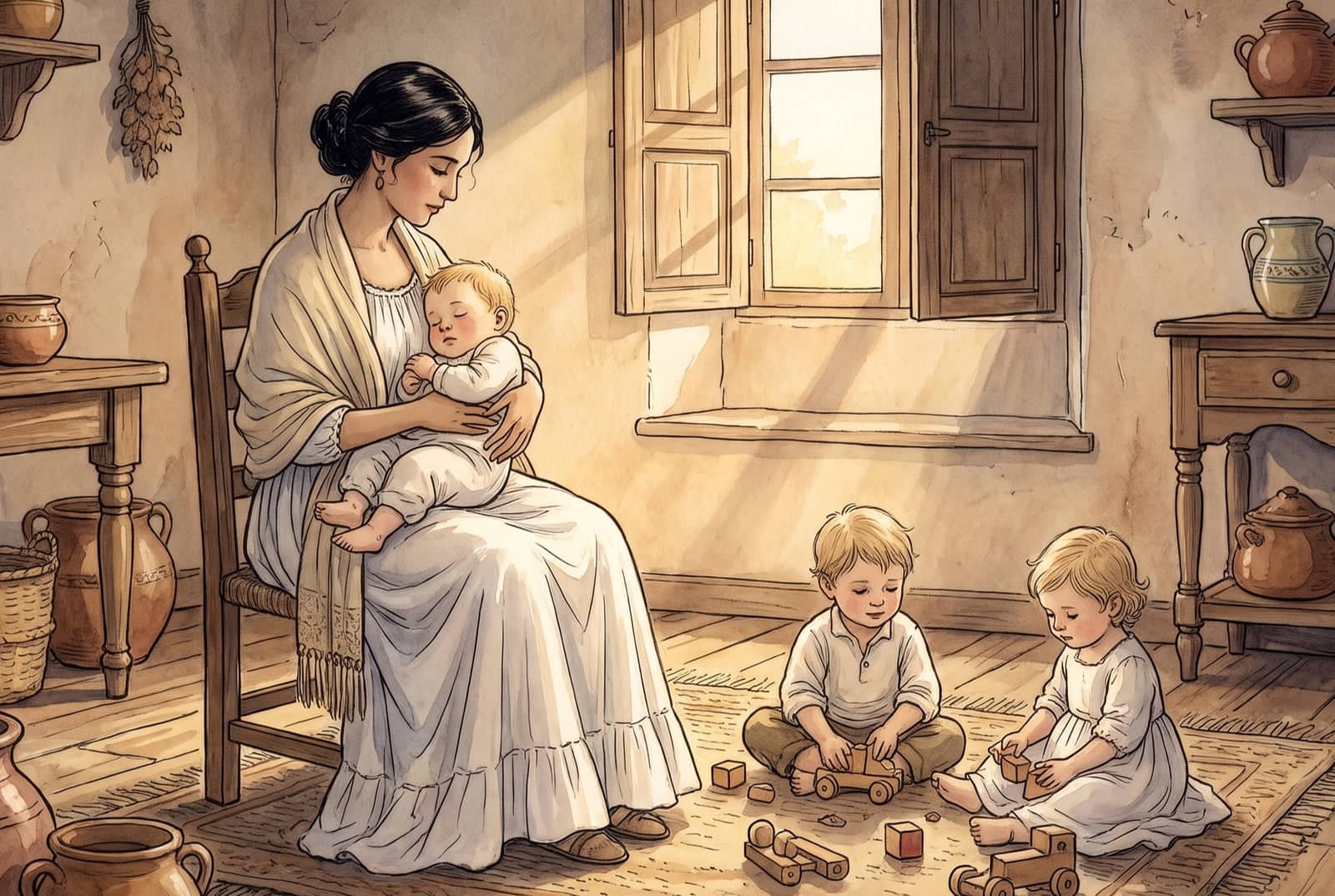
Luisa bore him three children. They grew up in her loving care, with hair as golden as wheat in the autumn sun, and they were her whole joy.
Yet deep in her heart Luisa began to feel a wound, as if from a poisoned arrow, and it turned her once peaceful life bitter. Little by little, though she had given him no reason and he himself could not have said why, Don Ñuño’s burning love cooled. He stopped coming every day. Sometimes whole weeks went by, and when he did come, he left again soon after, without caring how much he hurt her. Luisa said nothing. She wept in secret and never reproached him.
One night the moon shone calmly over the city, and the evening bells were ringing. Luisa sat by the open window of her quiet room with one of the children in her arms, gazing at the far horizon, where the snow lay like a great white shroud over the volcanoes. A moonbeam slid down her pale face and shone in her tears, and the tears fell on the face of the child, who slept in her lap and did not feel them.
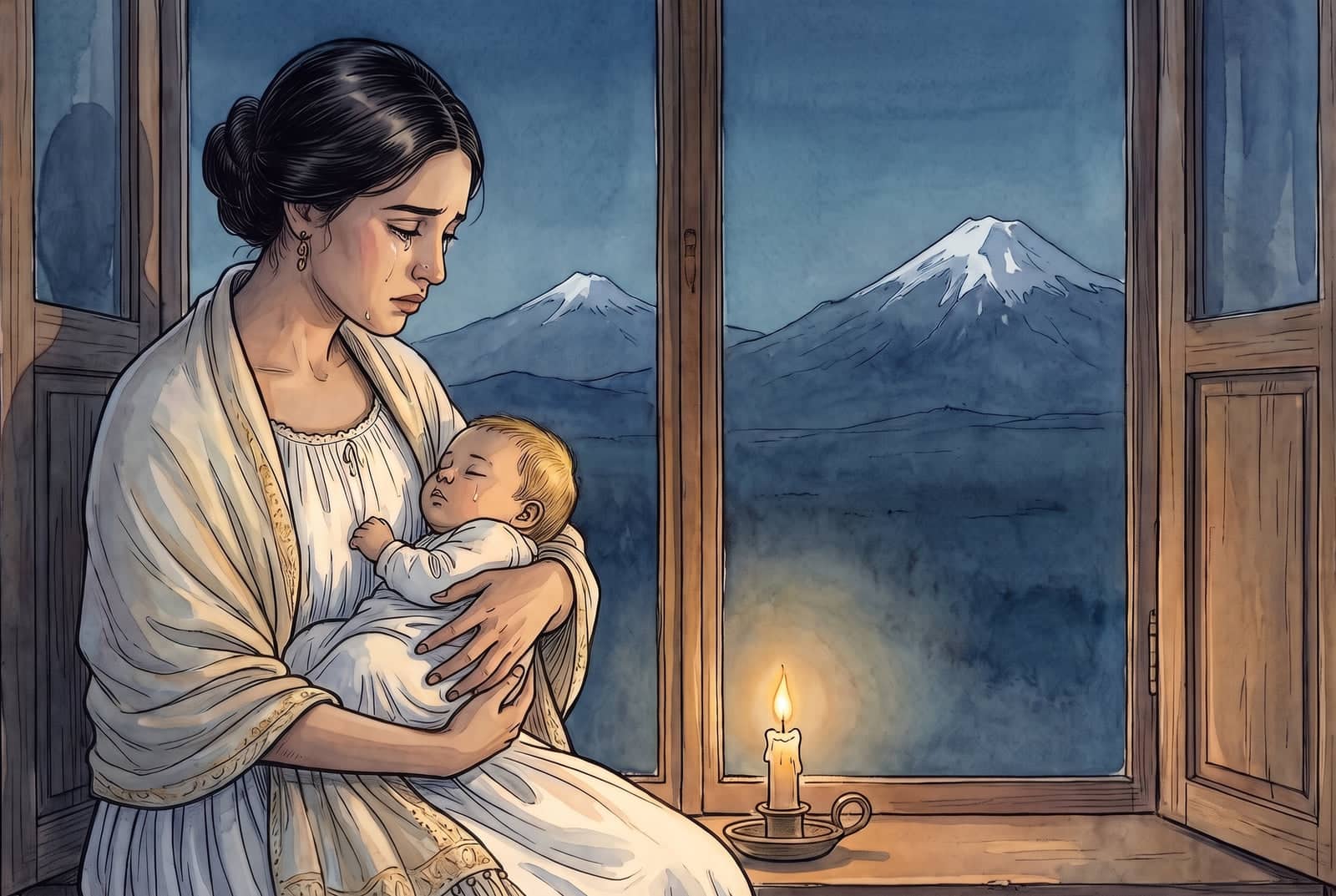
An hour passed like this. The mother went on weeping, and the child breathed softly. Then, all at once, the clock struck eleven. Luisa sprang up, laid the child in the cradle, wrapped herself in a black shawl, and went out into the street. She did not stop until she stood in front of the house where Don Ñuño lived.
Light poured from every balcony, and the music of a ball drifted out. Shadows passed back and forth across the windows. She heard the cheerful hum of a party: voices, songs, couples dancing, laughter, the clink of glasses, and now and then a burst of applause.
Luisa stood there, stunned, wondering if she was dreaming. Why was he so happy, while he left her drowning in tears? Then she gathered her courage, went up to the house, and stopped one of the hundred footmen coming and going at the door.
“Can you tell me why your master is giving a party?” she asked.
“Why, ma’am!” said the footman. “I can hardly believe you’re asking. Who in the city doesn’t know that Don Ñuño de Montes-Claros was married this morning at nine, with great pomp, in the Sagrario church? You really are behind on the news!”
The footman hurried on, and Luisa stood as still as marble. There was not a tear in her eyes, not a sound on her lips. For a long time she stood there, cold, silent, and motionless. Then she went to the door, slipped like a shadow through the people in the courtyard, and hurried up the stairs. She walked down the wide corridor so stiffly and so strangely that many turned to look at her.
At the door of the great hall she hid behind the folds of a satin curtain. From there she saw Don Ñuño with his bride on a splendid dais. They were talking lovingly, and he was holding her hands and swearing his love. Years before, on quiet nights in the little alley, he had held Luisa’s hands the very same way and sworn his love to her, with no light but the lantern and no witness but the saint.
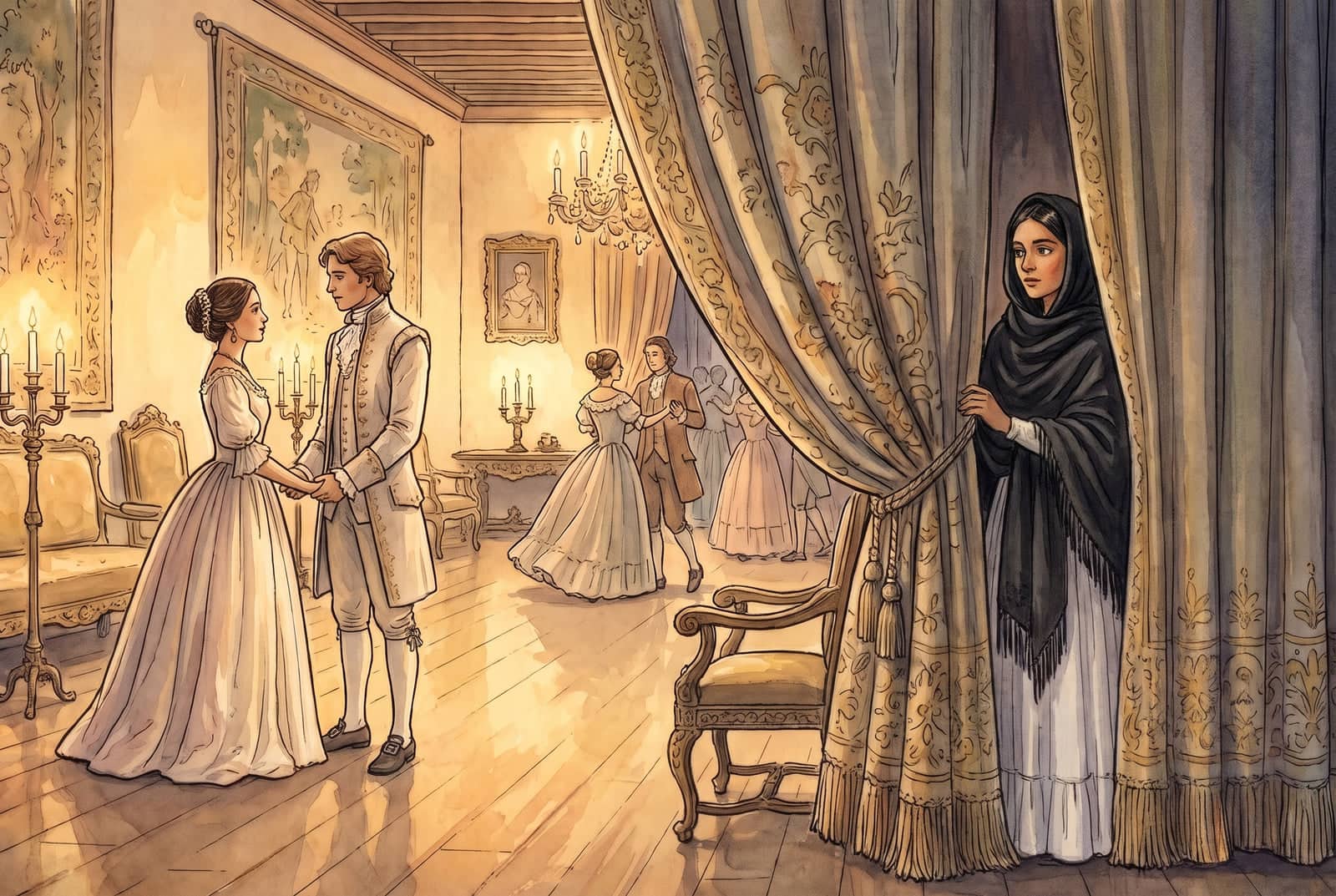
Furious and pitiless, Luisa went back out into the street. She fled, swift as an arrow from a bow, and soon she was too far away to hear the sounds of the ball. Yet she still heard them clearly, and the scene stayed alive before her eyes.
When she reached home, she went to the old wardrobe, opened a drawer, and searched it. There she found a dagger that Don Ñuño had left behind one night and forgotten. She gripped it, and a terrible light flashed in her eyes. In her madness she ran to the bed where her three children lay dreaming, and she killed all three of them. Then she ran out through the silent city, howling.
Crowds hurried to see the grim spectacle that justice had prepared. A woman who had killed her three children had been condemned to die by the garrote, and the case had shocked the whole city. From dawn on, the little square where the scaffold stood was packed with people waiting to watch. They were not quiet or sad but noisy, and so cruel a punishment did not frighten them at all.
It was May, and the sun beat down on the crowd. People grew restless as the clocks struck twelve, but no one thought of leaving; they all wanted to see the death of a tiger with a human face. The mothers wanted it most of all, for they were the angriest at a mother who had not been worthy of her children.
At last a small bell rang nearby. The crowd surged, and through the middle of it passed the grim procession leading Luisa to the scaffold. Her hair was tangled, her face was haggard, and relics and scapulars hung on her breast. She could barely walk, and two brothers of a holy confraternity, who helped the condemned, held her up. Nothing was left of the beautiful woman who had once been Don Ñuño’s delight.
She came to the dreadful place with her eyes cast down, listening to the priests who prayed for her. But as she climbed the scaffold, she raised her face in terror and recognized the house that stood before her. She drew herself up and let out a terrible shriek that froze everyone who heard it. Trembling all over, she lifted her hands to heaven and fell dead.
When the officers of justice carried out the sentence, they did it on a body that was already lifeless.
That same afternoon, so people say, the remains of Don Ñuño de Montes-Claros, whose name by then was on everyone’s lips, were carried to the cemetery in a great funeral procession, to the sound of psalms and hymns.
And they add that ever since, the cry of La Llorona has been heard in the night. She is Luisa, wandering in torment, and for three hundred years, as punishment for her guilt, her soul has not found a moment’s rest.
Retold by Talerie from Tradiciones y leyendas mexicanas (opens in a new window) Public domain Copy this text, adapt it, use it however you like. A link back to Talerie is appreciated but never required. CC0 1.0 (opens in a new window)