The Story of Saint Nicholas
8 min read ages 7 and up talerie.com/en/tales/the-story-of-saint-nicholas
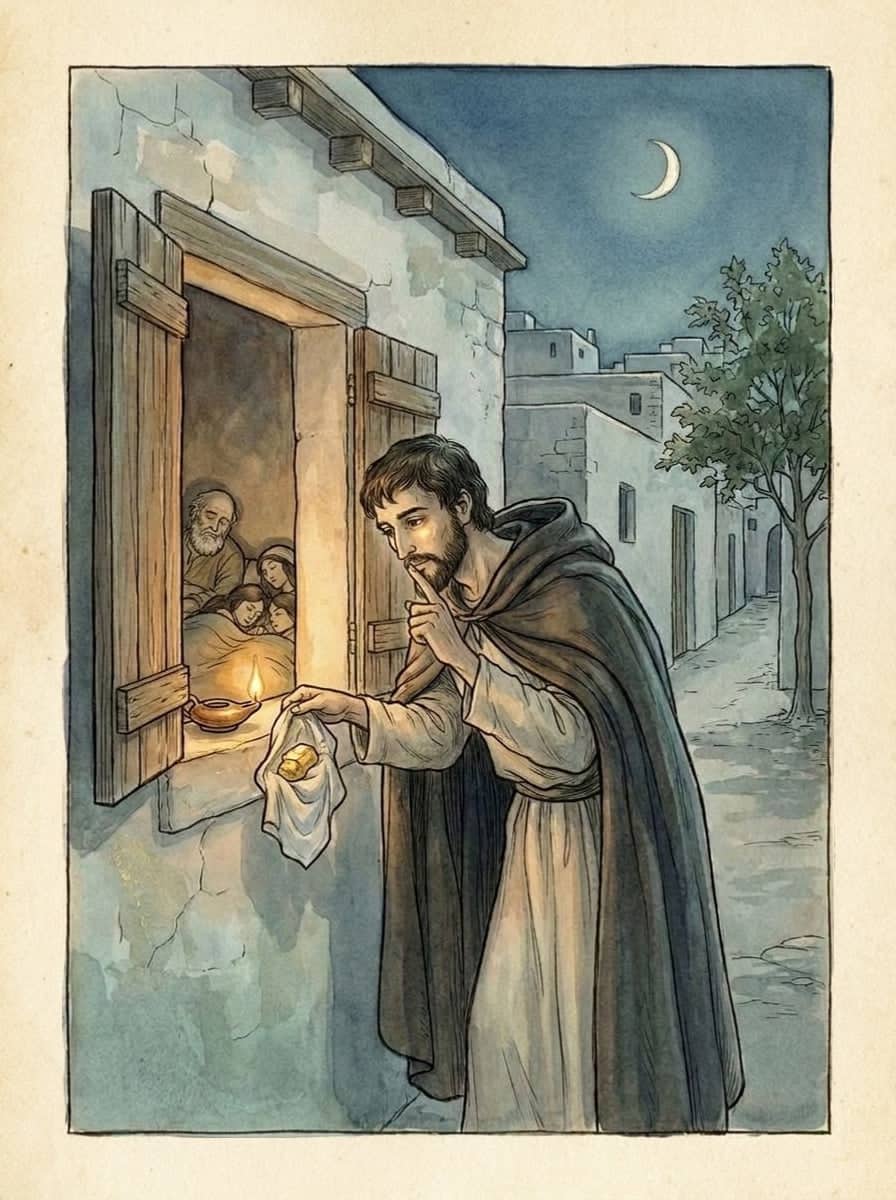
Young Nicholas of Patara inherits a great fortune and wants to give it away without anyone ever praising him. Next door, a man of good family has become so poor that he can no longer provide for his three daughters. Nicholas wraps a lump of gold in a cloth and waits for night to fall.
Nicholas was born in the city of Patara, the son of rich and devout parents. When they died, he was left with a great fortune, and he made up his mind to spend it for the glory of God, never to win anyone’s praise.
Next door lived a man of good family who had fallen into terrible poverty. He could no longer provide for his three daughters, so he made up his mind to send them to a brothel. When Nicholas heard of it, he was horrified.
That night he wrapped a lump of gold in a cloth, threw it through his neighbor’s window, and ran off unseen. The next morning the neighbor found it, thanked God, and at once began to prepare a wedding for his eldest daughter.
Some time later a second lump of gold came the same way. The neighbor praised God aloud, and he promised himself that from then on he would stay awake and find out who was helping him.
A few nights later a third lump came flying in, twice as large as the others, and this time he heard it thump to the floor. He ran out after the young man who was hurrying away, caught up with him, and knew him at once. The neighbor fell to the ground and tried to kiss his feet, but Nicholas would not take his thanks.
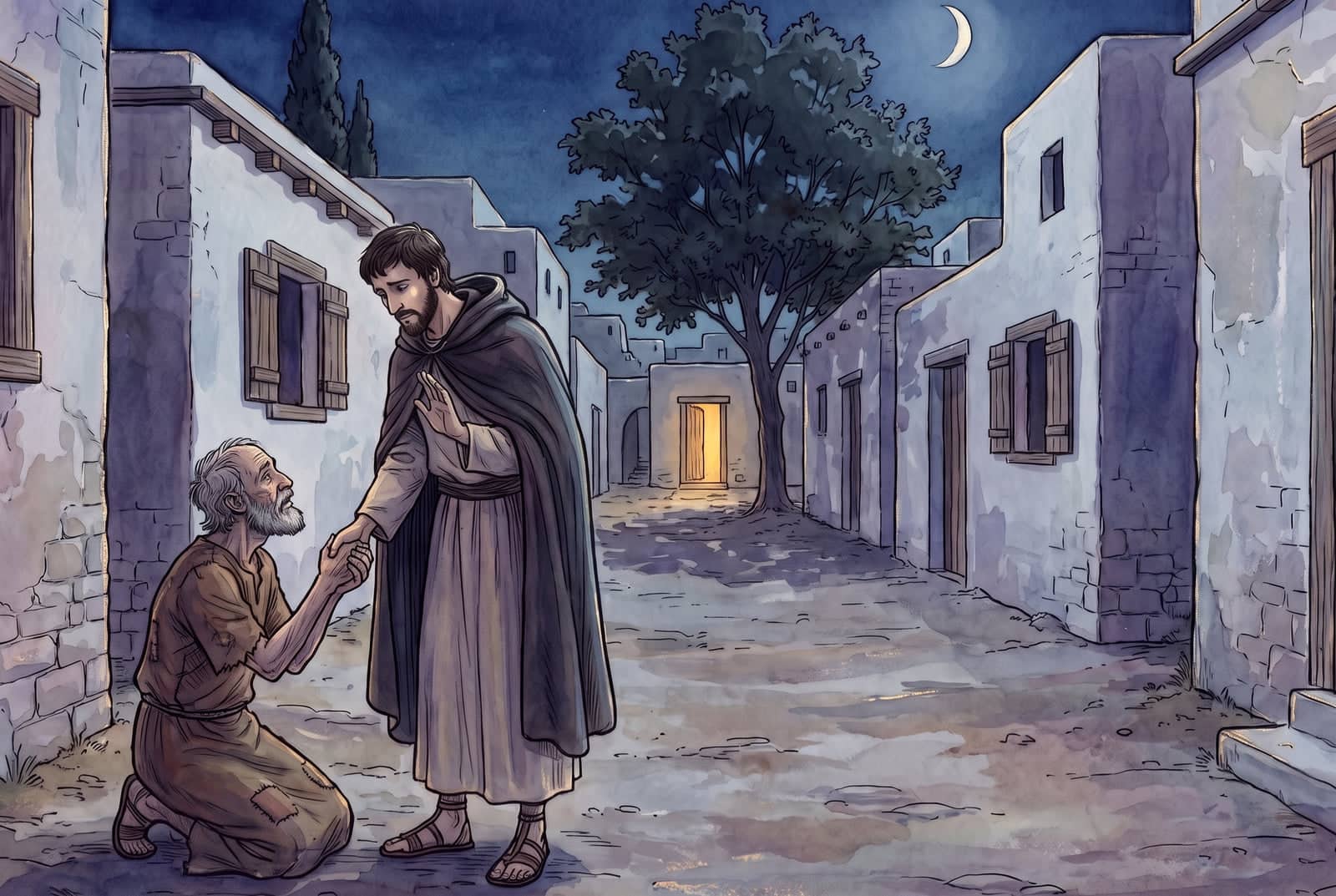
“Promise me, my friend,” he said, “that you will tell no one about this as long as you live.”
When the bishop of Myra died, the bishops of the region gathered to choose a new one. That night the oldest and most respected of them heard a voice. It told him to stand at the church door in the morning and to make bishop the first man who walked in.
Before dawn Nicholas came to the church and was the first to step inside.
“What is your name?” the old bishop asked.
Nicholas bowed his head. “Nicholas, your humble servant,” he answered.
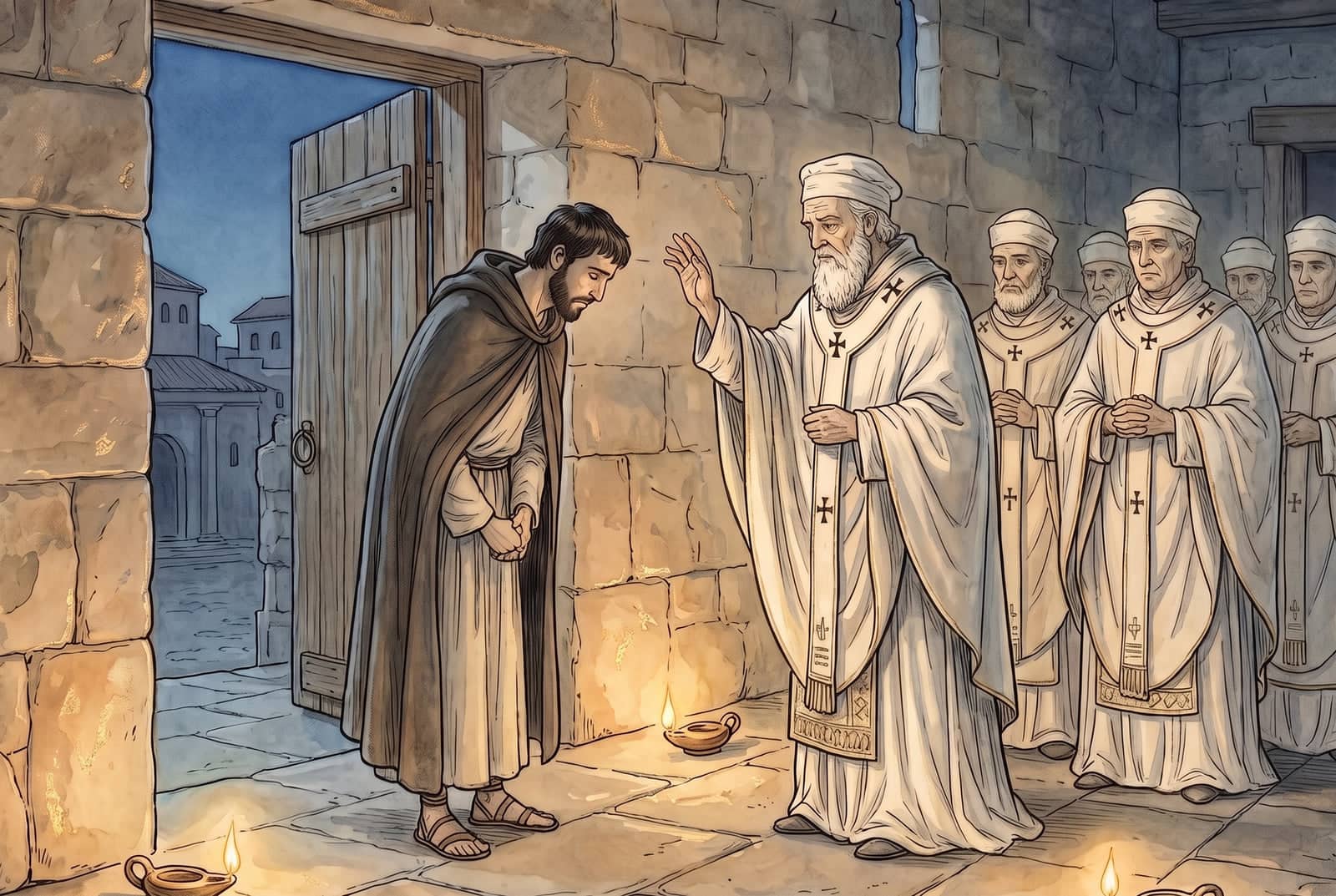
So the bishops dressed him in shining robes and made him bishop of Myra. Yet he stayed as humble as he had always been.
One day a ship was caught in a terrible storm, and the sailors prayed with tears in their eyes.
“Nicholas, servant of God, if what we have heard of you is true, let us see it now!”
All at once someone with the saint’s own face stood before them. “You called me, and here I am,” he said. He set to work with the sails and ropes, and the storm stopped then and there.
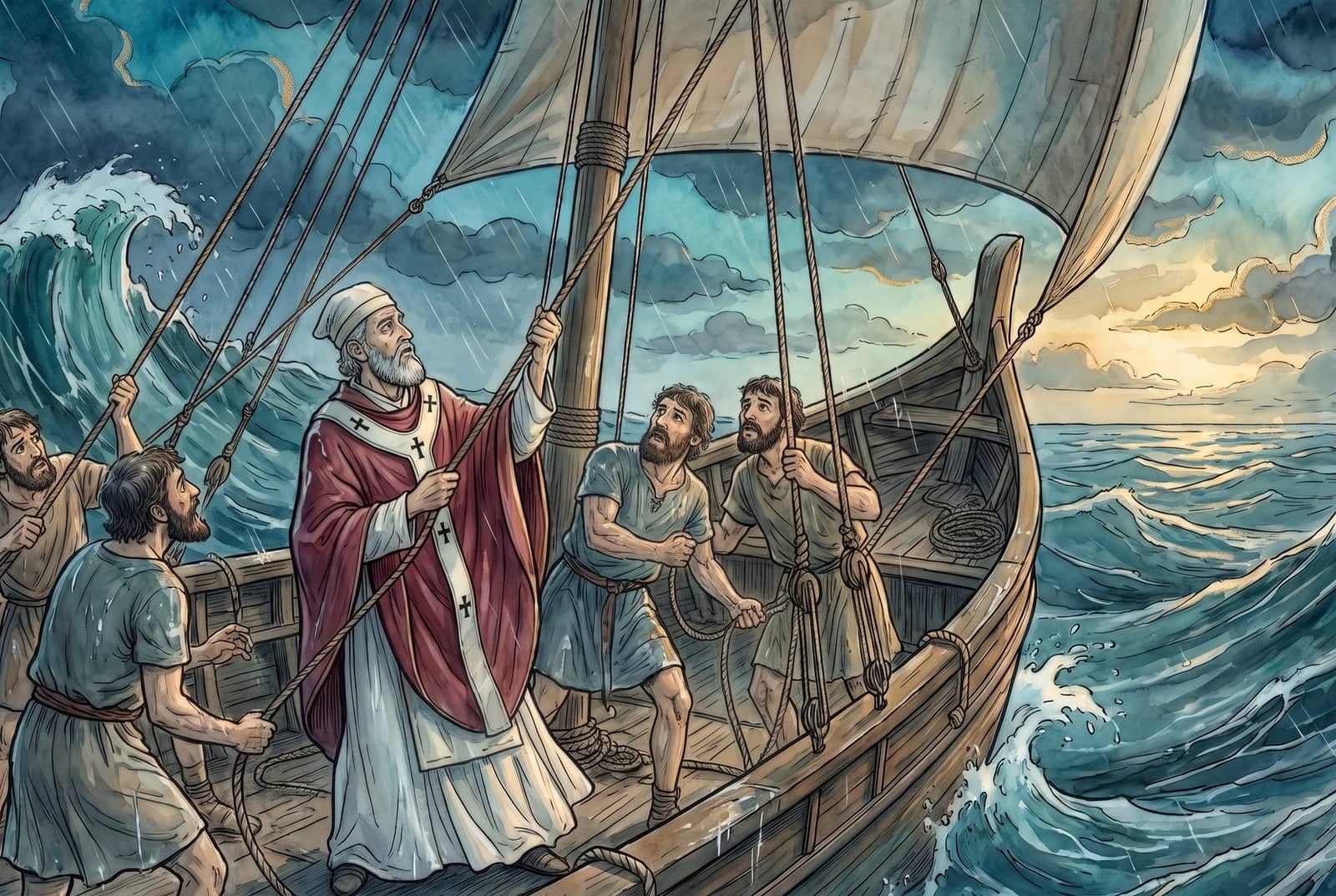
When the sailors reached land, they went to Nicholas’s church, and though they had never seen him before, they knew him at once. They thanked him, but he told them to thank God instead, because God’s mercy and their own faith had saved them.
Another time a famine struck the whole region. Nicholas heard that ships loaded with grain lay at anchor in the harbor, and he asked the crews for a hundred measures from each ship to feed the hungry.
“Father, we don’t dare,” they said. “Our grain was weighed in Alexandria, and every bit of it must go to the emperor’s granaries.”
“Do as I ask all the same,” said Nicholas, “and I promise you in God’s name that not a single grain will be missing.”
The crews did as he asked, and when they reached the granaries, they handed over exactly as much as had been weighed in Alexandria. Meanwhile Nicholas shared out the grain they had left him, and it fed the whole region for two years, with plenty to spare for sowing the fields.
Some farmers there still worshiped beneath an old tree sacred to the goddess Diana, so Nicholas had the tree cut down. That made Diana furious. She made a strange oil that would burn even on water, and then, disguised as a nun, she rowed out to some pilgrims who were sailing to see Nicholas.
“I’m sorry I can’t come with you to the holy man,” the nun said. “But please, in memory of me, rub this oil on the walls of his church and his house.”
As soon as the nun’s boat had gone, another boat came toward the pilgrims, and Nicholas was in it.
“What did that woman tell you, and what did she give you?” he asked.
The pilgrims told him everything and showed him the oil. “She is no nun,” said Nicholas. “She is Diana herself. If you want proof, throw her oil into the sea.”
They threw it overboard, and at once the water burst into flames. Later, when the pilgrims came to Nicholas’s church, they knew him as the man who had come to them in the boat.
Once the emperor sent three generals, Nepotian, Ursus, and Apilion, to put down a revolt. Contrary winds drove them into a harbor near Myra, and Nicholas invited them to dinner.
While Nicholas had been away from the city, the consul had taken a bribe and sentenced three innocent soldiers to death. Nicholas hurried to the place of execution with his guests. The three soldiers were already kneeling with their faces covered, and the executioner was raising his sword over their heads.
Nicholas pulled the sword from the executioner’s hands, untied the three men, and led them away unharmed. Then he went straight to the consul.
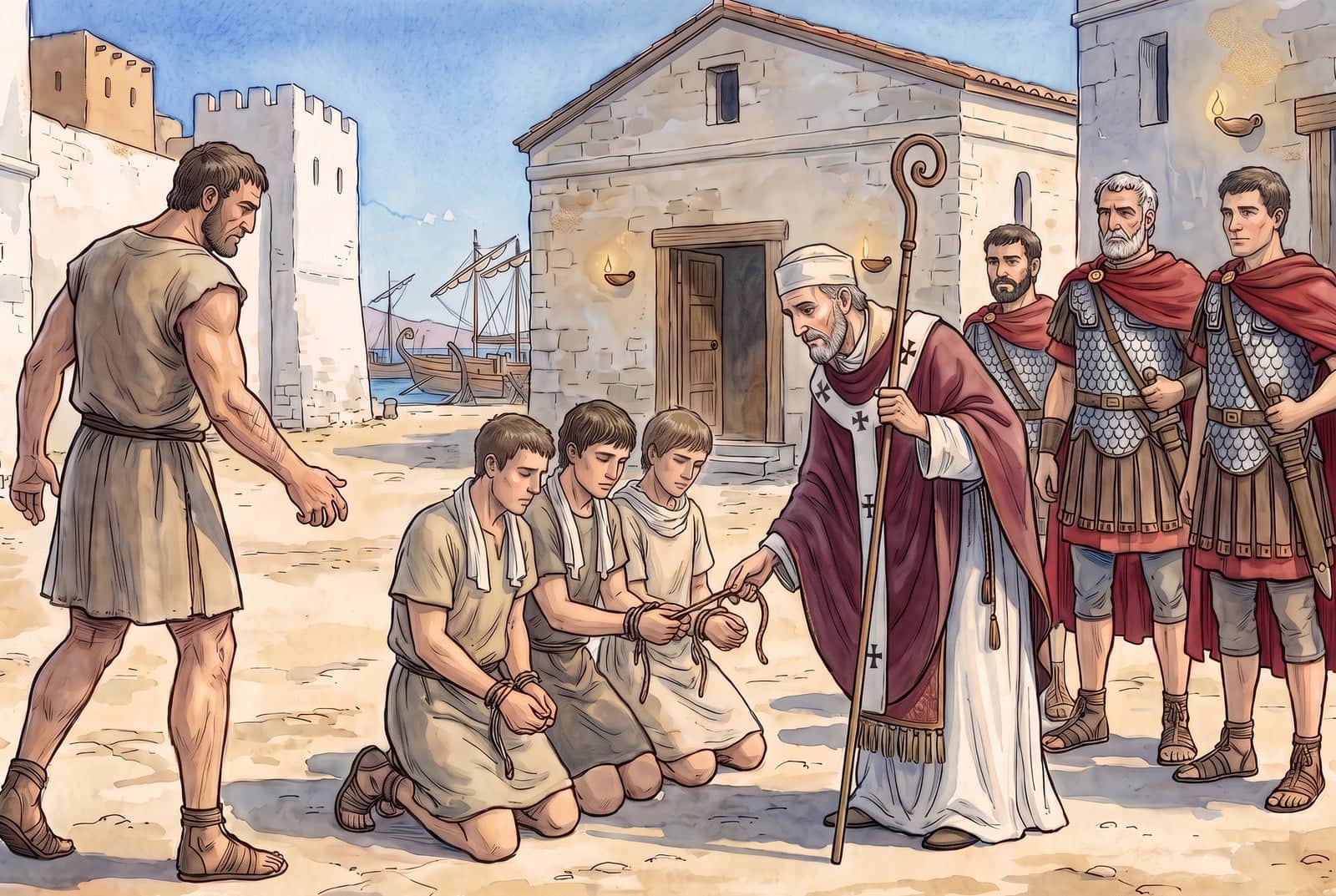
“Enemy of God,” he said, “how dare you look us in the face with such a crime on your conscience?”
The consul was truly sorry, and when the generals pleaded for him, Nicholas forgave him. The generals put down the revolt without bloodshed and came home to great honor.
But some jealous courtiers bribed the imperial prefect to accuse the three generals of treason. In a rage, Emperor Constantine had them thrown into prison and ordered them to be killed that night. The generals wept. Then Nepotian remembered how Nicholas had saved three innocent men before their very eyes, and he urged his companions to pray to Nicholas for help.
That same night Nicholas appeared to Emperor Constantine in a dream.
“Why have you condemned these generals when they are innocent?” he said. “Get up and set them free! If you do not, I will pray to God to send you a war you will lose.”
“Who are you to speak to me like this?” asked the emperor.
“I am Nicholas, bishop of the city of Myra.”
Then Nicholas appeared to the prefect in the same way. “Why did you agree to the death of three innocent men? See that they are freed at once, or ruin will fall on your house!”
“Who are you to threaten me like this?” asked the prefect.
“I am Nicholas, bishop of the city of Myra.”
In the morning the emperor sent for the prisoners.
“Do you know a man called Nicholas?” he asked them.
When they heard the name, the generals raised their hands to heaven and prayed to God to save them for Saint Nicholas’s sake.
“Go, and thank God, who saved you because this Nicholas prayed for you,” the emperor said. “Take him gifts from me, and ask him not to threaten me anymore, but to pray to God for me and for my empire.”
A few days later the generals knelt before Nicholas and told him everything that had happened. He raised his hands to heaven and praised God, and he sent them home.
Nicholas lived to be an old man. When God called him home, he bowed his head and prayed, and he was buried in Myra, in a marble tomb.
A holy oil began to flow from the tomb, and it healed many who were sick. Long afterward, soldiers from the city of Bari came to Myra and carried his bones away to their own city.
Retold by Talerie from La Légende dorée (opens in a new window) Public domain Copy this text, adapt it, use it however you like. A link back to Talerie is appreciated but never required. CC0 1.0 (opens in a new window)