Karen, an orphan taken in by an old lady, wears her forbidden red shoes to church, and once an old soldier strikes the soles, her feet will not stop dancing. After the executioner takes her feet, an angel with a branch of roses opens the walls of her narrow room, and Karen sits among the singing congregation.
There was once a little girl called Karen, pretty and poor. In summer she went barefoot, and in winter she wore heavy wooden shoes.
An old shoemaker’s wife in the village sewed her a pair of little shoes out of old red cloth, clumsy but kindly meant.
Karen first wore them on the day her mother was buried. Red was hardly right for mourning, but she had no others, and in them she walked behind the plain coffin.
Just then a big old carriage came by, and the old lady inside pitied the child.
“Let me have her,” she said to the clergyman, “and I will take care of her.”
Karen was sure the red shoes had done it. The old lady thought them ugly and had them burned; Karen was dressed neatly instead, and taught to read and sew, and people said she was pretty.
“You are more than pretty,” said the mirror. “You are beautiful.”
That summer the Queen came through the country with her little daughter, and the princess at the castle window wore red shoes of gleaming leather. Nothing can compare with red shoes.
When Karen was old enough to be confirmed she was to have new shoes, and in the rich shoemaker’s glass cases stood a red pair like the princess’s. They fitted, and they were bought. The old lady’s eyes were weak, and she did not know they were red; she would never have allowed them at a confirmation.
Everyone looked at Karen’s feet. While the clergyman spoke of the covenant with God, she thought only of her red shoes. Afterwards the old lady heard that the shoes had been red, and said that from then on Karen must go to church in black shoes.
The next Sunday there was Communion. Karen looked at the black shoes, and looked at the red ones, and looked at the red ones again, and put them on.
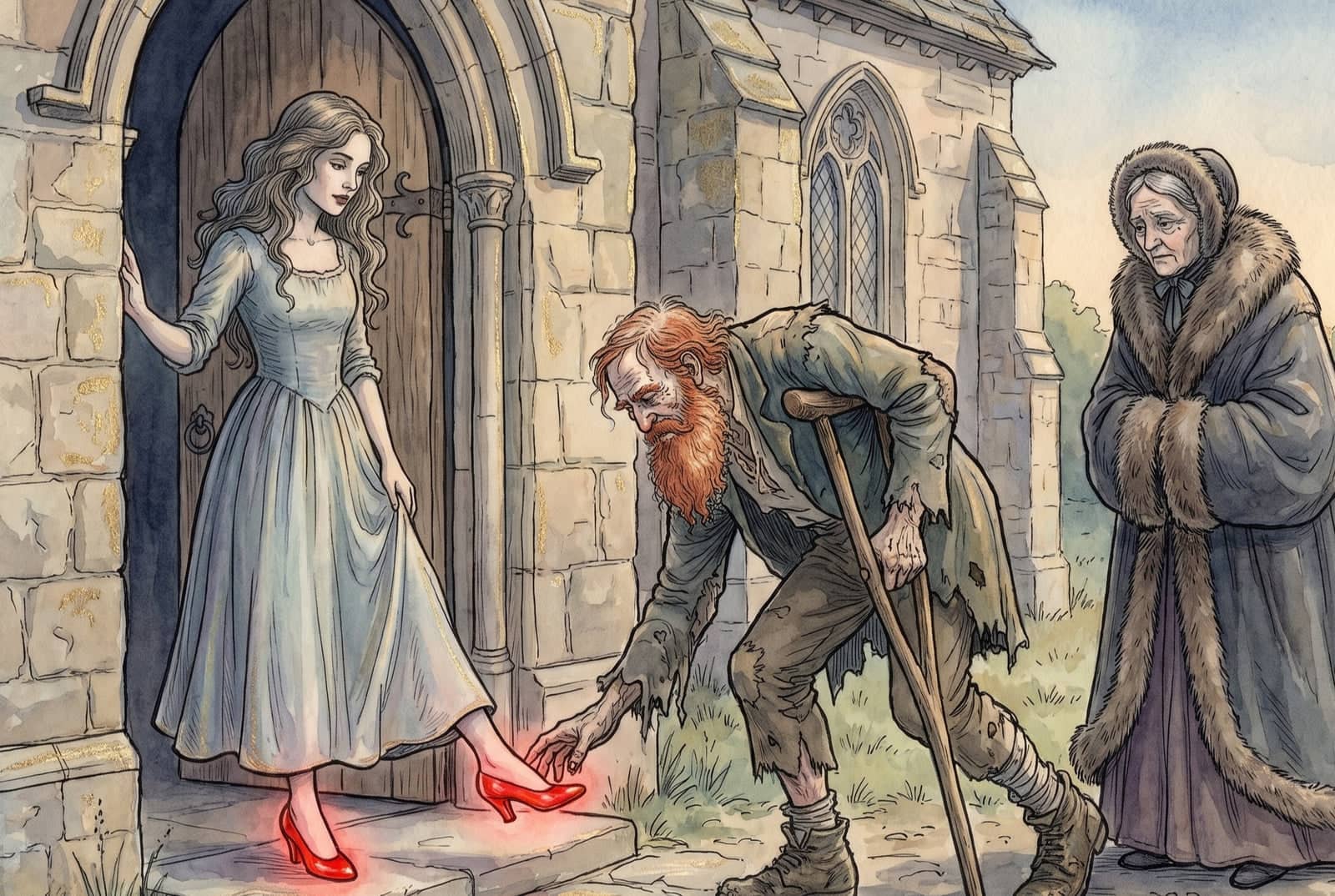
At the church door stood an old soldier with a crutch and a long red beard. He bowed low and asked to wipe the old lady’s shoes, and Karen put out her little foot too.
“Look at those pretty dancing shoes!” said the soldier. “Sit fast when you dance,” he said to the shoes, and he struck the soles with the flat of his hand.
Inside, when Karen lifted the golden cup at the altar, the red shoes seemed to swim in it, and she forgot her psalm and the Lord’s Prayer.
The old lady stepped into her carriage, and Karen lifted her foot to follow.
“Look at those pretty dancing shoes!” said the soldier.
Karen could not help herself. She took a few steps, and then her legs would not stop. She danced around the church until the coachman caught her and lifted her into the carriage, but her feet went on dancing, so that she kicked the good old lady. Only when the shoes came off did her legs go still.
Then the old lady fell ill, and Karen should have sat by her bed. But there was a grand ball in the town. Karen looked at the red shoes, and there was no harm in looking; she put them on, and surely no harm in that; and she went and danced.
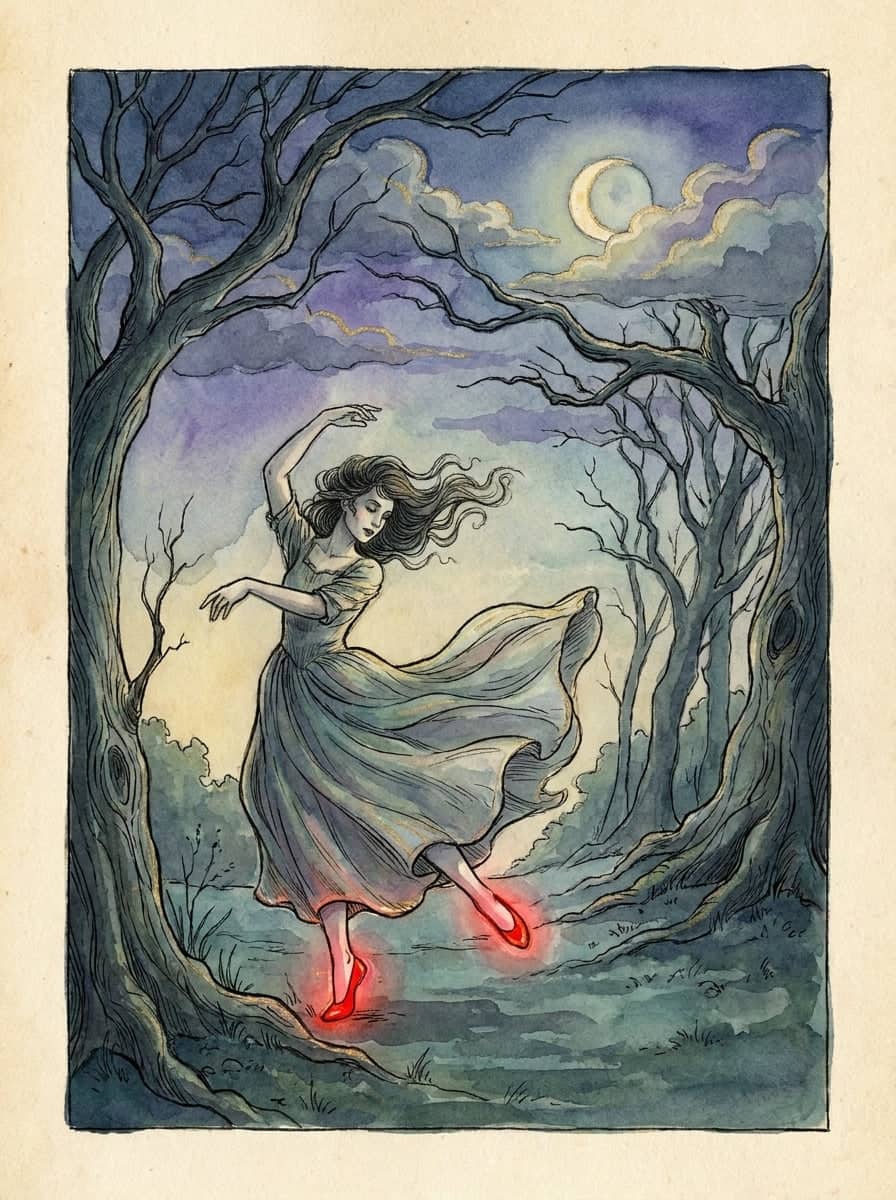
When she wanted to go right, the shoes danced left; when she wanted to go up the room, they carried her down it, down the stairs, out of the town gate and into the dark wood.
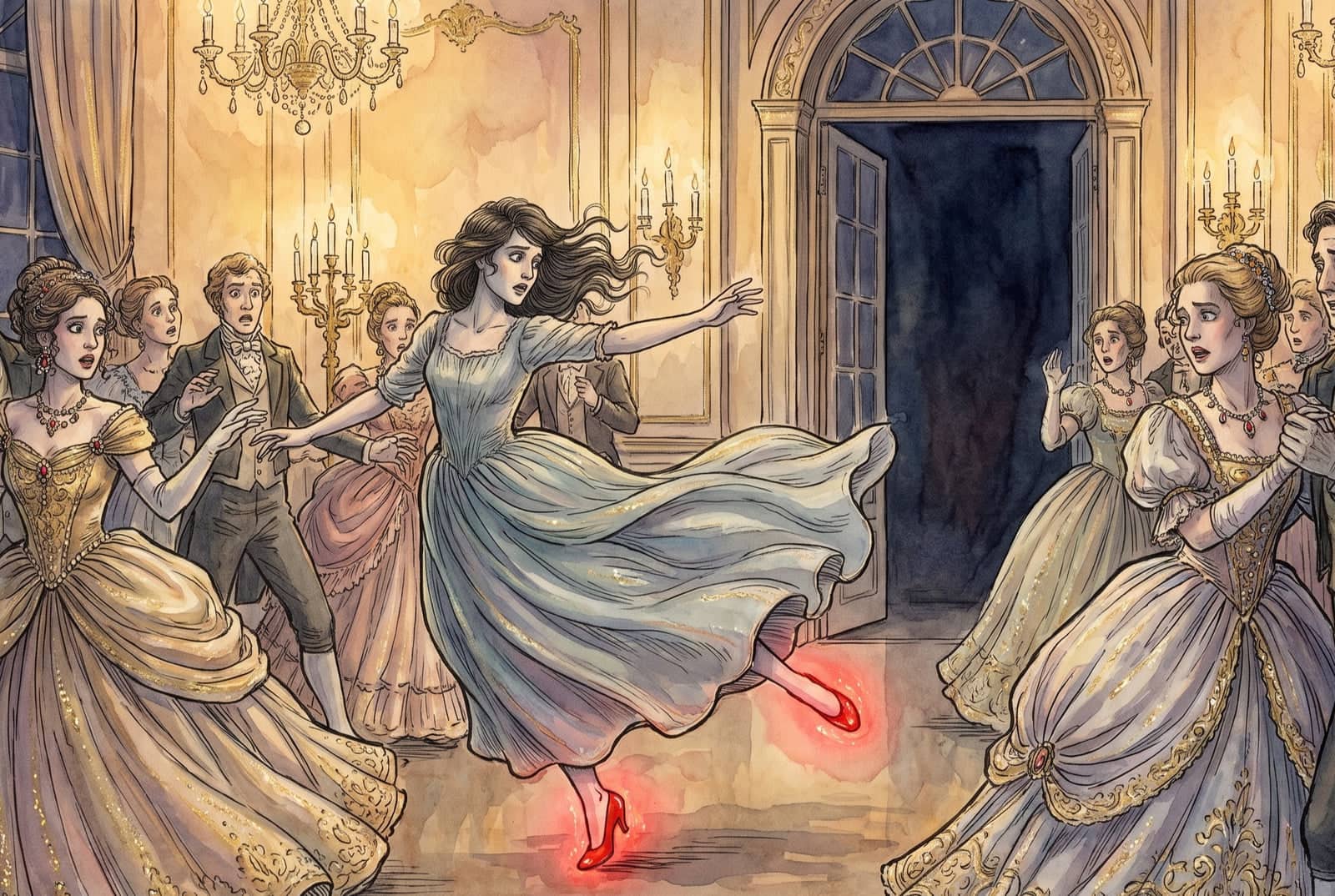
Something shone among the trees, and she thought it was the moon; but it was the old soldier with the red beard.
“Look at those pretty dancing shoes!” he said.
She tried to throw the shoes away, but they held fast, and when she tore off her stockings she found the shoes grown onto her feet. She danced over field and meadow, in rain and sunshine, and the nights were worst.
She danced into the churchyard, but the dead there did not dance; they had better things to do. She wanted to rest on the pauper’s grave, but for her there was neither peace nor rest. And as she danced past the open church door she saw an angel in white robes, with a broad shining sword in his hand.
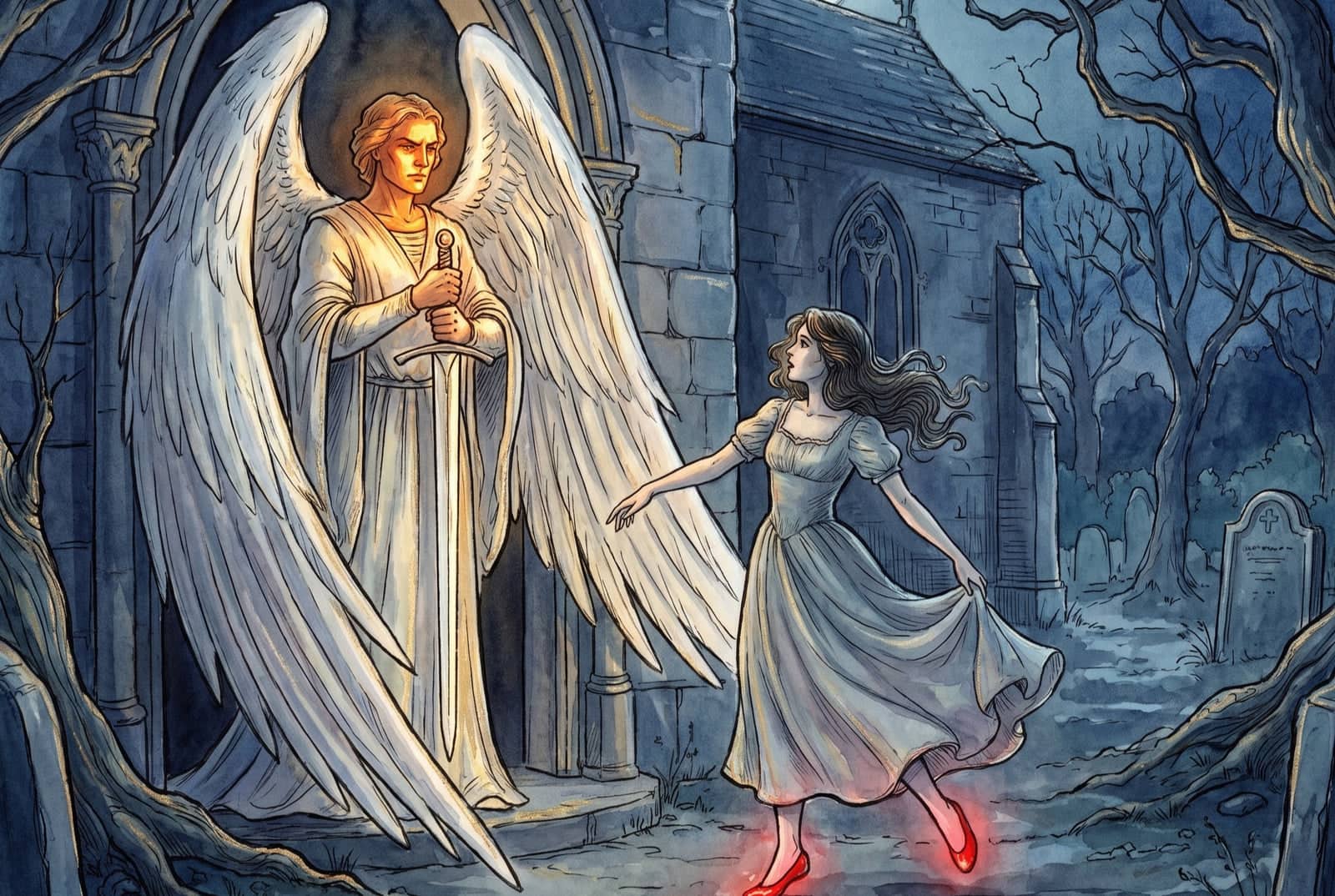
“Dance you shall,” he said. “Dance in your red shoes till you are pale and cold. Dance from door to door, and where proud and vain children live you shall knock, so that they hear you and are afraid. Dance you shall, dance.”
“Mercy!” cried Karen. But she never heard his answer, for the shoes carried her out into the fields, and still she had to dance.
One morning she danced past a door she knew. A psalm was sung inside, and a coffin came out covered with flowers. Then she knew the old lady was dead, and that she was alone in the world.
She danced on through the dark night, over thorns and stumps, across the heath to a lonely house where the executioner lived. She tapped at his window.
“Come out, come out! I cannot come in, for I must dance.”
“I don’t suppose you know who I am,” said the executioner. “I take the heads of the wicked, and I can feel my axe humming.”
“Do not take my head,” said Karen, “for then I could never repent. But take my feet, and the red shoes with them.”
She confessed everything, and the executioner did as she asked. The red shoes danced away over the field into the deep forest. He carved her wooden feet and crutches, and she kissed his hand and went away over the heath.
“Now I have suffered enough for the red shoes,” she said. “I will go to church, so that people can see me.” But at the church door the shoes came dancing before her, and she turned back afraid.
She tried again on Sunday, telling herself she was as good as many who sat in church giving themselves airs. At the churchyard gate the red shoes were dancing ahead of her, and she turned back and repented with her whole heart.
She went to the parsonage and begged to be taken into service for no wages, as long as she had a roof over her head and good people around her. The pastor’s wife took her in, and when the children talked of finery Karen only shook her head.
The next Sunday they asked whether she would come to church, and she looked at her crutches with tears in her eyes. So they went without her, and Karen sat alone with her hymn book, while the wind carried the sound of the organ over from the church. She lifted her face and said, “O God, help me!”
Then the sun shone out, and God’s angel stood before her in white robes, the same one she had seen at the church door. He carried no sword now, but a green branch full of roses. He touched the walls with it, and they opened wide: the organ was playing and the congregation singing. The church had come to the poor girl in her narrow room, and she sat in the pew with the pastor’s household. When the hymn ended they nodded to her.
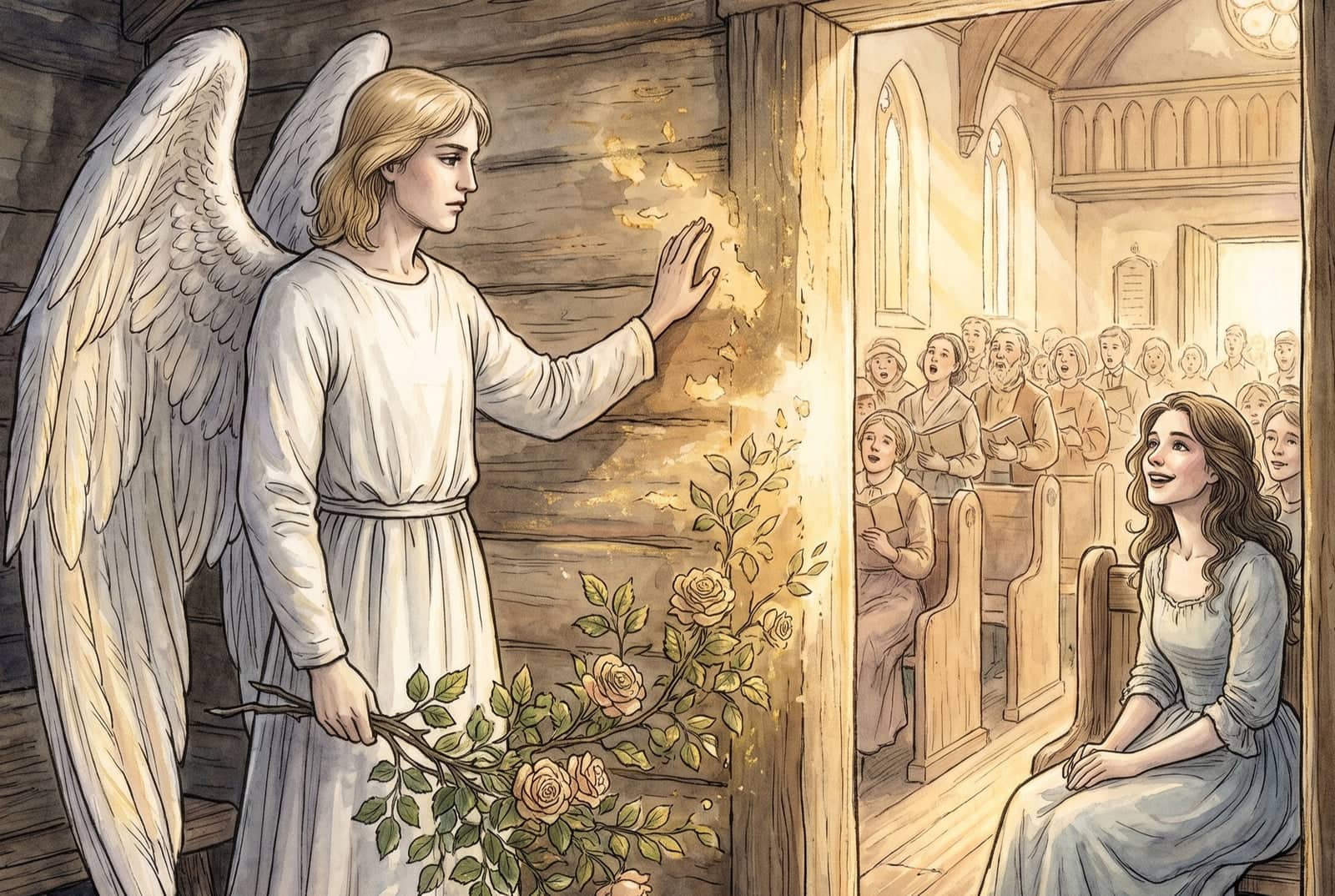
“It was right of you to come, Karen.”
“It was mercy,” she said.
The organ played, and the children’s voices sounded soft and lovely. Warm sunshine streamed into the pew where Karen sat, and her heart grew so full of sunshine, so full of peace and joy, that it broke. Her soul flew on the sunbeams to God, and no one there asked about the red shoes.
Retold by Talerie from Fairy Tales of Hans Christian Andersen (opens in a new window)License: Public domainCopy this text, adapt it, use it however you like. A link back to Talerie is appreciated but never required.CC0 1.0 (opens in a new window)