 Original
The Fir Tree
17 min readages 6 and uptalerie.com/en/tales/the-fir-tree-original
A young fir wishes away its years until it is cut for Christmas, dressed in candles and a gilded star for one evening. The tree then stands forgotten in a dark attic, tells the mice its one story, and ends in a courtyard, where a child pulls the gold star off and the chopped pieces burn under the brewing kettle.
Out in the forest stood a pretty little fir tree. It had a good spot, with sun enough and air enough, and bigger companions all around it, firs and pines. But the little fir wanted one thing only, and that was to be taller. It paid no attention to the warm sun or the fresh air, and none to the village children who came past chattering, out gathering strawberries and raspberries. Often they came with a whole pot full, or berries threaded on a straw, and sat down beside the little fir and said, “Look how sweet and small it is!” That was the one thing the tree could not bear to hear.
Each year it grew a good notch taller, for you can tell how many years a fir tree has grown by counting the notches in its stem.
“Oh, if only I were a great tree like the others,” sighed the little fir. “Then I could spread my branches wide and look out over the whole world from my crown. The birds would nest in me, and when the wind blew I could nod as grandly as those tall ones over there.”
It took no pleasure in the sunshine, or the birds, or the red clouds that sailed over it morning and evening.
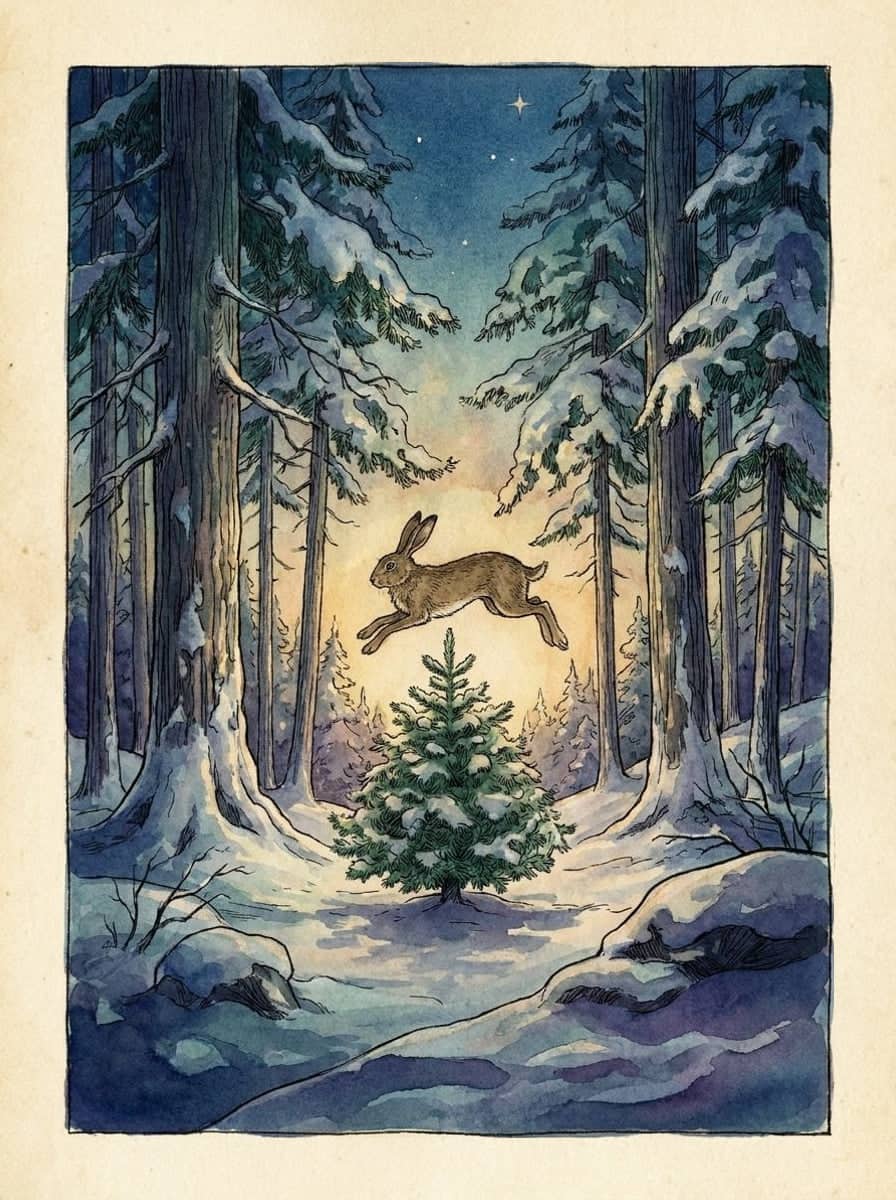
In winter, when the snow lay white and glittering, a hare would come bounding along and jump clean over the little tree. How that galled it! But two winters went by, and by the third the tree had grown so tall that the hare had to run around it. To grow and grow, to be tall and old: that is the only fine thing in the world, thought the tree.
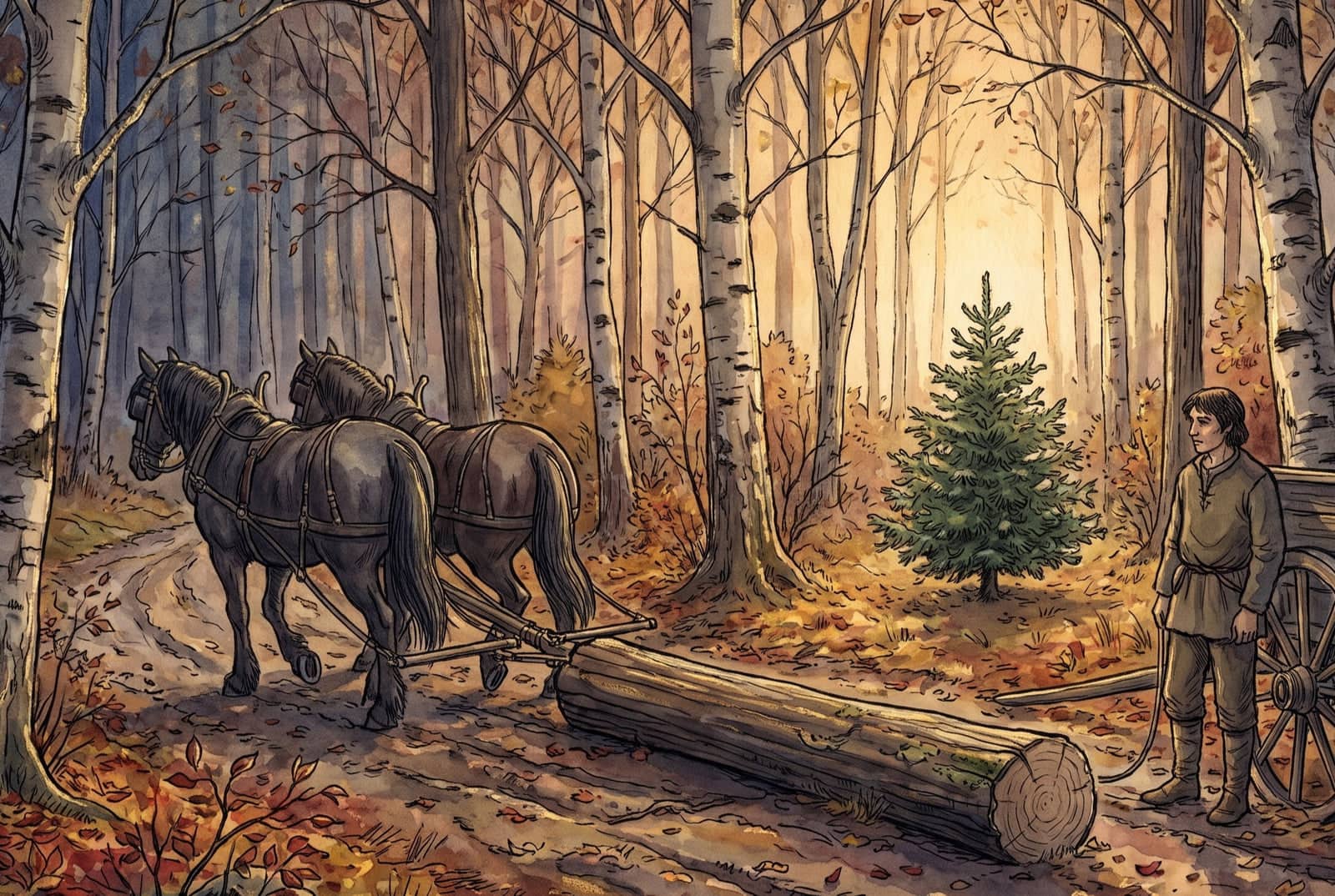
Every autumn the woodcutters came and felled some of the biggest trees. The young fir, which by now had come along well, shivered to see it, for the great trees went down with a rending and a crash. Their branches were hacked away and the trunks lay bare and thin, so that you could hardly tell what they had been. Then they were loaded onto wagons, and horses drew them out of the forest.
Where were they going? What lay ahead of them?
In spring, when the swallows and the storks came back, the tree asked them, “Do you know where they were taken? Did you meet them anywhere?”
The swallows knew nothing, but the stork looked thoughtful, nodded and said, “Yes, I rather think I do. I met a great many new ships as I flew up from Egypt, and they had splendid masts. It must have been them, for they smelled of fir. They send you their greetings. And my word, they cut a fine figure, a fine figure indeed.”
“Oh, if only I were big enough to travel over the sea,” said the fir tree. “What is the sea, and what does it look like?”
“That would take far too long to explain,” said the stork, and off he went.
“Be glad of your youth,” said the sunbeams. “Be glad of your fresh growing, and of the young life that is in you.”
And the wind kissed the tree, and the dew wept tears over it, but the fir tree understood none of it.
As Christmas came near, quite young trees were felled, often no taller than this fir and no older, this fir that had neither rest nor peace and wanted only to be away. Those young trees, the loveliest of all, kept every branch, and they too were laid on wagons and drawn out of the forest.
“Where are those going?” asked the fir tree. “They are no bigger than I am, and one was much smaller. Why do they keep their branches? Where are they being driven?”
“We know! We know!” chirped the sparrows. “Down in the town we have looked in at the windows. They come to the greatest splendour you could think of! We saw them planted in the middle of a warm room and hung with the most beautiful things: gilded apples, honey cakes, toys and hundreds of candles.”
“And then?” asked the fir tree, trembling in every branch. “And then? What happens then?”
“That is all we saw,” said the sparrows. “It was beyond compare.”
“I wonder whether I was meant for that shining road as well,” cried the fir tree. “It is better even than sailing over the sea. How I ache with longing! If only it were Christmas! Oh, if only I were on the wagon, in the warm room, with all that splendour around me! And then? Then something better must come, something far lovelier, or why would they dress us up like that? But what? Oh, how I suffer. I long, and I hardly know what is the matter with me.”
“Be glad of us,” said the air and the sunlight. “Be glad of your fresh young years out here in the open.”
But the tree was not glad at all. It grew and grew; winter and summer it stood green, dark green, and people who saw it said, “What a beautiful tree!” And at Christmas it was the very first to be felled. The axe bit deep through the pith, and the tree came down with a sigh. It felt a pain and a faintness, and could think of no happiness now. It grieved to leave the patch of ground it had shot up in, knowing it would never again see the dear old companions around it, nor the little bushes and flowers, and perhaps not even the birds. The journey away was no pleasure either.
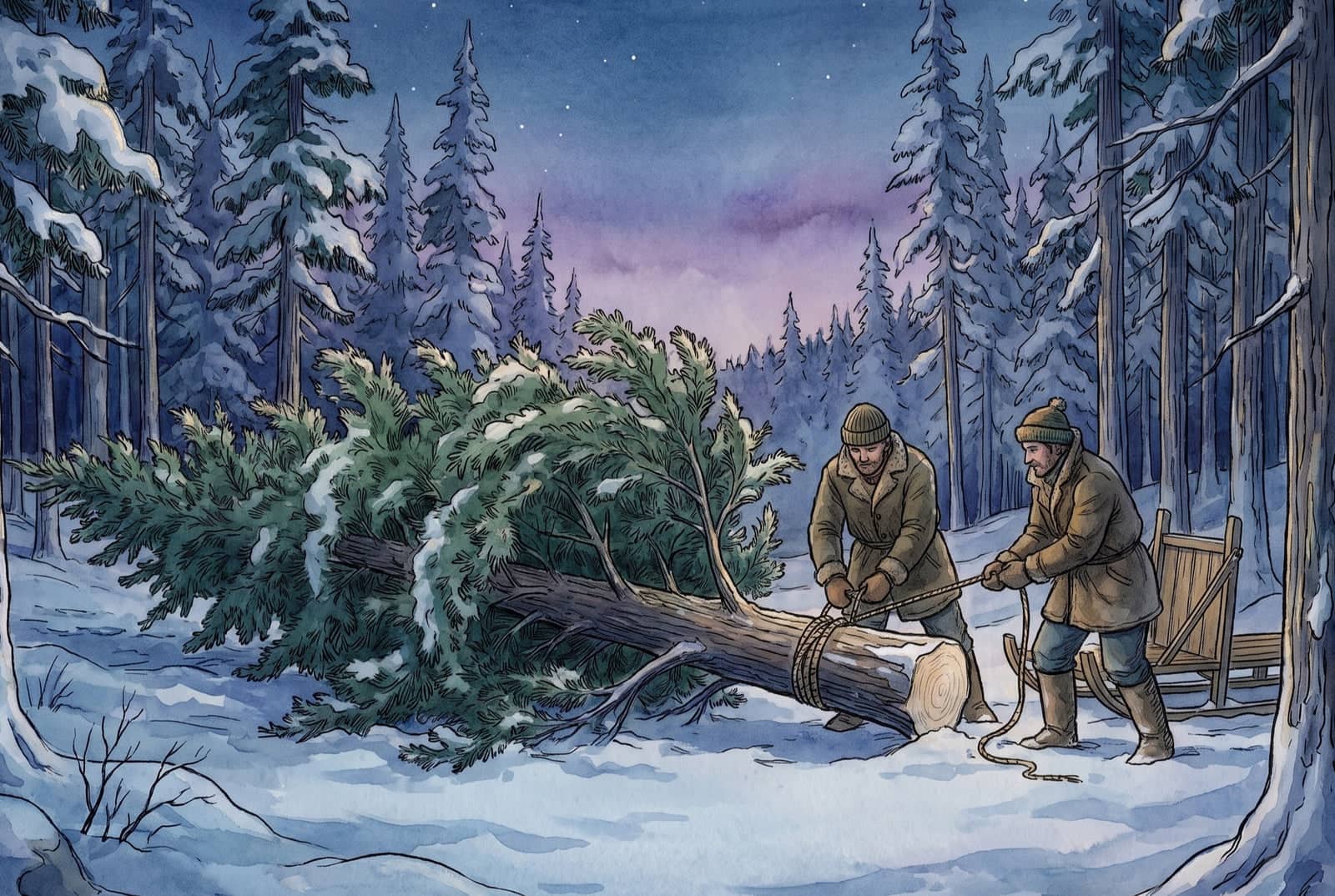
The tree came to its senses only as it was unloaded in a courtyard with several other trees, and heard a man say, “That one is a beauty. We need only that one.”
Two servants in fine livery carried the fir tree into a big handsome room. Pictures hung round the walls, and the tables were piled with picture books and toys. The fir was set in a large tub of sand, hidden all round with green cloth, and the servants and young ladies dressed it. How it trembled! What was going to happen now? On its branches they hung little nets of coloured paper filled with sweets, and gilded apples and walnuts as though they had grown there, and more than a hundred little candles, red, blue and white. Dolls that looked exactly like real people, such as the tree had never seen, floated in the green, and right at the top they fixed a star of tinsel gold. It was splendid, quite uncommonly splendid.
“Tonight,” they all said, “tonight it will shine!”
“Oh, if only it were evening,” thought the tree. “If only the candles were lit! And what will happen then? Will the trees come out of the forest to look at me? Will the sparrows fly against the windows? Will I take root here and stand dressed like this, winter and summer?”
That was not bad guessing. But the tree had a real ache in its bark from so much longing, and that is as bad for a slender fir as a headache is for the rest of us.
Now the candles were lit. What brightness! What splendour! The tree trembled so in all its branches that one of the candles set the green alight and scorched it badly.
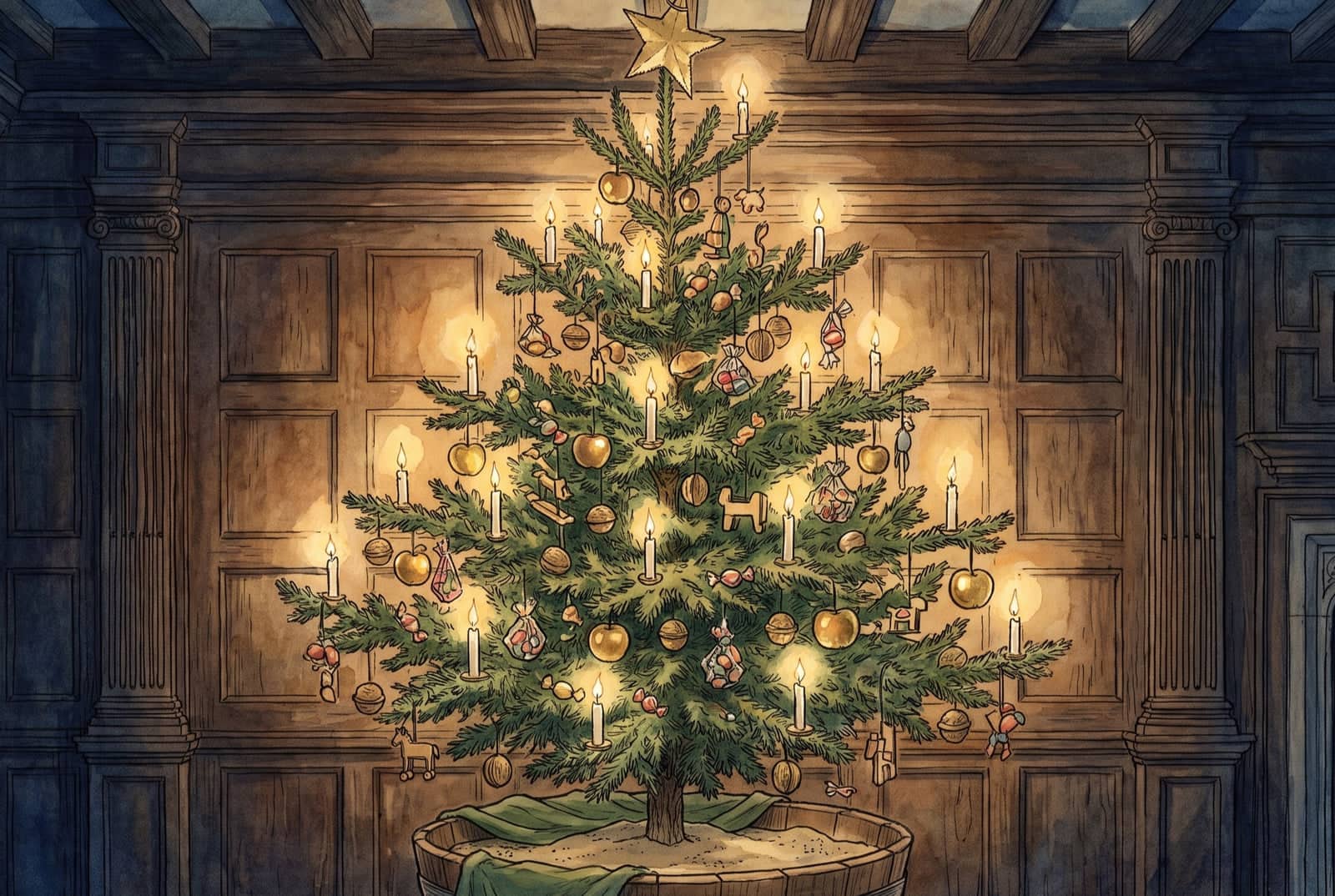
“Heaven help us!” cried the young ladies, and they put it out in a hurry.
After that the tree did not dare tremble at all, so afraid was it of losing any of its finery, and quite dazed with the brightness. Then both wings of the door were thrown open and a crowd of children came rushing in as though they meant to knock the tree over, the older people following more soberly. For a moment the little ones stood without a word; then they shouted for joy until the room rang, and danced round the tree while one present after another was picked off it.
“What are they doing?” thought the tree. “What is going to happen?” The candles burned down to the branches, and as each burned low it was put out; and then the children were given leave to plunder the tree. They rushed at it so that every branch creaked, and if it had not been fastened to the ceiling by its top and its gold star, it would have gone over.
The children danced about with their splendid toys, and nobody looked at the tree except the old nurse, who peered in among the branches, and only to see whether a fig or an apple had been left.
“A story! A story!” cried the children, pulling a little fat man over to the tree, and he sat down right under it.
“Now we are in the greenwood,” he said, “and the tree may get some good of listening. But I shall tell one story only. Will you have Ivede-Avede, or Humpty Dumpty, who fell down the stairs and rose to greatness all the same and won the princess?”
“Ivede-Avede!” shouted some.
“Humpty Dumpty!” shouted the others. What a calling and shouting there was!
Only the fir tree kept quite still and thought, “Am I to have no part in this? Is there nothing for me to do?” But it had had its part; it had done what it was there to do.
And the man told them about Humpty Dumpty, who fell down the stairs and rose to greatness all the same and won the princess. The children clapped their hands and cried, “Tell another! Tell another!” They wanted Ivede-Avede too, but they got only Humpty Dumpty.
The fir tree stood silent and full of thought, for never had the birds in the forest told anything like that. “Humpty Dumpty fell down the stairs and won the princess all the same. Yes, yes, that is the way of the world,” it thought, and believed every word, because such a nice man had told it. “Who can tell? Perhaps I shall fall down the stairs too and win a princess.” And it looked forward to being dressed again the next day with candles and toys, gold and fruit.
“Tomorrow I shall tremble,” it thought. “I mean to enjoy all my glory properly. Tomorrow I shall hear Humpty Dumpty again, and perhaps Ivede-Avede too.” And the tree stood still and full of thought all night long.
In the morning the servants and the housemaid came in.
“Now the dressing begins again,” thought the tree. But they dragged it out of the room and up the stairs to the attic, and stood it in a dark corner where no daylight came. “What does this mean?” thought the tree. “What am I to do here? What am I to hear in a place like this?” And it leaned against the wall and thought and thought. Days and nights went by and nobody came up; and when at last somebody did, it was only to push large boxes into the corner. Now the tree stood quite hidden, as if it had been forgotten altogether.
“It is winter outside,” thought the tree. “The ground is hard and covered with snow, and people cannot plant me now, so I am to stand here under shelter until spring. How well they have thought it out! How good people are! If only it were not so dark up here, and so lonely. Not even a little hare. It was lovely in the forest when the snow lay thick and the hare sprang past, yes, even over me, though I could not bear it then. Up here it is terribly lonely.”
“Squeak, squeak,” said a little mouse just then, slipping out of its hole, and after it came another. They sniffed at the fir tree and slipped in among its branches.
“It is bitterly cold,” said the little mice. “Otherwise it would be good to be here. Would it not, you old fir tree?”
“I am not old at all,” said the fir tree. “There are plenty of trees far older than I am.”
“Where do you come from,” asked the mice, “and what do you know?” They were tremendously curious. “Have you been in the larder, where the cheeses lie on the shelves and the hams hang from the ceiling, where you can dance on tallow candles and go in thin and come out fat?”
“I know nothing of that,” said the tree, “but I know the forest, where the sun shines and the birds sing.” And then it told them all about its young days, and the little mice had never heard the like. They listened hard.
“What a lot you have seen!” they said. “How happy you have been!”
“I?” said the fir tree, and thought about what it had just been telling them. “Yes, when you come to it, those were happy times.” And then it told them about Christmas Eve, and how it had been dressed with cakes and candles.
“Oh,” said the little mice, “how happy you have been, you old fir tree!”
“I am not old at all,” said the tree. “I came from the forest only this winter. I am simply behind in my growing.”
“How beautifully you tell it,” said the little mice.
And the next night they came back with four other mice to hear the tree, and the more it told, the more clearly it remembered. “They were happy times after all,” it thought, “but they may come again. Humpty Dumpty fell down the stairs and won the princess all the same, so perhaps I may win a princess too.” And the fir tree thought of a pretty little birch out in the forest, which was to it a real and beautiful princess.
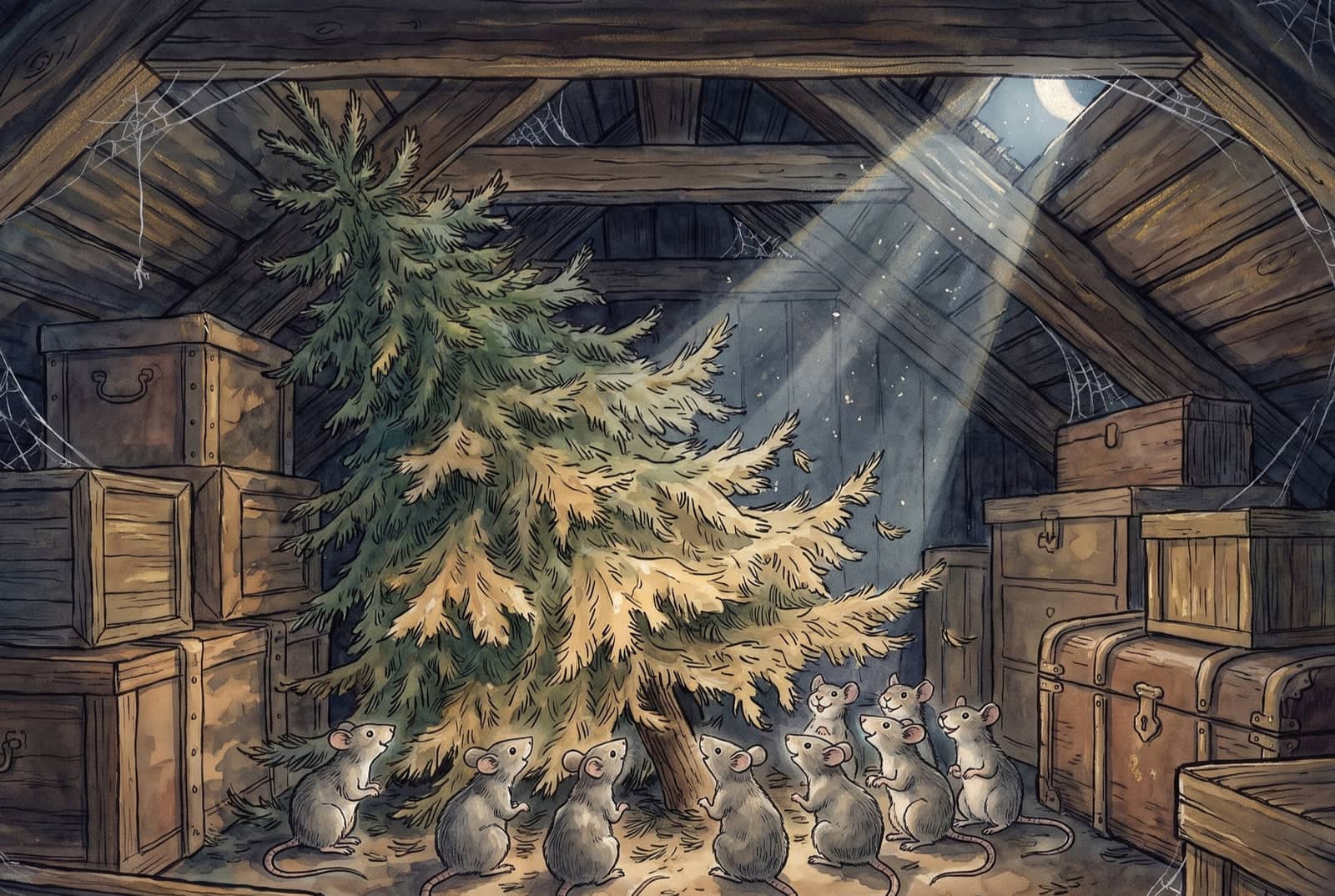
“Who is Humpty Dumpty?” asked the little mice. And the fir tree told them the whole tale. It could remember every single word, and the little mice were ready to jump to the very top of the tree for joy. The next night many more mice came, and on Sunday even two rats; but the rats said it was not a good story at all, and that troubled the little mice, for now they thought less of it too.
“Is that the only story you know?” asked the rats.
“The only one,” said the tree. “I heard it on the happiest evening of my life, though I did not think then how happy I was.”
“It is a thoroughly miserable story,” said the rats. “Do you know none about bacon, or about tallow candles? No larder story?”
“No,” said the tree.
“Then no thank you,” said the rats, and off they went home.
In the end the little mice stayed away too, and the tree sighed. “It was very pleasant when those lively little mice sat round me and listened while I told them things. Now that is over as well. But I shall remember to be glad when somebody fetches me out of here.”
And when did that happen? One morning people came to clear the attic. The boxes were moved aside and the tree pulled out; they threw it down on the floor hard enough, but a servant dragged it off to the stairs, where the daylight shone.
“Now life is beginning again,” thought the tree. It felt the fresh air and the first sunbeams, and then it was out in the courtyard. It all went so quickly that the tree forgot to look at itself, there was so much to see. The courtyard backed onto a garden, and everything in it was in bloom: roses hung fresh and sweet over the little railing, and the swallows flew about calling, “Tweet, tweet, my mate has come!” But it was not the fir tree they meant.
“Now I shall live!” the tree rejoiced, and spread its branches wide. But they were all withered and yellow, and it lay in a corner among the weeds and nettles. The star of gold paper still sat at the top and glittered in the sunshine.
In the courtyard some of the merry children were playing who had danced round the tree at Christmas and been so happy over it. One of the smallest ran up and tore the gold star off.
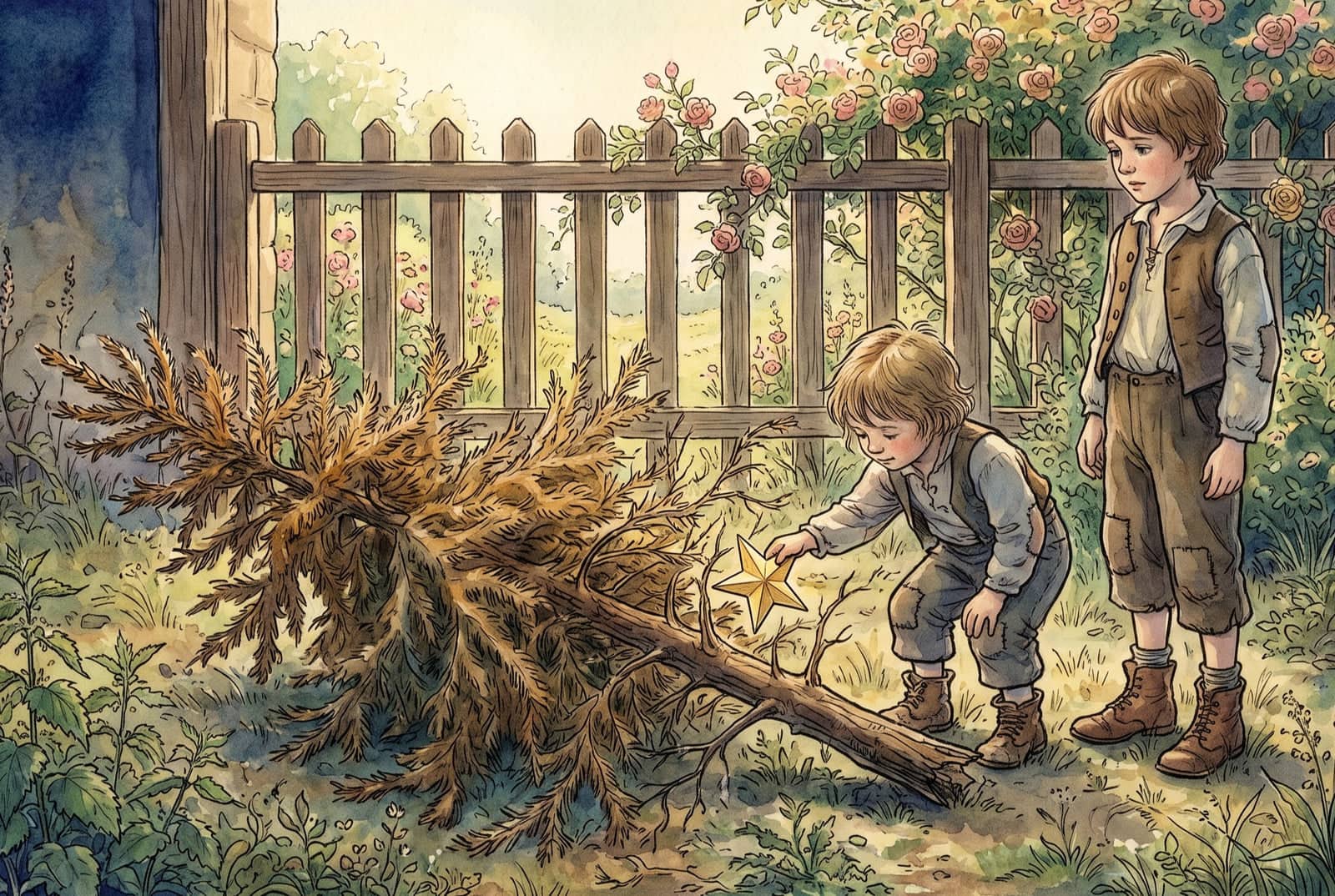
“Look what is still stuck to the ugly old fir tree,” said the child, and trod on the branches so that they cracked under his boots. And the tree looked at all the flowers and freshness in the garden, and then at itself, and wished it had stayed in its dark corner in the attic. It thought of its young days in the forest, of the merry Christmas Eve, and of the little mice who had listened so gladly to Humpty Dumpty.
“All over,” said the old tree. “All over! If only I had been glad while I still could! All over, all over!”
And the manservant came and chopped the tree into small pieces, until a whole bundle lay there. They flared up brightly under the great brewing kettle, and the tree sighed so deeply that every sigh was like a little shot; so the children playing outside came running and sat down before the fire, calling, “Pop! Pop!” But at every crack, which was a deep sigh, the tree thought of a summer day in the forest, or of a winter night out there when the stars were shining. It thought of Christmas Eve and of Humpty Dumpty, the only tale it had ever heard and knew how to tell. And then the tree was burnt.
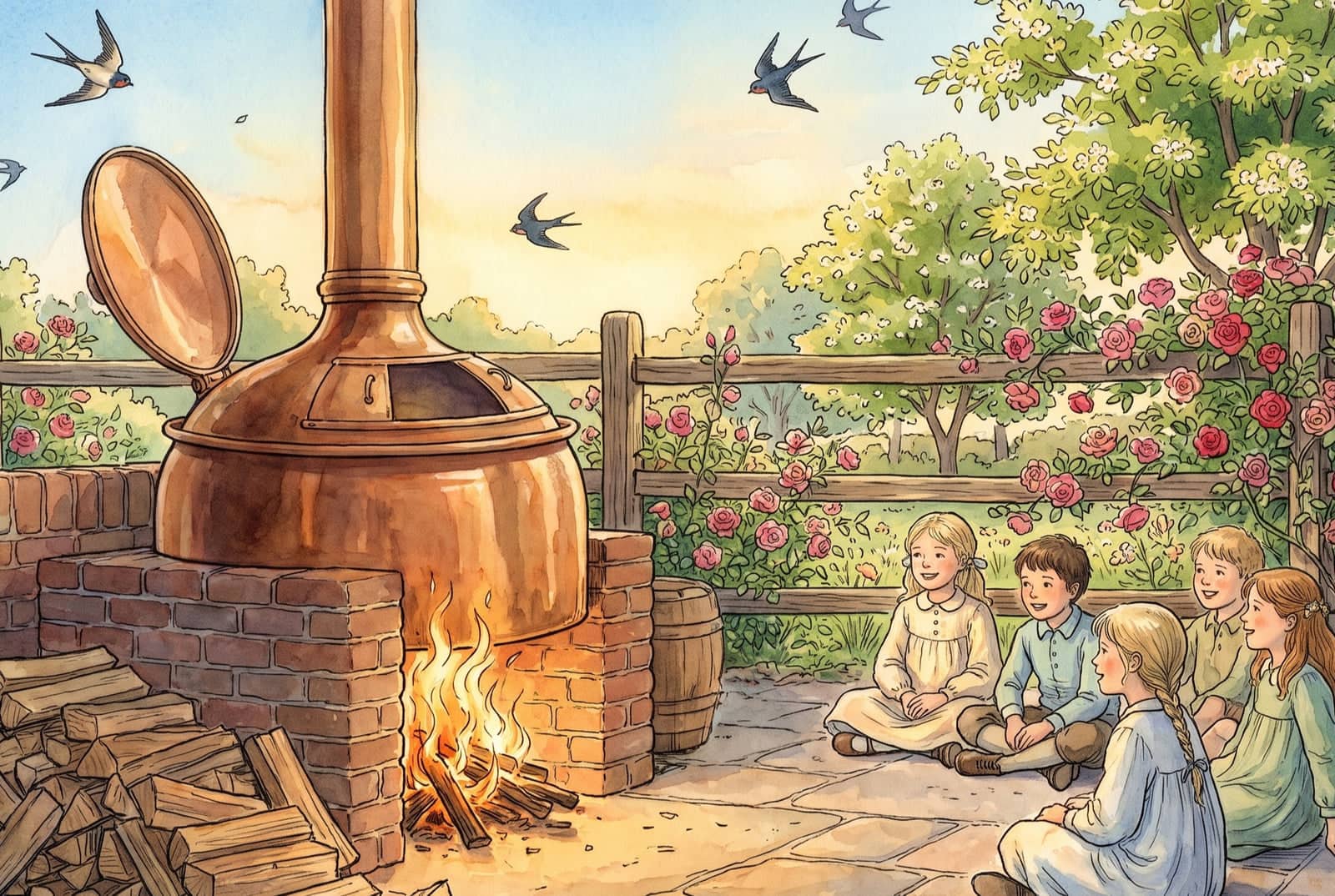
The boys played on in the garden, and the smallest of them wore on his chest the gold star that the tree had worn on the happiest evening of its life. Now that was over, and the tree was over, and the story too. Over and done with, and that is the way it goes with every story.
Retold by Talerie, Source: Fairy Tales of Hans Christian Andersen (opens in a new window)
License: Public domainCopy this text, adapt it, use it however you like. A link back to Talerie is appreciated but never required.CC0 1.0 (opens in a new window)