 Original
The Little Match Girl
6 min readages 7 and uptalerie.com/en/tales/the-little-match-girl-original
On the last evening of the old year a barefoot girl who has sold nothing strikes her matches one by one, and each flame opens a warm vision that goes out with it. She burns the whole bundle to keep her dead grandmother with her, and in the morning the little girl sits frozen in her corner with a smile on her lips.
It was terribly cold. Snow was falling, and it was almost dark, for it was the last evening of the old year. Through the cold and the darkness a poor little girl walked along the street, bare-headed and barefoot. She had been wearing slippers when she left home, but what good were they? They were enormous slippers, the ones her mother had worn until then, and the little girl lost them as she darted across the road while two carriages came rattling past at a frightening speed. One slipper she could not find again, and a boy snatched up the other and ran off with it, calling that he would use it for a cradle when he had children of his own.
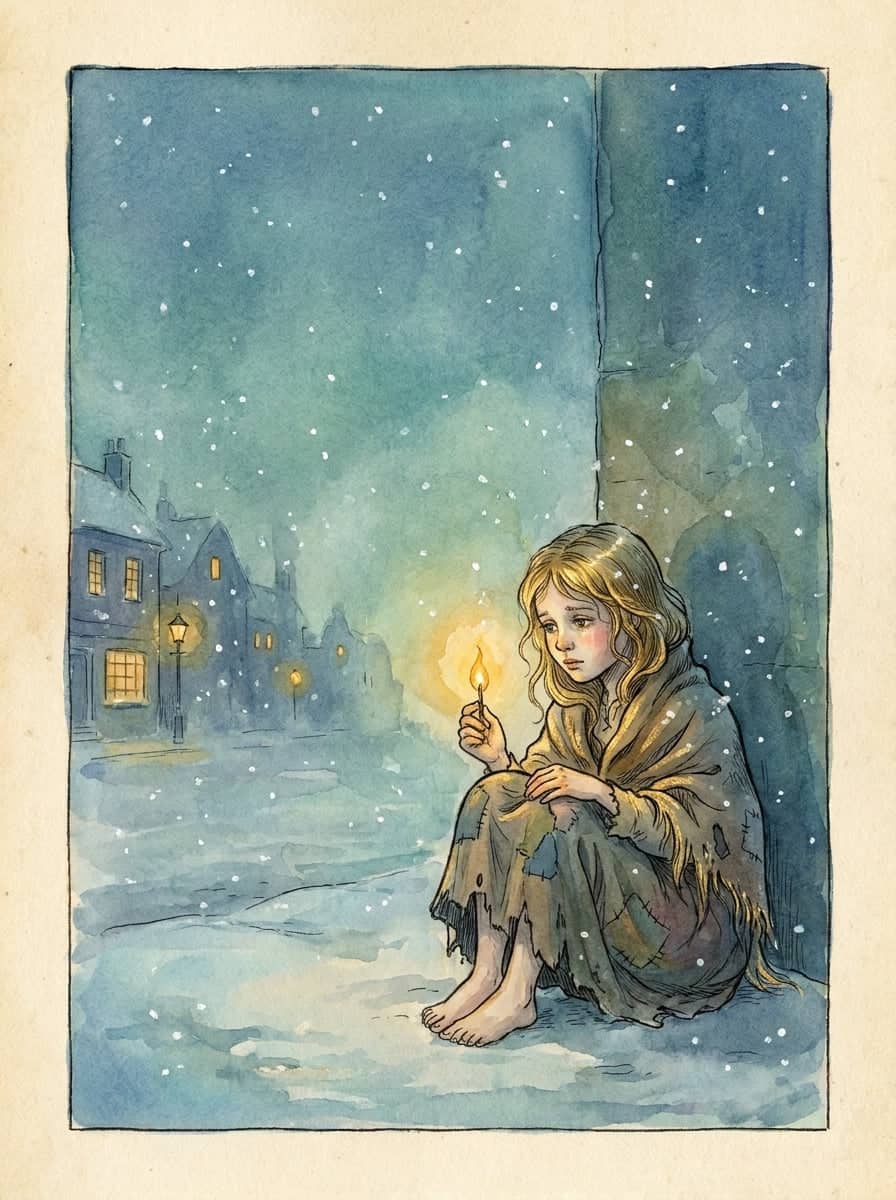
So the little girl walked on barefoot, her small feet red and blue with the cold. In an old apron she carried a heap of matches, and she held one bundle of them in her hand. No one had bought anything from her all the long day, and no one had given her so much as a penny.
Shivering with cold and hunger she crept along, the poor little thing, a picture of misery. Snowflakes settled on her long fair hair, which fell in pretty curls around her neck. She gave it no thought at all.
Lights were shining in every window, and the street smelled wonderfully of roast goose, for it was New Year’s Eve. That she did think about.
In a corner made by two houses, where one stood out a little further than the other, she sat down and curled herself up. She had pulled her small feet up under her, but she grew colder still, and she did not dare go home. She had not sold a single match and had not one penny to bring back. Her father would certainly beat her. Besides, it was cold at home too, for they had only the roof above them, and the wind whistled straight through it, although the biggest cracks had been stuffed with straw and rags.
Her little hands were nearly numb with cold. Ah, one small match might do her some good, if only she dared pull one out of the bundle, strike it against the wall and warm her fingers. She drew one out. Scratch! How it sputtered, how it burned! It made a warm, bright flame like a little candle when she held her hands over it. It was a wonderful little light. It seemed to the girl that she was sitting in front of a great iron stove with polished brass feet and a brass ornament on top. How the fire blazed inside it, and how kindly it warmed her! The child stretched out her feet to warm them too, and then the little flame went out, the stove vanished, and she was left holding the stub of a burnt match in her hand.
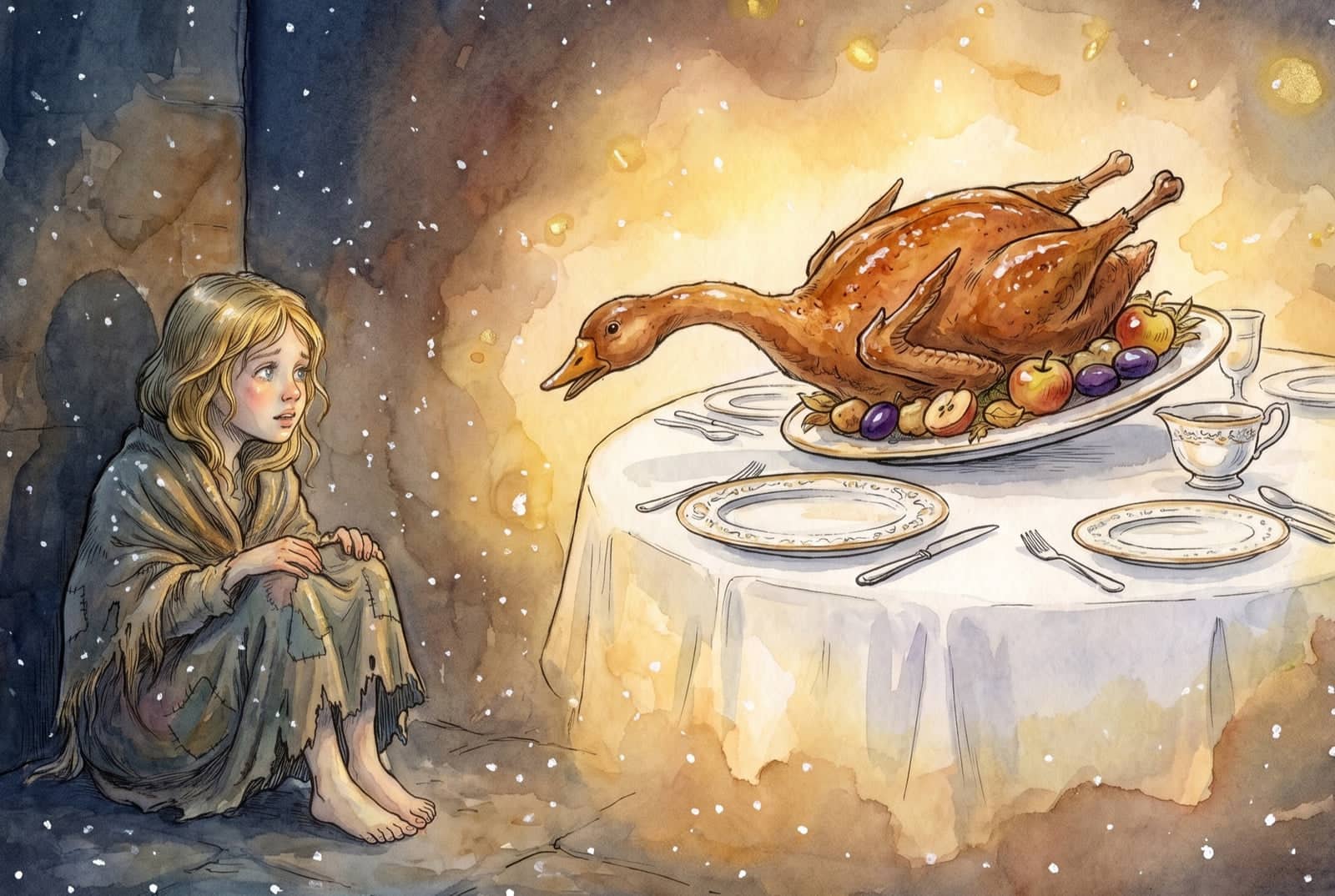
She struck a second match against the wall. It flared up, and where its light fell the wall turned as clear as a veil, so that she could see right into the room. The table was spread with a white cloth and set with shining china, and on it a roast goose steamed, stuffed with apples and dried plums. And what was finer still, the goose hopped down from the dish and waddled across the floor with the knife and fork in its breast, all the way to the poor girl. Then the match went out, and nothing was left but the thick, cold, damp wall.
She lit another match. Now she was sitting under a splendid Christmas tree. It was bigger and more beautifully decorated than the one she had seen through the glass door at the rich merchant’s house. Thousands of candles burned on the green branches, and bright pictures like the ones in the shop windows looked down at her. The little girl reached out her hands toward them, and the match went out.
The Christmas lights rose higher and higher. She saw now that they were the stars in the sky. One of them fell and drew a long streak of fire behind it.
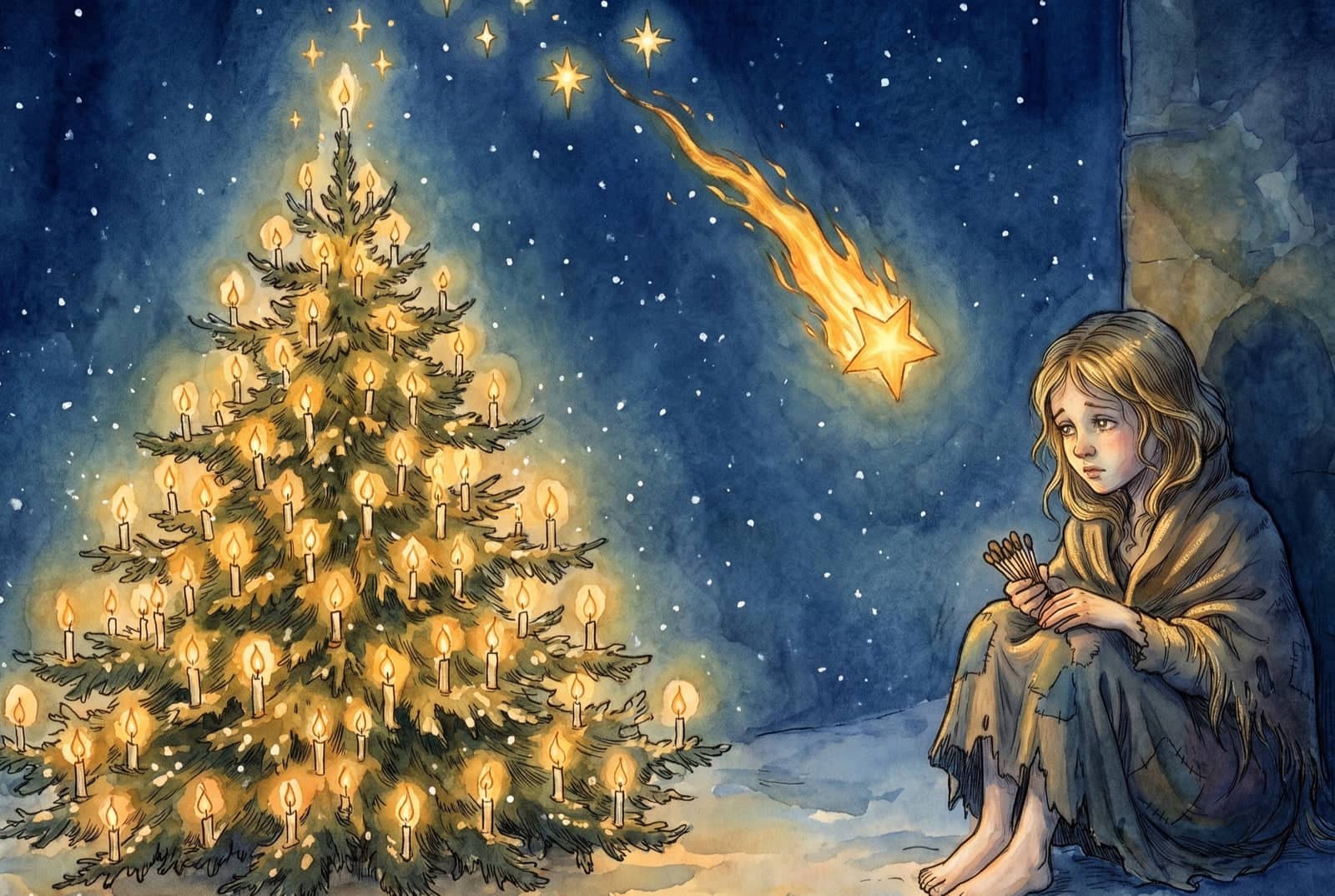
“Someone is dying now,” thought the little girl, for her old grandmother, the only person who had ever loved her and who was dead now, had told her that when a star falls, a soul is going up to God.
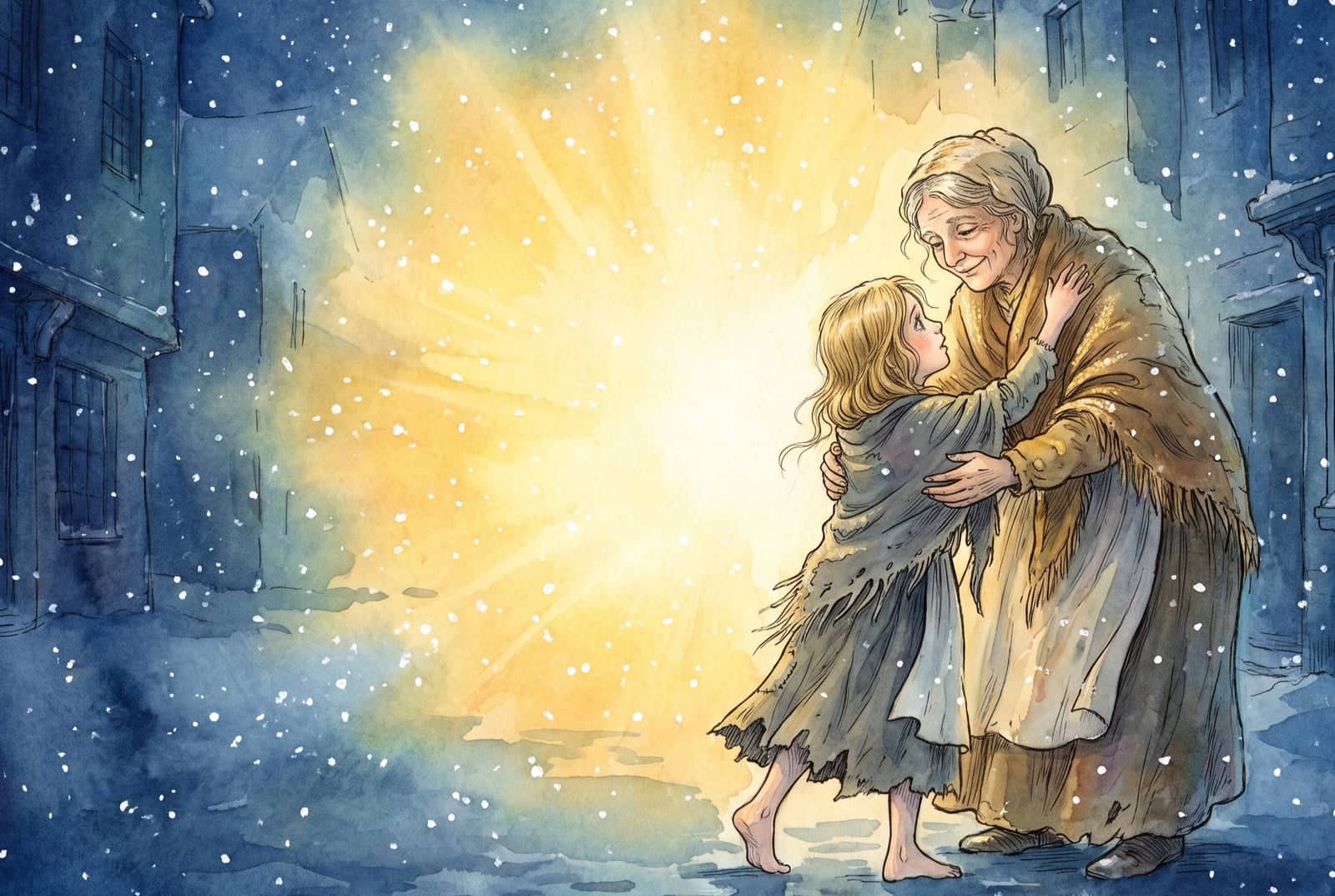
She struck another match against the wall. Light spread all around her, and there in the brightness stood her old grandmother, clear and shining, so gentle and so full of love.
“Grandmother!” cried the little girl. “Oh, take me with you! I know you will go away when the match burns out. You will disappear like the warm stove, like the lovely roast goose and like the big, splendid Christmas tree!”
And she quickly struck the whole bundle of matches, for she wanted to hold her grandmother fast. The matches shone with such a blaze that it grew brighter than broad daylight. Her grandmother had never looked so tall or so beautiful. She took the little girl up in her arms, and the two of them flew in light and joy high above the earth, far, far above, and up there was no cold and no hunger and no fear, for they were with God.
But in the corner by the wall, in the cold hour of the morning, sat the poor little girl with red cheeks and a smile on her lips, frozen to death on the last evening of the old year. The New Year’s sun rose over the small body. The child sat there stiff and still, holding her matches, one bundle of them burnt away.
“She was trying to warm herself,” people said. No one imagined what beautiful things she had seen, or into what glory she had gone with her grandmother, into the joy of the New Year.
Retold by Talerie from Fairy Tales of Hans Christian Andersen (opens in a new window)License: Public domainCopy this text, adapt it, use it however you like. A link back to Talerie is appreciated but never required.CC0 1.0 (opens in a new window)