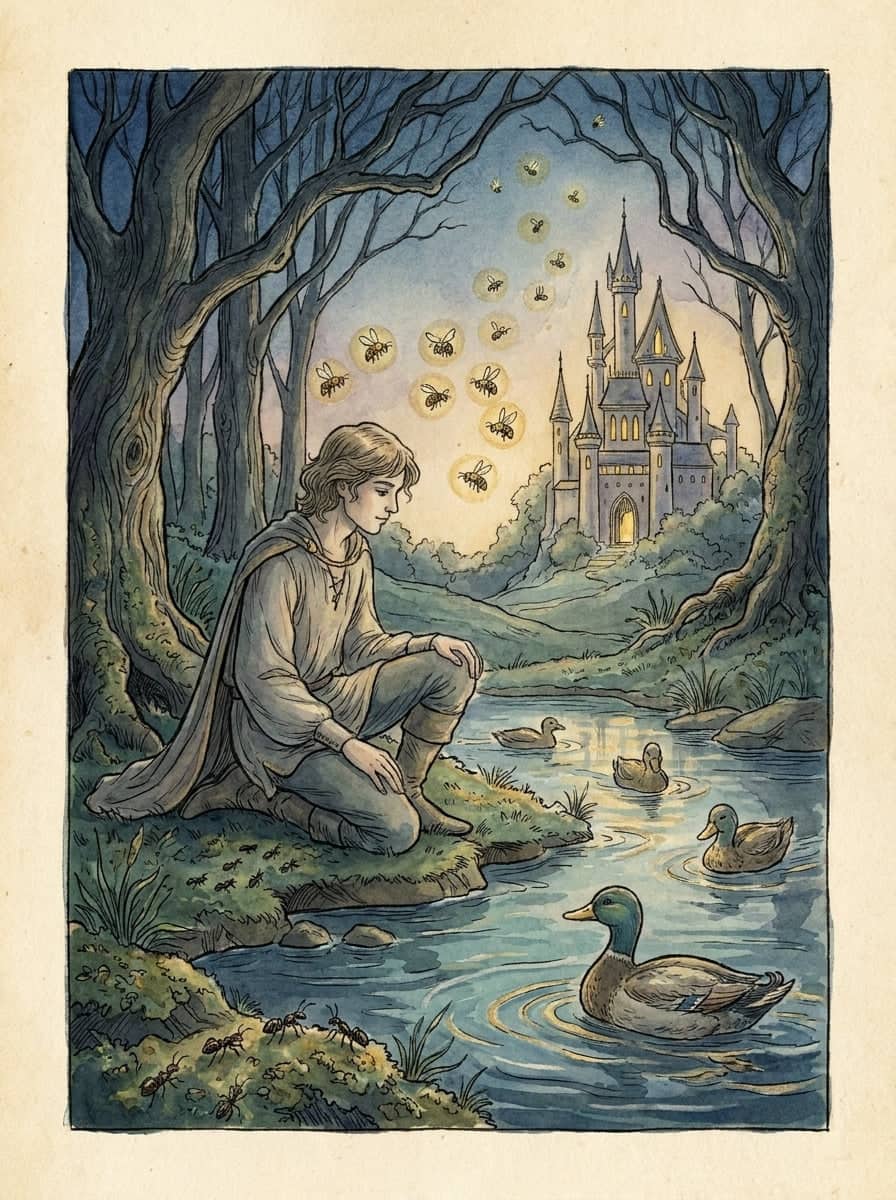
Along the road the youngest of three brothers, Simpleton, saves an anthill, a lakeful of ducks and a bees’ nest, then reaches a castle under a spell, where three princesses lie asleep. When the queen of the bees settles on the one who ate honey, Simpleton picks out the youngest, and the spell breaks.
Two princes once went out into the world to look for adventure. They fell in with rough company and lived wildly, and in the end they never came home at all.
The youngest brother, who was called Simpleton, set out to find them. When at last he did, they only laughed at him.
“You think you can make your way through the world with your simple head,” they said, “when the two of us are far cleverer and cannot manage it at all.”
Still, the three of them traveled on together.
Before long they came to an anthill. The two elder brothers wanted to kick it open and watch the little ants scurry about in their fright, carrying their eggs away.
“Leave the creatures in peace,” said Simpleton. “I will not let you trouble them.”
So they went on, and came to a lake where a great many ducks were swimming. The two brothers wanted to catch a pair of them and roast them for supper.
“Leave the creatures in peace,” said Simpleton. “I will not let you harm them.”
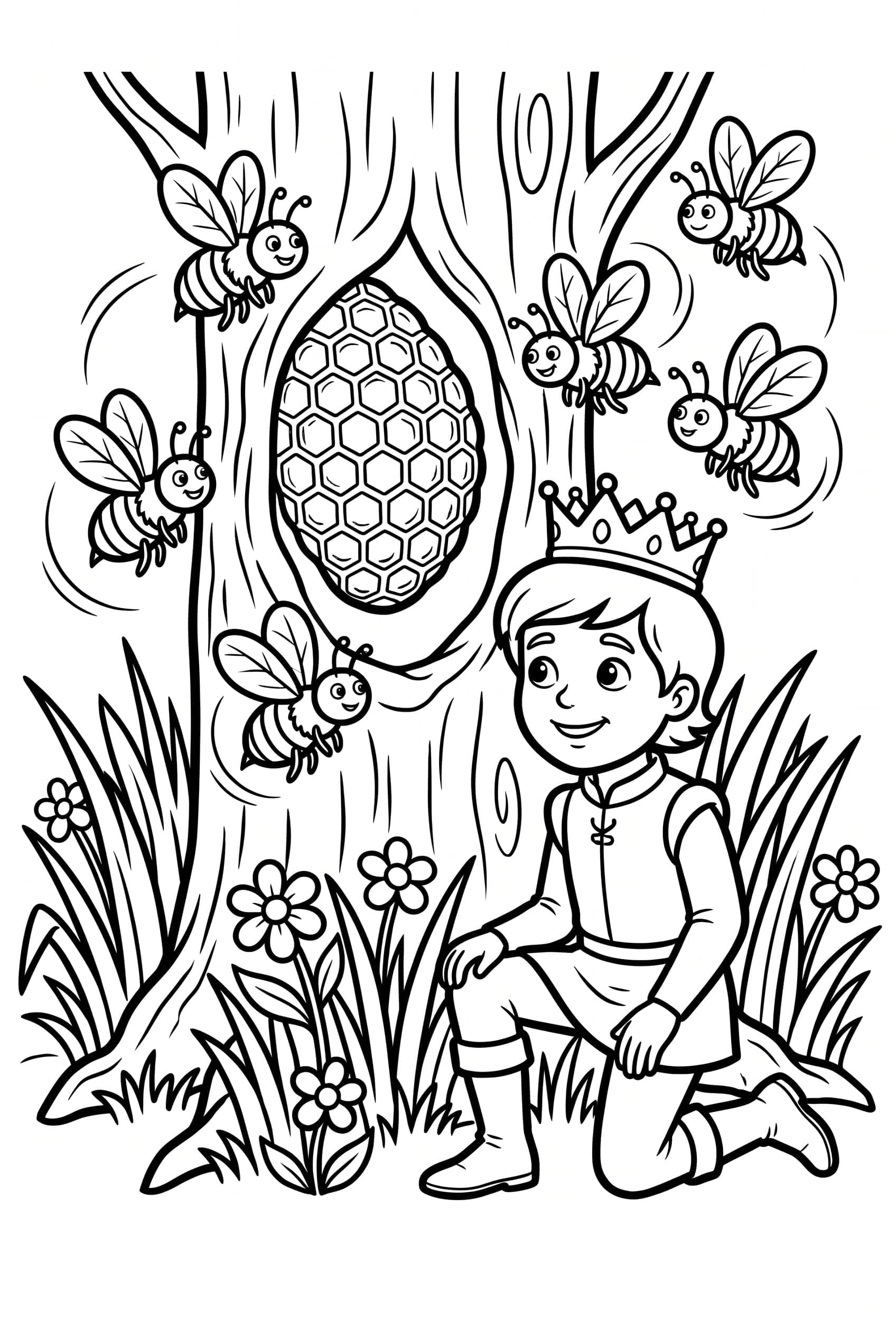
Farther along they found a bees’ nest in a hollow tree, so full of honey that it ran down the trunk. The two wanted to build a fire under the tree and smother the bees in the smoke, so that the honey would be theirs for the taking.
“Leave the creatures in peace,” said Simpleton. “I will not let you burn them.”
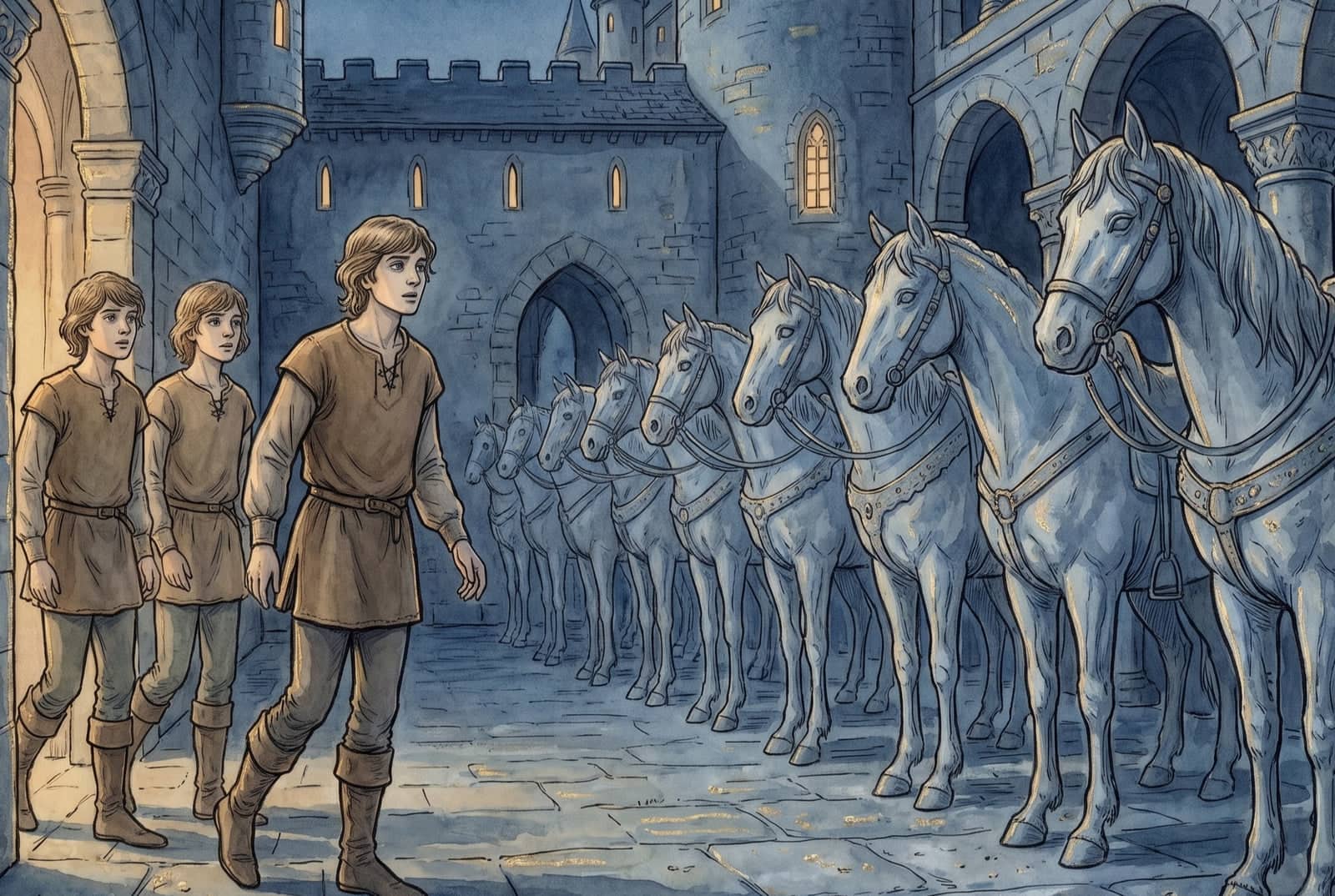
At last the three brothers came to a castle. In the stables stood horses of gray stone, every one of them still, and not a single person was to be seen.
They walked through hall after hall, until at the very end they came to a door with three locks on it. In the middle of the door was a small pane of glass, and through it they could see into the room beyond.
A little gray man sat there at a table. They called to him once. They called to him twice. He did not so much as lift his head.
The third time they called, he stood up, opened the three locks, and came out to them. He did not say a word. He only led them to a table spread with good things to eat, and when they had eaten and drunk their fill, he showed each of them to a bed.
In the morning the little gray man came to the eldest brother, beckoned to him, and led him to a table of stone. Three tasks were carved into it, and whoever did them would set the castle free.
The first was this. In the forest, under the moss, lay a thousand pearls belonging to the king’s daughter. Every one of them had to be gathered before sunset, and if a single pearl was missing, whoever had searched for them would be turned to stone.
The eldest brother went out and searched the whole day long. When the sun went down he had found only a hundred, and it happened just as the stone table had said. He stood among the trees, gray and still.
The next day the second brother tried his luck, and he fared little better. He found two hundred pearls and no more, and he too was turned to stone.
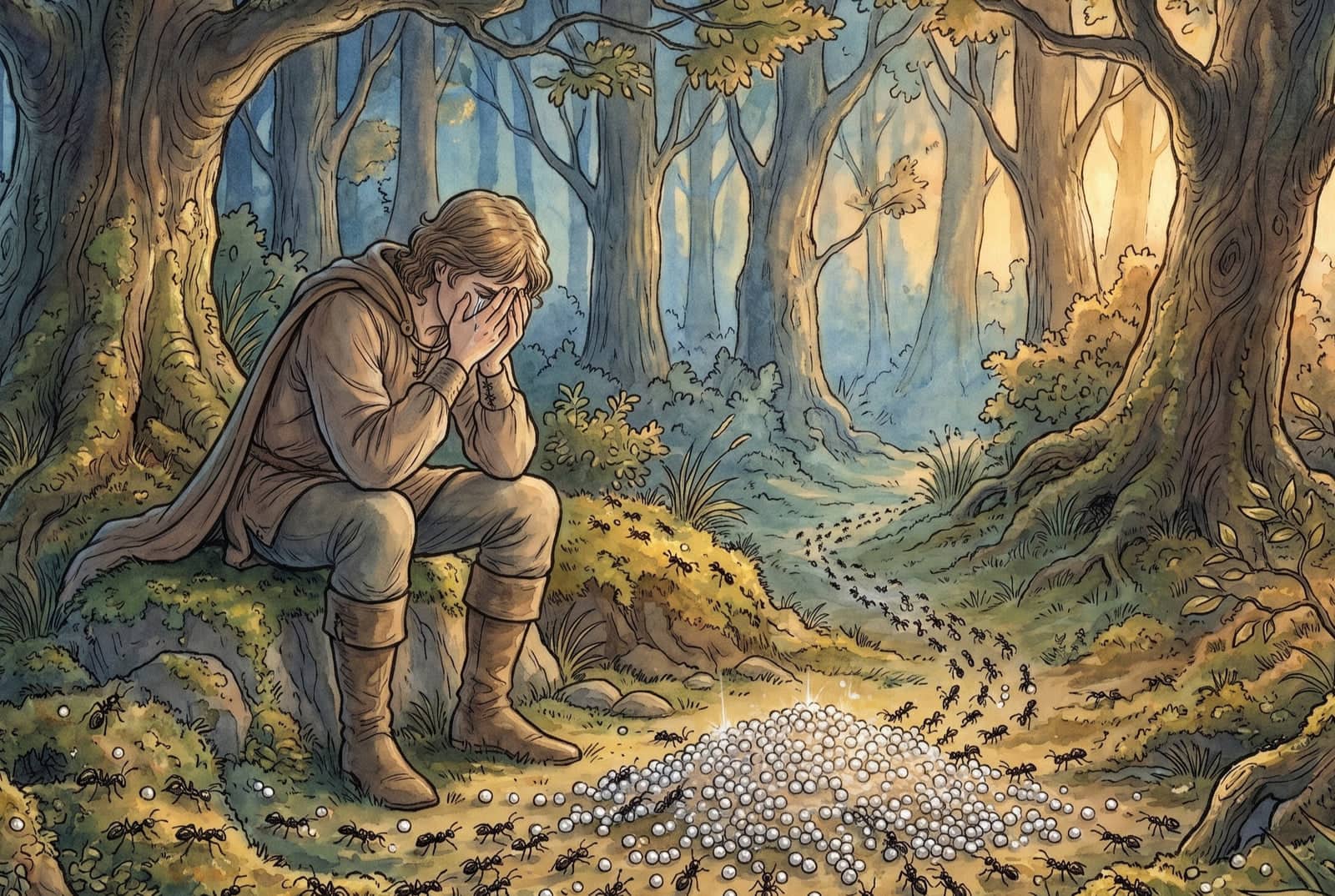
Then it was Simpleton’s turn. He knelt in the moss and searched, but the pearls were so small and so well hidden that he found them only one by one, and at last he sat down on a stone and wept.
While he sat there, the king of the ants, whose hill Simpleton had saved, came to him with five thousand of his own ants. In no time at all the little creatures had found every pearl and carried them into one bright heap.
The second task was to bring up the key to the princess’s bedchamber from the bottom of the lake.
When Simpleton came down to the water, the ducks he had saved swam to meet him. They dived deep, and up they came again with the key.
The third task was the hardest of all. Of the king’s three sleeping daughters, Simpleton had to choose the youngest and dearest.
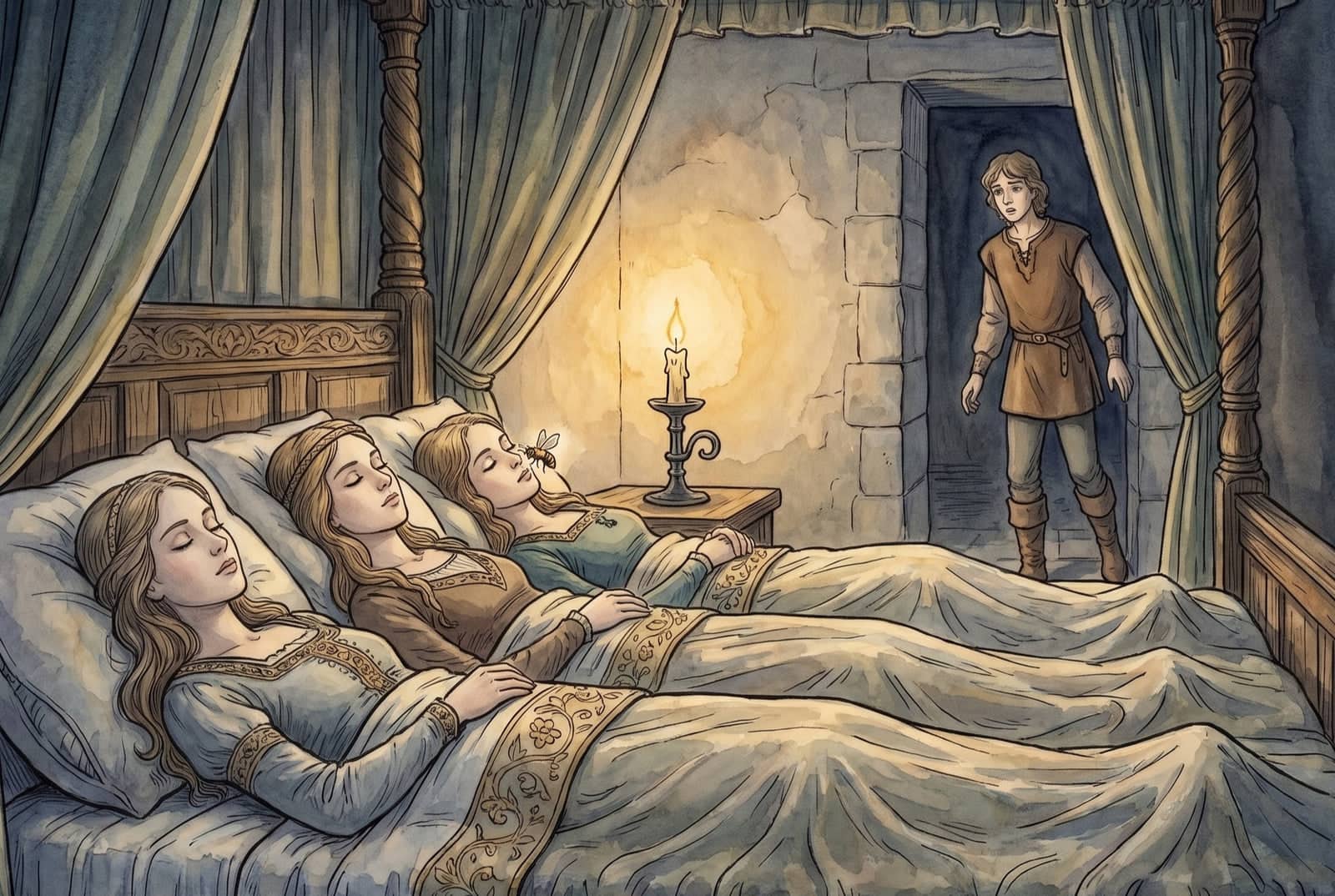
They looked exactly alike, and there was only one way to tell them apart. Before they fell asleep, each had eaten something sweet: the eldest a lump of sugar, the second a little syrup, and the youngest a spoonful of honey.
Then the queen of the bees, whose home Simpleton had kept from the fire, came flying in. She tasted the lips of each sleeping sister in turn, and at the last she settled on the mouth that had eaten honey. So he recognized the right princess.
At that moment the spell was broken. The whole castle woke from its long sleep, and everyone who had been turned to stone stood warm and living again, the two brothers among them.
Simpleton married the youngest and dearest of the sisters, and when her father died he became king. His two brothers married the other two sisters.
Retold by Talerie from Household Tales by Brothers Grimm (opens in a new window)License: Public domainCopy this text, adapt it, use it however you like. A link back to Talerie is appreciated but never required.CC0 1.0 (opens in a new window)