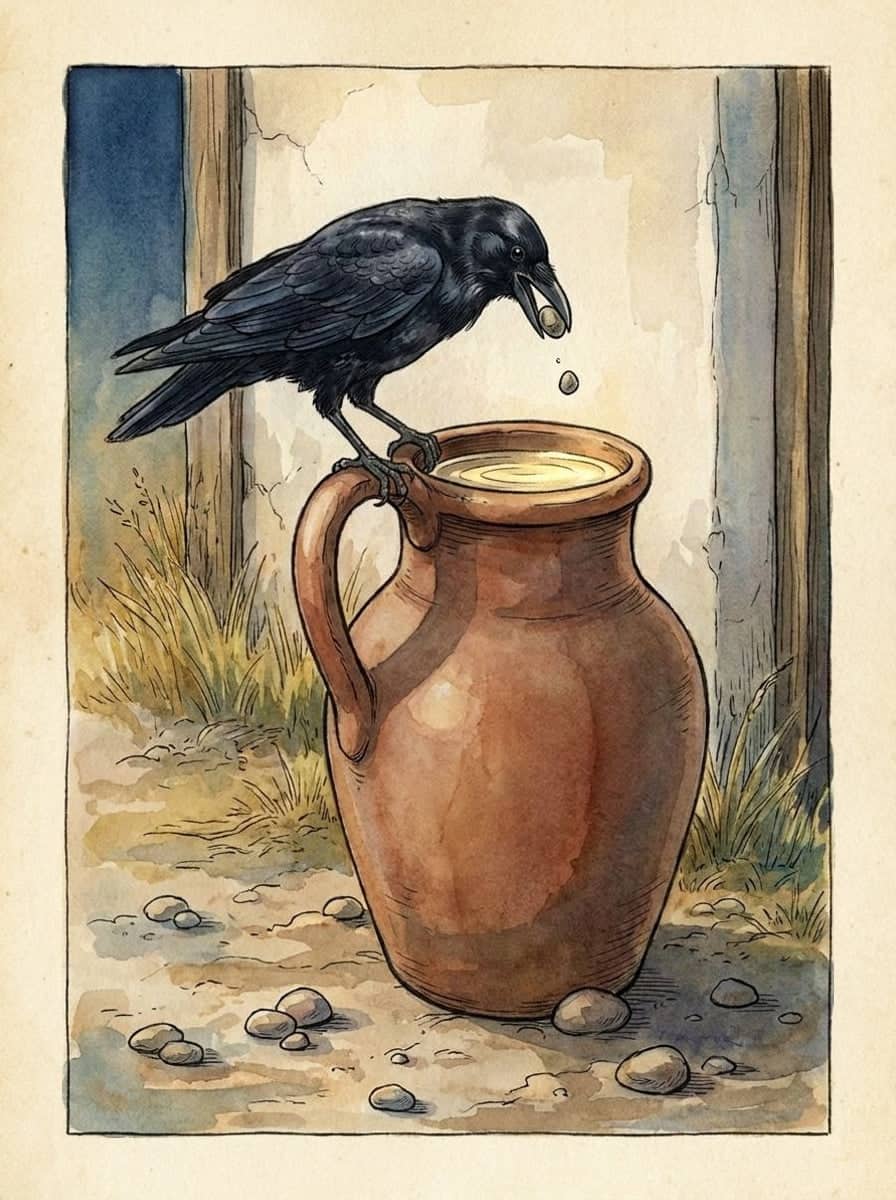
A thirsty crow finds a pitcher with water at the bottom, too far down for her beak to reach however far she stretches. She sits on the rim and thinks, then drops in one pebble after another until the water climbs level with the brim and she can drink her fill.
On a hot, still afternoon, a thirsty crow flew a long way looking for water. Every stream she passed had dried to cracked mud, and the dust of the road lay in her throat.
At last she saw a pitcher standing in the shade of a garden wall. She landed on its rim, looked down, and there at the bottom was water, clear and cool. She reached in as far as she could stretch. Her beak found nothing but air. The pitcher was deep, and there was very little water in it.
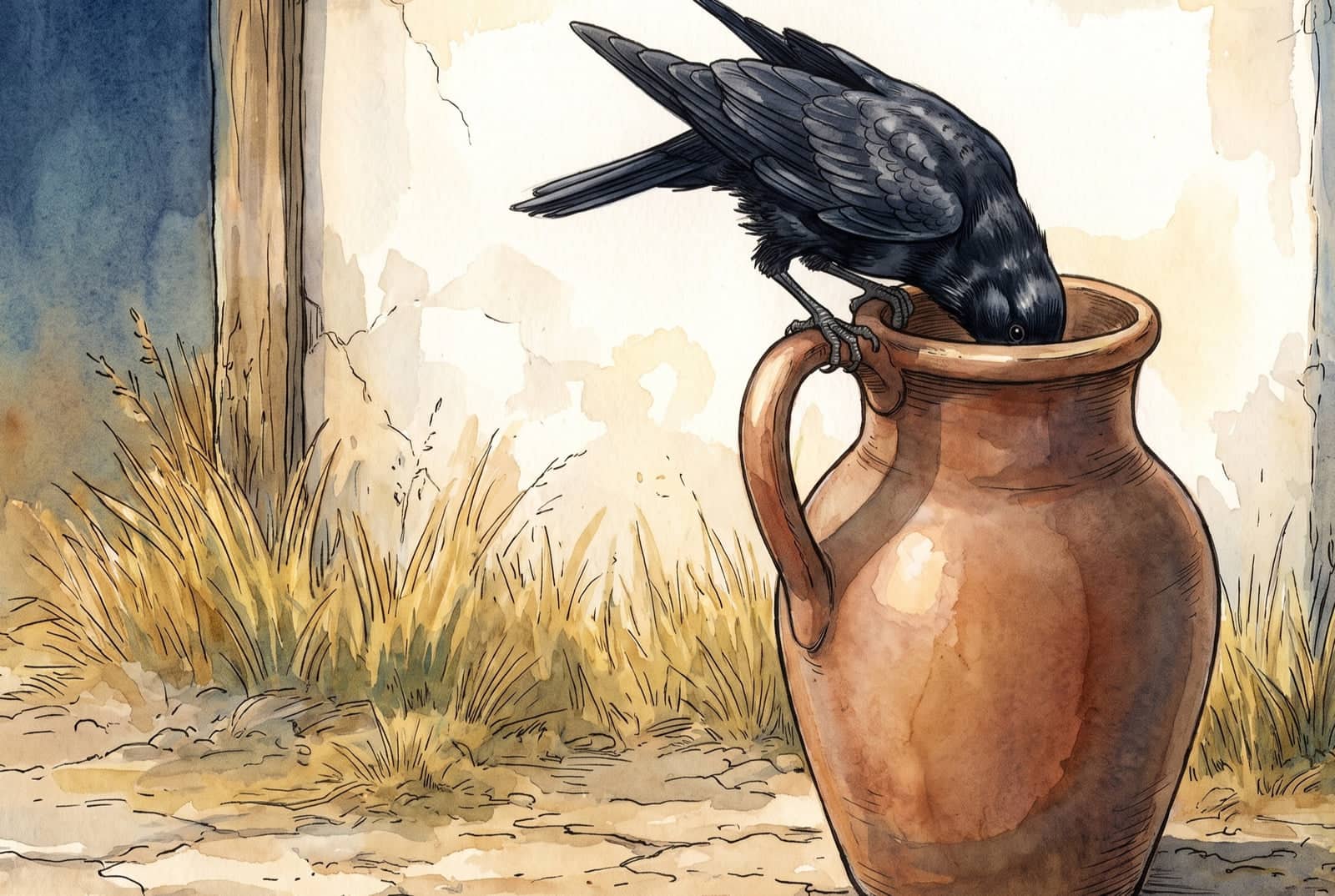
She tried again and again, reaching until her wings trembled, and still the water stayed out of reach. She began to fear she would die of thirst with the water right there in front of her.
So the crow sat quite still on the rim, and thought. In the dust below her lay a scattering of small pebbles.
She flew down, took one in her beak, carried it up and let it fall into the pitcher. She heard the little splash, and she saw the water rise, just the tiniest bit. So she fetched another pebble, and another, and another. Pebble by pebble the water climbed higher, until at last it stood level with the brim.
Then the crow drank her fill, and the dust of the road was gone from her throat.
Retold by Talerie from Aesop’s Fables: a new translation (opens in a new window)License: Public domainCopy this text, adapt it, use it however you like. A link back to Talerie is appreciated but never required.CC0 1.0 (opens in a new window)