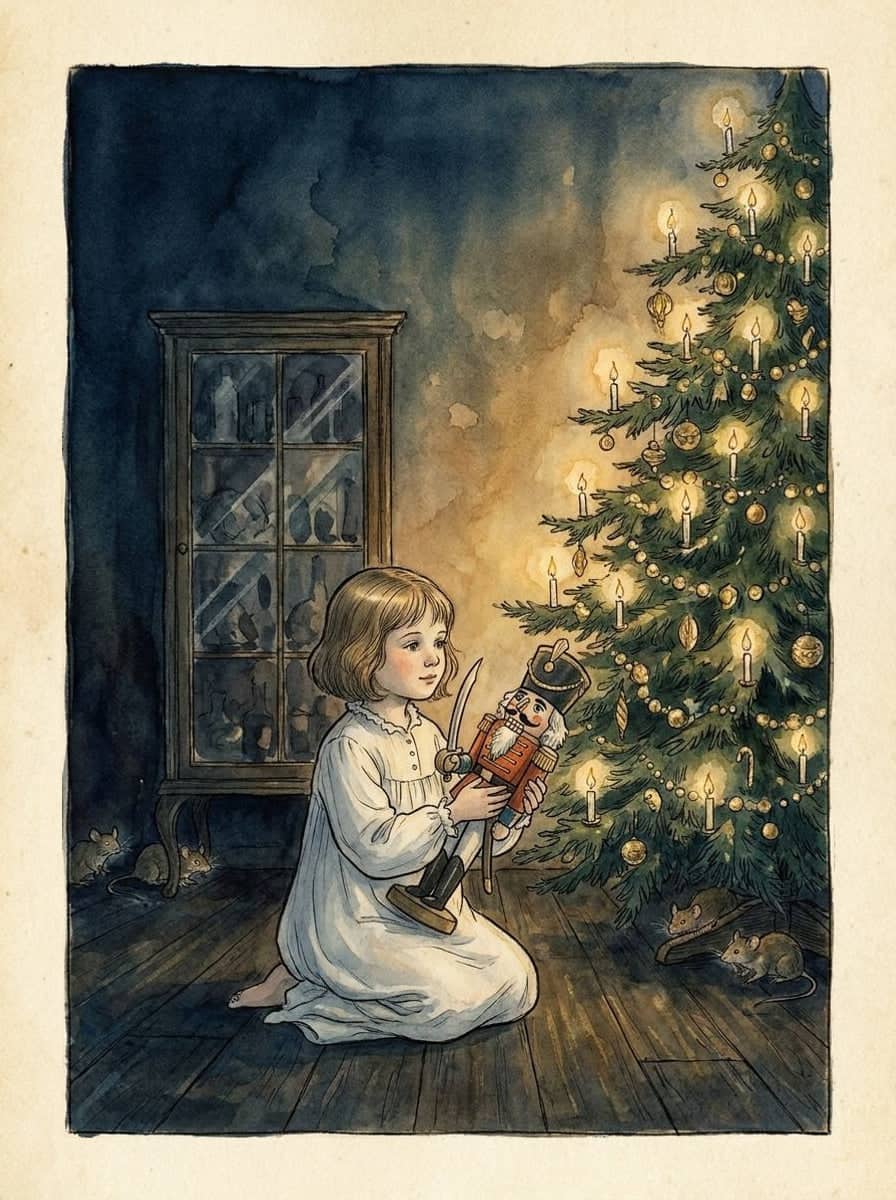
The Nutcracker and the Mouse King
15 min readages 7 and up
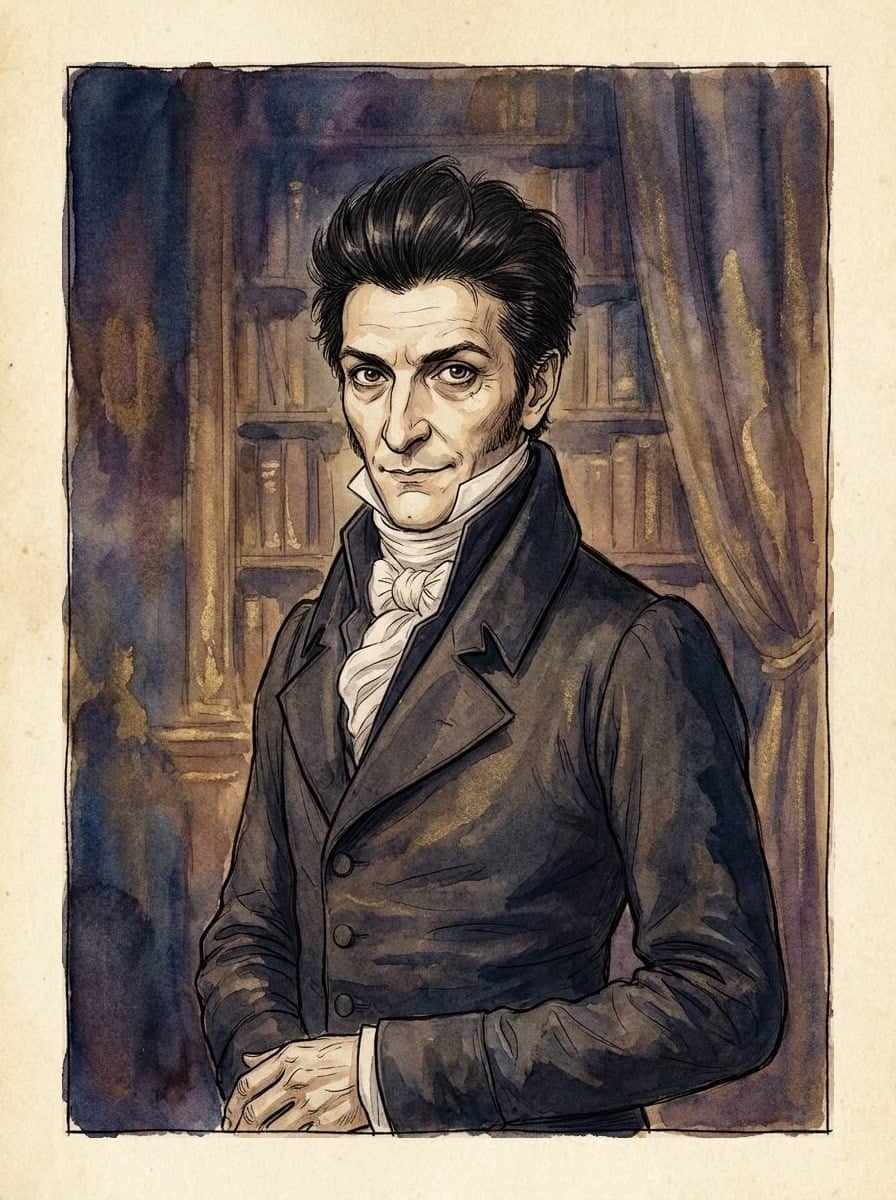
1776–1822
Ernst Theodor Amadeus Hoffmann (1776–1822) is reckoned the most influential German-language storyteller between Goethe and Kafka, and he wrote at night. His day work was the law: from 1814 until his death he sat as a judge on the Kammergericht, the Prussian high court in Berlin. He was born Ernst Theodor Wilhelm in Königsberg, and he swapped the Wilhelm for Amadeus himself, out of devotion to Mozart.
The other careers were not hobbies. He was a composer whose opera Undine was staged in Berlin in 1816, a Kapellmeister, a draughtsman and a caricaturist, and, with Robert Schumann, the most consequential music critic German Romanticism produced. His 1810 essay on Beethoven’s Fifth Symphony is one of the founding texts of Romantic writing about music.
Nußknacker und Mausekönig appeared in Berlin in 1816 and was taken into Die Serapionsbrüder in 1819. He wrote it for the children of his friend Julius Eduard Hitzig and put them into it. Friedrich and Clara Hitzig became Fritz and Marie, and the elder daughter Eugenie became the elder sister Luise. Tchaikovsky’s ballet of 1892 reached the tale by another road, through Alexandre Dumas père’s French adaptation of 1844, which is also where the ballet’s Clara comes from. She is a renamed Marie, not Hitzig’s daughter arriving under her own name.
1 tale
15 min readages 7 and up