Skip to content
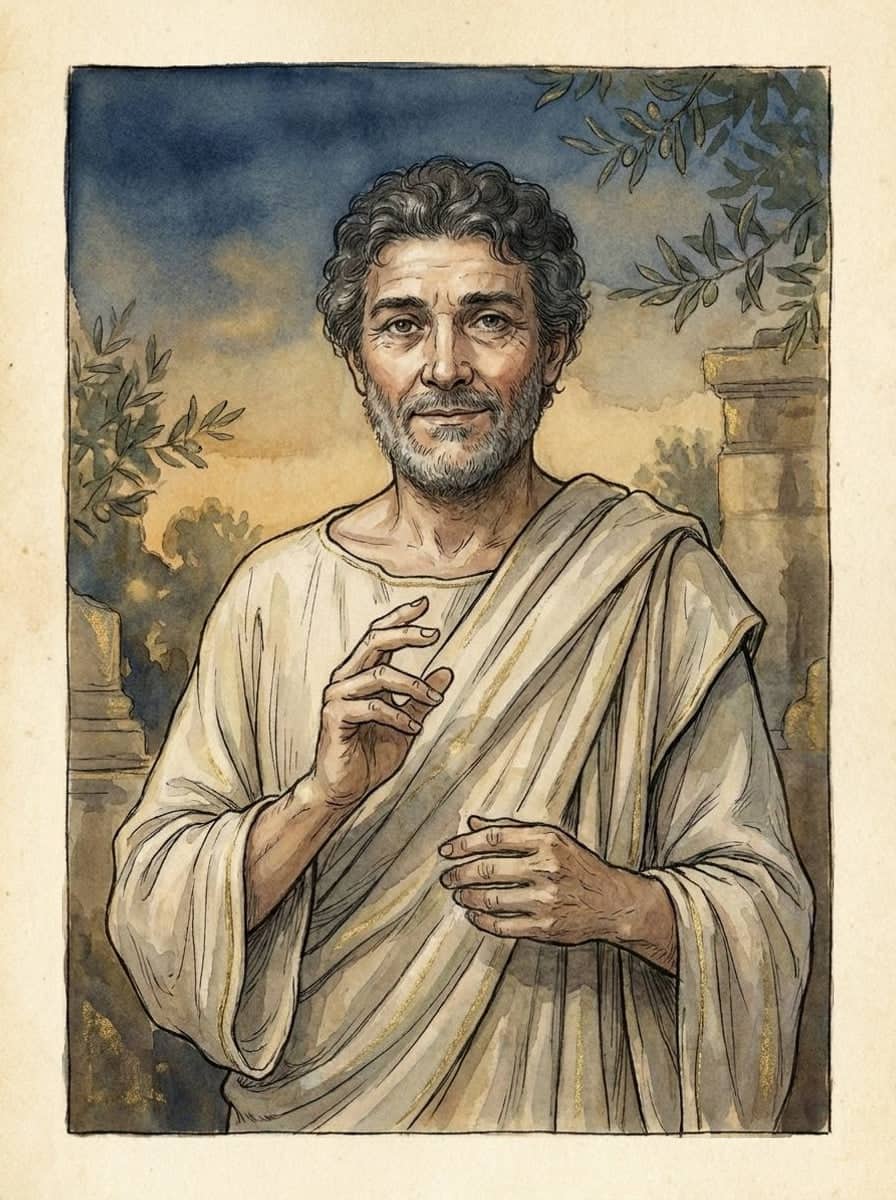
A red-faced young man strains to bend a corded bundle of sticks over his knee as his gray-bearded father watches and two brothers stand with arms folded.

The Bundle of Sticks

Aesop

1 min read ages 4 and up

A father has talked and talked, but his sons will not stop quarreling. One day he sends all of them out to fetch a bundle of sticks.


Once there was a man who had several sons, and they were always quarreling with one another. Try as he might, he could not get them to live together in peace.

Talking had done no good, so he decided to show them how foolish they were. He sent his sons out to fetch a bundle of sticks, and when they brought it back, he asked each of them in turn to break it across his knee.

The first son tried, and the bundle held. The next son tried, and it held again. One after another they all pushed and strained, and not one of them could break it.

Then their father untied the bundle and handed them the sticks one at a time. This time they snapped every stick with no trouble at all.
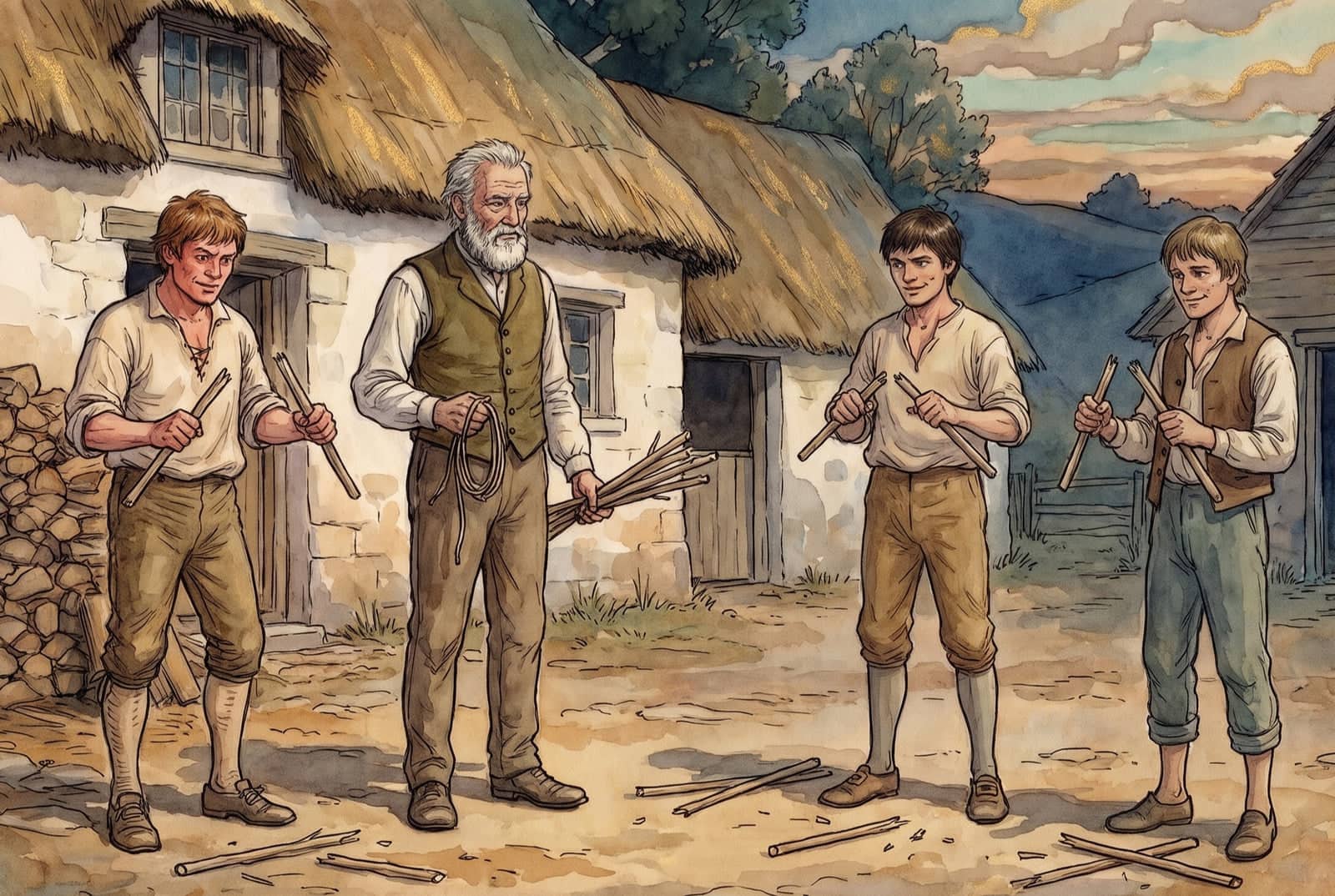
Outside a thatched cottage, a gray-bearded father holds the untied cord and a handful of loose sticks while his three sons smile, each holding a snapped stick.

“You see, my boys,” he said. “As long as you stand together, you’ll be more than a match for your enemies. But if you quarrel and go your separate ways, you’ll be so weak that anyone who attacks you can do as he likes with you.”

How did you like this fable?

Retold by Talerie from Aesop’s Fables: a new translation (opens in a new window) Public domain

Similar fables

About this fable

The Bundle of Sticks is an Aesop fable. The oldest text we read is a Greek prose fable printed by Émile Chambry: a farmer’s children are always quarreling, so he has them bring a bundle of rods that none of them can break.

Our English story follows the translation of Aesop by V. S. Vernon Jones, who calls this fable Father and Sons. We stay close to his version but tell the sons’ attempts one at a time, and we print his moral, “Union is strength”, under the story. Our title is the one Joseph Jacobs uses.

Vernon Jones and Jacobs side by side

Vernon JonesJoseph Jacobs
TitleFather and SonsThe Bundle of Sticks
The father“a certain man”an old man on the point of death
The sons“several”, each tries in turnthe eldest first, then the others
Who fetches itthe sonshis servants
Who unties itthe fatherthe sons, when he tells them to
What he saysa warning about their enemies“You see my meaning”
Moral“Union is strength”“Union gives strength”
Show more
As long as you stand together, you’ll be more than a match for your enemies.
Vernon Jones, 1912: united you will be more than a match for your enemies: but if you quarrel and separate, your weakness will put you at the mercy of those who attack you

What our text does

In our story the father is simply a man with several sons who quarrel all the time. Talking has done no good (that line is ours, not Vernon Jones’s), so he sends the sons out for a bundle of sticks and asks each of them in turn to break it across his knee. We tell the attempts one by one: the first son tries, then the next, then all the others, and the bundle holds every time. Then the father unties it and hands out the sticks singly, and the sons snap every one with no trouble.

He closes with a warning: as long as they stand together they are more than a match for their enemies, but apart they will be so weak that anyone who attacks them can do as he likes with them. Nobody is hurt and nobody dies; the only trouble in the story is the brothers’ quarreling. Vernon Jones’s moral, “Union is strength”, is printed under our text.

Other tellings, and whether the father dies

In the Greek prose fable printed by Chambry the father is a farmer whose words have failed. He has his children bring a bundle of rods, and when they cannot break it, he unties it and they break the rods easily. Roger L’Estrange makes the bundle a rod of twigs and has the children unbind it themselves; the father’s advice is “Keep Together and Y’are Safe, Divide, and Y’are Undone.” In La Fontaine’s verse a dying old man asks his three sons to break a bundle of darts tied together, then separates the darts and breaks them himself; after his death the brothers fall out over the inheritance and lose all of it. George Fyler Townsend prints no moral at all.

Jacobs’s father is an old man on the point of death, and La Fontaine’s dies before the fable ends. Ours, like Vernon Jones’s, is never said to be old or ill, and nobody in our story dies.

Sources

Period texts

Catalog

Claims checked against these sources on October 30, 2026.

Where else to find this fable