 Original
The Steadfast Tin Soldier
10 min readages 6 and uptalerie.com/en/tales/the-steadfast-tin-soldier-original
A tin soldier cast with one leg watches a paper dancer, and a goblin in the snuffbox tells him to look away. A fall from the window sends him down the gutter, into a fish, and home, where a boy throws him into the stove, the draft takes the dancer after him, and the maid finds a tin heart in the ashes.
There were once twenty-five tin soldiers, all of them brothers, for they had been made out of the same old tin spoon. They held their muskets in their arms and looked straight ahead, and their uniforms were splendid, red and blue. The very first words they heard in this world were “Tin soldiers!” The lid had just been lifted off the box they lay in, and a little boy was clapping his hands, because they were his birthday present. He stood them up on the table one by one. Every soldier was the image of every other, all but one. He had been cast last of all, and by then there was not quite enough tin left for him, so he was given a single leg. Yet he stood as firmly on that one leg as the others stood on two, and he is the one who turned out to be remarkable.
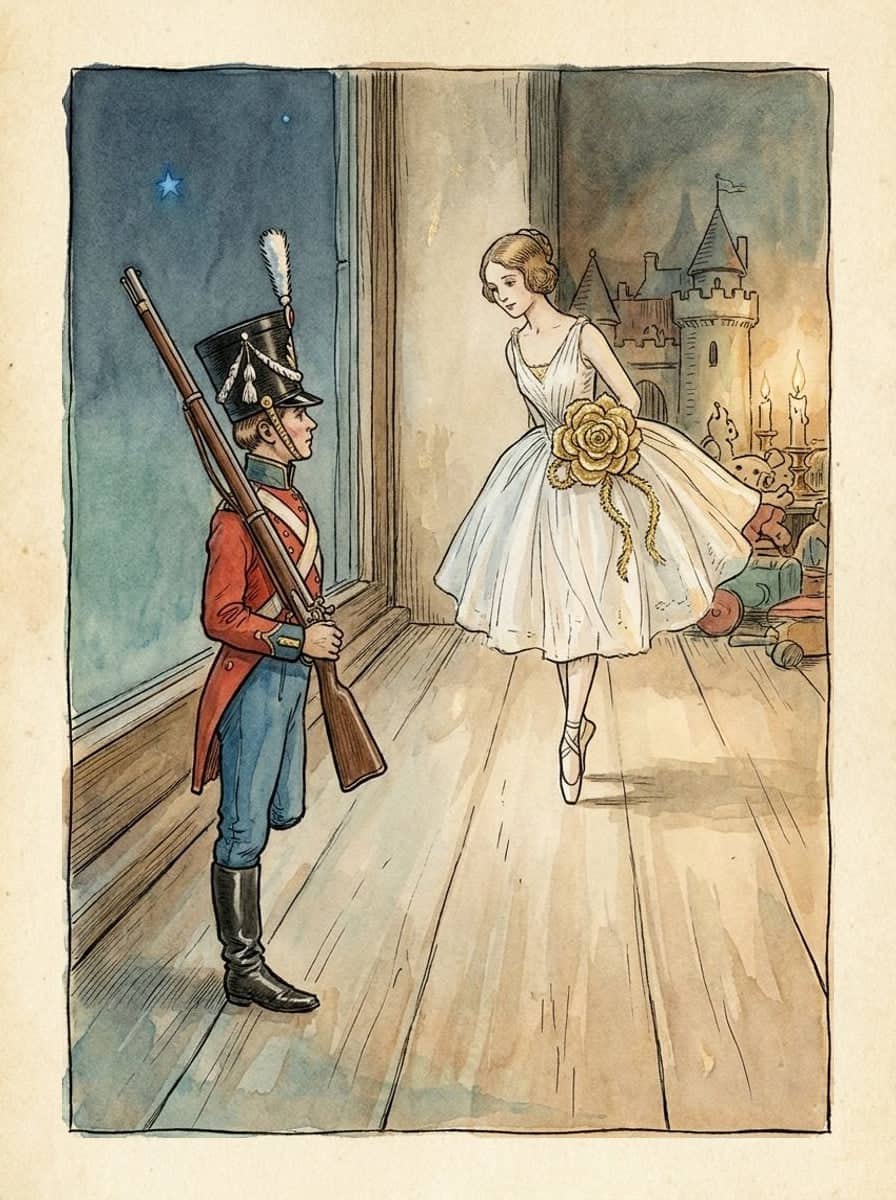
On the table where they were set out stood a great many other toys, but the one that caught the eye first was a pretty little castle made of paper. Through its small windows you could look right into the rooms. In front of the castle stood little trees around a small mirror that was meant to be a clear lake. Swans of wax swam on it and saw themselves in the water. All of it was lovely, but the loveliest thing of all was a little lady who stood in the open doorway of the castle. She was cut out of paper too, and she wore a skirt of the sheerest muslin, with a narrow blue ribbon over her shoulders like a sash. In the middle of it sat a glittering tinsel rose as big as her whole face. The little lady held out both her arms, for she was a dancer, and she lifted one leg so high behind her that the tin soldier could not find it at all, and he decided that she had only one leg, just as he had.
“There is the wife for me,” he thought. “But she is very grand. She lives in a castle, and I have only a box, with twenty-five of us inside it. That is no place for her. Still, I must get to know her.”
So he stretched himself out full length behind a snuffbox that stood on the table, and from there he could watch the delicate little lady as long as he liked, and she went on standing on one leg without ever losing her balance.
When evening came, the other tin soldiers were put away in their box, and the people of the house went to bed. Now the toys began to play games of their own: paying visits, waging war, giving balls. The tin soldiers rattled inside their box, because they wanted to be part of it, but they could not lift the lid. The nutcracker turned somersaults, and the pencil went dancing about on the slate. There was such a noise that the canary woke up and joined in the talk, and in verse, too. The only two who never stirred from their places were the tin soldier and the dancer. She stood straight up on the point of one toe with both arms held out, and he was just as steadfast on his one leg. He never took his eyes off her for a moment.
The clock struck twelve, and snap, up flew the lid of the snuffbox. There was no snuff inside it. There was a little black goblin, for it was a trick snuffbox.
“Tin soldier,” said the goblin, “keep your eyes off what is none of your business.”
But the tin soldier acted as though he had not heard.
“Very well. Just wait until tomorrow,” said the goblin.
In the morning, when the children were up, the tin soldier was set on the windowsill. Whether it was the goblin or the draft, no one can say, but all at once the window flew open and the soldier fell head over heels from the third floor into the street below. It was a dreadful journey. He came down with his leg straight up in the air and stuck fast, standing on his helmet with his bayonet wedged between two paving stones.
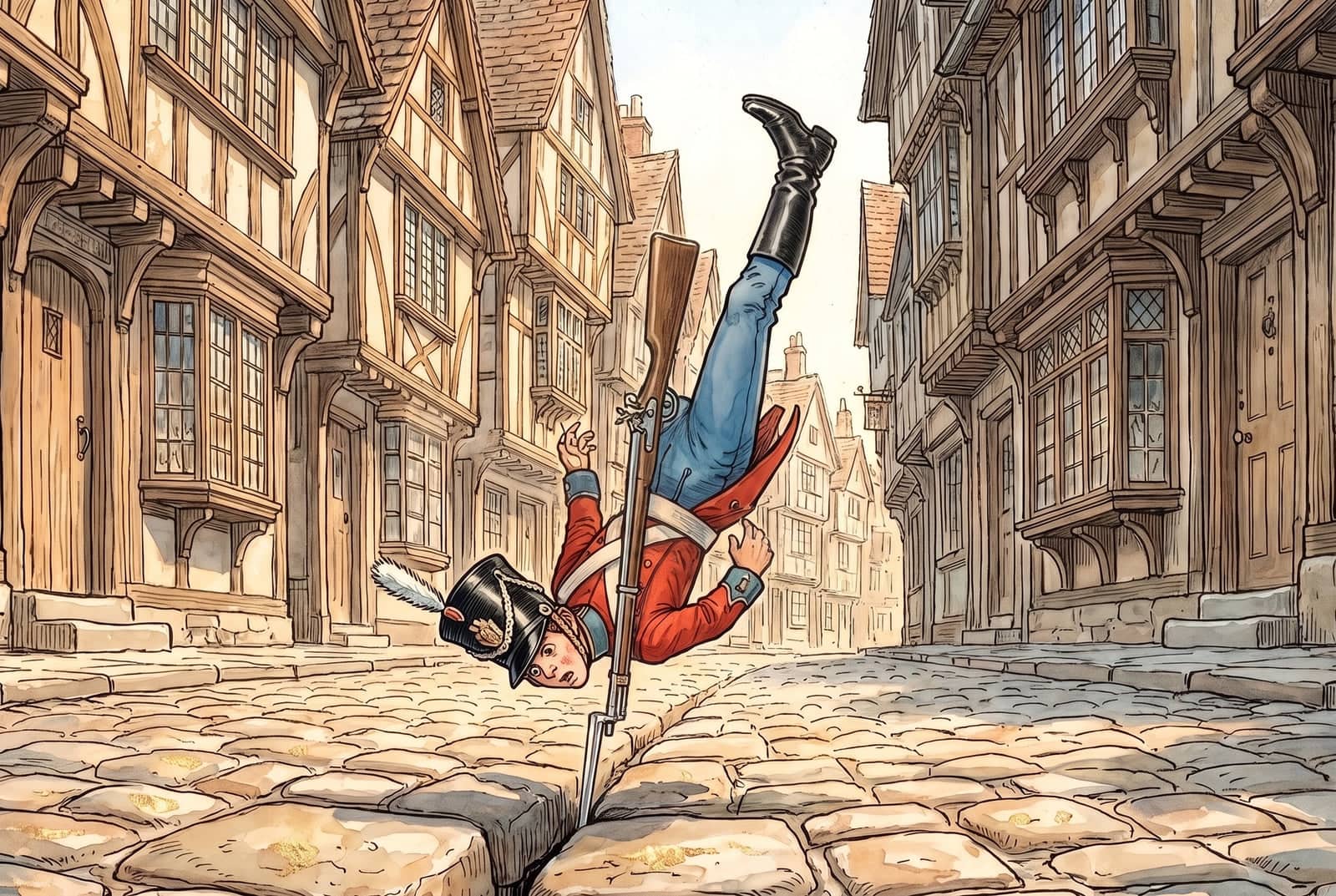
The maid and the little boy came straight down to look for him. They came so close that they very nearly trod on him, and still they did not see him. If the tin soldier had called out, “Here I am!” they would have found him easily enough, but he did not think it proper to shout while he was wearing his uniform.
Then it began to rain. The drops came thicker and thicker until it was a downpour. When the rain was over, two boys came along the street.
“Look at that,” said one of them. “There is a tin soldier. He ought to go out sailing.”
So they made a boat out of a newspaper, set the soldier down in the middle of it, and away he sailed along the gutter, with both boys running beside him and clapping their hands. Goodness, what waves there were in that gutter, and what a current, for the rain had come down in torrents. The paper boat pitched up and down, and now and then it spun round so fast that the tin soldier shook. Still he stayed steadfast. He did not move a muscle of his face, he looked straight ahead, and he kept his musket on his shoulder. All at once the boat drove in under a long bridge over the gutter, and it grew as dark as it had been inside his box.
“Where am I going now?” he thought. “Yes, yes, this is the goblin’s doing. If only the little lady were sitting here in the boat with me, it could be twice as dark for all I would care.”
Just then a great water rat appeared, who lived under the bridge.
“Have you a passport?” asked the rat. “Hand over your passport.”
But the tin soldier said nothing and held his musket tighter than ever.
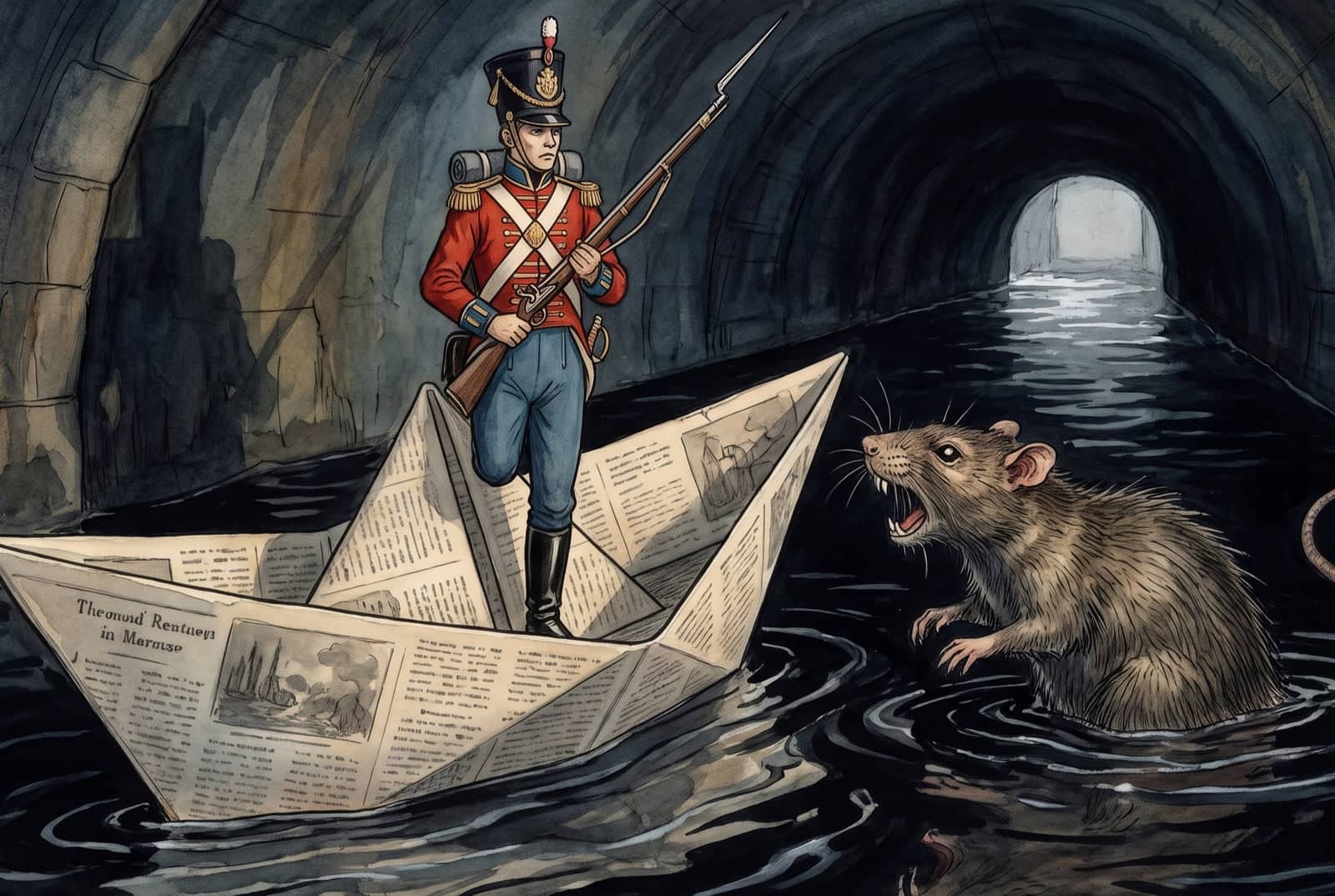
The boat rushed on and the rat came after it. How she gnashed her teeth, and how she shouted to the sticks and the straw:
“Stop him! Stop him! He has not paid the toll, and he has not shown his pass!”
But the current grew stronger and stronger. The tin soldier could already see broad daylight ahead, where the bridge came to an end, and he could hear a roaring noise as well, loud enough to frighten a brave man. Only think: where the bridge ended, the gutter emptied into a great canal. For him that was as dangerous as going over a high waterfall would be for us.
He was so near it now that there was no stopping. The boat shot out, and the poor tin soldier held himself as stiff as he could. Nobody was going to say of him that he had so much as blinked. The boat whirled round three times, four times, and filled with water to the brim. It had to sink. The tin soldier stood up to his neck in water, and deeper and deeper went the boat, and the paper came apart more and more. Now the water closed over the soldier’s head. He thought of the pretty little dancer he would never see again, and these words sounded in his ears:
Farewell, farewell, my soldier brave,The water bears you to your grave.
Then the paper tore through, and the tin soldier dropped, and that same moment he was swallowed by a great fish.
Oh, how dark it was inside that fish! It was darker than under the bridge, and much narrower besides. But the tin soldier stayed steadfast and lay full length with his musket on his shoulder.
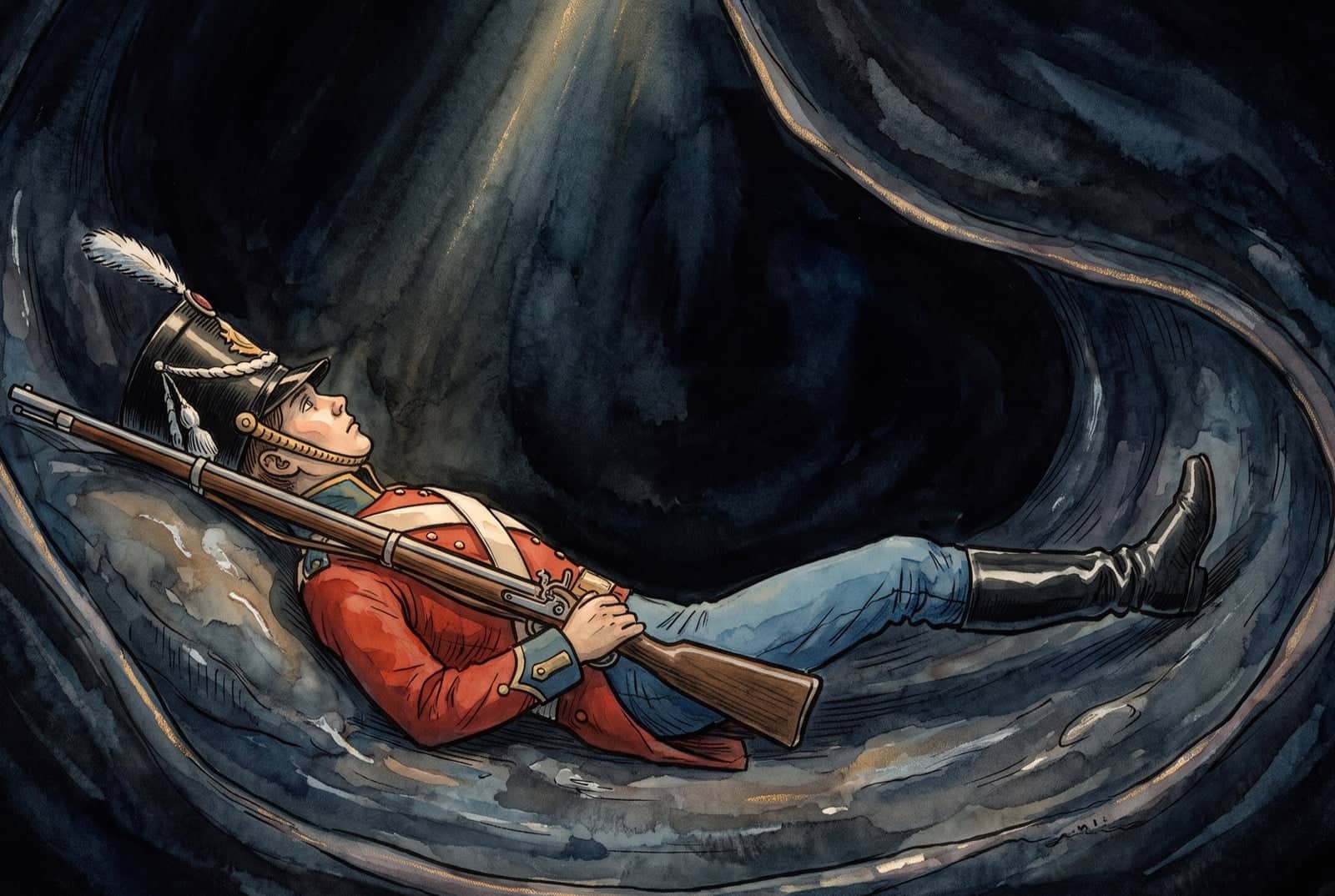
The fish swam this way and that, and thrashed about dreadfully. At last it went quite still. Then something passed through it like a flash of lightning, the light shone clear, and a voice called out, “The tin soldier!” The fish had been caught, carried to the market, sold, and taken up into the kitchen, where the cook cut it open with a big knife. She took the soldier round the middle between two fingers and carried him into the room, where everybody wanted to see the remarkable fellow who had traveled about in the belly of a fish. But the tin soldier was not proud.
They stood him on the table, and then, well, how strange things can be in this world! The tin soldier was in the very same room he had been in before. There were the same children, and the same toys stood on the table: the splendid castle with the pretty little dancer at its door. She was still on one leg, with the other held high in the air. She had been steadfast too. That touched the tin soldier so much that he was very close to weeping tin tears, but it would not have been proper. He looked at her, and she looked at him, but neither of them said a word.
Then one of the little boys picked the soldier up and threw him into the stove, and gave no reason for it at all. It was certainly the goblin in the snuffbox who was to blame.
The tin soldier stood there lit up by the fire, and he felt a heat that was terrible, though whether it came from the flames or from love he could not tell. His bright red and blue had gone from him. Whether that had happened on his travels or come of his sorrow, nobody could say. He looked at the little lady, and she looked at him, and he felt himself melting; but he stood steadfast still, with his musket on his shoulder. Then a door flew open, the draft caught the dancer, and she flew like a sylph straight into the stove to the tin soldier, blazed up in one flame, and was gone.
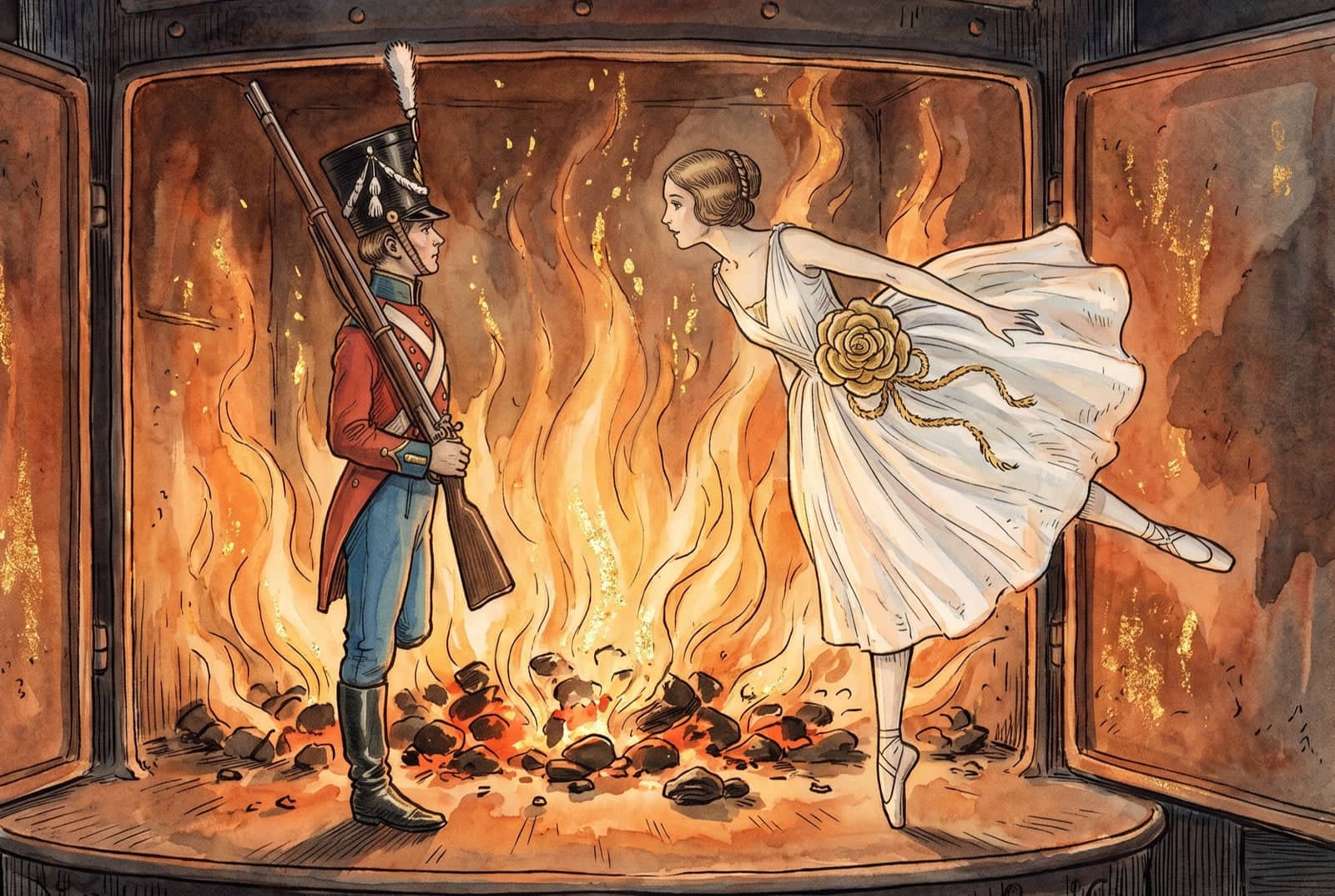
Then the tin soldier melted down into a lump, and when the maid raked out the ashes the next morning, she found him in the shape of a little tin heart. Of the dancer there was nothing left but the tinsel rose, and that was burnt as black as coal.
Retold by Talerie from Fairy Tales of Hans Christian Andersen (opens in a new window)License: Public domainCopy this text, adapt it, use it however you like. A link back to Talerie is appreciated but never required.CC0 1.0 (opens in a new window)