The Devil with the Three Golden Hairs
9 min readages 6 and uptalerie.com/en/tales/the-devil-with-the-three-golden-hairs
A luck-child fated to marry the king’s daughter survives the box the king throws into the river, and years later the king sends him to fetch three golden hairs from the devil’s head. He comes home with the hairs and four donkeys laden with gold, and the greedy king is left holding the ferryman’s pole.
There was once a poor woman whose son was born with a caul, a sign of great luck, and it was foretold that in his fourteenth year he would marry the king’s daughter.
Soon afterwards the king rode through that village, and nobody knew he was the king. The people told him of the luck-child and the prophecy.
The king had a hard heart. He went to the parents and smiled at them like a friend. “You poor people, let me have your child, and I will see that he wants for nothing.”
They refused at first, but he offered a heavy purse of gold, and they thought that everything must turn out well for a luck-child. So they gave the baby up.
The king laid him in a box and threw it into deep water.
But the box did not sink. It floated like a little boat until it caught against a mill dam.
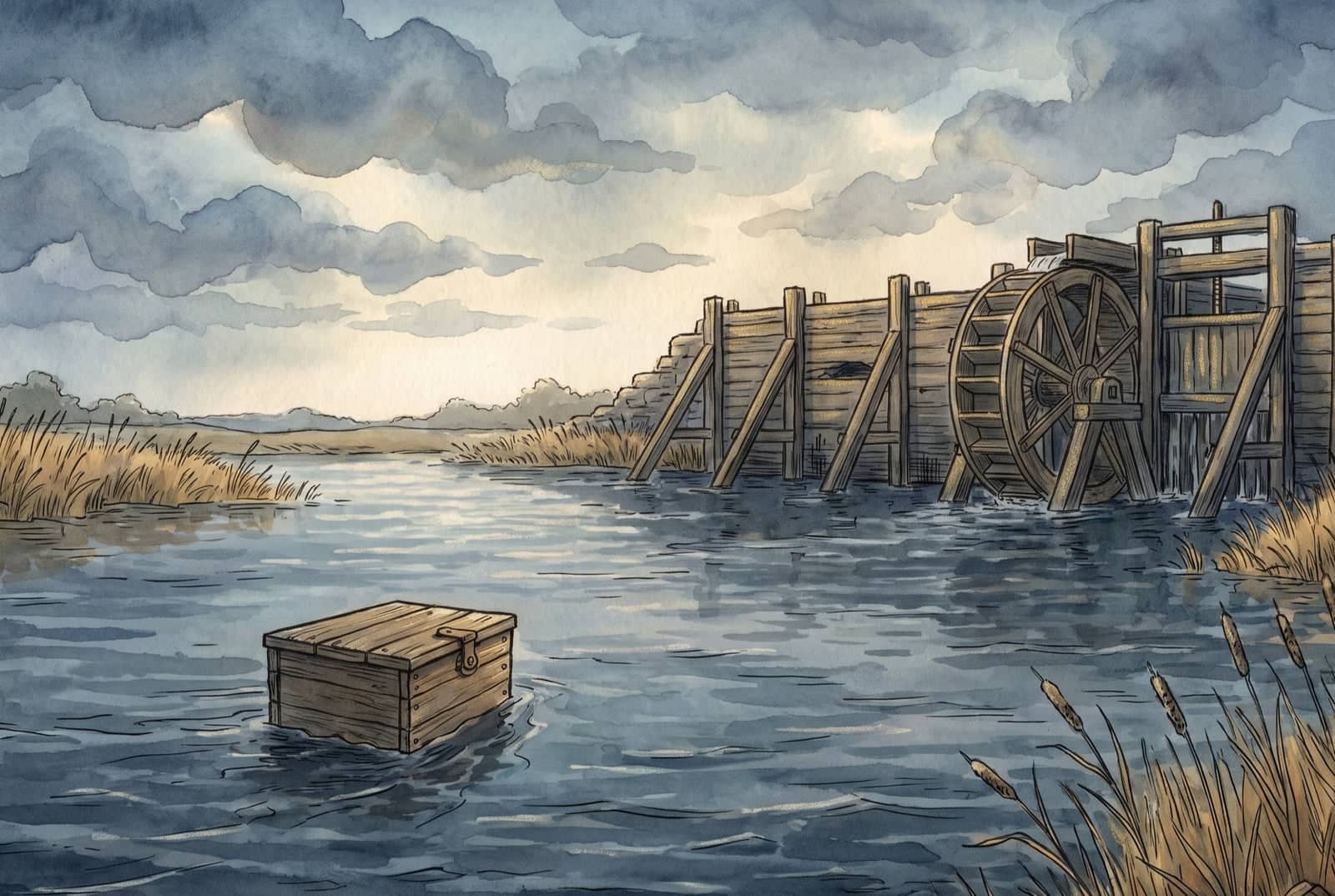
A miller’s boy hooked it out, expecting treasure, and found a child inside, warm and wide awake.
The miller and his wife had no children. “God has sent him to us,” they said, and they raised the foundling tenderly.
Fourteen years later a storm drove the king into that very mill, and he asked whether the tall young man in the doorway was their son.
“No,” they answered. “He is a foundling. He floated to our dam in a box.”
Then the king knew him for the luck-child he had thrown into the river. “Could the lad carry a letter to the queen?” he asked. “I will give him two gold pieces.”
The king wrote: “As soon as he comes with this letter, let him be put to death and buried before I come home.”
The boy lost his way, and evening found him deep in a forest. A small light led him to a cottage where an old woman sat alone by the fire, and he asked to sleep there.
“You poor boy,” she said. “You have walked into a robbers’ house, and when they come home it will go badly for you.”
“Let them come,” said the boy. “I am too tired to go a step farther.” He lay down on a bench and fell asleep.
When the robbers came in, the old woman told them he was an innocent child who had lost his way and was carrying a letter to the queen.
They opened the letter and read that the boy was to die the hour he arrived. Hard as they were, they pitied him, and their leader tore it up and wrote another, saying he should marry the king’s daughter instead.
In the morning they gave him the new letter and showed him the road.
The queen read it and did as it said. The king’s daughter was married to the luck-child at a splendid feast, and she lived with him in joy and contentment.
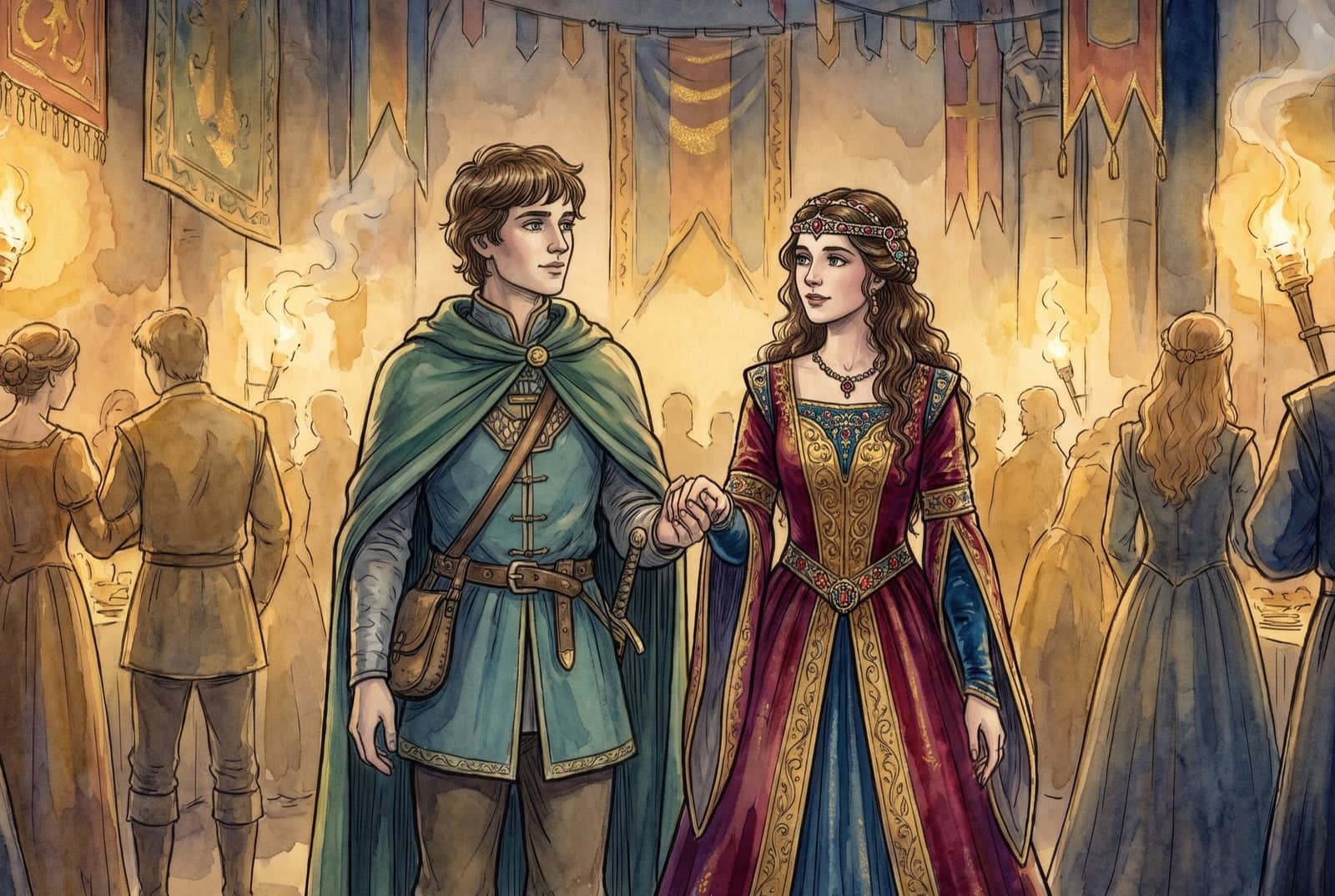
After a time the king came home and found the prophecy fulfilled. The queen showed him the letter, and he saw that his own had been exchanged. The young man knew nothing of it, and said it must have been changed in the night.
“You shall not have everything your own way,” said the king in a fury. “Whoever means to have my daughter must fetch me three golden hairs from the head of the devil himself. Bring me those, and you may keep her.”
“I will fetch them,” answered the luck-child. “I am not afraid of the devil.” And he set out.
The road led him to a great town, where the watchman at the gate asked what his trade was and what he knew.
“I know everything,” answered the luck-child.
“Then tell us why our market fountain, which once ran with wine, gives us not even water.”
“You shall learn that,” he answered. “Only wait until I come back.”
At the next town the gatekeeper asked him the same.
“I know everything,” answered the luck-child.
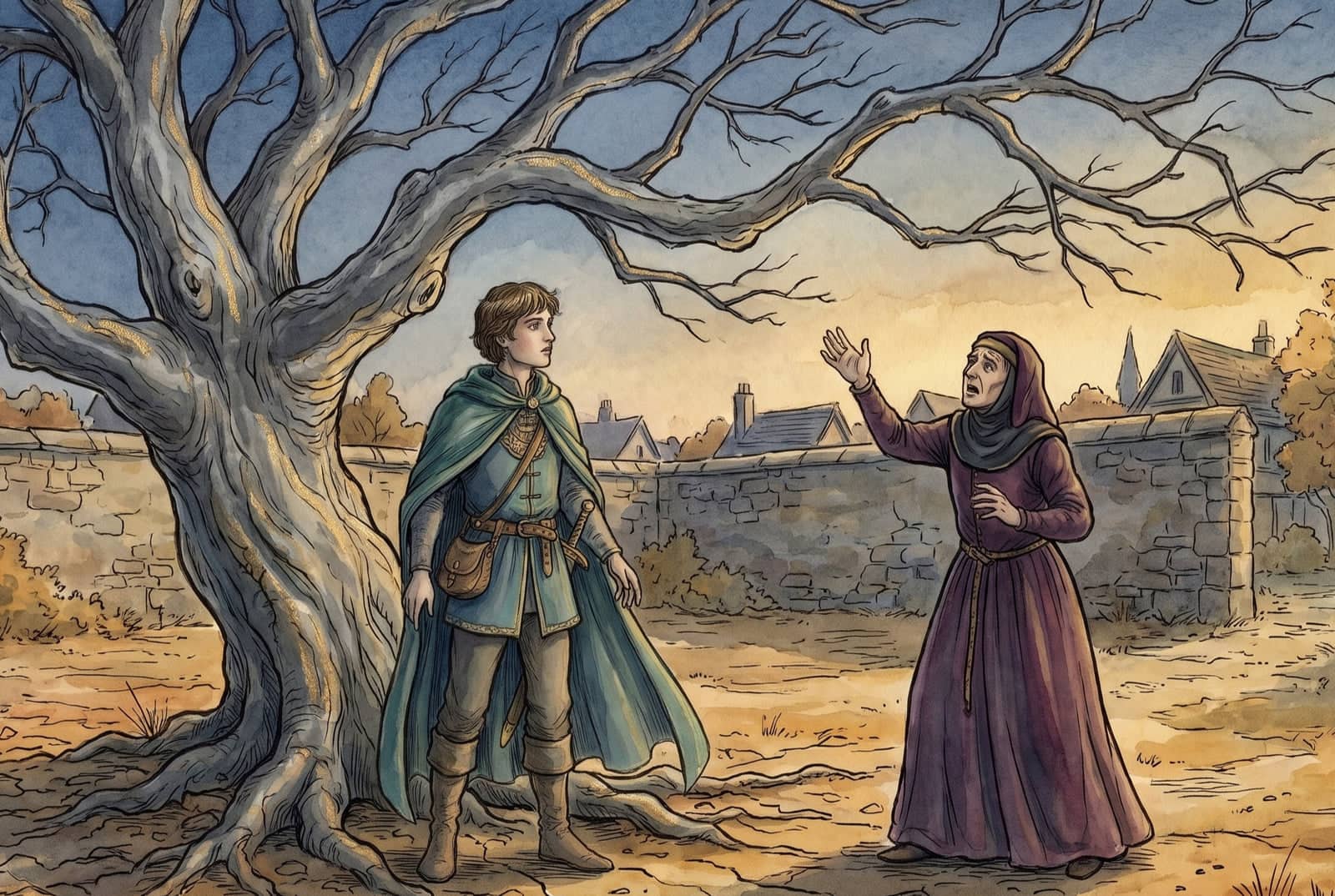
“Then tell us why a tree here that once bore golden apples puts out no leaves.”
“You shall learn that,” he answered. “Only wait until I come back.”
Then he came to a wide river, and the ferryman asked him the same.
“I know everything,” answered the luck-child.
“Then tell me why I must ferry back and forth forever, and am never set free.”
“You shall learn that,” he answered. “Only wait until I come back.”
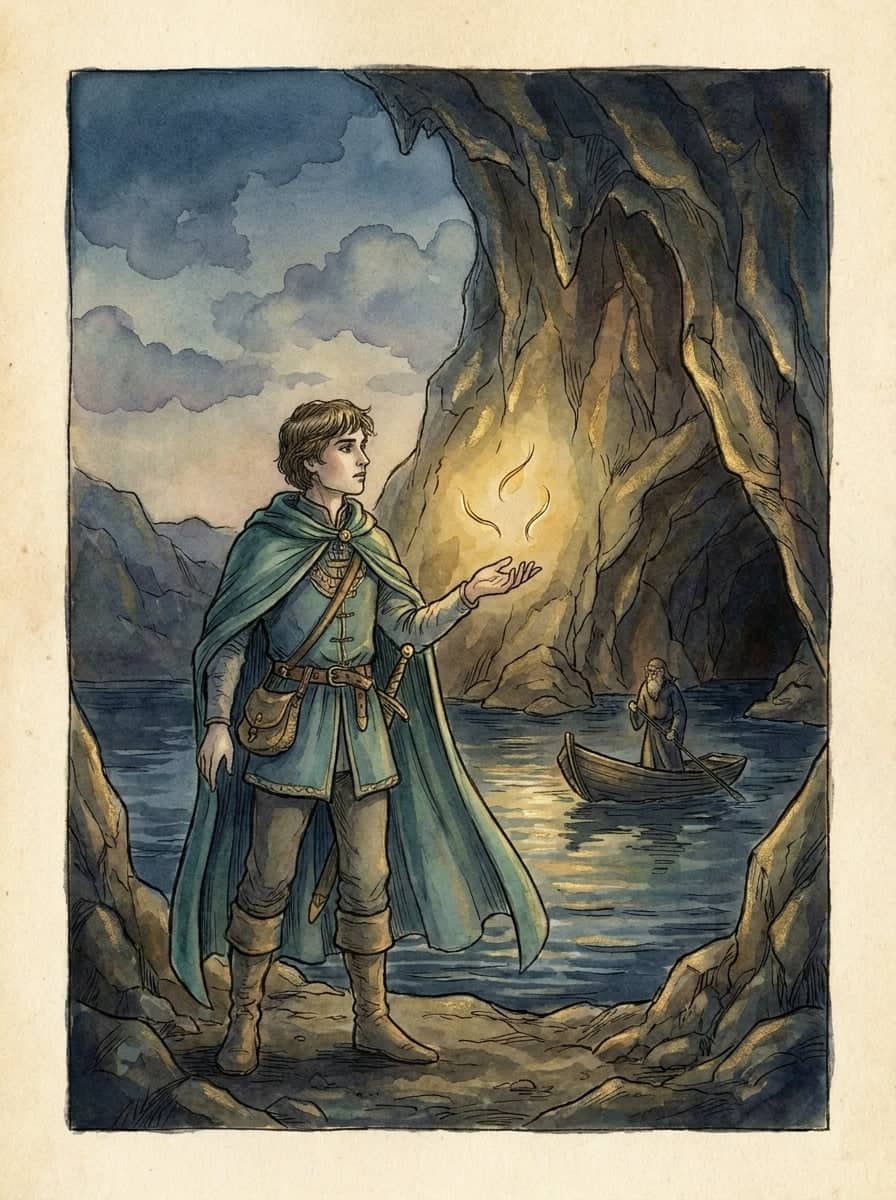
Across the water he found the entrance to hell, black and sooty inside. The devil was not at home, but his grandmother sat there in a broad armchair.
“What do you want?” she said.
“Three golden hairs from the devil’s head,” he answered, “or I cannot keep my wife.”
“If he finds you here, it will cost you your life. But I am sorry for you.” She changed him into an ant. “Creep into the folds of my dress, and you will be safe.”
“Thank you,” he answered, “but I must know three things as well: why a fountain that once ran with wine has gone dry, why a golden-apple tree puts out no leaves, and why a ferryman is never set free.”
“Hard questions,” she said. “Keep still and listen to what the devil says.”
As evening came on the devil came home and sniffed the air.
“I smell human flesh,” he said. He searched every corner and found nothing.
“It has only just been swept, and now you upset it all,” his grandmother scolded. “Sit down and eat your supper.”
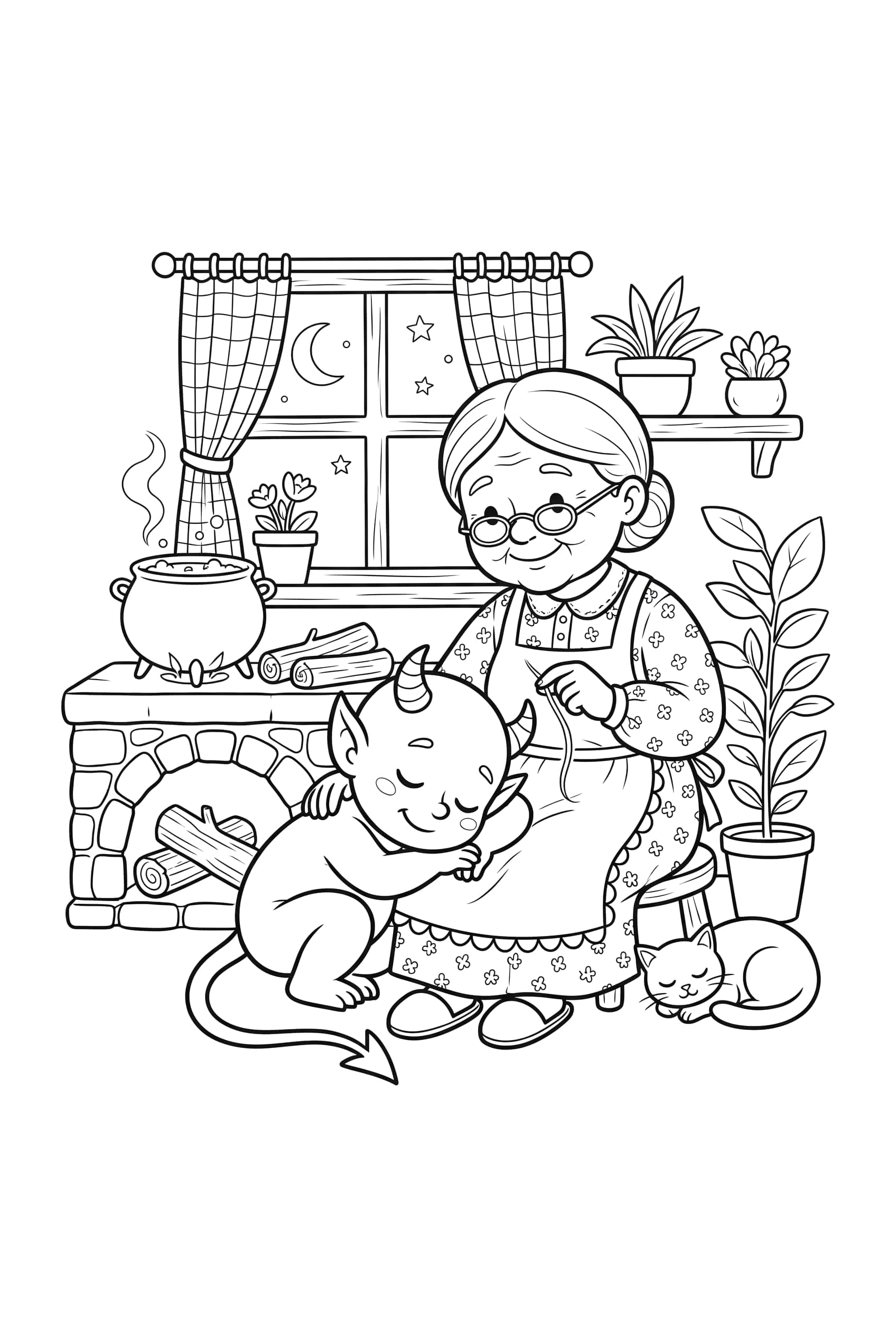
When he had eaten he laid his head in her lap and was soon asleep and snoring. Then the old woman pulled out a golden hair.
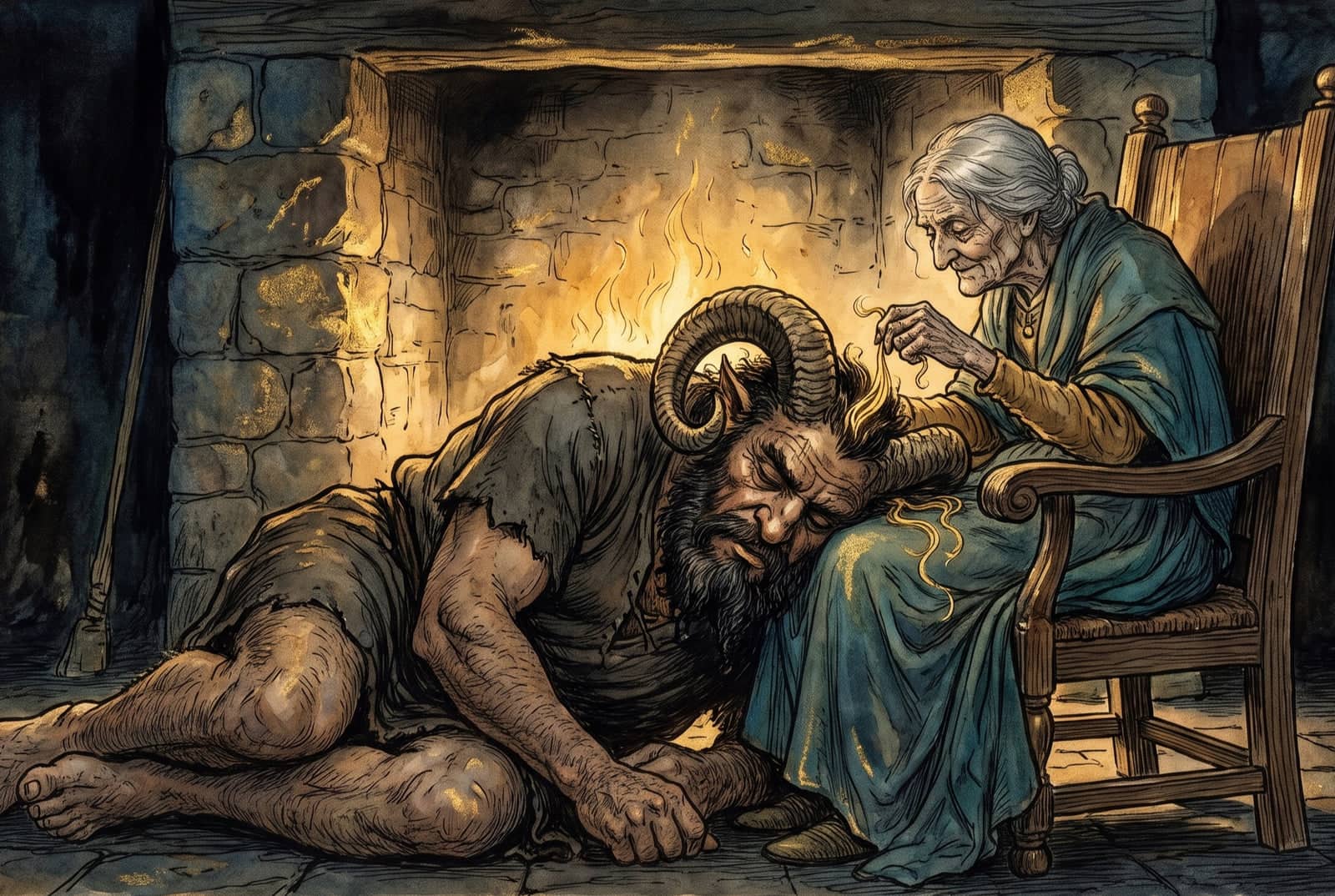
“Ow!” cried the devil. “What are you doing?”
“I had a bad dream and caught at your hair. I dreamed of a market fountain that once ran with wine and now gives not even water. What is the cause of it?”
“Ha, if only they knew!” answered the devil. “A toad sits under a stone in the well. Take it away, and the wine will flow again.”
He slept again, and she pulled out the second hair.
“Ha! What are you doing?” he cried angrily.
“Do not take it ill, it was only a dream. I dreamed of a tree that once bore golden apples and now puts out no leaves. What is the cause of it?”
“Ha, if only they knew!” answered the devil. “A mouse is gnawing at the root. Drive it off, and the tree will bear again. Now let me sleep.”
She spoke gently to him until he slept, and then she pulled out the third hair. The devil sprang up with a roar, but she calmed him again.
“Who can help bad dreams?” she said, and the devil, curious in spite of himself, asked what she had dreamed. “I dreamed of a ferryman who must carry people from bank to bank and is never set free. What is the cause of it?”
“Ha, the fool!” answered the devil. “When someone comes and wants to cross, he has only to put the pole into that man’s hand. Then the other must do the ferrying, and he is free.”
The three questions were answered, and the devil slept until daybreak.
When he had gone out again, the old woman took the ant from her dress and gave the luck-child his own shape back. “There are the three golden hairs,” she said, “and you heard the answers.”
He thanked her and left hell well content.
“Carry me across first,” said the luck-child to the ferryman, “and then I will tell you.” Safe on the far bank, he gave him the devil’s advice: put the pole into the hand of the next man who wants to cross.
In the town of the barren tree he told the watchman of the mouse at the root, and in the town of the dry fountain he told of the toad under the stone. Each watchman gave him two donkeys laden with gold.
So the luck-child came home to his wife, who was overjoyed to see him, and brought the king the three golden hairs. When the king saw the four donkeys, he said the young man might keep his daughter.
“But tell me, dear son-in-law, where did all that gold come from?”
“I was ferried across a river,” answered the luck-child, “and I took it from the shore. It lies there instead of sand.”
“Can I fetch some too?” said the king, greedy for it already.
“As much as you like. There is a ferryman on the river; let him carry you over.”
The king set off in all haste and waved to the ferryman to take him across. And when they reached the far bank, the ferryman put the pole into the king’s hand and sprang ashore.
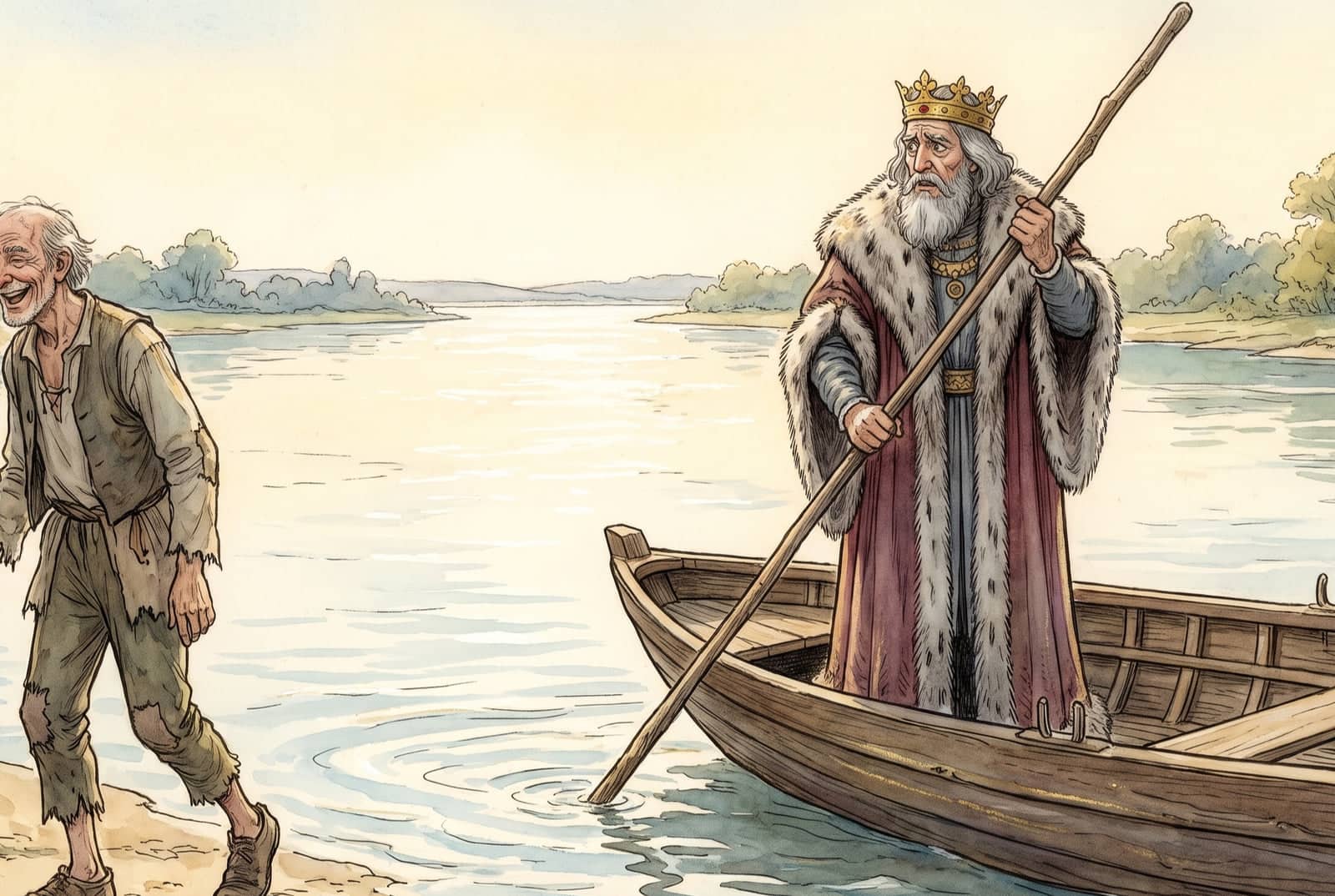
So from that day the king had to do the ferrying, as a punishment for all he had done.
Is he ferrying still? Very likely he is, for nobody has ever taken the pole out of his hand.
Retold by Talerie from Household Tales by Brothers Grimm (opens in a new window)License: Public domainCopy this text, adapt it, use it however you like. A link back to Talerie is appreciated but never required.CC0 1.0 (opens in a new window)