
Robinson Crusoe
15 min read ages 8 and up
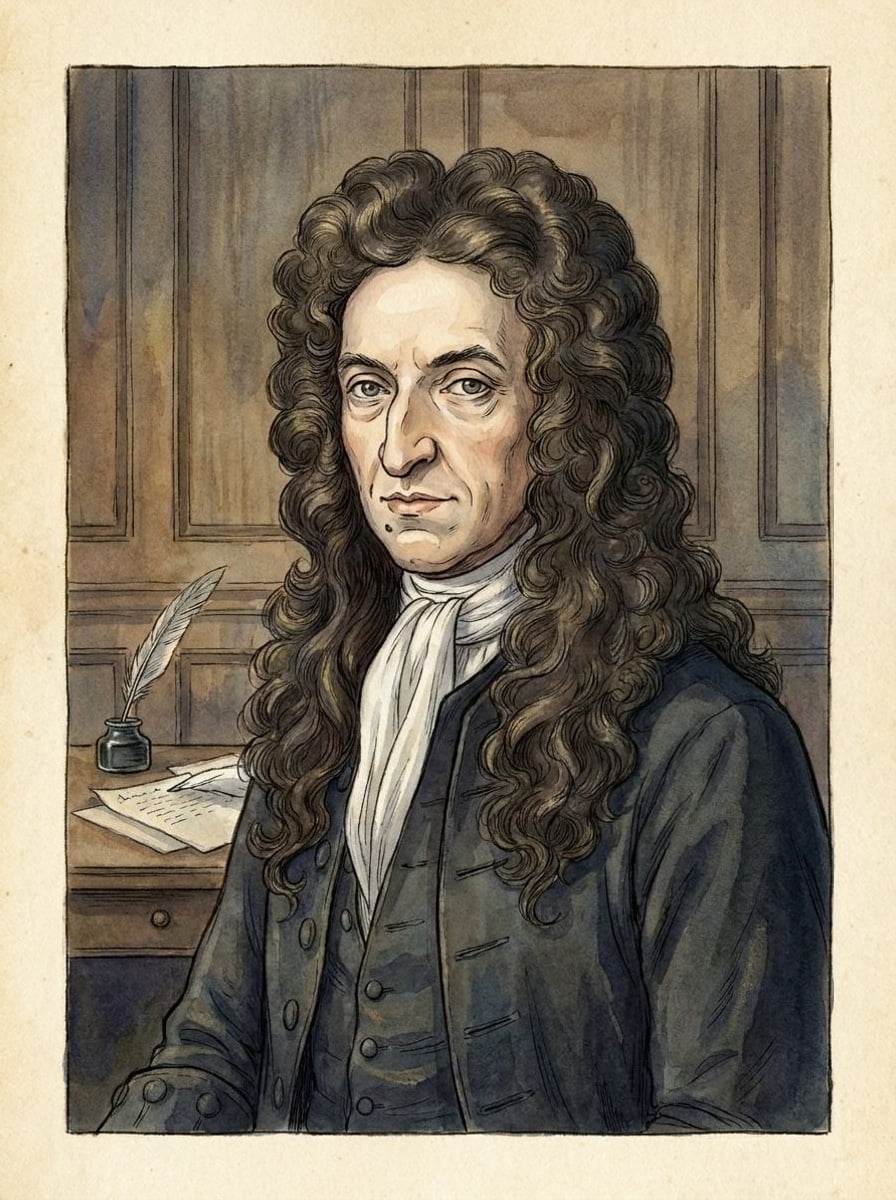
United Kingdom 1660–1731
Daniel Defoe (c. 1660–1731) was an English trader, pamphleteer and journalist who wrote Robinson Crusoe when he was nearly sixty. He was born Daniel Foe in London, the son of a candle-maker, and in his thirties began to sign himself Defoe.
He traded in stockings, woolens and wine, went bankrupt in 1692 and was never long free of debt. In 1702 his satire The Shortest-Way with the Dissenters, written as if by an enemy of Dissenters like himself, led to a charge of seditious libel, and in July 1703 he stood three days in the pillory, where the crowd took his side. The politician Robert Harley obtained his release from Newgate Prison, and for years Defoe wrote and gathered information for Harley’s government.
Robinson Crusoe appeared in London on April 25, 1719, as the life of a sailor from York “Written by Himself,” with no author’s name, and many readers took it for a true story. It is often counted among the first English novels. The story of Alexander Selkirk, a Scottish sailor who lived alone for four years on an island off Chile, is commonly named as one possible inspiration. Defoe died in London on April 24, 1731, and was buried in Bunhill Fields. A marble obelisk went up there in 1870, paid for with small gifts from the boys and girls of England.
1 tale
15 min read ages 8 and up