Robinson Crusoe wants nothing but the sea, though his old father begs him in tears to stay home in York. He lives through storms, pirates, and two years as a slave, until a hurricane wrecks his ship and he alone of eleven men reaches an island alive. The wreck still lies close to land.
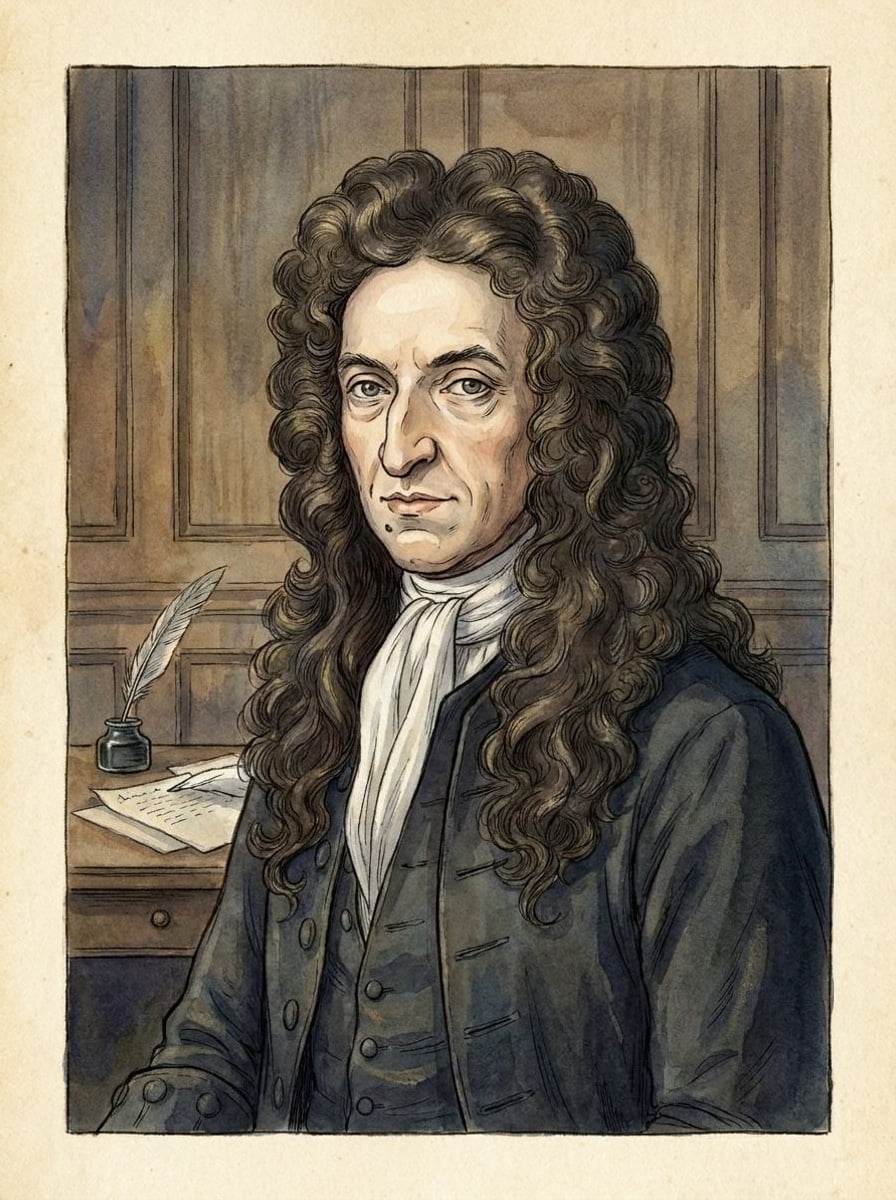
Robinson Crusoe was born in York in 1632, and ever since he was a boy, he had wanted to go to sea. His old father, kept to his room by gout, begged him in tears to stay home and live quietly, neither rich nor poor. If Robinson went to sea, he warned, God would not bless him, and one day he would have time enough to be sorry, with no one to help him. His mother would not take his side either.
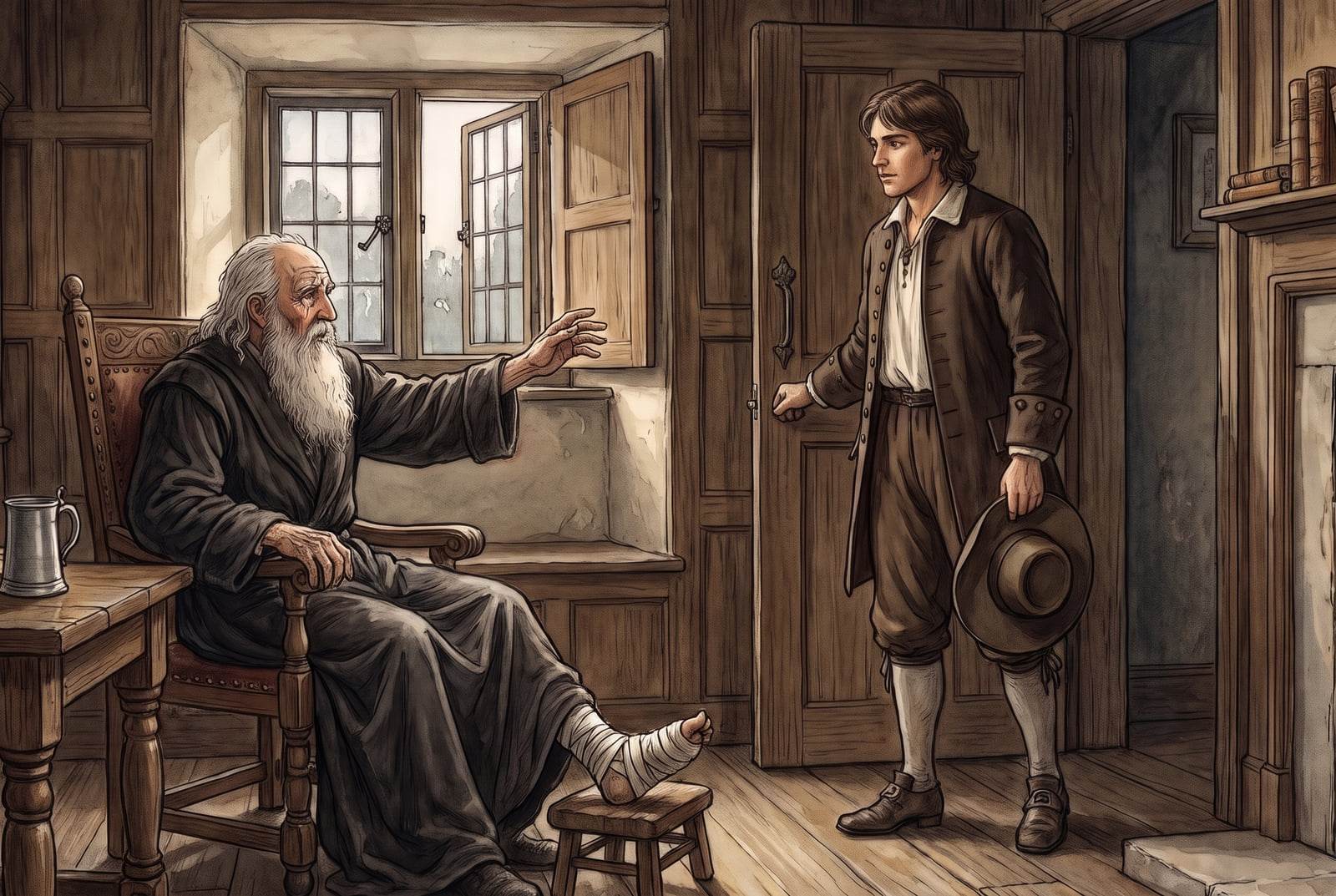
In 1651 a friend in Hull offered him a free passage on his own father’s ship, and Robinson went without telling anyone at home. In the first storm he promised God he would go straight home if he lived. By morning the sea was calm.
“Well, Bob,” said his friend, “that was nothing but a capful of wind. Let’s make a bowl of punch and forget it.”
So Robinson’s promise went down with the punch. Soon a far worse storm sank the ship off Yarmouth, and even then he was too ashamed to go home.
On a voyage to Guinea, pirates from Sallee captured the ship, and Robinson became the slave of their captain, a Moor.
After two years his master sent him out fishing in the longboat, stocked with food and guns. With him went a boy named Xury and a man called Moely. Far from shore, Robinson came up behind Moely and tipped him over the side. Moely bobbed up like a cork, and Robinson pointed a gun at him.
“You swim well enough to reach the shore,” said Robinson. “Come near this boat, and I’ll shoot.”
Moely swam for land. Xury swore by Muhammad and his father’s beard to be faithful, and they sailed south along the coast of Africa.
On the way Robinson shot a huge lion asleep on the shore. Farther south, people on the beach brought them food. Robinson shot a leopard that swam toward the boat, and the people skinned it with a sharpened stick and brought water.
Off Cape Verde a Portuguese ship took them aboard, and its captain would take no money.
“No, no, Senhor Inglês,” he said. “I’ll carry you to Brazil for nothing.”
He offered sixty pieces of eight for Xury. Robinson hated to sell the freedom of the boy who had helped him win his own, but the captain promised to free Xury in ten years if he became a Christian, and Xury was willing. So Robinson sold him.
In Brazil Robinson planted sugar cane and tobacco. The captain fetched half his savings from London, where an English captain’s widow had kept them honestly, and Robinson bought an enslaved African to work his land. After four years other planters asked him to sail to Guinea and buy slaves for them, and he agreed at once. He made the Portuguese captain his heir and set sail in 1659.
A hurricane drove the ship far off course and onto a sandbank. The eleven men took to the ship’s boat, and a huge wave overturned it in the surf. Wave after wave buried Robinson, until he crawled onto the beach. He was the only one left alive.
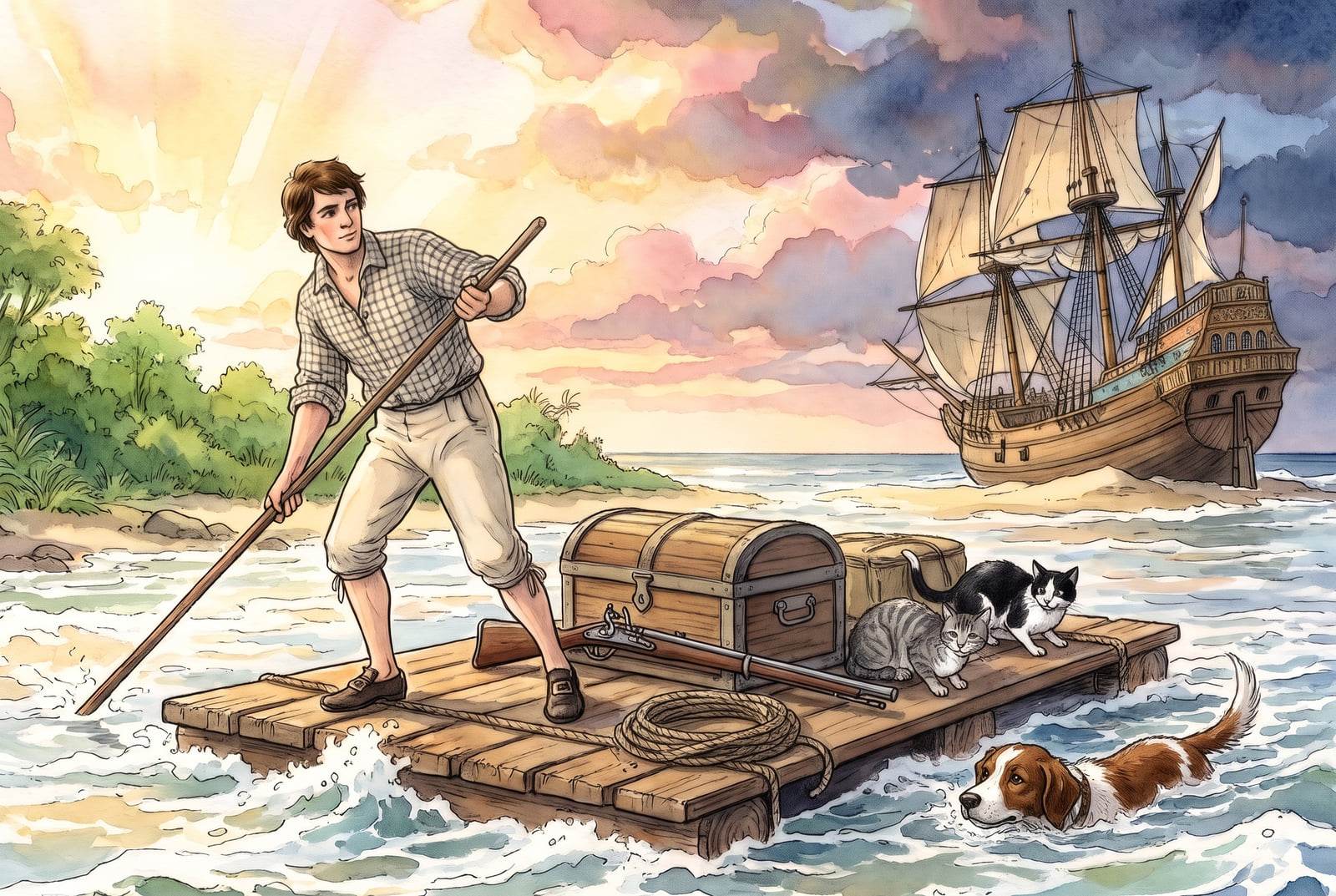
The tide had lifted the wreck close to shore. For thirteen days he built rafts and brought back food, the carpenter’s tools, guns, powder, sails, rope, and three Bibles; the ship’s dog and two cats came ashore too. He laughed at a pile of useless coins, then took them anyway. That night a storm broke the ship apart.
Under a rock he pitched his tent and dug a cave behind it. Around the tent he set a double row of stakes, which he climbed over by a ladder he pulled up after him. After a flash of lightning, he split his powder into small parcels. He cut a notch in a wooden post every day to keep track of time.
One day he shook out an old bag of chicken feed, and after the rains, English barley and rice came up. He thought it was a miracle, until he remembered the bag. He saved every grain, lost his first sowing to the dry season, and slowly learned to bake bread.
Then came an earthquake, and after it a fever. Robinson dreamed that a man came down from a black cloud in a bright flame and lifted a spear to kill him.
“Since all these things have not brought you to repentance,” the man said, “now you shall die.”
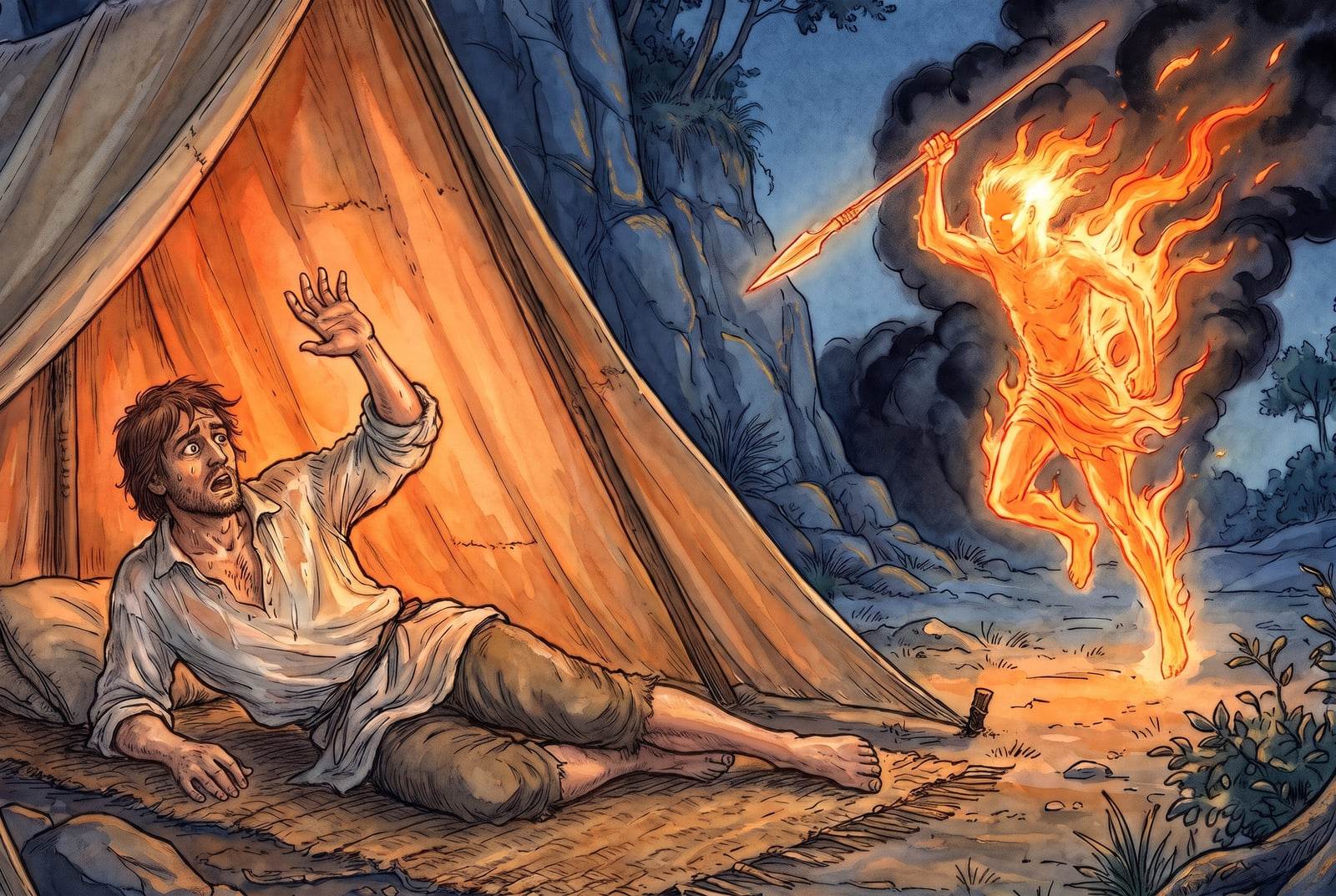
Robinson woke in terror and remembered his father’s words. He opened a Bible and read, “Call on me in the day of trouble, and I will deliver you.” For the first time in his life, he truly prayed.
When he was well, he explored the island, found wild grapes and limes, and built a shady bower with a hedge around it. He made a tall goatskin cap, a jacket, and an umbrella, tamed goats, and taught a young parrot named Poll to talk. He also carved a canoe so huge he could never drag it to the sea.
Years later a current swept him out to sea in a smaller canoe, and he begged God to bring him back. When at last he reached the shore, he slept in his bower until a voice woke him.
“Robin, Robin, Robin Crusoe! Poor Robin Crusoe, where are you? Where have you been?”
Robinson jumped up in fright. It was only Poll, on top of the hedge.
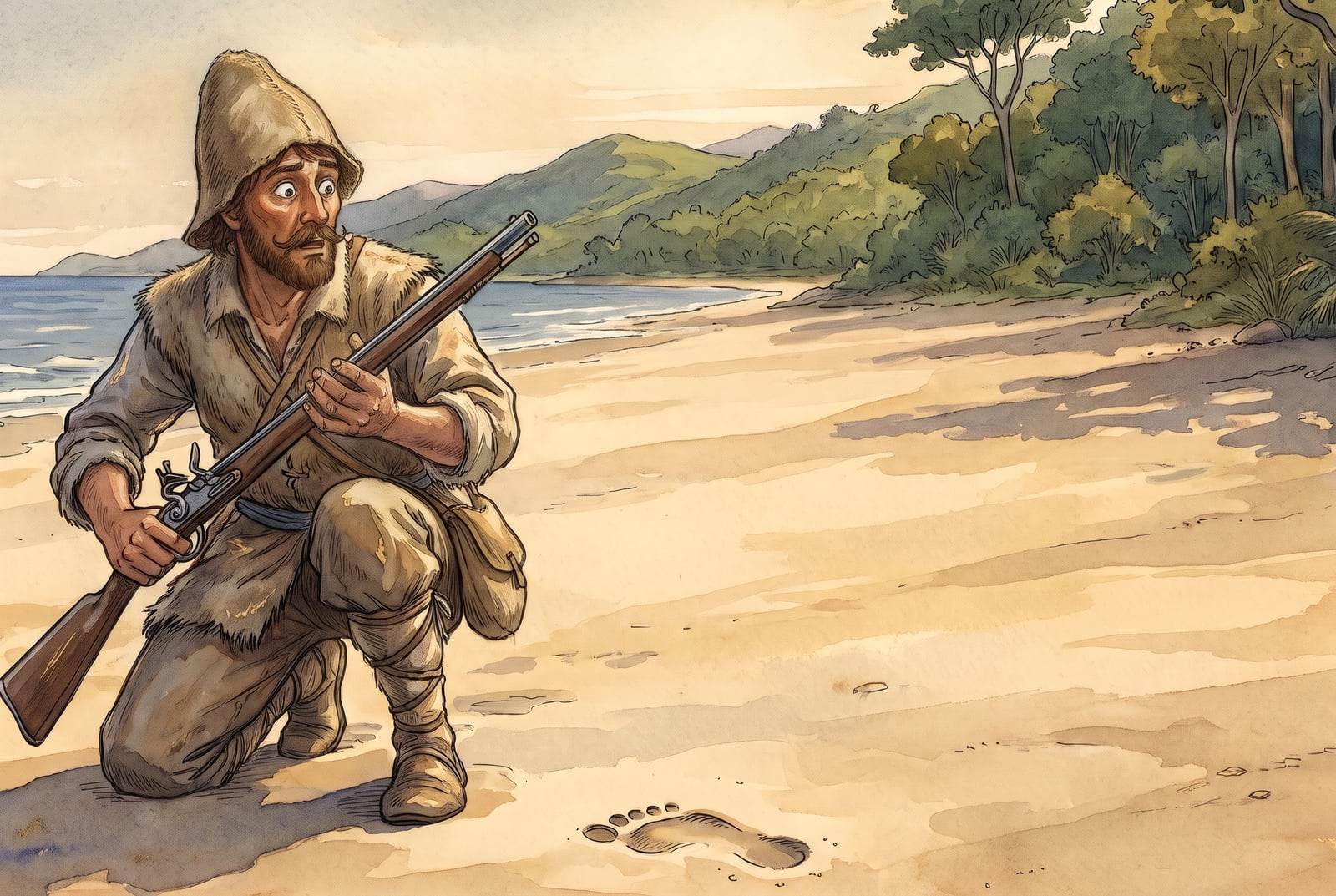
After fifteen years alone, Robinson found the print of one bare foot in the sand. He ran home as if something were chasing him. There he built a second wall and planted stakes around it, which took root and grew into a thick grove.
Later he found a beach strewn with human bones, where men from the mainland came in canoes to kill and eat their prisoners. For months he planned to shoot them, until he decided they had done him no wrong and he had no right to be their judge.
One stormy night a Spanish ship broke up on the rocks.
“Oh, if only one had been saved!” Robinson cried.
He paddled out and found only a starving dog alive. Soon after, he dreamed that a prisoner escaped from the canoes and became his servant, and he made up his mind to save one if he ever could.
A year and a half later, thirty men landed. Robinson watched them kill one prisoner for their feast. Another broke free and ran straight toward Robinson’s grove, with two men after him. Robinson knocked down the first with the butt of his gun and shot the second. The runaway knelt, laid his head on the ground, and set Robinson’s foot upon it.
But the man Robinson had knocked down began to stir. The runaway borrowed Robinson’s sword, killed him with one blow, and buried both bodies in the sand.
Robinson named the young man Friday, for the day he was saved, and taught him to say “Master.” Friday still wanted to eat what was left of the feast, but Robinson made him burn it and warned him: if Friday ever tasted such meat, Robinson would kill him.
Friday learned English, learned to bake bread, and gave up eating human flesh. When Robinson taught him about God, Friday asked, “If God much strong, why God no kill the devil?” From a hill Friday showed his master his homeland, where seventeen bearded white men lived among his people. When Robinson offered him a boat to go home alone, Friday fetched his hatchet and held it out.
“Take, kill Friday,” he said. “No send Friday away.”
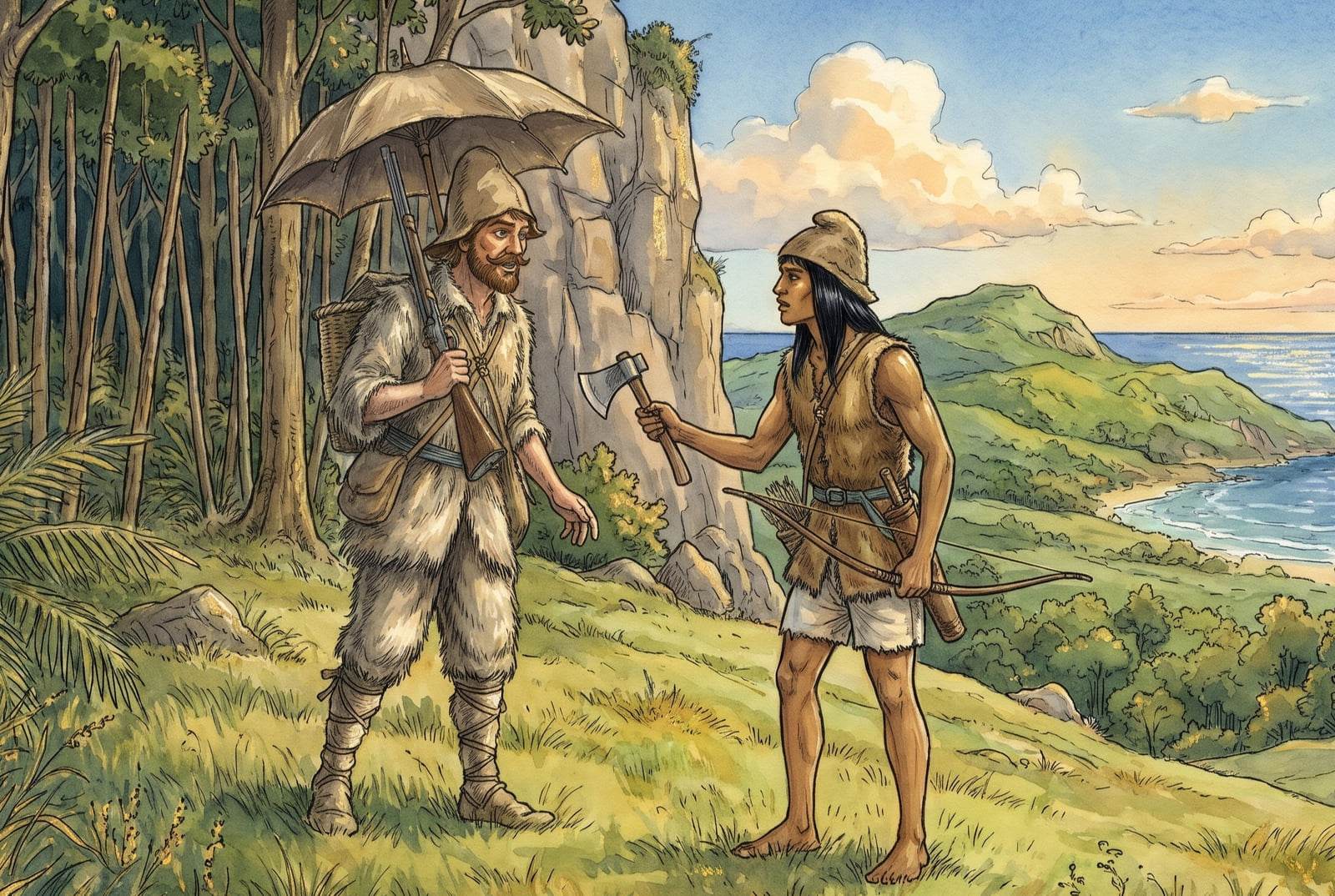
After that Robinson never doubted him, and together they built a big boat close to the water.
Later, twenty-one men landed with three bound prisoners, one of them a white man. Robinson and Friday fired on them from the trees, and Robinson cut the white man loose and armed him. The Spaniard fought like a fury. Seventeen of the twenty-one were killed. In a canoe lay one of the prisoners, tied hand and foot. When Friday saw his face, he wept and danced for joy. It was his own father.
After one more harvest, Robinson sent the Spaniard and Friday’s father to the mainland to fetch the other Spaniards, who would first have to swear to obey Robinson.
Before they returned, mutineers from an English ship rowed ashore with their captain, his mate, and a passenger, to leave them there. Dressed in goatskins, Robinson stepped out of hiding to meet the captain.
“Sir, I will help you on two conditions,” said Robinson. “While you are on this island, you will obey me. And if we win back the ship, you will carry me and my man to England for nothing.”
The captain gladly agreed. Two ringleaders were shot as they woke, and when one proved only wounded, the captain struck him dead with his musket. Later the boatswain was shot in the dark, and the rest gave up, believing the governor of the island, as Robinson now called himself, had an army behind him.
That night the captain took back the ship. His mate shot the rebel captain dead, and the body was hanged from the yardarm.
In the morning the captain pointed to the ship.
“My dear friend and deliverer,” he said, “there’s your ship!”
Robinson could not speak. The worst mutineers chose to stay on the island rather than hang in England. He left them his guns and powder, showed them how he had lived, and gave them a letter for the Spaniards, whom they promised to treat as equals. The next morning two of them swam out begging to come aboard. The captain took them, and later had them flogged. Then, after twenty-eight years, two months, and nineteen days, Robinson sailed away with Friday and Poll.
In England he learned that his father and mother had died. In Lisbon the old Portuguese captain, now poor, paid him what he could and helped him claim the plantation, whose profits had been honestly kept. All at once Robinson was rich. He rewarded the captain and the faithful widow.
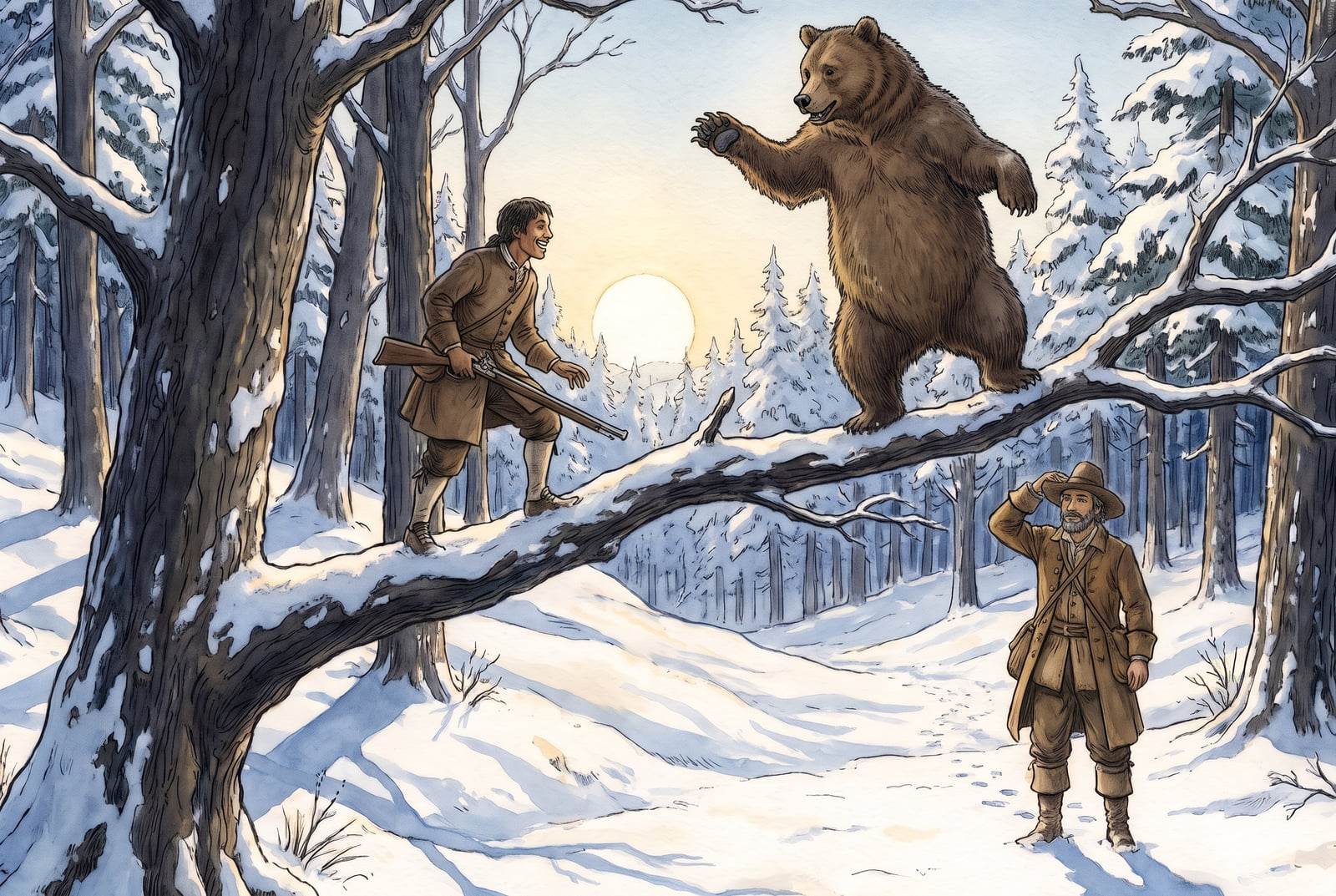
Robinson and Friday traveled home by land. In the snowy Pyrenees a wolf sprang at their guide, and Friday shot it dead. Then a huge bear came out of the woods. Friday hit it with a stone to make it chase him and scrambled up an oak. When the bear followed him out along a branch, Friday shook the branch to make the bear dance, and everyone laughed. At last Friday slid down, took up his gun, and shot the bear as it climbed down.
Farther on, they came upon a horse and two men the wolves had killed. Then about three hundred wolves came at them. From behind a fallen tree the travelers fired volley after volley and lit a trail of powder along it, and about sixty wolves were killed before the rest fled.
At last Robinson sold the plantation and settled at home. He married and had three children. After his wife died, he sailed once more and visited his island. The Spaniards and the men he had left there now lived together, and there were about twenty children.
Retold by Talerie from The Life and Strange Surprizing Adventures of Robinson Crusoe (opens in a new window) Public domain Copy this text, adapt it, use it however you like. A link back to Talerie is appreciated but never required. CC0 1.0 (opens in a new window)