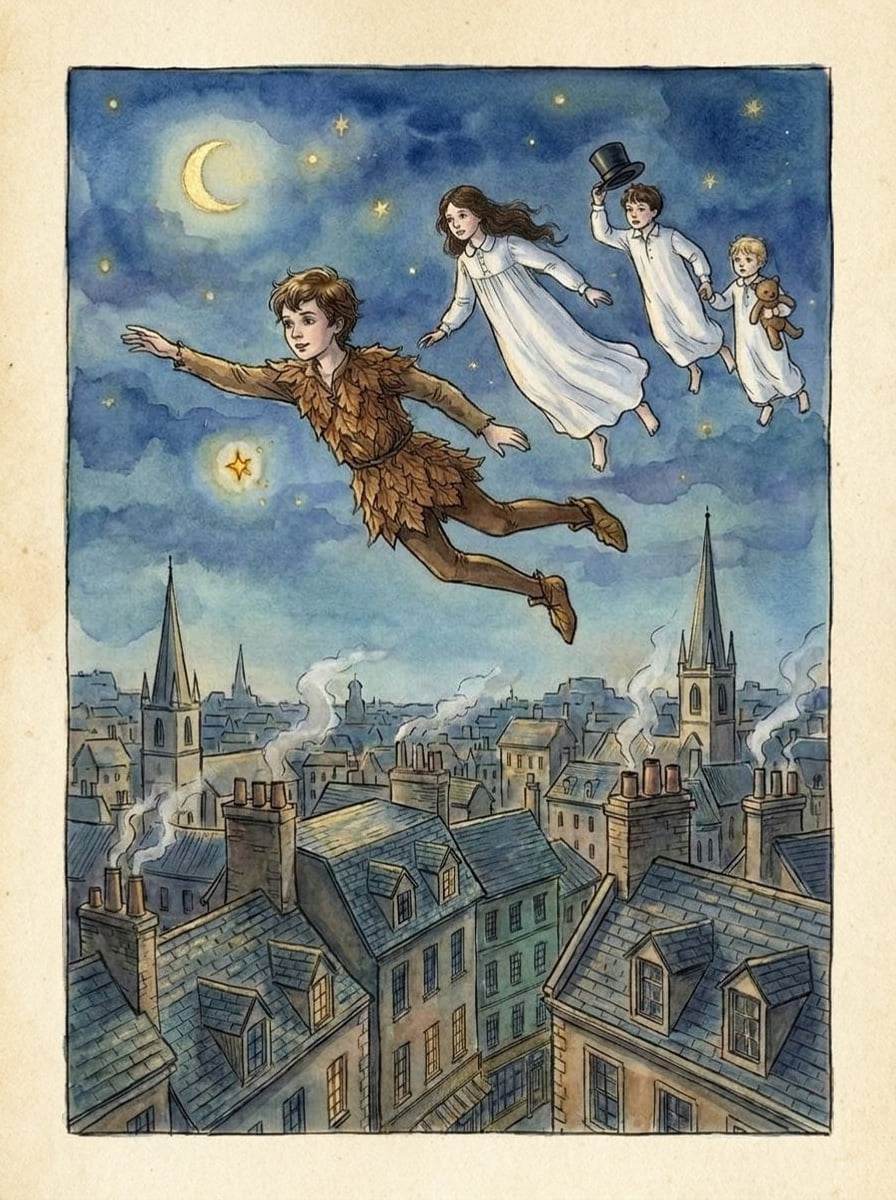
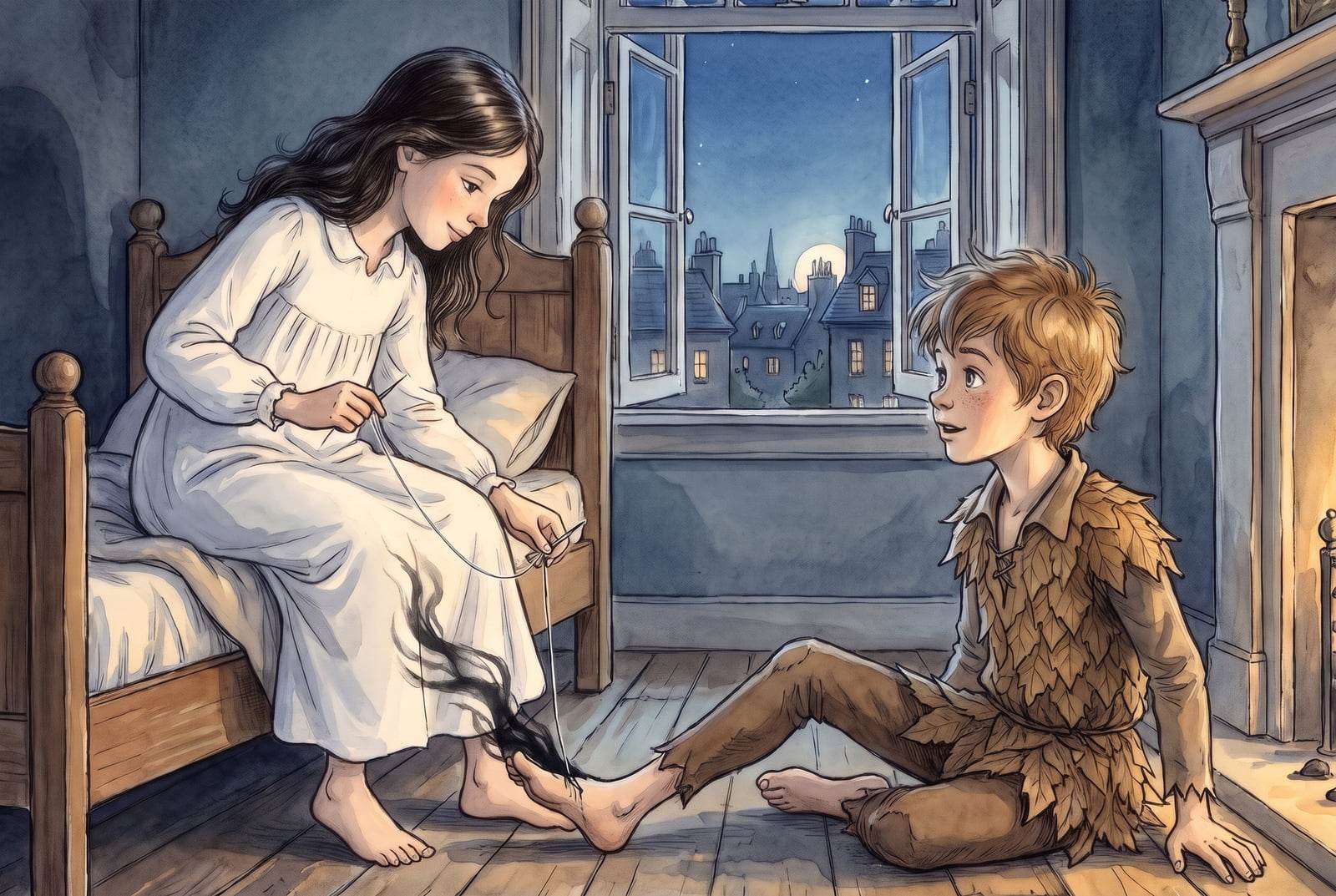
A boy dressed in skeleton leaves flies into the Darlings’ nursery to look for the shadow he lost there. Wendy sews it back onto his foot. Then Peter tells her about the Neverland, where the lost boys have no mother and know no stories, and asks her to fly away with him and be their mother.
All children, except one, grow up. The Darlings had three: Wendy, then John, then little Michael. Their nurse was a Newfoundland dog called Nana, whose kennel stood in the nursery.
One evening a boy flew in at the nursery window, dressed in skeleton leaves and with all his baby teeth. Mrs. Darling knew at once that he was Peter Pan.
She screamed, and Nana sprang. The boy escaped, but the window Nana slammed snapped off his shadow, and Mrs. Darling put it away in a drawer.
A week later Michael refused his medicine. Mr. Darling promised to take his own, far nastier one at the same moment, but when Michael gulped his down, he hid his glass. Then, as a joke, he poured it into Nana’s bowl and told her it was milk. Nana lapped it up and crept sadly into her kennel. Ashamed but stubborn, Mr. Darling dragged her out to chain her in the yard.
“George,” Mrs. Darling whispered, “remember what I told you about that boy.”
He wouldn’t listen. In bed, Wendy heard Nana barking. “That’s her bark when she smells danger,” she said.
Later, when the Darlings had gone out, the night-lights blinked out, and in flashed Tinker Bell, a fairy no longer than your hand, with Peter close behind. He found his shadow, but it wouldn’t stick, so he sat on the floor and cried.
His sobs woke Wendy. She sat up in bed and said, “Boy, why are you crying?”
When he told her, Wendy said, “It must be sewn on,” and she sewed it to his foot.
Peter danced about, crowing, “How clever I am!” He had already forgotten who had done it.
Wendy offered him a kiss, but Peter didn’t know what a kiss was and held out his hand, so she gave him a thimble. In return he gave her his kind of kiss, an acorn button, which she hung on the chain around her neck.
“Where do you live?” she asked.
“Second to the right, and then straight on till morning,” said Peter. “I ran away the day I was born, because I heard my father and mother talking about what I was to be when I became a man. I want always to be a little boy and to have fun.”
He lived in the Neverland with the lost boys, who had no mother and knew no stories, so he came to the window to hear Mrs. Darling’s.
“Oh, I know such lots of stories!” cried Wendy.
“Then come and be our mother,” said Peter. “You could tuck us in at night. And there are mermaids.”
Wendy woke her brothers, Peter blew fairy dust over them all, and out they flew. Nana broke her chain and fetched the Darlings, too late.
On the long flight Peter kept darting off alone, and once he came back hardly knowing them.
“I’m Wendy,” she had to tell him.
“If you ever see me forgetting you,” he said, “just keep on saying ‘I’m Wendy,’ and then I’ll remember.”
He told them about Captain Hook, who had an iron hook for a right hand. Peter had cut off his real one and thrown it to a crocodile, which had followed Hook ever since, hoping for the rest of him. It had also swallowed a clock, so Hook always heard it coming.
Over the island the pirates’ big gun scattered the children. Jealous Tink raced ahead to the lost boys. “Peter wants you to shoot the Wendy,” she told them.
The boys never questioned Peter. Tootles shot an arrow, and Wendy fluttered to the ground.
Then Peter landed. “Great news, boys! I’ve brought you a mother at last!”
Without a word they showed him Wendy. But she was alive: the arrow had hit the acorn button on her chain.
“It is the kiss I gave her,” said Peter. “It has saved her life.” Learning what Tink had done, he banished her for a week.
The boys didn’t dare carry a lady indoors, so they built a little house around her. In her sleep Wendy sang:
I wish I had a pretty house, the littlest ever seen, with funny little red walls and roof of mossy green.
They built it exactly so, with John’s top hat for a chimney, and when Wendy came out, they knelt.
“O Wendy lady, be our mother!”
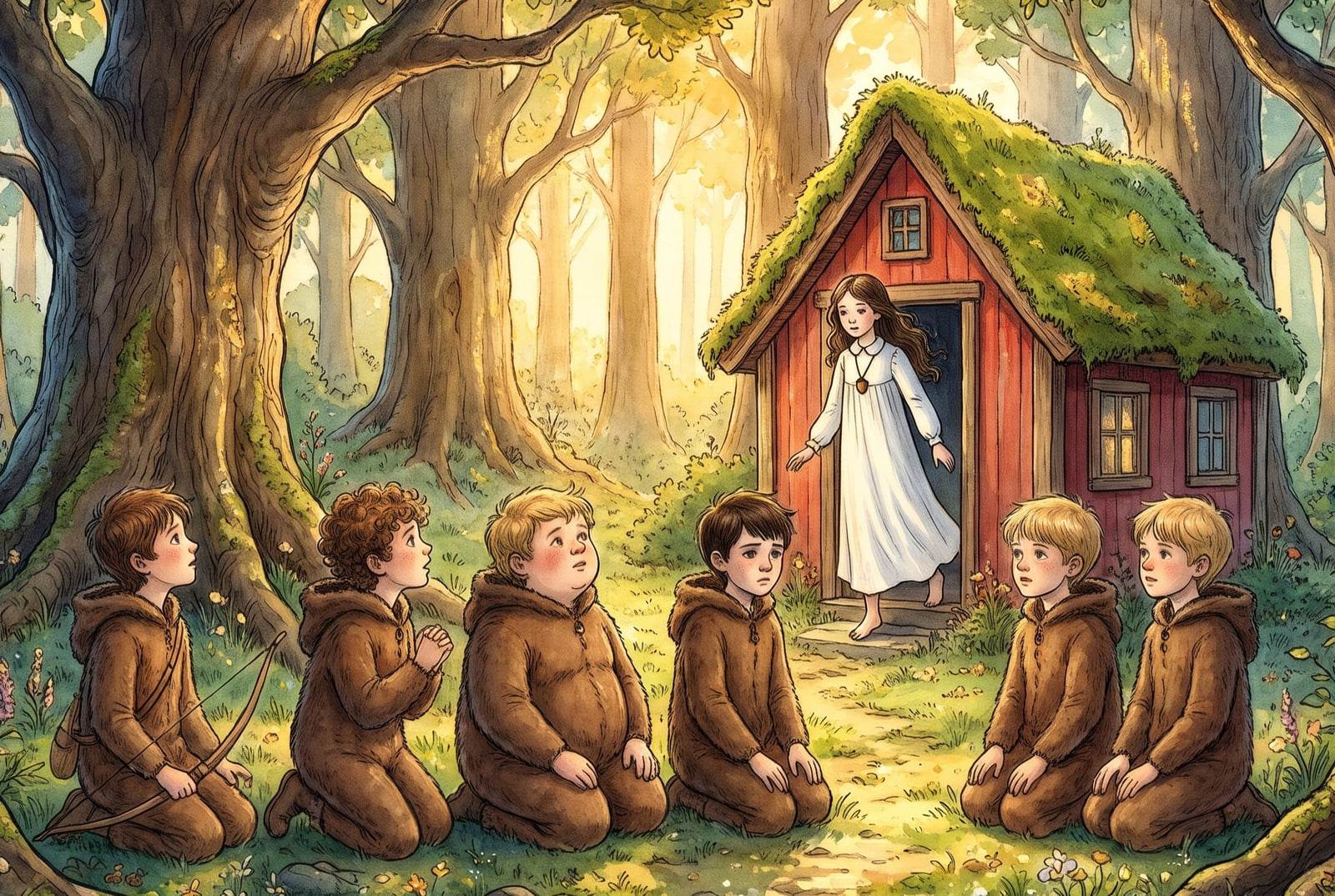
She said yes, and from then on she cooked and sewed and tucked them into bed in their home under the ground.
One day, while the children were at the Mermaids’ Lagoon, Smee and Starkey rowed Tiger Lily out to Marooners’ Rock to leave her to drown. Peter called in Hook’s voice, “Set her free!” and the puzzled pirates obeyed.
Then the real Hook swam up. On the rock Peter gave him a hand up to fight fairly, and Hook bit him and clawed him, then fled from the ticking crocodile.
The boys rowed home, sure Peter and Wendy would fly back. But Peter had pulled Wendy up onto the rock, and now he was too hurt to fly or swim, she was too tired, and the water was rising. When Michael’s kite drifted by, Peter tied her to its tail and sent her off alone.
He was afraid. Then a drum seemed to beat inside him, and it said, “To die will be an awfully big adventure.”
But the Never bird paddled her floating nest to him, and he sailed home in it.
After that, Tiger Lily’s warriors guarded the home under the ground.
One evening Wendy told a story about a mother who always left the window open for her children to fly home.
Peter groaned. “Long ago I thought my mother would keep the window open for me. But when I flew back, it was barred, and there was another little boy sleeping in my bed.”
“Wendy, let’s go home!” cried John and Michael.
Wendy agreed, and promised that her parents would adopt the lost boys too. But Peter wouldn’t come. “I just want always to be a little boy and to have fun,” he said. Wendy poured out his medicine, and they said goodbye.
Just then the pirates fell on the warriors and killed many of them, though Tiger Lily got away. Then Hook had Smee beat the warriors’ drum, their sign of victory.
“The warriors have won!” cried Peter.
So the children happily climbed their hollow trees, and at the top the pirates seized them one by one and tied them up.
The rope wouldn’t go around Slightly, and Hook guessed why: a boy that fat must have whittled his tree wide enough for a man. The pirates packed the children into Wendy’s little house and carried it to their ship.
Hook slipped down Slightly’s tree, but a little door he could not open kept him from the sleeping Peter. Within reach stood the medicine Peter hadn’t taken, just to make Wendy sorry. Hook poisoned it.
Tink flashed in with the news. Peter leaped up to rescue Wendy, but first, to please her, he reached for his medicine.
“No! It’s poisoned!” cried Tink, and she drank it all herself.
Her light grew dim. She whispered that she could get well if children believed in fairies, so Peter called to every child dreaming of the Neverland.
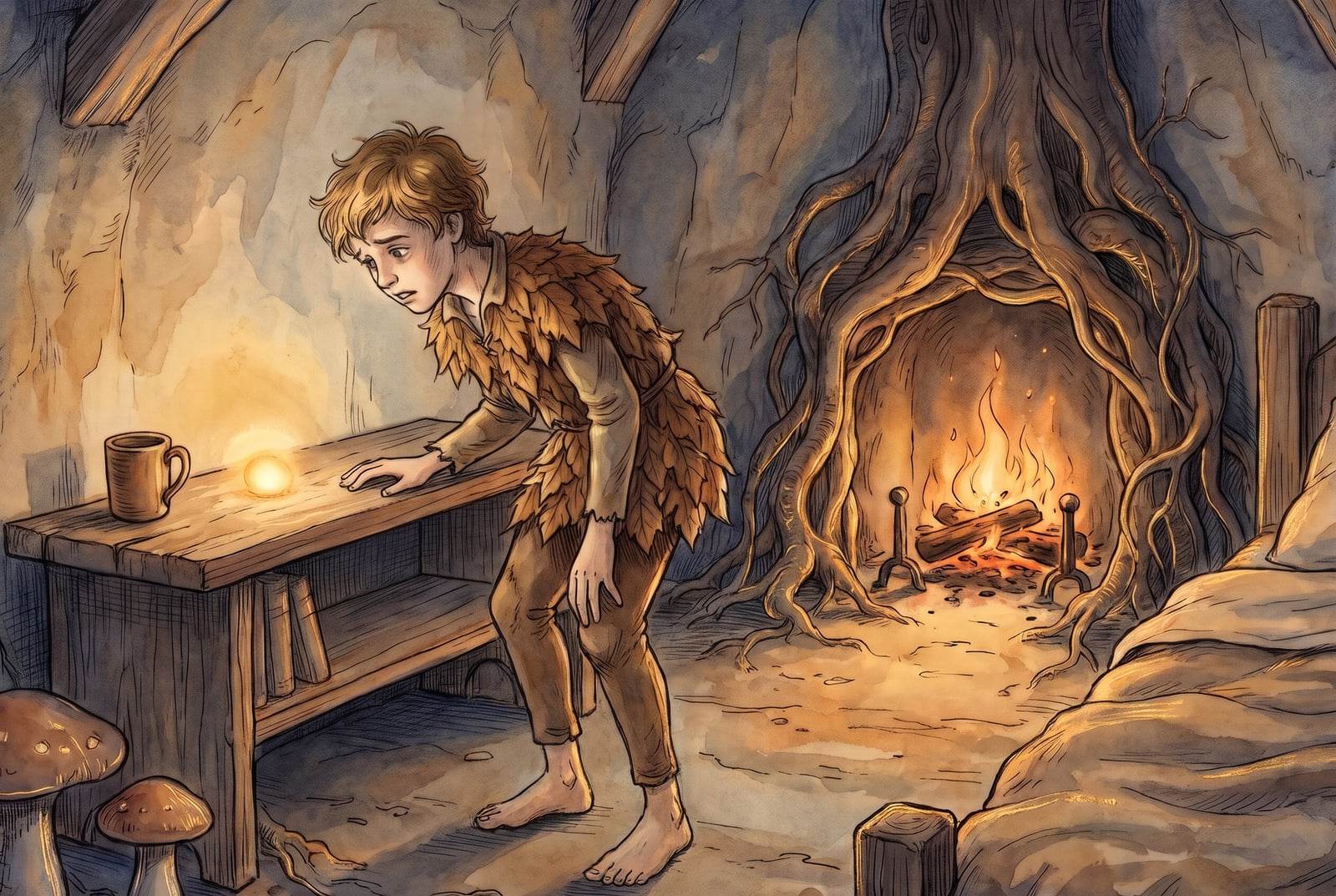
“If you believe, clap your hands; don’t let Tink die.”
Many clapped. Some didn’t. But Tink was saved.
“Hook or me this time,” Peter swore. The crocodile’s clock had run down, so Peter ticked as he went, to pass for it among the wild beasts.
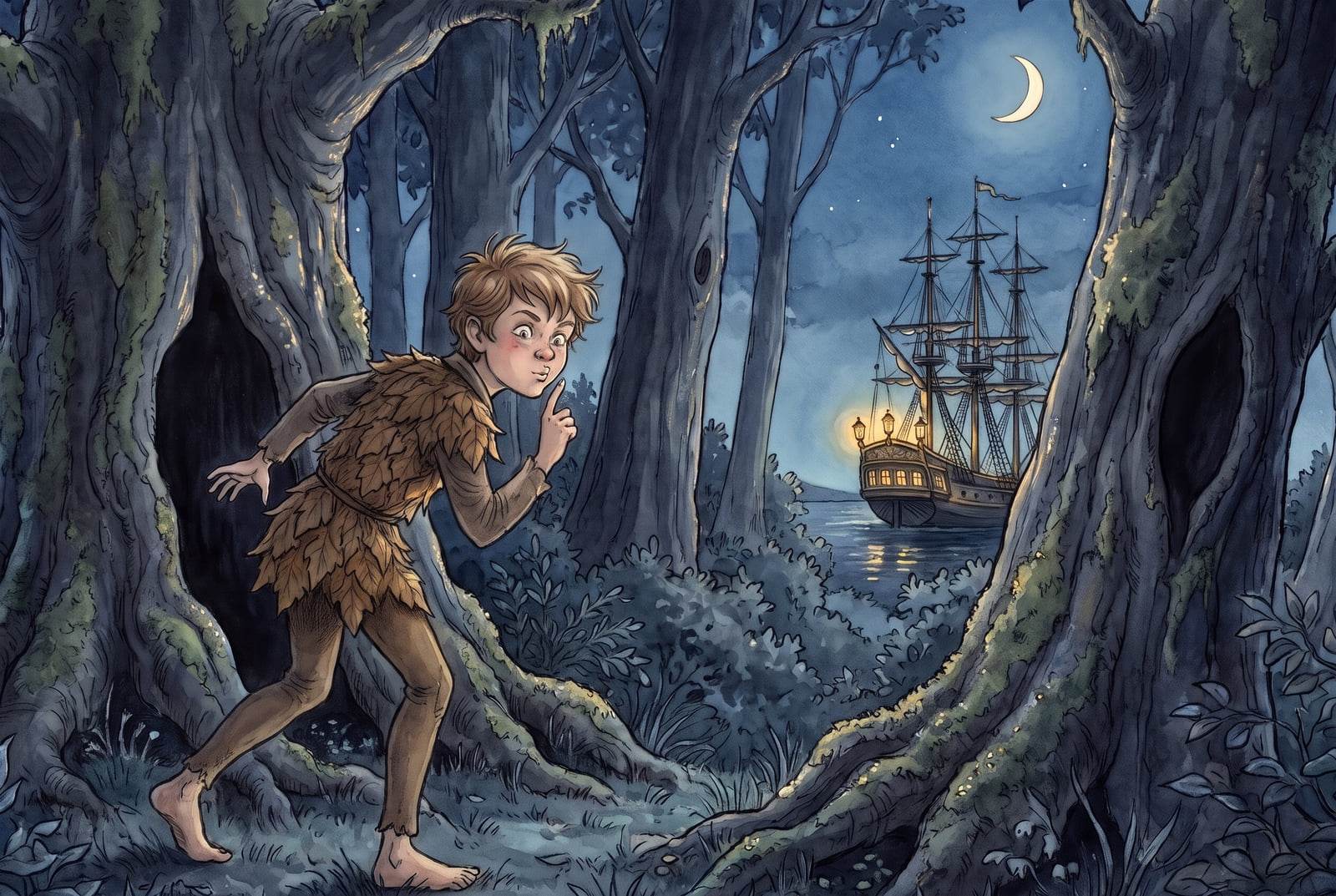
On the ship, Wendy was tied to the mast and the boys were about to walk the plank when everyone heard it: tick, tick, tick. Hook crumpled, begging his men to hide him. But it was Peter who climbed aboard.
He killed the quartermaster without a sound and slipped into the dark cabin. Slightly began to count the fallen pirates. Hook sent Bill Jukes in for his whip, then Cecco; each time there was a screech and a crow, and neither came out alive.
Then Hook drove the boys into the cabin to fight whatever was there. Peter found the key to their chains and freed them, then cut Wendy loose, hid her, and stood at the mast in her cloak.
“Peter Pan the avenger!” he cried, flinging off the cloak, and out rushed the boys with swords. The pirates fell or leaped into the sea until only Hook was left.
“Put up your swords, boys,” said Peter. “This man is mine.”
They fought until Hook’s sword fell, and Peter let him pick it up.
“Pan, who and what art thou?” cried Hook.
“I’m youth, I’m joy,” said Peter. “I’m a little bird that has broken out of the egg.”
Hook sprang onto the rail, with the crocodile waiting below. He had one wish left: to see Peter show bad form. As Peter flew at him, Hook tricked him into kicking instead of stabbing.
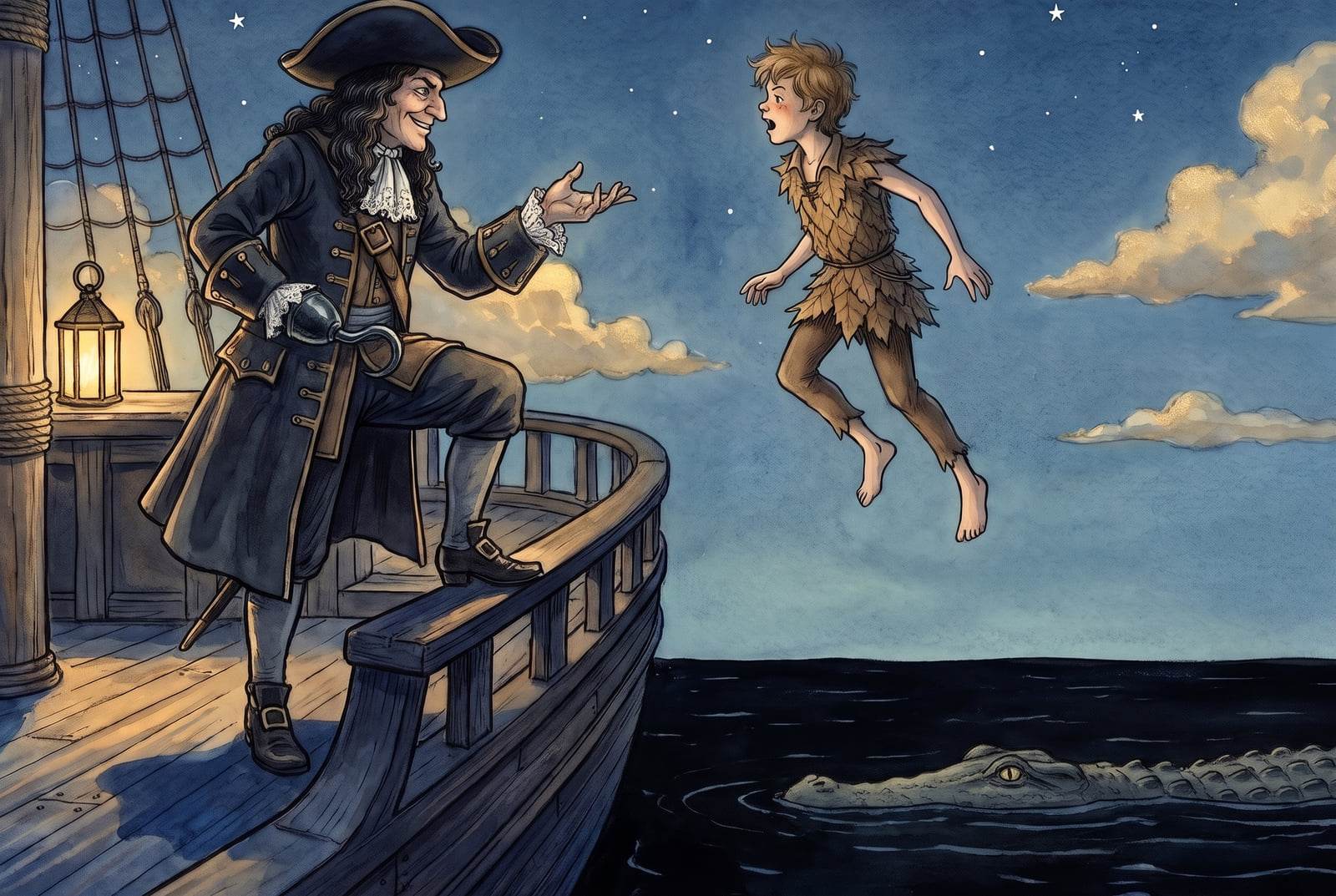
“Bad form,” Hook jeered, and he went happily to the crocodile. That was the end of Captain Hook.
All this time Mrs. Darling had kept the window open, and Mr. Darling, blaming himself, had lived in Nana’s kennel. Peter flew ahead and barred the window, so Wendy would think herself shut out and come back with him, but Mrs. Darling’s tears at the piano made him unbar it.
The children slipped into their beds. Mrs. Darling thought she was dreaming, until they ran into her arms. Only Peter saw it, through the window: the one joy he could never have.
All the lost boys were adopted, and Mrs. Darling offered to adopt Peter too.
“Would you send me to school?” he asked. “And then to an office? I don’t want to be a man. If I woke up and felt a beard!”
He went to live with Tink in the little house, high in the treetops, and Mrs. Darling promised Wendy could go to him every spring for his spring cleaning.
The first spring he came, but he had forgotten Captain Hook. When Wendy spoke of Tinker Bell, he asked, “Who is Tinker Bell?” When she told him, he said, “I expect she is no more.” Fairies don’t live long. The next spring he didn’t come; the spring after, he did, never knowing he had missed one. Then years went by, and Wendy grew up.
One spring night, while Wendy sat darning in the old nursery and her daughter, Jane, slept, Peter dropped in, the same as ever. Wendy turned up the light, and he saw she was a grown woman.
“You promised not to!” he cried, and he sat on the floor and sobbed.
Jane woke, sat up in bed, and said, “Boy, why are you crying?”
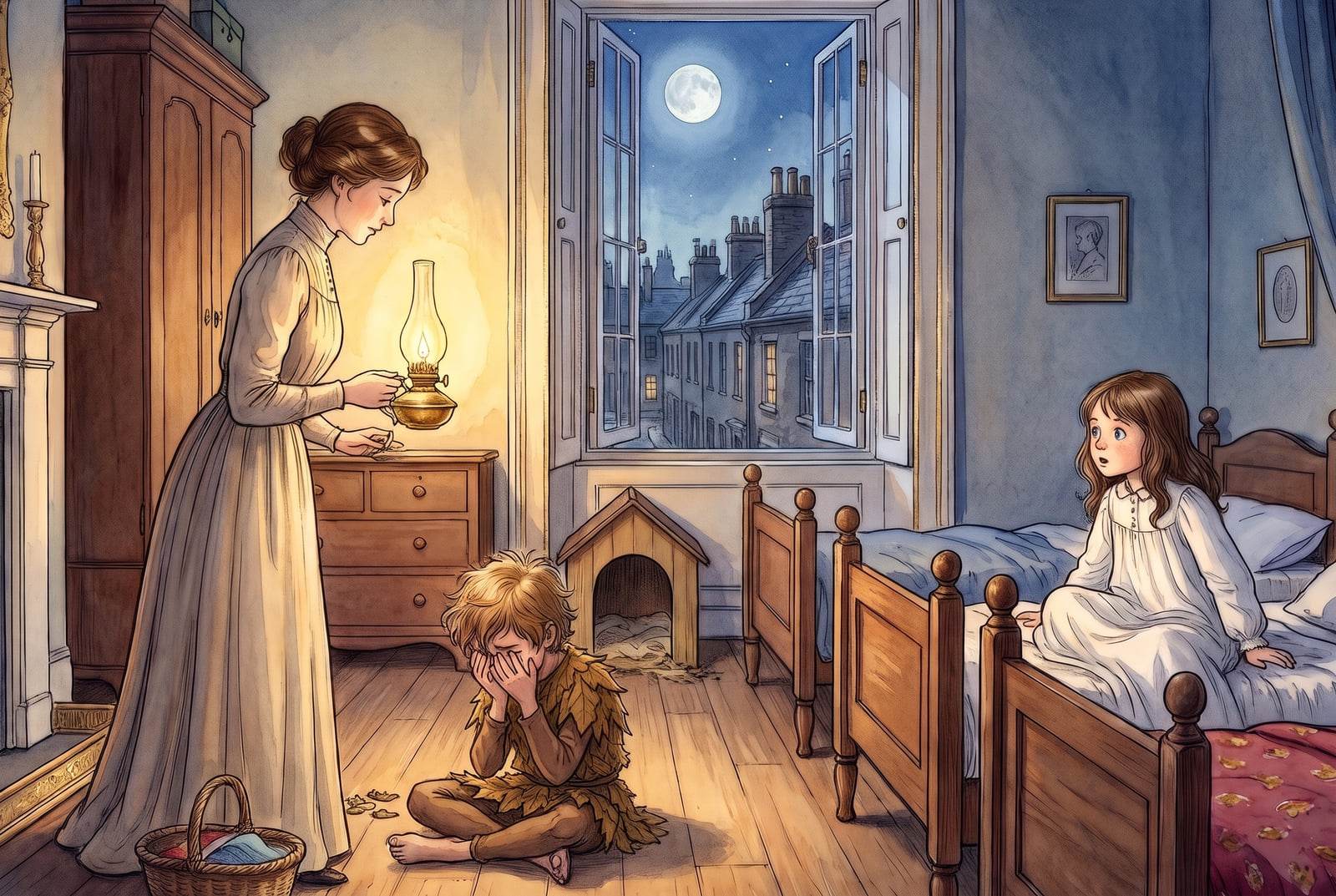
“I came back for my mother,” said Peter, “to take her to the Neverland.”
“Yes, I know,” said Jane. “I’ve been waiting for you.”
Soon Jane flew off with Peter to be his mother. Wendy watched from the window until they were as small as stars.
Now Jane is grown up, and Peter comes for her daughter, Margaret, whose daughter will be his mother in turn. And so it will go on, as long as children are merry and innocent and heartless.
Retold by Talerie from Peter and Wendy (opens in a new window) Public domain Copy this text, adapt it, use it however you like. A link back to Talerie is appreciated but never required. CC0 1.0 (opens in a new window)