 Original
The Fisherman and His Wife
18 min readages 6 and uptalerie.com/en/tales/the-fisherman-and-his-wife-original
A poor fisherman frees a talking flounder, and his wife sends him back again and again with grander wishes: a cottage, a castle, a crown. When she at last demands to become like God, a black storm sends houses and trees crashing while the sea roars, and the flounder leaves them sitting in their hovel once more.
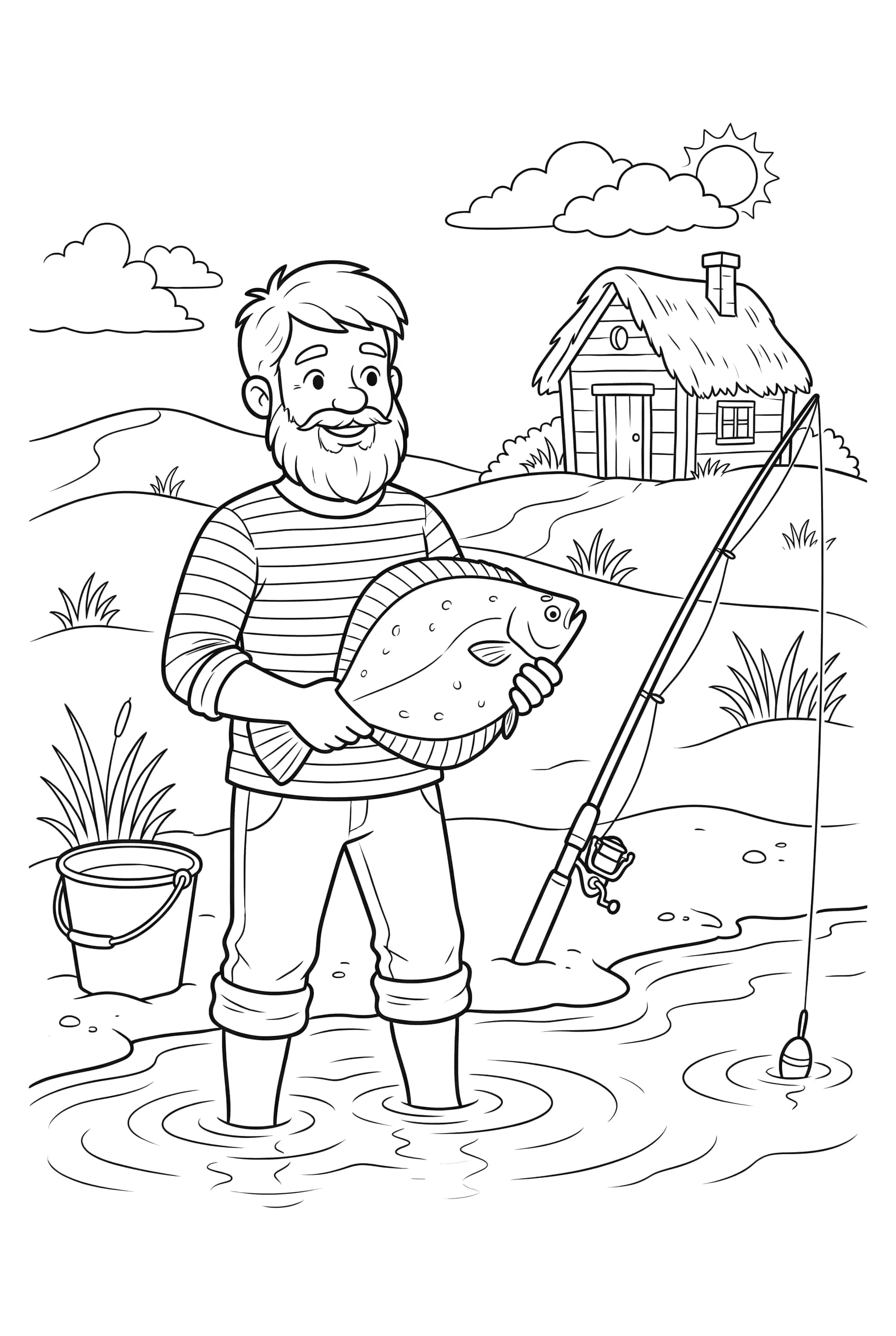
Once upon a time there was a fisherman who lived with his wife in a miserable hovel close by the sea, and every day he went out to fish. He fished and he fished.
One day he sat by his line, looking down into the clear water, and he sat and he sat.
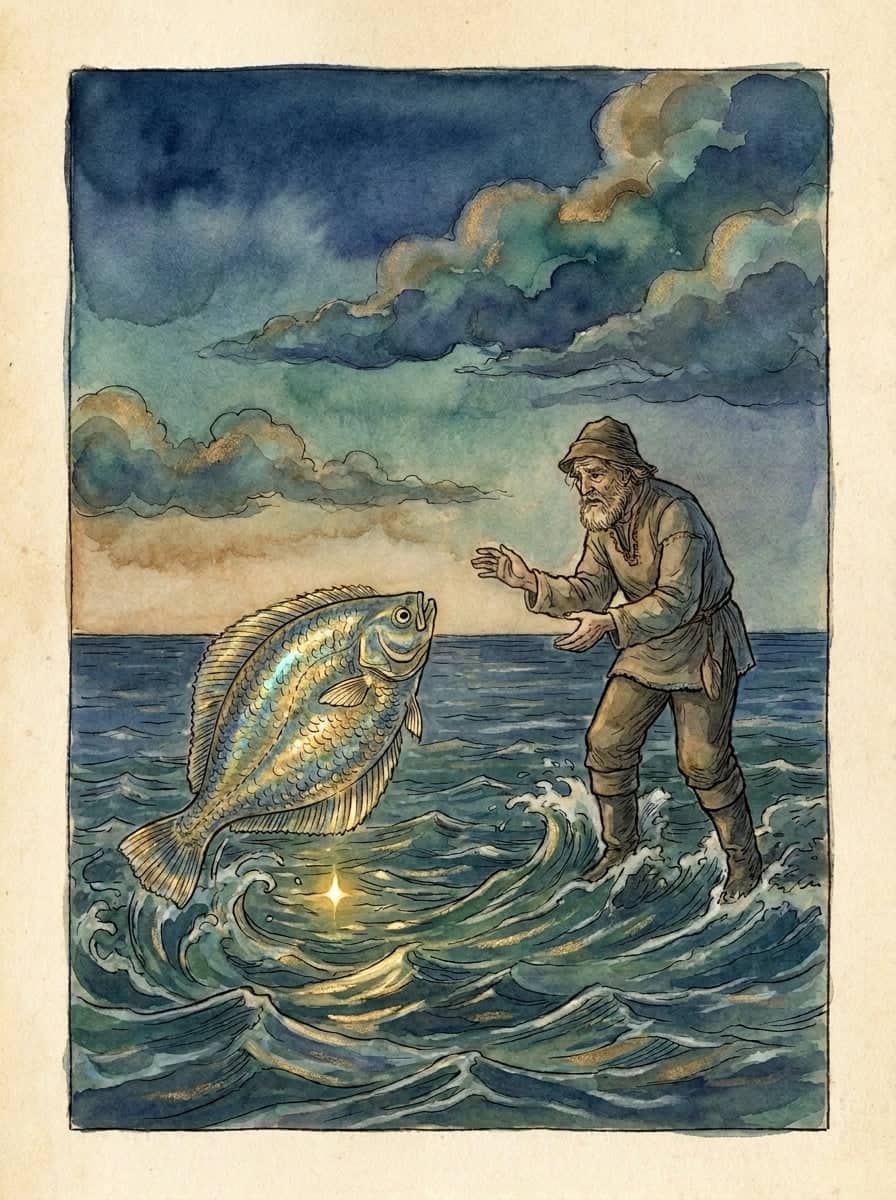
Then his line went down, far down to the bottom, and when he drew it up he brought out a great flounder. And the flounder said to him, “Listen, fisherman, I beg you, let me live. I am no ordinary flounder. I am an enchanted prince. What good would it do you to kill me? I would not be good to eat anyway. Put me back into the water and let me swim.”
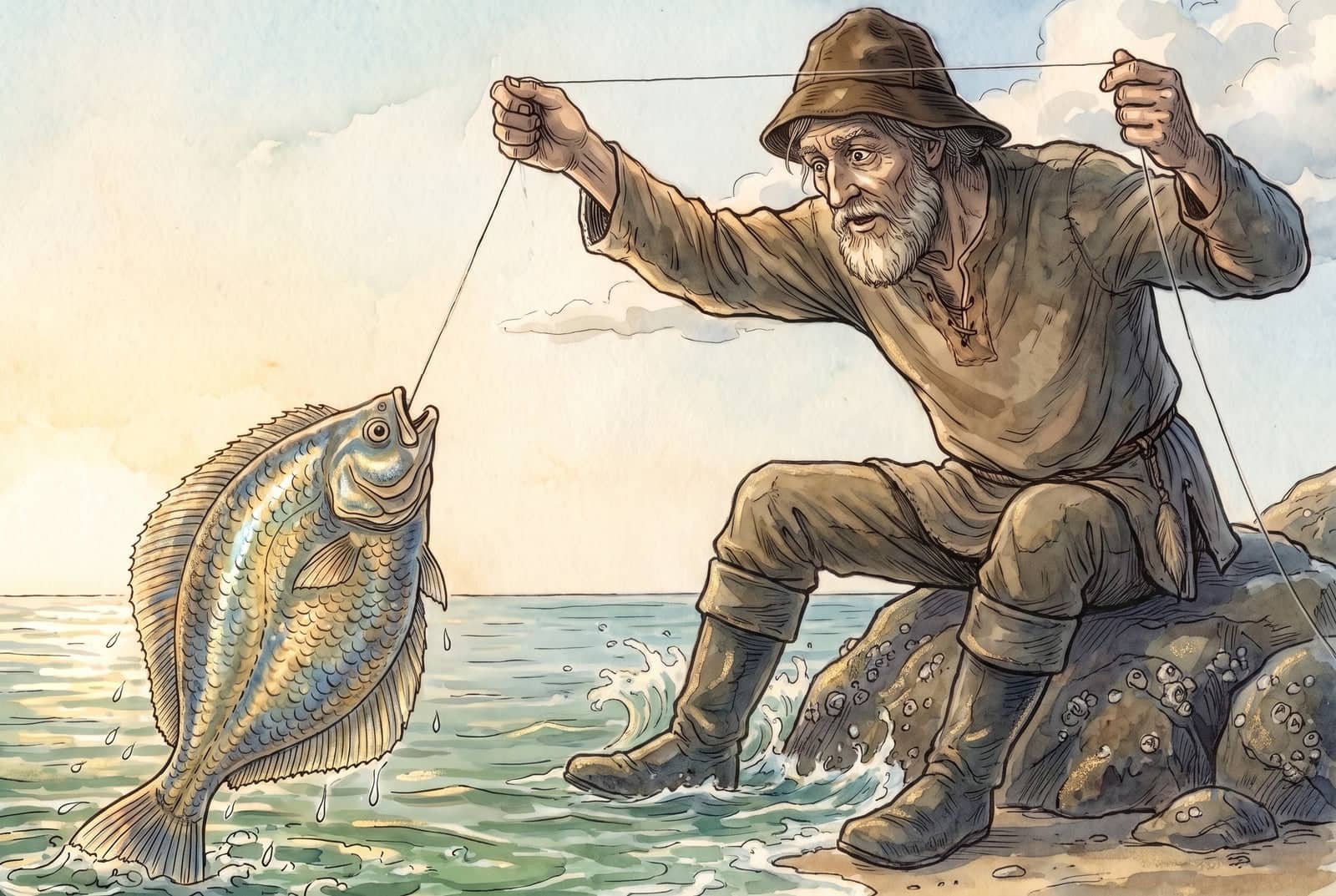
“Well,” said the man, “you needn’t waste so many words on it. A flounder that can talk I would have let go in any case.” With that he put him back into the clear water, and the flounder went down to the bottom and left a long streak of blood behind him. Then the fisherman got up and went home to his wife in the hovel.
“Husband,” said the wife, “have you caught nothing today?”
“No,” said the man. “I caught a flounder who said he was an enchanted prince, so I let him swim away again.”
“Did you not wish for anything?” said the wife.
“No,” said the man. “What should I wish for?”
“Oh,” said the wife, “it is a hard thing, always living here in this hovel. It stinks and it is horrible. You might at least have wished us a little cottage. Go back and call him. Tell him we want a little cottage. He will surely do it.”
“Oh,” said the man, “why should I go there again?”
“Why,” said the wife, “you caught him and you let him swim away. He will surely do it. Go at once.”
The man still did not really want to, but he did not want to cross his wife either, and he went down to the sea.
When he got there the sea was all green and yellow, and no longer clear and bright. So he stood still and said,
Flounder, flounder in the sea,come, I beg you, come to me;for my wife, good Ilsabil,wants her way against my will.
Then the flounder came swimming up and said, “Well, what does she want, then?”
“Ah,” said the man, “I did catch you, after all, and now my wife says I ought to have wished for something. She does not want to live in the hovel any longer. She would like a cottage.”
“Just go home,” said the flounder. “She has it already.”
So the man went home, and his wife was not sitting in the hovel any longer. In its place stood a little cottage, and she was sitting on a bench before the door. She took him by the hand and said, “Come inside. Look, isn’t this much better?”
They went in, and inside the cottage there was a little hall, and a lovely little parlor and a bedroom with their bed in it, and a kitchen and a pantry, all with the best of furnishings and laid out beautifully, with pewter and brass and everything such a place should have. Behind it there was a little yard with hens and ducks, and a little garden with vegetables and fruit.
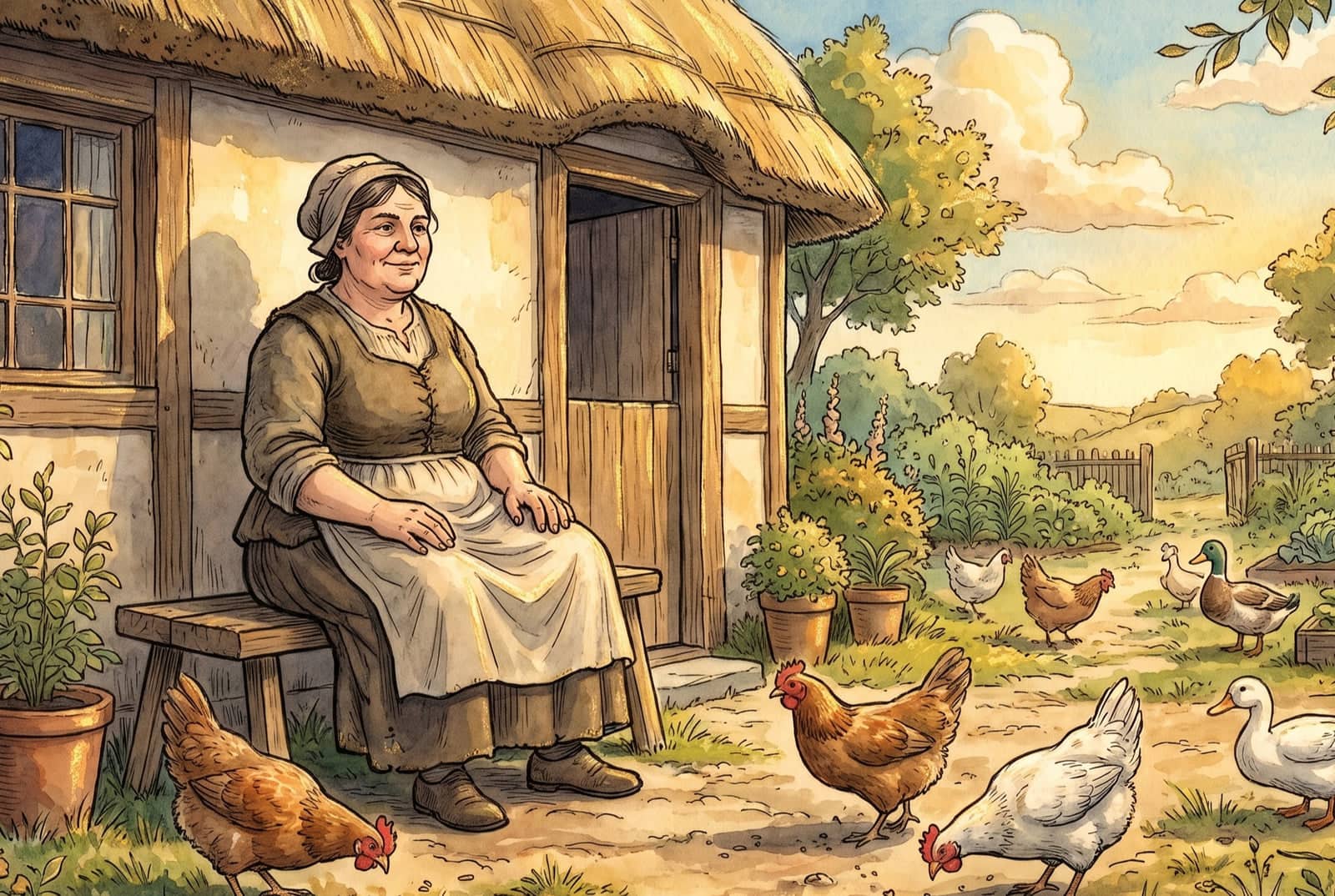
“Look,” said the wife, “isn’t that nice?”
“Yes,” said the man. “So it shall stay. Now we will live quite content.”
“We shall think about that,” said the wife. With that they ate a little and went to bed.
Things went well for a week or two, and then the wife said, “Listen, husband, this cottage is far too cramped, and the yard and the garden are so small. The flounder could just as well have given us a bigger house. I would like to live in a great stone castle. Go to the flounder and tell him to give us a castle.”
“Oh, wife,” said the man, “the cottage is good enough. Why should we live in a castle?”
“What nonsense,” said the wife. “You just go. The flounder can always do it.”
“No, wife,” said the man. “The flounder has only just given us the cottage. I don’t like to come back so soon. It might annoy him.”
“Go on,” said the wife. “He can do it easily and he will be glad to. You just go.”
The man’s heart grew heavy, and he did not want to. He said to himself, “This is not right,” and yet he went.
When he came to the sea, the water was all purple and dark blue and gray and thick, and no longer green and yellow, though it was still calm. So he stood there and said,
Flounder, flounder in the sea,come, I beg you, come to me;for my wife, good Ilsabil,wants her way against my will.
“Well, what does she want, then?” said the flounder.
“Ah,” said the man unhappily, “she wants to live in a great stone castle.”
“Just go home. She is standing before the door,” said the flounder.
Then the man went off, meaning to go home, but when he got there a great stone palace stood in its place, and his wife was just on the steps, about to go in. She took him by the hand and said, “Come inside.”
So he went in with her, and in the castle there was a great hall with a marble floor, and many servants, who threw the great doors open wide. The walls were bright with beautiful hangings, and in the rooms there was nothing but golden chairs and tables, and crystal chandeliers hung from the ceilings, and every room and every bedroom had carpets. Food and the very best wine stood on the tables, so that they nearly broke beneath it all. Behind the house there was a great courtyard too, with stables for horses and cows, and carriages of the very finest; and there was a great splendid garden with the loveliest flowers and fine fruit trees, and a park a good half mile long, with stags and deer and hares in it, and everything anyone could ever wish for.

“Well,” said the wife, “isn’t that beautiful?”
“Oh yes,” said the man. “So it shall stay. Now we will live in this beautiful castle and be content.”
“We shall think about that,” said the wife, “and sleep on it.” With that they went to bed.
Next morning the wife woke first. It was just daybreak, and from her bed she saw the glorious land lying before her. Her husband was still lying there stretching himself awake, so she poked him in the side with her elbow and said, “Husband, get up and look out of the window. See now, could we not be king over all this land? Go to the flounder. We will be king.”
“Oh, wife,” said the man, “why should we be king? I do not want to be king.”
“Well,” said the wife, “if you will not be king, I will. Go to the flounder. I want to be king.”
“Oh, wife,” said the man, “why do you want to be king? I don’t like to tell him that.”
“Why not?” said the wife. “Go this instant. I must be king.”
So the man went, and he was quite miserable that his wife wanted to be king. “It is not right, it is not right,” he thought. He did not want to go, and yet he went.
And when he came to the sea it was all dark gray, and the water heaved up from below and smelled foul. So he stood there and said,
Flounder, flounder in the sea,come, I beg you, come to me;for my wife, good Ilsabil,wants her way against my will.
“Well, what does she want, then?” said the flounder.
“Ah,” said the man, “she wants to be king.”
“Just go home. She is king already,” said the flounder.
So the man went, and when he came to the castle it had grown far bigger, with a great tower on it and splendid ornaments. A sentry stood before the door, and there were soldiers beyond counting with kettledrums and trumpets. When he came into the house, everything was of pure marble and gold, with velvet covers and great golden tassels. Then the doors of the hall were thrown open, and there was the whole court, and his wife sat on a high throne of gold and diamond, with a great golden crown on her head and a scepter of pure gold and precious stones in her hand, and on either side of her stood six ladies-in-waiting in a row, each one a head shorter than the last.
He went and stood before her and said, “Ah, wife, are you king now?”
“Yes,” said the wife, “now I am king.”
So he stood and looked at her, and when he had looked at her for a while he said, “Ah, wife, how fine that looks, now that you are king. Now we will wish for nothing more.”
“No, husband,” said the wife, and she was quite restless. “Time hangs heavy on my hands, I cannot bear it any longer. Go to the flounder. I am king, and now I must be emperor too.”
“Oh, wife,” said the man, “why do you want to be emperor?”
“Husband,” she said, “go to the flounder. I want to be emperor.”
“Oh, wife,” said the man, “he cannot make you emperor. I don’t like to tell the flounder that. There is only one emperor in the empire. The flounder cannot do it, and there is an end of it.”
“What!” said the wife. “I am king, and you are nothing but my husband. Will you go this instant? Go at once. If he can make a king, he can make an emperor. I want to be emperor, and I will be. Go at once.”
So he had to go. But as the man went he grew very frightened, and as he walked he thought to himself, “This will not end well. To ask to be emperor is shameless. In the end the flounder will grow tired.”
With that he came to the sea, and the sea was all black and thick and had begun to boil up from below, so that it threw up bubbles, and such a sharp wind blew over it that it curdled, and the man was filled with dread. So he stood there and said,
Flounder, flounder in the sea,come, I beg you, come to me;for my wife, good Ilsabil,wants her way against my will.
“Well, what does she want, then?” said the flounder.
“Ah, flounder,” he said, “my wife wants to be emperor.”
“Just go home,” said the flounder. “She is emperor already.”
So the man went, and when he got there the whole castle was of polished marble, with alabaster figures and golden ornaments. Soldiers marched before the door, blowing trumpets and beating kettledrums and side drums, and inside the house barons and counts and dukes went about as servants. They opened the doors for him, and the doors were of pure gold. When he came in, there sat his wife on a throne made out of one single piece of gold, and it was a good two miles high; and she wore a great golden crown three yards high, set with brilliants and rubies, and in one hand she held the scepter and in the other the imperial orb; and on either side of her stood her guards in two rows, each one smaller than the one before him, from the very biggest giant, who was two miles high, down to the very smallest dwarf, no bigger than a little finger. And before her stood a great many princes and dukes.
The man went and stood among them and said, “Wife, are you emperor now?”
“Yes,” she said, “I am emperor.”
Then he stood and looked at her properly, and when he had looked at her for a while he said, “Ah, wife, how fine that looks, now that you are emperor.”
“Husband,” she said, “why are you standing there? I am emperor now, but now I want to be pope as well. Go to the flounder.”
“Oh, wife,” said the man, “what will you want next? You cannot become pope. There is only one pope in all Christendom. He cannot make you that.”
“Husband,” she said, “I want to be pope. Go this instant. I must be pope this very day.”
“No, wife,” said the man, “I don’t like to tell him that. It will not go well. It is too much. The flounder cannot make you pope.”
“Husband, what nonsense!” said the wife. “If he can make an emperor, he can make a pope. Go at once. I am emperor, and you are nothing but my husband. Will you go?”
Then he was afraid and went, but he felt quite faint, and he shivered and shook, and his knees and his calves trembled under him. A high wind swept over the land, and the clouds flew, and it grew dark toward evening. The leaves blew from the trees, and the water rose and roared as if it were boiling, and splashed against the shore, and far off he saw ships firing their guns in their distress, dancing and leaping on the waves. And still there was a little patch of blue in the middle of the sky, though all around the edges it came up as red as in a heavy storm. So he went and stood there in fear and despair and said,
Flounder, flounder in the sea,come, I beg you, come to me;for my wife, good Ilsabil,wants her way against my will.
“Well, what does she want, then?” said the flounder.
“Ah,” said the man, “she wants to be pope.”
“Just go home,” said the flounder. “She is pope already.”
So he went, and when he got there he found what looked like a great church, with nothing but palaces all around it. He pushed his way through the crowd. Inside, everything was lit with thousands upon thousands of candles, and his wife was clothed all in gold and sat on a throne higher still, with three great golden crowns on her head, and all about her was the splendor of the church; and on either side of her stood two rows of candles, the largest as thick and as tall as the very tallest tower, down to the smallest kitchen candle. And all the emperors and all the kings knelt before her and kissed her slipper.

“Wife,” said the man, and he looked at her closely, “are you pope now?”
“Yes,” she said, “I am pope.”
So he stood and looked at her properly, and it was as if he were looking into the bright sun. When he had looked at her for a while he said, “Ah, wife, how fine that looks, now that you are pope.”
But she sat as stiff as a post and did not stir or move at all.
Then he said, “Wife, be content now. Now that you are pope, there is nothing more you can become.”
“I shall think about that,” said the wife.
With that they both went to bed, but she was not content, and her greed would not let her sleep. She lay thinking all the while what more she might yet become.
The man slept well and soundly, for he had run about a great deal that day, but the wife could not fall asleep at all. She threw herself from one side to the other the whole night through, thinking always what more she might become. At last the sun began to rise, and when she saw the red of morning she sat up in bed and looked out at it. And as she watched the sun come up through the window, she thought, “Aha, could I not make the sun and the moon rise as well?”
“Husband,” she said, and poked him in the ribs with her elbow, “wake up. Go to the flounder. I want to become like God.”
The man was still half asleep, but he was so horrified that he fell out of bed. He thought he must have misheard, and he rubbed his eyes and said, “Oh, wife, what did you say?”
“Husband,” she said, “if I cannot make the sun and the moon rise, and have to sit and watch the sun and the moon rise without me, I cannot bear it. I shall never have one quiet hour again, so long as I cannot make them rise myself.”
Then she gave him such a horrible look that a shudder ran through him. “Go this instant. I want to become like God.”
“Oh, wife,” said the man, and he fell on his knees before her, “the flounder cannot do that. He can make an emperor and a pope, and no more than that. I beg you, be content and stay pope.”
Then she flew into a fury. Her hair whirled wildly about her head, and she tore at her bodice and gave him a kick and screamed, “I cannot bear it, I will not bear it any longer! Will you go?”
Then he pulled on his trousers and ran off like a madman.
Outside the storm was raging, and it roared so that he could hardly keep his feet. Houses and trees blew over, and the mountains shook, and pieces of rock rolled into the sea, and the sky was pitch black, and the thunder rolled and the lightning flashed, and the sea came in with black waves as high as church towers and as high as mountains, and every one of them wore a white crown of foam on top. Then he shouted, and he could not hear his own words,
Flounder, flounder in the sea,come, I beg you, come to me;for my wife, good Ilsabil,wants her way against my will.
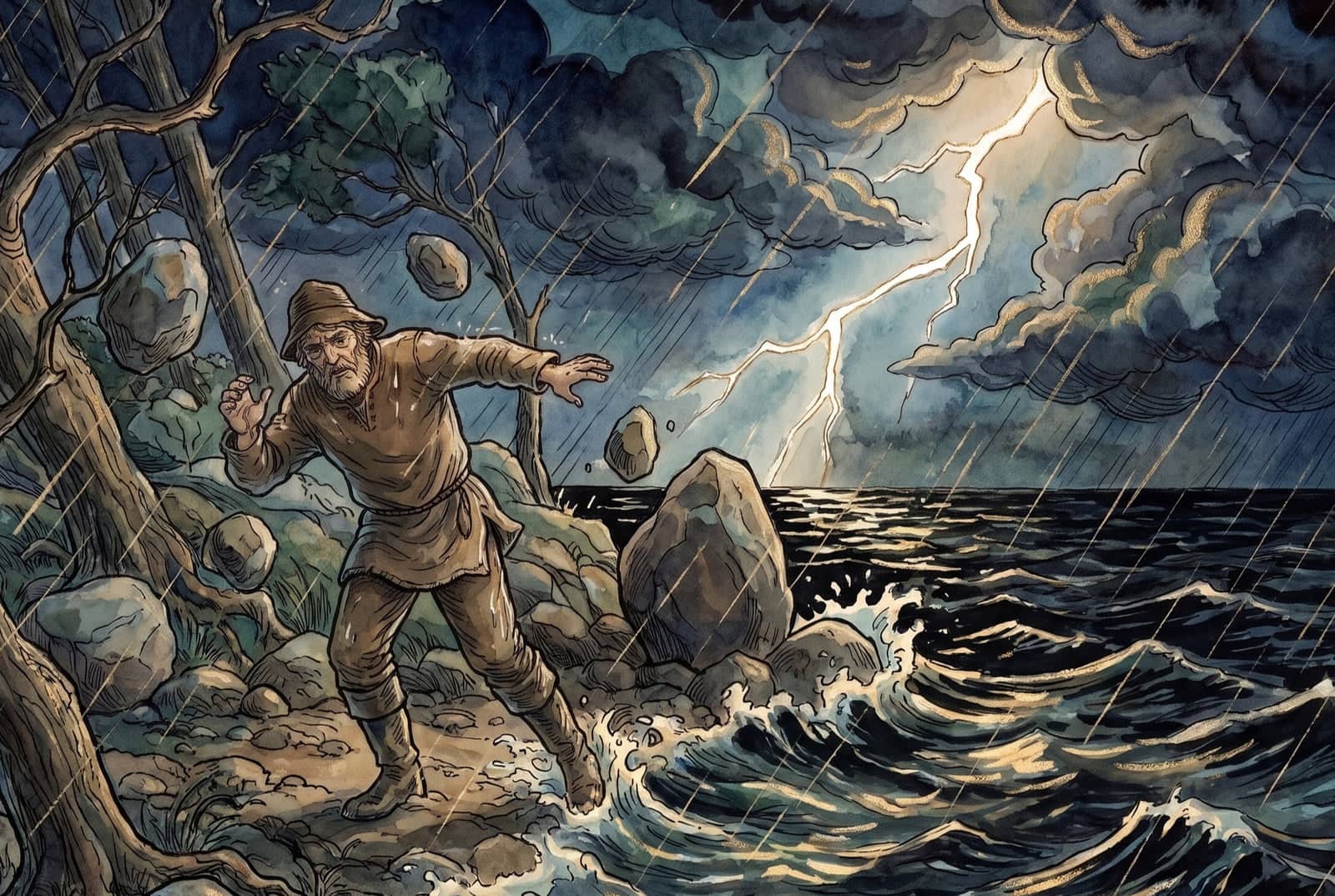
“Well, what does she want, then?” said the flounder.
“Ah,” he said, “she wants to become like God.”
“Just go home. She is sitting in the hovel again.”
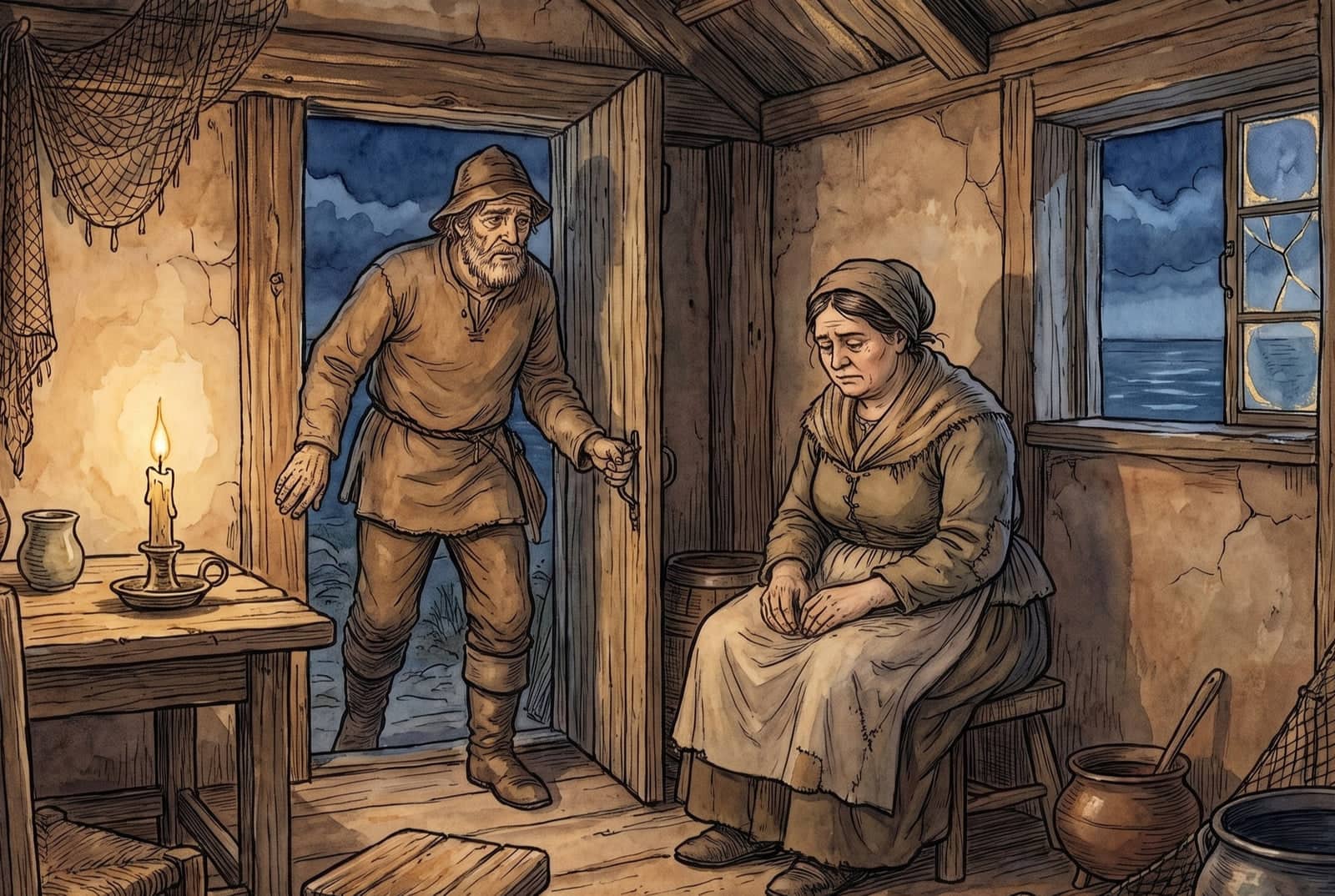
And there they are sitting to this very day.
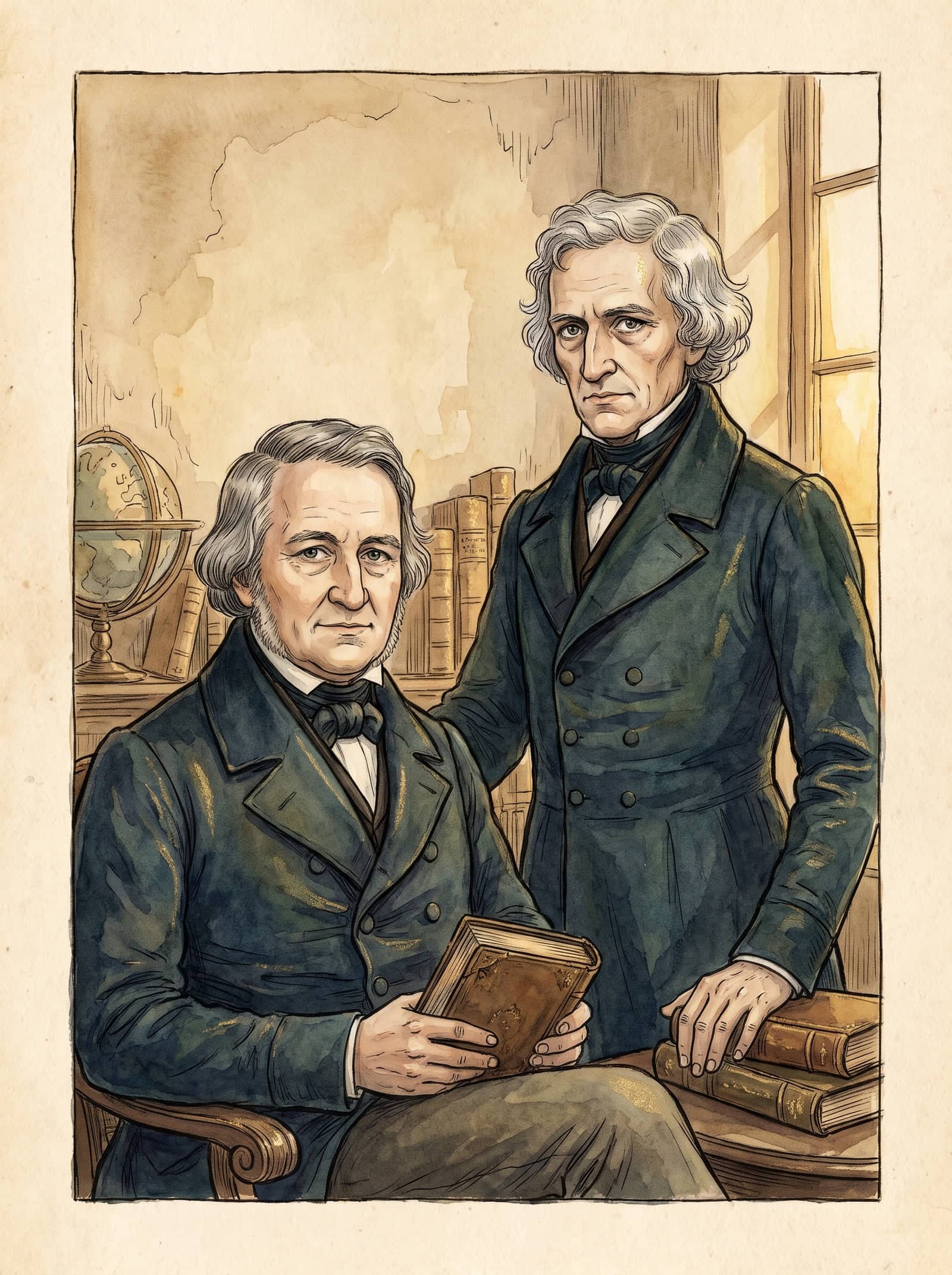
Retold by Talerie from Household Tales by Brothers Grimm (opens in a new window)License: Public domainCopy this text, adapt it, use it however you like. A link back to Talerie is appreciated but never required.CC0 1.0 (opens in a new window)