 Original
Beauty and the Beast
 Jeanne-Marie Leprince de Beaumont
41 min readages 6 and uptalerie.com/en/tales/beauty-and-the-beast-original
A merchant who picks a rose in an enchanted castle must give one of his daughters to its monstrous owner, and Beauty offers to go in his place. When she later finds her Beast dying, saves him and at last agrees to marry him, he turns into the prince he always was, and they are married the very next day.
Once upon a time, in a country very far from here, there lived a merchant who had been so fortunate in everything he undertook that he grew enormously rich. He had six sons and six daughters, however, and since they were all used to having whatever they fancied, he found that even his great fortune was not too much for them.
Then one day a misfortune nobody had foreseen fell on the family. Their house caught fire and burned to the ground in a very short time, and with it went the splendid furniture, the books, the pictures, the gold and silver and every precious thing the house contained. That was only the beginning of their troubles. Their father, who until that moment had prospered in every venture, lost one ship after another at sea, some to pirates, some to storms, one to fire. Then word came that the clerks he kept in distant countries, men he had trusted completely, had cheated him. And so, from great wealth, he fell into the deepest poverty.
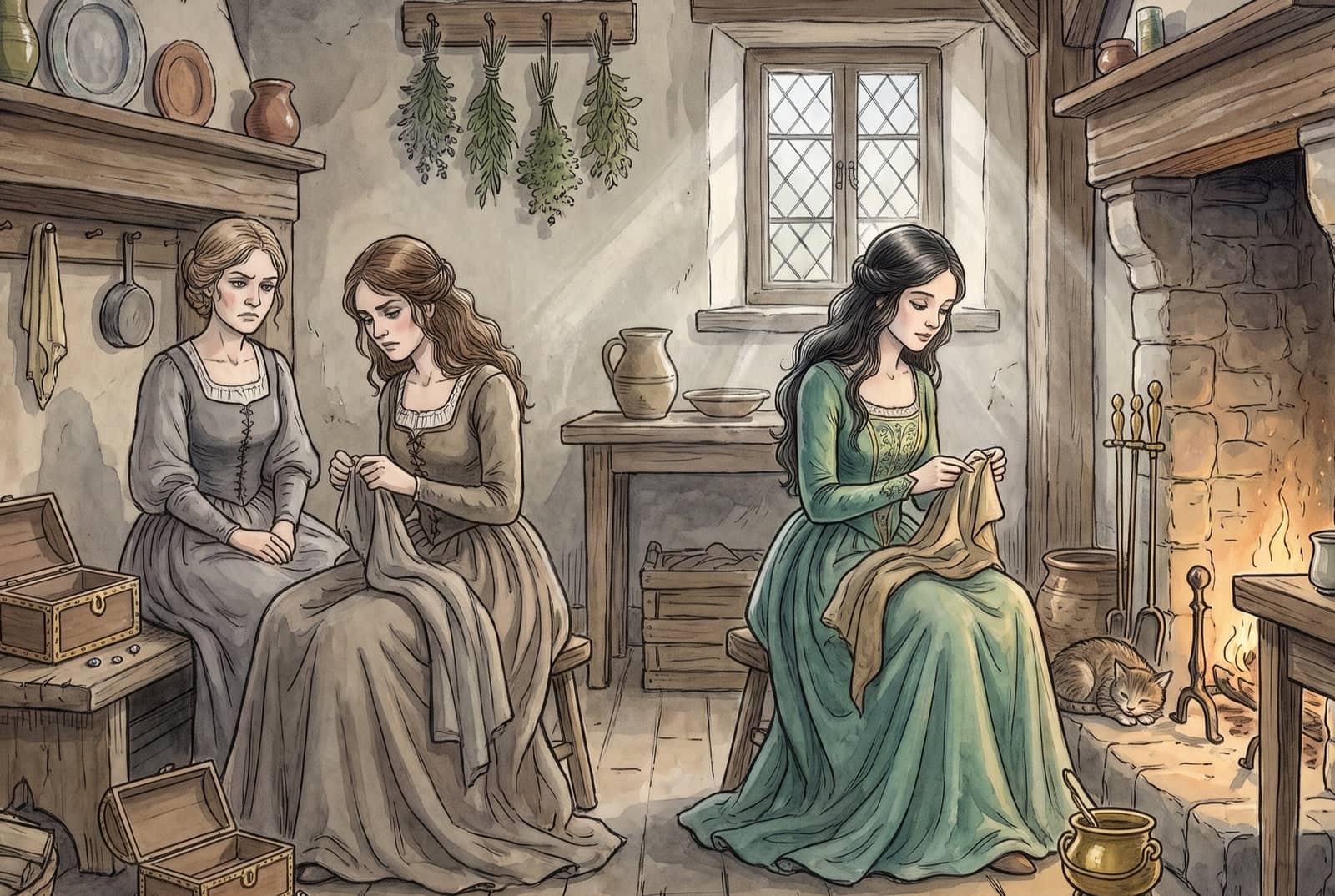
All that remained to him was a small house in a lonely place, a hundred leagues at least from the town where he had lived, and there he was obliged to take his children, who despaired at the thought of such a different life. The daughters hoped at first that their friends, who had been so many while there was money, would beg them to stay in their houses now that they had none of their own. They soon found that nobody wanted them. Their old friends even said among themselves that the family had brought its ruin on itself by extravagance, and not one of them offered any help. So there was nothing left but to go to the cottage, which stood in the middle of a dark forest and seemed the most dismal place on the face of the earth. They were far too poor to keep servants, so the girls had to work as hard as peasant women, and their brothers worked the fields for their bread. Roughly dressed, living on the plainest food, the sisters mourned without ceasing for the luxuries and the amusements they had lost. Only the youngest tried to be brave and cheerful. She had grieved as much as anyone when the blow fell on her father, but her natural gaiety soon came back to her, and she set about making the best of things: she amused her father and her brothers as well as she could, and did her best to persuade her sisters to sing and dance with her. They would do nothing of the kind, and because she was not as gloomy as they were, they told her that this wretched life was all she was fit for. In truth she was far prettier and far cleverer than any of them. Indeed she was so lovely that everyone called her Beauty.
After two years, when they were all beginning to grow used to their new life, something happened that disturbed their quiet. Their father had news that one of his ships, which he had long believed lost, had come safely into port with a rich cargo. His sons and daughters thought at once that their poverty was over, and they wanted to set off for the town that very day. Their father was more careful. He asked them to wait a little, and although it was harvest time and he could hardly be spared, he decided to go himself first and find out how matters stood. Only the youngest daughter had any doubt that they would soon be as rich as before, or at any rate rich enough to live comfortably in some town, with amusements and cheerful company around them once more. So they loaded him with orders for jewels and gowns that would have taken a fortune to buy. Only Beauty asked for nothing, being sure that there was no point in it. Her father noticed her silence.
“And what shall I bring for you, Beauty?” he said.
“The only thing I wish for is to see you come home safely,” she answered.
This annoyed her sisters, who fancied she was blaming them for asking for such costly things. Her father was pleased, but he thought that a girl of her age ought to like pretty presents, and he told her to choose something.
“Well then, dear father,” she said, “since you insist, please bring me a rose. I have not seen one since we came here, and I love them so much.”
So the merchant set out and reached the town as fast as he could, only to find that his old companions, believing him dead, had shared out among themselves the goods the ship had brought. After six months of trouble and expense he was as poor as when he started, having recovered barely enough to pay for the journey. Worse still, he was obliged to leave the town in the most dreadful weather, so that by the time he was a few leagues from home he was almost worn out with cold and weariness. He knew it would take him some hours to get through the forest, but he was so eager to be at the end of his journey that he decided to go on. Night overtook him. The snow lay deep, the frost was bitter, and his horse could carry him no further. There was not a house to be seen. The only shelter he could find was the hollow trunk of a great tree, and there he crouched all night, the longest night he had ever known. Tired as he was, he could not sleep for the howling of the wolves, and when day broke at last he was little better off, for the falling snow had covered every path and he had no idea which way to turn.
At last he made out something like a track. At first it was so rough and slippery that he fell more than once, but it soon grew easier, and it led him into an avenue of trees that ended at a splendid castle. It seemed very strange to him that no snow had fallen in the avenue, which was made up entirely of orange trees, all covered with flowers and fruit at once. When he came into the first court of the castle he saw a flight of agate steps in front of him. He climbed them and passed through several magnificently furnished rooms. The pleasant warmth of the air revived him and he began to feel very hungry, but there seemed to be nobody in all that vast and splendid palace he could ask for something to eat. A deep silence lay over everything. At last, tired of wandering through empty rooms and galleries, he stopped in a room smaller than the rest, where a bright fire was burning and a couch stood drawn up close to it. Thinking that this must have been made ready for someone who was expected, he sat down to wait until that person should come, and very soon he fell into a sweet sleep.
When hunger woke him several hours later he was still alone, but a little table had been drawn up beside him with a good dinner on it. He had eaten nothing for twenty-four hours, so he lost no time in beginning his meal, hoping that he would soon have a chance to thank whoever had been so thoughtful. Nobody came. He slept again, a long sleep, and woke completely refreshed, and still there was no sign of anyone, though a fresh meal of delicate cakes and fruit stood ready on the little table at his elbow. He was a timid man by nature, and the silence began to frighten him. He made up his mind to search through all the rooms once more, but it was no use. There was not even a servant to be seen. There was no sign of life anywhere in the palace. He began to wonder what he ought to do, and to amuse himself he pretended that all the treasures around him were his own, and considered how he would divide them among his children. Then he went down into the garden, and though it was winter everywhere else in the world, here the sun shone and the birds sang and the flowers were in bloom, and the air was soft and sweet. Delighted with everything he saw and heard, the merchant said to himself:
“All this must be meant for me. I shall go this very minute and bring my children to share these delights.”
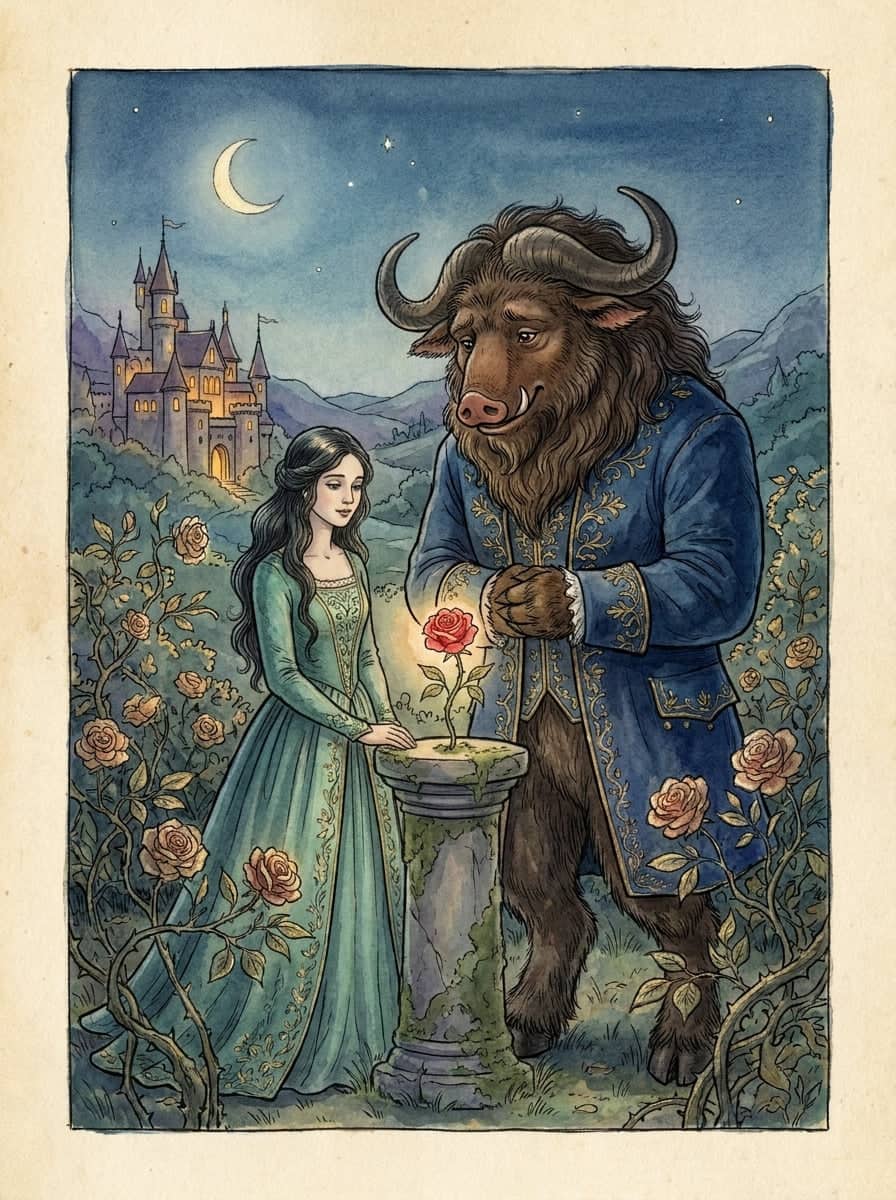
Cold and weary as he had been when he reached the castle, he had taken his horse to the stable and fed it. Now he thought he would saddle it for the journey home, and he turned down the path that led to the stable. The path had a hedge of roses on either side, and the merchant thought he had never seen or smelt such lovely flowers. They reminded him of his promise to Beauty. He stopped and had just picked one to take to her when a strange noise behind him made him start. He turned round and saw a frightful Beast, who seemed to be very angry and spoke in a terrible voice.
“Who told you that you might pick my roses? Was it not enough that I let you stay in my palace and treated you kindly? Is this how you show your gratitude, by stealing my flowers? Your insolence will not go unpunished.”
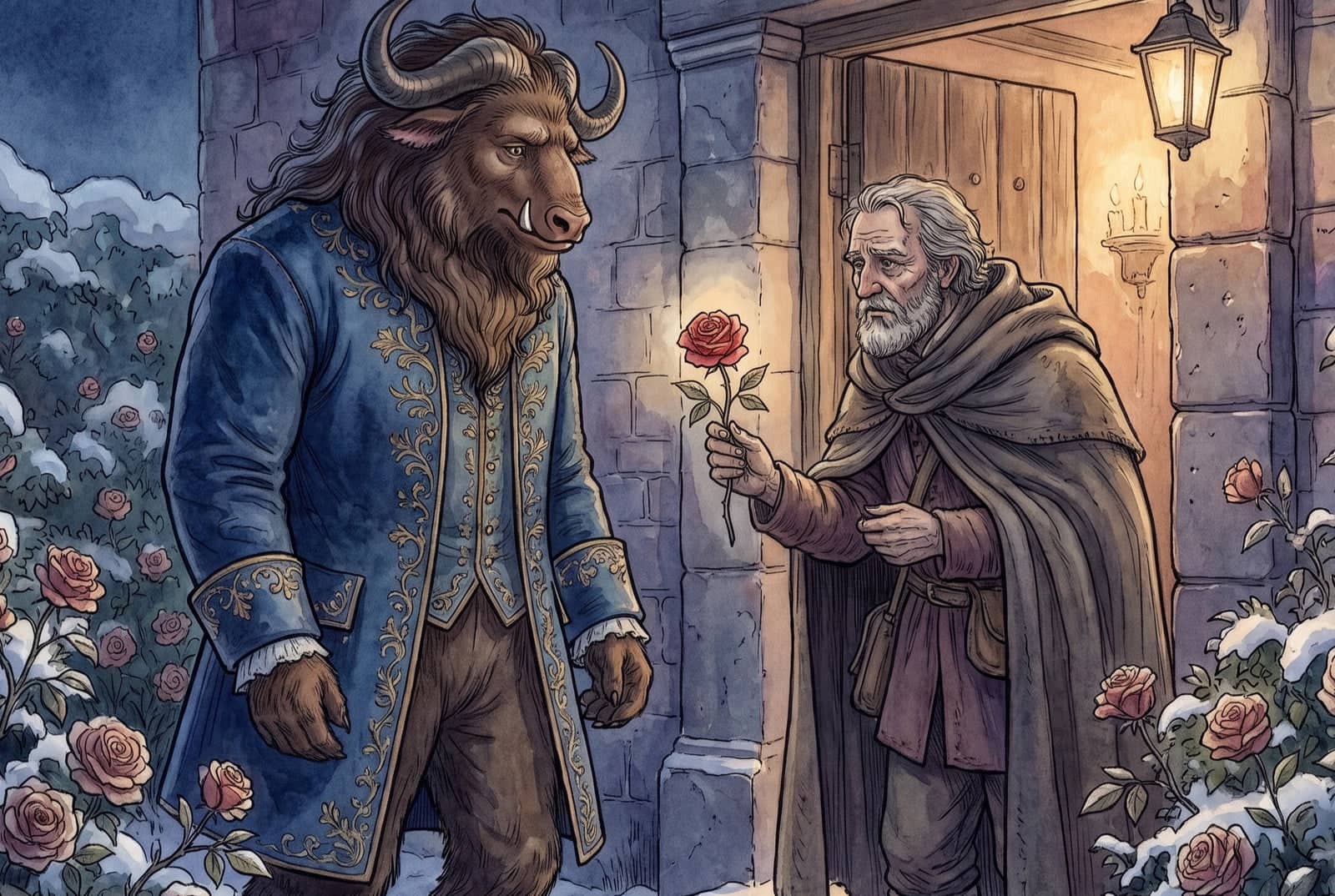
The merchant, terrified by these furious words, dropped the fatal rose and threw himself on his knees.
“Forgive me, noble sir,” he cried. “I am truly grateful for your hospitality. It was so magnificent that I could not imagine you would be offended by so small a thing as a rose.”
The Beast’s anger was not softened by this speech.
“You are very quick with excuses and flattery,” he cried, “but that will not save you from the death you deserve.”
“Oh,” thought the merchant, “if only my daughter knew what danger her rose has brought me into.”
And in his despair he began to tell the Beast all his misfortunes, and the reason for his journey, and he did not forget to mention what Beauty had asked for.
“A king’s ransom would hardly have bought what my other daughters wanted,” he said, “but I thought I might at least take Beauty her rose. I beg you to forgive me. You can see that I meant no harm.”
The Beast thought for a moment, and then said in a less furious tone:
“I will forgive you on one condition. You must give me one of your daughters.”
“Ah,” cried the merchant, “if I were cruel enough to buy my own life at the cost of one of my children’s, what excuse could I invent to bring her here?”
“No excuse would be needed,” answered the Beast. “If she comes at all, she must come willingly. On no other condition will I have her. Go and see whether one of them is brave enough, and loves you well enough, to come and save your life. You seem to be an honest man, so I will trust you to go home. I give you a month to find out whether any of your daughters will come back with you and stay here, so that you may go free. If none of them is willing, you must come alone, after saying goodbye to them forever, for then you will belong to me. And do not imagine that you can hide from me, for if you fail to keep your word, I will come and fetch you.”
The merchant accepted, though he did not really believe that any of his daughters could be persuaded to come. He promised to return at the time appointed, and then, longing to be out of the Beast’s presence, he asked leave to set off at once. The Beast answered that he could not go until the next day.
“Then you will find a horse ready for you,” he said. “Now go and eat your supper, and wait for my orders.”
The poor merchant, half dead with fright, went back to his room, where the most delicious supper was already laid on the little table in front of a blazing fire. He was far too frightened to eat, and only tasted a few of the dishes, for fear the Beast might be angry if he disobeyed. When he had finished he heard a great noise in the next room, and knew that the Beast was coming. There was no escaping the visit, so the only thing left was to seem as little afraid as he could, and when the Beast appeared and asked gruffly whether he had supped well, the merchant answered humbly that he had, thanks to his host’s kindness. Then the Beast reminded him of their agreement, and told him to prepare his daughter for exactly what she had to expect.
“Do not get up tomorrow,” he added, “until you see the sun and hear a golden bell ring. Then you will find your breakfast waiting for you here, and the horse you are to ride will be ready in the courtyard. He will bring you back again when you come with your daughter a month from now. Farewell. Take a rose to Beauty, and remember your promise.”
The merchant was only too glad when the Beast went away. He could not sleep for sorrow, but he lay still until the sun rose. Then, after a hurried breakfast, he went to pick Beauty’s rose and mounted his horse, which carried him off so swiftly that in a moment the palace was out of sight; and he was still deep in his gloomy thoughts when it stopped at the door of the cottage.
His sons and daughters had been very uneasy at his long absence, and they ran out to meet him, eager to hear how his journey had ended. Seeing him on a splendid horse and wrapped in a rich cloak, they supposed the news was good. He hid the truth from them at first, and only said sadly to Beauty as he gave her the rose:
“Here is what you asked me to bring you. You little know what it has cost.”
But this made them so curious that before long he told them the whole adventure from beginning to end, and then they were all wretched. The girls wailed over their lost hopes, and the sons declared that their father should not go back to that terrible castle, and began to make plans for killing the Beast if it came to fetch him. He reminded them that he had given his word. Then the elder sisters turned on Beauty and said it was all her fault, and that if she had asked for something sensible none of this would have happened, and they complained bitterly that they should have to suffer for her foolishness.
Poor Beauty was very much distressed.
“I have indeed caused this misfortune,” she said, “but I promise you I did it innocently. Who could have guessed that asking for a rose in the middle of summer would bring so much misery? Still, since I did the harm, it is only right that I should suffer for it. So I shall go back with my father and keep his promise.”
At first nobody would hear of it, and her father and her brothers, who loved her dearly, declared that nothing on earth would make them let her go. But Beauty would not be moved. As the time drew near she divided her few little possessions among her sisters, and said goodbye to everything she loved, and when the fatal day came she cheered and encouraged her father as they mounted together the horse that had brought him home. It seemed to fly rather than gallop, yet so smoothly that Beauty was not frightened. Indeed she would have enjoyed the ride if she had not been afraid of what waited for her at the end of it. Her father still tried to persuade her to turn back, but it was no use. While they were talking, night fell, and then, to their great surprise, wonderful colored lights began to shine in every direction and splendid fireworks blazed out in front of them. The whole forest was lit up by them, and the air even felt pleasantly warm, though it had been bitterly cold before. This lasted until they came to the avenue of orange trees, where statues stood holding flaming torches, and as they drew nearer to the palace they saw that it was lit from the roof to the ground, and that soft music was playing in the courtyard.
“The Beast must be very hungry,” said Beauty, trying to laugh, “if he makes all this rejoicing over the arrival of his prey.”
Anxious as she was, she could not help admiring all the wonderful things she saw.
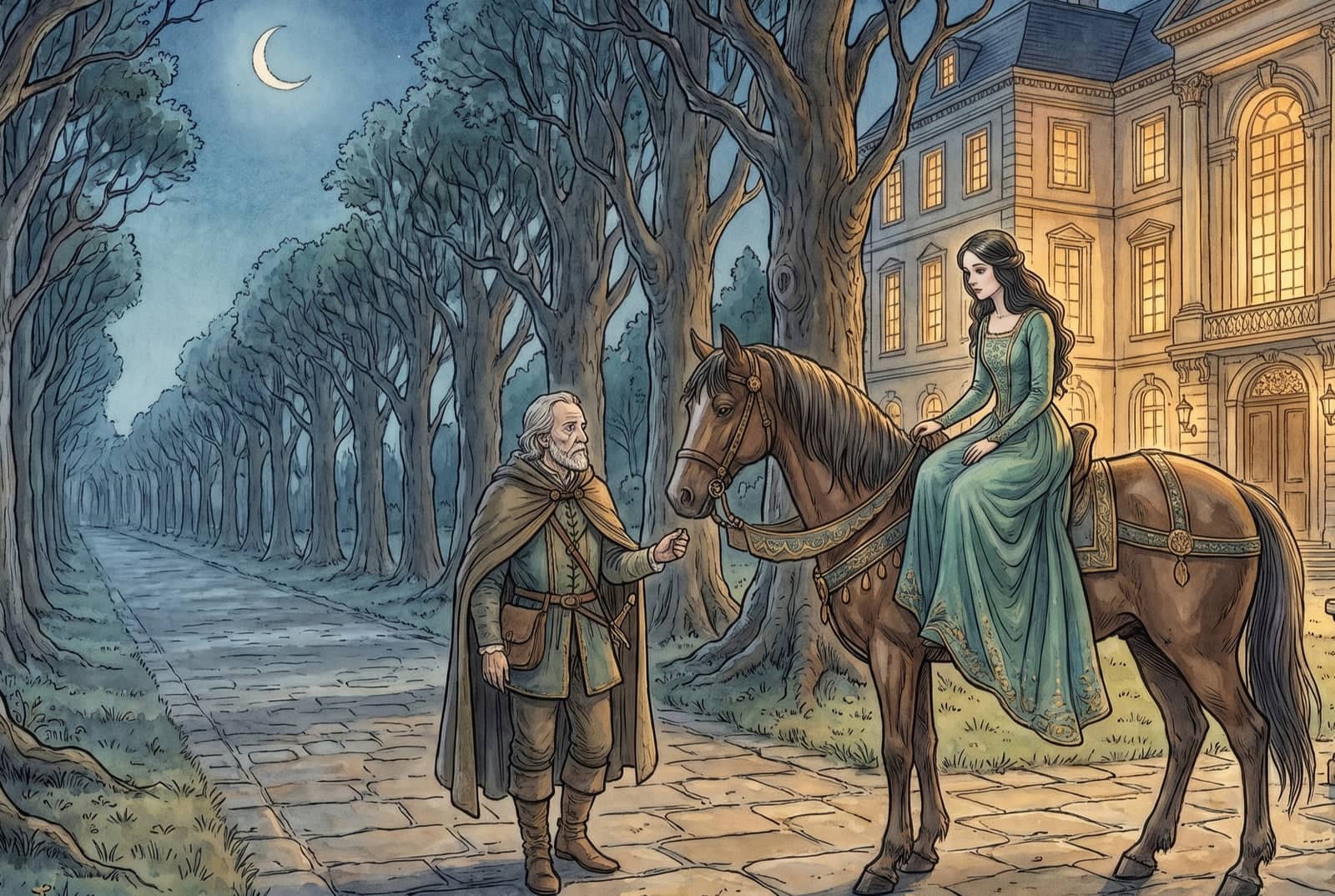
The horse stopped at the foot of the flight of steps that led up to the terrace, and when they had dismounted her father took her to the little room he had been in before, where they found a splendid fire burning and the table daintily laid with a delicious supper.
The merchant knew that it was meant for them, and Beauty, who was rather less frightened now that she had passed through so many rooms and seen nothing of the Beast, was quite willing to begin, for the long ride had made her very hungry. They had barely finished their meal when they heard the Beast’s footsteps coming nearer, and Beauty clung to her father in terror, which grew all the greater when she saw how frightened he was. Yet when the Beast really appeared, though she trembled at the sight of him, she made a great effort to hide her fear and greeted him respectfully.
This clearly pleased the Beast. He looked at her, and then said, in a voice that might have struck terror into the boldest heart, though he did not seem to be angry:
“Good evening, old man. Good evening, Beauty.”
The merchant was too terrified to reply, but Beauty answered sweetly, “Good evening, Beast.”
“Have you come willingly?” asked the Beast. “Will you be content to stay here when your father goes away?”
Beauty answered bravely that she was quite prepared to stay.
“I am pleased with you,” said the Beast. “Since you have come of your own accord, you may stay. As for you, old man,” he added, turning to the merchant, “at sunrise tomorrow you will take your leave. When the bell rings, get up quickly and eat your breakfast, and you will find the same horse waiting to carry you home. But remember that you must never expect to see my palace again.”
Then he turned to Beauty.
“Take your father into the next room,” he said, “and help him choose everything you think your brothers and sisters would like to have. You will find two traveling trunks there. Fill them as full as you can. It is only right that you should send your family something very precious to remember you by.”
Then he went away, saying, “Goodbye, Beauty. Goodbye, old man.”
Beauty was beginning to think with great dismay of her father’s departure, but she was afraid to disobey the Beast’s orders, so they went into the next room, which had shelves and cupboards all round it. They were greatly surprised at the riches it held. There were splendid gowns fit for a queen, with all the ornaments that were to be worn with them, and when Beauty opened the cupboards she was quite dazzled by the gorgeous jewels lying in heaps on every shelf. She chose a great quantity and divided them among her sisters, making a pile of the wonderful gowns for each of them, and last of all she opened a chest that was full of gold.
“I think, father,” she said, “that as the gold will be more useful to you, we had better take the other things out again and fill the trunks with it.”
So they did. But the more they put in, the more room there seemed to be, and in the end they put back all the jewels and gowns they had taken out, and Beauty even added as many more jewels as she could carry at once. Then the trunks were not too full, and yet they were so heavy that an elephant could not have carried them.
“The Beast was mocking us,” cried the merchant. “He must have pretended to give us all these things, knowing that I could not take them away.”
“Let us wait and see,” answered Beauty. “I cannot believe that he meant to deceive us. All we can do is fasten them up and leave them ready.”
So they fastened the trunks and left them ready for the morning. At sunrise the bell woke them, and they went back to the little room, where, to their astonishment, they found breakfast waiting. The merchant ate his with a good appetite, for the Beast’s generosity made him believe that he might perhaps dare to come back before long and see Beauty. She felt sure that her father was leaving her forever, and she was very sad when the bell rang sharply for the second time, to warn them that the moment of parting had come. They went down into the courtyard, where two horses were waiting, one loaded with the two trunks and the other for him to ride. They were pawing the ground in their impatience to be off, and the merchant had to say a hurried goodbye. As soon as he was in the saddle he went off at such a pace that she lost sight of him in an instant.
Then Beauty began to cry, and wandered sadly back to her own room. She soon found that she was very sleepy, and as she had nothing better to do she lay down and fell asleep at once. And then she dreamed that she was walking beside a brook with trees along its banks, lamenting her sad fate, when a young prince came to her, handsomer than anyone she had ever seen, with a voice that went straight to her heart.
“Ah, Beauty,” he said, “you are not so unfortunate as you suppose. Here you shall be rewarded for everything you have suffered elsewhere. Every wish of yours shall be granted. Only try to find me out, however I may be disguised, for I love you dearly, and in making me happy you will find your own happiness. Be as true-hearted as you are beautiful, and we shall have nothing left to wish for.”
“What can I do, Prince, to make you happy?” said Beauty.
“Only be grateful,” he answered, “and do not trust your eyes too much. And above all, do not desert me until you have saved me from my cruel misery.”
After this she thought she found herself in a room with a stately and beautiful lady, who said to her:
“Dear Beauty, try not to regret all that you have left behind you, for a better fate is waiting for you. Only do not let appearances deceive you.”
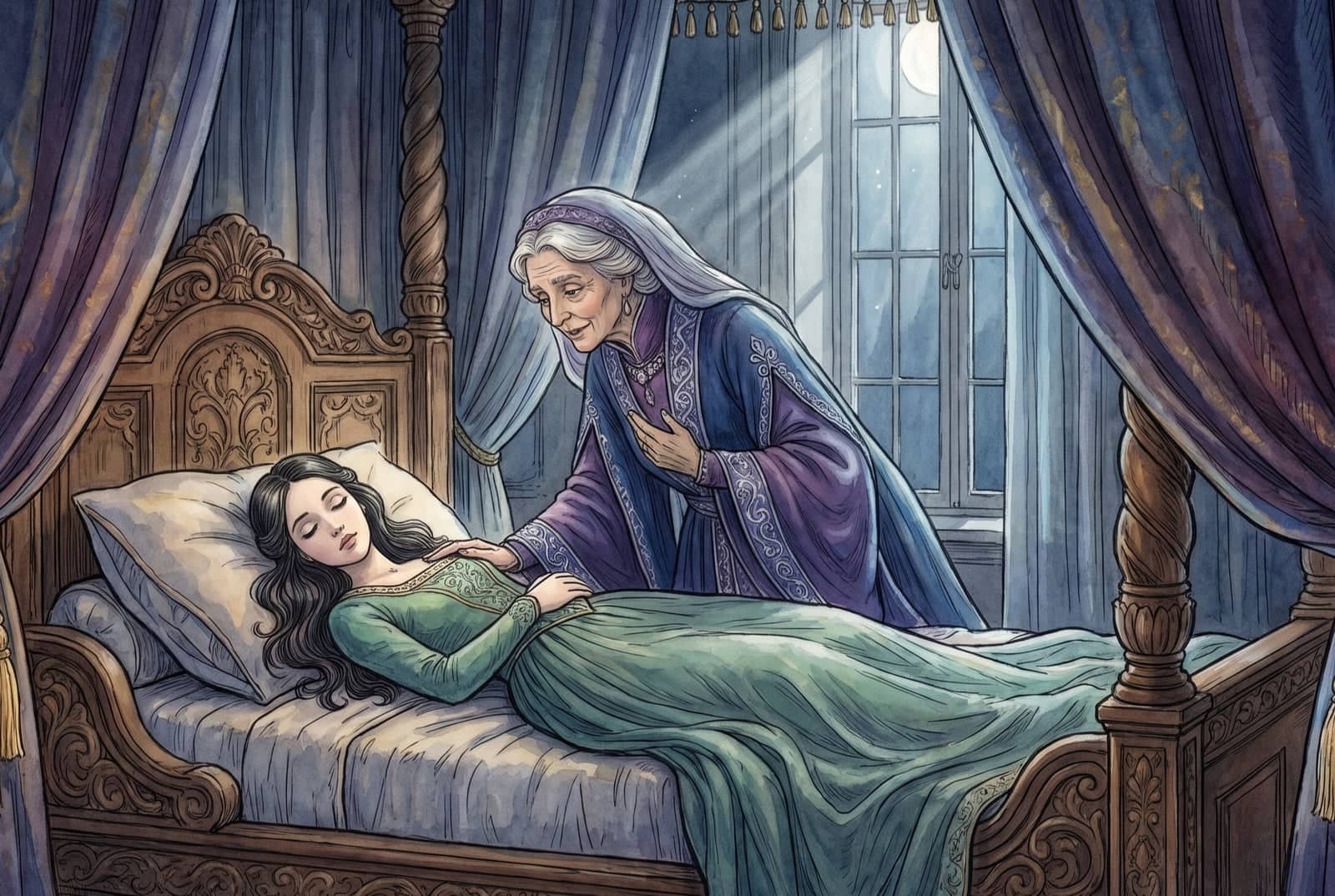
Beauty found her dreams so interesting that she was in no hurry to wake, but at last the clock roused her by calling her name softly twelve times over. She got up and found her dressing table laid out with everything she could possibly want, and when she was dressed she found dinner waiting in the room next to hers. Dinner does not take very long when you are all by yourself, and very soon she settled comfortably into the corner of a sofa and began to think about the charming prince she had seen in her dream.
“He said I could make him happy,” Beauty said to herself. “It seems, then, that this horrible Beast keeps him a prisoner. How am I to set him free? And why did they both tell me not to trust appearances? I do not understand it at all. But after all, it was only a dream, so why should I trouble my head about it? I had better go and find something to amuse me.”
So she got up and began to explore some of the many rooms of the palace.
The first she went into was lined with mirrors, and Beauty saw herself reflected on every side, and thought she had never seen such a charming room. Then a bracelet hanging from a chandelier caught her eye, and when she took it down she was greatly surprised to find that it held a portrait of her unknown admirer, exactly as she had seen him in her dream. She slipped the bracelet onto her arm with great delight and went on into a gallery of pictures, where she soon found a portrait of the same handsome prince, as large as life and so well painted that as she studied it he seemed to smile kindly at her. She tore herself away from it at last and passed into a room that held every musical instrument under the sun, and there she amused herself for a long while trying some of them and singing until she was tired. The next room was a library, and there she saw everything she had ever wanted to read, as well as everything she had already read, and it seemed to her that a whole lifetime would not be enough even to read the names of the books, there were so many of them. By this time it was growing dusk, and wax candles in candlesticks of diamond and ruby were beginning to light themselves in every room.
Beauty found her supper served at exactly the hour she liked to have it, but she saw nobody and heard not a sound, and although her father had warned her that she would be alone, she began to find it rather dull.
Then she heard the Beast coming, and wondered with a shiver whether he meant to eat her now. He did not seem at all ferocious, however, and only said gruffly:
“Good evening, Beauty.”
She answered cheerfully and managed to hide her terror. Then the Beast asked her how she had been amusing herself, and she told him about all the rooms she had seen. Then he asked whether she thought she could be happy in his palace, and Beauty answered that everything was so beautiful that she would be very hard to please if she could not be happy there. After an hour’s talk Beauty began to think that the Beast was not nearly so terrible as she had supposed at first. Then he got up to leave her, and said in his gruff voice:
“Do you love me, Beauty? Will you marry me?”
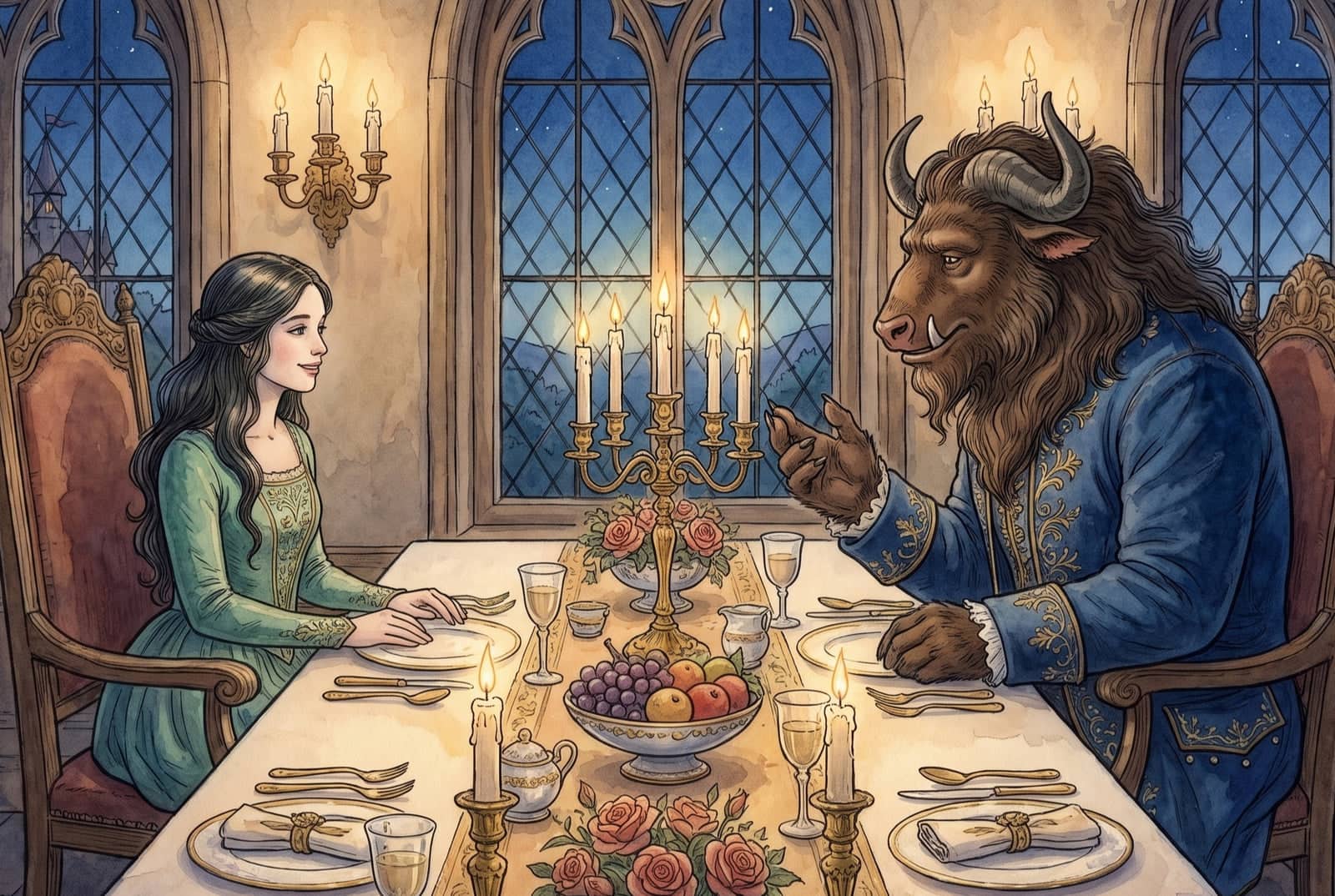
“Oh, what shall I say?” cried Beauty, for she was afraid of making the Beast angry by refusing.
“Say yes or no without fear,” he replied.
“Oh no, Beast,” said Beauty hastily.
“Since you will not, good night, Beauty,” he said.
“Good night, Beast,” she answered, very glad to find that her refusal had not provoked him.
After he had gone she was soon in bed and asleep, dreaming of her unknown prince. She thought he came to her and said:
“Ah, Beauty, why are you so unkind to me? I am afraid I am fated to be unhappy for many a long day yet.”
And then her dreams changed, but the charming prince appeared in all of them, and when morning came her first thought was to look at the portrait and see whether it was really like him. She found that it certainly was.
That morning she decided to amuse herself in the garden, for the sun was shining and all the fountains were playing. She was astonished to find that every place was familiar to her, and before long she came to the brook among the myrtle trees where she had first met the prince in her dream, and that made her think more than ever that he must be kept a prisoner by the Beast. When she was tired she went back to the palace and found a new room full of materials for every kind of work, ribbons to make into bows and silks to work into flowers. Then there was an aviary full of rare birds, so tame that they flew to Beauty as soon as they saw her and perched on her shoulders and her head.
“Pretty little creatures,” she said, “how I wish your cage were nearer my room, so that I could often hear you sing.”
As she spoke she opened a door and found, to her delight, that it led straight into her own room, though she had thought the aviary was on quite the other side of the palace.
There were more birds in a room farther on, parrots and cockatoos that could talk, and they greeted Beauty by name. She found them so entertaining that she took one or two back to her own room, and they talked to her while she was at supper. After supper the Beast paid her his usual visit and asked her the same questions as before, and then with a gruff “good night” he took his leave, and Beauty went to bed to dream of her mysterious prince.
The days passed quickly in one amusement or another, and after a while Beauty discovered another strange thing in the palace, which often pleased her when she was tired of being alone. There was one room she had never taken much notice of. It was empty, except that a very comfortable chair stood under each of the windows, and the first time she had looked out of a window it had seemed to her that a black curtain kept her from seeing anything outside. But the second time she came into the room she happened to be tired and sat down in one of the chairs, and instantly the curtain rolled aside and a most amusing pantomime was played out in front of her. There were dances and colored lights and music and pretty dresses, and it was all so merry that Beauty was enchanted. After that she tried the other seven windows in turn, and from each of them there was some new and surprising entertainment to be seen, so that Beauty could never feel lonely any more.
Every evening after supper the Beast came to see her, and always, before he said good night, he asked her in his terrible voice:
“Beauty, will you marry me?”
And it seemed to Beauty, now that she understood him better, that when she said, “No, Beast,” he went away quite sad. But her happy dreams of the handsome young prince soon made her forget the poor Beast, and the only thing that troubled her at all was being told again and again to distrust appearances, to let her heart guide her instead of her eyes, and many other things just as puzzling, which, think as she might, she could not understand.
So everything went on for a long time, until at last, happy as she was, Beauty began to long for the sight of her father and her brothers and sisters. One night, seeing her look very sad, the Beast asked her what was the matter. Beauty had quite stopped being afraid of him by now, for she knew that he was really gentle in spite of his ferocious looks and his dreadful voice, so she answered that she was longing to see her home once more. When he heard this the Beast seemed sadly distressed, and cried out miserably:
“Ah, Beauty, have you the heart to desert an unhappy Beast like me? What more do you want to make you happy? Is it because you hate me that you want to escape?”
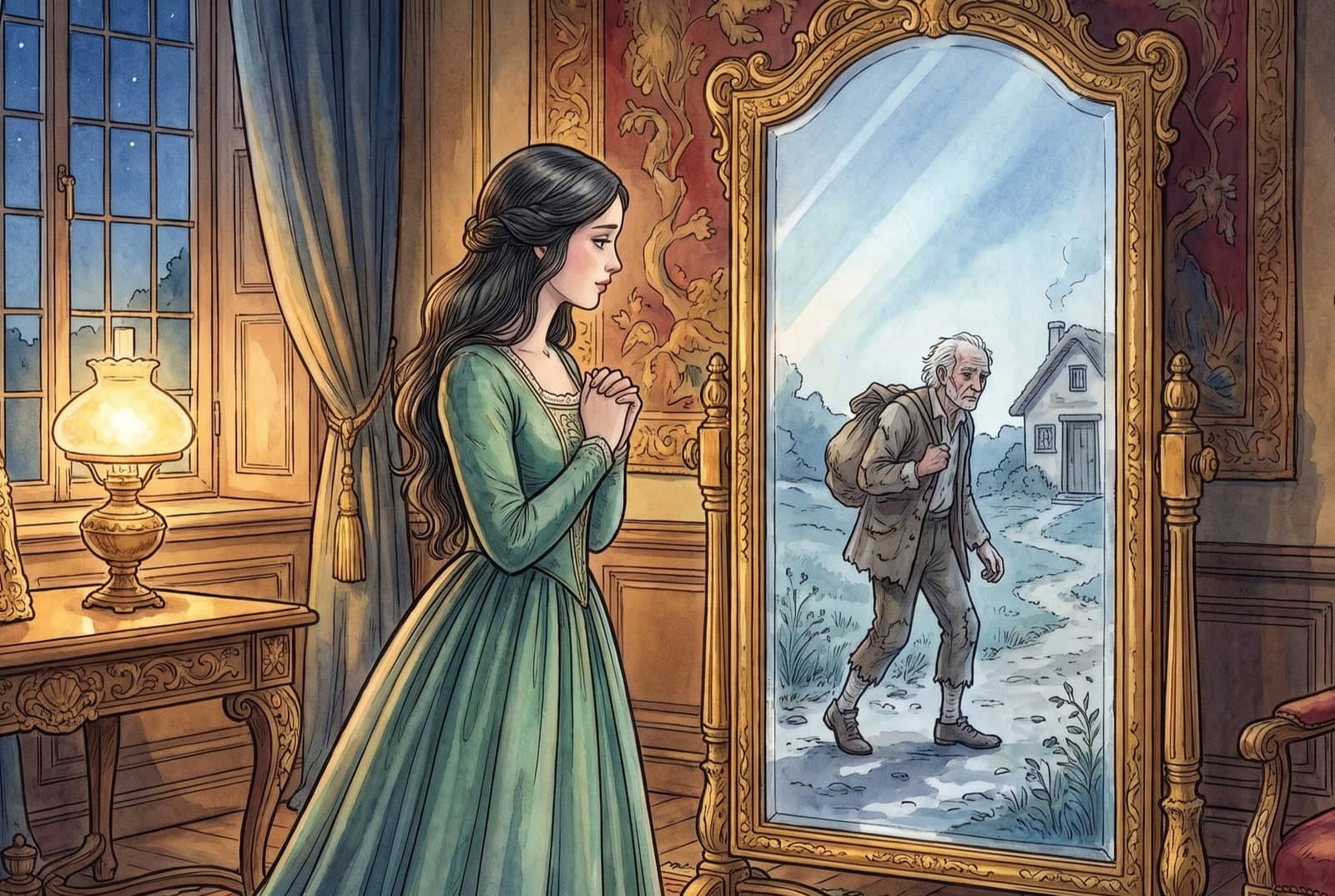
“No, dear Beast,” answered Beauty softly. “I do not hate you, and I should be very sorry never to see you again. But I long to see my father. Only let me go for two months, and I promise to come back to you and stay for the rest of my life.”
The Beast had been sighing sorrowfully while she spoke, and now he answered:
“I cannot refuse you anything you ask, even if it should cost me my life. Take the four boxes you will find in the room next to your own and fill them with everything you wish to take with you. But remember your promise, and come back when the two months are over, or you may have cause to regret it, for if you do not come in good time you will find your faithful Beast dead. You will need no carriage to bring you back. Only say goodbye to all your brothers and sisters the night before you come away. Take this ring, and when you have gone to bed turn it round upon your finger and say firmly: ‘I wish to go back to my palace and see my Beast again.’ Good night, Beauty. Fear nothing, sleep peacefully, and before long you shall see your father once more.”
As soon as Beauty was alone she hurried to fill the boxes with all the rare and precious things she saw about her, and only when she was tired of heaping things into them did they seem to be full.
Then she went to bed, but she could hardly sleep for joy, and when at last she did begin to dream of her beloved prince she was grieved to see him stretched out on a grassy bank, sad and weary and hardly like himself.
“What is the matter?” she cried.
He looked at her reproachfully.
“How can you ask me, cruel one?” he said. “Are you not leaving me, perhaps, to my death?”
“Oh, do not be so sorrowful,” cried Beauty. “I am only going to assure my father that I am safe and happy. I have promised the Beast faithfully that I will come back, and he would die of grief if I did not keep my word.”
“What would that matter to you?” said the prince. “Surely you would not care?”
“Indeed I should be ungrateful if I did not care for such a kind Beast,” cried Beauty indignantly. “I would die to save him from pain. I assure you it is not his fault that he is so ugly.”
Just then a strange sound woke her. Someone was speaking not very far away, and when she opened her eyes she found herself in a room she had never seen before, and certainly nothing like so splendid as the rooms she was used to in the Beast’s palace. Where could she be? She got up and dressed hastily, and then saw that the boxes she had packed the night before were all in the room with her. She was still wondering by what magic the Beast had carried them and her to this strange place when she suddenly heard her father’s voice, and rushed out and greeted him joyfully. Her brothers and sisters were astonished to see her, for they had never expected to set eyes on her again, and there was no end to the questions they asked. She had a great deal to hear as well, about everything that had happened to them while she was away, and about her father’s journey home. But when they learned that she had come to be with them only for a short time and must then go back to the Beast’s palace forever, they wailed aloud.
Then Beauty asked her father what he thought her strange dreams could mean, and why the prince kept begging her not to trust appearances. He considered it for a long while.
“You tell me yourself that the Beast, frightful as he is, loves you dearly, and deserves your love and gratitude for his gentleness and kindness,” he said. “I think the prince must mean you to understand that you ought to reward the Beast by doing as he wishes, in spite of his ugliness.”
Beauty could not help seeing that this seemed very likely. Still, when she thought of her dear prince, who was so handsome, she felt no inclination at all to marry the Beast. At any rate she need not decide for two months, and could enjoy herself with her sisters. But although they were rich now and lived in the town again and had plenty of acquaintances, Beauty found that nothing amused her very much. She often thought of the palace, where she had been so happy, especially since at home she never once dreamed of her dear prince, and she felt quite lost without him.
Her sisters, for their part, seemed to have grown used to being without her, and even found her rather in the way, so she would not have been sorry when the two months were over if it had not been for her father and her brothers, who begged her to stay and seemed so grieved at the thought of her going that she had not the courage to say goodbye to them. Every morning when she got up she meant to say it that night, and when night came she put it off again, until at last a dismal dream helped her to make up her mind. She thought she was wandering along a lonely path in the palace gardens when she heard groans that seemed to come from some bushes hiding the entrance of a cave, and when she ran up quickly to see what was the matter she found the Beast stretched out on his side, apparently dying. He reproached her faintly with being the cause of his distress, and at the same moment a stately lady appeared and said very gravely:
“Ah, Beauty, you are only just in time to save his life. See what comes of not keeping a promise. If you had waited one day longer, you would have found him dead.”
Beauty was so terrified by this dream that the next morning she announced that she meant to go back at once, and that very night she said goodbye to her father and to all her brothers and sisters, and as soon as she was in bed she turned her ring round upon her finger and said firmly, exactly as she had been told:
“I wish to go back to my palace and see my Beast again.”
Then she fell asleep instantly, and woke only to hear the clock saying “Beauty, Beauty” twelve times over in its musical voice, which told her at once that she was really in the palace once more. Everything was just as it had been, and her birds were so glad to see her. But Beauty thought she had never known such a long day, for she was so anxious to see the Beast again that it seemed as though suppertime would never come.
And when at last it came and no Beast appeared, she was really frightened. She listened and waited a long while, and then ran down into the garden to look for him. Up and down the paths and the avenues poor Beauty ran, calling him in vain, for nobody answered and she could not find the least trace of him. At last, quite worn out, she stopped for a moment’s rest and saw that she was standing opposite the shady path she had seen in her dream. She rushed down it, and sure enough there was the cave, and in it lay the Beast, asleep, as Beauty thought. She was so glad to have found him that she ran up and stroked his head, and then, to her horror, he neither moved nor opened his eyes.
“Oh, he is dead, and it is all my fault,” said Beauty, crying bitterly.
But then, looking at him again, she thought he was still breathing, and she hurried to fetch some water from the nearest fountain and sprinkled it over his face, and to her great delight he began to revive.
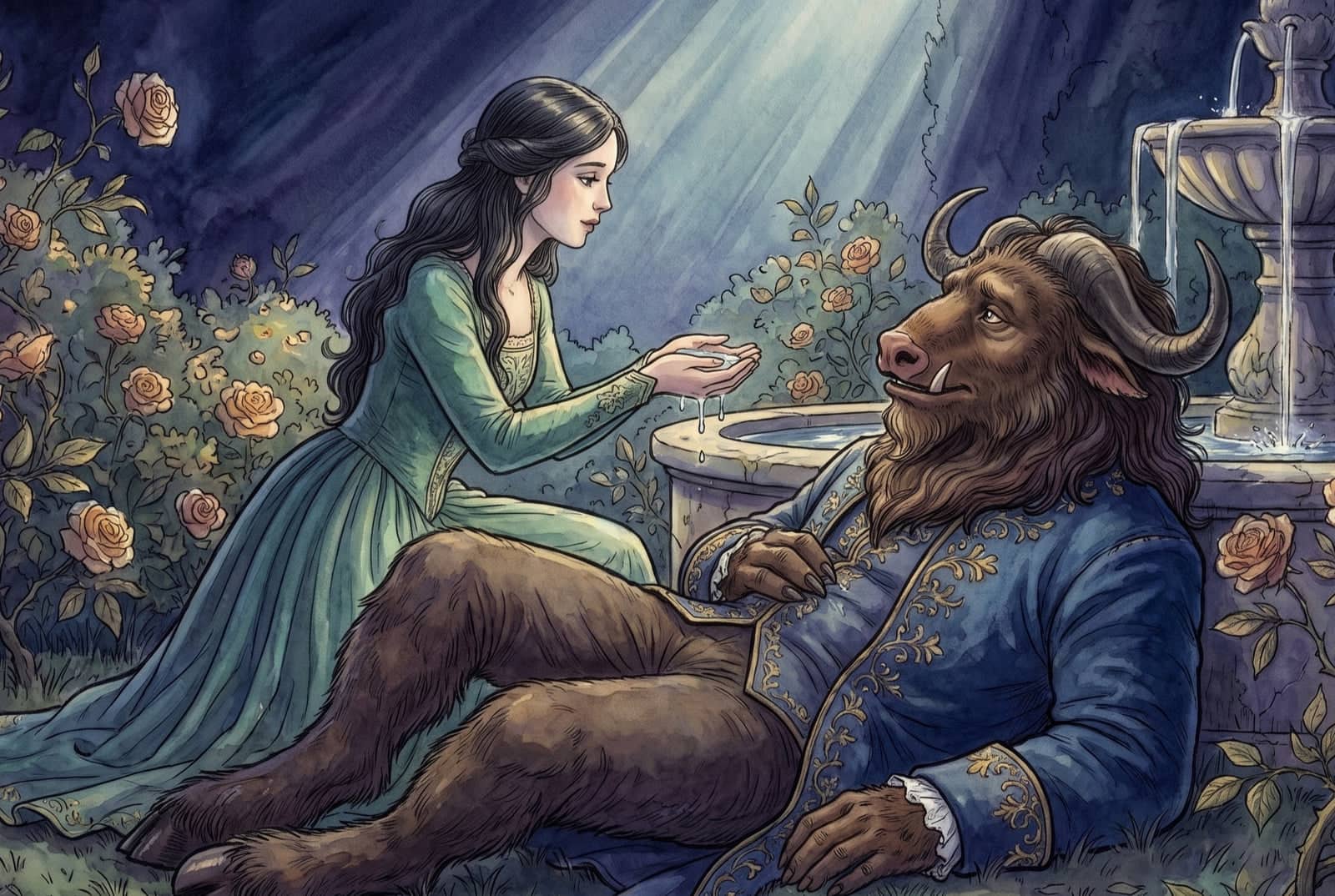
“Oh, Beast, how you frightened me,” she cried. “I never knew how much I loved you until just now, when I was afraid I had come too late to save your life.”
“Can you really love such an ugly creature as I am?” said the Beast faintly. “Ah, Beauty, you came only just in time. I was dying because I thought you had forgotten your promise. But go back now and rest, and I shall see you again before long.”
Beauty had half expected him to be angry with her, and his gentle voice reassured her. She went back to the palace, where supper was waiting for her, and afterwards the Beast came in as usual and talked about the time she had spent with her father, asking whether she had enjoyed herself and whether they had all been very glad to see her.
Beauty answered politely, and quite enjoyed telling him everything that had happened to her. And when at last the time came for him to go, he asked, as he had asked so many times before:
“Beauty, will you marry me?”
She answered softly, “Yes, dear Beast.”
As she spoke, a blaze of light sprang up before the windows of the palace. Fireworks crackled and guns banged, and across the avenue of orange trees, in letters all made of fireflies, were written the words: “Long live the Prince and his Bride.”
Beauty turned to ask the Beast what it could all mean, and found that he had disappeared, and in his place stood the prince she had loved so long. At the same moment the wheels of a carriage were heard on the terrace, and two ladies came into the room. One of them Beauty recognized as the stately lady she had seen in her dreams. The other was so grand and queenly that Beauty hardly knew which of them to greet first.
But the one she already knew turned to her companion and said:
“Well, Queen, this is Beauty, who has had the courage to rescue your son from his terrible enchantment. They love one another, and only your consent to their marriage is needed to make them perfectly happy.”
“I consent with all my heart,” cried the Queen. “How can I ever thank you enough, charming girl, for giving me back my dear son in his own form?”
And then she tenderly embraced Beauty, and the prince too. He had meanwhile been greeting the stately lady, who was a fairy, and receiving her congratulations.
“Now,” said the Fairy to Beauty, “I suppose you would like me to send for all your brothers and sisters to dance at your wedding?”
And so she did, and the marriage was celebrated the very next day with the greatest splendor, and Beauty and her prince lived happily ever after.
Retold by Talerie from The Blue Fairy Book (opens in a new window)License: Public domainCopy this text, adapt it, use it however you like. A link back to Talerie is appreciated but never required.CC0 1.0 (opens in a new window)