The Pied Piper of Hamelin
5 min readages 7 and uptalerie.com/en/tales/the-pied-piper-of-hamelin
A stranger in a coat of many colours rids Hamelin of its rats for a promised sum, and when the town refuses to pay he returns and pipes its children out of the gate. The hill closes behind them, and the lines carved on the town hall wall still name the hundred and thirty, while the street they walked stays silent.
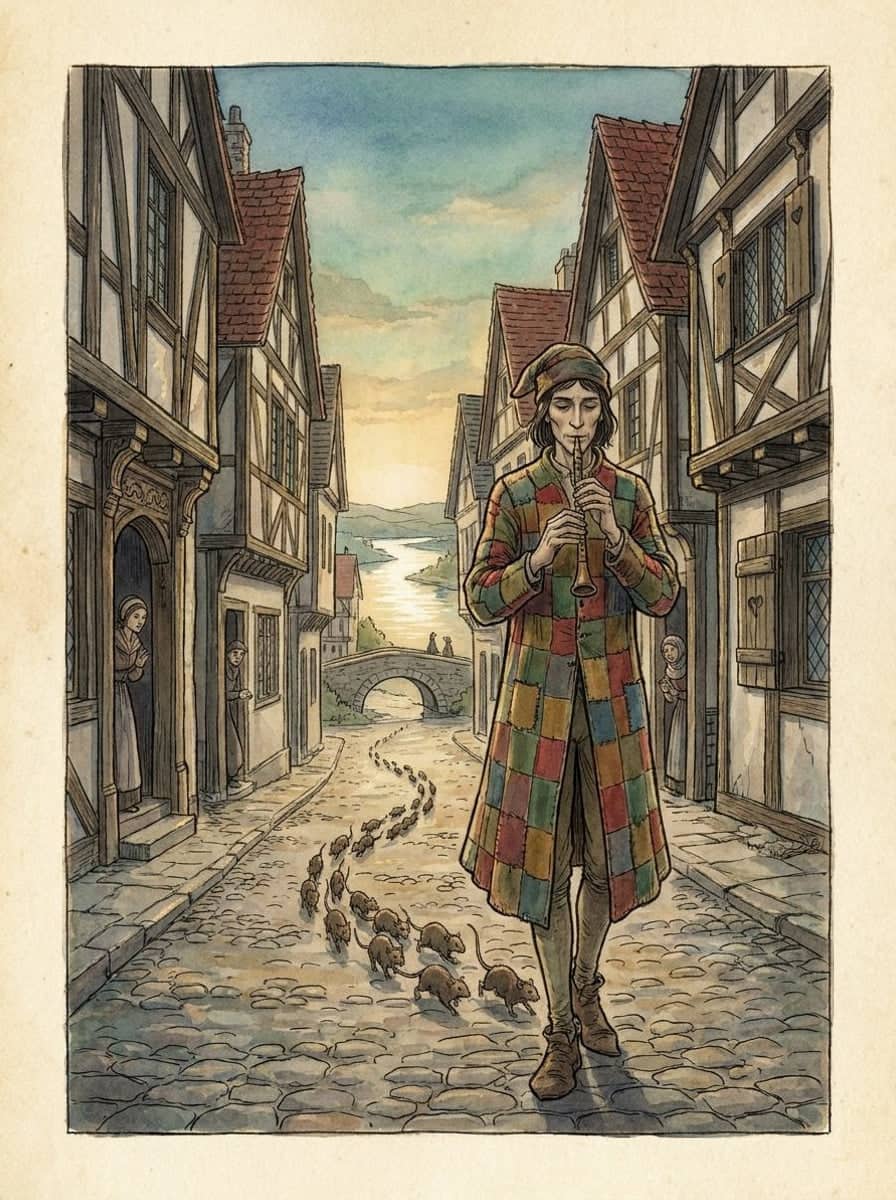
In the year 1284 a strange man was seen in the town of Hamelin. His coat was sewn from cloth of many colours, as bright as a summer meadow, and because of it people called him Bunting, which was their name for cloth of that gaudy kind.
He said he was a rat-catcher. For a certain sum of money, he told the townspeople, he would rid Hamelin of every rat and every mouse inside its walls.
The town had need of him. Rats sat on the flour sacks, mice ran along the beams, and there was hardly a cupboard in Hamelin that had not been gnawed.
So the townsmen came to an agreement with him and promised him a fixed sum, and the bargain was made in front of witnesses.
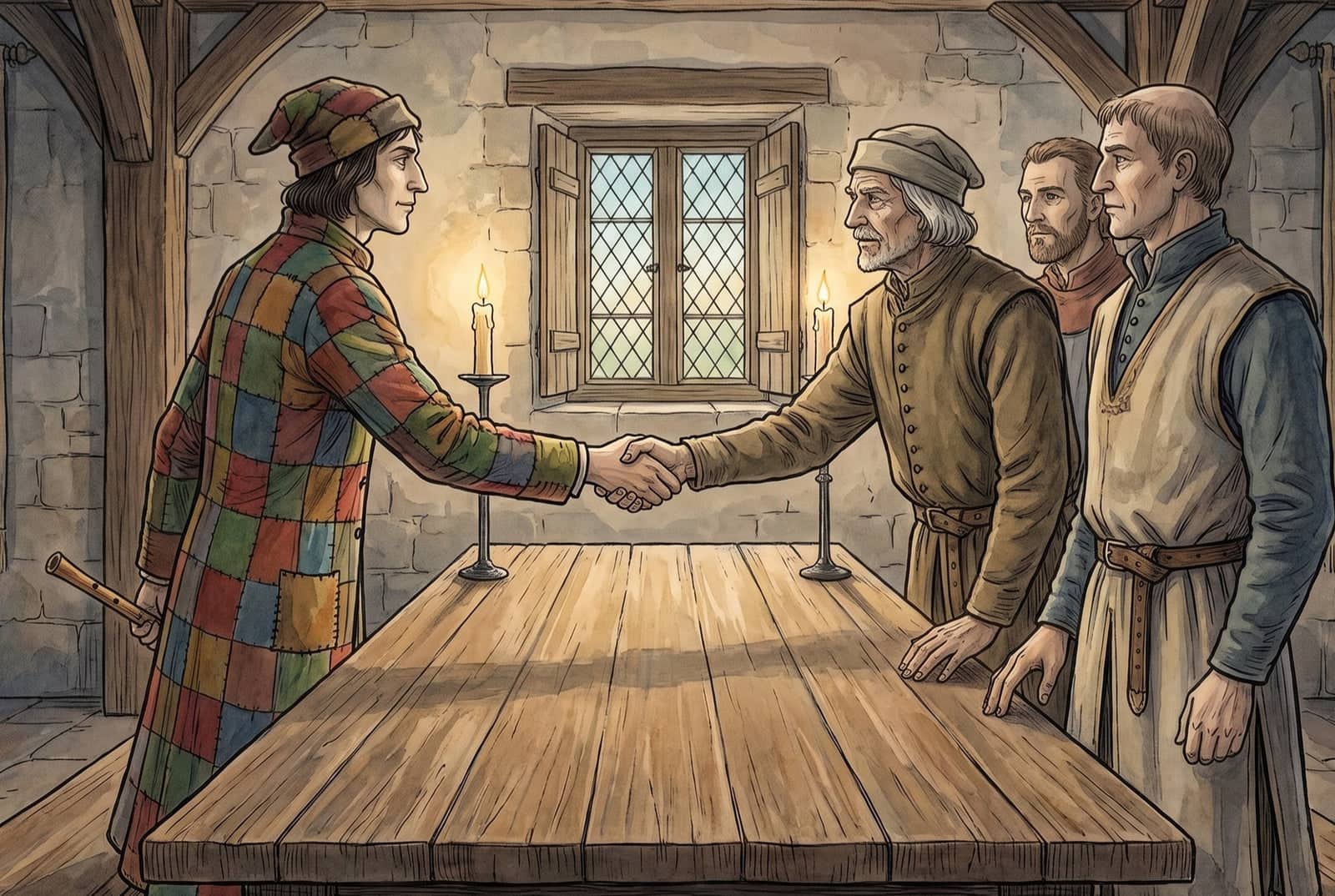
Then the rat-catcher took a little pipe out of his coat and began to play.
At once the rats and mice came creeping out of the houses. They poured up from the cellars and slid down from the roof beams and gathered around him in a grey crowd, and not one of them ran away.
When he judged that none were left behind, he walked out through the streets, and the whole swarm went after him, and he led them down to the river Weser.
There he hitched up his coat and stepped into the water. The rats came after him, every one, and the river carried them away, and Hamelin was free of them.
But once the town was rid of its plague, the promised money began to look like a great deal of money.
The townspeople found excuses. The sum had never been meant to be taken so exactly, they said. The work had taken no time at all. Paying could wait another day. In the end they refused him altogether.
The man said very little. He went away angry and bitter, and the town forgot him, or told itself that it had.
He came back on the twenty-sixth of June, the day of Saint John and Saint Paul. Some say it was seven in the morning. Others say it was noon.
He was not dressed as a rat-catcher now. He came in the clothes of a hunter, with a strange red hat, and his face was so terrible that those who saw it looked away.
He put the pipe to his lips and played through the narrow streets.
This time it was not the rats that came. It was the children, boys and girls, the smallest of them barely four years old, running out of the doorways and the yards and the gardens. Among them was the mayor’s daughter, who was already grown.
They came in a great crowd, laughing and hurrying, their faces turned towards the music. Every one of them followed him out through the gate.
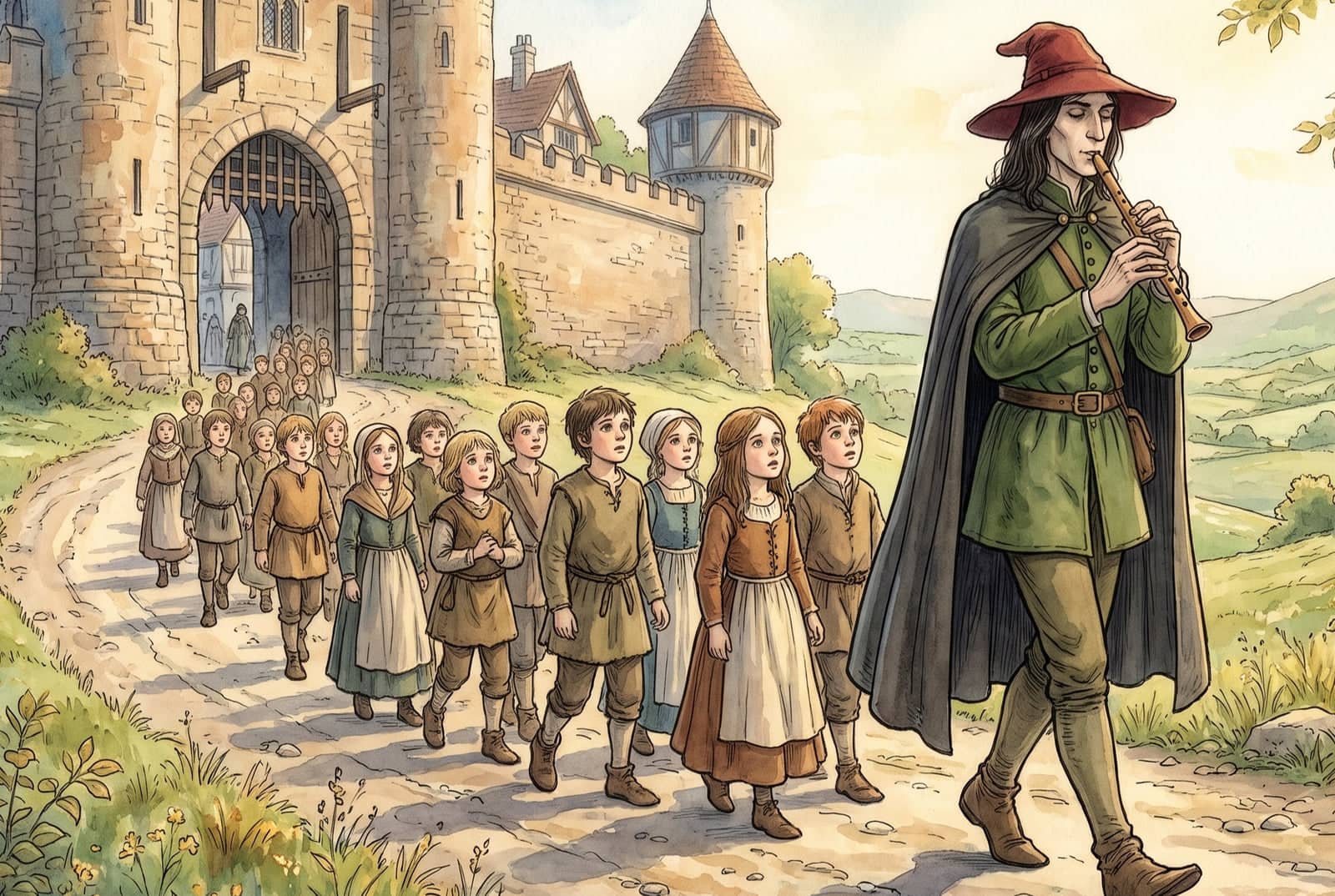
He led them up to a hill beyond the town, and the hill opened, and he went in, and the children went in with him, and it closed behind them.
A nursemaid had seen it. She had followed a long way back with a baby in her arms, and she turned and ran and carried the news into the town.
Then the parents came pouring out of every gate. They searched the roads and called their children’s names with heavy hearts, and the mothers wept aloud, and nobody in Hamelin slept that night.
Messengers were sent out by water and by land, into every town and village, to ask whether anyone had seen the children, or even a few of them. Nothing came back. A hundred and thirty were lost.
Two of them, people say, set out late and so came home again. One was blind and could not show the place, but could tell how they had all gone after the piper’s music. The other could not speak, and led the townspeople to the very spot, but could tell them nothing at all.
And one small boy, they say, had run out in his shirt and turned back for his coat, and that was what saved him. By the time he came back, the hillside had closed upon the others. The place is still pointed out today.
The hill is called the Poppenberg, and two stones were raised on it, one to the left and one to the right, each cut in the shape of a cross.
Some say the children were led into a cave under the hill and came out again far away, in Transylvania. But that is only a rumour. No one in Hamelin ever saw them again.
The street they went down on their way to the gate has been a silent street ever since. No dance was ever held in it and no drum or fiddle was ever sounded there, and when a bride was brought to church with music, the players had to carry their instruments past that lane without a single note.
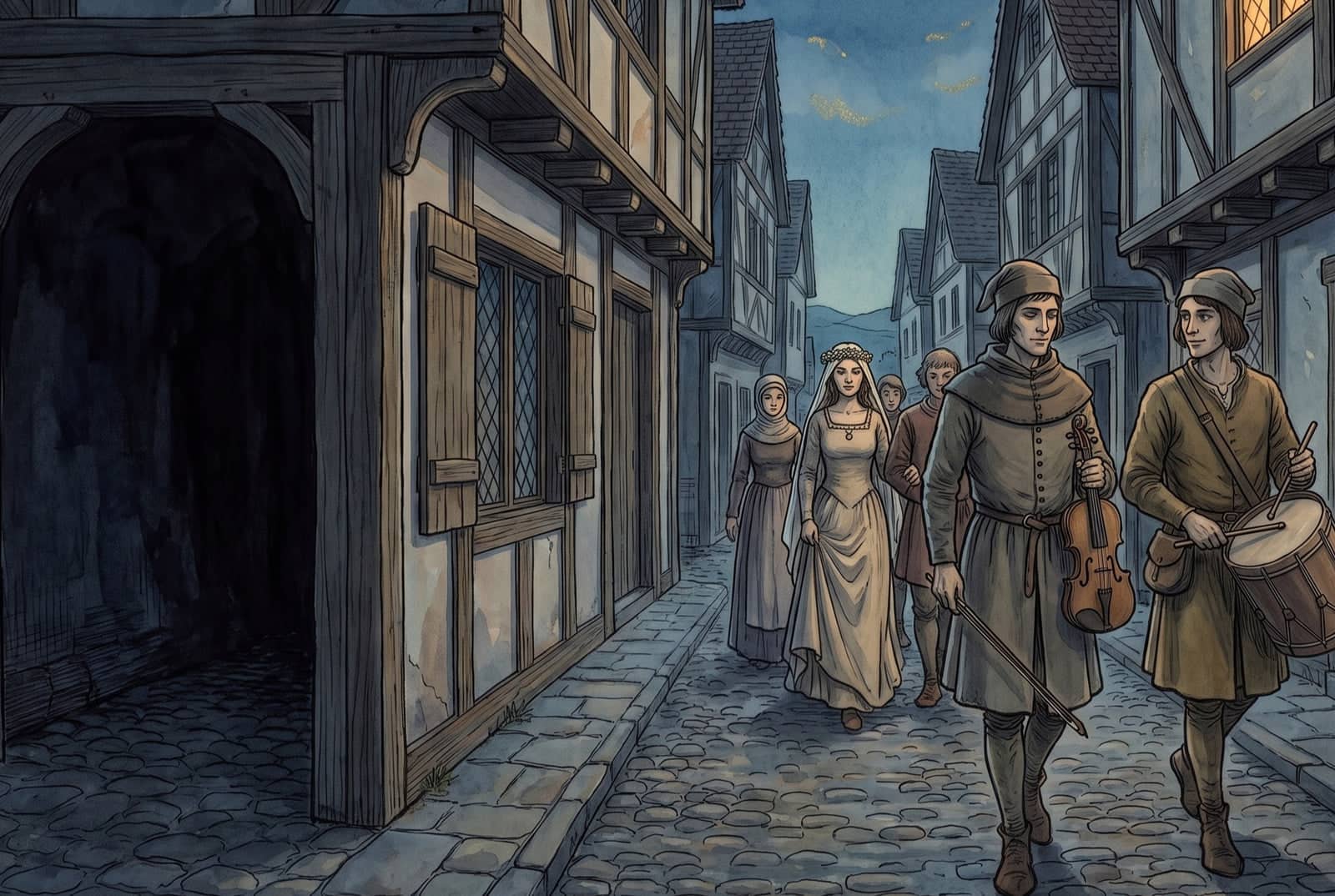
On the wall of the town hall these lines were carved, so that nobody should forget:
In the year twelve hundred and eighty-foura piper led children from Hamelin’s door,a hundred and thirty, born in this town,and under the hill his music took them down.
Retold by Talerie, Source: Deutsche Sagen (opens in a new window)
License: Public domainCopy this text, adapt it, use it however you like. A link back to Talerie is appreciated but never required.CC0 1.0 (opens in a new window)