A soldier home from the wars fetches an old witch’s tinderbox from a hollow tree, and its spark calls up three dogs that bring him money and the sleeping princess. Led to the gallows, he strikes fire once more, and the dogs toss the judges, the king and the queen away as the people cry that the soldier shall be king.
A soldier came marching down the high road. Left, right! Left, right! He had his knapsack on his back and a sword at his side, and he was coming home from the wars.
On the road he met an old witch, a dreadful sight, with her lower lip hanging down to her chest.
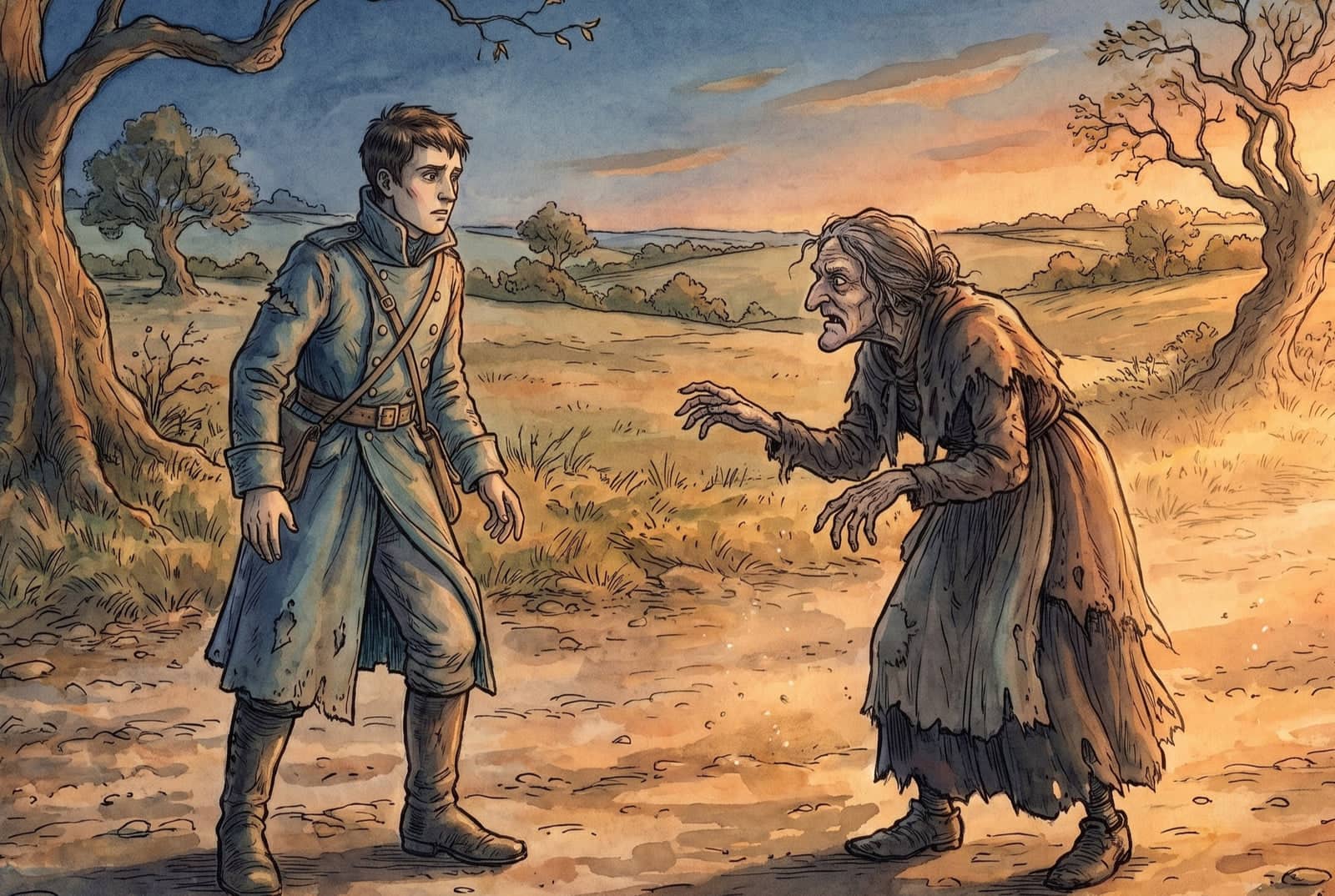
“Good evening, soldier,” she said. “What a fine sword, and what a big knapsack! You are a real soldier, and you shall have all the money you please.”
“Thank you kindly, old witch,” said the soldier.
“Do you see that great tree?” she said. “It is hollow inside. Climb to the top and slip down through the hole there. I will tie a rope round you and pull you up when you call.”
“And what am I to do down there?” asked the soldier.
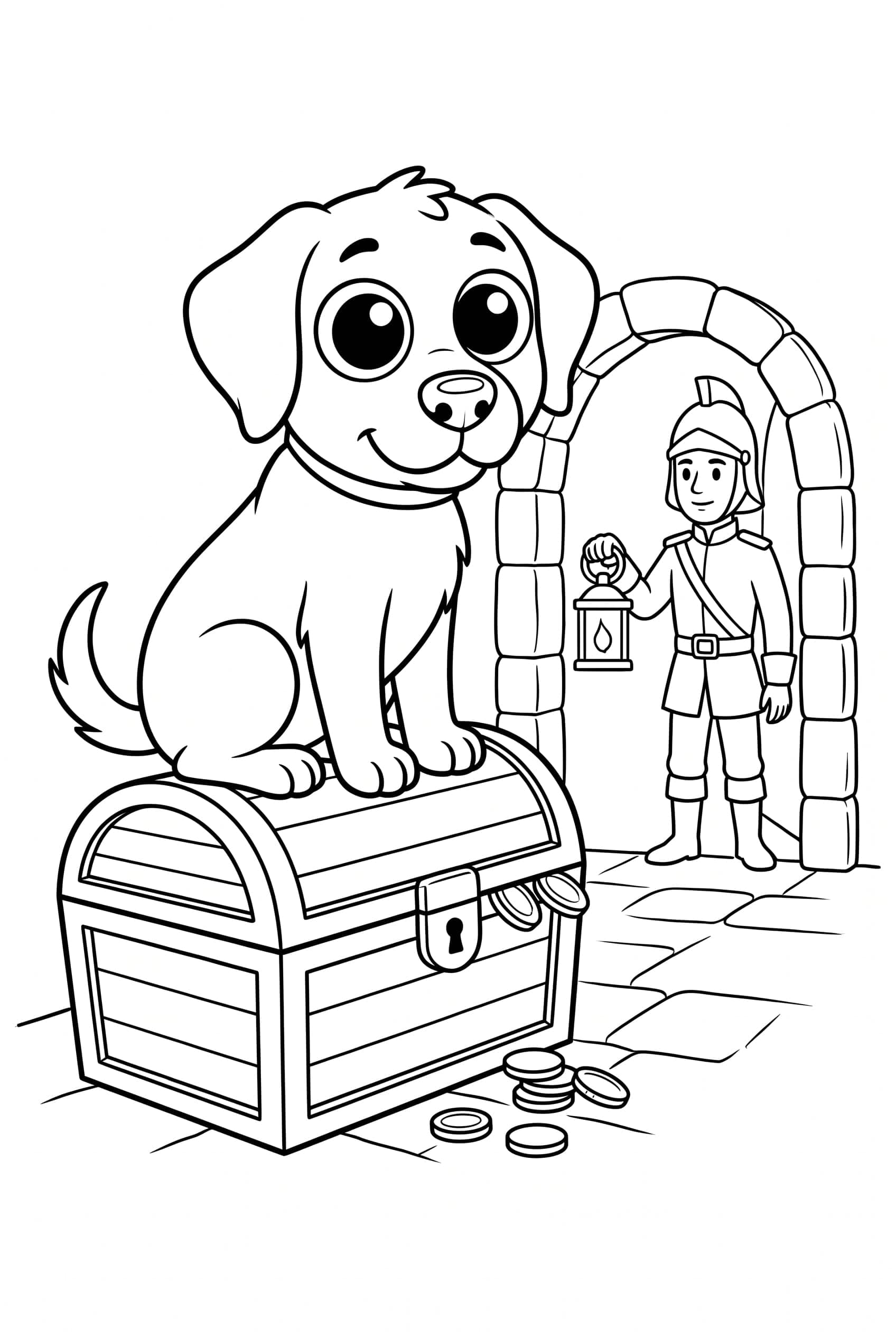
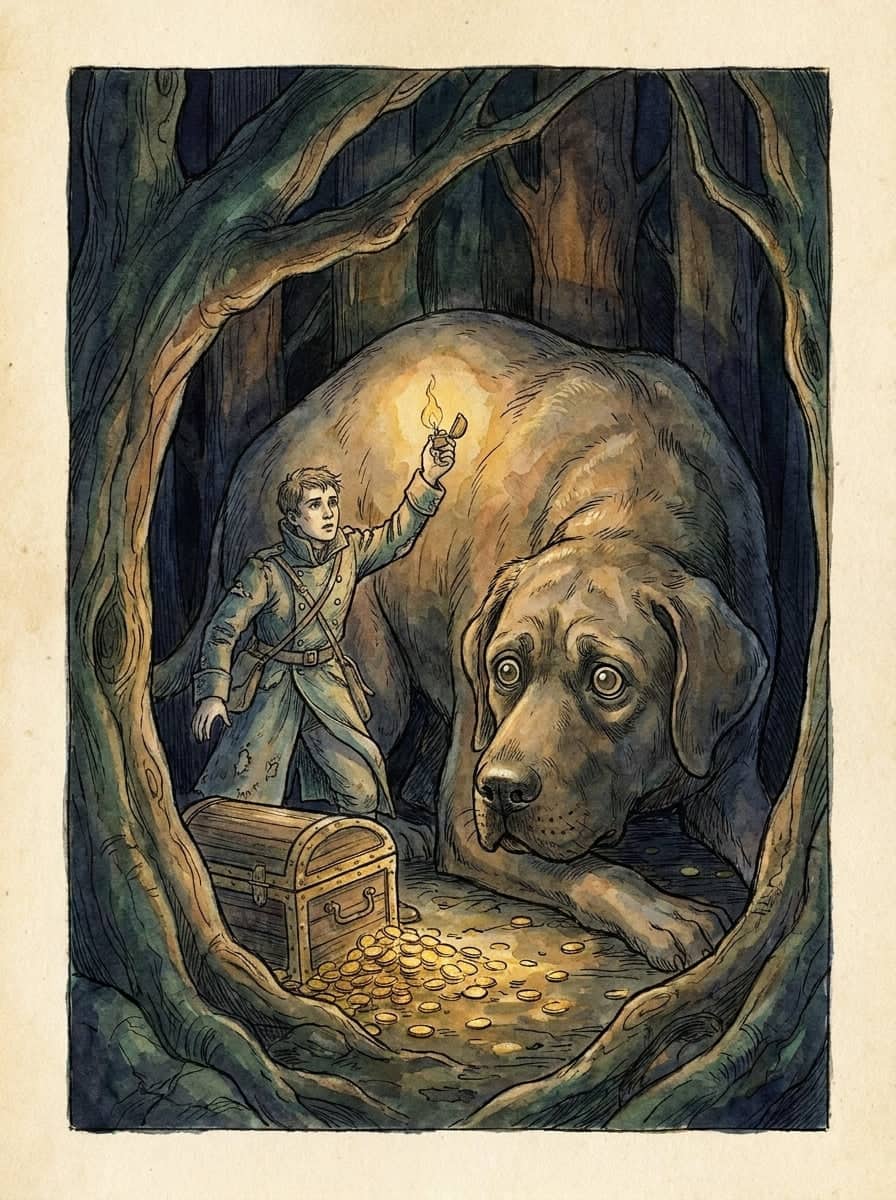
“Fetch money,” said the witch. “At the bottom is a hall lit by three hundred lamps, with three doors and the keys in the locks. In the first room a dog with eyes as big as teacups sits on a chest of copper, in the second a dog with eyes as big as mill-wheels on a chest of silver, and in the third a dog with eyes as big as towers on a chest of gold. Never mind them. Spread my blue checked apron on the floor, set each dog on it, and he cannot touch you. Then take all you can carry.”
“That does not sound bad,” said the soldier. “But what do you want for it?”
“Not one penny,” said the witch. “Only bring me the old tinderbox my grandmother left down there.”
“Then tie the rope round me,” said the soldier.
So she tied the rope and gave him the apron. He climbed the tree and slid down into a great hall where hundreds of lamps burned. He opened the first door, and there sat the dog with eyes as big as teacups.
“You are a fine fellow,” said the soldier. He set him on the apron, filled his pockets with copper coins and went into the next room, where the dog with eyes as big as mill-wheels sat waiting. He set that one on the apron too, and at the sight of the silver he threw away every copper coin and filled his pockets and knapsack instead.
In the third room the dog was truly frightful. His eyes were as big as towers, and they turned round in his head like wheels.
“Good evening,” said the soldier, touching his cap, for he had never seen such a dog in his life. Then he set him on the apron and opened the chest. What a heap of gold, enough to buy the whole town! He threw the silver away and filled his pockets, his knapsack, his cap and his boots with gold, until he could hardly walk. Then he called up through the tree.
“Pull me up now, you old witch!”
“Have you got the tinderbox?” she called down.
“I clean forgot it,” said the soldier, and back he went for it. Then the witch hauled him up, and he stood on the road with his cap and boots full of gold.
“What do you want the tinderbox for?” he asked.
“That is no business of yours,” said the witch. “Give me the tinderbox.”
“Tell me what you mean to do with it,” said the soldier, “or I shall draw my sword.”
“No,” said the witch.
So the soldier drew his sword, and that was the end of the old witch. He tied his gold up in her apron, pocketed the tinderbox and walked on to the town.
There he took the best rooms at the best inn and bought fine clothes, so that everyone took him for a gentleman born. His new friends told him of the king’s daughter, the loveliest princess in the world.
“And where may I see her?” asked the soldier.
“She is not to be seen,” they said. “She lives in a copper castle behind high walls, and nobody but the king goes in or out. It has been foretold that she will marry a common soldier, and the king cannot bear the thought.”
No permission was to be had, so he lived merrily instead and gave much money to the poor, for he remembered what it is to have nothing. But his money could not last forever. Soon he had two shillings left, and he moved into an attic under the roof, where no friend of his climbed the stairs to see him.
One dark evening he could not even buy a candle, and he remembered the candle stub in the tinderbox from the hollow tree. He struck a spark, the door flew open, and there stood the dog with eyes as big as teacups.
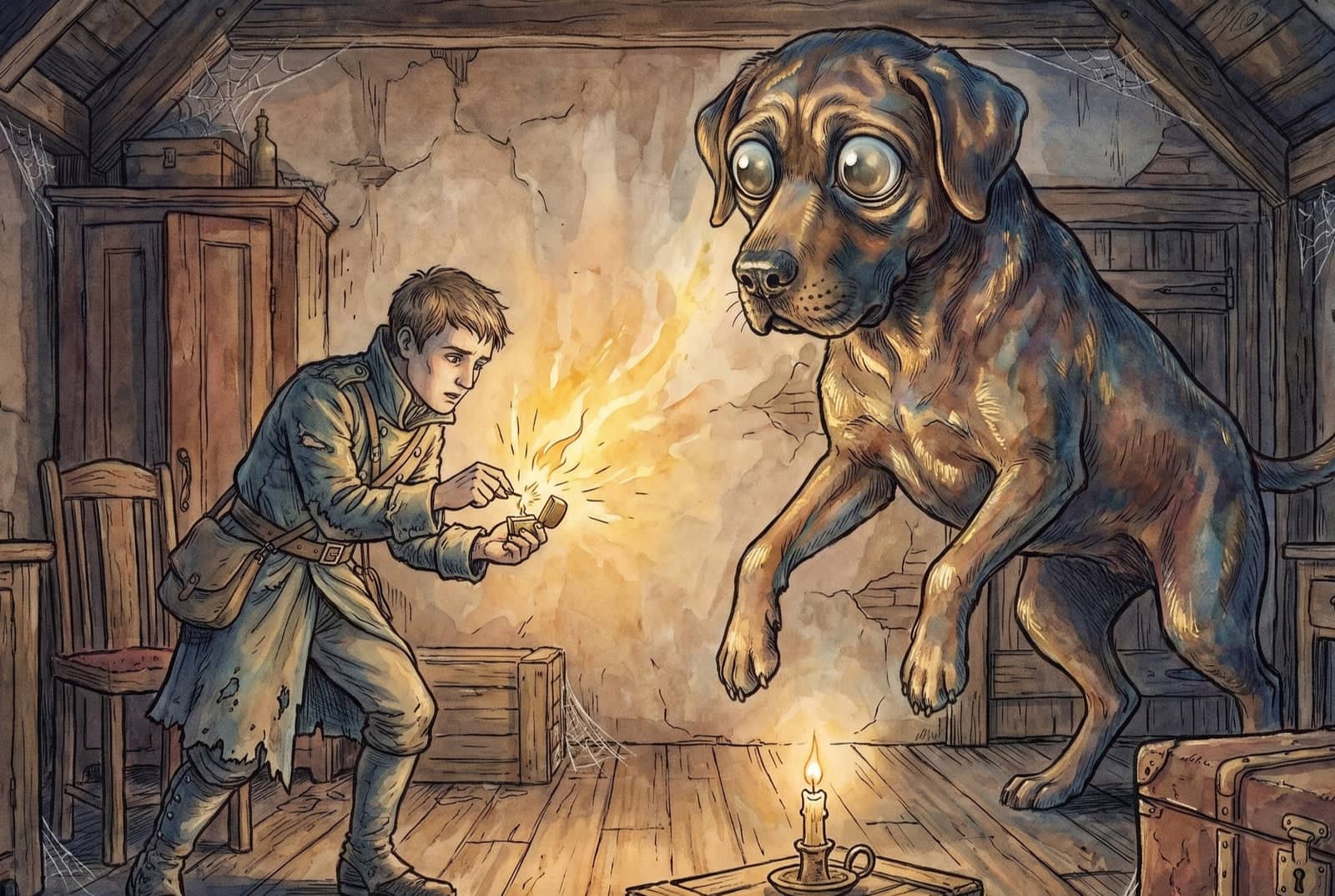
“What does my master command?” said the dog.
“A merry tinderbox indeed,” said the soldier. “Fetch me some money.”
The dog was gone in a flash and back with a bag of coins in his mouth. One stroke of the flint brought the dog from the copper chest, two strokes the dog from the silver, and three the dog who guarded the gold. So the soldier moved back into his fine rooms, and his friends knew him again.
It seemed hard that nobody could get a look at the princess. So he struck a spark, and there stood the dog with eyes as big as teacups.
“It is the middle of the night, I know,” said the soldier, “but I should dearly love to see the princess, if only for a moment.”
The dog was out of the door and back before the soldier could look round. The princess lay asleep on the dog’s back, so lovely that anyone could see she was a real princess. The soldier could not help kissing her, and the dog carried her home again.
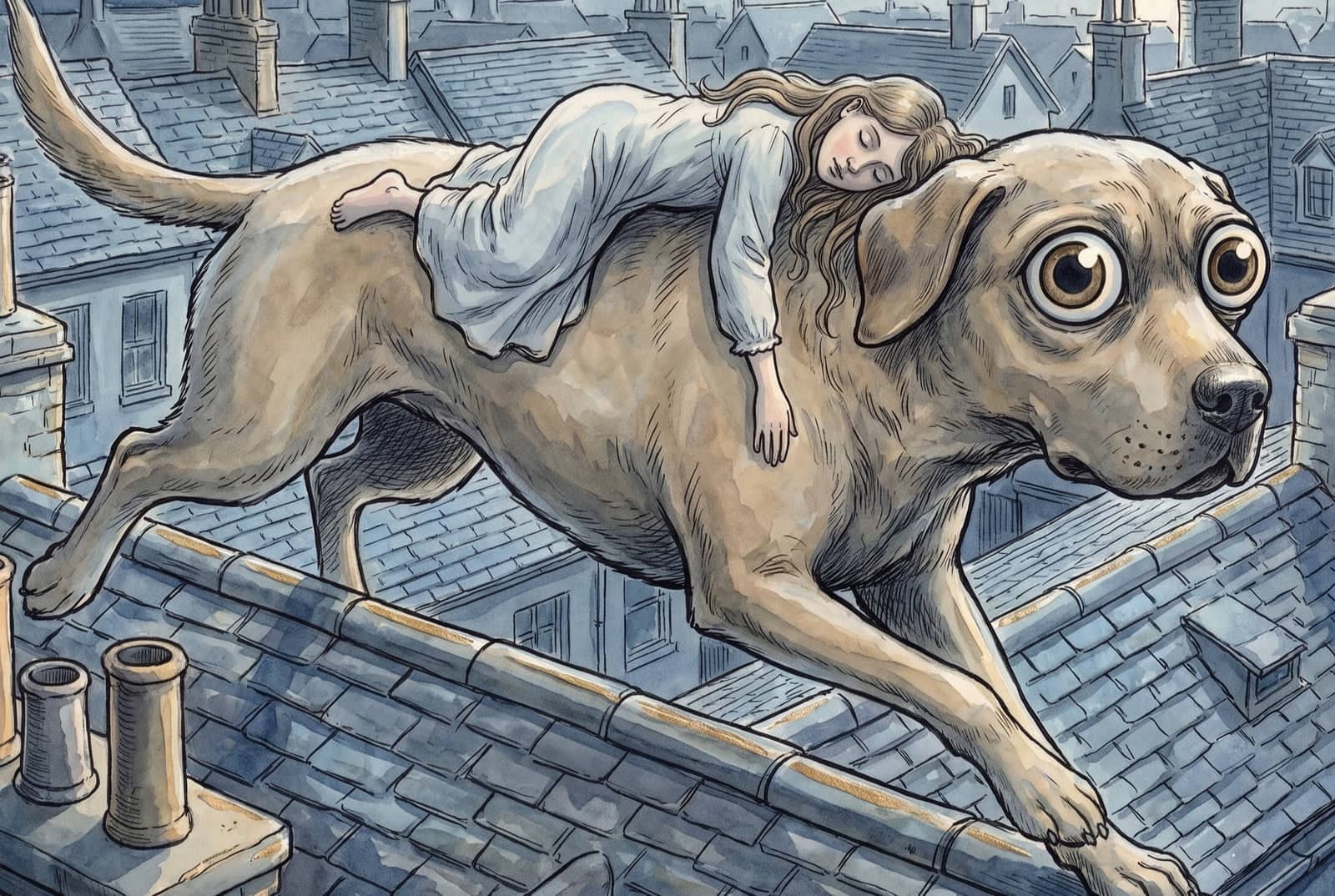
In the morning the princess told the king and queen of a strange dream, in which she rode on a dog’s back and a soldier kissed her.
“What a pretty story,” said the queen. But the next night an old lady of the court sat watching beside the princess’s bed.
The soldier longed to see her again and sent the dog for her once more. But the old lady pulled on stout boots and ran behind him, and when the dog slipped into a great house she chalked a cross on the door. The dog saw it as he carried the princess back, so he took chalk and marked every door in the town. When the king and queen came out next morning, there was a cross wherever they looked, and searching did them no good.
But the queen was a clever woman. She sewed a little bag of silk, filled it with buckwheat flour and tied it to the princess, with a small hole snipped in it, so that the flour would trickle out along whatever road the princess traveled.
That night the dog carried the princess to the soldier, who loved her so much that he wished he had been born a prince, to marry her. The dog never noticed the thin white line running from the castle wall to the window, and in the morning the king and queen knew where their daughter had been. The soldier was put in prison.
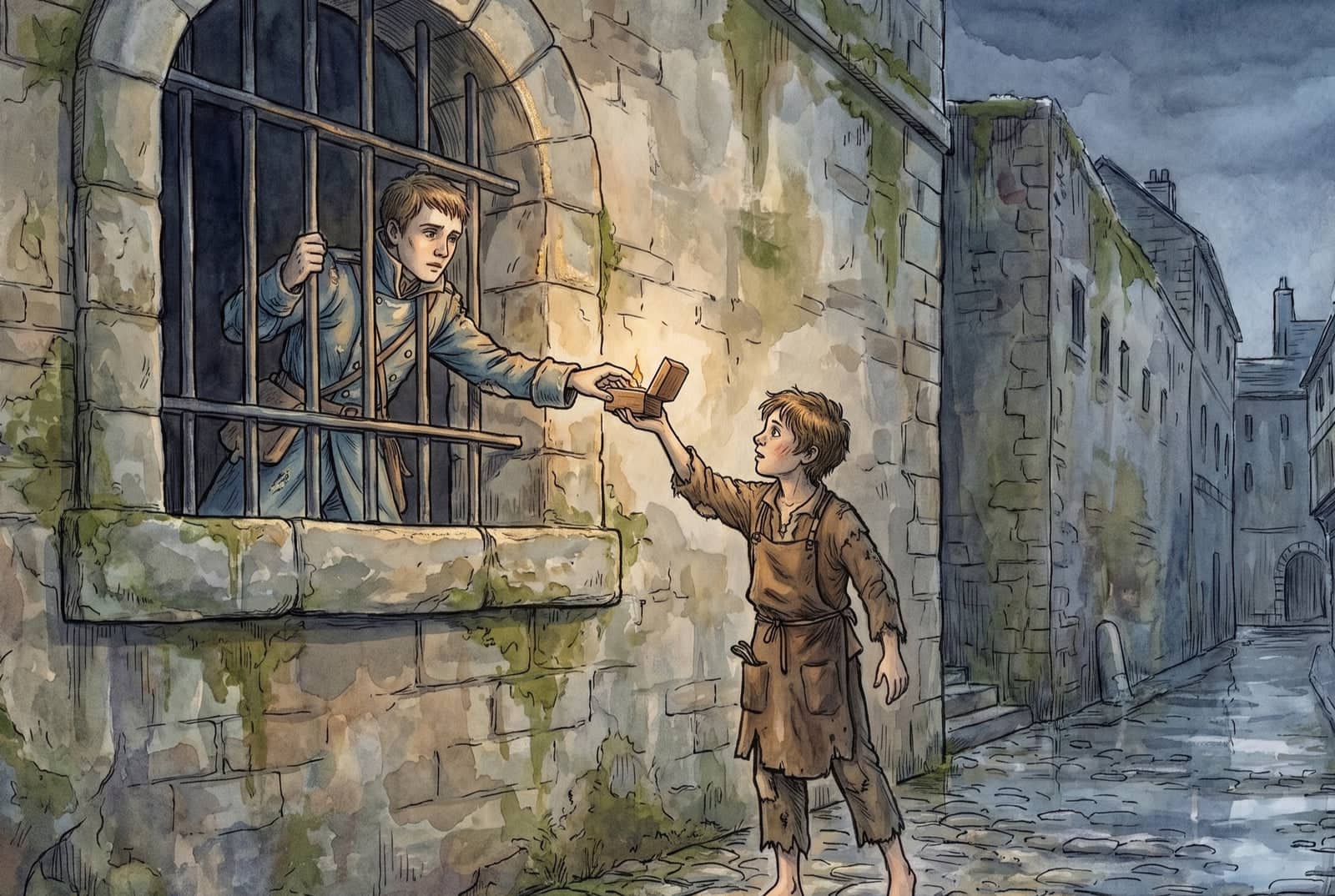
How dark and dreary it was there! And they told him he would hang in the morning. Worse still, his tinderbox lay at the inn. When morning came he heard the drums, and through the iron bars he saw the people hurrying out of town. A shoemaker’s boy came running past below the soldier’s window.
“No need to hurry, shoemaker’s boy,” called the soldier. “Nothing will happen until I come. Run to the house where I lodged and bring me my tinderbox, and you shall have four shillings!”
The boy ran like the wind and handed the tinderbox up through the bars.
Outside the town a gallows had been raised, and round it stood soldiers and many thousands of people. The king and queen sat facing the judges and the whole council. The soldier stood on the ladder already, but as they went to put the rope round his neck he asked for the last wish a poor prisoner is granted: a pipe of tobacco.
The king could not refuse him that. So the soldier struck fire with his tinderbox, once, twice, three times, and there stood all three dogs: the one with eyes as big as teacups, the one with eyes as big as mill-wheels, and the one with eyes as big as towers.
“Help me now, so that I am not hanged!” cried the soldier.
The dogs went for the judges and the whole council, took one by the leg and another by the nose, and tossed them so high that there was an end of them.
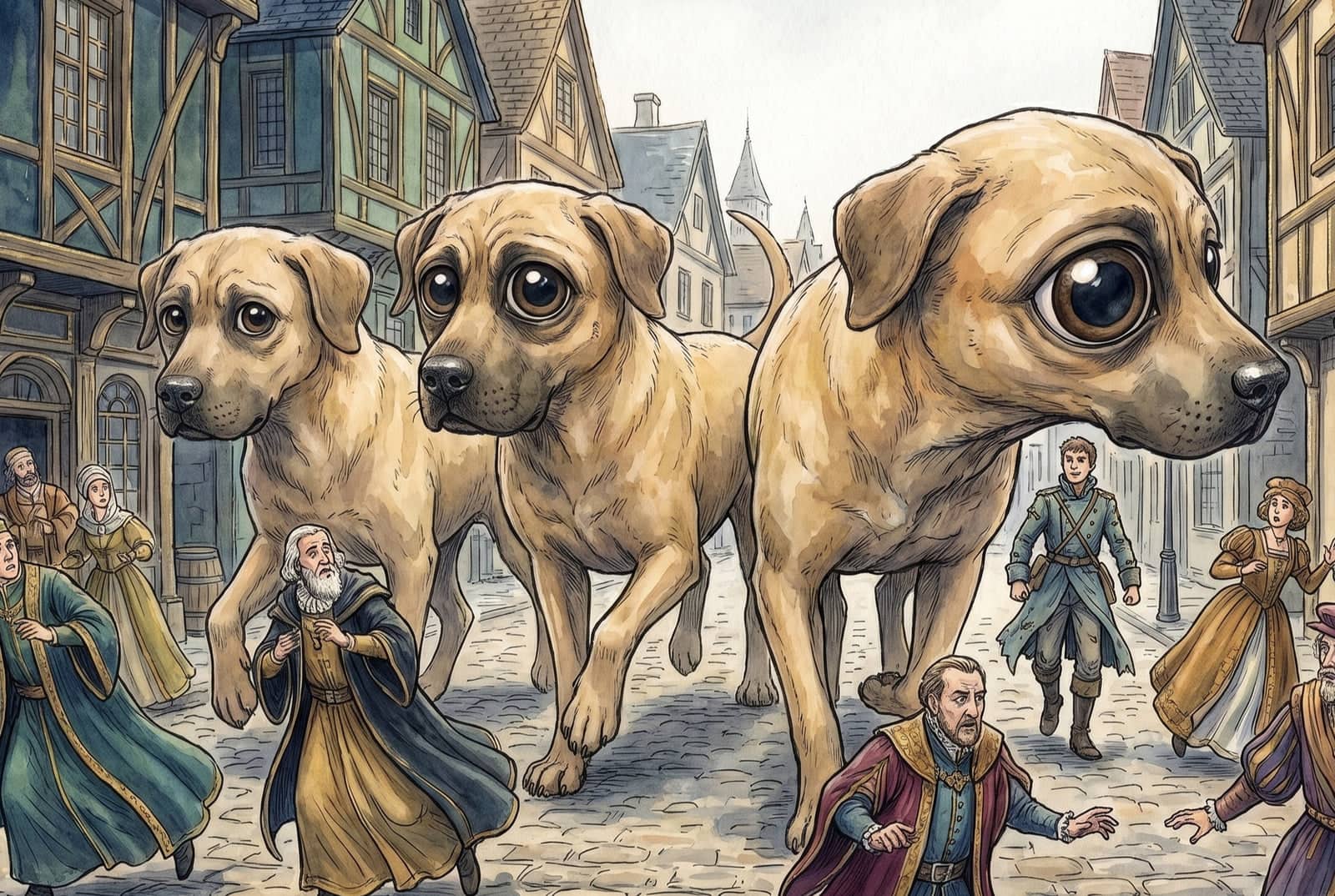
“I will not be touched!” said the king. But the largest dog took him and the queen and threw them after the others. Then all the people cried out.
“Good soldier, you shall be our king, and you shall have the beautiful princess!”
So they set the soldier in the king’s carriage, and the three dogs danced in front and shouted, “Hurrah!” The princess came out of the copper castle and became queen, which suited her very well. The wedding lasted eight days, and the dogs sat at the table and stared with great round eyes.
Retold by Talerie from Fairy Tales of Hans Christian Andersen (opens in a new window)License: Public domainCopy this text, adapt it, use it however you like. A link back to Talerie is appreciated but never required.CC0 1.0 (opens in a new window)