 Original
The Wishing Table
21 min readages 7 and uptalerie.com/en/tales/the-wishing-table-original
A tailor drives out his three sons over a lying goat, and a thieving innkeeper steals the wishing table and gold donkey the first two earn on their travels. The youngest brother’s cudgel wins them back for a feast with all the relatives, while the goat, her head shaved bald, hides in a fox’s den until a bee stings her.
Once upon a time there was a tailor who had three sons and only one goat. Because the goat fed them all with her milk, she had to have good food and be taken out to pasture every day, and the sons took turns doing it.
One day the eldest led her to the churchyard, where the finest greens grew, and let her eat and skip about there as she pleased. In the evening, when it was time to go home, he asked, “Goat, have you had enough?”
The goat answered:
I’m full as can be,not one leaf more for me.Baa! Baa!
“Then come along home,” said the boy. He took her by her rope, led her into the stall and tied her up.
“Well,” said the old tailor, “has the goat had her proper feed?”
“Oh,” answered his son, “she’s so full she couldn’t eat another leaf.”
But the father wanted to see for himself. He went down to the stall, stroked the dear animal and asked, “Goat, have you really had enough?”
The goat answered:
How can I be full?I only hopped over graves all dayand never found one leaf on the way.Baa! Baa!
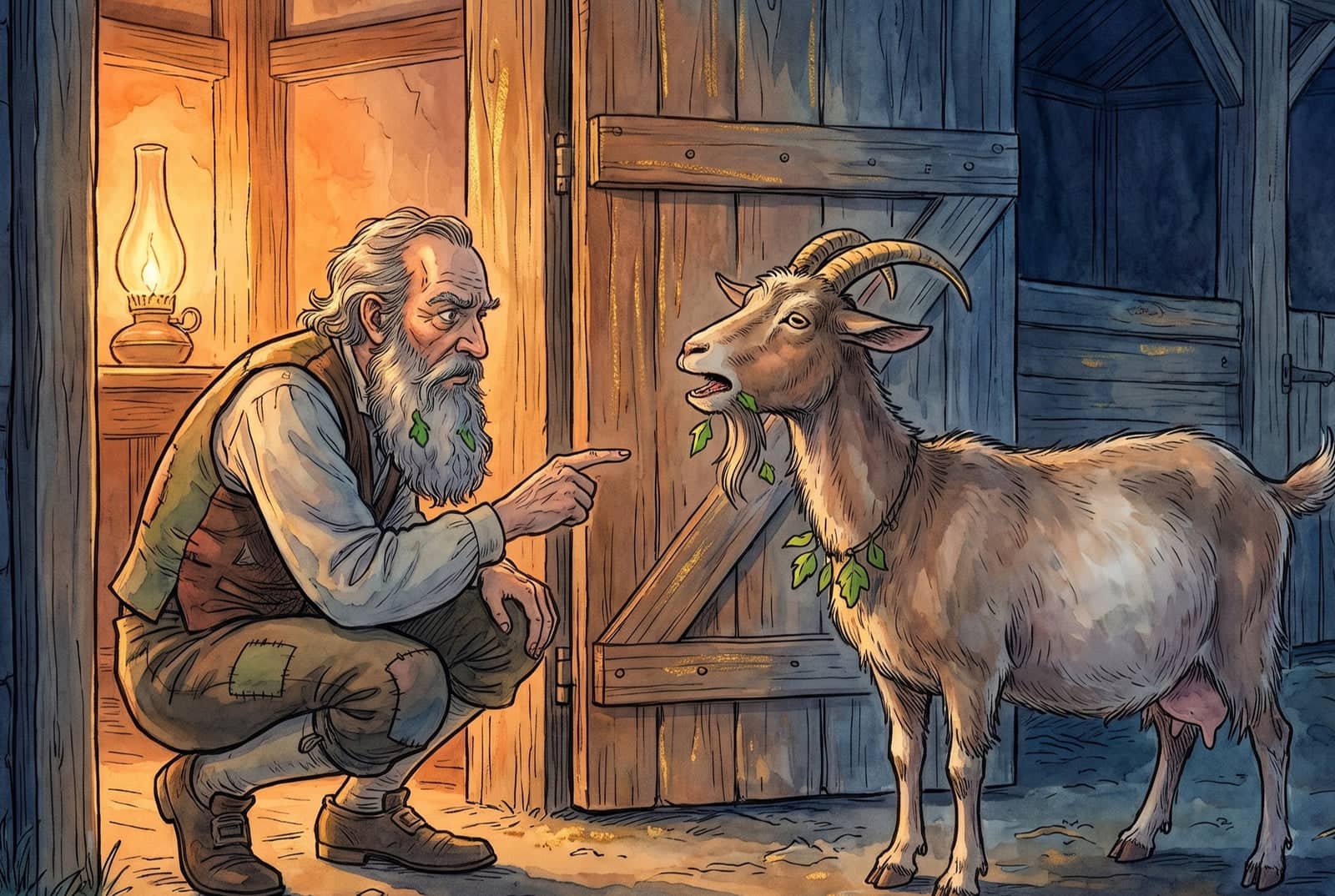
“What’s this I hear?” cried the tailor. He ran upstairs and said to the boy, “You liar! You tell me the goat is full, and all the while you let her go hungry?” And in his anger he took the yardstick down from the wall and beat him out of the house.
The next day it was the second son’s turn. He found a spot by the garden hedge where nothing but good greens grew, and the goat ate them all down to the ground. In the evening, when he wanted to go home, he asked, “Goat, have you had enough?”
The goat answered:
I’m full as can be,not one leaf more for me.Baa! Baa!
“Then come along home,” said the boy. He led her home and tied her up in the stall.
“Well,” said the old tailor, “has the goat had her proper feed?”
“Oh,” answered his son, “she’s so full she couldn’t eat another leaf.”
The tailor did not want to take his word for it. He went down to the stall and asked, “Goat, have you really had enough?”
The goat answered:
How can I be full?I only hopped over graves all dayand never found one leaf on the way.Baa! Baa!
“The wicked good-for-nothing!” shouted the tailor. “To let such a good animal go hungry!” He ran upstairs and drove the boy out of the front door with the yardstick.
Now it was the third son’s turn. He wanted to do the job well, so he picked out bushes with the loveliest leaves and let the goat feed on them. In the evening, when he wanted to go home, he asked, “Goat, have you had enough?”
The goat answered:
I’m full as can be,not one leaf more for me.Baa! Baa!
“Then come along home,” said the boy, and he led her into the stall and tied her up.
“Well,” said the old tailor, “has the goat had her proper feed?”
“Oh,” answered his son, “she’s so full she couldn’t eat another leaf.”
The tailor did not trust it. He went down and asked, “Goat, have you really had enough?”
The spiteful creature answered:
How can I be full?I only hopped over graves all dayand never found one leaf on the way.Baa! Baa!
“Oh, you pack of liars!” cried the tailor. “Each one as wicked and careless as the next! You won’t make a fool of me any longer!” Beside himself with rage, he rushed upstairs and tanned the poor boy’s hide so hard with the yardstick that he ran from the house.
Now the old tailor was alone with his goat. The next morning he went down to the stall, petted her and said, “Come, my dear little goat, I’ll take you to pasture myself.” He led her by the rope to green hedges and patches of yarrow and all the other things goats like to eat. “For once you can eat to your heart’s content,” he told her, and he let her graze until evening. Then he asked, “Goat, have you had enough?”
The goat answered:
I’m full as can be,not one leaf more for me.Baa! Baa!
“Then come along home,” said the tailor, and he led her into the stall and tied her up. As he was leaving, he turned round once more and said, “Well, you’re full at last!” But the goat treated him no better than the others and cried:
How can I be full?I only hopped over graves all dayand never found one leaf on the way.Baa! Baa!
When the tailor heard that, he stopped short, and he saw clearly that he had driven his three sons away for no reason. “Just you wait, you ungrateful creature!” he cried. “Chasing you off is not enough. I’ll mark you so that you’ll never dare show your face among honest tailors again.” In a great hurry he ran upstairs, fetched his razor, lathered the goat’s head and shaved it as smooth as the palm of his hand. And because the yardstick would have been too good for her, he fetched the whip and lashed her so hard that she ran off in great leaps.
Sitting all alone in his house, the tailor grew very sad. He would gladly have had his sons back, but nobody knew where they had gone.
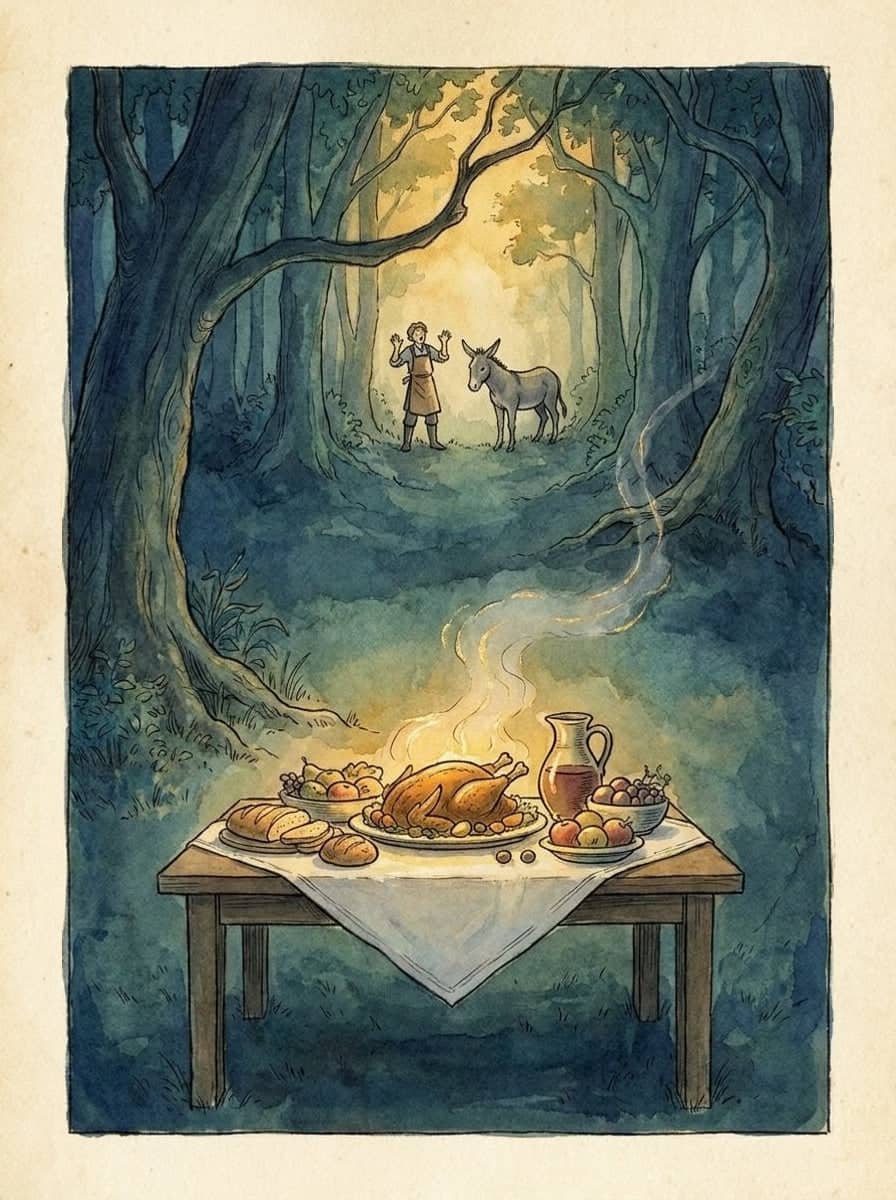
The eldest had been apprenticed to a carpenter. He worked hard and never tired of learning, and when his time was up and he was to set out on his travels, his master gave him a little table. It was nothing special to look at and was made of ordinary wood, but it had one good quality. If you set it down and said, “Table, be set!” the little table was covered at once with a clean cloth, a plate, a knife and fork, as many dishes of boiled and roasted meat as there was room for, and a big glass of red wine that made your heart glad. The young man thought, “That’s enough to last me the rest of my life.” He wandered cheerfully about the world and never cared whether an inn was good or bad. Often he did not stop at one at all, but in a field, a wood or a meadow, wherever he pleased, he took the table off his back, set it down in front of him and said, “Table, be set!” and there was everything his heart desired.
At last it came into his mind that he would go back to his father. His father’s anger would have passed by now, and with a wishing table he was sure to be welcomed. On his way home he came one evening to an inn full of guests. They made him welcome and invited him to sit and eat with them, or else he would hardly get anything at all.
“No,” answered the carpenter, “I won’t take the last few bites out of your mouths. You shall be my guests instead.”
The guests laughed and thought he was making fun of them. But the carpenter set his wooden table in the middle of the room and said, “Table, be set!” In an instant it was covered with food better than anything the innkeeper could have brought, and it smelled so good that the guests’ mouths began to water.
“Help yourselves, dear friends,” said the carpenter. When the guests saw that he meant it, they did not need to be asked twice. They drew up their chairs, took out their knives and tucked in heartily. And what amazed them most was that whenever a dish was emptied, a full one took its place all by itself.
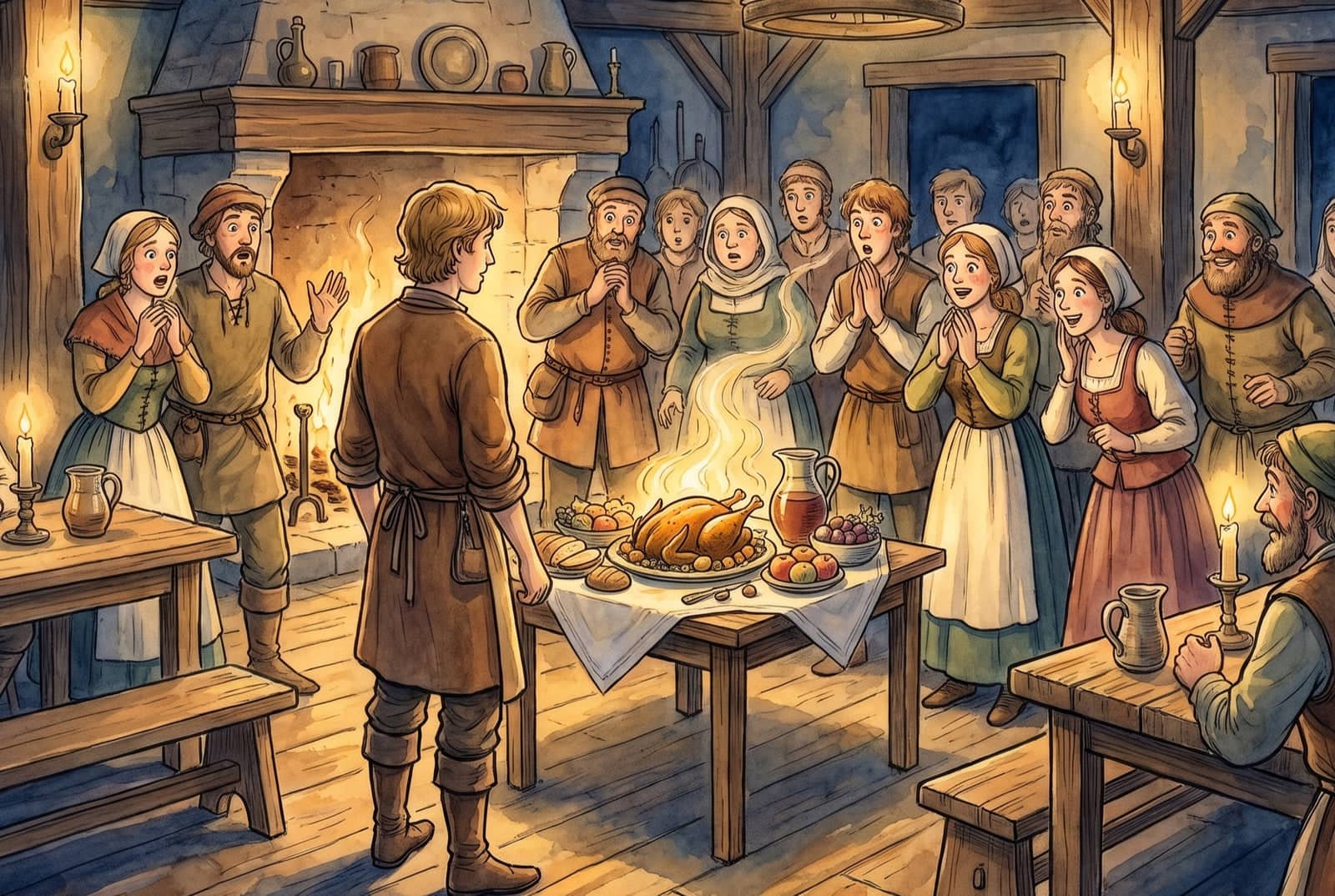
The innkeeper stood in a corner watching it all. He did not know what to say, but he thought, “A cook like that would come in handy at my inn.”
The carpenter and his company made merry until late into the night. At last they went to bed, and the young man went to bed too and stood his wishing table against the wall. But the innkeeper’s thoughts gave him no rest. He remembered that there was an old table in his storeroom that looked just like it. He crept off, fetched it very quietly and swapped it for the wishing table.
The next morning the carpenter paid for his bed, packed up his table, never dreaming that it was the wrong one, and went on his way. At noon he reached his father’s house, and the tailor welcomed him with great joy.
“Well, my dear son, what have you learned?” asked the tailor.
“Father, I’ve become a carpenter.”
“A good trade,” said the old man. “But what have you brought home from your travels?”
“Father, the best thing I’ve brought is this little table.”
The tailor looked it over from every side and said, “That’s no masterpiece you’ve got there. It’s a shabby old table.”
“But it’s a wishing table,” answered his son. “When I set it down and tell it to set itself, the finest dishes appear on it at once, with a wine that gladdens the heart. Just invite all our relatives and friends. For once they shall eat and drink their fill, because the table will feed them all.”
When the company had gathered, the carpenter set his table in the middle of the room and said, “Table, be set!” But the table did not stir. It stayed as bare as any other table that does not understand what is said to it. Then the poor young man realized that his table had been switched, and he was ashamed to stand there like a liar. The relatives laughed at him and had to walk home again without a bite to eat or a drop to drink. The father brought out his scraps of cloth and went back to his sewing, and the son went to work for a master carpenter.
The second son had gone to a miller and been apprenticed to him. When his years were up, the master said, “Because you have behaved so well, I’m giving you a donkey of a very special kind. He won’t pull a cart and he won’t carry sacks.”
“Then what is he good for?” asked the young man.
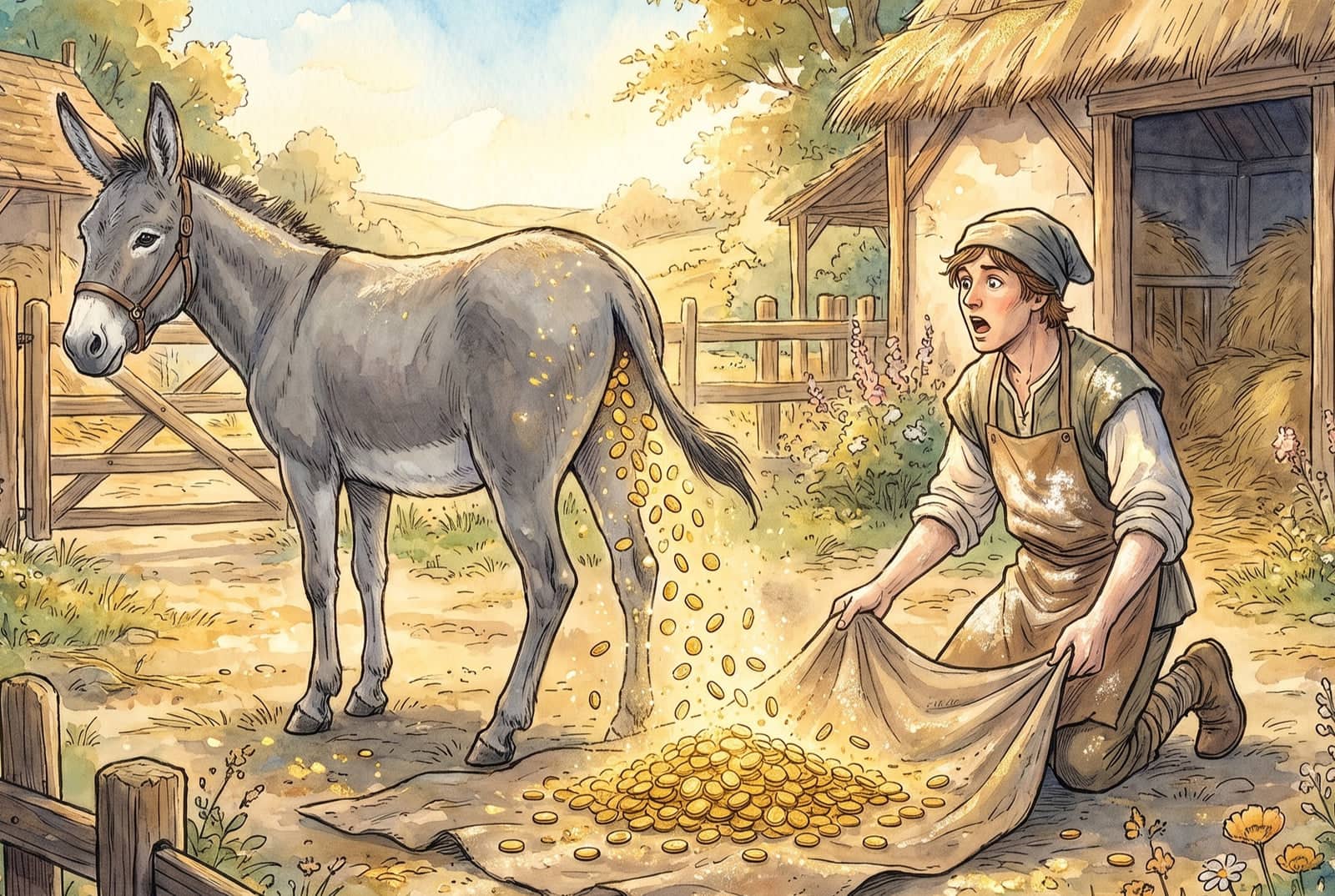
“He spits out gold,” answered the miller. “Stand him on a cloth and say ‘Bricklebrit!’ and the good creature will spit out gold coins for you, front and back.”
“That’s a fine thing,” said the young man. He thanked his master and set off into the world. Whenever he needed gold, he only had to say “Bricklebrit!” to his donkey, and gold coins rained down, and all he had to do was pick them up off the ground. Wherever he went, only the best was good enough for him, and the dearer the better, for his purse was always full.
When he had seen something of the world, the young miller thought, “I must go and find my father. If I come home with a gold donkey, he’ll forget his anger and give me a warm welcome.” As it happened, he came to the very same inn where his brother’s table had been swapped. He was leading his donkey by the halter, and the innkeeper wanted to take the animal from him and tie it up.
“Don’t trouble yourself,” said the young man. “I’ll take my donkey into the stable myself and tie him up myself too, because I need to know where he is.”
The innkeeper thought this strange, and he supposed a man who saw to his own donkey would not have much to spend. But when the stranger put his hand in his pocket, took out two gold coins and told him to buy something good for supper, the innkeeper’s eyes grew wide, and he ran off and found the best he could get. After the meal the guest asked what he owed. The innkeeper saw his chance to overcharge and said he would have to add a few more gold coins. The young man felt in his pocket, but his gold had just run out.
“Wait a moment, landlord,” he said. “I’ll just go and fetch some gold.” But he took the tablecloth with him.
The innkeeper could not think what this meant. He was curious, so he crept after his guest, and since the young man bolted the stable door, the innkeeper peeped in through a knothole. The stranger spread the cloth under the donkey and called, “Bricklebrit!” and at once the animal began to spit out gold, front and back, until it fairly rained down onto the ground.
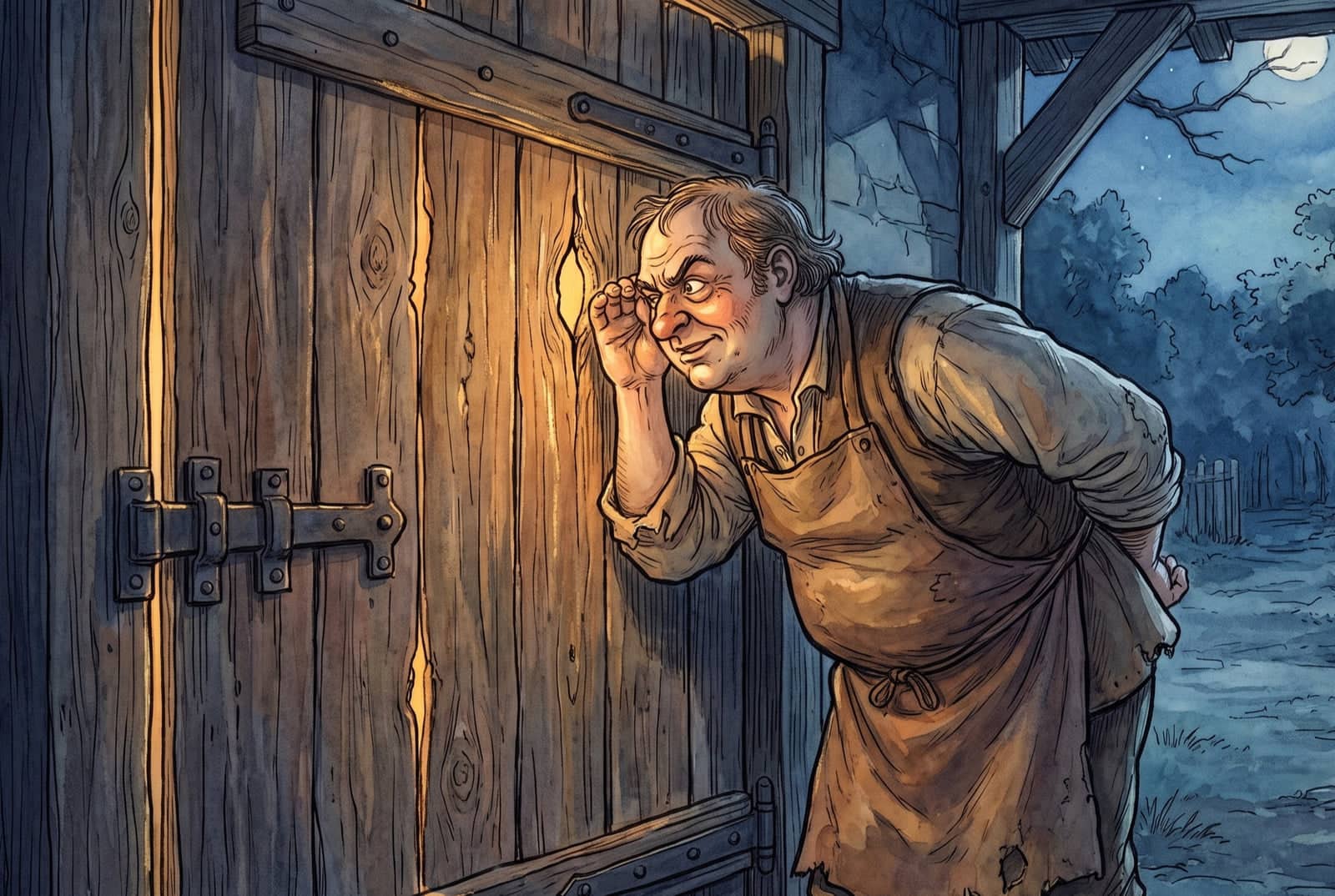
“Well, I’ll be!” said the innkeeper. “That’s a quick way to mint gold! A purse like that wouldn’t be bad at all.”
The guest paid his bill and went to bed. But in the night the innkeeper crept down to the stable, led the gold donkey away and tied another donkey in its place. Early the next morning the young man set off with the donkey, thinking it was his gold donkey. At noon he reached his father, who was delighted to see him again and welcomed him in.
“What have you become, my son?” asked the old man.
“A miller, dear Father,” he answered.
“And what have you brought home from your travels?”
“Nothing but a donkey.”
“There are plenty of donkeys here,” said his father. “I’d rather have had a good goat.”
“Yes,” answered his son, “but this is no ordinary donkey. It’s a gold donkey. When I say ‘Bricklebrit!’ the good creature gives you a whole clothful of gold. Just call all our relatives together, and I’ll make them all rich.”
“Now that I like,” said the tailor. “Then I won’t have to wear myself out with the needle any longer.” He hurried off himself and called the relatives together.
As soon as they were gathered, the miller told them to make room, spread out his cloth and brought the donkey inside. “Now watch,” he said, and he called, “Bricklebrit!” But what fell down was no gold at all, and it was plain that the animal knew nothing of the trick, for not every donkey gets that far. The poor miller pulled a long face. He saw that he had been cheated and begged the relatives’ pardon, and they went home as poor as they had come. There was nothing else for it: the old man had to take up his needle again, and the young one hired himself out to a miller.
The third brother had been apprenticed to a woodturner, and because it is a skilled craft, he had to learn the longest. His brothers wrote him a letter telling him how badly things had gone for them, and how the innkeeper had cheated them of their fine magic gifts on their very last evening. When the turner had finished his training and was to set out on his travels, his master gave him a sack, because he had behaved so well, and said, “There’s a cudgel in it.”
“I can hang the sack over my shoulder, and it will come in handy,” said the young man. “But what is the cudgel for? It only makes the sack heavy.”
“I’ll tell you,” answered the master. “If anyone does you wrong, just say ‘Cudgel, out of the sack!’ and the cudgel will jump out among them and dance on their backs so merrily that they can’t stir for a week. And it won’t stop until you say ‘Cudgel, into the sack!’”
The young man thanked him and hung the sack over his shoulder. Whenever anyone came too close and meant him harm, he said, “Cudgel, out of the sack!” and at once the cudgel leaped out and dusted their coats for them one after another, while they were still wearing them. It went so fast that before a man knew it, his turn had come.
In the evening the young turner reached the inn where his brothers had been cheated. He laid his knapsack on the table in front of him and began to tell of all the remarkable things he had seen in the world.
“Yes,” he said, “you can find a wishing table out there, or a gold donkey and the like. Good things, all of them, and I don’t look down on them. But they’re nothing compared with the treasure I’ve won for myself and carry here in my sack.”
The innkeeper pricked up his ears. “What in the world can that be?” he thought. “The sack must be full of jewels. By rights I ought to have that too, for all good things come in threes.”
At bedtime the guest stretched out on the bench and put his sack under his head for a pillow. When the innkeeper thought his guest was fast asleep, he crept over and tugged very gently at the sack, hoping to slip it out and put another in its place. But the turner had been waiting for this a long time, and just as the innkeeper was about to give it a good hard yank, he cried, “Cudgel, out of the sack!”
At once the little cudgel flew out at the innkeeper and gave him a thorough going-over. The innkeeper howled for mercy, but the louder he howled, the harder the cudgel beat time on his back, until at last he fell to the floor, worn out.
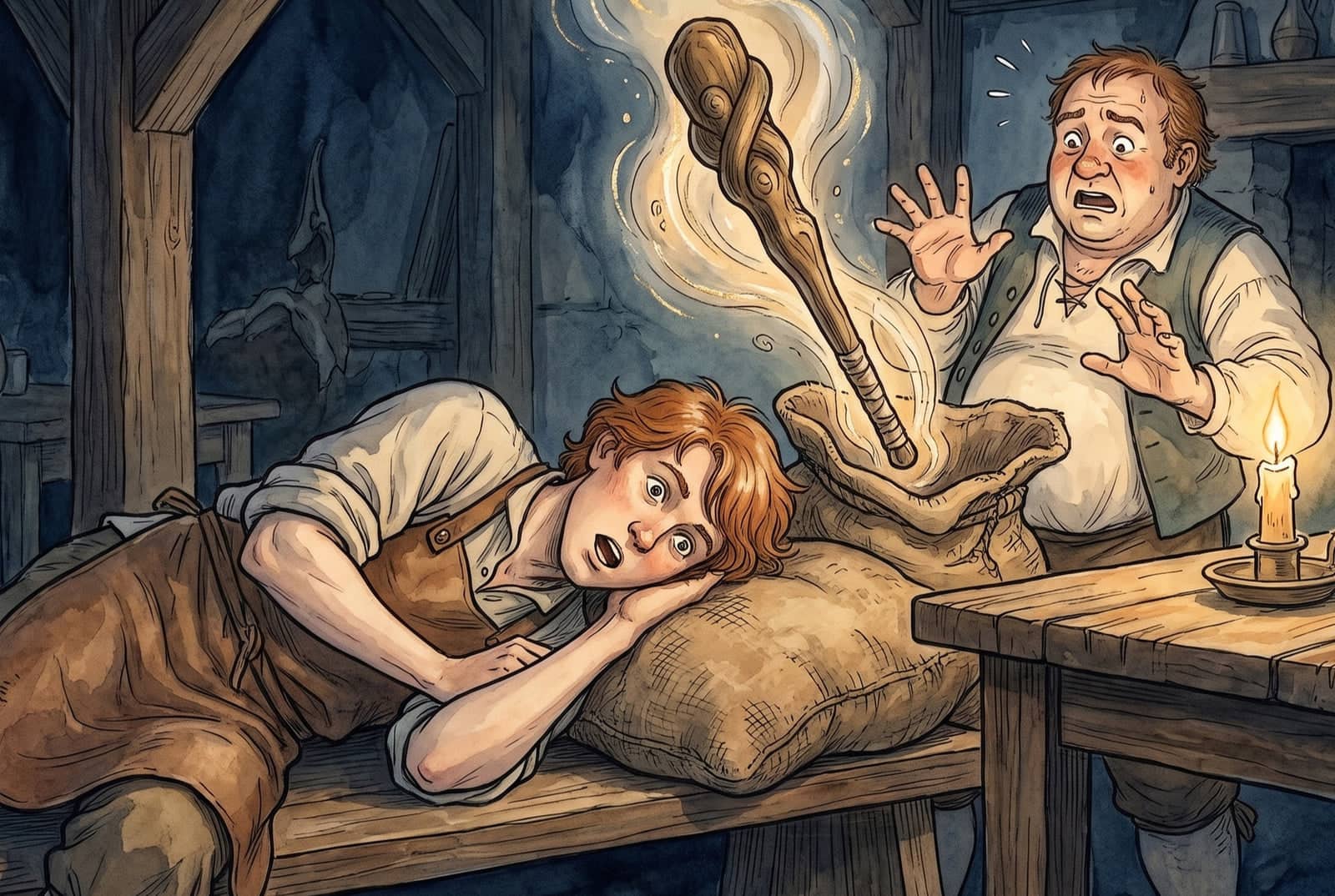
Then the turner said, “If you don’t give back the wishing table and the gold donkey, the dance will start all over again.”
“Oh no!” cried the innkeeper, very meekly now. “I’ll gladly give everything back. Only make that cursed goblin crawl back into its sack!”
“I’ll let you off more lightly than you deserve,” said the young man, “but mind you stay out of trouble!” Then he called, “Cudgel, into the sack!” and let it rest.
The next morning the turner went home to his father with the wishing table and the gold donkey. The tailor was glad to see him again and asked him, too, what he had learned out in the world.
“Dear Father,” he answered, “I’ve become a woodturner.”
“A skilled craft,” said his father. “What have you brought home from your travels?”
“A precious thing, dear Father,” answered his son. “A cudgel in a sack.”
“What!” cried his father. “A cudgel! Well, that was worth the trouble! You can cut one from any tree.”
“But not one like this, dear Father. When I say ‘Cudgel, out of the sack!’ the cudgel jumps out and gives anyone who means me harm a dance he won’t forget, and it doesn’t let up until he’s lying on the ground begging for mercy. You see, with this cudgel I’ve won back the wishing table and the gold donkey that the thieving innkeeper took from my brothers. Now send for them both and invite all our relatives. I’ll give them food and drink and fill their pockets with gold besides.”
The old tailor did not quite believe it, but he brought the relatives together all the same. Then the turner spread a cloth on the floor, led the gold donkey in and said to his brother, “Now, dear brother, speak to him.”
The miller said, “Bricklebrit!” and at once gold coins came pouring down onto the cloth like a cloudburst, and the donkey did not stop until everyone had more than they could carry. (I can tell you wish you’d been there too!)
Then the turner fetched the table and said, “Now, dear brother, you speak to it.” And the carpenter had hardly said, “Table, be set!” before it was set and richly covered with the finest dishes. There was a feast such as the good tailor had never known in his house, and all the relatives stayed merrily together until late into the night. The tailor locked his needle and thread, his yardstick and his iron away in a cupboard, and he lived with his three sons in joy and plenty.
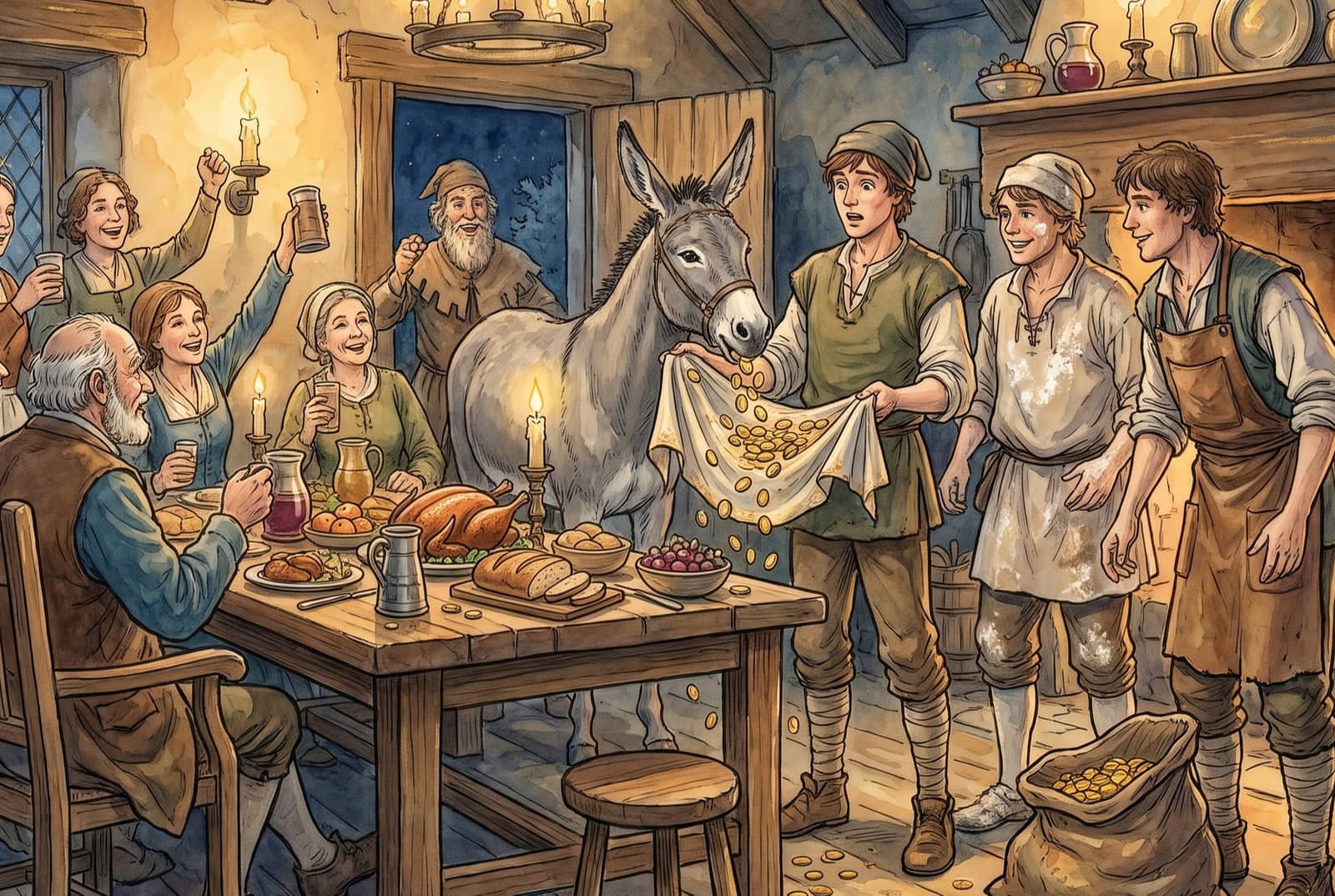
But what became of the goat, whose fault it was that the tailor drove his three sons away? I’ll tell you. She was so ashamed of her bald head that she ran into a fox’s den and crept inside to hide. When the fox came home, a pair of big eyes glared out at him from the dark, and he got such a fright that he ran away again.
The bear met him, and since the fox looked so upset, the bear said, “What’s the matter, Brother Fox? Why the long face?”
“Oh,” answered the fox, “a fierce beast is sitting in my den, and it glared at me with fiery eyes.”
“We’ll soon drive it out,” said the bear, and he went with the fox to the den and looked in. But when he saw those fiery eyes, he grew frightened as well. He wanted nothing to do with the fierce beast, and he took to his heels.
The bee met the bear, and since she could see how ill at ease he was, she said, “Bear, what a terribly gloomy face! Where has all your cheer gone?”
“That’s easy for you to say,” answered the bear. “There’s a fierce beast with glaring eyes in the fox’s den, and we can’t drive it out.”
The bee said, “I feel sorry for you, Bear. I’m only a poor weak little creature that you pass without a glance, but I think I can help you all the same.”
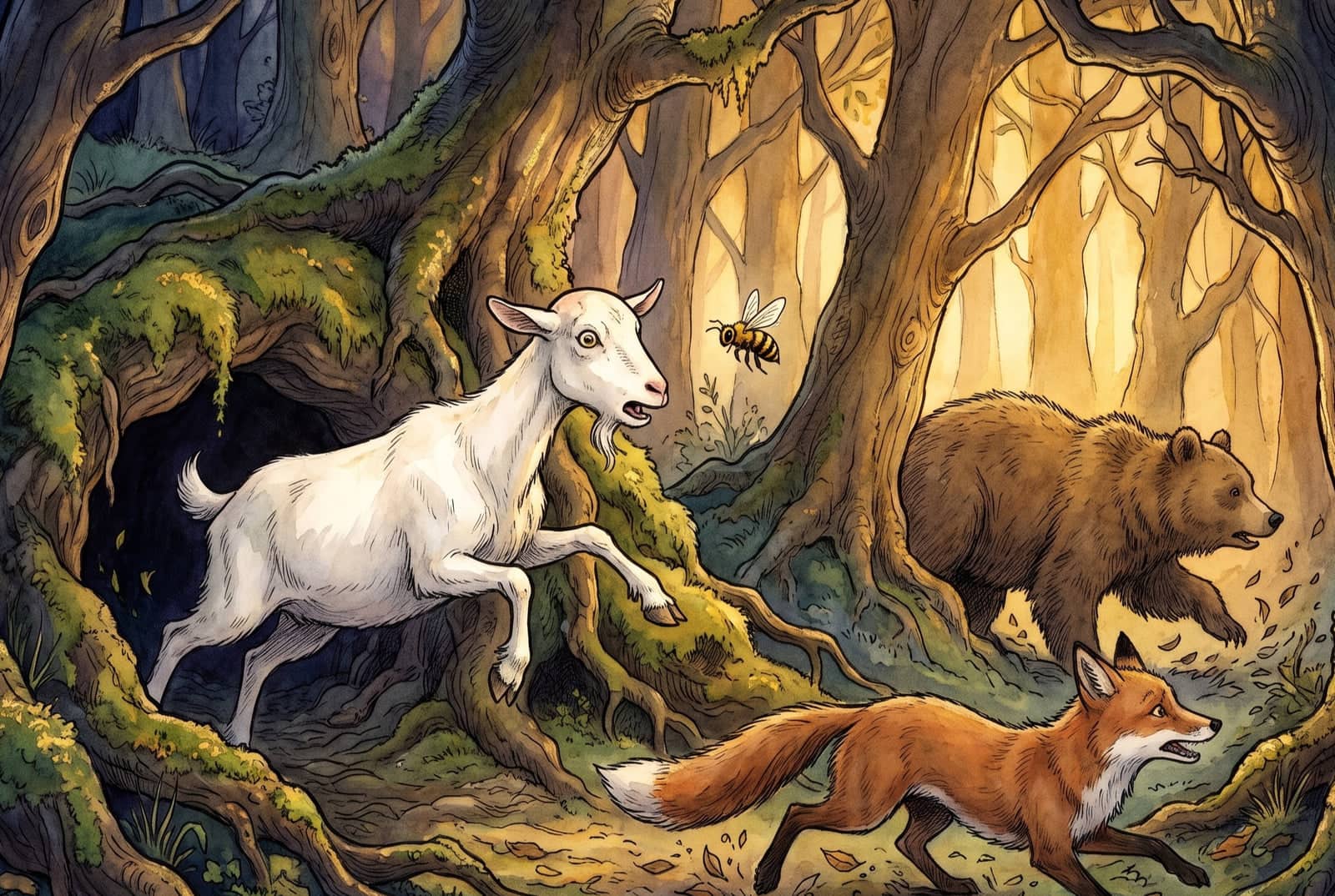
The bee flew into the fox’s den, landed on the goat’s smooth, shaved head and stung her so hard that the goat leaped up, cried “Baa! Baa!” and ran off wildly into the world. And to this very hour nobody knows where she ran to.
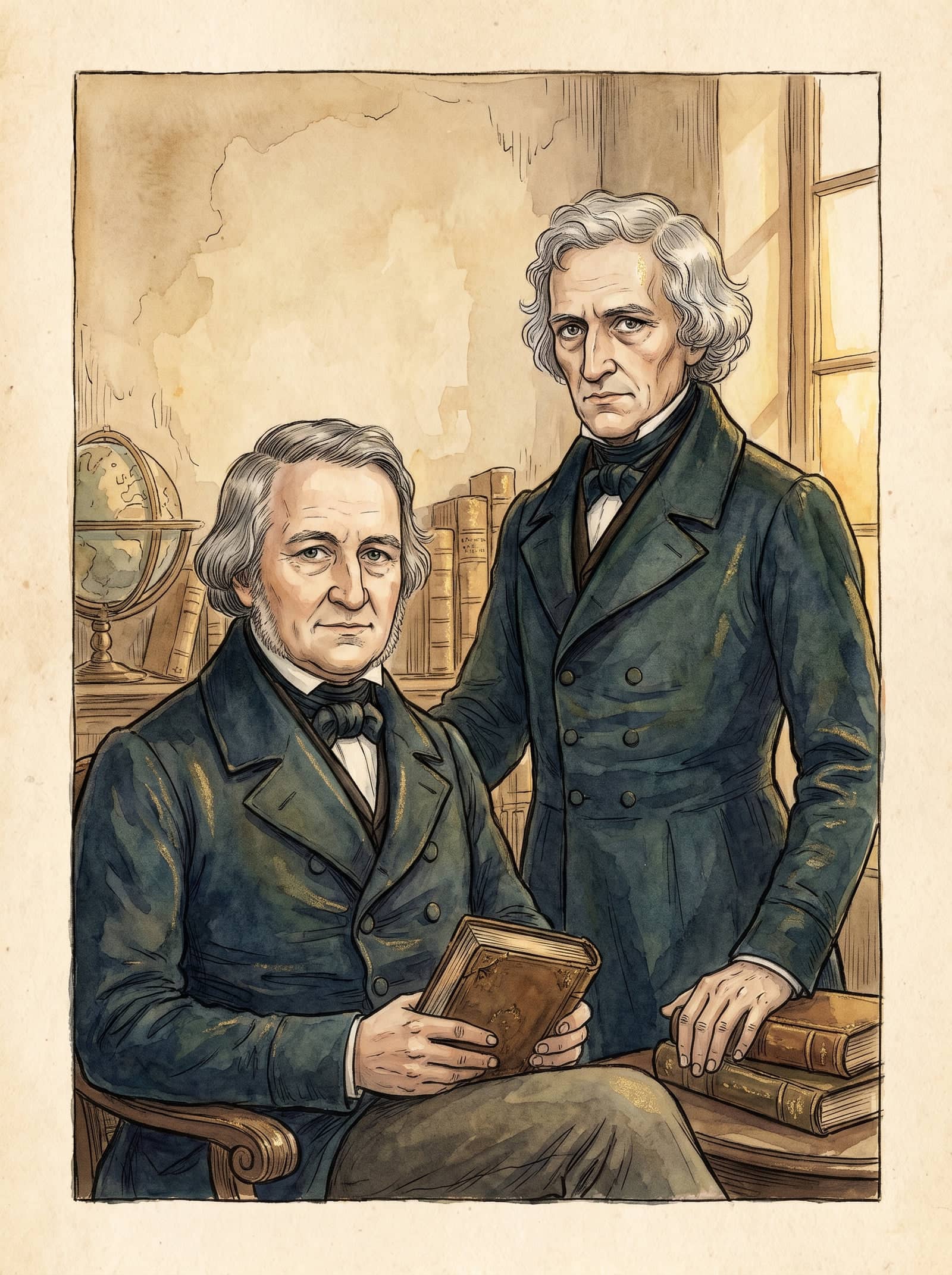
Retold by Talerie, Source: Kinder- und Hausmärchen (opens in a new window)
License: Public domainCopy this text, adapt it, use it however you like. A link back to Talerie is appreciated but never required.CC0 1.0 (opens in a new window)