 Original
The Velveteen Rabbit
22 min read ages 5 and up talerie.com/en/tales/the-velveteen-rabbit-original
A velveteen rabbit arrives in the Boy’s Christmas stocking and is forgotten by dinnertime. In the nursery the mechanical toys snub him, but the old Skin Horse tells him how a toy becomes Real: a child has to love it for a long, long time. The Rabbit longs to be Real, but not to grow shabby.
There was once a velveteen rabbit, and in the beginning he was really splendid. He was fat and bunchy, as a rabbit should be. His coat was spotted brown and white, he had real thread whiskers, and his ears were lined with pink sateen. On Christmas morning, when he sat wedged in the top of the Boy’s stocking with a sprig of holly between his paws, he looked charming.
There were other things in the stocking, nuts and oranges and a toy engine, chocolate almonds and a clockwork mouse, but the Rabbit was quite the best of all. For at least two hours the Boy loved him. Then the aunts and uncles came to dinner, and there was a great rustling of tissue paper and unwrapping of packages, and in the excitement over all the new presents the Velveteen Rabbit was forgotten.
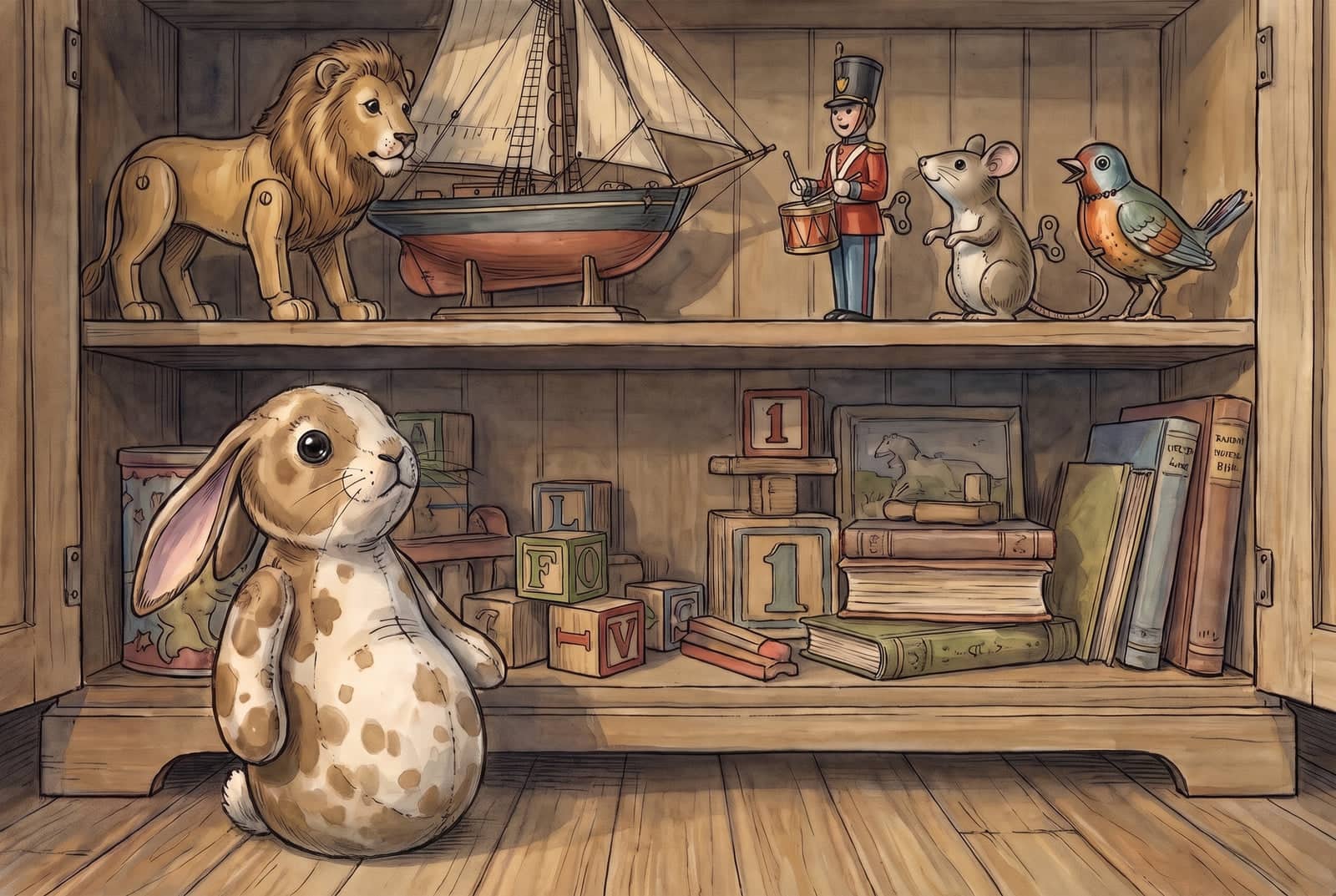
For a long time he lived in the toy cupboard or on the nursery floor, and no one thought much about him. He was shy by nature, and because he was only made of velveteen, some of the more expensive toys snubbed him. The mechanical toys felt very superior and looked down on everyone else. They were full of modern ideas, and they pretended they were real.
The model boat, who had lived through two seasons and lost most of his paint, picked up their manner and never missed a chance to talk about his rigging in technical terms. The Rabbit could not claim to be a model of anything, because he didn’t know that real rabbits existed. He thought they were all stuffed with sawdust like himself, and he understood that sawdust was quite out of date and should never be mentioned in modern company.
Even Timothy, the jointed wooden lion, put on airs. He had been made by soldiers wounded in the war and should have been more open-minded, yet he pretended he had something to do with the Government. Between them all, the poor little Rabbit was made to feel very small and ordinary, and the only one who was kind to him at all was the Skin Horse.
The Skin Horse had lived in the nursery longer than any of the others. He was so old that his brown coat was bald in patches and showed the seams underneath, and most of the hairs in his tail had been pulled out to string bead necklaces.
He was wise. He had watched a long line of mechanical toys arrive to boast and swagger, and by and by break their mainsprings and pass away. He knew they were only toys and would never turn into anything else. For nursery magic is very strange and wonderful, and only playthings that are old and wise and experienced, like the Skin Horse, understand all about it.
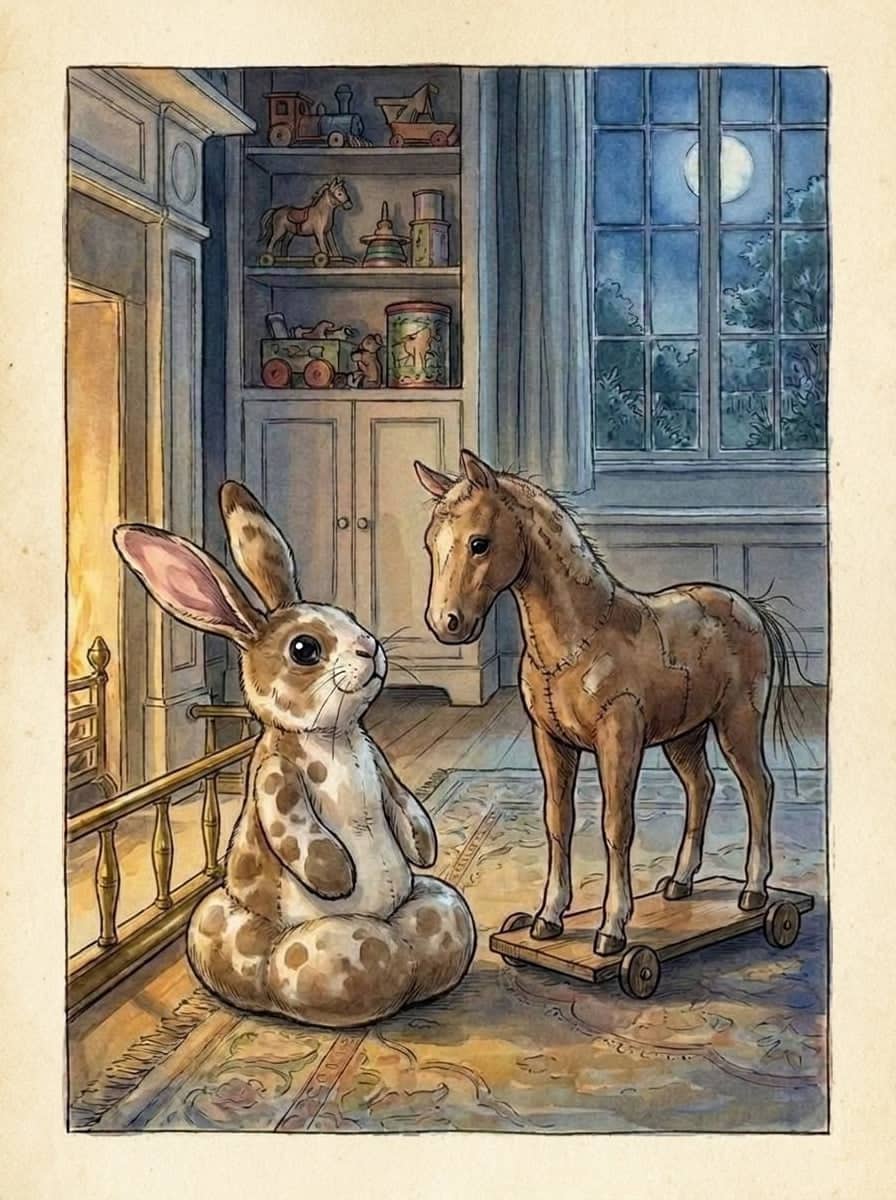
“What is REAL?” the Rabbit asked one day, when they were lying side by side near the fireplace screen, before Nana came to tidy the room. “Does it mean having things that buzz inside you and a handle that sticks out?”
“Real isn’t how you are made,” said the Skin Horse. “It’s a thing that happens to you. When a child loves you for a long, long time, not just to play with, but REALLY loves you, then you become Real.”
“Does it hurt?” asked the Rabbit.
“Sometimes,” said the Skin Horse, for he always told the truth. “When you are Real you don’t mind being hurt.”
“Does it happen all at once, like being wound up,” the Rabbit asked, “or bit by bit?”
“It doesn’t happen all at once,” said the Skin Horse. “You become. It takes a long time. That’s why it doesn’t happen often to people who break easily, or have sharp edges, or have to be carefully kept. Generally, by the time you are Real, most of your hair has been loved off, and your eyes drop out, and you get loose in the joints and very shabby. But these things don’t matter at all, because once you are Real you can’t be ugly, except to people who don’t understand.”
“I suppose you are Real?” said the Rabbit. Right away he wished he hadn’t said it, because he thought the Skin Horse might be sensitive about it. But the Skin Horse only smiled.
“The Boy’s uncle made me Real,” he said. “That was a great many years ago, but once you are Real you can’t become unreal again. It lasts forever.”
The Rabbit sighed. He thought it would be a long time before this magic called Real happened to him. He longed to become Real, to know what it felt like, and yet the thought of growing shabby and losing his eyes and whiskers was rather sad. He wished he could become Real without all those uncomfortable things happening to him.
The nursery was ruled by a person called Nana. Sometimes she paid no attention to the playthings lying about, and sometimes, for no reason at all, she went swooping around like a great wind and bundled them away into cupboards. She called this “tidying up,” and the playthings all hated it, especially the tin ones. The Rabbit didn’t mind it so much, because wherever he was thrown, he landed soft.
One evening, when the Boy was going to bed, he couldn’t find the china dog that always slept with him. Nana was in a hurry, and hunting for china dogs at bedtime was too much trouble. So she simply looked around, saw that the toy cupboard door stood open, and made a swoop.
“Here,” she said, “take your old Bunny! He’ll do to sleep with you!” And she pulled the Rabbit out by one ear and put him into the Boy’s arms.
That night, and for many nights after, the Velveteen Rabbit slept in the Boy’s bed. At first he found it rather uncomfortable. The Boy hugged him very tight, and sometimes rolled over on him, and sometimes pushed him so far under the pillow that the Rabbit could hardly breathe. He missed, too, those long moonlit hours in the nursery when the whole house was silent, and his talks with the Skin Horse.
But very soon he grew to like it. The Boy talked to him and made nice tunnels for him under the covers, which he said were like the burrows real rabbits lived in. They played splendid games together, in whispers, when Nana had gone down to her supper and left the night-light burning on the mantelpiece. And when the Boy fell asleep, the Rabbit would snuggle down close under his warm little chin and dream, with the Boy’s hands clasped tight around him all night long.
So time went on, and the little Rabbit was very happy, so happy that he never noticed how his beautiful velveteen fur was getting shabbier and shabbier, how his tail was coming unsewn, and how all the pink had rubbed off his nose where the Boy had kissed him.
Spring came, and they spent long days in the garden, for wherever the Boy went, the Rabbit went too. He had rides in the wheelbarrow and picnics on the grass, and lovely fairy huts were built for him under the raspberry bushes behind the flower border.
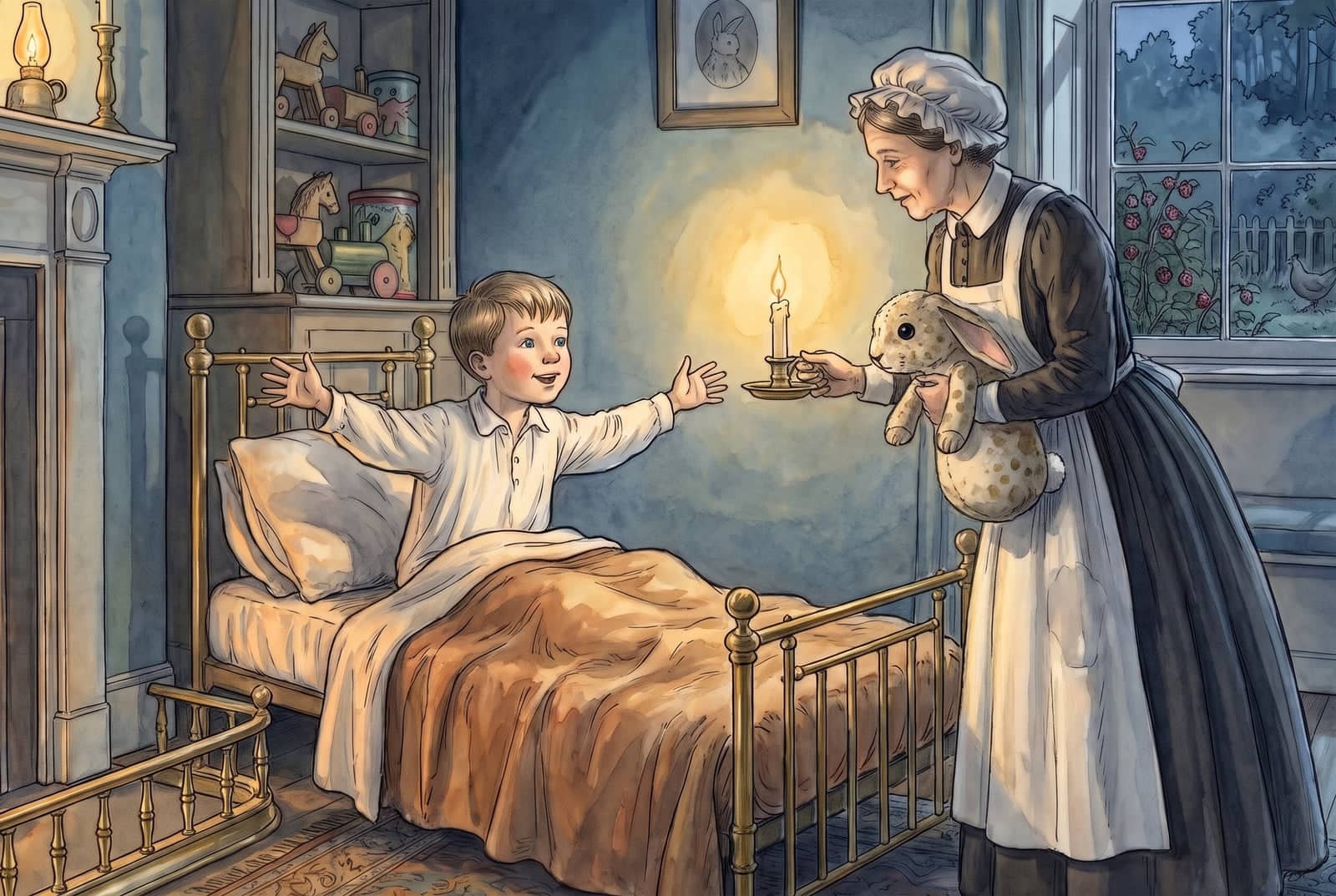
Once, when the Boy was suddenly called away to go visiting, the Rabbit was left out on the lawn until long after dark. Nana had to come and look for him with a candle, because the Boy couldn’t go to sleep without him. He was soaked with dew and covered in dirt from diving into the burrows the Boy had dug for him in the flower bed, and Nana grumbled as she rubbed him off with a corner of her apron.
“So you must have your old Bunny!” she said. “All that fuss over a toy!”
The Boy sat up in bed and stretched out his hands.
“Give me my Bunny!” he said. “You mustn’t say that. He isn’t a toy. He’s REAL!”
When the little Rabbit heard that, he was happy, for he knew that what the Skin Horse had told him had come true at last. The nursery magic had happened to him, and he was a toy no longer. He was Real. The Boy himself had said so.
That night he was almost too happy to sleep, and so much love stirred in his little sawdust heart that it nearly burst. His boot-button eyes had lost their shine long ago, but now a look of wisdom and beauty came into them.
Even Nana noticed it the next morning when she picked him up. “Well, I never,” she said. “That old Bunny has quite a knowing look!”
That was a wonderful summer!
Near the house where they lived there were woods, and in the long June evenings the Boy liked to go and play there after supper. He took the Velveteen Rabbit with him. Before he wandered off to pick flowers or play robbers among the trees, he always made the Rabbit a little nest somewhere in the ferns where he would be nice and cozy, for the Boy was kind-hearted and liked Bunny to be comfortable.
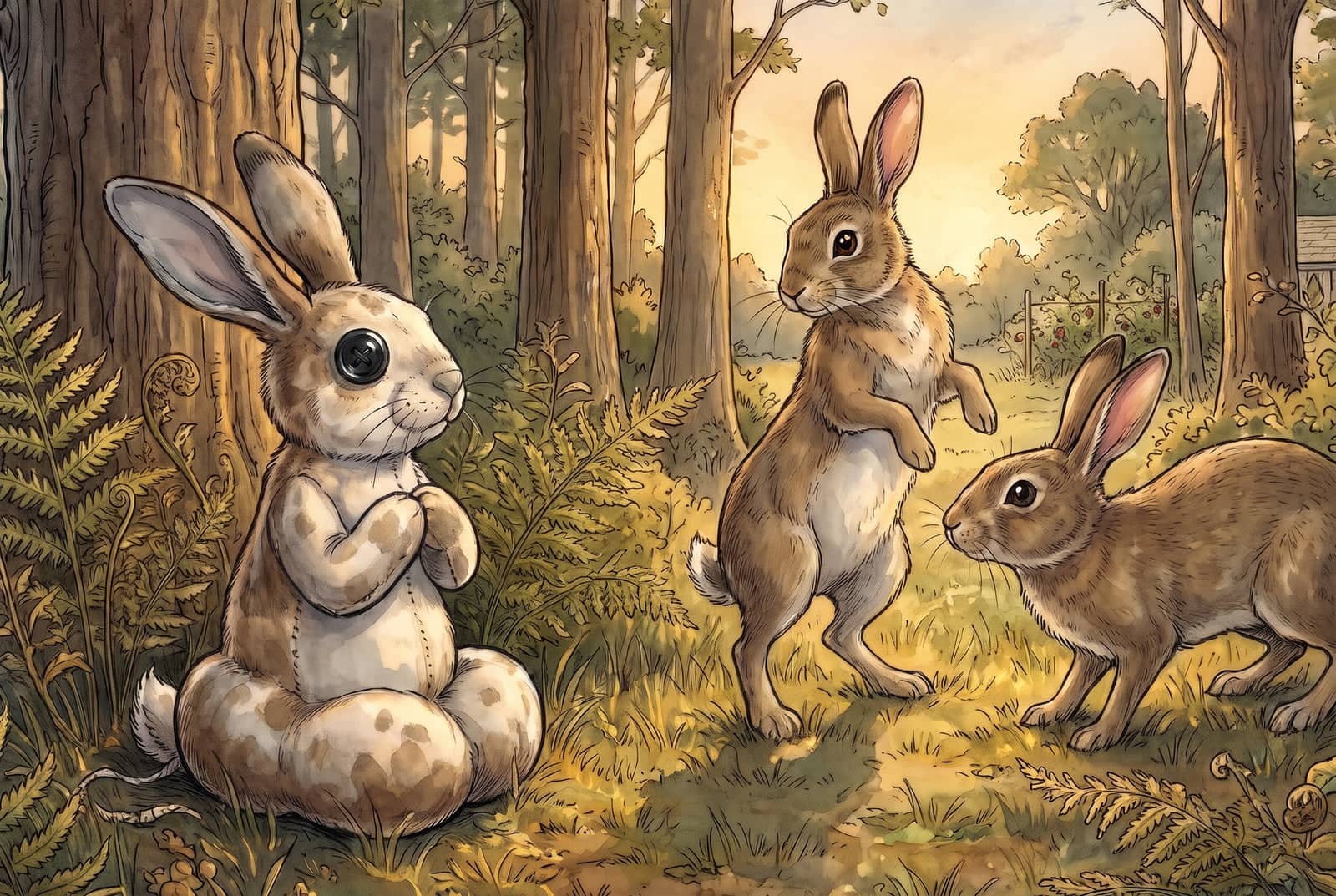
One evening, while the Rabbit was lying there alone, watching the ants that ran back and forth between his velvet paws in the grass, he saw two strange creatures creep out of the tall ferns nearby.
They were rabbits like himself, but very furry and brand-new. They must have been very well made, for their seams didn’t show at all, and they changed shape in an odd way when they moved: one minute they were long and thin and the next fat and bunchy, instead of always staying the same, as he did. Their feet padded softly on the ground, and they crept quite close to him, twitching their noses.
The Rabbit stared hard to see which side their clockwork stuck out of, for he knew that people who jump generally have something to wind them up. But he couldn’t see it. They were clearly a whole new kind of rabbit.
They stared at him, and the little Rabbit stared back. And all the time their noses twitched.
“Why don’t you get up and play with us?” one of them asked.
“I don’t feel like it,” said the Rabbit, because he didn’t want to explain that he had no clockwork.
“Ho!” said the furry rabbit. “It’s as easy as anything.” And he gave a big hop sideways and stood up on his hind legs. “I don’t believe you can!” he said.
“I can!” said the little Rabbit. “I can jump higher than anything!” He meant when the Boy threw him, but of course he didn’t want to say so.
“Can you hop on your hind legs?” asked the furry rabbit.
That was a dreadful question, for the Velveteen Rabbit had no hind legs at all! The back of him was made all in one piece, like a pincushion. He sat still in the ferns and hoped the other rabbits wouldn’t notice.
“I don’t want to!” he said again.
But wild rabbits have very sharp eyes, and this one stretched out his neck and looked.
“He hasn’t got any hind legs!” he called out. “Imagine a rabbit without any hind legs!” And he began to laugh.
“I have!” cried the little Rabbit. “I have got hind legs! I’m sitting on them!”
“Then stretch them out and show me, like this!” said the wild rabbit. And he began to whirl around and dance, until the little Rabbit got quite dizzy.
“I don’t like dancing,” said the Rabbit. “I’d rather sit still!”
But all the while he was longing to dance. A funny new tickly feeling ran through him, and he felt he would give anything in the world to be able to jump about the way these rabbits did.
The wild rabbit stopped dancing and came very close, so close this time that his long whiskers brushed the Velveteen Rabbit’s ear. Then all at once he wrinkled his nose, flattened his ears, and jumped backward.
“He doesn’t smell right!” he cried. “He isn’t a rabbit at all! He isn’t real!”
“I am Real!” said the little Rabbit. “I am Real! The Boy said so!” And he nearly began to cry.
Just then there was a sound of footsteps. The Boy ran past close by them, and with a thump of feet and a flash of white tails the two strange rabbits vanished.
“Come back and play with me!” called the little Rabbit. “Oh, please come back! I know I am Real!”
But there was no answer. Only the little ants ran back and forth, and the ferns swayed gently where the two strangers had passed. The Velveteen Rabbit was all alone.
“Oh, dear!” he thought. “Why did they run away like that? Why couldn’t they stay and talk to me?”
For a long time he lay very still, watching the ferns and hoping they would come back. But they never did, and soon the sun sank lower, the little white moths fluttered out, and the Boy came and carried him home.
Weeks passed, and the little Rabbit grew very old and shabby, but the Boy loved him just as much. He loved him so hard that he loved all his whiskers off, and the pink lining of his ears turned gray, and his brown spots faded. The Rabbit even began to lose his shape, and he hardly looked like a rabbit anymore, except to the Boy.
To the Boy he was always beautiful, and that was all the little Rabbit cared about. He didn’t mind how he looked to other people, because the nursery magic had made him Real, and when you are Real, shabbiness doesn’t matter.
And then, one day, the Boy fell ill.
His face grew very flushed, he talked in his sleep, and his little body was so hot that it burned the Rabbit when the Boy held him close. Strange people came and went in the nursery, and a light burned all night. Through it all the little Velveteen Rabbit lay hidden under the covers and never stirred. He was afraid that if they found him, someone might take him away, and he knew that the Boy needed him.
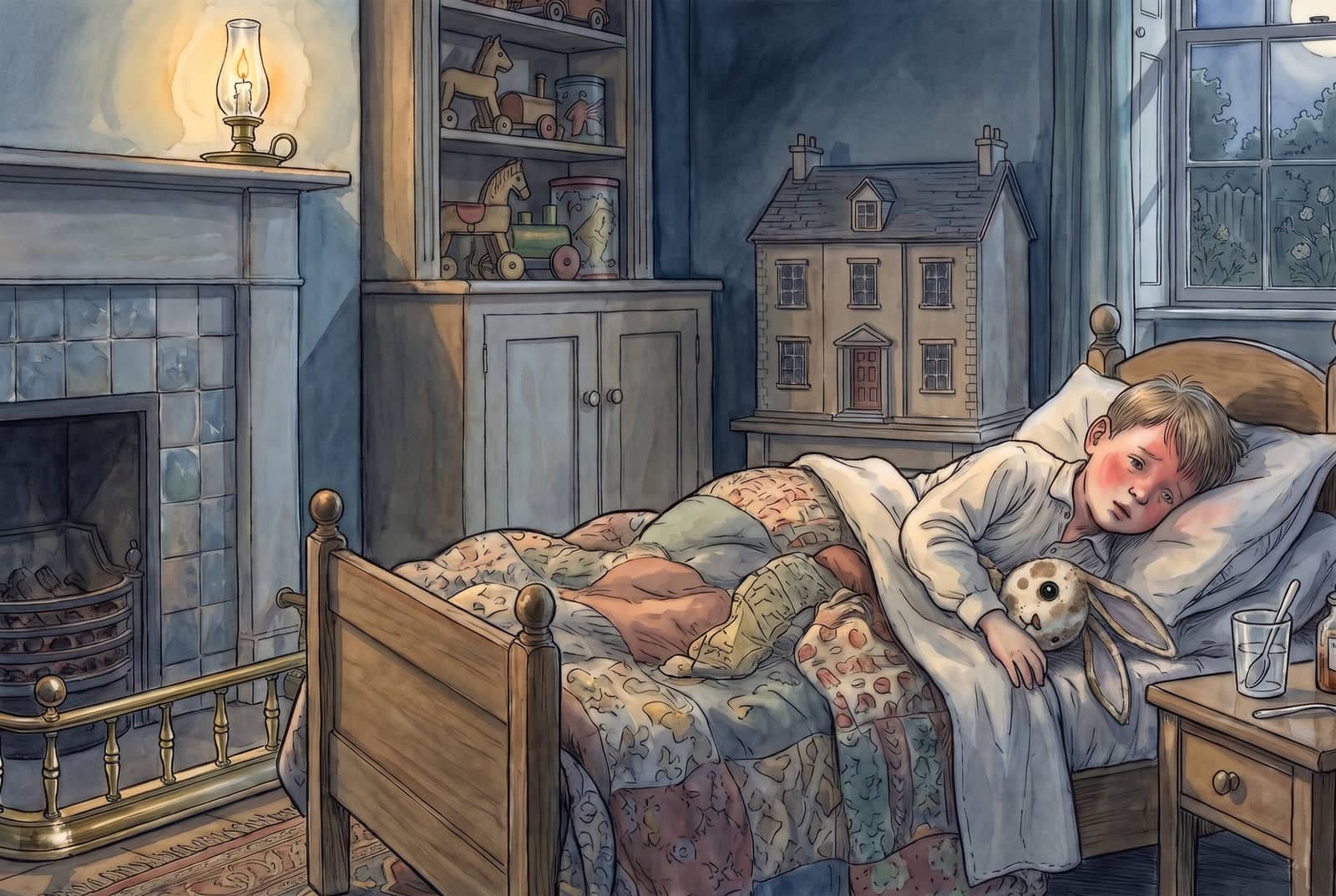
It was a long, weary time. The Boy was too ill to play, and the little Rabbit found it rather dull with nothing to do all day long. But he snuggled down patiently and looked forward to the time when the Boy would be well again, and they would go out into the garden among the flowers and the butterflies and play splendid games in the raspberry thicket the way they used to.
He planned all sorts of delightful things, and while the Boy lay half asleep, the Rabbit crept up close to the pillow and whispered them in his ear. By and by the fever broke, and the Boy got better. He was able to sit up in bed and look at picture books, while the little Rabbit cuddled close at his side. And one day they let the Boy get out of bed and put on his clothes.
It was a bright, sunny morning, and the windows stood wide open. They had carried the Boy out onto the balcony, wrapped in a shawl, and the little Rabbit lay tangled up in the bedclothes, thinking.
The Boy was going to the seashore tomorrow. Everything was arranged, and now all that remained was to carry out the doctor’s orders. The grown-ups talked it all over while the little Rabbit lay under the covers with just his head peeping out, and listened. The room was to be disinfected, and all the books and toys the Boy had played with in bed had to be burned.
“Hooray!” thought the little Rabbit. “Tomorrow we’re going to the seashore!” For the Boy had often talked about the seashore, and the Rabbit wanted very much to see the big waves rolling in, and the tiny crabs, and the sand castles.
Just then Nana caught sight of him.
“What about his old Bunny?” she asked.
“That?” said the doctor. “Why, it’s a mass of scarlet fever germs! Burn it at once. What? Nonsense! Get him a new one. He mustn’t have that anymore!”
So the little Rabbit was put into a sack with the old picture books and a lot of trash, and carried out to the end of the garden behind the henhouse. That was a fine place for a bonfire, only the gardener was too busy just then to see to it. He had the potatoes to dig and the green peas to pick, but he promised to come quite early the next morning and burn the whole lot.
That night the Boy slept in a different bedroom, and he had a new bunny to sleep with him. It was a splendid bunny, all white plush with real glass eyes, but the Boy was too excited to care much about it. Tomorrow he was going to the seashore, and that alone was such a wonderful thing that he could think of nothing else.
While the Boy slept and dreamed of the sea, the little Rabbit lay among the old picture books in the corner behind the henhouse, feeling very lonely. The sack had been left untied, so by wriggling a bit he managed to push his head through the opening and look out. He was shivering a little. He had always been used to sleeping in a proper bed, and by now his coat had worn so thin and threadbare from hugging that it no longer kept him warm.
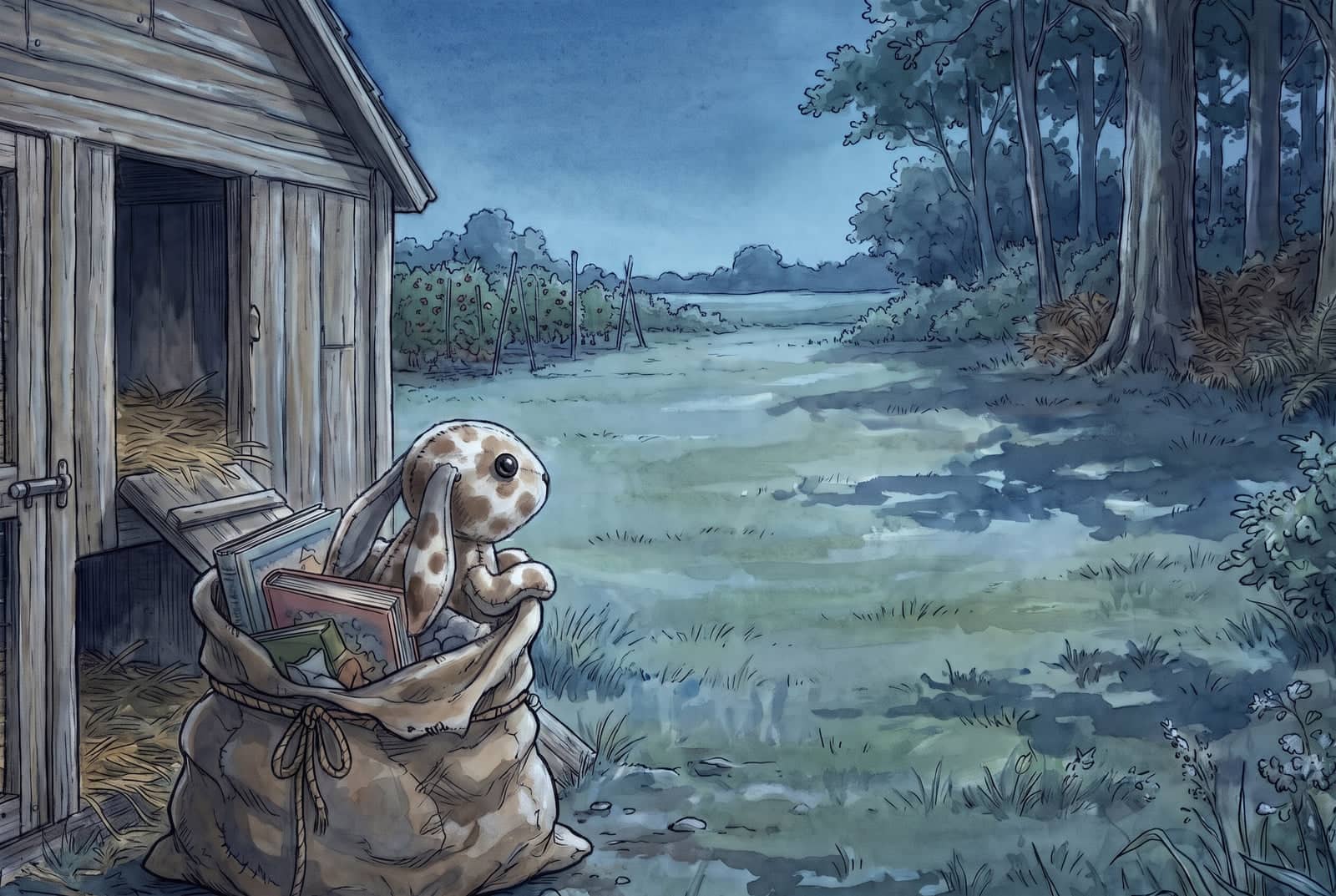
Nearby he could see the raspberry thicket, grown tall and close like a jungle. He had played in its shade with the Boy on mornings long ago. He thought of those long sunlit hours in the garden, how happy they had been, and a great sadness came over him. They seemed to pass before him one by one, each lovelier than the last: the fairy huts in the flower bed, the quiet evenings in the woods when he lay in the ferns and the little ants ran over his paws, and the wonderful day when he first knew that he was Real.
He thought of the Skin Horse, so wise and gentle, and of all he had told him. What use was it to be loved and lose your beauty and become Real, if it all ended like this? And a tear, a real tear, trickled down his shabby little velvet nose and fell to the ground.
Then a strange thing happened. Where the tear had fallen, a flower grew out of the ground, a mysterious flower, not at all like any that grew in the garden. It had slender leaves the color of emeralds, and in the center of the leaves a blossom like a golden cup. It was so beautiful that the little Rabbit forgot to cry and just lay there watching it. Before long the blossom opened, and out of it stepped a fairy.
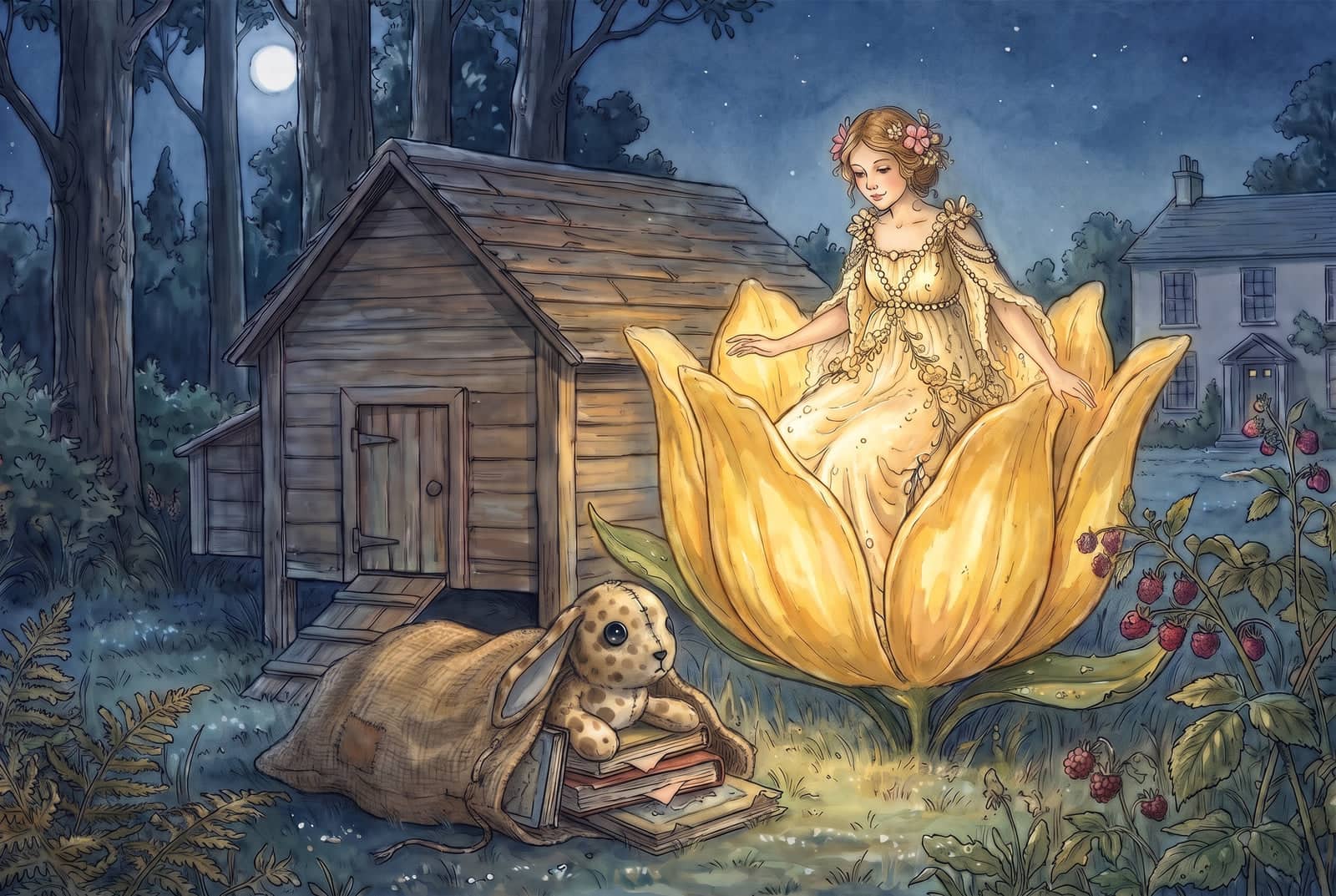
She was the loveliest fairy in the whole world. Her dress was made of pearls and dewdrops, there were flowers around her neck and in her hair, and her face was like the most perfect flower of all. She came close to the little Rabbit, gathered him up in her arms, and kissed him on his velveteen nose, which was still damp from crying.
“Little Rabbit,” she said, “don’t you know who I am?”
The Rabbit looked up at her, and it seemed to him that he had seen her face before, but he couldn’t think where.
“I am the nursery magic Fairy,” she said. “I take care of all the playthings that children have loved. When they are old and worn out and the children don’t need them anymore, I come and take them away with me and turn them into Real.”
“Wasn’t I Real before?” asked the little Rabbit.
“You were Real to the Boy,” the Fairy said, “because he loved you. Now you shall be Real to everyone.”
And she held the little Rabbit close in her arms and flew with him into the woods.
It was light now, for the moon had risen. The whole forest was beautiful, and the fern fronds shone like frosted silver. In the open glade between the tree trunks the wild rabbits were dancing with their shadows on the velvet grass, but when they saw the Fairy they all stopped and stood around in a ring to stare at her.
“I’ve brought you a new playmate,” the Fairy said. “You must be very kind to him and teach him all he needs to know in Rabbit-land, for he is going to live with you forever and ever!”
And she kissed the little Rabbit again and set him down on the grass.
“Run and play, little Rabbit!” she said.
But the little Rabbit sat quite still for a moment and didn’t move. When he saw all the wild rabbits dancing around him, he suddenly remembered about his hind legs, and he didn’t want them to see that he was made all in one piece. He did not know that when the Fairy kissed him that last time, she had changed him completely.
He might have sat there a long time, too shy to move, if something hadn’t tickled his nose just then. Before he thought what he was doing, he lifted his hind toe to scratch it.
And he found that he really had hind legs! Instead of dingy velveteen he had brown fur, soft and shiny, his ears twitched all by themselves, and his whiskers were so long that they brushed the grass. He gave one leap, and the joy of using those hind legs was so great that he went springing about the grass on them, jumping sideways and whirling around as the others did. He grew so excited that when at last he did stop to look for the Fairy, she was gone.
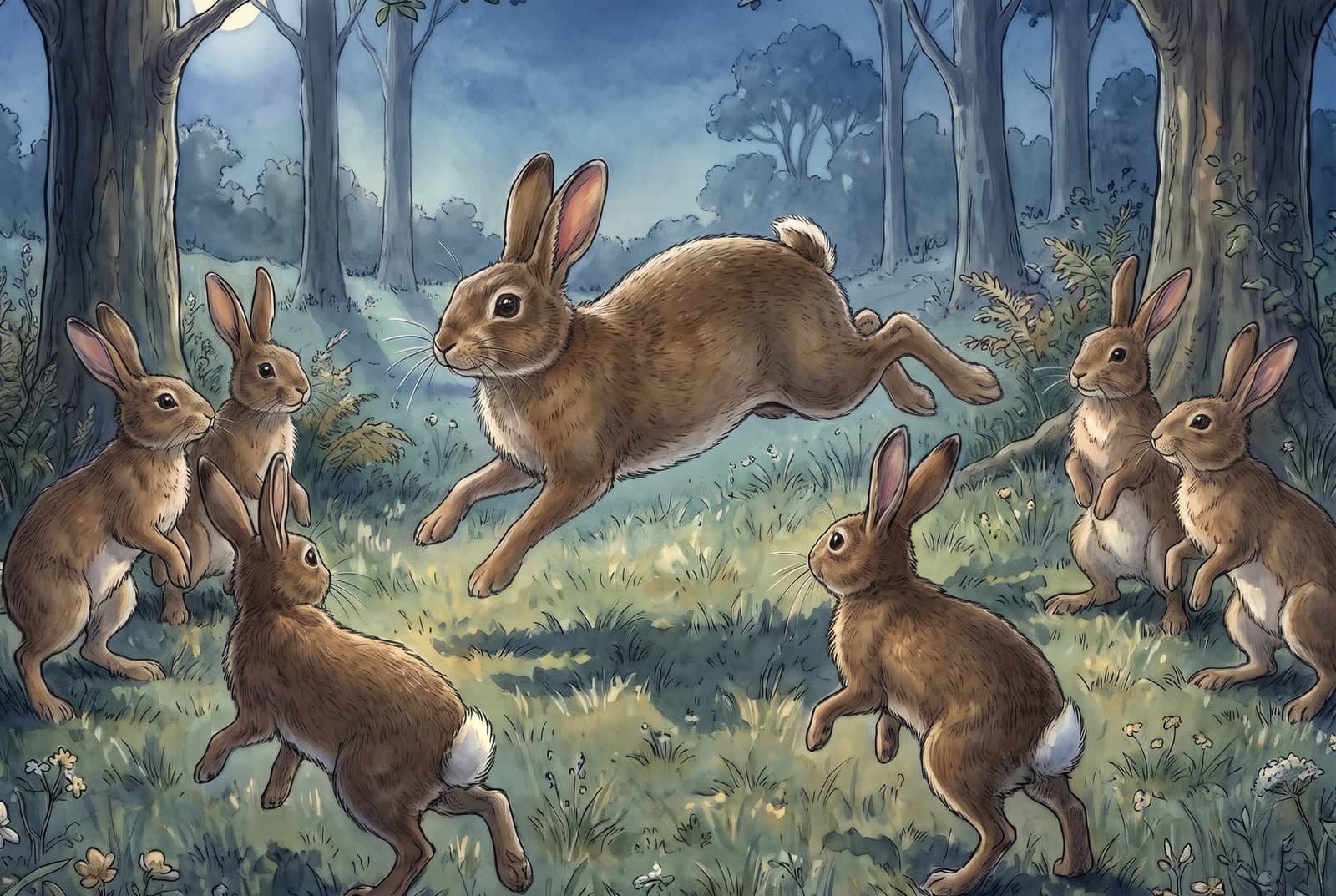
He was a Real Rabbit at last, at home with the other rabbits.
Autumn passed, and winter, and in the spring, when the days grew warm and sunny, the Boy went out to play in the woods behind the house. While he was playing, two rabbits crept out of the ferns and peeped at him. One of them was brown all over, but the other had strange markings under his fur, as though long ago he had been spotted and the spots still showed through.
And about his soft little nose and his round black eyes there was something familiar, so that the Boy thought to himself, “Why, he looks just like my old Bunny that was lost when I had scarlet fever!”
But the Boy never knew that it really was his own Bunny, come back to look at the child who had first helped him to be Real.
Retold by Talerie from The Velveteen Rabbit (opens in a new window) Public domain Copy this text, adapt it, use it however you like. A link back to Talerie is appreciated but never required. CC0 1.0 (opens in a new window)