The Youth Who Went Forth to Learn What Fear Was
12 min read ages 7 and up talerie.com/en/tales/the-youth-who-went-forth-to-learn-what-fear-was
A farmer’s younger son has never shuddered in his life, so he sets out to learn how. Sent from home with fifty thalers, he hears of an enchanted castle where whoever keeps watch for three nights will learn what shuddering is and win the king’s daughter.
Once upon a time a farmer had two sons. The elder was clever, but the younger could learn nothing at all.
When the elder son was sent past the churchyard after dark, he would say, “Oh no, Father, I won’t go there. It makes me shudder!” And when ghost stories were told by the fire, the listeners would say, “Oh, it makes me shudder!” The younger son listened from his corner and thought, “It never makes me shudder. That must be a skill I know nothing about.”
One day his father said, “You’re getting big and strong. You must learn a trade to earn your bread.”
“Gladly, Father,” he answered. “If it can be done, I’d like to learn how to shudder.”
His elder brother laughed. “What a fool!” he thought.
The father sighed. “You’ll learn to shudder soon enough, but it won’t earn you your bread.”
Soon afterward the sexton came to visit and heard the father’s troubles. “If that’s all,” he said, “he can learn it from me.”
So the boy moved into the sexton’s house to ring the church bell. One midnight the sexton sent him up the tower and slipped up the stairs ahead of him. At the top, the boy saw a white figure standing on the stairs.
“Who’s there?” he called. The figure did not answer and did not move.
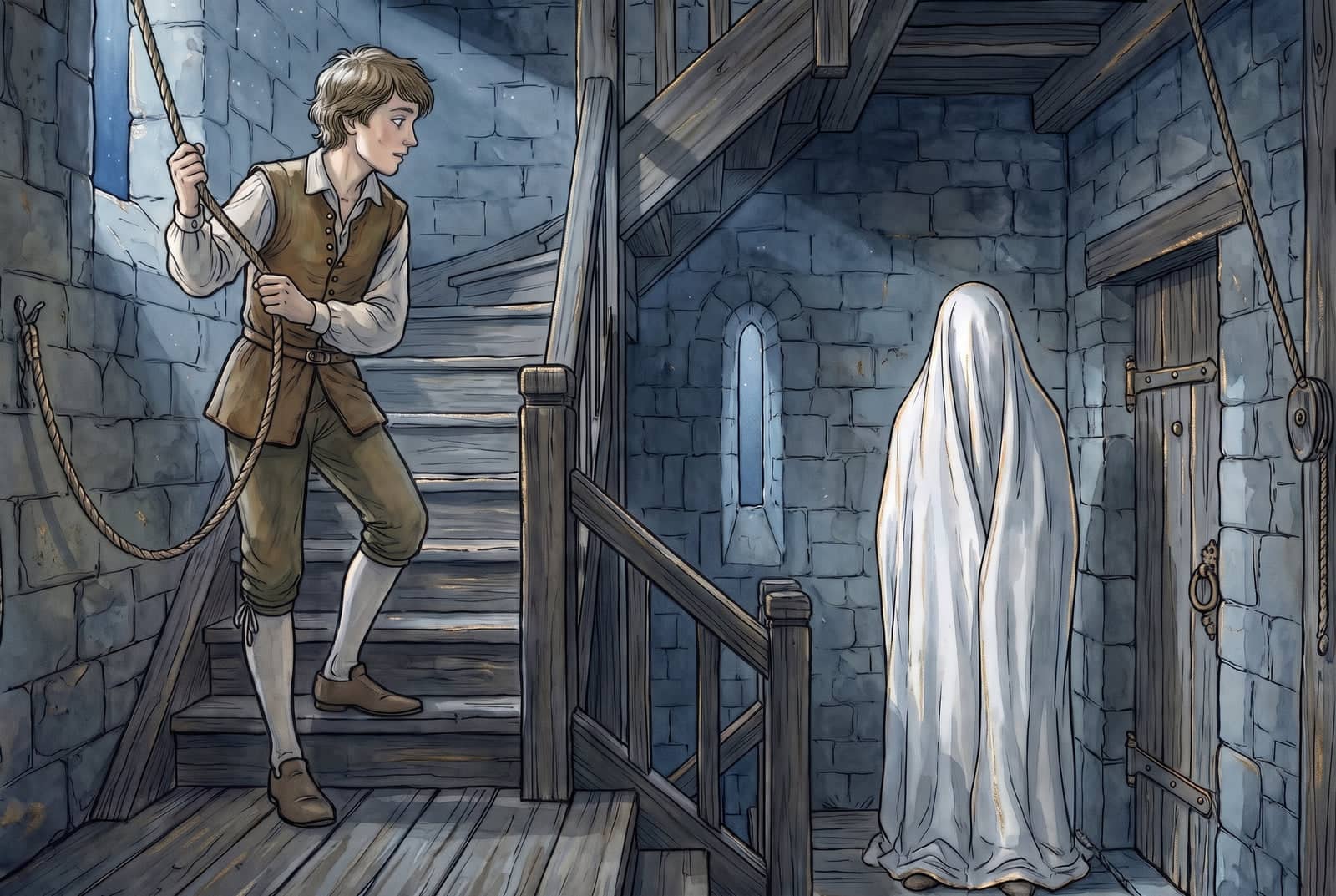
“Answer me,” said the boy, “or go away. You have no business here at night.”
The sexton stood perfectly still, so that the boy would take him for a ghost.
“What do you want?” the boy called a second time. “Speak, if you’re an honest fellow, or I’ll throw you down the stairs.”
The sexton did not stir. The boy called a third time, and when that did no good, he pushed the ghost down the stairs. It tumbled ten steps and lay still in a corner. The boy rang the bell and went home to bed.
Hours later the sexton’s wife woke the boy and asked if he knew where her husband was.
“No, ma’am,” said the boy. “But someone on the stairs wouldn’t answer or go away, so I took him for a thief and pushed him down.”
She found her husband moaning in the corner with a broken leg and ran straight to the boy’s father. “Your boy has broken my husband’s leg!” she cried. “Get that good-for-nothing out of our house!”
His father came running and scolded him.
“Father, I’m not to blame,” said the boy. “I warned him three times to speak or go away.”
“You bring me nothing but misery,” said the father. “Here are fifty thalers. Go out into the wide world, and don’t tell anyone where you come from or who your father is, because I’m ashamed of you.”
“Yes, Father, just as you wish.”
At daybreak the boy set out along the road, saying over and over, “If only I could shudder!”
A man on the road heard him and pointed to the gallows. “Seven men were hanged there. Sit under it tonight, and you’ll learn to shudder.”
“If that’s all it takes,” said the boy, “you can have my fifty thalers if I learn to shudder. Come back in the morning.”
That night he sat under the gallows by a fire, but the midnight wind was so cold that the fire could not warm him. The wind knocked the hanged men together, and he thought, “If I’m freezing down here, how they must be freezing up there!” Feeling sorry for them, he climbed the ladder, brought all seven down, and sat them around his fire.
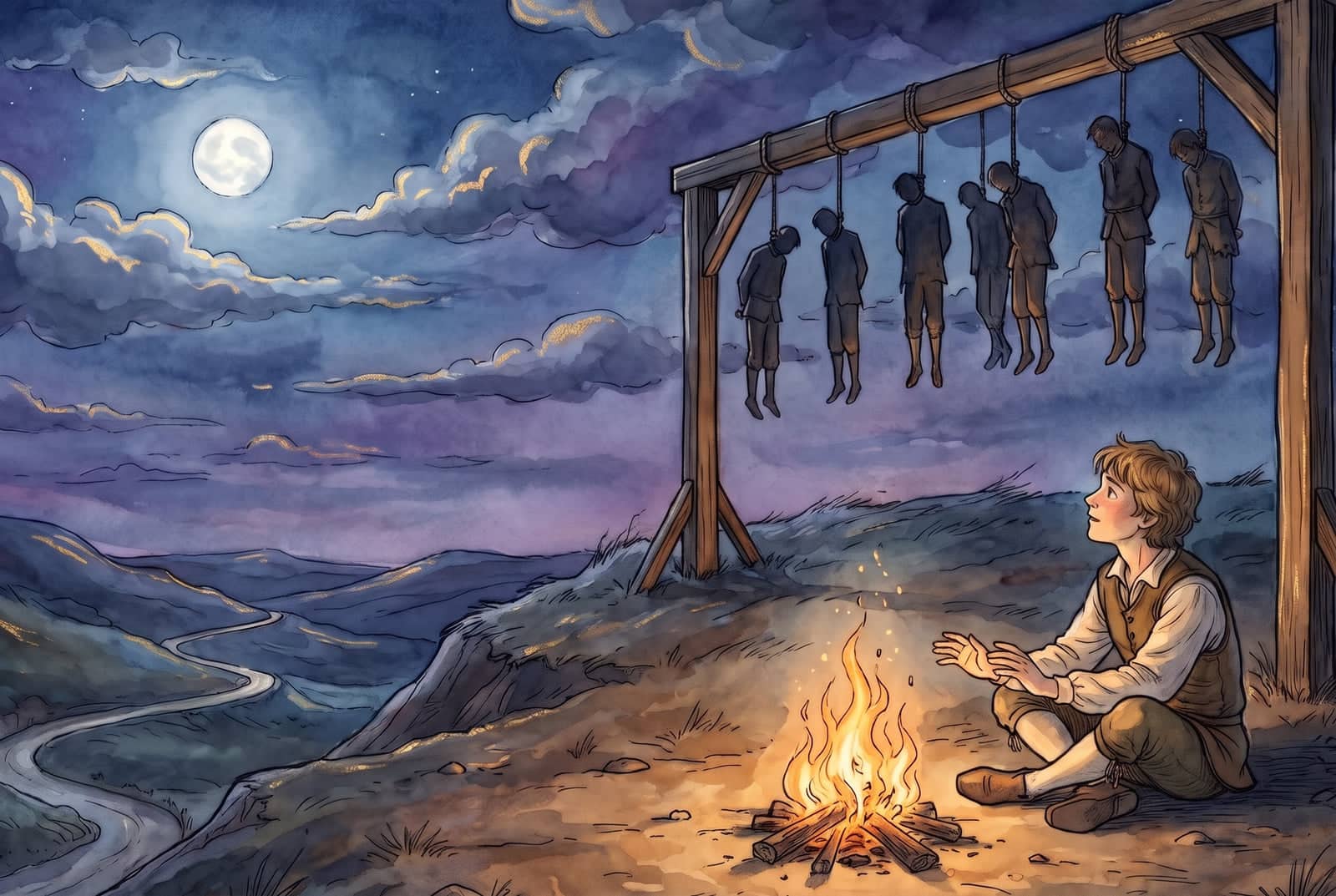
But they did not move, and the fire caught their clothes. “Be careful,” he said, “or I’ll hang you back up.” The dead men did not hear, and their rags went on burning. “If you won’t take care, I can’t help you,” he said crossly. He hung them back up and fell asleep by his fire.
In the morning the man came for his money. “Well, do you know what shuddering is now?”
“No,” said the boy. “Those fellows never said a word, and they were foolish enough to let their own rags burn.”
The man went off without the fifty thalers, saying, “I’ve never met anyone like him.”
The boy went on, talking to himself again. “If only I could shudder!”
A wagoner walking behind him asked, “Who are you?”
“I don’t know.”
“Where are you from?”
“I don’t know.”
“Who’s your father?”
“I’m not allowed to say.”
“Stop that silly mumbling,” said the wagoner, “and come along with me.”
In the evening they came to an inn. As he stepped inside, the boy said again, loudly, “If only I could shudder!”
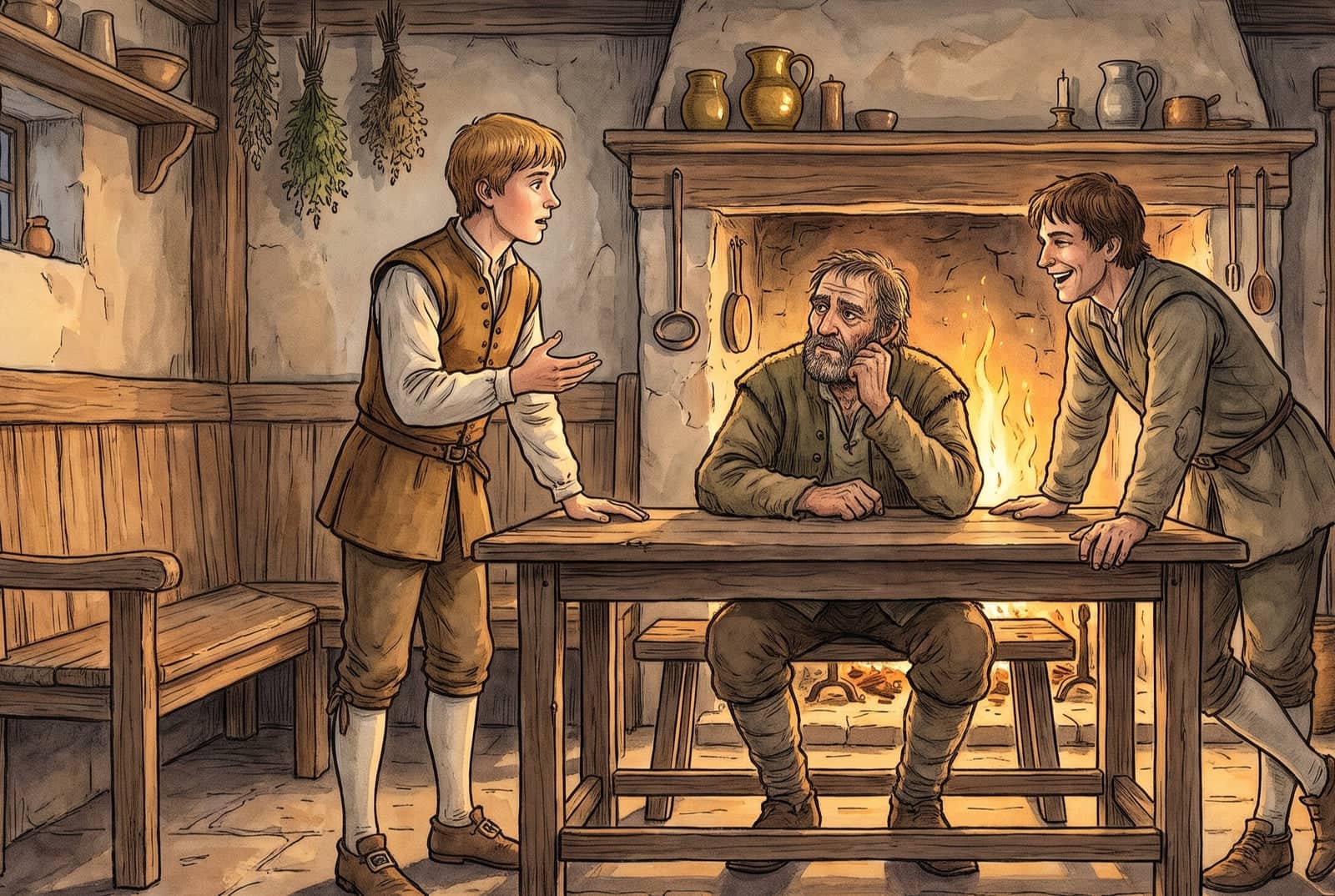
The innkeeper laughed. “If that’s what you’re after, you may get your chance here.”
“Hush,” said his wife. “Plenty of bold young men have lost their lives already.”
But the boy pestered the innkeeper until he told him about an enchanted castle nearby. Whoever kept watch in it for three nights would learn what shuddering was, and the king had promised his daughter, the most beautiful girl the sun had ever shone on, to anyone who dared. The treasures that evil spirits guarded there would be set free as well.
The next morning the boy went to the king. “If you’ll allow it, Your Majesty, I’d like to keep watch for three nights in the castle.”
The king liked the look of him. “You may take three things with you,” he said, “but they must be things without life.”
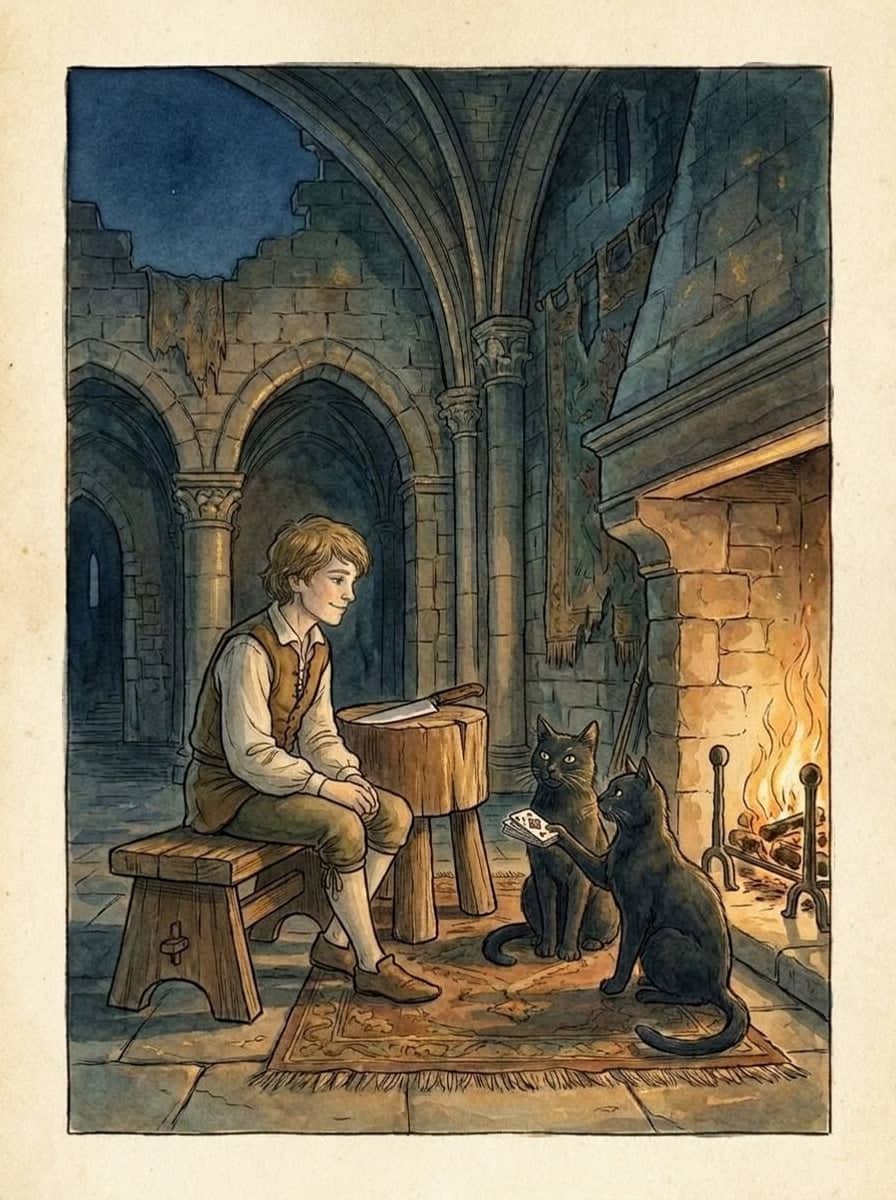
“Then I ask for a fire, a lathe, and a carving bench with its knife.”
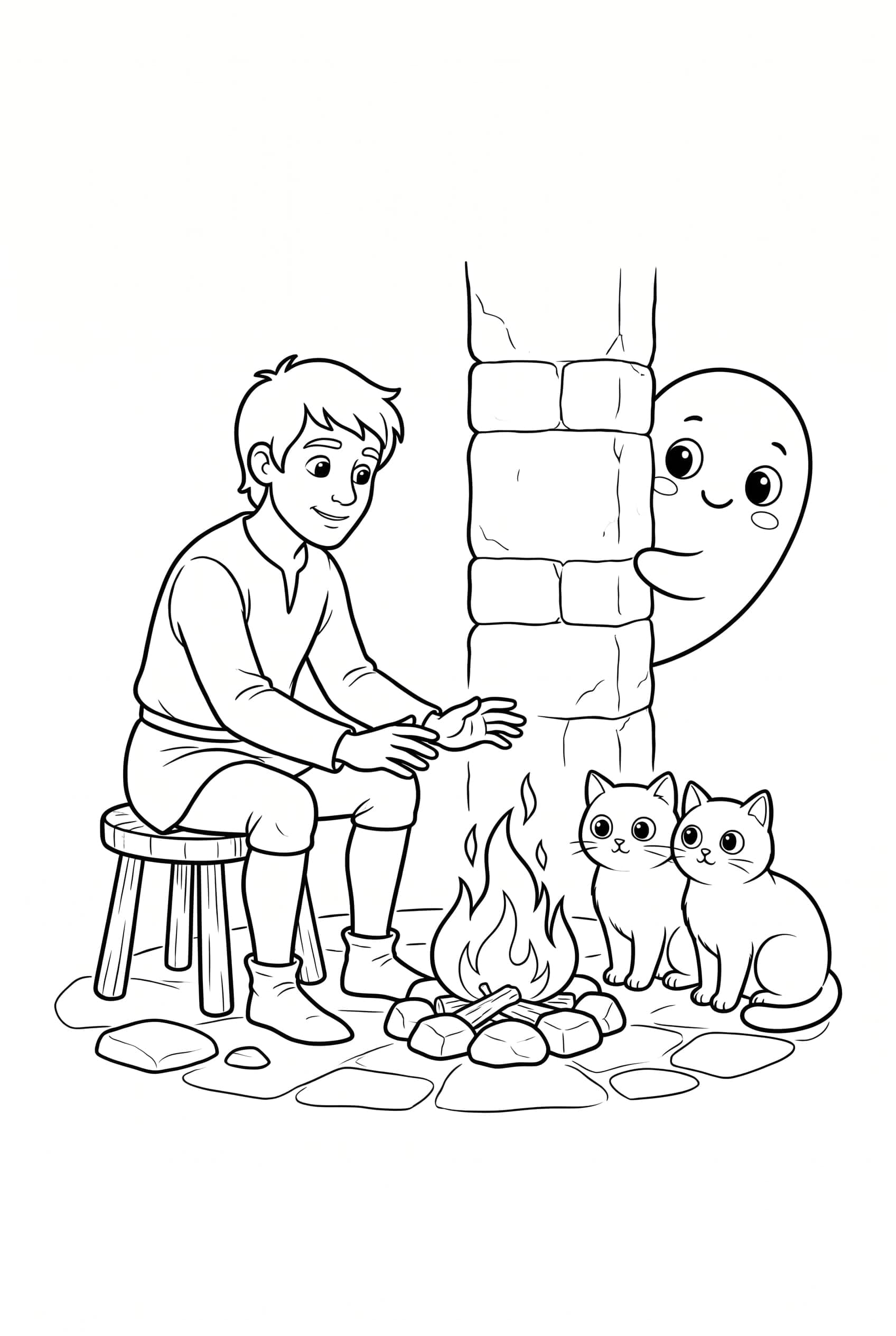
At nightfall the boy lit a fire in the castle, set the carving bench beside it, and sat down on the lathe. “If only I could shudder!” he said. “But I won’t learn it here either.”
Toward midnight a cry came from a corner: “Meow! How cold we are!”
“Silly things,” he called. “If you’re cold, come and warm yourselves.”
Two big black cats bounded over, sat down on either side of him, and stared with fiery eyes. When they were warm, they said, “Friend, shall we have a game of cards?”
“Why not?” he answered. “But show me your paws first.” They stretched out their claws. “My, what long nails you have! I’ll have to trim them first.” He set them on the carving bench and screwed their paws down tight. “Now that I’ve seen your claws, I don’t feel like playing cards anymore.” Then he killed the two cats and threw them into the water.
All at once black cats and dogs on glowing chains came pouring out of every corner, howling and trampling his fire to put it out. At last he grabbed his carving knife and shouted, “Get out, you rabble!” Some of them ran away, and he killed the rest and threw them into the pond.
He blew his fire back to life and, growing sleepy, lay down in a big bed in the corner. As soon as he closed his eyes, the bed began to roll all through the castle by itself.
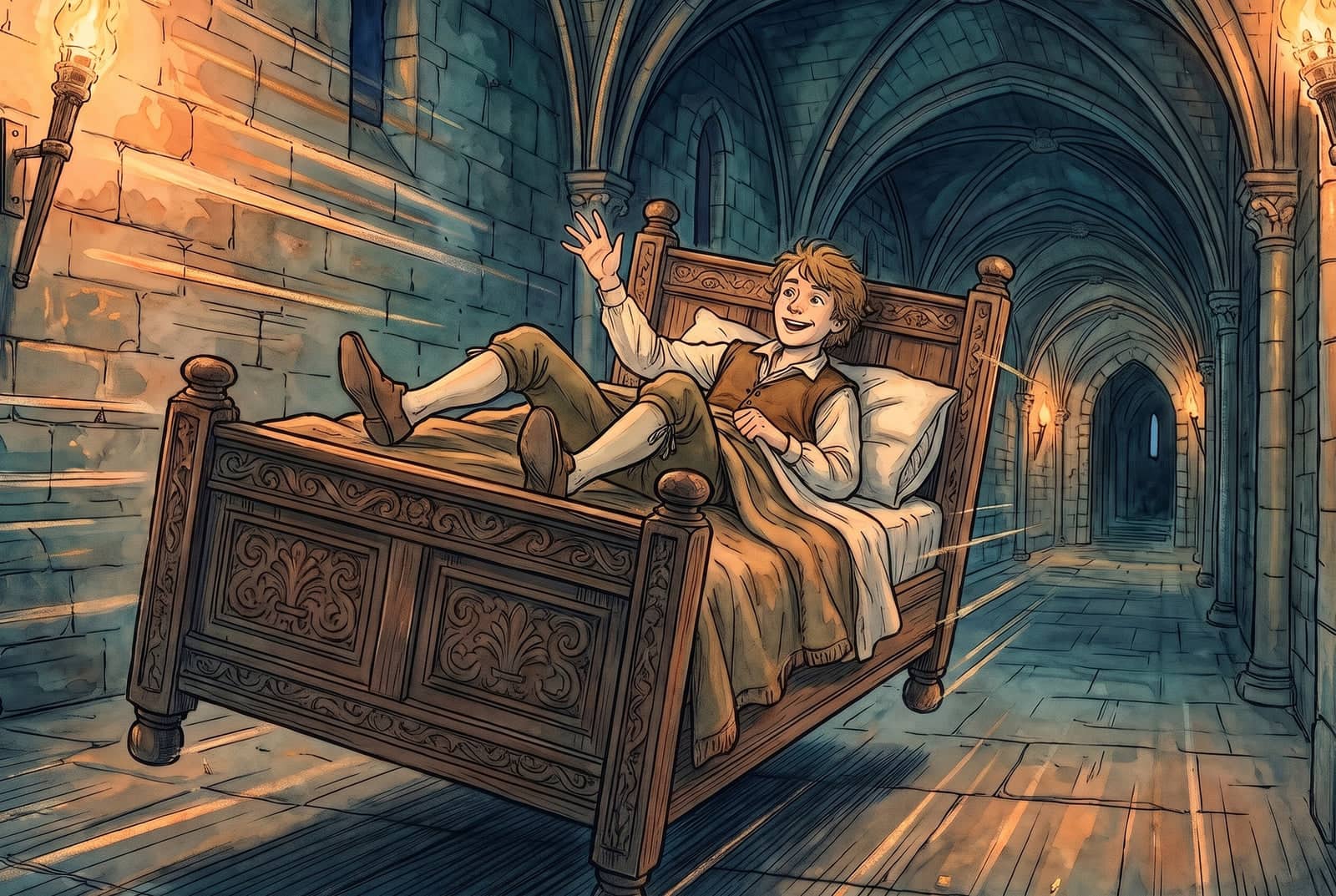
“That’s right,” he said, “faster!” The bed raced up and down the stairs as if six horses were pulling it, until, bump, bump, it turned upside down on top of him like a mountain. He climbed out and said, “Now anyone who likes can have a ride.” Then he lay down by his fire and slept until morning.
In the morning the king found the boy lying on the floor and thought the ghosts had killed him. “What a pity,” he said, “such a fine young man.”
The boy sat up. “It hasn’t come to that yet!”
The king was astonished and glad.
“One night is over,” said the boy, “and the other two will pass as well.”
Back at the inn, the innkeeper stared at him. “Have you learned what shuddering is now?”
“No,” said the boy. “It’s no use. If only someone could tell me!”
The second night he sat by the fire in the castle and started on his old song. “If only I could shudder!”
At midnight there was a great rumbling, and half a man came tumbling down the chimney. “Hey there!” the boy called. “There’s another half missing!” The racket began again, and down fell the other half.
The boy stirred the fire, and when he turned around again, the two halves had joined, and a hideous man sat on his bench.
“That bench is mine,” said the boy. He shoved the man off and sat back down.
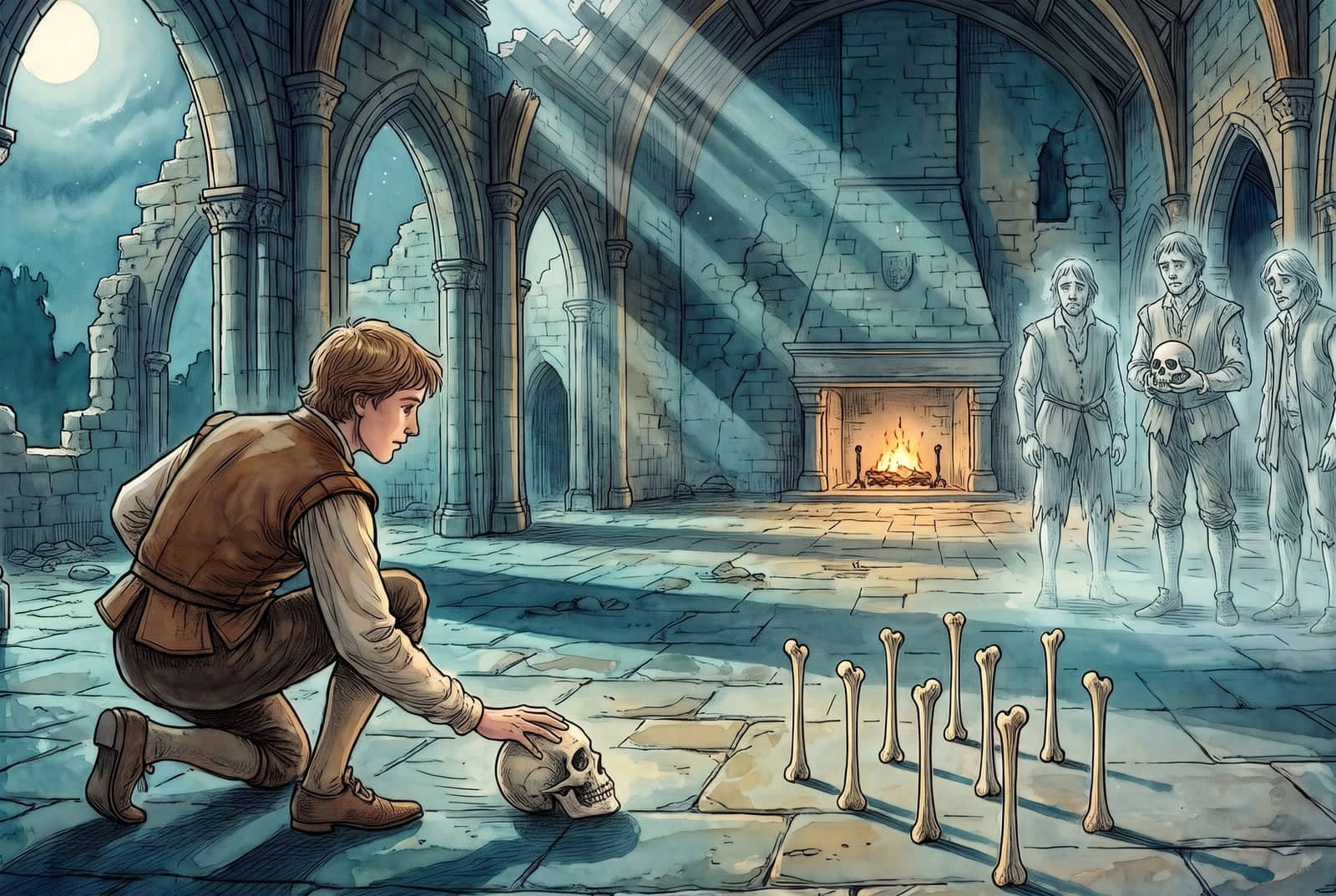
More men dropped down the chimney and began to play ninepins with nine dead men’s bones and two skulls. “Can I join in?” asked the boy.
“Yes, if you have money.”
“Plenty,” he said, “but those skulls aren’t quite round.” He put them on his lathe and turned them until they were. “There, now they’ll roll better!” He played and lost a little money until at the stroke of twelve everything vanished, and he slept peacefully.
The next morning the king came. “How did it go this time?”
“I played ninepins,” said the boy, “and lost a few pennies.”
“Didn’t you shudder?”
“Not at all. I had fun. If only I knew what shuddering was!”
On the third night he sat on his bench and said gloomily, “If only I could shudder!”
Late that night six tall men came in carrying a coffin. “Ha!” said the boy. “That must be my cousin, who died a few days ago. Come here, cousin!”
The men set the coffin down, and the boy lifted the lid. Inside lay a dead man, cold as ice. The boy warmed his hand at the fire and laid it on the man’s cheek, then held him on his lap and rubbed his arms. When nothing helped, he remembered that two people in a bed keep each other warm, so he put the dead man into bed and lay down beside him.
After a while the dead man grew warm and began to stir. “You see, cousin?” said the boy. “Aren’t you lucky I warmed you!”
But the dead man cried, “Now I’m going to strangle you!”
“Is that all the thanks I get? Back into your coffin!” The boy threw him in and shut the lid, and the six men carried the coffin away. “I just can’t shudder,” said the boy. “I’ll never learn it here as long as I live.”
Then in came a dreadful old man with a long white beard, taller than all the others. “You wretch,” he roared, “now you’ll learn what shuddering is, because you are going to die!”
“Not so fast,” said the boy. “I’m as strong as you are, and probably stronger.”
“We’ll see,” said the old man. “If you’re stronger, I’ll let you go.”
He led the boy to a forge, took an ax, and with one blow drove an anvil into the ground. “I can do better than that,” said the boy, and went to the other anvil. The old man stood close by, his white beard hanging down. The boy took the ax, split the anvil with one stroke, and caught the beard fast in the crack. “Now I’ve got you,” he said. He took an iron bar and beat the old man until he groaned and begged him to stop, promising him great riches. Then the boy let him go.
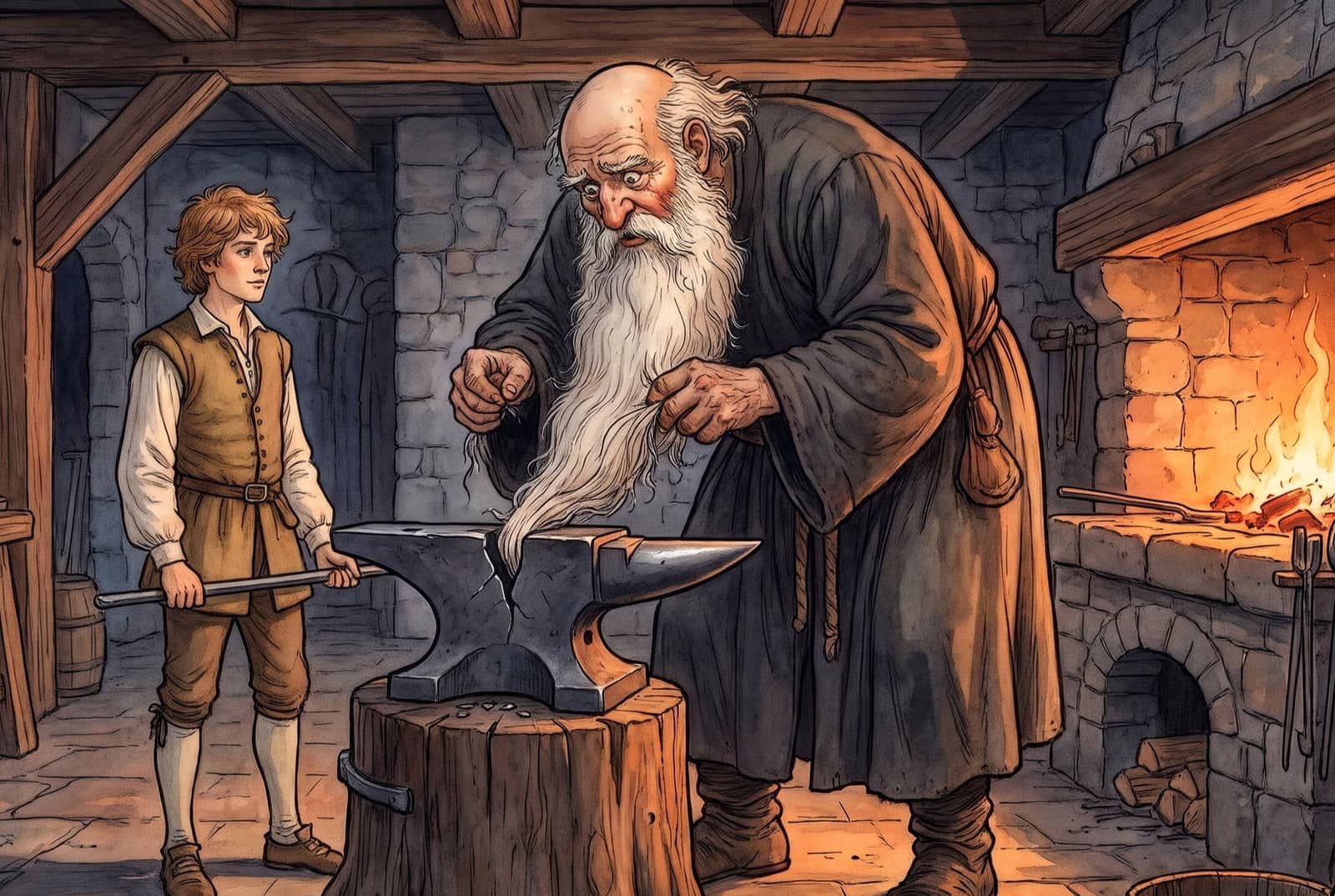
The old man showed him three chests full of gold in a cellar. “One is for the poor,” he said, “one for the king, and the third is yours.” Just then the clock struck twelve and the spirit vanished. The boy felt his way back in the dark and fell asleep by his fire.
In the morning the king said, “Now you must have learned what shuddering is.”
“No,” said the boy. “My dead cousin was here, and a bearded man showed me a lot of gold down below, but nobody told me what shuddering is.”
“You have set the castle free,” said the king, “and you shall marry my daughter.”
“That’s all very well,” said the boy, “but I still don’t know what shuddering is.”
So the gold was brought up and the wedding was held. The young king loved his wife dearly, yet he kept saying, “If only I could shudder!” At last she grew tired of it.
“I can help, Your Majesty,” said her chambermaid. “He’ll learn to shudder, all right.” She had a bucket of water full of little fish fetched from the stream that ran through the garden.
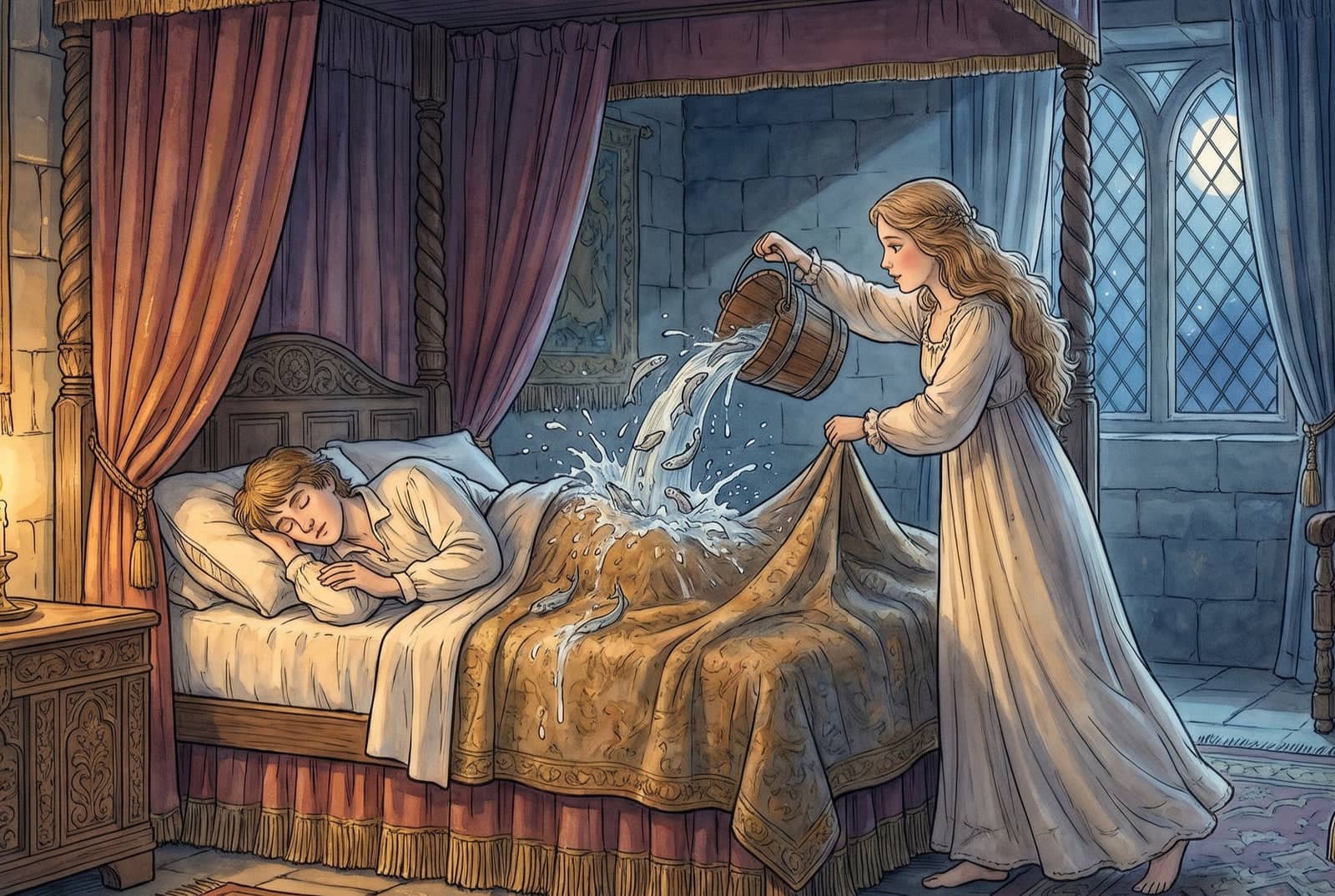
That night, while the young king slept, his wife pulled back his covers and tipped the cold water and the little fish over him, and the fish wriggled all around him. He woke crying, “Oh, how I shudder, how I shudder, dear wife! Yes, now I know what shuddering is!”
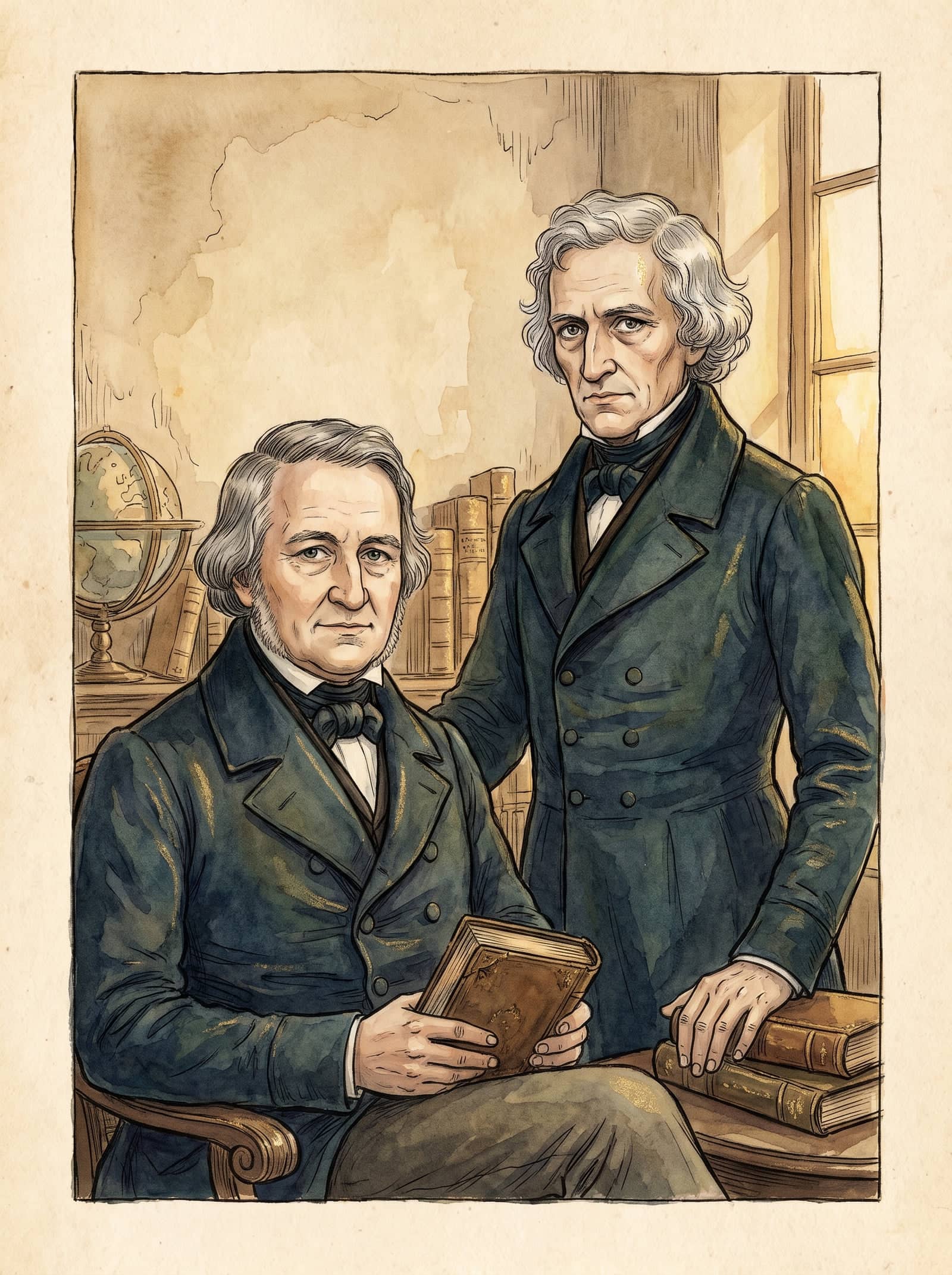
Retold by Talerie from Kinder- und Hausmärchen (opens in a new window) Public domain Copy this text, adapt it, use it however you like. A link back to Talerie is appreciated but never required. CC0 1.0 (opens in a new window)