 Original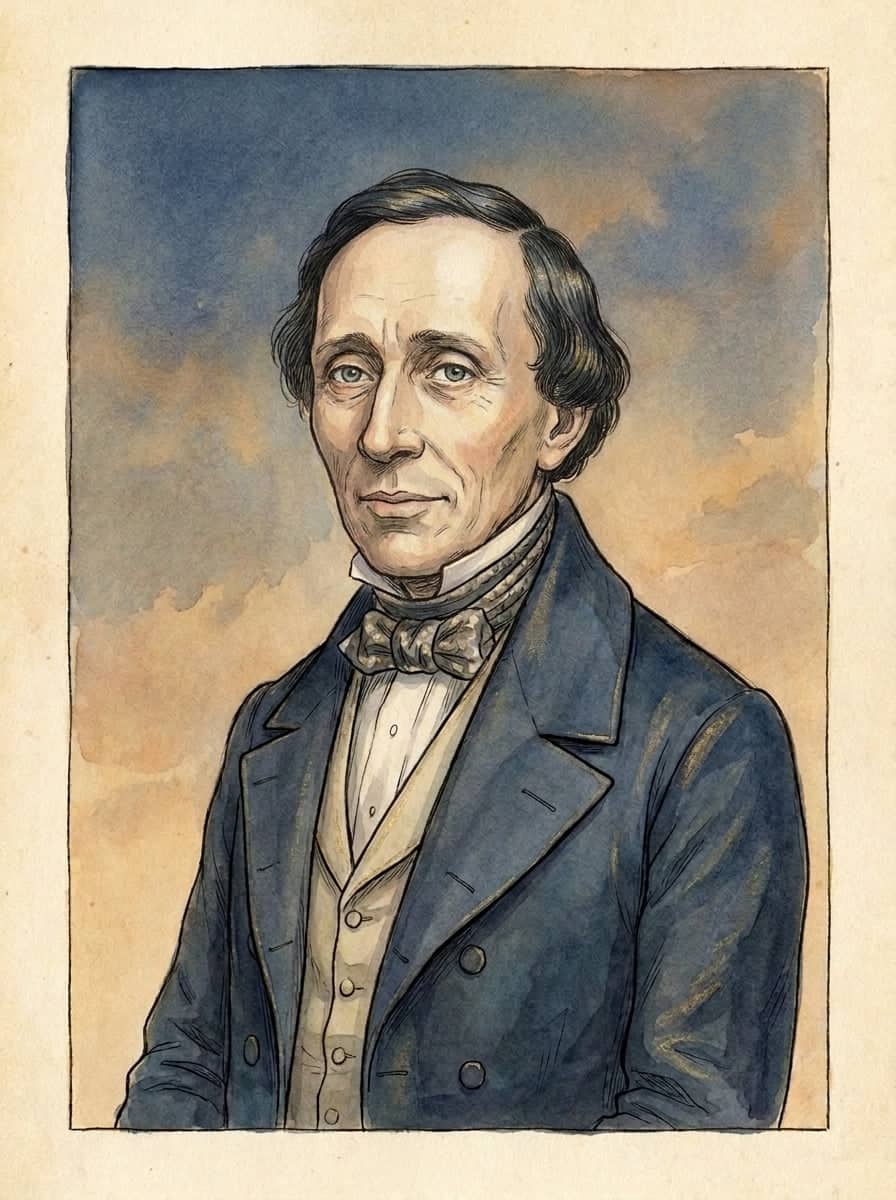
Half a thumb tall, a girl born in a tulip is stolen by a toad, abandoned by a beetle, and promised to a blind mole by the field mouse who shelters her. The swallow she saves carries her to the warm countries, where a prince no bigger than herself sets his gold crown on her head and makes her queen of the flowers.
There was once a woman who longed for a little child of her own, but she had no idea where she might get one. So at last she went to an old witch and said to her, “I would so dearly love to have a little child. Can you tell me where I might find one?”
“Oh, that is easily done,” said the witch. “Here is a barley grain for you. It is not the kind that grows in the farmer’s field, nor the kind the hens are given to peck at. Plant it in a flowerpot, and then you shall see something worth seeing.”
“Thank you,” said the woman, and she gave the witch twelve shillings, for that was the price of it. Then she went home and planted the barley grain, and at once a fine large flower grew up out of the pot. It looked like a tulip, but its petals were shut fast, as though it were still a bud.
“What a beautiful flower,” said the woman, and she kissed it on its red and yellow petals. As she kissed it, the flower opened with a little pop. It was a real tulip, as anyone could see now, but in the middle of it, on the soft green heart of the flower, sat a tiny girl, so fine and so pretty. She was hardly half a thumb tall, and so they called her Thumbelina.
A polished walnut shell was her cradle. Blue violet petals were her mattress, and a rose petal was her blanket. There she slept at night, and in the daytime she played on the table, where the woman had set out a plate with a ring of flowers around it, their stems standing in water. On the water floated a broad tulip petal, and Thumbelina could sit on it and sail from one side of the plate to the other, rowing with two white horsehairs for oars. It was a lovely sight. And she could sing, too, so sweetly and so finely that no one had ever heard the like of it.
One night, as she lay in her pretty bed, an old toad came creeping in through a broken pane in the window. She was a big toad, wet and ugly, and she hopped down onto the table where Thumbelina lay asleep under her red rose petal.
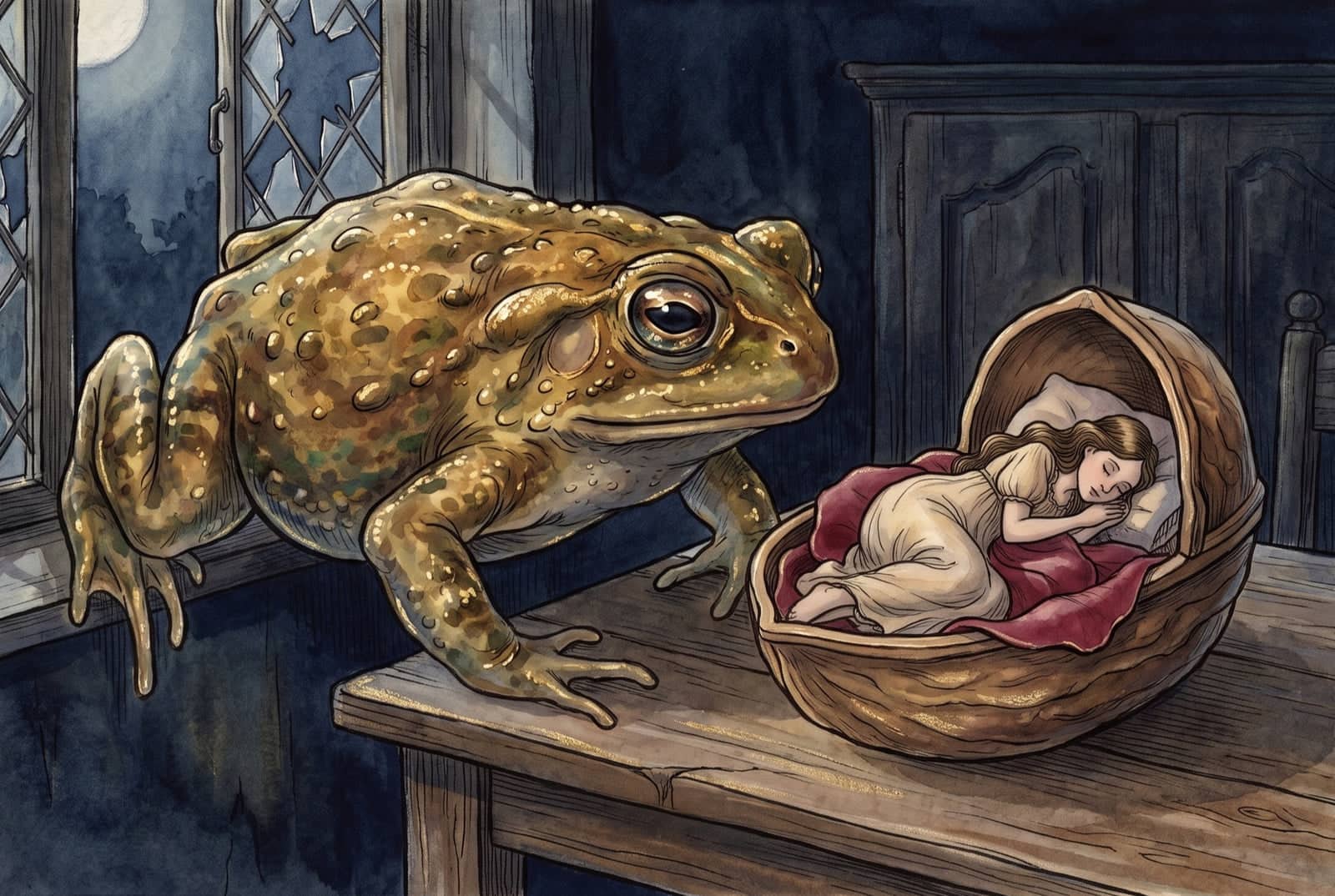
“Here is a fine wife for my son,” said the toad, and she picked up the walnut shell with Thumbelina sleeping inside it and hopped away with it through the window, down into the garden.
Through the garden ran a wide stream, and its bank was marshy and muddy. There the toad lived with her son. Oh, he was ugly and disagreeable, exactly like his mother. When he caught sight of the pretty little creature in the walnut shell, all he could say was, “Croak, croak, brekekekex!”
“Don’t talk so loudly, or you will wake her,” said the old toad. “She could still run off, for she is as light as swansdown. We will set her out on one of the broad water-lily leaves in the stream. To anyone as small and light as she is, that will be an island, and she cannot run away from it. Meanwhile we shall get the best room ready down under the mud, where the two of you are to live and keep house.”
Out in the stream grew a great many water lilies with wide green leaves that seemed to float on the surface. The leaf lying farthest out was the largest of all, and the old toad swam out to it and set the walnut shell down on it with Thumbelina inside.
The poor little thing woke early in the morning, and when she saw where she was she began to cry bitterly, for there was water on every side of the great green leaf and no way at all of reaching the shore.
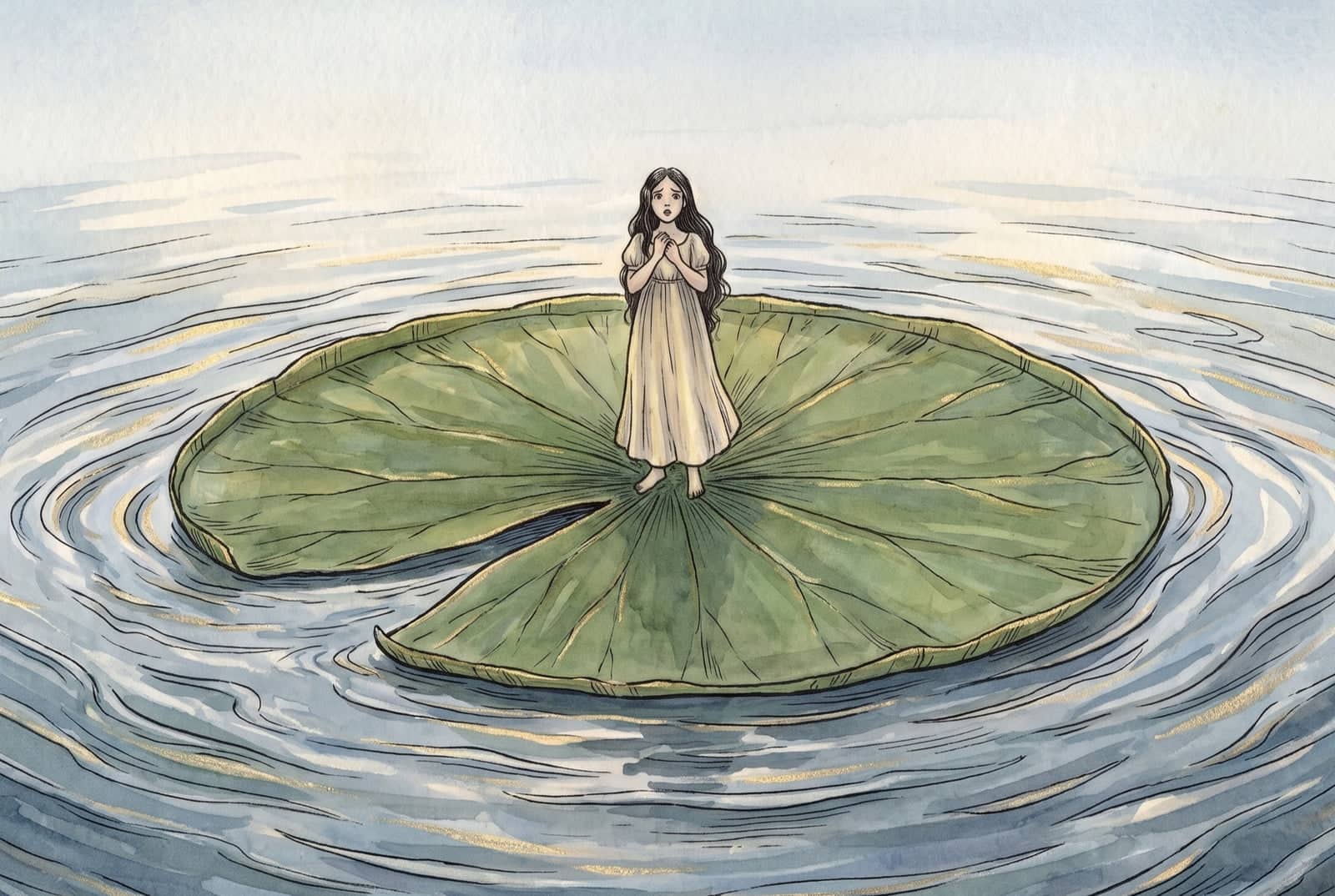
Down in the mud the old toad sat decking out her room with rushes and yellow marsh flowers, to make it pretty for her new daughter-in-law. Then she swam out with her ugly son to the leaf where Thumbelina stood. They had come for the neat little bed, which was to be carried into the bridal chamber before Thumbelina herself was brought there. The old toad bowed low in the water and said, “Here is my son. He is to be your husband, and the two of you will live very grandly down in the mud.”
“Croak, croak, brekekekex!” was all the son could say.
Then they took the pretty little bed and swam away with it, and Thumbelina sat alone on the green leaf and wept, for she did not want to live with the horrid old toad or have her ugly son for a husband. The little fish swimming below in the water had seen the toad and heard what she said, so they put their heads up, for they wanted to look at the little girl too. The moment they caught sight of her they thought her so lovely that it grieved them to think she must go down and live with the ugly toads. No, that must never happen. They gathered in the water around the green stalk that held the leaf, and they gnawed the stalk through with their teeth. Away went the leaf down the stream, and Thumbelina with it, far away where the toad could never reach her.
Thumbelina sailed past town after town, and the little birds sat in the bushes and saw her and sang, “What a lovely little girl!” The leaf floated on with her, farther and farther, and so Thumbelina traveled right out of the country.
A pretty little white butterfly kept fluttering around her, and at last he settled on the leaf. Thumbelina had taken his fancy, and she was so happy, for now the toad could not reach her, and everything she sailed past was so beautiful. The sun shone on the water until it glittered like the finest silver. She took off her sash and tied one end of it around the butterfly and made the other end fast to the leaf, and now the leaf glided along much faster, and she with it, for she was standing on it.
Just then a large beetle came flying by. He caught sight of her, and in that same moment he closed his claws around her slender waist and flew off with her into a tree. The green leaf went floating on down the stream, and the butterfly went with it, for he was tied fast and could not get free.
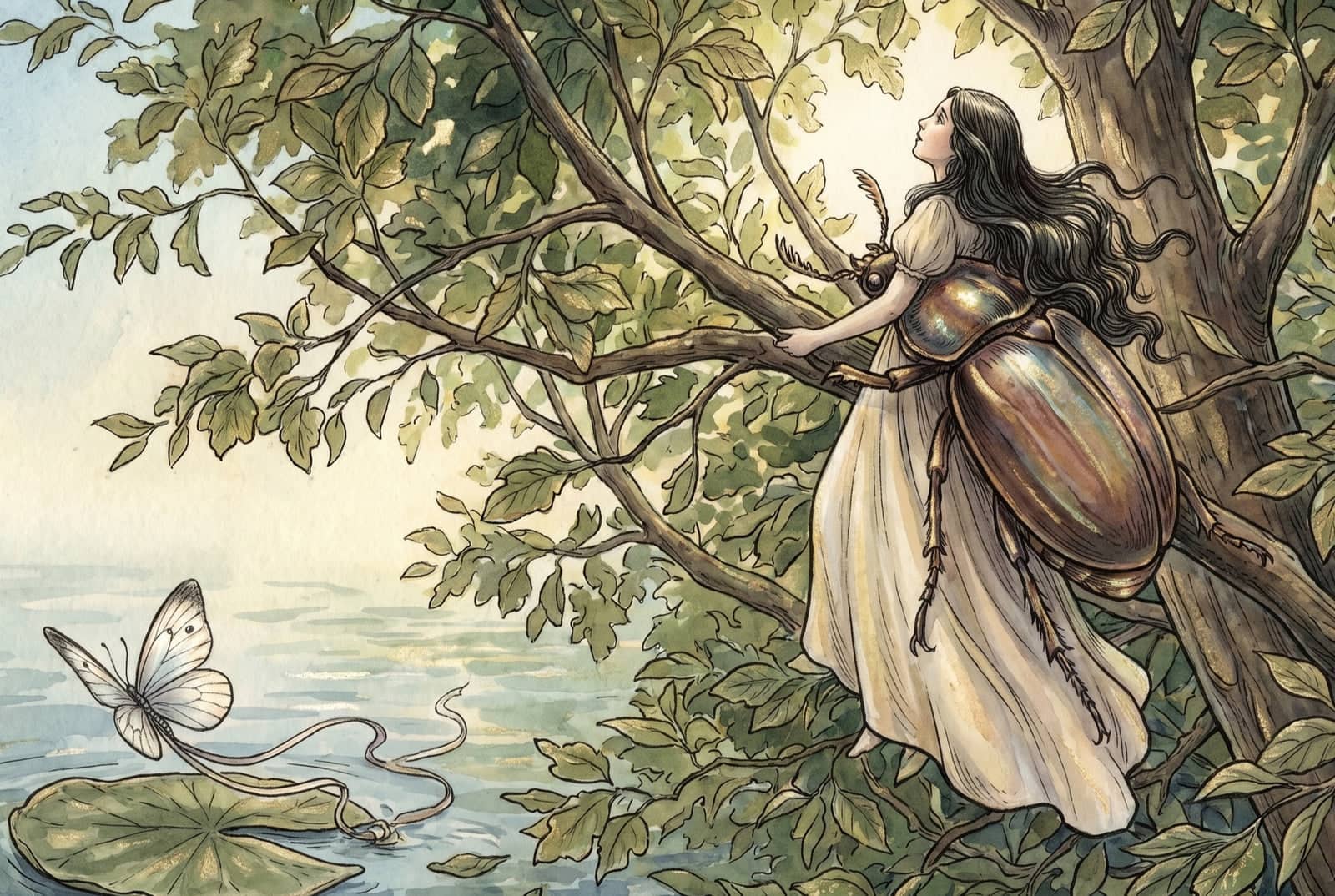
Goodness, how frightened poor Thumbelina was when the beetle flew up into the tree with her. But most of all she was sorry for the beautiful white butterfly she had tied to the leaf, for if he could not get loose he would starve. The beetle did not trouble himself about that at all. He sat down with her on the largest green leaf of the tree, gave her honey from the flowers to eat, and told her she was very pretty, although she did not look in the least like a beetle.
A little later all the other beetles who lived in the tree came to pay a call. They looked Thumbelina up and down.
“Why, she has only two legs,” said one. “What a wretched sight.”
“And no feelers at all,” said another.
“Her waist is so thin. Ugh, she looks like a human being!” said all the lady beetles.
And yet Thumbelina was truly lovely. The beetle who had carried her off could see it perfectly well, but when all the others said she was ugly, in the end he believed it too, and he would not keep her; she could go wherever she liked. So they flew down out of the tree with her and set her on a daisy, and there she wept, because she was so ugly that the beetles would not have her. And all the while she was the sweetest thing anyone could imagine, as fine and delicate as the loveliest rose petal.
All that summer poor Thumbelina lived alone in the great wood. She wove herself a bed out of blades of grass and hung it under a clover leaf, so that the rain could not reach her. She gathered honey from the flowers for her food, and drank the dew that stood on the leaves every morning. So the summer passed, and the autumn passed, and then came the winter, the long cold winter.
All the birds who had sung so beautifully for her flew away. The trees and the flowers lost their leaves, and the big clover leaf she had lived under curled up and shrivelled until nothing was left of it but a withered stalk. She was dreadfully cold, for her clothes were worn to rags, and she herself was so small and fine, poor Thumbelina. She would surely freeze to death. It began to snow as well, and every snowflake that fell on her was like a whole shovelful thrown over one of us, for we are big and she was only an inch tall. She wrapped herself in a dry leaf, but it split down the middle and gave her no warmth, and she shivered with cold.
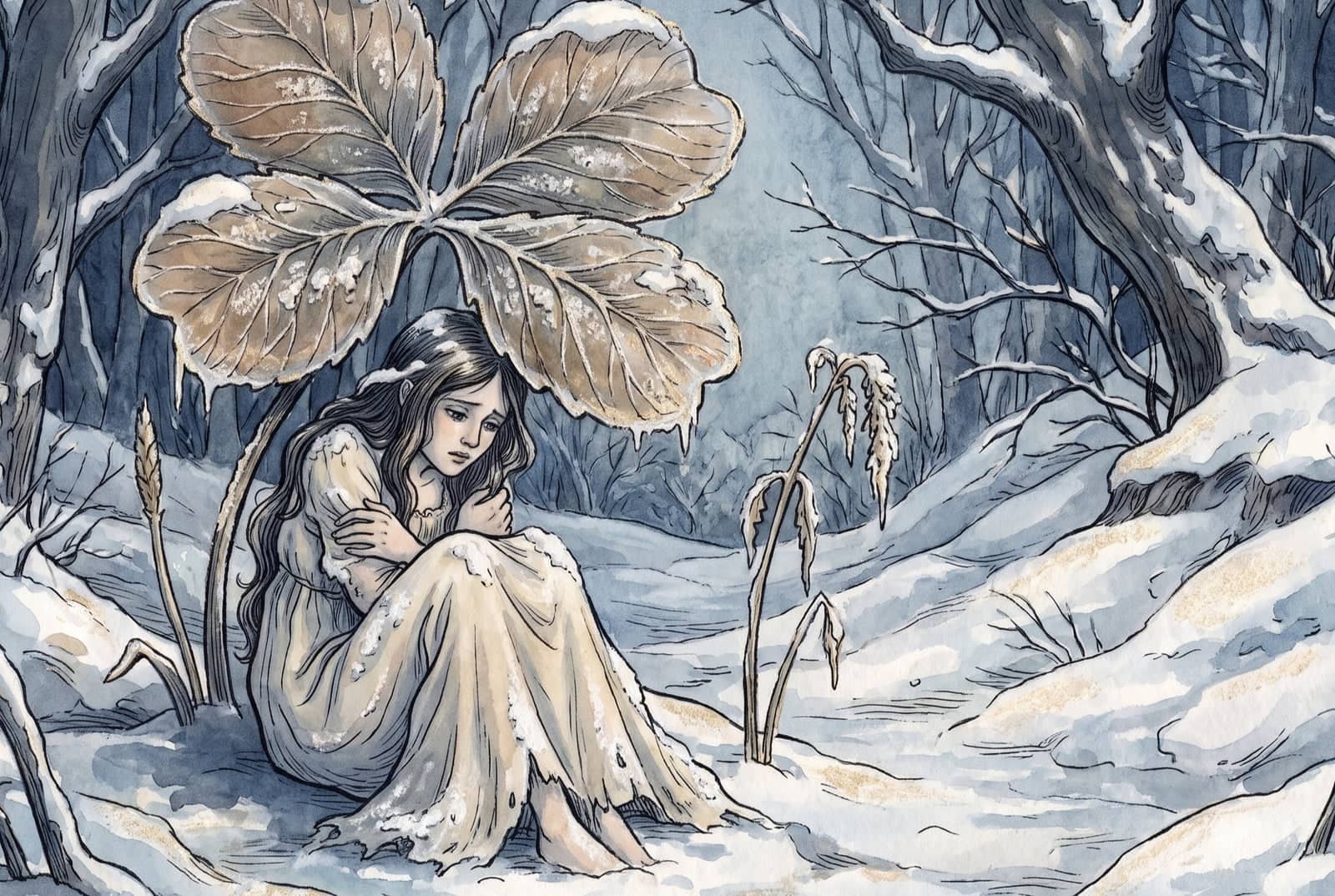
Close by the wood lay a great field of grain, but the grain had long since been carried away, and only the bare dry stubble stood up out of the frozen ground. For her it was a whole forest to walk through, and oh, how she shivered with the cold. At last she came to the door of a field mouse, who had a little hole under the stubble. There the mouse lived warm and snug, with a whole room full of grain, and a fine kitchen and a pantry besides. Poor Thumbelina stood in the doorway like a little beggar girl and asked for one small piece of a barley grain, for she had not had the least thing to eat for two days.
“You poor little thing,” said the field mouse, who at heart was a kind old soul. “Come into my warm room and have dinner with me.”
Then, because she liked Thumbelina, she said, “You are welcome to stay with me all winter if you please, but you must keep my room clean and tidy, and you must tell me stories, for I do love a story.” And Thumbelina did everything the good old field mouse asked of her, and was very well off there.
“We shall have a visitor soon,” said the field mouse. “My neighbor calls on me once a week. He is even better off than I am. He has great rooms, and he wears a beautiful coat of black velvet. If only you could have him for a husband, you would be well provided for. But he cannot see. You must tell him the prettiest stories you know.”
Thumbelina cared nothing for that. She had no interest in the neighbor, for he was a mole.
He came and paid his call in his black velvet coat. He was so rich and so learned, said the field mouse, and his house was more than twenty times the size of hers. Learning he certainly had, but he could not bear the sun or the beautiful flowers, and he spoke ill of them both, for he had never seen them.
Thumbelina had to sing for him, and she sang “Ladybug, ladybug, fly away home,” and other songs besides, and the mole fell in love with her for the sweetness of her voice. But he said nothing about it yet, for he was a cautious man.
A little while before, he had dug a long passage through the earth from his house to theirs, and the field mouse and Thumbelina had leave to walk in it as much as they wished. But he asked them not to be frightened of the dead bird that lay in the passage. It was a whole bird, with feathers and a beak, that could not have been dead long, and it lay buried just where he had made his tunnel.
The mole took a piece of rotten wood in his mouth, for that glimmers like fire in the dark, and he went ahead of them to light the long black passage. When they came to the place where the dead bird lay, the mole pushed his broad nose up against the roof and shoved the earth aside, so that a great hole opened and the daylight came shining down. In the middle of the floor lay a dead swallow, his lovely wings pressed close to his sides, his feet and his head drawn in under his feathers. The poor bird had surely died of the cold.
It made Thumbelina very sad. She loved all the little birds dearly, for all summer long they had sung and twittered so beautifully for her. But the mole shoved the swallow with his crooked legs and said, “There is an end of his piping. What a miserable thing it must be, to be born a little bird. Thank goodness none of my children will ever be one. A bird like that has nothing but his tweet-tweet, and in the winter he has to starve.”
“Yes, you may well say so, being a sensible man,” said the field mouse. “What does a bird get for all his tweeting when the winter comes? He must starve and freeze. Though I dare say it is very grand.”
Thumbelina said nothing. But when the other two had turned their backs on the bird, she bent down, pushed aside the feathers that lay over his head, and kissed him on his closed eyes.
“Perhaps it was he who sang so sweetly to me in the summer,” she thought. “How much happiness he gave me, the dear beautiful bird.”
The mole stopped up the hole that let the daylight in, and then he saw the ladies home. But that night Thumbelina could not sleep at all. She got up out of her bed and wove a large fine blanket out of hay, and she carried it out and spread it over the dead bird. Then she gathered the soft down from the flowers in the field mouse’s room, as soft as cotton, and tucked it in at the bird’s sides, so that he might lie warm in the cold earth.
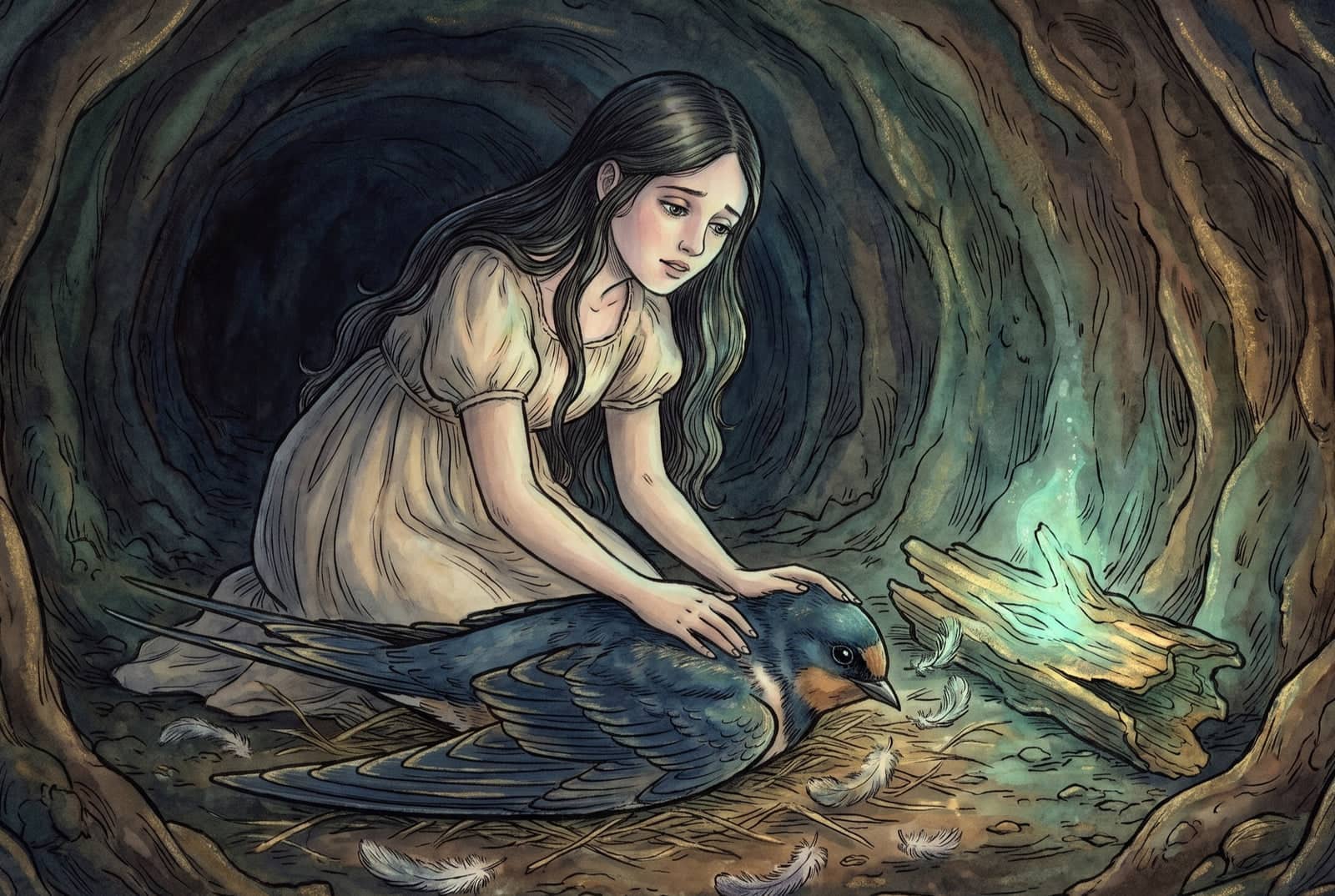
“Farewell, you beautiful little bird,” she said. “Farewell, and thank you for your lovely singing in the summer, when all the trees were green and the sun shone warm upon us.”
Then she laid her head against the bird’s breast, and in the same moment she started back in fright, for something inside him went thump, thump. It was his heart. The bird was not dead at all. He had only lain there numb with cold, and now the warmth had brought him back to life.
In the autumn all the swallows fly away to the warm countries, but if one of them is late, the cold takes such a hold of it that it drops down as though dead and lies where it falls, and the cold snow covers it over.
Thumbelina trembled with fright, for the bird was big, very big beside her, who was only an inch tall. But she took heart all the same. She packed the down more closely around the poor swallow, fetched the mint leaves she herself slept under, and laid them over the bird’s head.
The next night she stole out to him again. He was alive, but very weak, and he could open his eyes for no more than a moment to look at Thumbelina, who stood before him with a piece of rotten wood in her hand, for she had no other lantern.
“Thank you, you dear little child,” the sick swallow said to her. “I have been so beautifully warmed. Soon I shall have my strength back, and then I shall be able to fly about out there in the warm sunshine.”
“Oh,” she said, “it is cold outside. It is snowing and freezing. Stay in your warm bed. I will look after you.”
Then she brought the swallow water in a flower petal, and he drank, and told her how he had torn one of his wings on a thornbush and could not fly as fast as the other swallows when they flew away, far away to the warm countries. At last he had fallen to the ground, and after that he could remember nothing at all, and had no idea how he had come to be where she found him.
He stayed down there the whole winter, and Thumbelina looked after him and cared for him with all her heart. Neither the mole nor the field mouse knew a thing about it, for they had no liking for the poor swallow.
As soon as the spring came and the sun warmed the earth, the swallow said goodbye to Thumbelina, and she opened the hole the mole had made overhead. The sun shone in on them so gloriously, and the swallow asked whether she would come away with him. She could sit on his back, he said, and they would fly far into the green wood. But Thumbelina knew it would grieve the old field mouse if she left her like that.
“No, I cannot,” said Thumbelina.
“Farewell, then, farewell, you good, pretty girl,” said the swallow, and he flew out into the sunshine. Thumbelina looked after him, and the tears came into her eyes, for she had grown very fond of the poor swallow.
“Tweet, tweet,” sang the bird, and flew away into the green wood.
Thumbelina was very sad. She was not given leave to go out into the warm sunshine. The grain that had been sown in the field above the field mouse’s house grew up high into the air, and to the poor little girl, who was only an inch tall, it was a thick forest.
“You are to be married, Thumbelina,” said the field mouse. “My neighbor has asked for you. What great good fortune for a poor child like you. Now you must sew your wedding things, woollen and linen both, for nothing must be wanting when you are the mole’s wife.”
Thumbelina had to turn the spindle, and the field mouse hired four spiders to weave for her day and night. Every evening the mole came to visit, and every evening he talked of how the summer would soon be over, and then the sun would not shine anything like so warm; just now it was baking the earth as hard as a stone. Yes, when the summer was over, that was when he and Thumbelina would be married. But she was not glad at all, for she could not bear the dull old mole. Every morning when the sun rose and every evening when it went down, she stole out of the door, and when the wind parted the ears of grain so that she could see the blue sky, she thought how bright and beautiful it was out there, and she wished with all her heart that she might see the dear swallow again. But he never came back. By now he had surely flown far away into the lovely green wood.
When the autumn came, Thumbelina had all her wedding things ready.
“In four weeks you shall be married,” the field mouse told her.
But Thumbelina cried, and said she would not have the dull old mole.
“Fiddlesticks,” said the field mouse. “Don’t be obstinate, or I shall bite you with my white teeth. It is a fine man you are getting. The queen herself has no such black velvet coat. His kitchen and his cellar are full. You should thank heaven for him.”
So the wedding day came. The mole had already arrived to fetch Thumbelina away. She was to live with him deep under the earth and never come out into the warm sun, for he could not bear it. The poor child was very sad, for now she had to say goodbye to the beautiful sun, which the field mouse had at least allowed her to look at from the doorway.
“Farewell, bright sun,” she said, and she stretched her arms high toward it, and walked a little way out from the field mouse’s house, for the grain had been harvested and only the dry stubble stood there now. “Farewell, farewell,” she said, and she put her arms around a little red flower that was still in bloom. “Give my love to the little swallow, if ever you see him.”
“Tweet, tweet,” came suddenly from above her head. She looked up, and there was the little swallow, flying by at that very moment. He was overjoyed the instant he caught sight of Thumbelina, and she told him how unwilling she was to take the ugly mole for a husband, and how she was to live deep under the earth where the sun never shone. She could not help crying as she told him.
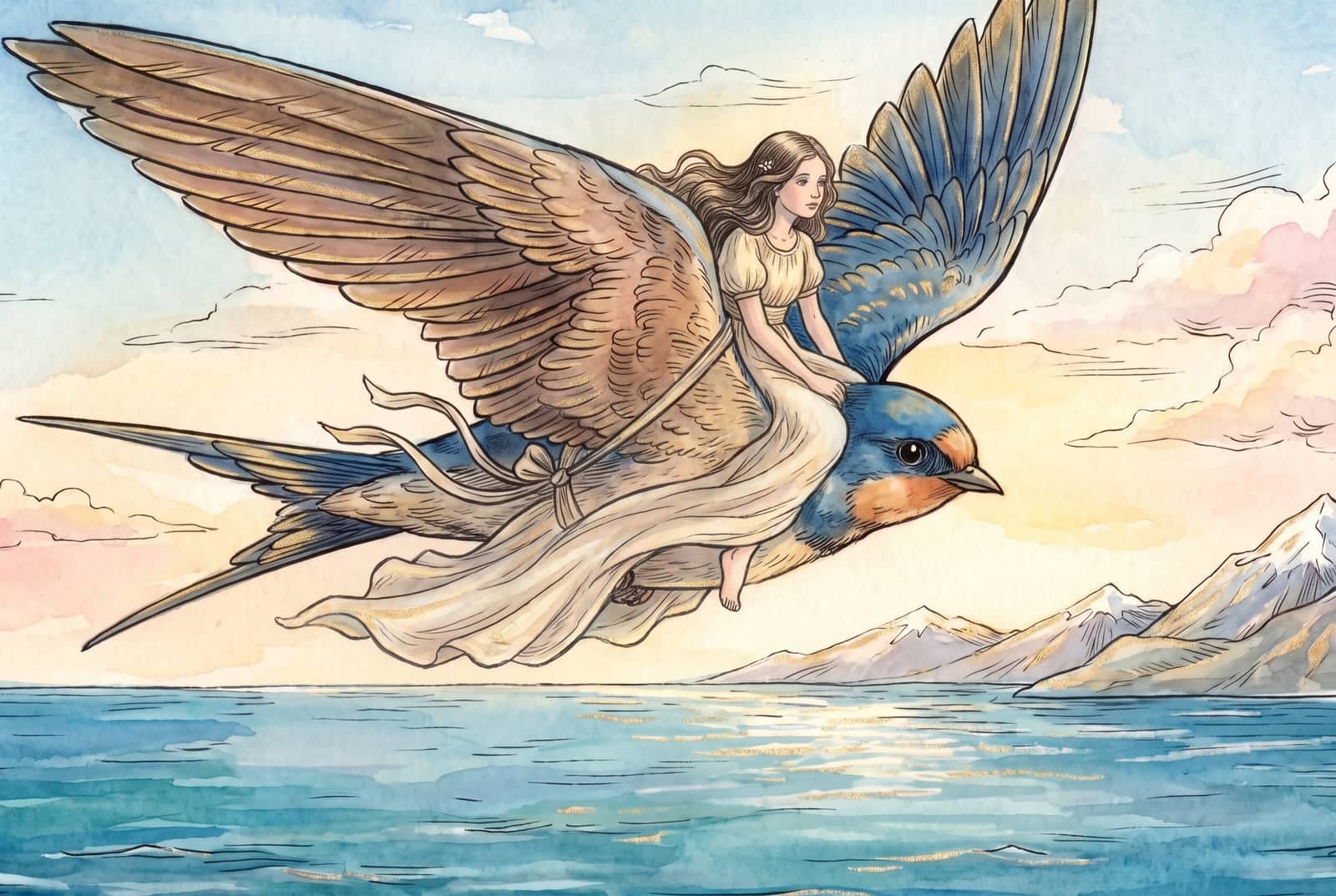
“The cold winter is coming now,” said the little swallow. “I am flying far away to the warm countries. Will you come with me? You can sit on my back. Only tie yourself on with your sash, and we shall fly away from the ugly mole and his dark rooms, far away over the mountains to the warm countries, where the sun shines more beautifully than here, where it is always summer and there are wonderful flowers. Do fly with me, dear little Thumbelina, you who saved my life when I lay frozen in that dark passage under the earth.”
“Yes, I will come with you,” said Thumbelina, and she seated herself on the bird’s back with her feet on his outspread wing, and tied her sash to one of his strongest feathers.
Then the swallow rose high into the air and flew over forest and over sea, high above the great mountains where the snow never melts. Thumbelina was cold in that cold air, but she crept in under the bird’s warm feathers and put out only her little head, so that she could look at all the beautiful country below her.
At last they came to the warm lands. There the sun shone far brighter than here, and the sky was twice as high. Along the ditches and the hedges grew the finest green and blue grapes; lemons and oranges hung in the woods; the air was sweet with myrtle and mint, and along the roads the loveliest children ran about, playing with big bright butterflies. But the swallow flew on still farther, and everything grew more and more beautiful.
Under magnificent green trees beside a blue lake stood a dazzling white marble palace from the old days. Vines climbed the tall pillars, and at the very top were a great many swallows’ nests, and in one of them lived the swallow who was carrying Thumbelina.
“Here is my house,” said the swallow. “But it would not do for you to live in it. It is not kept as you would want it. Choose one of the splendid flowers growing down there, and I will set you in it, and you shall have everything you could wish for.”
“How wonderful,” she said, and clapped her little hands.
A great white marble pillar lay on the ground where it had fallen and broken into three pieces, and among the pieces grew the most beautiful large white flowers. The swallow flew down with Thumbelina and set her on one of the broad petals. But how astonished she was! There in the middle of the flower sat a little man, as white and clear as though he were made of glass. He wore the daintiest gold crown on his head and the loveliest wings on his shoulders, and he was no bigger than Thumbelina herself. He was the angel of the flower. In every flower there lives such a little man or such a little woman, but this one was king over them all.
“Goodness, how beautiful he is,” Thumbelina whispered to the swallow.
The little prince was greatly afraid of the swallow, for beside anyone as small and fine as himself, the swallow was a giant of a bird. But when he saw Thumbelina he was overjoyed. She was the prettiest girl he had ever set eyes on. So he took the gold crown from his own head and set it on hers, and asked her what her name was, and whether she would be his wife; then she should be queen over all the flowers.
Well, here was a husband quite unlike the toad’s son and the mole in his black velvet coat, and so she said yes to the beautiful prince. And out of every flower stepped a lady and a gentleman, so charming that it was a joy to see them. Each one brought Thumbelina a present, but the best of all was a pair of lovely wings from a big white fly. They were fastened to Thumbelina’s back, and now she too could fly from flower to flower. There was great rejoicing, and the little swallow sat up in his nest and was asked to sing the wedding song, and he sang it as well as he could. But in his heart he was sad, for he was so fond of Thumbelina, and would never willingly have parted from her.
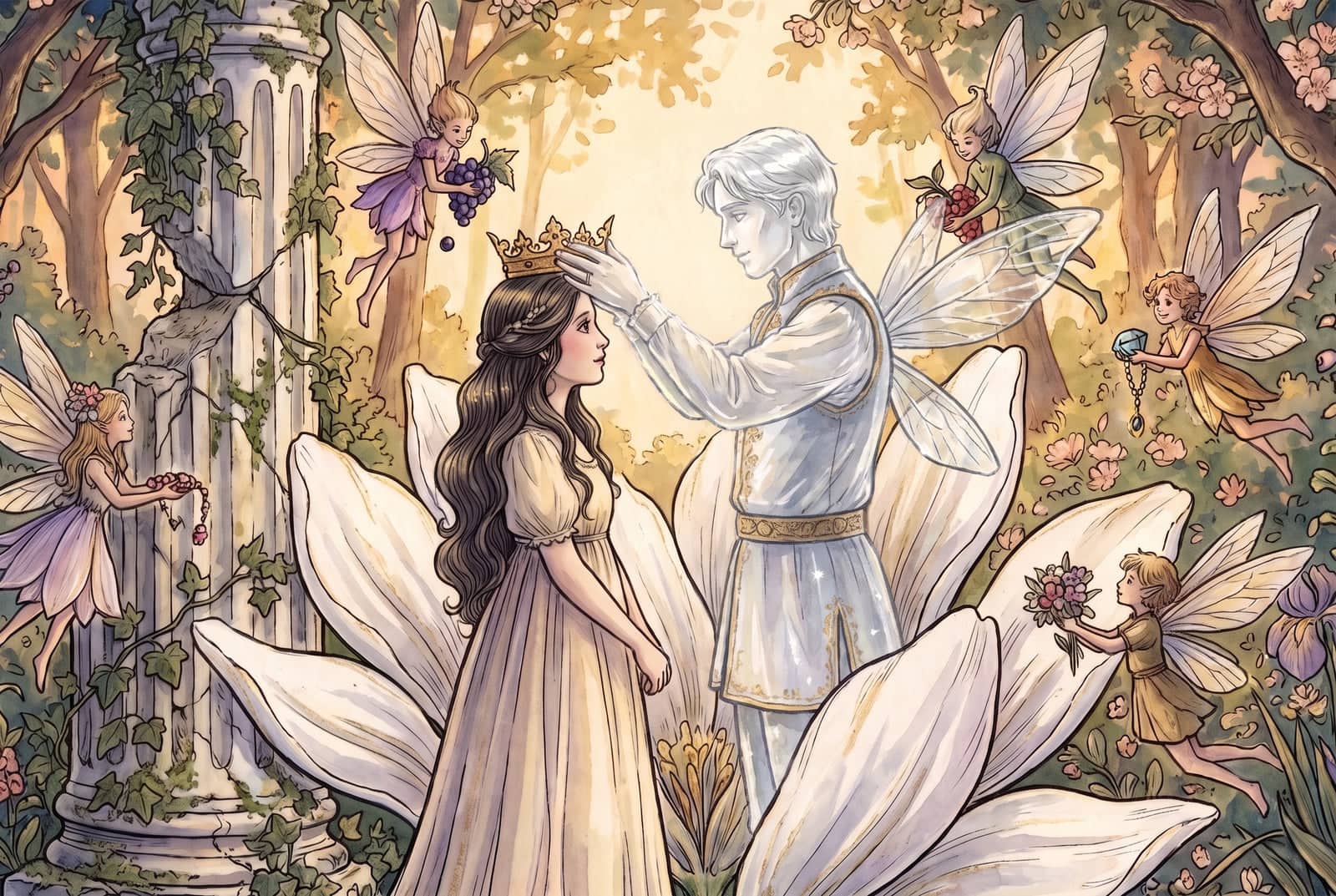
“You shall not be called Thumbelina,” said the angel of the flower. “It is an ugly name, and you are far too pretty for it. We shall call you Maia.”
“Farewell, farewell,” said the little swallow, with a heavy heart, and he flew away again from the warm countries, far away back to Denmark. There he had a little nest above the window of the man who can tell fairy tales. He sang “Tweet, tweet” to him, and that is how we know the whole story.
Retold by Talerie from Fairy Tales of Hans Christian Andersen (opens in a new window)License: Public domainCopy this text, adapt it, use it however you like. A link back to Talerie is appreciated but never required.CC0 1.0 (opens in a new window)
